Party Planner: The Complete Guide
What a party planner really does, when to hire versus do it yourself, what it costs, and how to plan a celebration people remember.
A party planner turns a vague wish, "let's throw something special", into a real evening people remember, without you spending the night refilling platters and worrying about the music. Whether that planner is a hired professional or simply you with a good plan, the craft is the same: a clear theme, a workable budget, the right vendors and a timeline that holds. This guide covers the whole subject, from what a party planner actually does to when it is worth hiring one and how to do the job well yourself.
The short version
- A party planner designs and runs celebrations. Theme, budget, venue, vendors, timeline and the flow of the night.
- Parties come in many shapes. Birthdays, dinners, cocktail evenings, showers and milestones each ask for a different plan.
- Hiring is about time and scale. The bigger or more complex the party, the more a professional earns their fee.
- The DIY version works too. With a checklist and a realistic budget, most smaller parties are entirely plannable yourself.
What a party planner does
A party planner is a specialist who designs and coordinates social celebrations from start to finish. The role applies the same discipline as broader event management, just scaled to a party: understanding what the host wants, shaping a concept around it, then handling the budget, venue, vendors, decor, food, entertainment and the running order of the evening. Where a host sees "a fun night", a planner sees a project with a critical path, and that difference is exactly what lets everyone else relax.
The value shows up most on the day itself. A good planner is the person quietly solving the problems the guests never notice: the caterer running late, the playlist that needs changing, the seating that has to shift. Their job is to absorb the stress so the host can be a guest at their own party. That is the same promise a wedding planner makes for a wedding, applied to the wider world of celebrations.
The many kinds of party


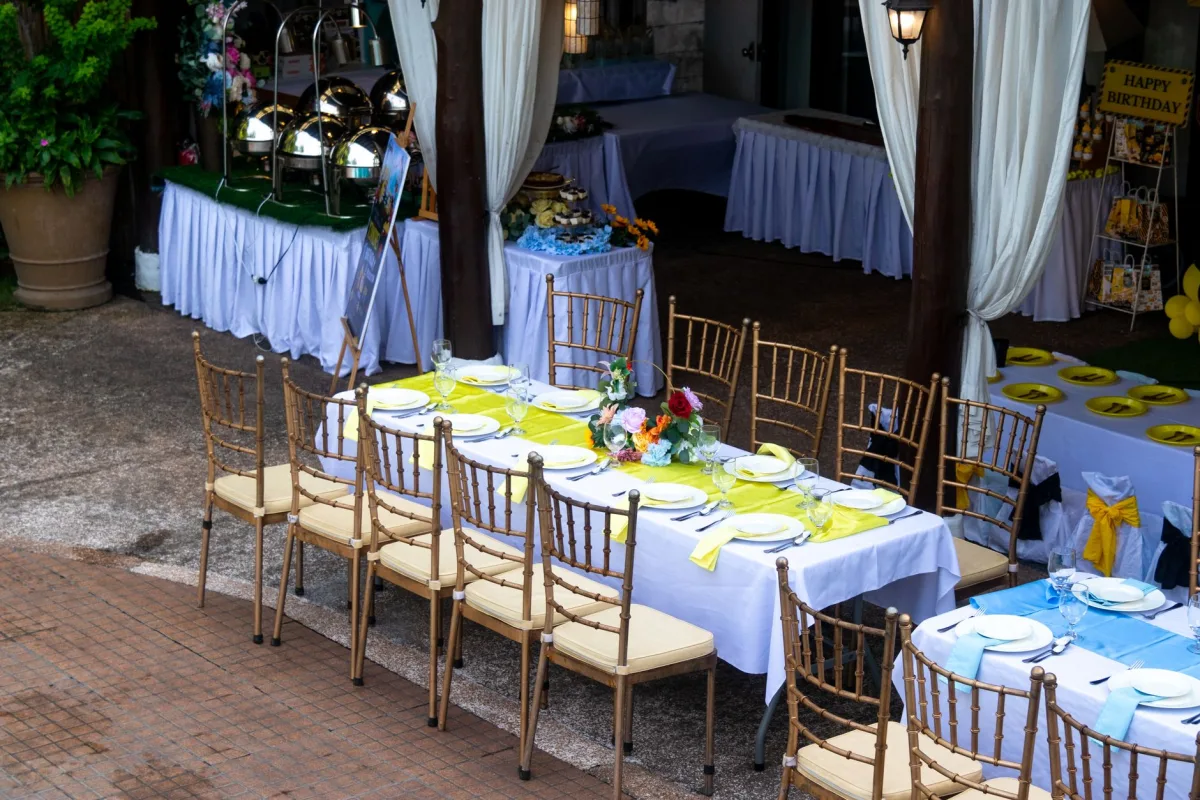

"Party" is a broad word. As the general definition puts it, a party is a gathering of people invited by a host to socialise or mark a special occasion, and the formats are many: birthdays, dinners, cocktail evenings, garden parties, milestone celebrations, showers and more. Each type nudges the plan in a different direction, and knowing which you are throwing shapes every decision that follows.
Birthday and milestone
From a child's party to a landmark birthday. The tone and budget swing enormously, so the theme and guest list lead everything else.
Cocktail and dinner
A more intimate, adult evening built around food, drink and conversation. Flow, seating and timing matter more than spectacle.
Showers and celebrations
Baby showers, bridal showers and engagement parties centre on a person and often on gifts, with gentle games and a daytime feel.
Corporate and festive
Company parties, holiday gatherings and launches, where a brand, a budget sign-off and a headcount shape the brief.
Naming the type early saves you from planning the wrong party. A relaxed garden lunch and a formal cocktail evening share almost nothing beyond the word "party", and the plan has to follow the format, not the other way around.
Should you hire a party planner or do it yourself?
The honest answer turns on three things: the size of the party, the complexity of what you want, and how much of your own time and calm you are willing to spend. A small dinner for eight is usually a pleasure to plan yourself. A hundred-guest milestone with catering, entertainment, a venue and a theme is where a professional starts to pay for themselves, both in saved time and in vendor deals you could not get alone.
Hire a planner when the guest count is high, the logistics are tangled, or you simply want to be fully present rather than working the room. Do it yourself when the party is smaller, you enjoy the planning, and the moving parts are few enough to hold in a single checklist. Many people land in the middle: they plan most of it and bring in help only for the day, exactly as couples do with day-of coordination. If you are leaning toward doing it yourself, our event planning checklist turns the whole job into manageable steps.
What party planners cost
Prices vary widely by region, experience and the scale of the party, so treat these as rough shapes rather than quotes. Party planners generally charge in one of three ways: a flat fee for a defined scope, an hourly rate for smaller jobs or consultations, or a percentage of the total party budget, which scales with the size of the event. A simple party styled and coordinated sits at the lower end; a large, catered, entertained affair with full planning sits at the top.
As with any planner, ask two things before you commit. What exactly does the fee include, and what is extra: staffing on the night, hire of equipment, travel, and overtime if the party runs late? And do they take a commission from any vendors they recommend, which should be disclosed so you can judge fit against margin. Getting these clear in writing keeps a friendly quote from turning into a surprise invoice.
How to choose a party planner
If you decide to hire, treat it like any important booking. Build a shortlist from venue recommendations, word of mouth and reviews, then look for the same signals in each candidate.
- A portfolio of parties like yours. Someone brilliant at corporate launches may be untested at intimate birthdays. Look for a real track record in your kind of party.
- Checkable references. Two recent hosts you can actually contact tell you more than a page of anonymous ratings.
- Clear communication and a written contract. How they answer your first message predicts the whole experience, and a professional always works from a contract.
- Proof of insurance. Liability cover is a basic mark of a serious operator, especially for larger parties.
- Honesty about capacity. Ask how many events they run per weekend, so you know your party will get real attention.
For anything at the larger, more logistical end, you may be choosing between an individual planner and a fuller event management company, and the same questions apply to both. A single coordinator suits an intimate evening; a company suits a complex, high-headcount event with many moving vendors.
Planning a great party yourself
If you take the reins, a handful of principles carry most parties. Start with the guest list and the budget together, because one constantly shapes the other. Pick a single clear idea, a theme, a mood, a reason, and let every later choice answer to it. Book the venue and any catering or entertainment early, since these are the pieces that sell out. Build a simple running order for the night so the food, the speeches and the music land in the right sequence rather than colliding.
Then, crucially, plan to hand off the day itself. Ask a reliable friend, or hire an event coordinator for a few hours, to manage the timeline so you are not checking your phone and refilling glasses while your guests celebrate. The mark of a well-planned party is a host who looks like they have nothing to do, and that ease is always the product of work done in advance.
Where matrimony360 fits
Matrimony360 is not a party-planning agency and does not book your caterer or run your night. What we do is the reading around the decision: honest guides that help you understand the roles, the realistic costs and the questions to ask, whether you end up hiring a planner or doing it yourself. Use us to get oriented, then hire, or plan, from a position of knowing what good looks like. The best celebrations come from clear thinking well before the first guest arrives, and that is exactly what these guides are for.
The bottom line
A party planner, hired or homegrown, is really just someone with a clear plan: a defined kind of party, a theme, a budget, the right vendors and a timeline that holds. Hire a professional when the scale or the complexity outgrows your time and calm; take it on yourself when the party is small enough to hold in a checklist. Either way, name the type of party first, plan the day-of hand-off deliberately, and you give yourself the one thing every host actually wants: to enjoy the celebration you created.
Frequently asked questions
What does a party planner do?
A party planner designs and coordinates a celebration from start to finish. That means understanding what the host wants, shaping a theme, setting and managing the budget, booking the venue and vendors, arranging food, decor and entertainment, and running the timeline on the day itself. Their real job is to absorb the logistics and the stress so the host can relax and be a guest at their own party rather than working it.
How much does a party planner cost?
It varies widely by region, experience and the size of the party, so treat any figure as a rough shape. Planners typically charge a flat fee for a defined scope, an hourly rate for smaller jobs, or a percentage of the total party budget. A simply styled small party sits at the lower end, while a large, catered, fully planned event sits at the top. Always confirm what the fee includes and get it in writing before you commit.
Do I need a party planner for a small party?
Usually not. Small gatherings such as an intimate dinner or a modest birthday are very plannable yourself with a simple checklist and a realistic budget. A planner earns their fee mainly when the party is large, the logistics are complex, or you want to be fully present rather than managing the night. Even then, many hosts hire help only for the day itself rather than for the whole planning process.
What is the difference between a party planner and an event planner?
The two overlap heavily. "Event planner" is the broader term, covering everything from conferences and corporate functions to weddings and festivals, while "party planner" usually signals a focus on social celebrations like birthdays, showers and milestone parties. Many professionals do both. The skills are the same, so choose based on relevant experience with your specific kind of event rather than on the job title alone.
How far in advance should I plan a party?
It depends on scale. A large party with a venue, catering and entertainment is best started a few months ahead, since those vendors book up, while a small gathering may need only a few weeks. Whatever the size, the earlier you lock the guest list, budget and venue, the calmer the run-up will be. Leaving the big bookings to the final fortnight is the most common cause of a stressful, expensive scramble.