
Premarital Counseling: The Complete Guide
A preventive, not corrective, way to prepare for marriage: what premarital counseling covers, the forms it takes, and what to expect.
Most couples spend a year planning the wedding and almost no time planning the marriage. Premarital counseling is the deliberate correction to that imbalance: a short course of guided conversations, before the wedding, about the things couples otherwise discover the hard way. It is not a sign that something is wrong. It is one of the most quietly sensible things two people can do before they commit their lives to each other. This guide explains what premarital counseling actually is, what it covers, the different forms it takes, what a session feels like, and how to find and afford it, so you can decide whether it belongs in your own run-up to the day.
The short version
- It is preventive, not corrective. The point is to build skills before problems arrive, not to fix a broken relationship.
- It surfaces the hard conversations early: money, family, children, faith, roles and conflict.
- It comes in many forms, from a therapist's office to a faith leader's study to a structured questionnaire.
- A few sessions is normal. This is a short, focused course, not open-ended therapy.
What premarital counseling actually is
Premarital counseling is a form of therapy or structured guidance that helps couples prepare for marriage. Its stated aim is to give partners the tools to build a strong, satisfying relationship before the wedding rather than waiting until difficulties appear. It is usually delivered by a licensed therapist, a counselor, or a religious leader such as a minister, priest, rabbi or imam, and it can be a few sessions or a longer programme depending on the approach.
The crucial word is "pre." Unlike marriage counseling, which people typically seek when a relationship is already under strain, premarital counseling is preventive. It works on communication, expectations and shared plans while the relationship is healthy and both partners are motivated, which is precisely when new habits are easiest to build. Thinking of it as relationship maintenance done in advance, rather than a repair job, is the most accurate frame.
Why it is worth doing

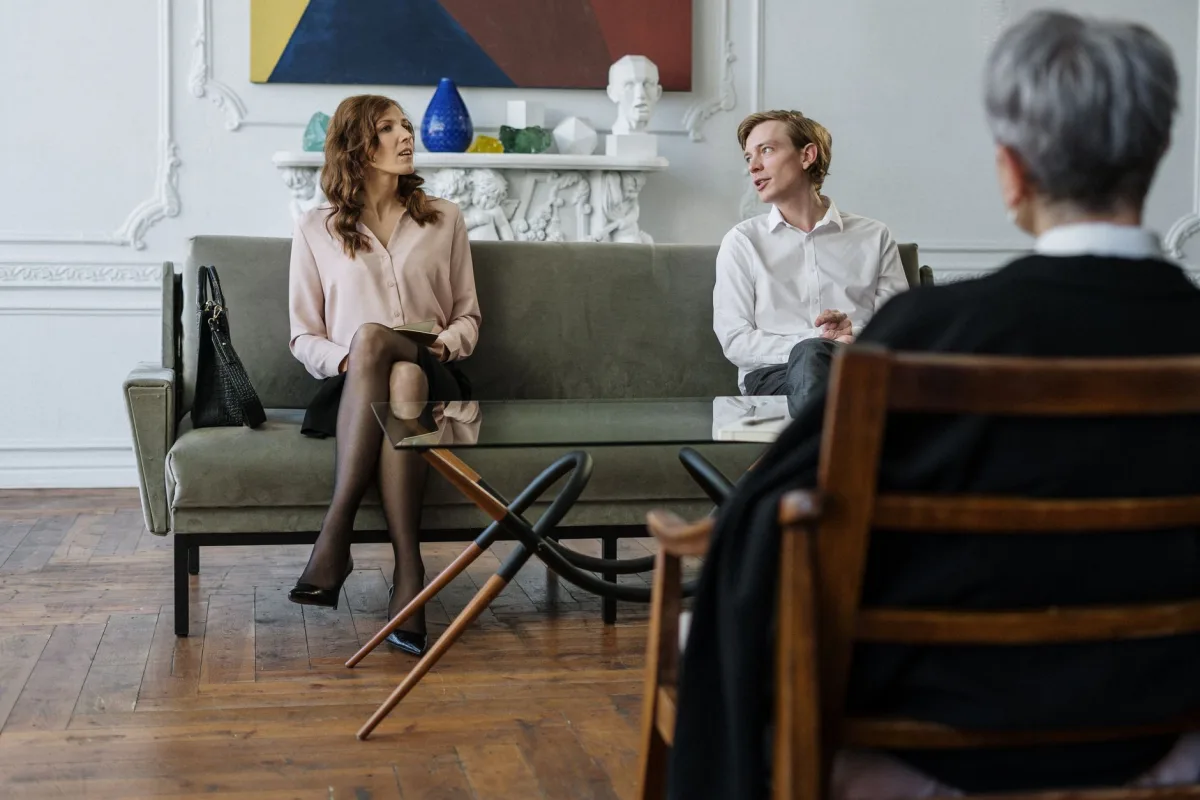


The case for premarital counseling is simple: the conversations that most often derail marriages are the ones couples avoid while dating, because they are uncomfortable and the wedding is more fun to talk about. Money, children, in-laws, faith and the division of everyday labour rarely come up naturally over dinner, yet they are exactly the fault lines that open up under the pressure of a shared life. Counseling creates a structured, neutral space to have those conversations on purpose, with a guide who has heard them a thousand times before.
Just as importantly, it teaches skills rather than only surfacing topics. Learning how to disagree without contempt, how to repair after a fight, and how to hear a complaint without defending, are abilities that compound over decades. Research into long marriages, popularised in guides such as our summary of the seven principles for making marriage work, consistently points to how couples handle conflict and connection, not whether they have any conflict, as the thing that separates the marriages that last from the ones that do not.
The topics it covers
Programmes vary, but the core agenda is remarkably consistent, because the same handful of subjects account for most marital friction. A good course will make sure none of them goes unspoken before the wedding.
Money and finances
Spending and saving styles, debt, joint versus separate accounts, and who manages what. The single most common source of marital conflict.
Family and in-laws
Boundaries with parents, how much extended family is involved, and whose traditions the new household keeps.
Children and parenting
Whether to have children, how many, and how to raise them, including discipline, faith and schooling.
Communication and conflict
How each partner argues, withdraws and repairs, and how to disagree without doing damage.
Roles and expectations
Who does what at home, careers, and the often-unspoken assumptions each partner brings about how a marriage should run.
Values and faith
Religion, culture, life goals and the deeper values that will shape decisions for decades.
The value is not that couples will agree on all of this. It is that they will know where they differ before those differences become a crisis. A couple who has talked honestly about money and children before the wedding is not guaranteed a smooth marriage, but they are spared the shock of discovering, two years in, that they never actually shared a plan.
The forms it takes
Premarital counseling is not one thing, and the right format depends on your beliefs, budget and how you like to work. All of the following are legitimate routes to the same goal.
- Therapist-led sessions. A licensed marriage and family therapist or psychologist runs a set of structured sessions. The most in-depth option, and the best fit if either partner wants professional skill-building.
- Faith-based preparation. Many religious traditions require or offer marriage preparation led by a clergy member, weaving practical topics together with the couple's shared faith.
- Structured assessments. Validated questionnaires that both partners complete separately, then discuss with a facilitator, surfacing areas of strength and areas to work on.
- Workshops and courses. Group programmes, sometimes over a weekend, that teach communication and conflict skills alongside other engaged couples.
- Guided self-study. Books and workbooks a couple works through together. The least formal option, useful as a supplement or where cost or access is a barrier.
If your relationship is rooted in a particular faith, a specialised route may suit you best; our guide to Christian marriage counseling covers one such tradition in detail, and most faiths offer an equivalent. If you would rather work with a secular professional, the same skills are taught in couples counseling, delivered before the wedding rather than during a rough patch.
What a session actually feels like
Couples often arrive nervous, expecting to be judged or cross-examined. In reality a good session is closer to a structured conversation than an interrogation. The counselor typically starts by understanding your relationship and history, then works through the core topics over subsequent meetings, often using exercises, questionnaires or role-plays to draw out how each of you thinks. You talk far more than the counselor does; their job is to guide, notice patterns and keep the harder subjects from being skipped.
Honesty is what makes it work. The sessions are confidential and the counselor is neutral, which means there is little to gain from performing a version of the relationship you think you should have. Disagreeing openly in front of a trained third party is not a failure of the process; it is the process. A couple who never disagrees in counseling has usually just learned to hide it better, which is the opposite of the point.
How many sessions, and what it costs
Premarital counseling is short by design. Many couples do somewhere between four and eight sessions, though faith-based programmes and intensive weekend courses vary. It is a focused course with a clear finish line, not open-ended therapy, and most couples complete it comfortably in the months before the wedding.
Cost depends heavily on the route. Faith-based preparation is often free or low-cost for members of a congregation. Private therapy is charged per session and varies widely by location and the therapist's credentials, so a course of sessions can range from modest to a meaningful investment; some therapists offer packages, and some workplace assistance programmes and community services subsidise or provide it. Structured questionnaires and workbooks sit at the affordable end. As a rough principle, weigh the cost against the scale of what you are preparing for: set beside the price of the wedding itself, a handful of counseling sessions is usually a small line that pays back for decades. Timing-wise, fold it into your run-up to the day alongside the practical steps in our guide to getting married.
Is it right for every couple?
Premarital counseling suits almost any couple, whether newly engaged, marrying later in life, blending families, or crossing cultures and faiths, and it is especially valuable where partners come from very different backgrounds or where children from previous relationships are involved. It is not a test you can fail and not a predictor of divorce. What it offers is a head start: a shared vocabulary for the hard conversations and a set of skills for the inevitable rough patches, put in place while the relationship is strong. Couples who go in willing to be honest almost always come out saying they are glad they did, even, or especially, when it surfaced something they had been avoiding.
The bottom line
A wedding is a day; a marriage is the rest of your life, and it is strange how much more preparation the first usually gets. Premarital counseling rebalances that. It will not guarantee a perfect marriage, because nothing can, but it gives you the two things that matter most going in: clarity about where you already agree and differ, and the skills to handle the differences with care. Choose the format that fits your beliefs and budget, go in honest, and treat it not as a hurdle before the wedding but as the first real investment in the marriage the wedding begins.
Frequently asked questions
Is premarital counseling only for couples with problems?
No, and this is the biggest misconception about it. Premarital counseling is preventive, not corrective. It is designed for healthy couples who want to build strong communication and shared expectations before the wedding, while the relationship is going well and new habits are easiest to form. Marriage counseling is the version people seek when a relationship is already strained; premarital counseling deliberately gets ahead of that.
How many premarital counseling sessions do couples usually need?
It varies by approach, but many couples complete somewhere between four and eight sessions. It is designed as a short, focused course with a clear finish line rather than open-ended therapy. Faith-based marriage preparation and intensive weekend workshops follow their own formats, but the common thread is that most couples finish comfortably in the months before their wedding.
What topics does premarital counseling cover?
The core agenda is consistent across programmes: money and finances, family and in-laws, whether and how to raise children, communication and conflict styles, the division of household roles, and shared values including faith and life goals. The aim is not to make couples agree on everything, but to ensure none of these fault-line topics goes unspoken before the wedding.
Does premarital counseling have to be religious?
Not at all. It can be led by a secular licensed therapist, delivered through structured questionnaires and workshops, or worked through in a couple's own faith tradition with a clergy member. Faith-based marriage preparation is common and often free for congregation members, but there are equally effective secular routes for couples who prefer them.
How much does premarital counseling cost?
It depends entirely on the route. Faith-based preparation is often free or low-cost for members of a congregation, structured questionnaires and workbooks sit at the affordable end, and private therapy is charged per session and varies widely by location and the therapist's credentials. Some employers and community services subsidise it. Set against the cost of the wedding, a course of sessions is usually a small investment that pays back for years.