Couples Therapy: The Complete Guide
A comprehensive, empathetic guide to couples therapy: what it is, how it helps, what happens in sessions, what it costs, and how to find the right therapist.
Almost every couple hits a stretch where the same argument keeps coming back, where closeness quietly thins out, or where a single hard event knocks the relationship off balance. Couples therapy is simply structured help for exactly those moments: a trained, neutral professional who helps two people understand what is happening between them and change the pattern. It is not a sign that a relationship is broken, and it is not couples being sent to the principal's office. This guide explains what couples therapy actually is, how sessions work, the main approaches in plain language, what it costs and how to find low-cost or free options, and the honest signs that it might be worth a try.
The short version
- Couples therapy is a form of psychotherapy that aims to improve a relationship, ease conflict and rebuild connection. It is closely related to marriage counseling.
- You do not need a crisis to go. Many couples come for communication, drift or a life transition, not a single dramatic problem.
- There are a few well-known approaches: the Gottman Method, Emotionally Focused Therapy and Imago, each with a slightly different focus.
- Online and in-person both work. Cost ranges widely, and low-cost and free options exist through training clinics, community services and helplines.
- It works best early. Couples often wait years before seeking help. Going sooner gives you more to work with.
What couples therapy actually is
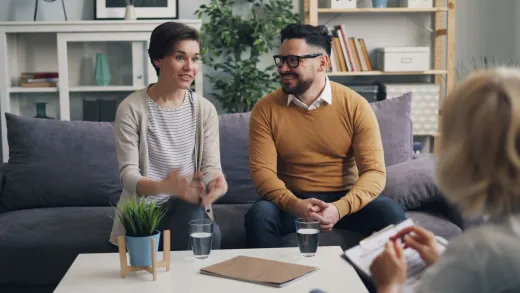
Couples therapy, also called couples counseling, is a form of psychotherapy that seeks to improve an intimate relationship, resolve conflict between partners and repair the bond between them. In practice that means both partners meet together with a trained therapist, usually for a set number of sessions, and work on the relationship itself rather than on one person alone. The relationship is, in a sense, the client in the room.
That framing matters. A good couples therapist does not take sides, hand out blame or decide who is right. Their job is to help both people feel heard, to make the underlying pattern visible, and to give the couple better tools for talking, repairing and reconnecting. Some couples come to save a relationship in trouble, others to strengthen one that is basically healthy, and some to work out, calmly and with support, whether to stay together at all. All three are legitimate reasons to walk through the door.
The terms can be confusing, and people use them loosely. Couples therapy, marriage counseling and relationship counseling overlap heavily and are often the same thing in practice. If you are specifically preparing for or working on a marriage, our guide to what makes a marriage work is a natural companion to this one.
Signs couples therapy might help

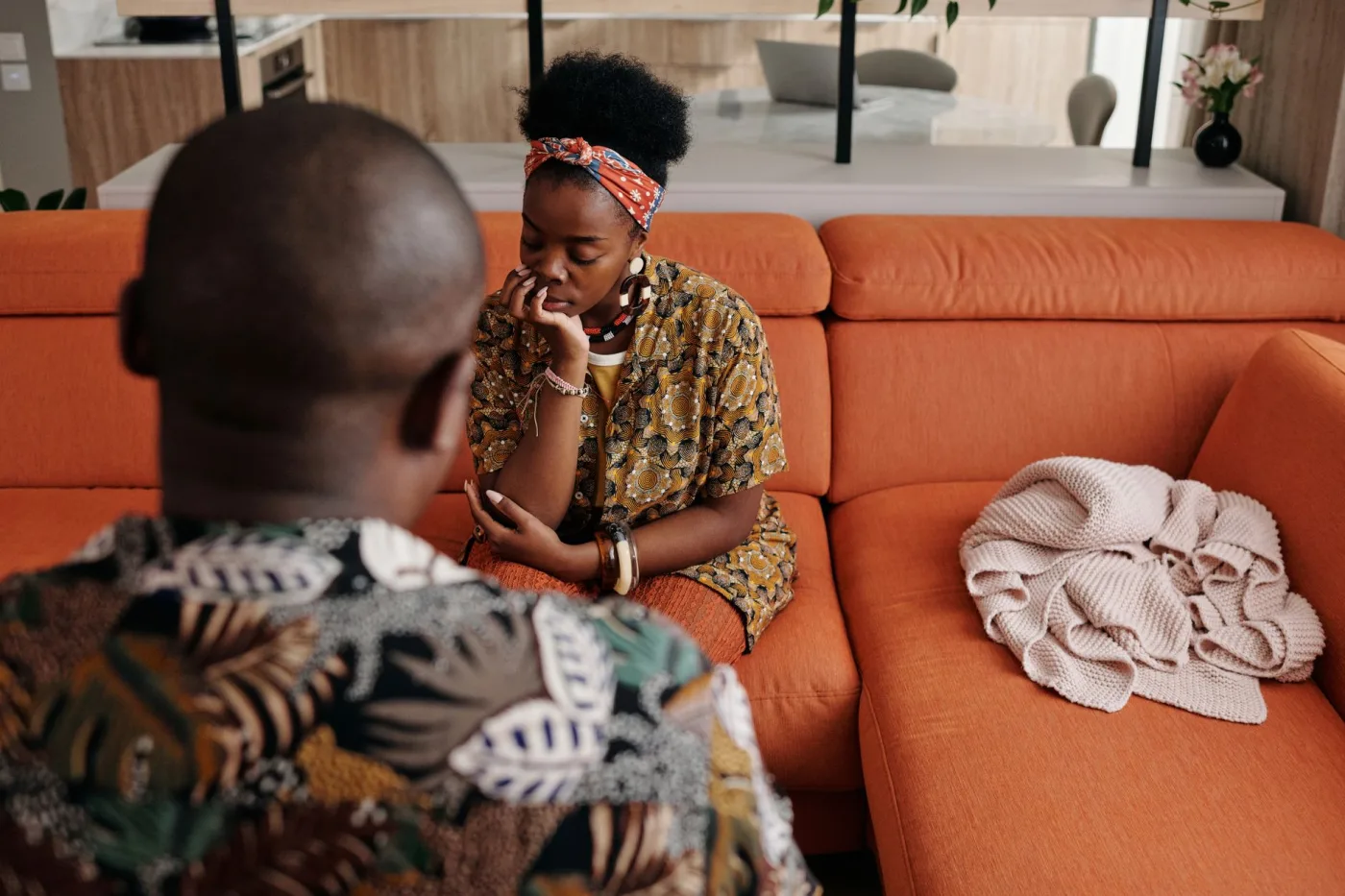


There is no single threshold you have to cross before therapy is allowed. Still, a few patterns come up again and again, and recognising them can turn a vague sense that something is off into a clear reason to reach out. If several of these feel familiar, therapy is worth considering.
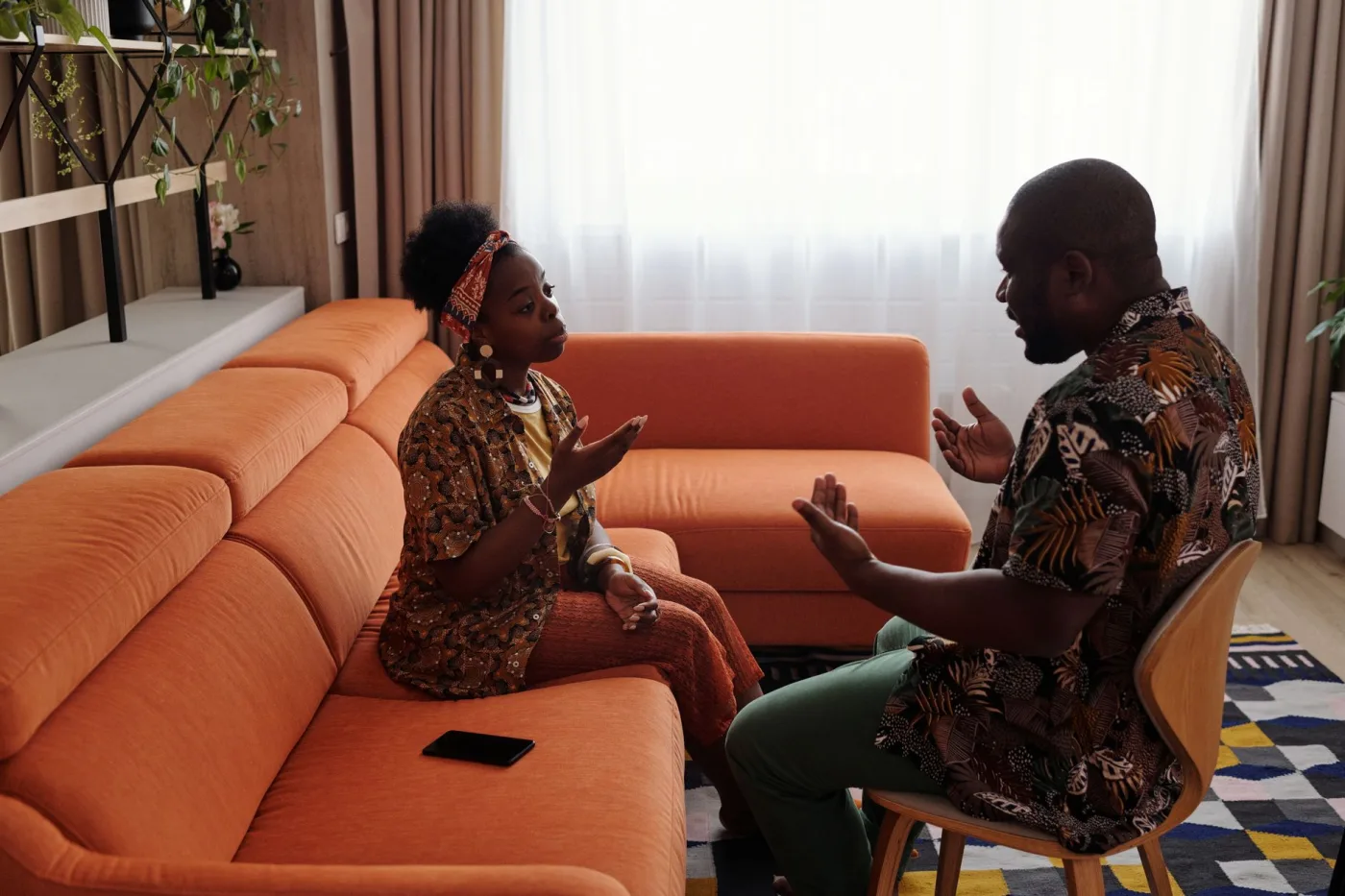
The same fight on a loop
You argue about different things but it always becomes the same argument, and it never resolves.
Communication has broken down
Conversations turn into criticism, defensiveness or silence, and you have stopped really talking.
Trust has been shaken
An affair, a lie, money kept secret or a broken promise has left a wound you cannot close alone.
You feel more like roommates
Warmth, affection and intimacy have faded, and the relationship runs on logistics rather than connection.
A big transition is straining things
A new baby, a move, job loss, illness, blending families or retirement has changed the ground under you.
You are unsure about the future
One or both of you is wondering whether to stay, and you want support to think it through honestly.
One thing worth saying plainly: couples often wait a long time before seeking help, sometimes years after the trouble started. Earlier is easier. The sooner you go, the more goodwill and connection there usually is to build on, and the less time a painful pattern has had to set.
How the main approaches work
Therapists draw on different models, and the names can sound intimidating. In plain language, though, the best-known approaches are simply different answers to the same question: what is the real thing that needs to change for this couple to do better? Here are the three you are most likely to encounter.
The Gottman Method
Built on decades of research by John Gottman, it focuses on the observable habits of daily interaction: turning criticism into requests, repairing after conflict, and building fondness and friendship.
Emotionally Focused Therapy
EFT is grounded in attachment: the idea that we need a secure bond with our partner. It works on the emotions underneath the fight, helping each person express the softer need behind the anger or withdrawal.
Imago Relationship Therapy
Imago uses a structured dialogue of mirroring, validating and empathising, and links present conflicts to old patterns learned in childhood, so partners can respond to each other rather than react.
You do not need to pick an approach before you start, and many therapists blend elements of several. What matters far more than the label is that the method is used by a trained professional and that it fits the two of you. Below is a quick, plain-language comparison of where each one puts its attention.
| Approach | Core idea | Focuses most on | Often suits |
|---|---|---|---|
| Gottman Method | Change the daily habits of how you interact | Communication, conflict repair, friendship | Couples stuck in recurring arguments |
| Emotionally Focused Therapy | Rebuild a secure emotional bond | The emotions and needs beneath the conflict | Couples who feel distant or disconnected |
| Imago | Understand how past patterns shape the present | Structured dialogue and deep listening | Couples who talk past each other |
Behavioral approaches, which concentrate on changing specific interactions, are among the most studied, and research generally finds that couples therapy helps a meaningful share of couples who commit to it. No approach works for everyone, and outcomes depend a great deal on timing, effort and honesty from both partners.
What actually happens in a session
The unknown is often the scariest part, so it helps to know the shape of it. Most couples work follows a loose arc, and while every therapist runs things a little differently, the rhythm below is common.
A typical arc. Length varies widely, from a handful of sessions to several months, depending on the couple and the goals.
In the first session or two, the therapist gets to know you both. Expect questions about your history together, what brought you in, and what each of you hopes will be different. Some therapists meet each partner individually once, so both voices are heard. This stage is also where you decide together on goals, which might be as concrete as fighting less or as broad as feeling close again.
In the middle stretch, the real work happens. The therapist helps you notice the pattern as it plays out in the room, slows it down, and coaches you through doing it differently. You may learn specific skills, practise hard conversations with support, and try small exercises at home between sessions. It can feel awkward and occasionally raw. That is normal, and a good therapist keeps the room safe while you do it.
Toward the end, the focus shifts to making the change last: recognising your own warning signs, knowing how to repair when you slip, and trusting that you can handle conflict without a referee. Some couples wrap up in six to twelve sessions, others continue for longer. There is no single correct length.
Online versus in-person
Couples therapy is now widely offered online, by video, as well as in a therapist's office, and both formats can work well. The right choice depends less on which is better in the abstract and more on your circumstances.
Online couples therapy removes the biggest practical barriers. There is no commute, no arranging childcare to be in the same building, and far more choice of therapist, which matters a great deal if you live somewhere with few local specialists. Couples in different cities, or with clashing schedules, can still attend together. For many, being on their own sofa also makes it easier to open up. The trade-offs are real, though: a stable connection and a private space where neither of you will be overheard are essential, and the therapist reads body language less easily through a screen.
In-person therapy offers a dedicated, contained space that belongs to the work and nothing else, which some couples find steadying. It can also be a better fit when emotions run very high, or where safety is a concern, because the therapist has the full picture in the room. Neither format is a compromise. Pick the one you will both actually show up to, week after week.
What it costs, and low-cost or free options
Cost is one of the most common reasons couples hesitate, so it is worth being clear-eyed about it. Private couples therapy is typically charged per session, and in many places a single session with a licensed therapist ranges from roughly the price of a nice dinner out to several times that, depending on the therapist's training, location and whether they are in high demand. Online sessions and subscription platforms are often, though not always, cheaper than a private office.
The good news is that paying full private rates is not the only route. Genuinely low-cost and free options exist in most regions if you know where to look.
University training clinics
Therapists in training offer sessions at a steep discount under close supervision. Quality is often surprisingly high.
Community and nonprofit services
Family service agencies and charities frequently offer counseling on a sliding scale tied to your income.
Sliding-scale private therapists
Many private therapists reserve a few reduced-fee slots. It is always worth asking directly and without embarrassment.
Employer and faith-based programs
Workplace assistance programs and many places of worship offer free short-term counseling or referrals.
Helplines and free resources
Relationship helplines and reputable self-guided programs are free and a reasonable first step while you look for a therapist.
Insurance and public health
Coverage varies, but some plans and public systems fund couples or family therapy. Check before you assume you cannot afford it.
How to find a good therapist
The single most important factor in whether therapy helps is the fit between you and the therapist, so it is worth choosing with a little care rather than picking the first name you find. Providers who deliver couples therapy include licensed marriage and family therapists, psychologists, clinical social workers and counselors. A few practical steps make the search easier.
- Check the credential. Look for a licensed professional with specific training in couples or family work, not only individual therapy.
- Ask about approach and experience. A brief question about how they work, and with what kinds of issues, tells you a lot.
- Use the first session as a trial. It is normal, and healthy, to notice whether both of you feel respected and at ease. If not, it is fine to try someone else.
- Make sure both partners feel neutral ground. If one of you consistently feels ganged up on, that is a fit problem worth raising or acting on.
- Confirm the logistics. Fee, session length, online or in-person, and cancellation policy, all settled up front, prevent friction later.
General information, not a diagnosis or treatment: this article explains how couples therapy generally works so you can make an informed choice. It is not medical or mental health advice and it is not a substitute for care from a qualified professional. If you are struggling, please reach out to a licensed therapist or counselor. And if you or your partner is ever in crisis, feels unsafe, or is having thoughts of self-harm, contact your local emergency number or a trusted crisis or domestic-abuse helpline right away. Therapy is not the right tool for an emergency, and getting immediate help is never an overreaction.
When to consider it, and when to reach out sooner
Put simply, consider couples therapy whenever the relationship matters to you and something in it is not working the way you both want. You do not have to wait for a catastrophe, and you do not have to agree on everything before you start. Many couples arrive still unsure whether therapy will help, and that uncertainty is a perfectly normal place to begin from.
A few situations call for reaching out sooner rather than later: a betrayal of trust that keeps reopening, conflict that has turned constant or contemptuous, a growing sense of distance that neither of you can bridge alone, or a major life change that has left you out of step. In any of these, professional support tends to help most when it comes early, while there is still warmth to work with. Seeking help is not an admission of failure. It is one of the more hopeful things two people can choose to do together.
Frequently asked questions
What is couples therapy, exactly?
Couples therapy is a form of psychotherapy in which both partners meet with a trained, neutral professional to improve their relationship, work through conflict and rebuild their connection. The focus is on the relationship itself rather than on either person alone. It overlaps closely with marriage counseling and relationship counseling, and the terms are often used to mean the same thing. Couples come for many reasons, from recurring arguments to rebuilding trust to simply feeling close again.
Does couples therapy actually work?
For many couples, yes. Research on couples therapy, especially the more studied behavioral approaches, generally finds that a meaningful share of couples improve when both partners engage with the process. No therapy works for everyone, and results depend heavily on timing, effort and honesty from both people. Couples who go earlier, before resentment has set in deeply, and who practise what they learn between sessions, tend to get the most out of it.
What is the difference between the Gottman Method, EFT and Imago?
They are different approaches to the same goal. The Gottman Method, based on John Gottman's research, focuses on the everyday habits of how partners interact and repair after conflict. Emotionally Focused Therapy works on the emotional bond underneath the conflict, drawing on attachment theory. Imago uses a structured dialogue of mirroring and empathy and links present conflicts to patterns learned in the past. Many therapists blend elements of several. The approach matters less than finding a trained therapist who fits you both.
Is online couples therapy as good as in-person?
For most couples, online therapy by video can be just as effective as meeting in person, and it removes practical barriers like travel, childcare and limited local choice. It works best when you have a stable connection and a private space where neither partner will be overheard. In-person therapy can be a better fit when emotions run very high or where safety is a concern. The best format is the one you will both reliably attend.
Are there free or low-cost couples therapy options?
Yes. Beyond full-price private therapy, you can often find affordable help through university training clinics, community and nonprofit family services, sliding-scale private therapists, workplace assistance programs, faith-based counseling and free relationship helplines. Some insurance plans and public health systems also fund couples or family therapy. It is always worth asking a therapist directly about reduced fees, as many keep a few lower-cost slots.
When should we consider couples therapy?
Consider it whenever the relationship matters and something is not working the way you both want. You do not need a crisis. Common triggers include the same argument on repeat, a breakdown in communication, shaken trust, growing distance, or a major life transition. Reaching out sooner tends to help more, because there is usually more connection left to build on. Seeking help early is a sign of investment in the relationship, not a sign that it has failed.