Marriage: The Complete Guide
A broad, culture-respectful pillar on marriage: its definition, history, types across the world, the legal and financial layer, and what keeps marriages together.
Almost every society that has ever existed has some version of marriage, yet no two of them define it quite the same way. It has been a treaty between families, a religious sacrament, a property arrangement, a tax status and a public promise between two people who simply chose each other. This guide steps back from the wedding day to look at the institution itself: what marriage is, where it came from, the many forms it takes across cultures, the legal and financial machinery behind it, what actually helps a marriage last, and how all of that is shifting now.
The short version
- Marriage is a cultural universal, but its definition changes with time and place.
- It is very old. The earliest recorded ceremonies date to roughly 2350 BCE in Mesopotamia.
- There is no single "type". Monogamy, arranged, love, civil and religious forms all coexist today.
- The law adds a second layer of rights and duties on top of the personal and cultural one.
- What keeps marriages together is better understood than most couples assume.
What marriage actually is
At its broadest, marriage is a culturally and often legally recognised union between people called spouses, one that establishes rights and obligations between them, their children and their wider families. That definition sounds dry until you notice how much it carries. A marriage can decide who inherits, who is next of kin in a hospital, who is presumed to be a child's legal parent, and who a community treats as a single household. It is at once intimate and institutional, which is exactly why it has proven so durable and so contested.
Anthropologists describe marriage as a cultural universal, meaning some form of it appears in essentially every human society ever studied. What is not universal is the content. The word itself is relatively recent: marriage entered English around 1300 from the Old French mariage, tracing back to the Latin maritatus. The older, more formal English word matrimony comes from the Latin matrimonium, built from mater, meaning mother, a hint at what many early societies thought marriage was chiefly for. You can read the fuller picture in the Wikipedia entry on marriage.
A very short history
Marriage did not appear fully formed. It accumulated, one custom and one law at a time, and the version most people recognise today is a recent settlement on top of thousands of years of change. The milestones below are a useful skeleton rather than the whole body.
Five markers across roughly four thousand years. The dashed line is all the local custom the record never captured.
The earliest recorded evidence of marriage ceremonies uniting a man and a woman comes from ancient Mesopotamia around 2350 BCE, and dowry, wedding rites and divorce all trace back to the same world. In ancient Rome, marriage was largely an economic arrangement centred on inheritance, with different forms depending on whether a wife's property passed to her husband's family or stayed with her own. Around 27 BCE the emperor Augustus went further, using family law to penalise the unmarried and reward those with children.
After the Western Roman Empire fell, the Catholic Church gradually became Europe's authority on marriage, keeping the records and ruling on disputes. In 1563 the Council of Trent decreed that a valid Catholic marriage required a priest and two witnesses, formalising what had often been an informal act. In 1753 England and Wales went in a parallel direction with the Marriage Act, requiring a proper ceremony, witnesses and registration. The long arc of the twentieth century then pushed toward free spousal choice as the norm across much of the world, alongside falling marriage rates in many wealthy countries. The history of marriage is essentially the story of who got to decide, and on what terms.
A useful reframe: for most of recorded history, marriage was arranged around property, lineage and alliance, and love was hoped for rather than required. The idea that a marriage should begin with mutual love is real, powerful and, historically speaking, quite new. Neither model is the "correct" one. They answer different questions.
The many types of marriage
Ask what marriage is and the honest answer is that there are several institutions wearing the same name. The most useful way to sort them is by two questions: how many spouses, and who sanctions the union. The table gathers the common categories that appear across the world today. None of them is presented here as better than another. They reflect different histories, faiths and social arrangements.
| Type | What it means | Where it is common |
|---|---|---|
| Monogamy | One spouse at a time | The most widespread form worldwide |
| Polygyny | One husband, more than one wife | Parts of Africa and Asia, many Muslim-majority regions |
| Polyandry | One wife, more than one husband | Very rare; some Himalayan communities historically |
| Arranged marriage | Families lead the choice of partner | Common in parts of South Asia, the Middle East and Africa |
| Love marriage | Partners choose each other first | Increasingly the norm across Western societies |
| Civil marriage | Recognised and registered by the state | Available in most countries |
| Religious marriage | Solemnised under a faith's rites | Worldwide, often alongside civil registration |
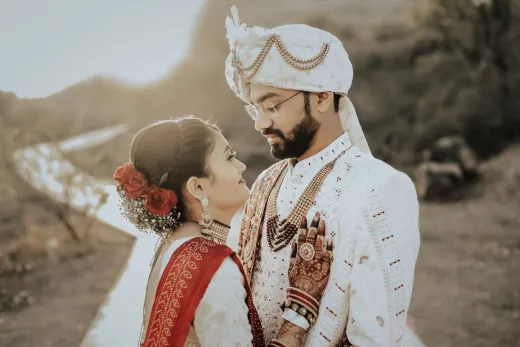
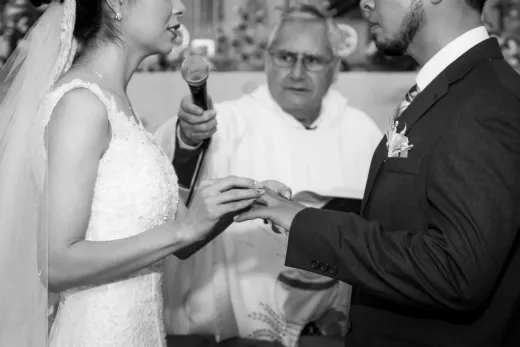
Two clarifications matter. First, these categories overlap constantly. A couple can have an arranged, religious, monogamous marriage that is also civilly registered, all at once. Most marriages in practice combine the civil and religious layers: a religious ceremony is often licensed and recognised by the state, and a civil marriage, while not sanctioned under religious law, is nonetheless respected. Second, the numbers are lopsided. Monogamy is the most common form globally, and while polygyny is legal in many places, even in those societies most men have only one wife. Polyandry, by contrast, is genuinely rare. For a broader survey, see Wikipedia's overview of the types of marriages.
By numbers
Monogamy and polygamy describe how many spouses a marriage may include.
By choice
Arranged and love marriages differ in who leads the choice of partner.
By authority
Civil marriage is sanctioned by the state, religious marriage by a faith.
By culture
Local customs layer meaning on top of every one of these categories.
In South Asia in particular, the vocabulary carries its own weight. Our guide to what shaadi means unpacks how the word describes not just a ceremony but a joining of families, which is often the real unit a marriage is built around.
The legal and financial side, in plain terms
Underneath the culture and the ceremony sits a legal contract, and it is worth understanding in outline even though the specifics differ enormously from one country and state to another. What follows is general description, not legal advice, and you should check your own jurisdiction before acting on any of it.
In most places, a legally recognised marriage begins with a licence and a registration. You apply, you meet the requirements your jurisdiction sets, a ceremony is conducted by someone authorised to do so, and the union is entered into an official record. That record is what later lets institutions treat the two of you as spouses. Historically the standardising of this process is exactly what the 1753 Marriage Act and, in the Catholic world, the Council of Trent were doing: turning private promises into public, provable facts.
Once recognised, marriage typically attaches a bundle of rights and responsibilities. These commonly include some or all of the following, though the details vary widely.
- Legal parenthood. A spouse is often presumed to be the legal parent of a child born within the marriage.
- Property and inheritance. Marriage frequently changes how assets are treated, both during the union and on death.
- Tax and benefits. Many systems offer joint filing, allowances or survivor benefits to married couples.
- Next of kin. A spouse is usually the default decision-maker in medical or emergency situations.
- Name changes. Marriage is one of the most common occasions for a legal change of surname, though taking a spouse's name is a choice, not a requirement, in most modern jurisdictions.
The financial dimension is older than any of the paperwork. Dowry, which travelled with marriage out of ancient Mesopotamia, was a way of moving wealth between families, and researchers have found that societies built on intensive plough agriculture tend to correlate with both monogamy and dowry systems. The modern equivalents (prenuptial agreements, joint accounts, shared property rules) are less dramatic but answer the same underlying question: when two lives and two balance sheets merge, whose is what.
What research says makes marriages last
People often treat marital longevity as luck or chemistry, but decades of study point to more concrete patterns. None of this is a guarantee. It is closer to the difference between a tailwind and a headwind.
The recurring themes are unglamorous and reassuring. Couples who handle conflict without contempt, who repair quickly after arguments, who keep investing in the friendship underneath the relationship, and who share a broad sense of the life they are building tend to do better over time. Realistic expectations help too. The shift toward marriages built on mutual love rather than economic necessity has raised what people want from a spouse, which is wonderful when it works and harder to sustain when it does not, because one person is now expected to be partner, confidant and teammate all at once.
The practical takeaway: lasting marriages are less about never fighting and more about how the fight ends. If conflict is becoming a pattern rather than an event, that is a solvable problem, and it is usually easier to solve earlier. Our guide to marriage counseling covers what professional support looks like and when it tends to help most.
Structure matters as much as feeling. Shared finances, agreement on whether and how to raise children, and compatible expectations about work and family all quietly do a lot of the load bearing. This is one reason arranged marriages, when entered freely and with consent, can be stable: they often start from explicit agreement on exactly these practical foundations, with affection expected to grow rather than to arrive first.
How marriage is changing
The institution is in one of its periodic renegotiations. Across much of Western Europe, marriage rates fell sharply in the closing decades of the twentieth century, and people now marry later, if at all. Free spousal choice, once radical, is now the default assumption in large parts of the world. Age-of-consent reforms that began with feminist campaigns in the late nineteenth century raised minimum marriage ages from single digits into the mid-to-late teens within a couple of generations, a reminder of how recently some basic protections arrived.
Legal recognition keeps expanding in some places and remains restricted in others. Same-sex marriage is now legal across many Western countries and a handful beyond them, such as South Africa and Taiwan, while remaining illegal across much of Africa and Asia. Consensual non-monogamy, cohabitation without marriage, and couples who marry purely for the personal meaning rather than the legal benefits are all more visible than they were a generation ago. What is not changing is the underlying human impulse the institution serves: to make a private bond public, and to give it the weight of witness.
If your interest in all this is practical rather than historical, the natural next step is the event itself. Our complete guide to weddings picks up where this one leaves off, moving from the institution to the celebration that marks its beginning.
Frequently asked questions
What is the difference between marriage and a wedding?
A wedding is the ceremony and celebration that marks the beginning of a marriage. A marriage is the ongoing union itself, along with the cultural and legal relationship it creates. Put simply, the wedding is a day and the marriage is everything after it. You can have one without the other: a quiet civil registration is a marriage with barely any wedding, and some couples hold a large celebration separate from the legal act.
What is the oldest recorded form of marriage?
The earliest recorded evidence of marriage ceremonies uniting a man and a woman comes from ancient Mesopotamia around 2350 BCE. That same world also gives us the earliest records of dowry, formal wedding rites and divorce, which suggests marriage was already a developed institution rather than a new idea by that point.
Is monogamy the only "normal" form of marriage?
Monogamy is the most widespread form of marriage in the world today, but it is not the only one with deep roots. Polygyny, where a husband has more than one wife, is legal in many regions, though even there most men have only one wife. Polyandry, where a wife has more than one husband, is genuinely rare. Which form counts as "normal" depends heavily on culture, faith and law rather than on any single universal rule.
Do I have to change my name when I get married?
In most modern jurisdictions, no. Taking a spouse's surname is a common tradition, but it is a choice rather than a legal requirement, and couples increasingly keep their own names, combine them, or make another arrangement entirely. Because name-change procedures differ by country and state, it is worth checking the exact process where you live before assuming any particular path.
What does research say actually keeps a marriage together?
The most consistent findings are unglamorous: managing conflict without contempt, repairing quickly after disagreements, sustaining the underlying friendship, and agreeing on the practical foundations of shared money, children and expectations. Longevity has less to do with never arguing and more to do with how arguments end. When conflict becomes a repeating pattern, professional support such as marriage counseling tends to help most when it starts early.