Dating Advice That Actually Helps
Grounded, non-cliche dating advice for real situations: clarity before you start, first dates, reading the signals that matter, the apps, and dating with marriage in mind.
Most dating advice is either a slogan or a sales pitch. "Just be yourself." "Play a little hard to get." "You will find them when you stop looking." Some of it is harmless, some of it is quietly terrible, and almost none of it tells you what to actually do on a Wednesday evening when you are three messages deep with someone and not sure whether to keep going. This is the grounded version: what to sort out before you date at all, how to handle a first meeting, how to read the signals that matter, how to behave on the apps without becoming a statistic, and how to move from dating into something real, including dating when your intention is marriage. No scripts, no manipulation. Just the parts that hold up.
The short version
- Know what you want before you start. Vague goals produce vague dating and a lot of wasted evenings.
- A first date is a conversation, not an audition. Low stakes, short, in public, and curious.
- Watch patterns, not moments. One green flag is nice. A pattern of them is the actual signal.
- The apps reward good manners. Clear photos, a real bio, prompt honest replies, and no ghosting.
- Name your intent early if it is marriage. It filters faster than any checklist and saves everyone's time.
A quick frame before the practical stuff. Dating is simply spending planned time together with the intention of getting to know each other, usually with a romantic purpose. That definition is worth holding onto, because a lot of dating anxiety comes from treating every date as a referendum on your entire future rather than what it is: one conversation to find out whether you want a second one. Lower the stakes and you will make better decisions.
Start by knowing what you actually want
The single most useful thing you can do before you match with anyone is to get honest with yourself about what you are looking for. Not a fantasy checklist of height and salary, but the real question underneath: are you looking for company, for exploration, for a committed partnership, or for a path toward marriage? All of those are legitimate. Problems start when you want one thing and date as though you want another, or when you leave it so undefined that you drift into situations that were never going to give you what you needed.
Separate wants from needs
A shared sense of humour is a want. Feeling respected when you disagree is a need. Be flexible on the first list. Do not compromise on the second.
Be honest about your timeline
"Open to something serious eventually" and "actively looking to marry" are different searches. Neither is wrong. Knowing which one you are on changes who you should be talking to.
Do the pre-work on yourself
You do not need to be fully healed to date, but knowing your own patterns, what you tend to tolerate too long, helps you spot trouble before you are attached.
Let it be yours
Whoever you are and whoever you are looking for, the same principles hold. Clarity, respect and honesty are not tied to any one kind of relationship.
First-date basics that actually reduce the nerves
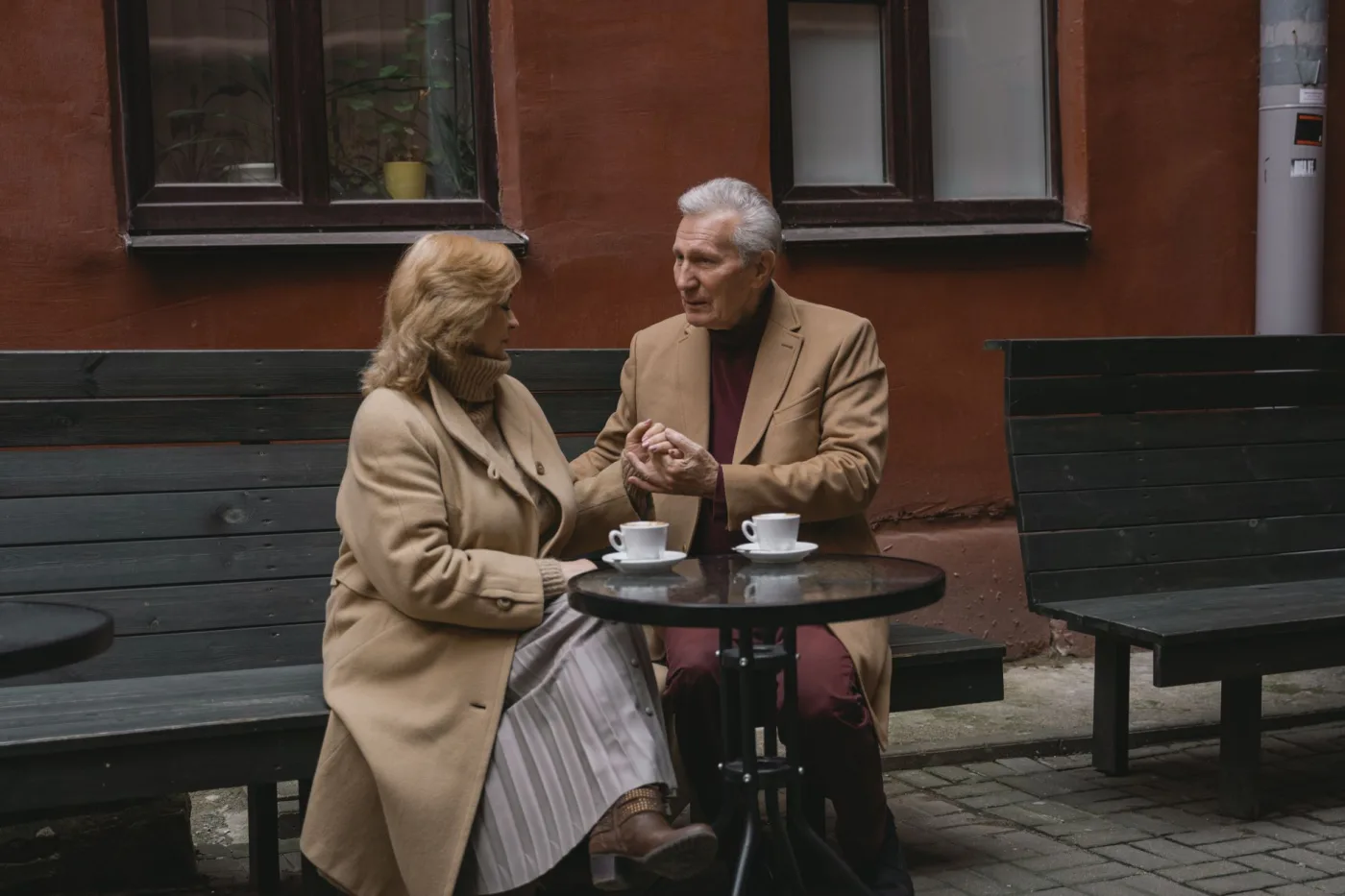
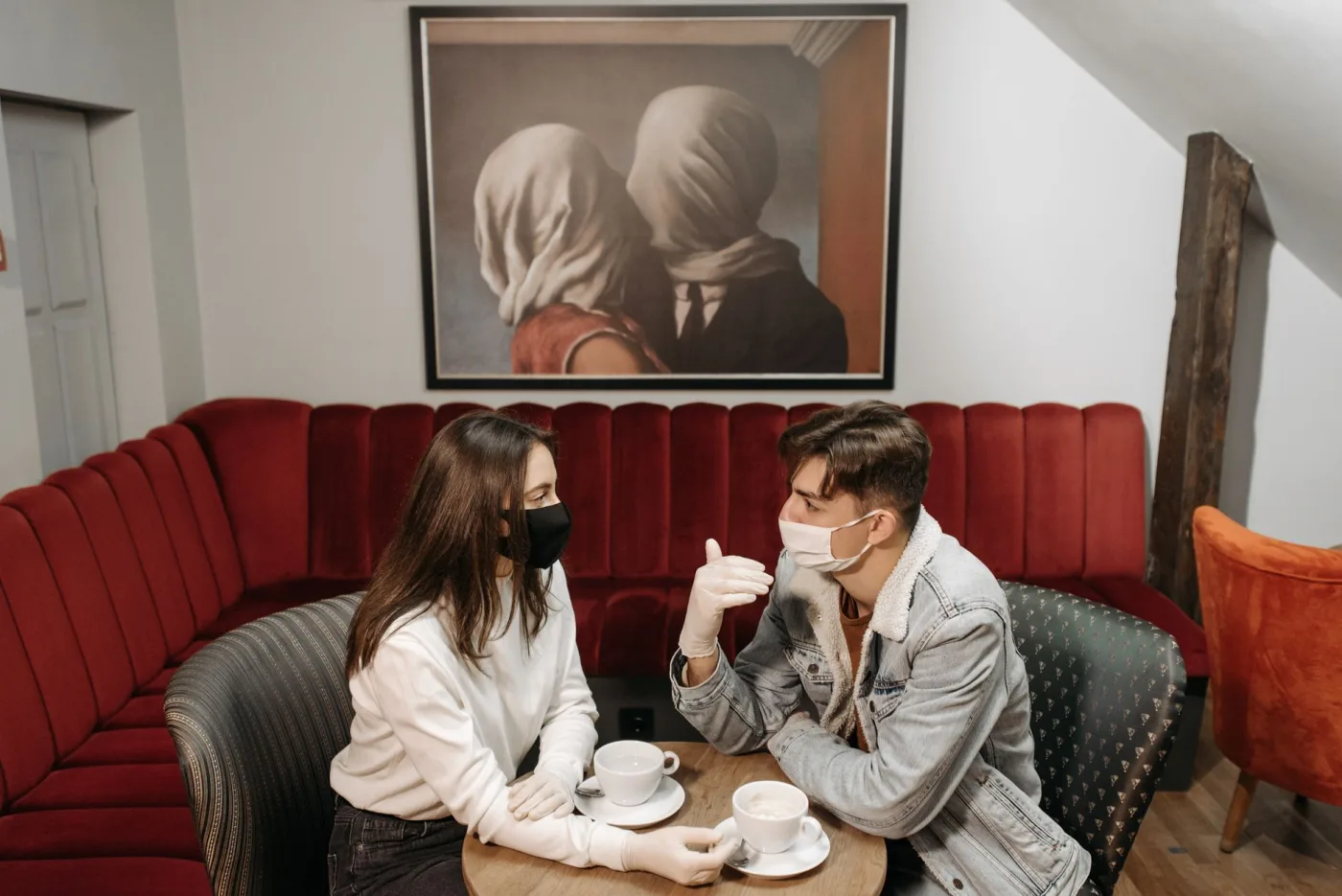


Almost all first-date anxiety comes from over-designing the event. People book elaborate dinners that trap two near-strangers at a table for three hours, then wonder why it felt like a job interview. The fix is to make the first meeting small. A coffee, a short walk, a single drink: something with a natural end point so that a good date can be extended and a flat one can close gracefully without anyone feeling trapped.
Keep it short and public
An hour in a public place is plenty to know whether you want more. It is also the safest way to meet someone you have only spoken to online.
Ask real questions, then listen
Skip the interview checklist. Ask what they are into lately and follow the thread. The goal is a conversation that flows, not a fact-finding mission.
Let there be silences
A pause is not a failure. Trying to fill every gap reads as nerves. Comfortable quiet is itself a good sign about how you two fit.
Tell a friend the plan
Share where you are going and roughly when you will be back. It is not paranoia, it is basic sense, especially early on with someone new.
The mindset that fixes first dates: you are not there to be chosen. You are there to find out, together, whether there is something worth continuing. That shift, from auditioning to assessing mutual fit, takes the pressure off and, ironically, makes you far more attractive. People relax around someone who is genuinely curious rather than performing.
Reading the signals: green flags and red flags
Early dating is a reading exercise, and the mistake most people make is over-weighting single moments. One thoughtful gesture does not make someone a keeper, and one awkward comment does not make them a villain. What you are looking for is a pattern. A green flag is a repeated behaviour that makes the relationship safer and clearer. A red flag is a repeated behaviour that makes it less safe or more confusing. The table below is not a scorecard to tally on date one; it is a lens to hold up over the first few weeks.
| Area | Green flag (keep going) | Red flag (slow down) |
|---|---|---|
| Communication | Replies land, plans get made, you are not left guessing | Hot then cold, breadcrumbs, you are always the one chasing |
| Respect | Curious about your life, remembers what you said | Talks over you, treats staff badly, dismisses your interests |
| Conflict | Can disagree calmly and repair afterwards | Silent treatment, contempt, or making every issue your fault |
| Honesty | Stories are consistent, boundaries are stated plainly | Vague about their situation, dodges simple direct questions |
| Pace | Matches your comfort, no pressure either way | Love-bombing, rushing commitment, or pushing your limits |
| Independence | Has their own friends, work and a full life | Wants all your time, resents anything outside the two of you |
One caution about that table: red flags are for noticing, not for collecting as ammunition. If someone shows a genuine pattern of the right-hand column, believe it early rather than explaining it away, that is where most people go wrong. But do not turn healthy human imperfection into a disqualification. A person who is nervous, or who once said something clumsy, is not a red flag. A person whose behaviour repeatedly leaves you anxious and confused is telling you something real.
A single moment tells you almost nothing. The pattern is where the truth lives, both the good and the bad.
Online dating and app etiquette
The apps are now simply where a large share of people meet. Online dating moved from a niche in the mid-1990s to the mainstream, and around three in ten adults report using a dating site or app at some point. That scale is the good news and the bad news: enormous choice, and enormous room to behave badly. The people who do well on apps are not the ones with the best jawline. They are the ones who are clear, prompt and kind.
Show your real face and life
Recent, clear photos where you are actually visible, plus one that shows what you enjoy. No decade-old pictures, no group shots where nobody can tell which one is you.
Write a bio that says something
"Love to laugh and travel" says nothing. One specific, honest detail gives people something to open with and filters for people who actually fit.
Open with more than "hey"
Reference something in their profile. It is the difference between a message that gets a reply and one that gets lost in a hundred identical greetings.
Do not ghost, just close kindly
If you are not feeling it, a short honest "I do not think we are a match, but take care" is far kinder than vanishing. You would want the same.
Two structural things worth knowing so you do not take the apps personally. Response rates are lopsided and often low, so a quiet inbox is rarely about you specifically. And endless swiping can turn people into a catalogue, which is exactly the mindset that makes dating feel hollow. The antidote is to move promising conversations off the app and into a real meeting reasonably quickly, within a few days rather than a few weeks, before either of you becomes a pen pal or a fantasy. If the messaging is easy, propose a short coffee. The app is a doorway, not a destination.
Moving from dating to a relationship
At some point casual dating either fizzles or it wants to become something. The transition trips up a lot of people because they wait for it to happen by osmosis, then feel hurt when the other person "did not get the hint." There are no hints in this part. The move from dating to a relationship is made by an actual conversation, and the people who can have that conversation calmly are the ones who end up in clear, secure partnerships.
Some of what draws two people together is out of your control. Interpersonal attraction research keeps pointing at a few quiet forces: proximity and repeated contact make people fonder (the mere-exposure effect), and shared attitudes and values tend to breed liking more than differences do. Chemistry gets the headlines, but similarity and steady presence are what turn a spark into something durable. In plain terms: keep seeing each other, keep finding the overlap, and let attraction build on a base of genuine compatibility rather than pure novelty.
How to have "the talk" without it being terrifying: keep it about you, not an ultimatum. Something like "I have really enjoyed getting to know you, and I am at a point where I would like to be exclusive. Where are you with that?" states your wish, asks theirs, and leaves room for an honest answer. If the honest answer is no, that is painful but useful information, and far better than months of ambiguity. Our practical guide to everyday relationship tips picks up exactly where this conversation leaves off.
Dating after heartbreak
Getting back out there after a bad breakup is its own skill, and the usual advice ("just get back on the horse") is not always right. Dating too soon, while you are still raw, tends to produce two outcomes: you look for a replacement to numb the loss, or you punish a perfectly nice new person for the last one's crimes. Neither is fair to anyone, least of all you. There is no fixed timeline, but there is a readiness test.
Date to meet people, not to fill a hole
If the honest goal is to stop feeling lonely tonight, you are not ready yet. When you can enjoy a date without needing it to fix anything, you are closer.
Do not audition new people for old crimes
Notice when your suspicion belongs to your ex, not the person in front of you. Everyone deserves to be met as themselves, with a clean slate.
Go slow on purpose
You do not owe anyone your whole story on date one. Let trust rebuild at a pace that feels safe. Rushing intimacy after heartbreak usually backfires.
Keep what the last one taught you
A finished relationship leaves you with better data on what you need and what you will not tolerate. That is not baggage, it is a clearer map.
Dating with marriage in mind
Dating changes shape when the intent is marriage, and there is nothing old-fashioned about being upfront that this is your aim. It is simply an efficient filter. If you are dating to marry, the kindest thing you can do for both people is to make that intention clear early, without turning the first coffee into a interrogation about children and finances. Intent stated early; details explored gradually.
The temptation, especially under family or cultural pressure, is to run compatibility like a resume screen: qualifications, income, background. Those things matter, but they are the easy part to check and the least predictive of a happy marriage. The harder and more important questions are about values and daily life: how you each handle money, conflict and family, what you want the next ten years to look like, and whether you actually like the person, not just the profile. Attraction and respect still have to be there. A marriage-intent match that skips the liking is just an arrangement.
State the intent, spare the pressure
"I am dating with the hope of marriage" is a fair thing to say early. It filters kindly. Firing off a life-plan questionnaire on date one does not.
Meet the wider life, in time
For many, marriage means blending families and communities. Seeing how someone treats their people, and yours, tells you a great deal about the years ahead.
Compare directions, not just checkboxes
Two people can tick every box and still want opposite lives. Talk about where you are each heading. Aligned direction beats a matching list.
Do not skip liking each other
Suitability without warmth is a contract. The best marriage-minded matches still start with two people who genuinely enjoy each other's company.
If this is the road you are on, it helps to understand what a strong partnership needs before the wedding is ever on the table. Our guide to building a healthy relationship covers the foundations that a marriage will lean on, and if your search is specifically the arranged or matrimonial route, our overview of the modern shaadi process walks through how marriage-intent matching works in practice, from first introductions to a committed yes.
If you take one thing from all of this: good dating is not about tactics, it is about clarity and kindness, toward yourself and the other person. Know what you want, say it plainly, watch patterns rather than moments, treat people the way you would want to be treated on the apps and off them, and let the right relationship build on a foundation of genuine liking. Everything else is detail.
Frequently asked questions
How do I know if a first date went well?
The most honest test is simple: did the time pass easily, and do you want to see them again? Forget whether it looked like a film. A good first date usually feels like an easy conversation where you both relaxed, laughed at least a little, and were curious about each other. Do not over-analyse a single evening. If you left feeling comfortable and a bit keen, that is a green light for a second, lower-pressure meeting where you will learn far more.
How soon should I move from messaging to meeting in person?
Sooner than most people do. If the conversation is easy and you feel safe, suggest a short, public meeting within a few days to a week rather than messaging for weeks. Long text-only exchanges build up a fantasy version of a person that reality rarely matches, and they let good matches go cold. A quick coffee tells you more in twenty minutes than a fortnight of typing. Meet early, keep it low-stakes, and always tell a friend where you are going.
What is the difference between a red flag and just being picky?
A red flag is a pattern of behaviour that makes the relationship less safe or more confusing: repeated dishonesty, disrespect, pressure, or hot-and-cold treatment that leaves you anxious. Being picky is rejecting someone over a single harmless quirk or a superficial preference. The test is the pattern and its effect on you. If someone consistently makes you feel uneasy or small, believe it early. If you are ending things over one clumsy sentence or a taste you dislike, that is pickiness, not a warning sign.
How long should I wait to date again after a breakup?
There is no fixed number, because it depends on how ready you feel, not how much time has passed. The better question is why you want to date. If the honest reason is to numb loneliness or to replace the person you lost, it is worth waiting. When you can enjoy a date for its own sake, without needing it to fix your feelings or punish it for your ex's mistakes, you are ready. Rushing back in while still raw usually hurts you and whoever you meet.
Is it strange to say early on that I am dating for marriage?
Not at all. If marriage is genuinely your aim, saying so early is efficient and kind, because it lets people who want the same thing lean in and lets others step aside without wasted months. The trick is to state the intention warmly rather than interrogate a near-stranger about children and finances on the first meeting. Share your direction early, and explore the details gradually as trust builds. Clear intent tends to attract people who respect it.
Do dating apps really work, or are they a waste of time?
They work for a great many people, which is why a large share of couples now meet on them, but the experience depends heavily on how you use them. Clear recent photos, a specific bio, personalised opening messages, prompt honest replies and a willingness to meet in person soon all raise your odds. Treating the app as an endless catalogue and messaging forever without meeting is what makes it feel like a waste. Use it as a doorway to real dates, not a game to keep playing.