Event Planning Planner: Complete Step-by-Step Checklist
The planner as a system, not a notebook: define the event, work backwards from the date, and track budget, guests and vendors in one place, all the way to a minute-by-minute run-of-show.
An event planning planner is two things at once: the document or tool you plan inside, and the ordered method that document enforces. Whether you are running a wedding, a launch party, a conference or a milestone birthday, the underlying system is the same. You define the event, work backwards from the date, break the work into stages, and track it all in one place. This step-by-step guide builds that planner from scratch, so you finish with a repeatable structure rather than a pile of sticky notes and a rising sense of dread.
The short version
- A planner is a system, not a notebook. Its value is the order it imposes on the work.
- Start from the goal and the date. Everything else is scheduled backwards from those two anchors.
- One source of truth. Budget, timeline, guest list and vendors belong in a single shared place.
- Rehearse the run-of-show. A minute-by-minute plan for the day is what separates smooth events from chaotic ones.
What an event planning planner actually is
In everyday use, "planner" slips between two meanings: the person who plans and the tool they plan with. This guide is about the tool, the structured planner that turns event management from guesswork into a process. At its simplest it is a single organised space, a spreadsheet, a binder or an app, that holds five things: the brief, the budget, the timeline, the guest or attendee list, and the vendor contacts. Everything you decide lands in one of those five buckets.
Why does the container matter so much? Because scattered planning is where events go wrong. A caterer confirmed by text, a headcount remembered from a conversation, a deadline living only in someone's head: these gaps are invisible until they fail. A proper planner closes them by insisting that every decision has a written home. The rest of this article walks the stages your planner should contain, in the order it should contain them.
Stage one: define the event before you plan it

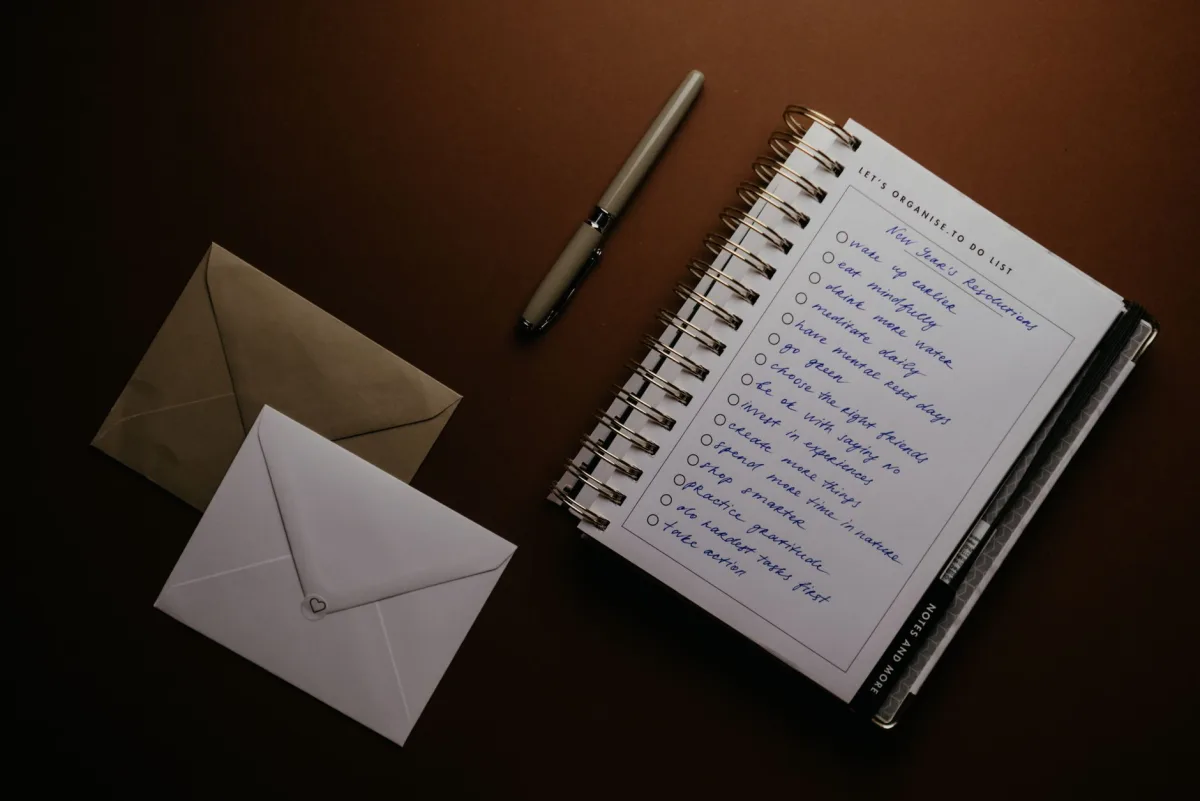
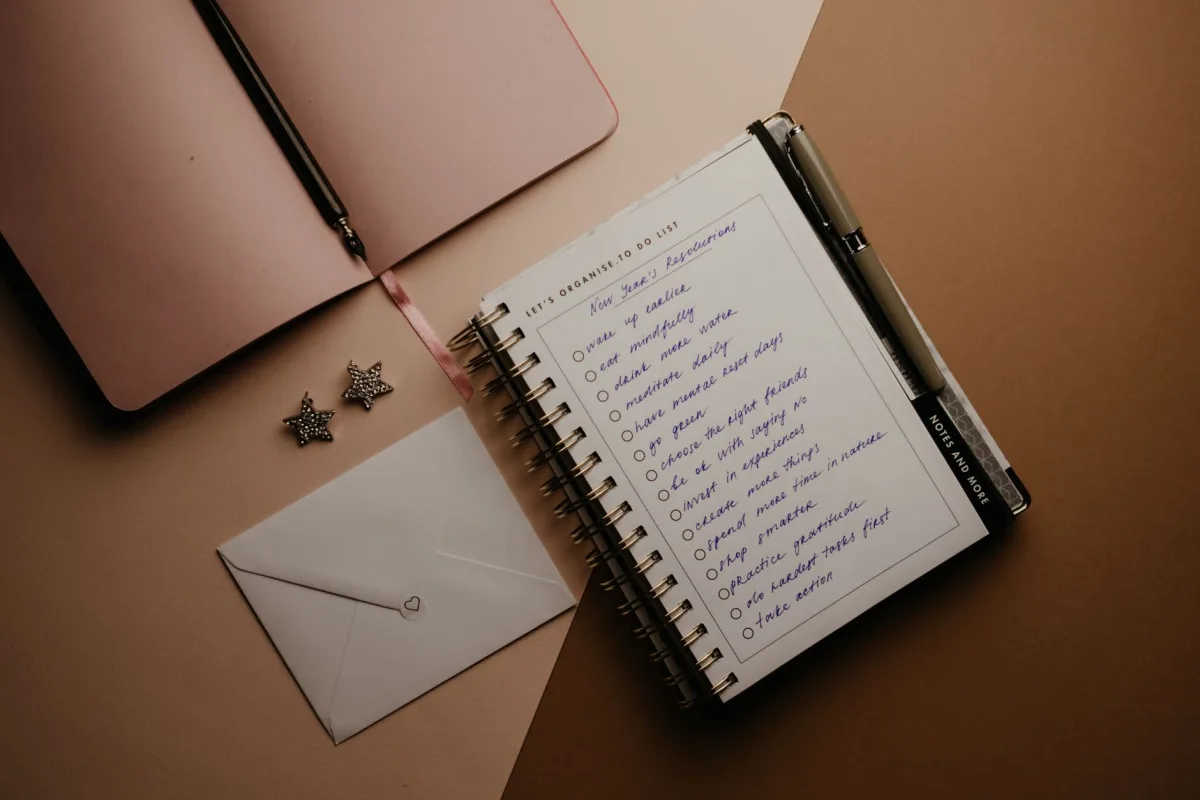
The first page of any planner is not a task list, it is a brief. Skip it and you will plan energetically in the wrong direction. A good brief answers five questions in a sentence or two each, and everything downstream inherits from them.
Purpose
Why does this event exist, and what does success look like? A wedding celebrates a union; a launch drives sales; a gala raises funds. The purpose decides every trade-off.
Audience and size
Who is coming and roughly how many? Headcount is the master dial: it sets venue size, catering and cost more than any other single number.
Budget
What is the total, and who signs off on it? A ceiling set now stops scope creep later, when every add-on feels essential.
Date and format
When is it, and is it in person, virtual or hybrid? Format quietly reshapes the entire task list.
Write these down and pin them to the front of your planner. When a shiny idea appears later, you hold it up against the brief: does it serve the purpose, fit the budget and suit the audience? If not, it does not go in. That single discipline prevents most of the overspending and drift that sink amateur events.
Stage two: build the backwards timeline
With a brief in hand, the planner's spine is the timeline, and the only sane way to build it is backwards from the event date. Professionals often visualise this as a Gantt chart, which lays each task against time so you can see what must finish before the next thing can start. You do not need special software; a dated table does the same job.
Group the work into broad phases and let each one feed the next. Far out, you settle the foundations: venue, date, key vendors and the guest or invitation list. In the middle stretch you confirm details, send invitations, and finalise the programme. Close to the date you chase numbers, brief your team, and prepare the run-of-show. The logic mirrors any good checklist: slow, scarce things go early; fast, flexible things go late. For a wedding-specific version of this spine, our event planning checklist lays out the phases in detail.
Stage three: the money page
The budget is not a single figure at the top of the planner; it is a living page that tracks estimated against actual for every line. Break the total into categories, venue, food and drink, staffing, production, decor, stationery and a contingency, and give each a target. As you book vendors, replace the estimate with the real number and watch the running total.
Two habits keep this page honest. First, hold back roughly ten percent as contingency and refuse to spend it early; events always surprise you late. Second, record the payment schedule, not just the total, because cash flow trips up planners who budgeted the amount but forgot that half of it was due on signing. A planner that tracks when money leaves, not only how much, is a planner that never gets caught short.
Stage four: guests, vendors and the details
The middle of the planning window is where the event gains texture, and your planner needs three working lists to hold it. Keep them separate but linked, because each answers a different question on the day.
- The guest or attendee list tracks invitations, RSVPs, dietary needs and, for seated events, table assignments. It is the source of your final headcount, so every paid-per-head vendor depends on it.
- The vendor list holds each supplier's contact, contract, arrival time and balance due. When something goes quiet a week before, this is the page you work down.
- The details list catches everything that does not fit elsewhere: signage, seating, gifts, permits, transport and the hundred small items that are individually trivial and collectively decisive.
This is also the stage to decide whether you need professional help. Many events run beautifully on a self-built planner, but a large or high-stakes one may justify a coordinator. Our guide to what a party planner handles, and our overview of the event coordinator role, explain where an extra pair of professional hands earns its fee and where it does not.
Stage five: the run-of-show
Everything above builds toward the single most valuable document a planner produces: the run-of-show, a minute-by-minute schedule for the event itself. This is what turns a plan into a performance. It lists every moment, arrivals, the ceremony or programme, food service, speeches, key transitions and the close, with a time and a responsible person against each.
Share the run-of-show with everyone who has a role, then rehearse the parts that can be rehearsed. On the day, the person coordinating simply follows the sheet, which means the host, or the couple, is free to be present rather than in charge. If you take one artefact from your whole planner into the event, it is this one. A calm event is almost always an event where someone is quietly holding a printed run-of-show and gently keeping time.
Turning the planner into a habit
A planner is only as good as your relationship with it. Keep it in one place, review it on a fixed weekly rhythm, and resist the urge to start parallel lists on your phone that never make it back into the main document. The moment planning lives in two places, it effectively lives in none. Matrimony360 publishes step-by-step guides for the events couples care about most, from the engagement through the wedding and the celebrations around it, and the same planner structure carries all of them. Build the system once, and you can reuse it for every event you host for the rest of your life.
Frequently asked questions
Is an event planning planner a person or a tool?
The word covers both, but this guide means the tool: the organised document or app you plan inside. A professional event planner is the person you might hire; an event planning planner is the structured space, a spreadsheet, binder or app, that holds your brief, budget, timeline, guest list and vendors. You can use the tool with or without hiring the person, and most small events are run entirely on a well-built planner alone.
What should every event planner document contain?
Five things: a brief that defines the event's purpose, audience, budget and date; a backwards timeline of tasks; a live budget tracking estimated against actual; a guest or attendee list with RSVPs and needs; and a vendor list with contracts and payment schedules. From these, near the date, you produce a run-of-show. If your planner holds those elements in one place, it holds everything an event needs.
Do I build the timeline forwards or backwards?
Backwards, always, from the event date. Start at the day itself and work back, placing each task so it finishes before whatever depends on it can begin. This exposes the true deadlines and shows you which long-lead items, the venue, key vendors, printed materials, must be started far earlier than instinct suggests. Planning forwards from today tends to leave the scarce, slow decisions dangerously late.
How much contingency should the budget include?
A common rule is to reserve around ten percent of the total as contingency and to protect it until late in the process. Events reliably produce surprises, an extra rental, a last-minute headcount rise, a weather backup, and the contingency is what absorbs them without derailing the plan. Just as important as the amount is tracking the payment schedule, so you are never surprised by when a large balance falls due.
Can one planner work for weddings and corporate events?
Yes. The underlying structure, brief, timeline, budget, lists and run-of-show, is identical across event types; only the content changes. A wedding planner emphasises attire, ceremony and family traditions, while a conference planner emphasises registration, sessions and audiovisual, but both sit on the same skeleton. Build the system once and you can adapt it to almost any gathering by swapping the details, not the method.