Marriage Counseling Near Me: How to Choose the Right One (2026 Local Guide)
How to find, compare and choose a marriage counselor, with realistic price ranges, free options and questions to ask.
Searching "marriage counseling near me" usually means you are ready to do something about a strain in your relationship and want real help close to home. The good news is that finding the right counselor is a learnable process, not a lottery. This local guide walks you through what marriage counseling is, how to find qualified counselors nearby, how to compare them fairly, what it realistically costs, how to find lower-cost or free options, and the exact questions to ask before you book. The aim is to help you choose someone who fits your relationship, not just the first name that appears on a map.
The short version
- Fit matters most. The strongest predictor of progress is how comfortable you both feel with the counselor, so shortlist two or three and compare.
- Check credentials and approach. Look for a licensed professional trained in couples work, and ask which method they use.
- Budget realistically. Private sessions vary widely by location and experience; sliding-scale, community and online options can cut the cost.
- "Near me" can include online. Video counseling widens your choice far beyond your immediate area, often with shorter waits.
What marriage counseling actually is
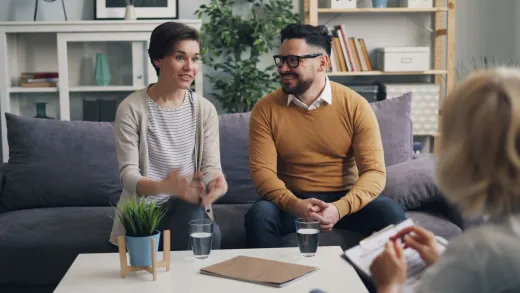
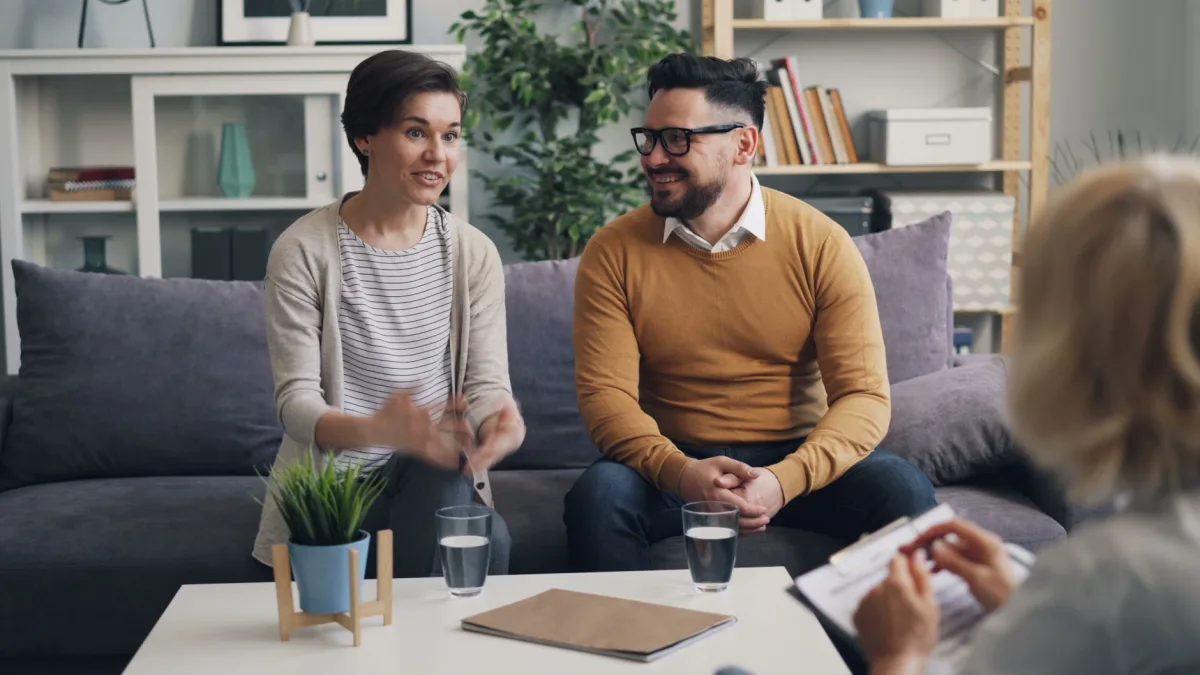
Marriage counseling is a form of couples therapy, a process where a trained professional helps two partners understand their patterns, improve how they communicate, and work through specific conflicts. It sits within the broader field of family therapy, which treats relationships and family systems rather than only individuals. The goal is not to declare who is right; it is to help both people be heard and to build healthier ways of relating.
It helps to know that counselors work in different, evidence-informed ways. Some use emotionally focused therapy, which centres on the emotional bond and attachment between partners; others use methods built around communication skills and conflict patterns. There is no single correct school, but knowing which approach a counselor favours helps you judge fit. For the wider picture of how this compares to other formats, our overview of marriage counseling and our guide to couples therapy go deeper on what happens in the room.
How to find counselors near you



A map search is only the starting point. To build a genuinely useful shortlist, combine a few sources so you are not relying on advertising rank alone.
Search and directories
Start with a local search, then cross-check professional directories that list licensed therapists by area and speciality. Directories usually show credentials clearly.
Referrals
Your family doctor, a trusted community or faith leader, or an employee assistance program can point you to vetted local counselors, sometimes at reduced cost.
Word of mouth
Friends who have been to counseling can share honest impressions that no listing captures. Ask about the counselor's manner, not only their results.
Online counseling
Video sessions expand "near me" to anywhere licensed to serve your area, often with shorter waits and more evening slots. Ideal if local choice is thin.
Community clinics
Community mental-health centres, universities with training clinics, and non-profits often offer lower-cost couples counseling on a sliding scale.
Cultural and faith fit
If shared background matters to you, look for counselors experienced with your culture or faith, which many directories let you filter for.
How to compare them fairly
Once you have three or four names, judge them on the things that actually predict a good experience rather than on a slick website. Weigh each candidate on a short, consistent set of criteria so you are comparing like with like.
- Credentials and licensing. Confirm they are a licensed professional and, ideally, trained specifically in couples or marriage work rather than only individual therapy.
- Approach. Ask which method they use and whether it suits your situation, whether that is communication-focused, emotionally focused, or something structured around specific issues.
- Experience with your issue. A counselor who regularly handles your particular challenge, whether communication, trust, in-laws or a major life change, will move faster than a generalist.
- Logistics. Location, availability, evening or weekend slots, session length and whether they offer video all shape whether you will actually keep attending.
- Neutrality and comfort. Both partners should feel the counselor is fair and easy to open up to. If one of you feels ganged up on, keep looking.
Most counselors offer a short introductory call. Use it. Ten minutes on the phone tells you more about fit than any number of reviews. If you want a broader comparison framework that also covers online-first services, our local guide to relationship counseling lays out the same logic for a wider set of relationship issues.
What it typically costs
Prices vary so much by location, experience and setting that any single figure would mislead, so treat these as broad ranges to check locally. Private-practice couples sessions are generally charged per session of roughly fifty to ninety minutes, and experienced or specialist counselors in high-cost cities sit at the upper end. Community clinics and training clinics can cost significantly less, and online services sometimes offer subscription or per-session pricing that undercuts local private rates.
A few honest notes on money. Marriage counseling is often a course of several sessions rather than a one-off, so budget for a block, not a single visit. Where health coverage exists, couples counseling is not always covered the way individual therapy is, so confirm before you assume. And do not treat price as a proxy for quality; a good sliding-scale counselor at a community clinic can help you more than an expensive one who is a poor fit.
Free and low-cost options
"Free marriage counseling near me" is a common search, and there are genuine routes to low or no-cost help, though they vary by country and area. Worth investigating.
University training clinics
Programs that train therapists often run public clinics where supervised trainees offer low-cost or free couples sessions.
Non-profits and charities
Relationship-support charities and community organisations sometimes provide free or sliding-scale counseling, occasionally with a waiting list.
Employee assistance programs
Many employers fund a set number of free confidential counseling sessions. Check your workplace benefits before paying privately.
Faith and community centres
Some religious and community organisations offer pastoral or peer counseling at no charge; see our guide to faith-based marriage counseling for one example.
Low-cost does not mean low-value. Supervised trainees are learning under experienced oversight, and many couples get real help this way. The trade-offs are usually longer waits and less choice of counselor, so start your search early rather than at crisis point.
Questions to ask before you book
A short introductory call, or the first session, is the moment to check fit. Bring these questions and listen as much to how they answer as to what they say.
- Are you licensed, and are you specifically trained in couples or marriage counseling?
- What approach do you use, and how does it work in practice?
- Have you worked often with the kind of issue we are facing?
- How do you keep sessions fair so neither partner feels blamed?
- How many sessions do couples usually need, and how will we know it is working?
- What are your fees, do you offer a sliding scale, and how does payment work?
There is no perfect answer to any of these; you are listening for honesty, warmth and clarity. Counseling works best when both partners feel safe, so trust the sense of comfort, or its absence, that the conversation gives you. For the everyday habits that support what happens in the room, our relationship tips are a practical companion between sessions.
The bottom line
Choosing marriage counseling "near me" comes down to fit, credentials and access, in that order. Build a shortlist from searches, referrals and directories, include online options to widen your choice, and compare candidates on their training, approach and how comfortable you both feel, not on price or ad rank. Budget for a course of sessions rather than one visit, and explore training clinics, non-profits and workplace programs if cost is a barrier. Most of all, use a short introductory call to trust your instincts. The right counselor is the one both of you can be honest with, and that honesty is where the real work begins.
Frequently asked questions
How do I find good marriage counseling near me?
Combine sources rather than relying on a single map search. Cross-check professional directories that list licensed therapists by area, ask for referrals from a doctor, community leader or employee assistance program, and consider word of mouth from friends. Include online video counseling, which widens your choice well beyond your immediate area. Then shortlist two or three and compare them on fit.
How much does marriage counseling cost?
It varies widely by location, the counselor's experience and the setting, so treat any figure as a broad range to check locally. Private sessions are charged per session and cost more with specialists in high-cost cities, while community and training clinics are cheaper and online services can undercut local rates. Budget for several sessions, not one, and confirm whether any health coverage applies to couples work.
Is there free marriage counseling near me?
Often, yes, though it varies by area. Look at university training clinics with supervised trainees, relationship-support non-profits and charities, employee assistance programs that fund a few free sessions, and some faith or community centres. Low-cost options usually mean longer waits and less choice of counselor, so start searching early rather than at a crisis point.
What should I ask a marriage counselor before booking?
Ask whether they are licensed and specifically trained in couples work, what approach they use, whether they have experience with your particular issue, how they keep sessions fair to both partners, how many sessions couples usually need, and what they charge. Listen to how warmly and clearly they answer, since comfort and trust matter as much as credentials.
Does "near me" have to mean in person?
No. Online video counseling counts, and it often expands your options dramatically, with shorter waits and more evening slots than local practices. In-person suits couples who prefer face-to-face contact, while video suits those in areas with little local choice or with busy schedules. Many counselors now offer both, so you can choose what fits.