Wedding Floral Arrangements: The Complete Guide
The core pieces, bouquet shapes, design styles and seasonal pricing that turn a pile of flowers into one coordinated wedding scheme.
Flowers are the thread that runs through a whole wedding. They ride down the aisle in the bride's hands, they crown the arch, they sit on every table and they pin to every lapel. Get them working together and the day feels designed; let them drift and it feels assembled. Wedding floral arrangements are really one connected system rather than a shopping list, and this guide lays out the core pieces, the styles they come in, how the seasons quietly control your options and your budget, and how to brief a florist so the flowers you imagine are the flowers you get.
The short version
- Flowers are a system, not separate purchases: bouquet, arch, aisle, tables and buttonholes should share a palette.
- Season is the real price tag. In-season and local blooms cost far less than out-of-season imports.
- Bouquet shape sets the tone, from a tight posy to a trailing cascade, each reading very differently in photos.
- Brief with images and numbers, not adjectives: a good florist works from a palette, a headcount and a budget.
The core pieces every wedding uses
Floristry, the trade of producing and arranging flowers, breaks a wedding order into a predictable set of pieces. Knowing the standard list stops you either forgetting something or paying for things you do not need. Most weddings draw from the same core menu, then scale it up or down.
The bridal bouquet
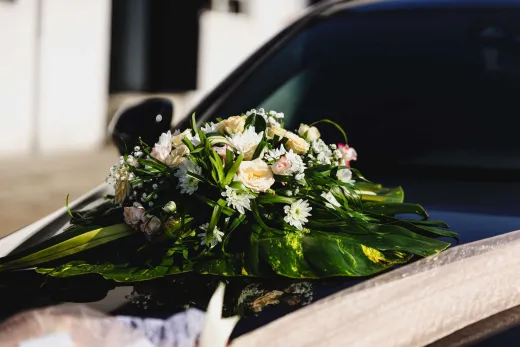
The single most important arrangement, carried by the bride and photographed more than any other. It sets the palette everything else follows.
Bridesmaid bouquets
Smaller echoes of the bridal bouquet, usually simpler and sometimes a single accent colour to let the bride's stand out.
Buttonholes and corsages
The small pieces for the groom, groomsmen, fathers and grandmothers. Tiny, but they tie the wedding party into the scheme.
Ceremony flowers
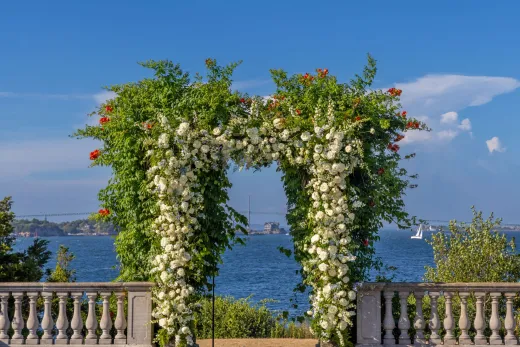
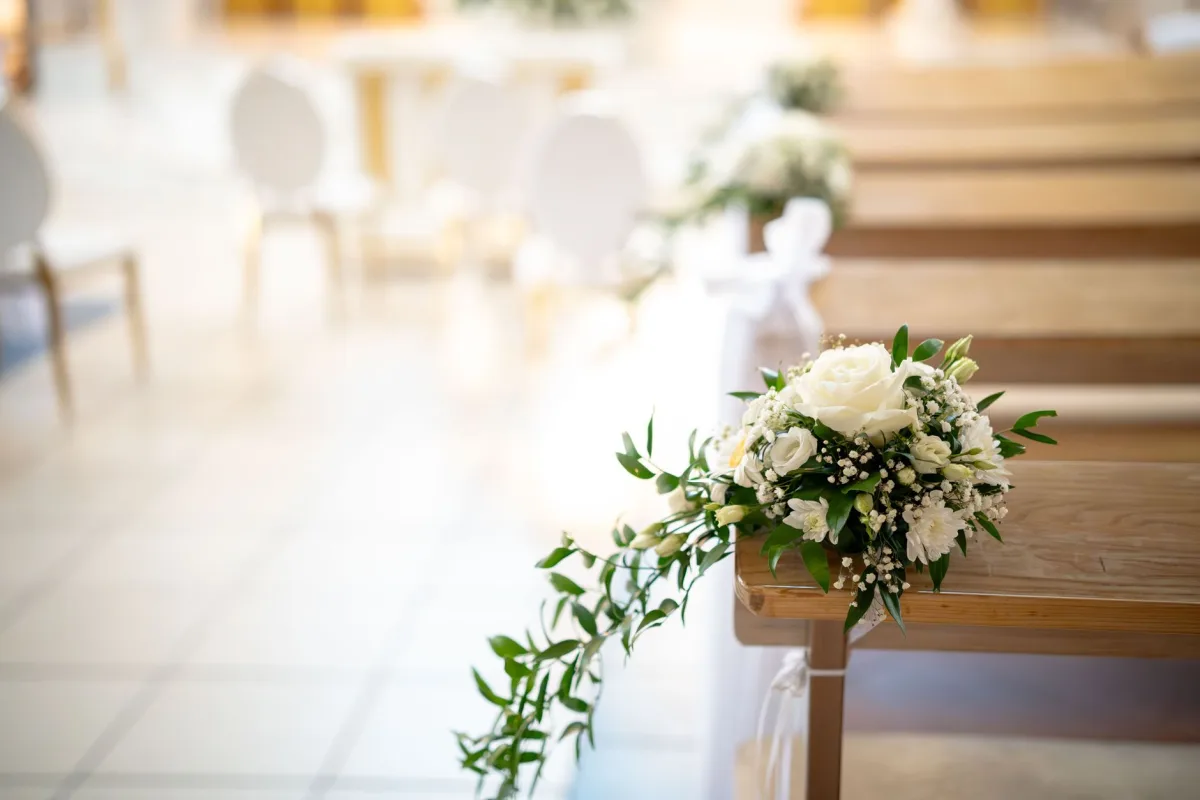
The arch, aisle markers, pew or chair ends and the altar. These frame the vows and the first photos of the day.
Table centrepieces
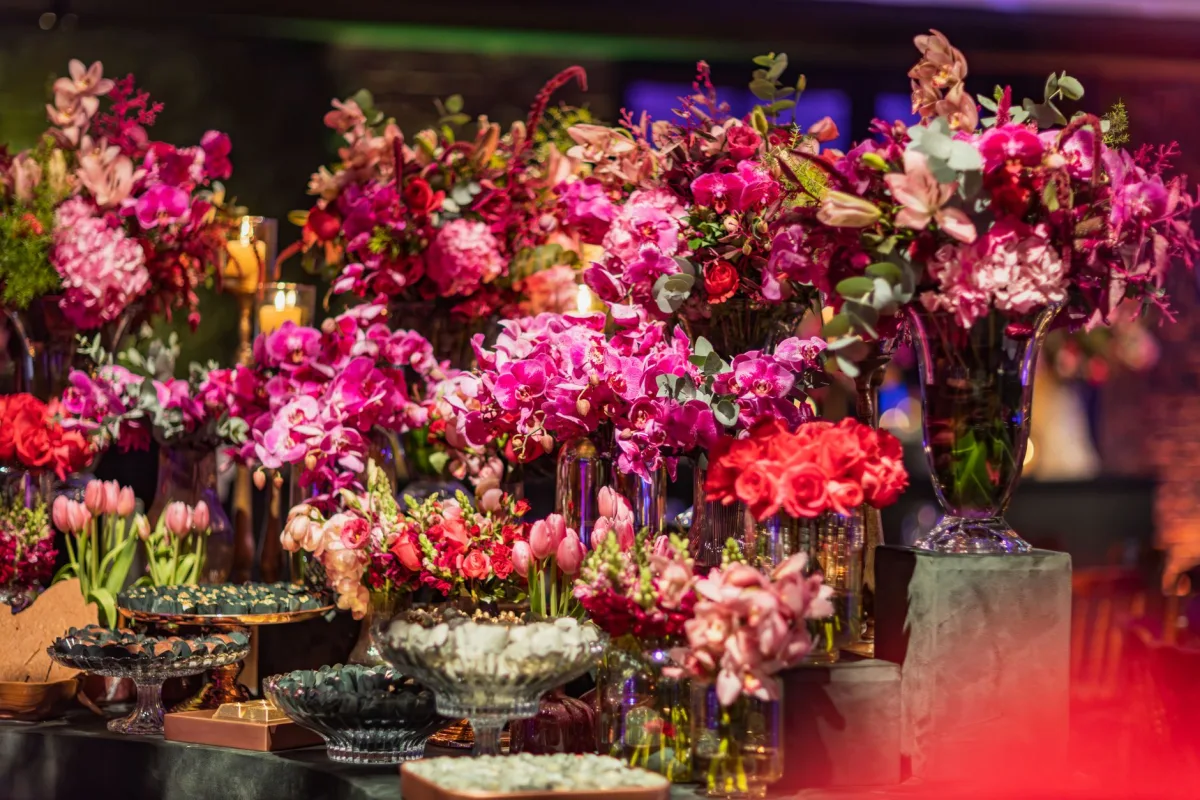
The reception's workhorse. Repeated across every guest table, so small differences in size and cost multiply fast.
Statement installations
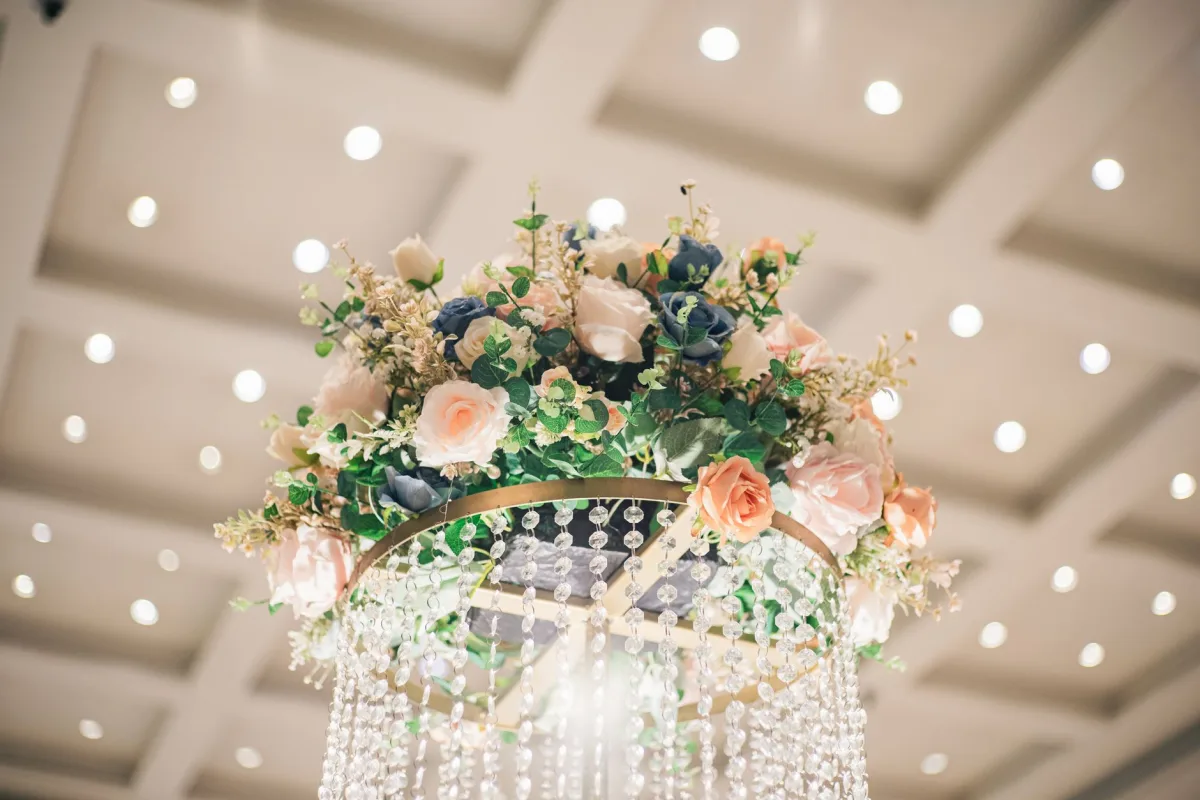
Hanging clouds, flower walls, staircase runs and top-table backdrops. High impact, high budget, entirely optional.
The trick is proportion. Couples routinely overspend on centrepieces, which guests glance at, and underspend on the bouquet and ceremony flowers, which appear in the pictures they keep forever. If a budget has to flex, protect the pieces the camera loves. For how the ceremony frame in particular ties into the flowers, our guide to the wedding arch covers the structure those blooms hang from.
Bouquet shapes and what they say
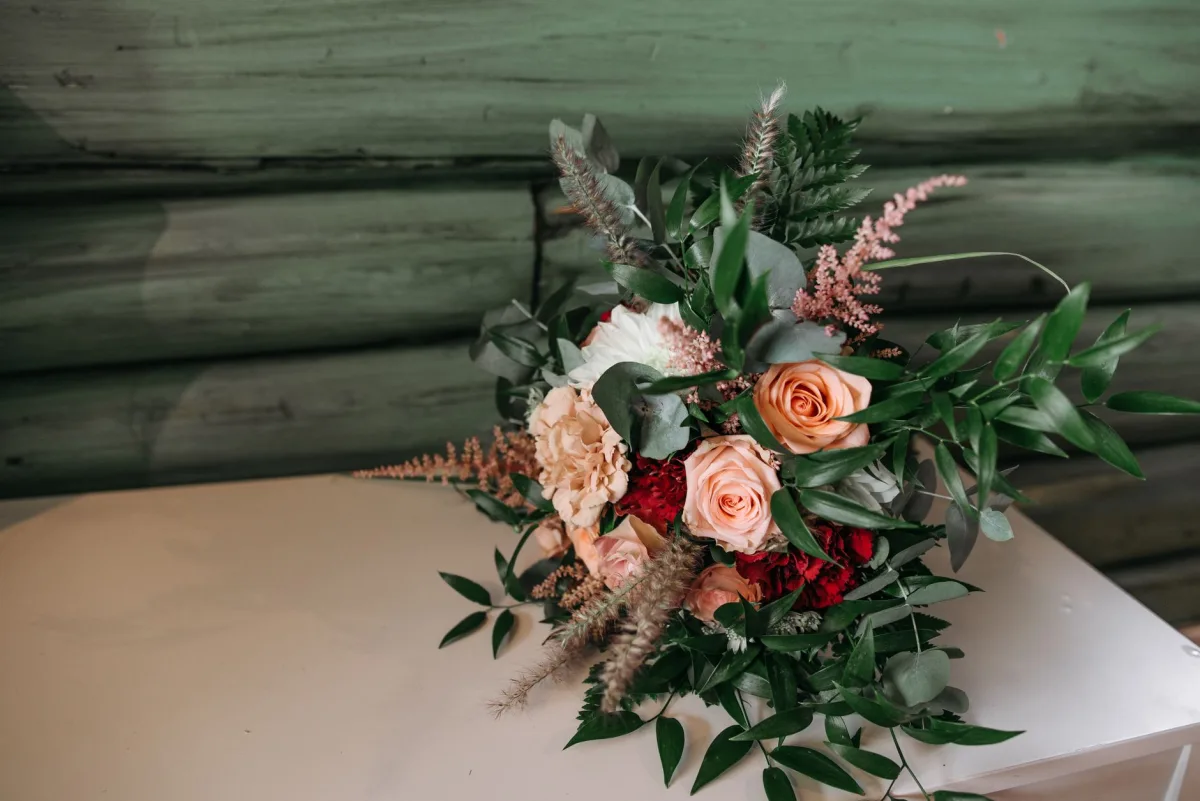
The bridal bouquet is worth its own attention, because its shape changes the whole silhouette of the bride. A flower bouquet comes in several classic forms, and the popular ones each carry a distinct mood. A posy or nosegay is a small, round, easy-to-carry cluster that suits almost everyone and photographs neatly. A cascade, the long trailing style made famous by Lady Diana Spencer's 1980 wedding, is dramatic and formal, best with a gown that can carry the drama. A presentation bouquet of long-stemmed calla lilies, cradled in the arm rather than gripped by the stems, reads modern and sculptural.
There is no correct answer, only fit. Scale the bouquet to the bride and the dress: a huge cascade can overwhelm a petite frame and a simple sheath, while a tiny posy can look lost against a full ballgown. And remember the bouquet often gets a second life, as many couples still honour the tradition of the bride tossing it for the next to marry, so a sturdy build survives the day better than a delicate one.
Styles of arrangement, from wild to structured
Beyond individual pieces, wedding flowers come in recognisable design languages, and naming yours is the fastest way to align with a florist. Floral design broadly spans several schools, from the disciplined restraint of Japanese ikebana to the lush abundance of the English garden style and the clean lines of modern European work. For weddings, most couples land somewhere on a spectrum between two poles.
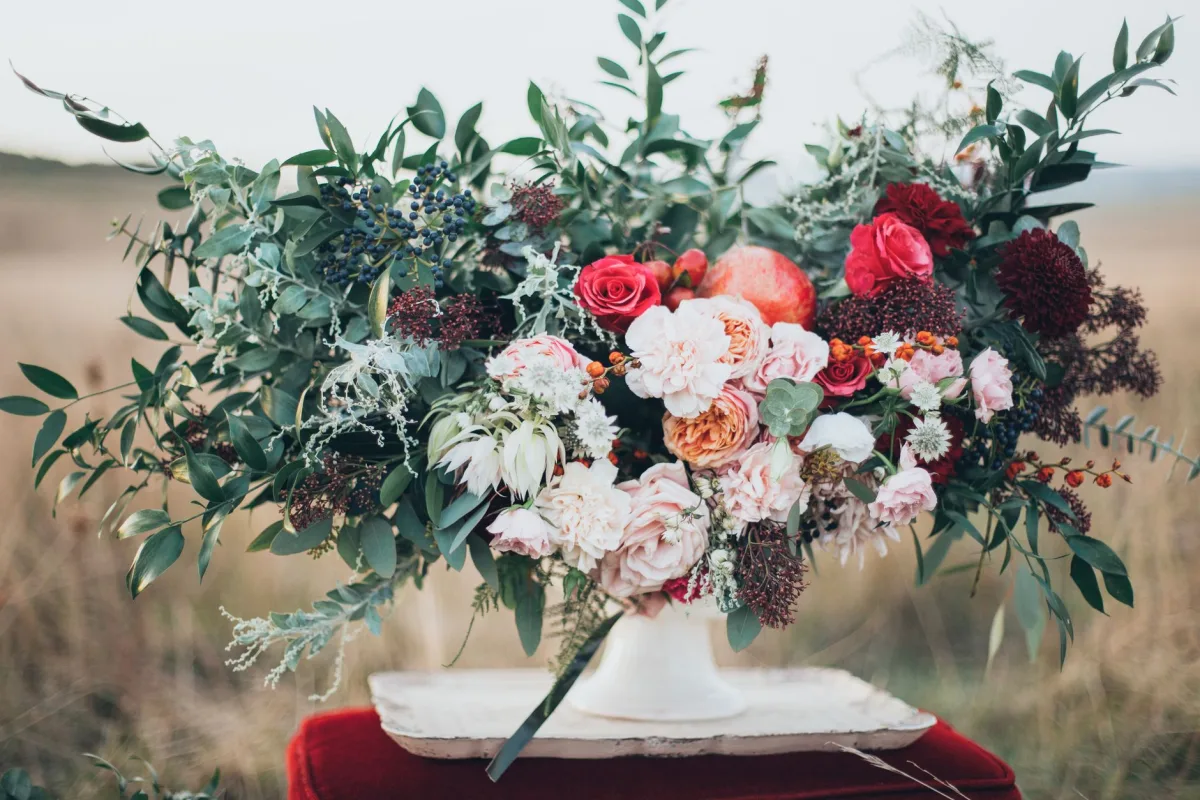
At one end sits the loose, organic, "just gathered" look: asymmetric, airy, full of trailing greenery and a wild mix of blooms, the signature of the rustic and boho wave. At the other end sits the structured, symmetrical, classic arrangement: tight domes, defined shapes and a controlled palette, the language of formal and traditional weddings. Neither is harder or cheaper by default, but they demand different flowers. The wild look leans on greenery and inexpensive filler; the structured look leans on uniform, premium focal blooms. Deciding which pole you sit near tells the florist more than a folder of pictures does.
Season is the quiet boss of your budget
Here is the single most useful thing to understand about wedding flowers: the season decides the price. Floristry runs on seasonal cycles, and a flower in its natural season, grown locally, costs a fraction of the same flower flown in from the other side of the world out of season. Peonies in late spring are abundant and reasonable; peonies in autumn are a small fortune, if you can get them at all.
You can work with this rather than against it. Pick your palette and shape first, then let the florist tell you which in-season flowers deliver that look for the least money. Roses, chrysanthemums and many staples are available almost year round and hold up well, which is why they anchor so many arrangements. A wedding in June has different, cheaper options than a wedding in January, and a florist who knows the local growers will save you more than any coupon. If you are still setting numbers, our wedding budget checklist puts flowers in proportion against the rest of the day.
Real, faux or dried
Fresh flowers are the default and the most beautiful, but they are perishable, seasonal and priced by the stem. Two alternatives have grown up alongside them, and mixing all three is increasingly normal. High-quality faux flowers, silk or latex, never wilt, survive heat and travel, and can be kept forever, which makes them tempting for a destination wedding or a scorching summer day. The catch is that good ones are not cheap and bad ones look plastic in close-up.
Dried and preserved flowers, pampas grass, bunny tails, dried palm and preserved eucalyptus, have become a style in their own right rather than a compromise. They suit autumn and boho weddings, cost less than a comparable fresh installation, and double as a keepsake because they last for years. A common, sensible blend is fresh flowers where the camera lingers, the bouquet and top table, and faux or dried on the structural pieces like arch greenery and hanging installations, where longevity matters more than fragrance.
Briefing a florist without the guesswork
Florists are not mind readers, and "romantic and elegant" means something different to everyone. The couples who get exactly what they pictured all brief the same way: with a tight palette, a set of reference images, a firm headcount and an honest budget. The palette is the backbone, three or four colours the florist can build around. The images should show shape and density, not just pretty pictures, and it helps to include one or two of what you do not want.
The headcount drives the centrepieces, which are the pieces that multiply, so an accurate number protects you from a surprise on the final invoice. And naming your budget up front is not gauche, it is the single most useful thing you can do, because it lets the florist steer you toward in-season flowers and clever tricks rather than quietly designing something you cannot afford. A good wedding florist will take a real number and make it look like more, which is exactly the skill you are paying for. When you are ready to shortlist, our local guide to finding a wedding florist near you covers how to vet portfolios and reviews.
The bottom line
Wedding floral arrangements are less a set of purchases than a single visual system that runs from the bride's hands to the last table. Decide your palette and your style poles first, let the season pick your most beautiful and affordable flowers, protect the pieces the camera keeps, and brief your florist with images, numbers and a real budget rather than adjectives. Do that and the flowers stop being a line of anxious decisions and become the quiet thread that makes the whole day feel like one thing. Couples planning on matrimony360 find that once the flowers agree, the rest of the styling tends to fall into place.
Frequently asked questions
How much of the wedding budget should go on flowers?
A common planning benchmark places flowers somewhere around eight to ten percent of the total wedding budget, though it swings widely with your style. A flower-forward wedding with installations and full centrepieces can push well beyond that, while a pared-back day with a bouquet, buttonholes and a few simple tables can sit far below it. The useful move is to protect the photographed pieces, the bouquet and ceremony flowers, and to flex on the centrepieces, which guests barely register.
What flowers are cheapest for a wedding?
Whatever is in season and grown near you. Season, not species, is the main driver of cost, because out-of-season blooms must be imported at a premium. That said, several staples such as roses, chrysanthemums, carnations and much greenery are available and affordable almost year round and hold up well, which is why florists lean on them. The cheapest beautiful bouquet is usually one that trusts the florist to swap your dream flower for a similar in-season one.
Should I use real or fake flowers for my wedding?
Both have a place, and many weddings now mix them. Fresh flowers are the most beautiful and are worth it for the bouquet and anything close to the camera, but they wilt in heat and cost by the stem. High-quality faux or dried flowers never wilt, travel well and become keepsakes, which suits destination weddings, hot days and structural pieces like arch greenery. A practical blend puts fresh where it shows most and faux or dried where longevity matters more than fragrance.
How far in advance should I book a wedding florist?
For a popular date, six to nine months ahead is comfortable, and busy florists in peak season can book out a year or more in advance. Booking early does not mean deciding everything early: you can secure the florist with a rough palette and headcount, then refine the detail as the guest list and season firm up. Leaving it late narrows your choice of florist and can force out-of-season substitutions that cost more.
Can I make my own wedding flower arrangements?
You can, and couples do, especially for simple table arrangements and buttonholes. The savings are real, but so are the demands: buying wholesale flowers, conditioning them properly, arranging them the day before, and keeping them cool and hydrated is genuine work at the busiest moment of the week. A sensible halfway house is to let a florist handle the bouquet and ceremony pieces, where mistakes show, and to DIY the low-stakes centrepieces if you have willing hands and a cool room.