Wedding Arch: The Complete Guide
Styles, materials, cultural roots and the hire-versus-build decision behind the most photographed structure at a modern wedding.
A wedding arch does one quiet, powerful job: it draws a frame around the two people at the centre of the day. Stand under it and the whole scene organises itself. The eyes of every guest, and every camera in the room, settle on the couple beneath. That is why the arch has become the single most photographed structure at modern weddings, and why choosing one deserves a little more thought than "something with flowers on it." This guide walks through what an arch is, the styles and materials on offer, the deep cultural roots of the wedding canopy, and how to decide between building your own and hiring a professional.
The short version
- An arch is a focal point, a frame that concentrates attention and every photo on the couple.
- Shape is a choice, not just decoration: round, triangular, square, hexagon and freeform each set a different mood.
- The canopy is ancient. The Jewish chuppah and Hindu mandap gave the wedding arch its meaning long before the styled version arrived.
- Match it to the setting. An arch should agree with your venue, season and the flowers you can actually get.
What a wedding arch actually is
At its simplest, a wedding arch is a freestanding structure that the couple stands in front of, or beneath, during the ceremony. It marks the "altar" in the loosest sense of the word: the spot where the vows happen. It has no structural job to do beyond holding itself up and, usually, some flowers or fabric. Its whole purpose is visual and symbolic. It says "look here," and it gives the ceremony a centre it would otherwise lack, especially outdoors where there are no walls to define the space.
The word "arch" is a little misleading, because plenty of them are not arched at all. A triangular frame, a square, a hexagon and a loose branch sculpture all fall under the same everyday heading. What unites them is the role, not the geometry. Think of the arch less as a shape and more as a job title: the thing that frames the couple. Once you see it that way, the design choices open up rather than narrowing to a single silhouette.
The main styles of wedding arch
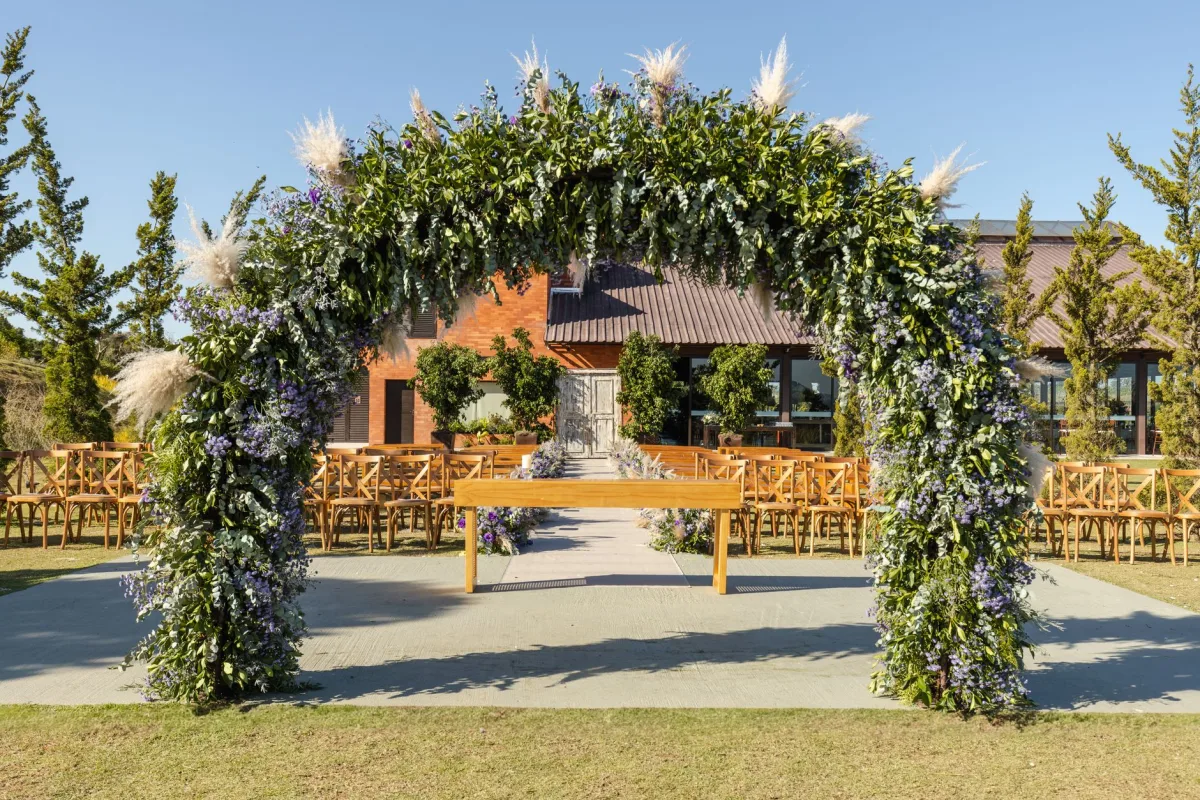
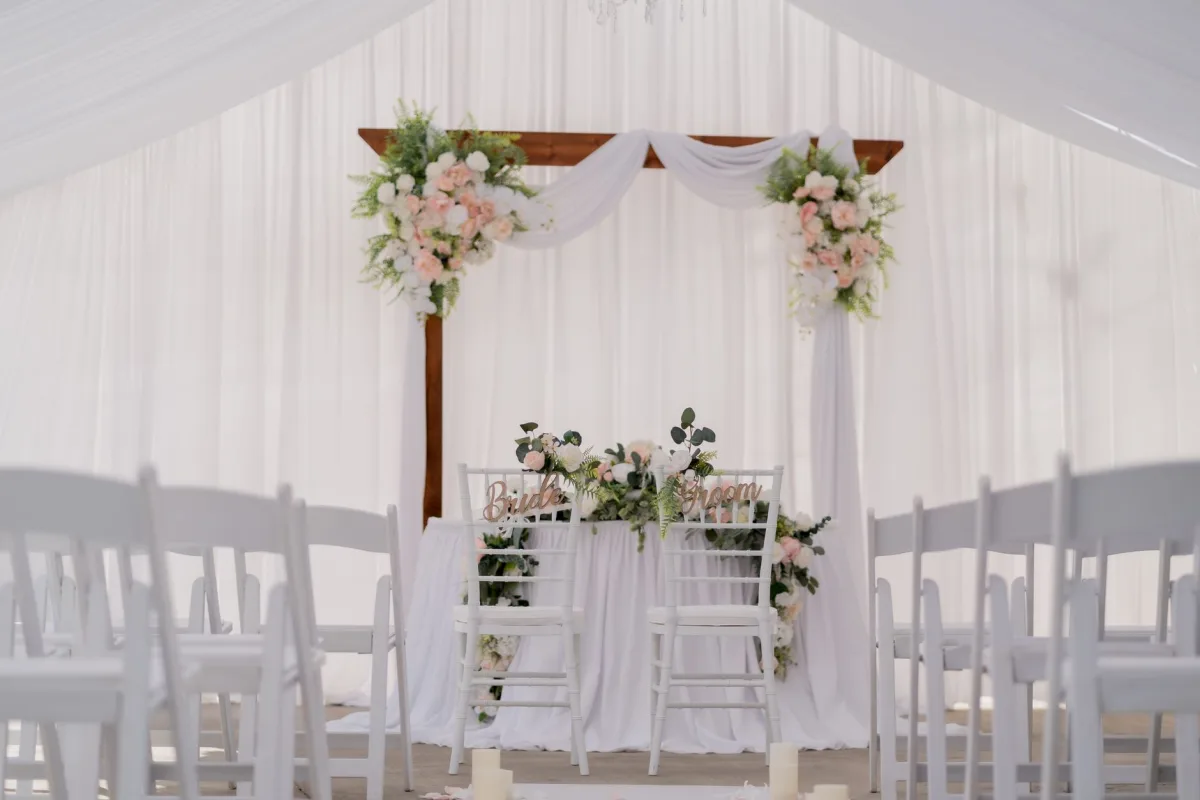
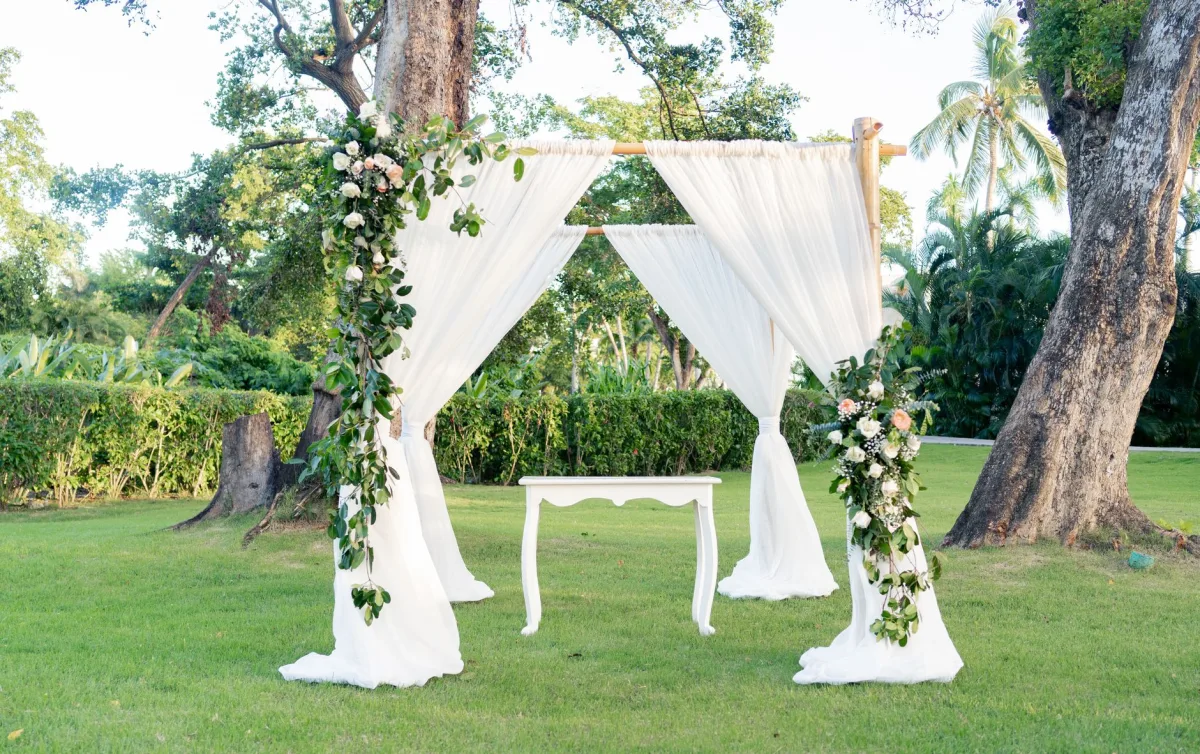
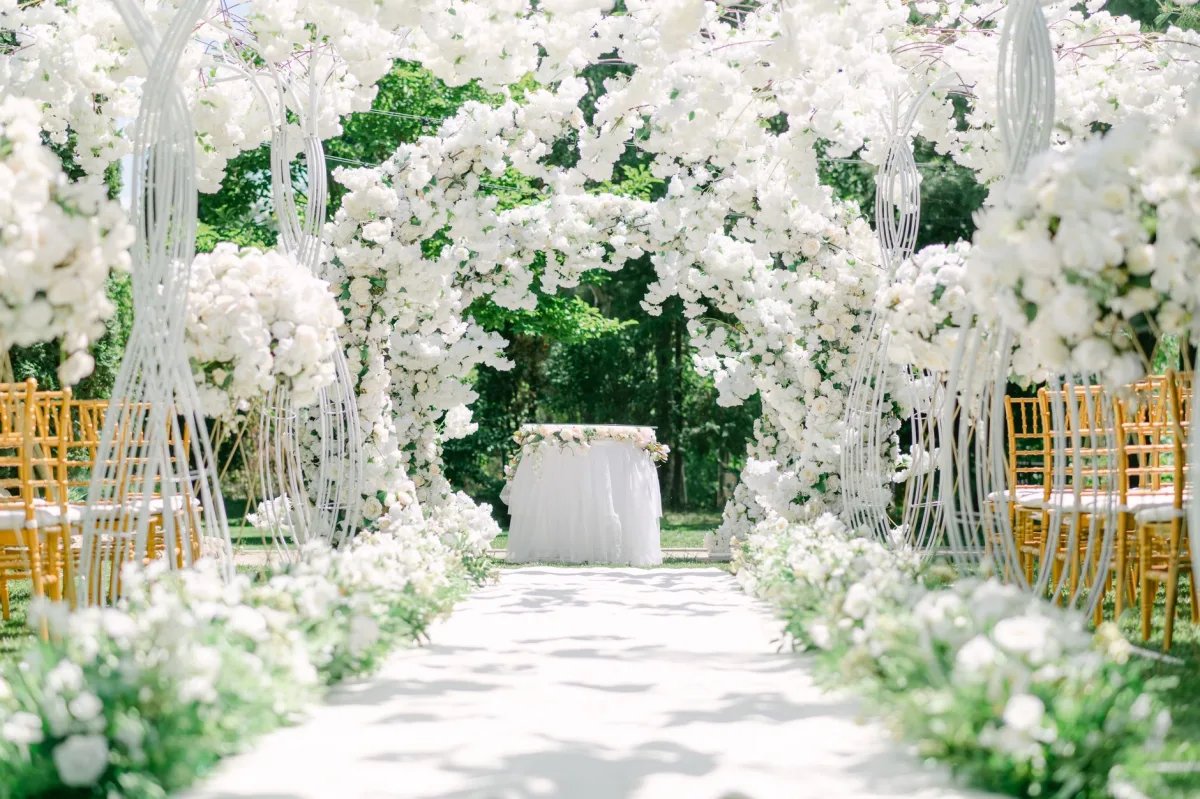
Most arches you will see fall into a handful of recognisable families. None is better than the others. The right one depends on your venue, your flowers and the feeling you are chasing.
Round or circular
A full or partial ring, often called a moon gate. Soft, romantic and complete, it works beautifully with a half-crown of flowers on one side and bare frame on the other.
Triangular
Two poles meeting at a point, or an open A-frame. Clean, modern and architectural, it suits minimalist and geometric styling.
Square or rectangular
A simple four-sided frame. Structured and contemporary, it reads well against gardens and neutral walls and gives fabric a clean line to drape from.
Hexagonal
The six-sided frame that became a signature of the rustic and boho wave. It photographs generously and holds asymmetric florals with ease.
Freeform and branch
Curved copper, driftwood or living branches with no fixed shape. Organic and one-of-a-kind, best when the venue itself is wild or wooded.
Floral wall or full arch
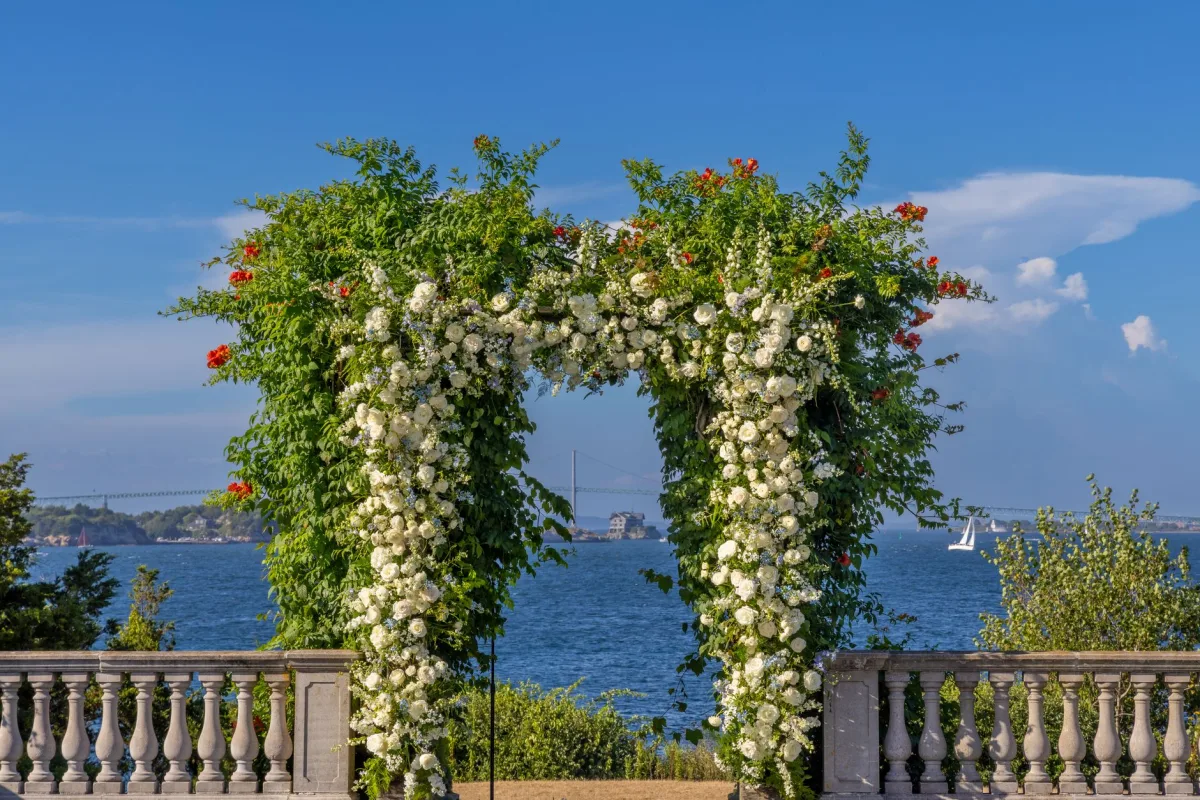
A dense, fully covered structure that becomes a wall of blooms and greenery. Dramatic, generous and the most demanding on the florist's budget.
A useful rule of thumb: the simpler the frame, the more the flowers have to carry, and the more ornate the frame, the less floral work it needs. A bare copper hexagon with three tight clusters can look more expensive than a full arch stuffed corner to corner, because restraint reads as confidence. If you are pairing the arch with wider styling, our guide to wedding floral arrangements shows how to keep the arch, the tables and the bouquets speaking one language.
Materials and what they cost you in effort
The frame underneath the flowers matters more than couples expect, because it dictates weight, wind resistance and how the whole thing is anchored. Metal frames, usually iron or copper pipe, are the workhorse of the hire world: strong, reusable and slim enough to disappear behind florals. Wood, from rough timber to birch poles, brings warmth and suits barns, gardens and rustic settings, though it is heavier and less forgiving to move. PVC pipe wrapped in fabric or greenery is the budget path, light and cheap but prone to looking exactly like what it is if the covering slips.
Then there is the living arch, grown or built from real branches and foliage, which is glorious and fragile in equal measure. Whatever the material, the same physics applies outdoors: an arch is a sail. A tall frame catches wind, and a gust can topple an unweighted structure into the front row. Sandbags, stakes or weighted plates at the base are not optional at an exposed venue, they are the difference between a keepsake and an incident. Any reputable wedding florist will build this anchoring into their setup, which is one of the quiet reasons hiring often beats building.
The canopy has ancient roots
The styled photo-backdrop arch is young, but the idea of marrying beneath a canopy is very old and carries real meaning in several traditions. Understanding that history tends to change how couples feel about the structure, from a prop into something closer to a threshold.
In Jewish weddings, the couple stands beneath a chuppah, a cloth or tallit stretched over four poles or held aloft by attendants. It symbolises the home the couple will build together, open on all sides in the spirit of Abraham's welcoming tent. In Hindu weddings the ceremony takes place inside a mandap, a pillared pavilion where the bride and groom circle a sacred fire lit by the priest at its centre. Both are, in a sense, the ancestors of the modern arch: a defined, sanctified space that says the vows happen here and nowhere else.
That lineage is worth respecting. If your family carries a chuppah or mandap tradition, the "arch" is not a decorative choice at all, it is a ritual object with rules about who holds it, what it is made of and what it means. A styled floral arch borrows the visual language of these canopies, and knowing where the borrowing comes from is part of doing it gracefully.
Where the arch goes and why placement matters
An arch is only as good as its background. The most beautiful frame in the world falls flat in front of a car park or a fire exit, and a modest one sings against the sea, a treeline or an old stone wall. Before you fixate on the flowers, walk your ceremony space at the time of day you will actually marry and look at what sits behind the arch and where the sun falls.
Light is the quiet decider. Backlighting, with the sun behind the arch, creates a glow but can throw the couple's faces into shadow. Front or side light keeps faces bright but can make everyone squint. A good photographer will have an opinion, so ask them before you lock the position. Indoors, the arch can rescue a plain hotel ballroom by giving an otherwise blank wall a centre, which is one reason couples marrying at all-purpose venues lean on them so heavily. If you are still choosing where to marry, our overview of wedding venues covers how the setting shapes every decoration decision that follows.
Hire it or build it yourself
This is the real fork in the road. Hiring an arch from a florist or stylist buys you a sturdy frame, professional flowers, safe anchoring, delivery, setup and takedown, and someone else's problem if it rains. You pay for all of that, and full floral arches sit among the pricier single items on a decoration invoice. Building your own can save a meaningful amount and gives you total control, at the cost of your time, a car big enough to transport it, and the risk that fresh flowers wilt between assembly and ceremony.
A sensible middle path suits many couples: hire or buy the bare frame, then dress it yourself with a mix of fresh focal flowers and hardy greenery or fabric, ideally the morning of or the evening before. Faux or preserved stems on the structural parts, with a few fresh blooms at the focal points, gives you resilience without a fully artificial look. Whichever route you choose, the arch should not be a standalone decision. It belongs to a wider scheme, and browsing broader wedding decoration ideas first will stop your arch clashing with the aisle, the tables and the stage.
The bottom line
A wedding arch is not just a thing you buy flowers for. It is the frame that tells everyone where to look, an heir to canopies that have marked marriage for centuries, and one of the few decorations that lives in nearly every photograph you will keep. Choose the shape for the mood you want, the material for the setting you have, and the flowers for the season you are in. Anchor it properly, place it against a background worth keeping, and let it do its one quiet job: holding the frame steady while the two of you fill it. When couples plan their wedding on matrimony360, the arch is often where the whole look finally clicks into focus.
Frequently asked questions
How much does a wedding arch cost?
It varies enormously with materials and flowers. A bare frame you buy or build yourself can be quite modest, often in the low hundreds or less, while a fully covered fresh-floral arch supplied and installed by a florist commonly runs into the hundreds or low thousands, because most of the cost is the volume of flowers and the labour of building them on site. The frame is cheap; the blooms are not. A part-fresh, part-faux approach on a hired frame is usually the best value.
Do I need a wedding arch at all?
No. An arch is optional, not required. It earns its place when your ceremony space lacks a natural focal point, such as a plain wall, an open field or a featureless marquee, because it manufactures a centre that photographs well. If you are marrying in front of the sea, an altar, a fireplace or a grand doorway, the setting already frames you and an arch can feel redundant. Judge it by whether your background needs help.
What is the difference between a wedding arch and a chuppah or mandap?
A styled wedding arch is primarily decorative, a frame that concentrates attention on the couple. A chuppah in Jewish tradition and a mandap in Hindu tradition are ritual structures with religious meaning, specific rules and ceremonial roles, from symbolising the marital home to sheltering a sacred fire. The modern arch borrows their visual idea of marrying beneath a canopy, but it does not carry the same religious significance unless it is one of those canopies.
How do I stop my wedding arch blowing over outdoors?
Weight the base. A tall arch acts like a sail, and even a light gust can topple an unanchored frame. Use sandbags, weighted plates, or stakes driven into soft ground, and hide them behind flowers, fabric or foliage. Choose a heavier metal or wood frame over light PVC for exposed sites, and if the forecast turns genuinely windy, have a sheltered plan B. A professional installer builds anchoring in as standard, which is one advantage of hiring over building.
When should the arch be decorated, before or on the day?
For fresh flowers, as late as possible: the morning of the ceremony, or the evening before if the blooms are conditioned and the weather is kind. Flowers wilt fast in heat and sun, so the shorter the gap between dressing the arch and saying your vows, the better it will look in photographs. Faux, dried or preserved elements can go on days ahead, which is exactly why many couples build the sturdy greenery in advance and add a few fresh focal stems at the last minute.