Wedding Greetings: The Complete Guide
A simple formula for any card or toast, wording by relationship, etiquette and cultural notes, plus what to avoid in a wedding greeting.
A wedding greeting is a small thing that carries a lot: a few sincere words that tell a newly married couple you are glad, that you wish them well, and that you were thinking of them on one of the biggest days of their lives. Whether you are signing a card, standing to give a toast, or simply typing a message, the challenge is the same: to say something warm and true without freezing over a blank space. This guide covers what a wedding greeting is, how to write one for any relationship, the etiquette that keeps it kind, and the phrases to lean on and to avoid, so you can send yours with confidence.
The short version
- A good greeting is short and sincere. Warmth beats cleverness every time; you do not need a poem.
- Match the tone to the couple. Close friends welcome humour and warmth; formal relations want dignity.
- Congratulate both partners. Address the couple together and, where you can, name them.
- When stuck, use a simple formula: congratulate, wish them well, add one personal line, and sign off.
What a wedding greeting really is
At its heart a greeting is an act of acknowledgement, a way of recognising another person and marking a moment. A wedding greeting narrows that to a single occasion: it acknowledges the couple, celebrates their marriage, and offers a wish for the life ahead. It can travel in many forms, a handwritten card, a spoken toast, a text message, a note tucked into a gift, or a line in a guestbook, but the purpose behind all of them is identical. You are telling two people that their joy matters to you.
That is worth remembering because it takes the pressure off. A greeting is not a performance to be judged; it is a gesture of goodwill. The couple will not grade your grammar or measure your wit. What they will feel is whether the words are sincere, and sincerity is something anyone can manage. The rest of this guide simply helps you shape that sincerity into something easy to read and pleasant to receive.
The simple formula for any greeting
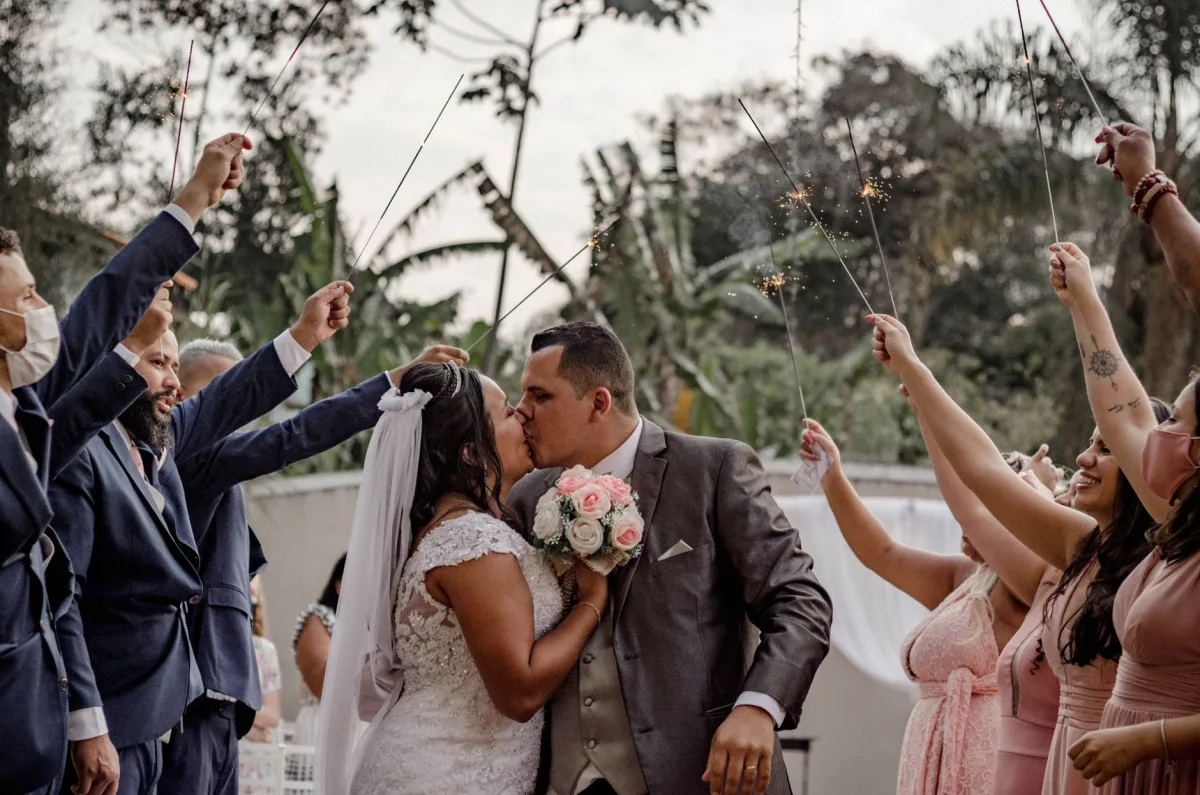
When you are staring at a blank card, a reliable structure is worth more than inspiration. Almost every good wedding greeting follows the same four-part shape, and you can lean on it for a card, a message or the opening of a toast.
Congratulate
Open by naming the occasion and the couple: "Congratulations on your wedding" or "So happy for you both". This sets the warm tone at once.
Wish them well
Offer a hope for the future: a long and happy marriage, a life full of love, or a lifetime of the joy of the day itself.
Add a personal line
One specific, true detail lifts a greeting above the generic: a shared memory, a quality you admire, or a moment from the day.
Sign off warmly
Close with affection suited to the relationship: "With love", "Warmest wishes", or simply your name for a lighter note.
Follow those four beats and you will never be stuck. A greeting as short as "Congratulations to you both, wishing you a lifetime of happiness together, we are so proud of the couple you have become, with all our love" already does everything a wedding greeting needs to do. For longer wording and dozens of ready lines, our collection of wedding message examples gives you plenty to adapt.
Matching the greeting to the relationship
The single biggest factor in getting the tone right is your relationship to the couple. The same occasion calls for very different words depending on how close you are, so read the room before you write.
For close friends and siblings, warmth and gentle humour are welcome. You can be personal, reference inside jokes carefully, and let genuine affection show. For parents and family elders, greetings often carry more emotional weight and can speak to pride, to watching the couple grow, and to the family they are joining. For colleagues and acquaintances, keep it gracious and slightly more formal: sincere good wishes without over-familiarity. And for very formal or professional relationships, a dignified, classic line is safest, since a warm but restrained note never feels out of place. When in doubt, lean a touch more formal than you think you need to; nobody was ever offended by a greeting that was too kind and well-mannered.
Written greetings: cards, messages and gift notes
The most common wedding greeting is the written one, and the same principles carry across a greeting card, a text, an email or a gift tag. Address the couple together, and name them if you can, since a greeting that uses their names always feels more personal than a blank "congratulations". Keep it concise: a few sincere sentences read far better than a crowded page, and there is no prize for length.
Handwriting matters more than perfection. A card written by hand, even in imperfect script, carries a warmth that a printed message cannot, so take your time and do not fear a small crossing-out. If you are sending money or a gift, a short written line to accompany it is always kinder than a bare envelope. And if the greeting is going into a card the couple will keep, remember that they may reread it for years, so a specific, heartfelt line will mean far more on the tenth reading than a clever one. For the fuller art of congratulating a couple well, our guide to congratulations on your wedding goes deeper, and our piece on marriage congratulations covers the wording for every kind of relationship.
Spoken greetings and toasts
A spoken greeting, whether a quick word at the reception or a full toast, follows the same warmth but adds the challenge of nerves. The good news is that the structure barely changes: greet the room, name and congratulate the couple, share one short, genuine story or observation, offer a wish, and raise a glass. Keep it brief, because a short toast that lands beats a long one that wanders, and aim for a couple of minutes at most unless you have a formal role.
A few gentle rules keep a spoken greeting kind. Speak to both partners, not just the one you know. Avoid anything embarrassing, any joke at the couple's expense, or any reference to past relationships. If you are nervous, write it out and practise aloud beforehand, and it is perfectly fine to read from a card. Above all, end on the couple and their future rather than on yourself. A warm, sincere thirty seconds is remembered far more fondly than a rambling speech that tried too hard.
Cultural and religious greetings
A wedding means different things across cultures and faiths, and greetings carry those differences. In many traditions there are set phrases and blessings that are warmly welcomed and show real thoughtfulness, while in others a simple, universal wish is perfectly appropriate. The considerate move is to match the couple's own tradition where you know it, and to keep to warm, general good wishes where you do not.
A few principles travel everywhere. Congratulate both partners and their joining families, since many cultures see a marriage as the union of families as well as individuals. Where a faith or culture has a customary blessing, using it respectfully is a lovely gesture, but a sincere secular wish is never wrong. And if you are unsure what is appropriate, warmth and good manners cover almost any gap: "Wishing you both every happiness" is welcome at any wedding, anywhere in the world. When the celebration extends to anniversaries down the years, our collection of anniversary messages carries the same spirit forward.
What to avoid in a wedding greeting
A few missteps can turn a well-meant greeting sour, and they are easy to sidestep once you know them. Avoid making the greeting about yourself, your own relationship, or your views on marriage; the day belongs to the couple. Steer clear of any reference to past partners, any joke at either person's expense, and any unsolicited advice dressed up as a wish. Do not comment on the cost or scale of the wedding, and never hint that you doubt the match, even in jest.
Beyond those, keep it positive and forward-looking. A greeting is not the place for backhanded humour, for complaints about travel or logistics, or for anything that reads as faint praise. If a line makes you hesitate, cut it: a plain, sincere good wish is always safer and kinder than a clever one that might land wrong. The couple will remember how your words made them feel, so err toward generosity every time. For a warm, all-purpose sign-off, our short guide to saying happy wedding gathers simple phrases you can use with anyone.
Frequently asked questions
What should I write in a wedding greeting?
Keep it short and sincere, and follow a simple four-part shape: congratulate the couple by name, wish them well for the future, add one personal and true line such as a shared memory or a quality you admire, and sign off with warmth. Something as brief as "Congratulations to you both, wishing you a lifetime of happiness, with all our love" does everything a greeting needs. Warmth matters far more than cleverness or length.
How formal should a wedding greeting be?
Match the tone to your relationship with the couple. Close friends and siblings welcome warmth and gentle humour, family elders often lean more heartfelt, colleagues and acquaintances call for gracious and slightly formal wishes, and very formal relationships suit a dignified, classic line. When you are unsure, lean a touch more formal than you think you need to, because a warm, well-mannered greeting is never out of place.
Is it okay to send a wedding greeting by text or online?
Yes, a text, message or online greeting is perfectly acceptable, especially for friends and for reaching people quickly. That said, a handwritten card carries a warmth a digital message cannot, so for close relationships or when accompanying a gift, a written card is the kinder choice. Whatever the medium, the same rules apply: address both partners, keep it sincere, and add a personal touch.
What should I avoid saying in a wedding greeting?
Avoid making it about yourself, referencing past relationships, joking at either partner's expense, or offering unsolicited advice. Do not comment on the cost or scale of the wedding, and never hint at doubt about the match, even in jest. Keep the greeting positive and forward-looking, and if any line makes you hesitate, cut it. A plain, sincere good wish is always safer and kinder than a clever one that might land wrong.
Do I greet both partners or just the one I know?
Greet both. Even if you are close to only one partner, a wedding celebrates the couple and, in many cultures, the joining of their families, so address them together and name both where you can. It is a small courtesy that reads as genuine goodwill, and it avoids the awkwardness of a greeting that seems to acknowledge only half of the marriage being celebrated.