Wedding Invitation Messages: 100+ Heartfelt Examples
Over 100 example messages by mood, from formal and religious to short and funny, plus how to make the words sound like you.
The wedding invitation message is the handful of lines that turn a card from a notice into an invitation. It is where you say, in your own register, that you would love this person at your wedding, and its tone tells guests almost everything about the day before they read a single detail. Below are more than a hundred original examples, sorted by mood, from stately and formal to short, warm, religious and light-hearted. Treat them as raw material: borrow a line, blend two, or use one as a spark and write your own. The best message always sounds like the couple, not like a template.
The short version
- Tone is the real decision. Match the message to the day: formal for a black-tie evening, relaxed for a garden party.
- Keep the message and the details separate. The warm invitation line is not the place for parking and dress code.
- Names, date, place, reply. However you phrase it, those four facts must survive the poetry.
- Personal beats perfect. A slightly imperfect line in your own voice reads warmer than a flawless borrowed one.
What a wedding invitation message is for
A message and the mechanics of an invitation are not the same thing. The message is the emotional core, the sentence or short passage that extends the welcome; the mechanics are the host line, the dress code and the reply instructions. As Wikipedia's overview of the wedding invitation notes, the card requests the presence of the recipient at the ceremony and celebration, and the message is simply how warmly you make that request. Get the mechanics right on the card and let the message carry the feeling.
The welcome line
The heart of the message: the phrase that invites the guest, from "request the honour of your presence" to "come celebrate with us."
The host frame
Who is inviting, whether the couple, one family, or both. It sets whose voice the message speaks in.
The sentiment
An optional touch of warmth, a quote or a blessing, that colours the tone without crowding the facts.
For the full etiquette of host lines, formal versus casual phrasing and how to word the tricky parts, our companion guide to wedding invitation wording covers the rules in depth. This page is about the feeling: the messages themselves.
Formal and traditional messages
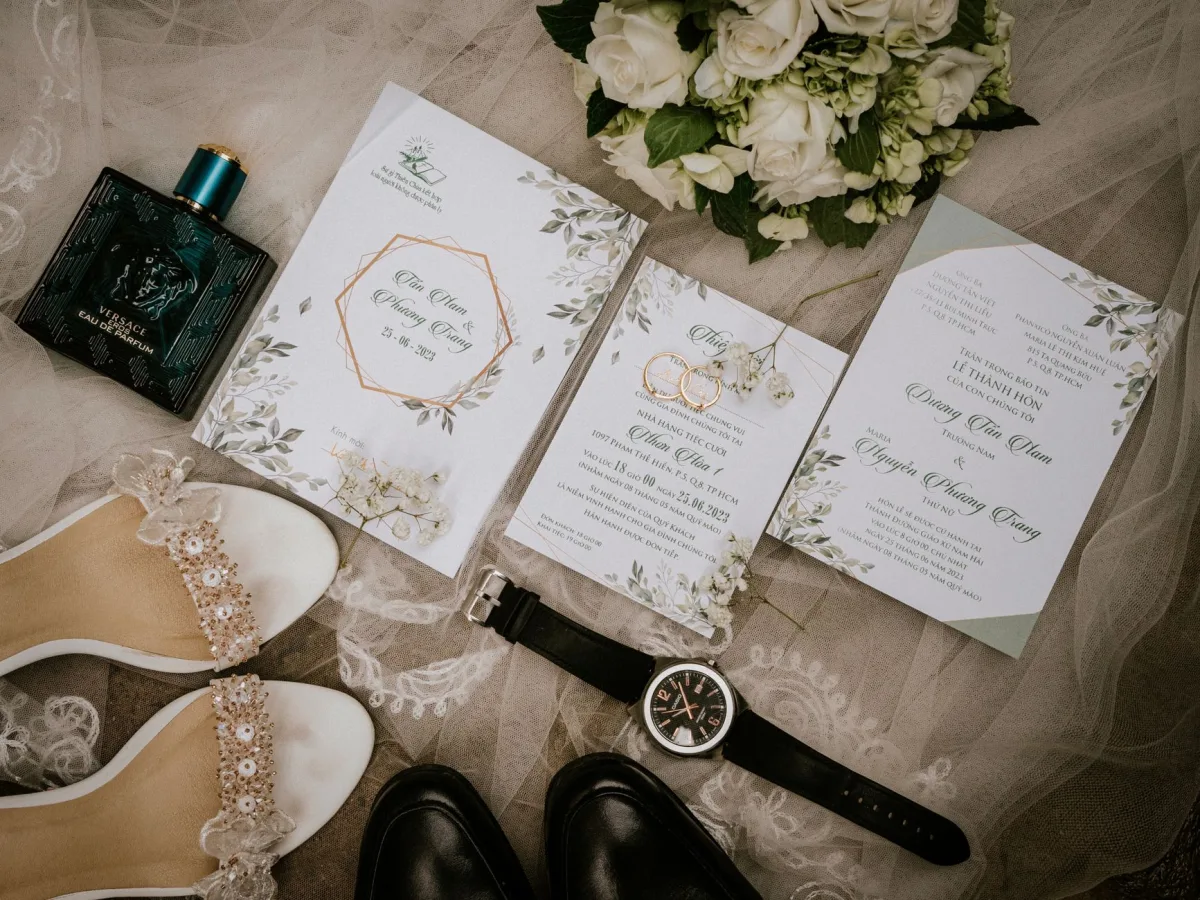
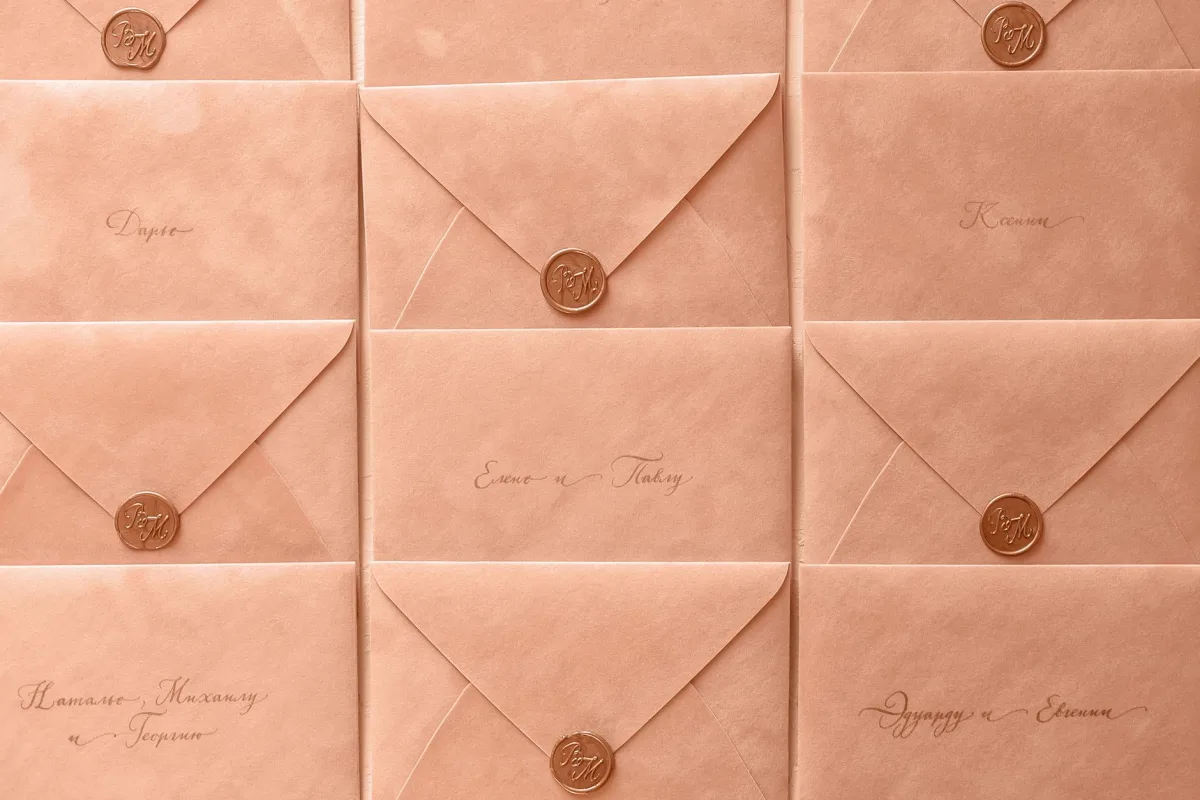
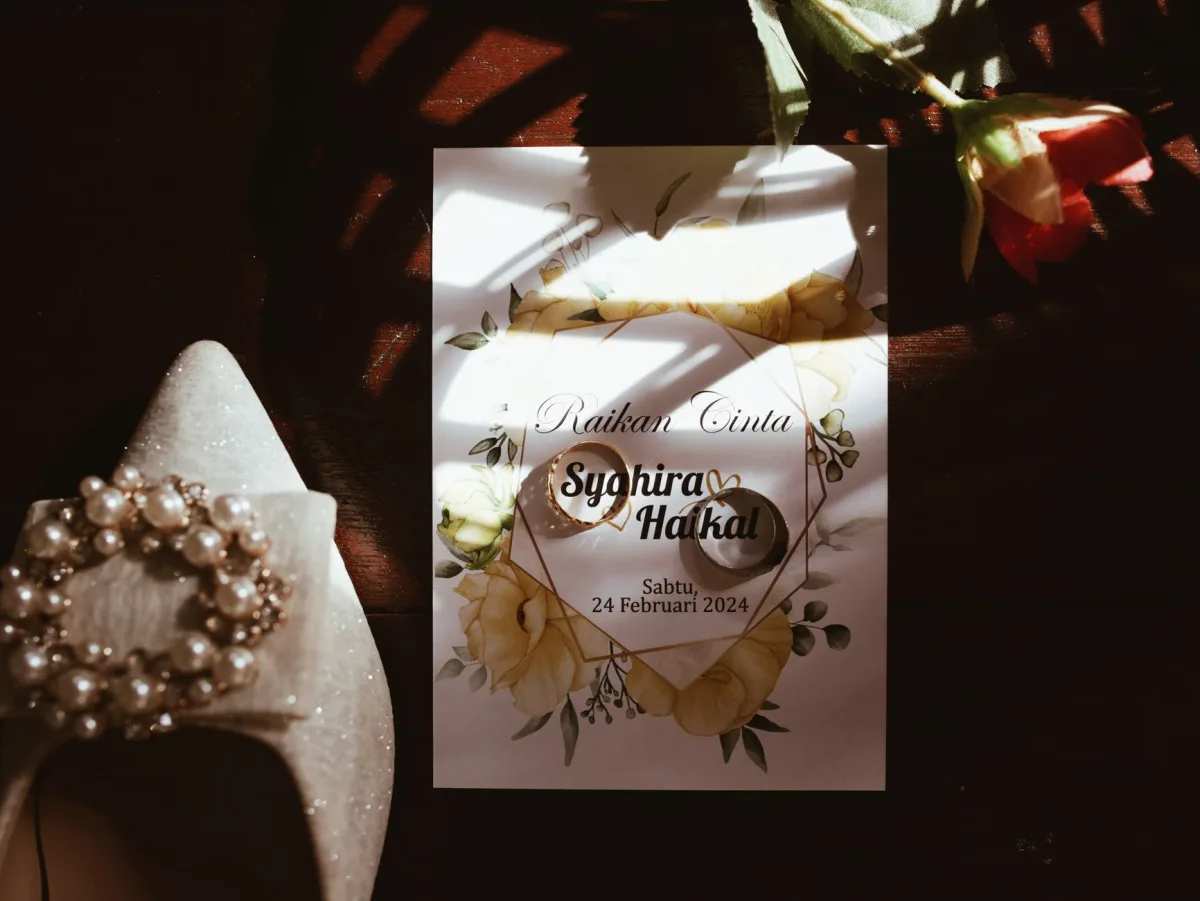
Formal messages use full names, spelled-out dates and third-person phrasing. They suit a religious ceremony, a black-tie reception, or any wedding where the tone is stately. Choose one of these when the day itself will be traditional.
- Together with their families, [Name] and [Name] request the honour of your presence at their marriage.
- Mr. and Mrs. [Surname] request the pleasure of your company at the marriage of their daughter [Name] to [Name].
- With hearts full of joy, we invite you to witness the union of [Name] and [Name] in holy matrimony.
- The families of [Name] and [Name] cordially invite you to share in the joy of their wedding celebration.
- We request the honour of your presence as we exchange vows and begin our life together.
- You are warmly invited to celebrate the marriage of [Name] and [Name], and the beginning of their new chapter.
- It is with great pleasure that we invite you to join us on the most important day of our lives.
- [Name] and [Name] invite you to share in the celebration of their marriage and the love that unites them.
- With the blessings of their families, [Name] and [Name] request the honour of your company at their wedding.
- We would be honoured to have you witness the joining of two hearts and two families.
Warm and modern messages
Modern messages drop the formality and speak plainly, in the couple's own voice. They suit a relaxed venue, a daytime celebration, or any couple who would rather sound like themselves than like a formal card. Warmth, not grandeur, is the goal here.
- We're getting married, and we can't imagine the day without you there.
- Two hearts, one love, and a whole lot of celebrating. Come be part of our day.
- He asked, she said yes, and now we'd love to see you there.
- We found our person, and now we're throwing a party. You're invited.
- Join us as we say "I do" and dance the night away with the people we love most.
- The wait is over. We're tying the knot and we want you by our side.
- Love brought us together, and we'd love for you to help us celebrate it.
- Please join us for an evening of love, laughter and happily ever after.
- We're starting our forever, and you are one of the people we most want in the room.
- Good food, good friends and a very big yes. Come celebrate our wedding with us.
Short and simple messages
When the design is doing the talking, or when you are working with a small digital card, a short message is often the strongest. A few words, clearly set, can be more elegant than a full paragraph. Pair these with the essential details close by.
- Two hearts becoming one. Please join us.
- She said yes. Save the date and celebrate with us.
- Come watch us say "I do."
- Love, joy and a lifetime ahead. You're invited.
- Better together, forever. Join us.
- Our forever begins. Be there.
- Please join us as we become "us."
- Ready to marry my best friend. Come celebrate.
- A day of love. A lifetime of us. You're invited.
- The beginning of always. Please come.
Religious and blessing-led messages
For many couples the invitation opens with faith, and a message that leads with a blessing sets that tone from the first line. The examples below are written to be respectful and adaptable across traditions; pair them with the specific verse, invocation or blessing your family uses.
- With the grace of God, we invite you to witness our marriage and to bless our union.
- As we join our lives before God, we ask for your presence and your prayers.
- By the blessing of the Almighty, [Name] and [Name] invite you to their wedding.
- We invite you to share in a sacred celebration of love, faith and commitment.
- With grateful hearts and God's blessing, we ask you to celebrate our marriage with us.
- Two souls, joined in faith. We would be honoured by your presence and your blessings.
- We ask you to stand with us as we make our vows before God and our families.
- United in faith and love, we invite you to witness the beginning of our married life.
- With thanks for the love that brought us here, we invite you to our wedding ceremony.
- May our marriage be blessed, and may your presence make the day complete.
Playful and light-hearted messages
A little humour signals a relaxed, joyful day, and for the right couple it is the most honest message of all. Keep it warm rather than sarcastic, and make sure the essential details still land clearly underneath the joke.
- We're finally doing it. Come for the vows, stay for the cake.
- Free food, an open dance floor and two people very much in love. See you there.
- She swiped right. He swiped right. Now you're invited to the wedding.
- Warning: excessive love, dancing and dessert ahead. Join us anyway.
- We're throwing a party. There'll be a wedding first, but mostly it's a party.
- Two people who couldn't agree on a Netflix show are getting married. Come watch.
- He put a ring on it. Now we're putting on a wedding. You're on the list.
- Good news: we're getting married. Better news: you're invited.
- Come for the "I do," stay for the "let's eat."
- Save the date. There will be snacks.
Messages for specific guests and situations
Some messages have to do a job as well as set a tone: signalling a reception-only invitation, an adults-only celebration, or an intimate guest list. Etiquette, as Wikipedia describes, is really about making others feel comfortable, so the trick is to be clear and kind at once. The reply itself matters most: an invitation asks, above all, for a prompt RSVP, so make that easy in every version.
- We would be delighted to have you join us for our wedding reception and evening celebration.
- Please join us for an intimate ceremony, followed by dinner and dancing with our nearest and dearest.
- To let us all relax and celebrate, we have chosen to make our wedding an adults-only occasion.
- We're keeping our day small and close. It would mean the world to have you among the few.
- Join us after the ceremony to raise a glass and celebrate the newlyweds.
- Our celebration is small by design, and you are one of the people we most wanted there.
- We warmly invite you to the evening reception to dance the night away with us.
- Kindly reply by [date] so we can save you a seat at our table.
- Your presence is the only gift we ask for. Please let us know you can come.
- We can't wait to celebrate. Please send your reply by [date].
However you phrase the welcome, remember that the message is only one part of a warm exchange that continues after the day. When guests reply and congratulate you, our collections of wedding greetings and marriage congratulations help you and your guests find the right words in return, and for the mechanics of the card itself our wedding invitations guide ties it all together. A message that sounds like you is the first note of a celebration that Matrimony360 hopes begins with finding the right person to send it about.
Frequently asked questions
What should a wedding invitation message say?
At minimum, a message should warmly invite the guest and make clear who is marrying, when and where, with a clear way to reply. Beyond that, the tone is yours to choose: formal and traditional for a stately day, warm and modern for a relaxed one, short and simple where the design carries the look, or faith-led where the ceremony is religious. Keep logistics such as dress code and directions on a separate line or card so the message itself stays warm.
How long should a wedding invitation message be?
Shorter is usually stronger. The message only needs to extend the invitation and set the tone; a single warm sentence often does more than a full paragraph. Longer, formal phrasing suits traditional or religious weddings, while a few words suit modern and digital cards. Whatever the length, make sure the essential facts, names, date, place and how to reply, remain easy to find beneath the sentiment.
Can I write my own wedding invitation message?
Absolutely, and a message in your own voice almost always reads warmer than a borrowed one. Use the examples here as a starting point: take a line you like, blend two, or let one spark your own words. Then read it aloud to check it sounds like you as a couple, and have someone else confirm the essential details are all present. A slightly imperfect line that is genuinely yours beats a flawless one that could belong to anyone.
What is the difference between an invitation message and invitation wording?
The message is the warm, emotional line that extends the invitation and sets the tone. The wording is the full etiquette of the card: the host line, the formal phrasing, the dress code and the reply instructions. You choose a message for feeling and follow wording rules for correctness. Our dedicated wording guide covers host lines, formal versus casual language and how to handle tricky situations, while this page focuses on the messages themselves.
Are funny wedding invitation messages appropriate?
They can be, when the day itself is relaxed and the humour is warm rather than sarcastic. A light message signals an informal, joyful celebration and can feel more honest than stiff formality for the right couple. The key is to keep the essential details clear beneath the joke and to make sure the tone will not confuse older guests. For a black-tie or religious wedding, a more formal or blessing-led message will usually suit better.