Wedding Invitation Wording: The Complete Guide
Every line has a job: host, request, date, reply. A line-by-line guide to wording, plus fixes for the tricky family cases.
Wedding invitation wording feels harder than it is because every line is quietly carrying a rule. The host line encodes who is welcoming the guests, the request line signals how formal the day is, and a single phrase can tell a guest whether they may bring a partner or whether children are welcome. Learn what each line is for and the whole thing becomes a fill-in-the-blanks exercise rather than an etiquette exam. This is the complete guide to wedding invitation wording, taken line by line, from the formal template to the relaxed one, with clear solutions for divorced parents, plus-ones, dress codes and the reply.
The short version
- Every line has a job. Host, request, couple, date, place, reception, reply, each carries one piece of information.
- Tone is a choice, not a rule. Formal third-person and relaxed first-person are both correct; match the card to the day.
- The host line names who invites, traditionally who pays, and modern weddings name both families or the couple.
- The envelope is the plus-one policy. Who is named on it decides who is invited, so word it precisely.
The anatomy of invitation wording
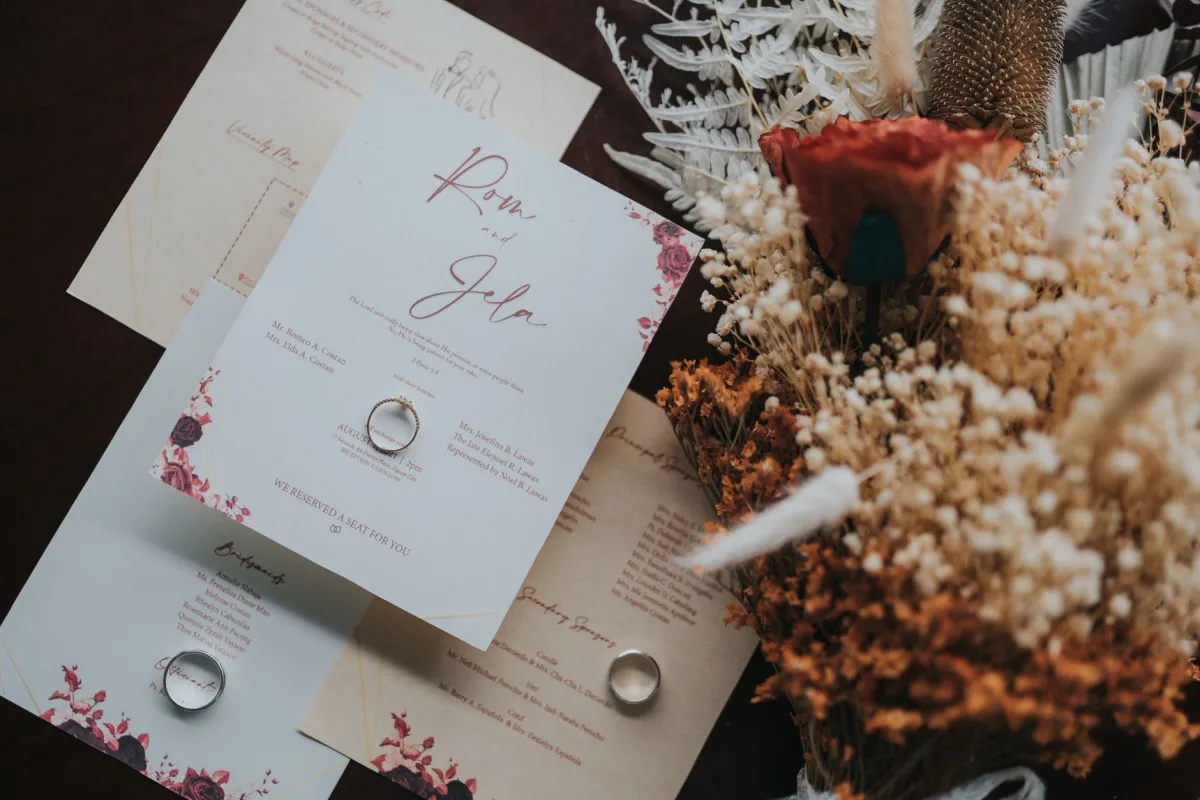
A traditional invitation reads from top to bottom in a fixed order, and each line answers one question. As Wikipedia's overview of the wedding invitation explains, the card requests the presence of the recipient at the ceremony and reception, and the wording is simply how that request is structured. Understanding the sequence is the whole game.
Host line
Who is inviting the guests, at the very top. Traditionally the bride's parents; today often both families or the couple themselves.
Request line
The invitation itself: "request the honour of your presence" or a warmer "invite you to celebrate." This sets the formality.
Couple and action
The names of the couple and what is happening: "at the marriage of." The names are the largest element on the card.
Date, time and place
When and where. Formal cards spell the date and year out in full words; relaxed cards use numerals.
Reception and reply
Where the celebration continues and how to respond. Often carried on separate lines or a separate card.
Once you can see the invitation as these five moving parts, wording it becomes a matter of filling each one in your chosen tone. For the warm, emotional phrasing that sits inside this structure, our collection of wedding invitation messages gives you more than a hundred lines to borrow, while this guide focuses on the etiquette that holds it all together.
Formal versus casual wording
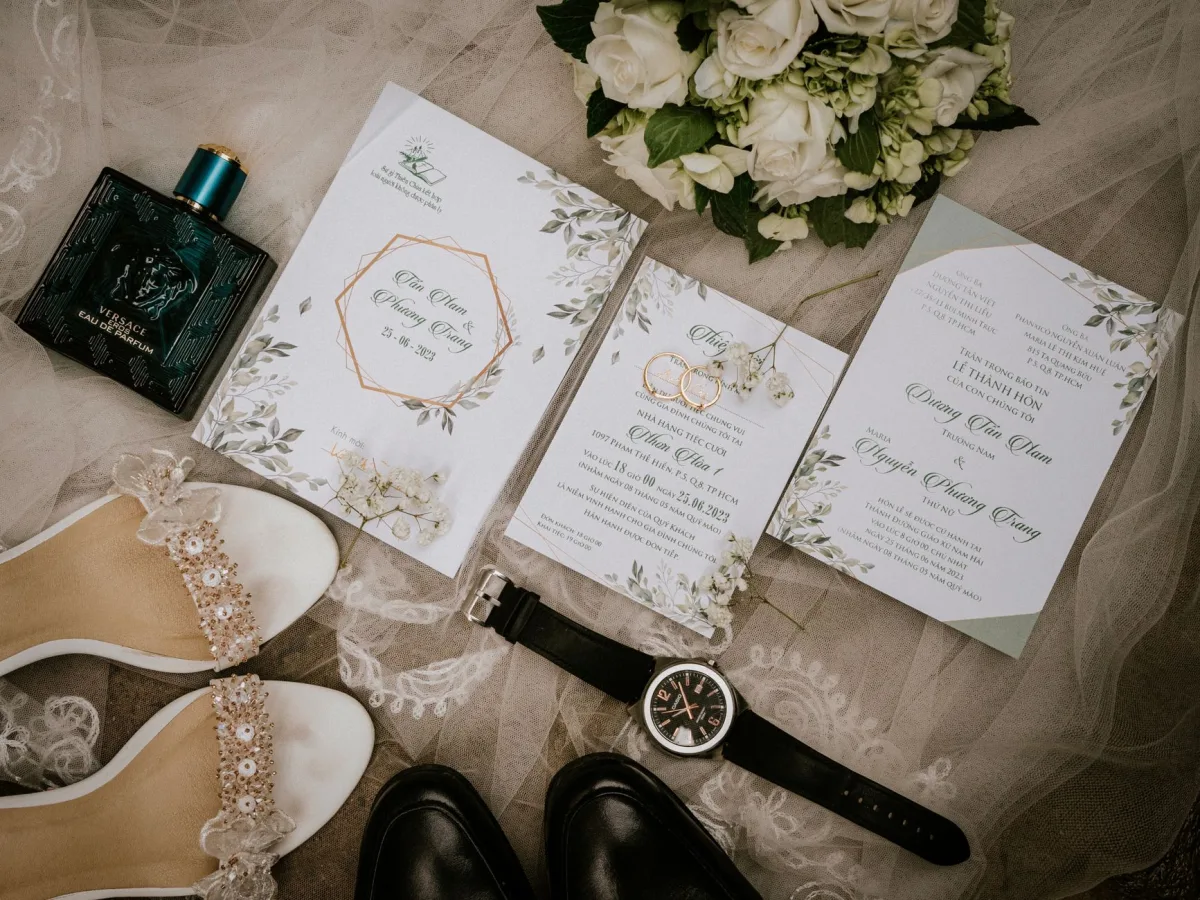

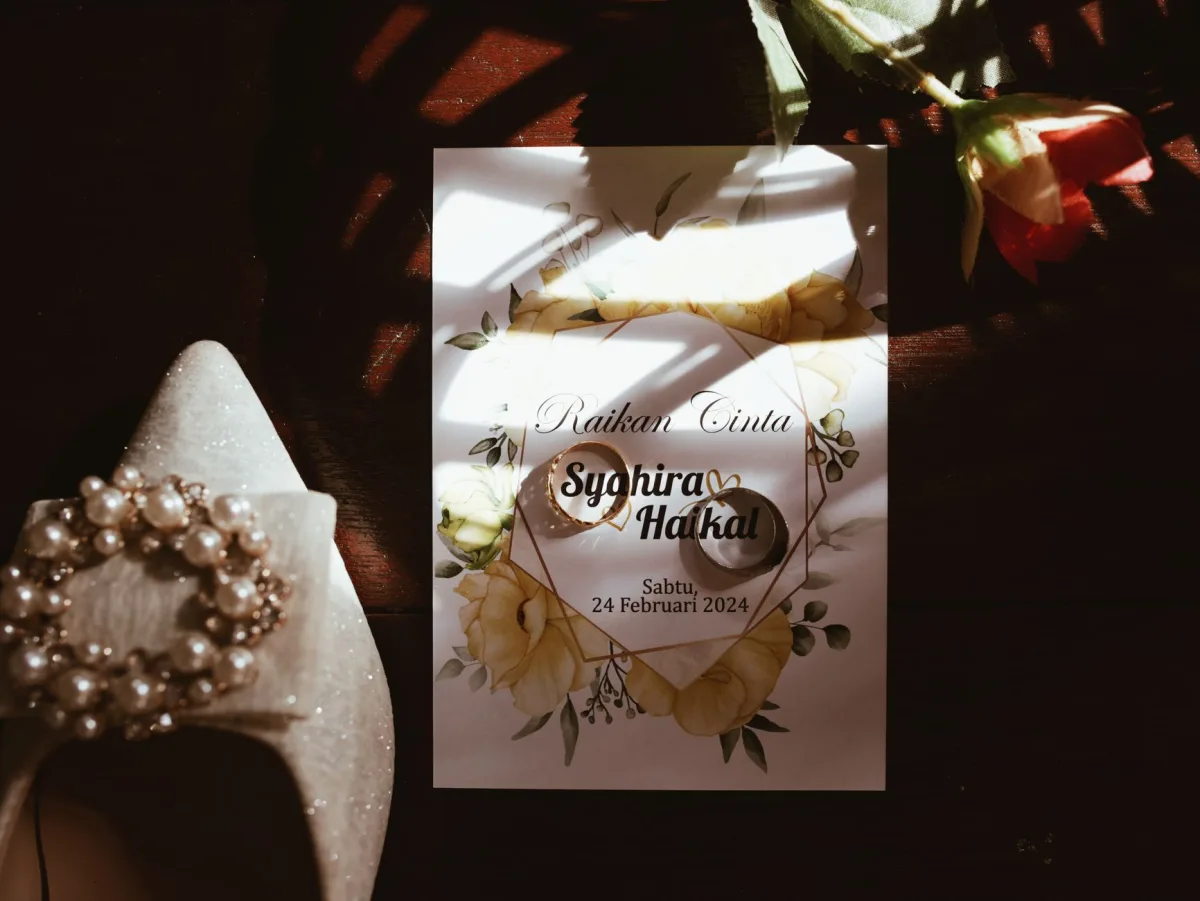
The single biggest wording decision is tone, because it quietly makes most of the others for you. Formal wording uses third-person language, full names with no abbreviations, the date and year written out in words, and a stately request line. Much of this convention traces back to the American etiquette writer Emily Post, whose early-twentieth-century writing codified many of the rules couples still reach for. A classic example: "Mr. and Mrs. John Smith request the honour of your presence at the marriage of their daughter Priya to Daniel James."
Casual wording drops all of it and speaks in the couple's own voice: "Together with their families, Priya and Daniel invite you to celebrate their wedding." Numerals are fine, first names are fine, and warmth replaces grandeur. Neither register is more correct; the only mistake is a mismatch, a black-tie card worded like a text message, or a beach-party card weighed down with "the honour of your presence." Choose the tone that matches the day, then keep every line consistent with it.
One small convention worth knowing: on formal cards, "the honour of your presence" traditionally signals a religious ceremony, while "the pleasure of your company" signals a secular one. Many couples also keep the British spelling "honour" even outside the UK, a stylistic nod to tradition rather than a rule you must follow.
Wording the host line
The host line opens the invitation and names whoever is formally welcoming the guests, which traditionally meant whoever was paying. Classic etiquette began with the bride's parents, but modern weddings are funded in every possible combination, so the honest and increasingly common approach is to reflect reality rather than an old default. The permutations below cover almost every family.
- One set of parents host: "Mr. and Mrs. John Smith request the honour of your presence at the marriage of their daughter."
- Both families host: "Together with their families, Priya Sharma and Daniel James invite you to their wedding."
- The couple host themselves: "Priya Sharma and Daniel James, together with those who raised them, invite you to celebrate their marriage."
- Both sets of parents named: list the bride's parents, then the groom's, each on their own line, before the couple.
The rule under every version is the same: the host line reflects who is welcoming the guests, and there is no single arrangement you are obliged to use. If parents are divorced, remarried or no longer living, the wording adjusts, and we cover those cases in their own section below.
Wording the request, date and details
After the host line comes the request, the couple's names, and then the practical facts. Keep a clear hierarchy: the couple's names are the largest element, the date and place are clearly secondary, and everything else is smaller still, so the eye lands in the right order. On formal cards, spell the date and year out in full, as in "Saturday, the fourteenth of June, two thousand twenty-six," and give the time as "half after four o'clock." On relaxed cards, "Saturday, June 14, 2026, at 4:30 in the afternoon" is perfectly correct.
Resist the temptation to crowd logistics onto the main card. Directions, parking, hotel blocks and dress code belong on a separate details card, which keeps the invitation clean and formal and lets you reprint the change-prone information without touching the piece guests keep. Our broader guide to wedding invitations covers how the full suite fits together, and for culturally specific multi-event wording, our guides to Indian wedding invitations and Muslim wedding invitations show how the same structure adapts to faith and tradition.
Wording the tricky situations
Most wording anxiety comes down to a short list of awkward cases, and each has a settled, gracious solution. Here is how to handle the ones that come up most.
Divorced parents. List them on separate lines, without "and" joining them, bride's mother's line first if she is hosting. If a parent has remarried and the step-parent is co-hosting, include them. The separate lines quietly convey the situation without spelling it out.
A deceased parent. You can honour a late parent gracefully, for example "Priya Sharma, daughter of Mr. Rajesh Sharma and the late Mrs. Anita Sharma," which includes them warmly without making the card sombre. Wording the couple as hosts "together with their families" is another gentle option.
Plus-ones. The envelope is the policy. If a guest may bring someone, the envelope reads "and guest" or names the partner; if not, only the invited guest is named. Never leave it ambiguous, because an unclear envelope is exactly how uninvited plus-ones appear at your final count.
Adults-only. Do not write "no children" on the invitation. Instead, address the envelope only to the named adults and, if you want to be explicit, add a gentle line to the details card such as "we have chosen to keep our celebration adults only." Precision here is kindness: it protects guests from an awkward moment at the door.
Dress code. Put it on the details card, not the main invitation, and name it plainly, black tie, cocktail, semi-formal or garden party. Vague phrases like "dress to impress" only generate questions.
Wording the RSVP and reply
The reply line does the most practical work on the whole suite, because it produces your headcount. As Wikipedia notes, receiving an invitation does not obligate a guest to attend or send a gift, but it does create one genuine obligation: a prompt reply. Word the RSVP to make that reply as easy as possible. The abbreviation itself, as the RSVP entry explains, comes from the French "repondez s'il vous plait," meaning "please respond," so the line is a request, not decoration.
Whether the reply is a printed card or a web form, spell out exactly what you need back: attendance, meal choice where relevant, and any dietary requirements, each on its own clearly labelled line. Set the deadline three to four weeks before the wedding, never on the day the venue wants numbers, so you have a buffer to chase the handful of guests who always forget. A clear, easy reply line is worth more to your planning than any flourish elsewhere on the card. When the invitation is one step in a much larger journey, Matrimony360 is here for the part that comes first, and our wedding planning checklist shows exactly where the wording and the reply deadline sit in your wider timeline.
Frequently asked questions
What is the correct order of wording on a wedding invitation?
A traditional invitation reads top to bottom in a fixed order: the host line naming who is inviting, the request line, the couple's names and the action such as "at the marriage of," then the date, time and place, and finally the reception and reply information. Each line answers one question. The couple's names should be the largest element, with the date and venue clearly secondary, so a guest's eye lands on the information in the right sequence.
How formal should wedding invitation wording be?
That depends entirely on the day. Formal wording uses third-person language, full names, dates written out in words and a stately request line, and it suits religious ceremonies and black-tie receptions. Relaxed wording speaks in the couple's own voice, uses first names and numerals, and suits informal or daytime weddings. Neither is more correct. The only real error is a mismatch between the tone of the card and the tone of the celebration it invites people to.
How do you word a wedding invitation when the couple is hosting?
When the couple hosts, the invitation is worded in their own voice, often acknowledging their families warmly. Common phrasings include "Together with their families, [Name] and [Name] invite you to celebrate their wedding," or "[Name] and [Name], together with those who raised them, request the pleasure of your company." This approach is entirely correct and increasingly common, since modern weddings are funded in every combination and the host line simply reflects who is welcoming the guests.
How do you word divorced parents on a wedding invitation?
List divorced parents on separate lines rather than joining them with "and," with the hosting parent's line placed first. If a parent has remarried and the step-parent is co-hosting, include them on that line. The separate lines convey the situation gracefully without stating it outright. If wording the parents becomes complicated, having the couple host "together with their families" is a clean and increasingly popular alternative that sidesteps the issue entirely.
What should the RSVP wording say?
The RSVP line should make replying as easy as possible and spell out exactly what you need: attendance, a meal choice where relevant, and any dietary requirements, each on its own clearly labelled line. RSVP stands for the French "repondez s'il vous plait," meaning "please respond," so it is a genuine request. Set the reply deadline three to four weeks before the wedding, not on the day the venue needs final numbers, so you have time to chase the guests who forget.