Indian Wedding Invitations: The Complete Guide
Symbols, invocations and multiple events: how Indian wedding invitations work, from the suite and wording to colour, printing and etiquette.
An Indian wedding invitation is rarely a single card and almost never a single event. It is a package, often a small box, that opens onto several days of ceremony and carries the weight of two families introducing themselves at once. Where a Western invitation solves a scheduling problem, an Indian invitation also performs a blessing, names the elders, invokes the divine and sets the tone for a celebration that can run from a mehndi night to a reception. This is the complete guide to Indian wedding invitations: what belongs in the suite, the symbols and invocations that open it, how to word the many events, and how paper and digital cards now sit side by side.
The short version
- It is a multi-event suite, not one card. A single invitation may list mehndi, sangeet, ceremony and reception.
- The invocation matters. A deity symbol or blessing traditionally opens the card, and families choose it with care.
- Both families are named, often with elders and the host generation, reflecting a union of households rather than two individuals.
- Colour carries meaning. Red, maroon and gold dominate because they read as auspicious across most Indian traditions.
What makes an Indian wedding invitation different
The first thing to understand is scale. A wedding in India is typically a sequence of functions spread across two, three or more days, and, as Wikipedia's overview of weddings in India notes, the celebrations are elaborate affairs involving extended families and many rituals that vary widely by region, religion and community. The invitation has to introduce all of that. Rather than one card for one afternoon, it is a small folder or box that walks a guest through the whole arc of events, so the reader knows not just when to arrive but which nights they are being welcomed into.
The second difference is emotional register. An Indian invitation is not neutral stationery; it is a warm, often ornate statement that a marriage is a joining of two families. The design, the language and the order of names all reinforce that. Understanding these conventions is what separates a card that feels authentic from one that merely looks decorative, and it is worth getting right because this card sets expectations for everything that follows.
The anatomy of an Indian invitation suite
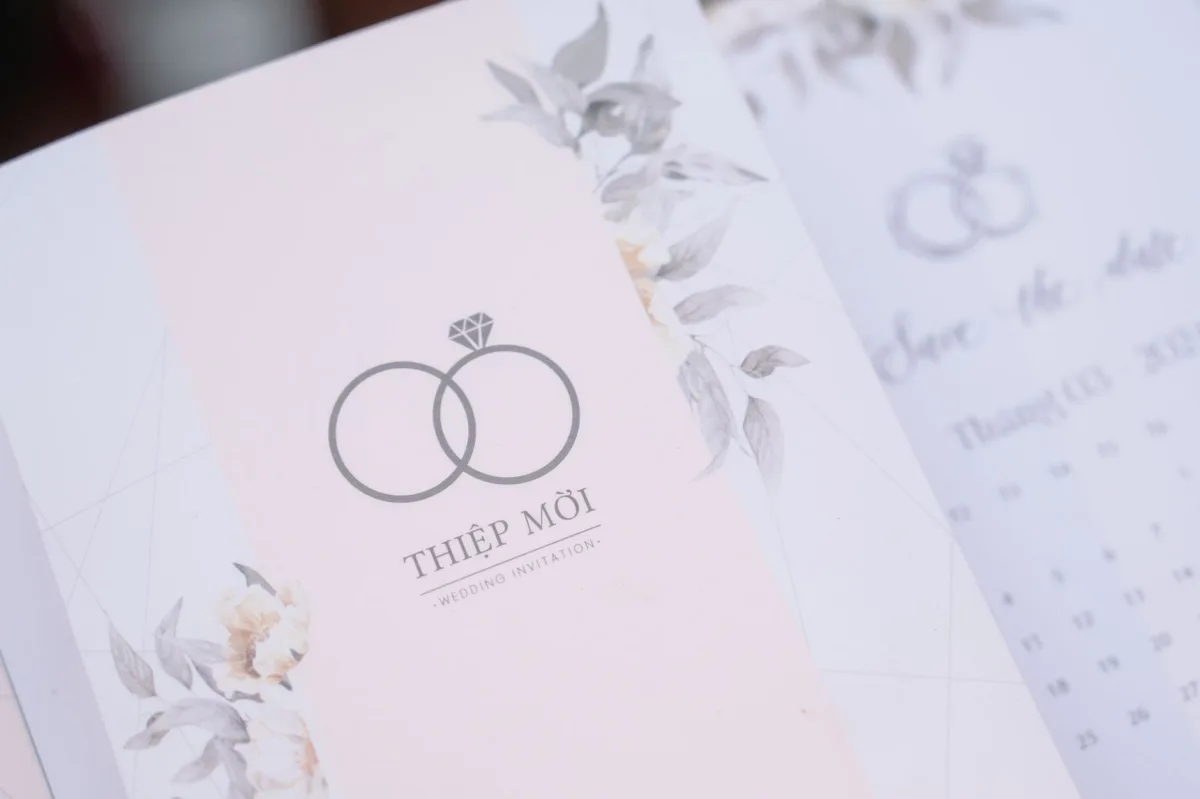
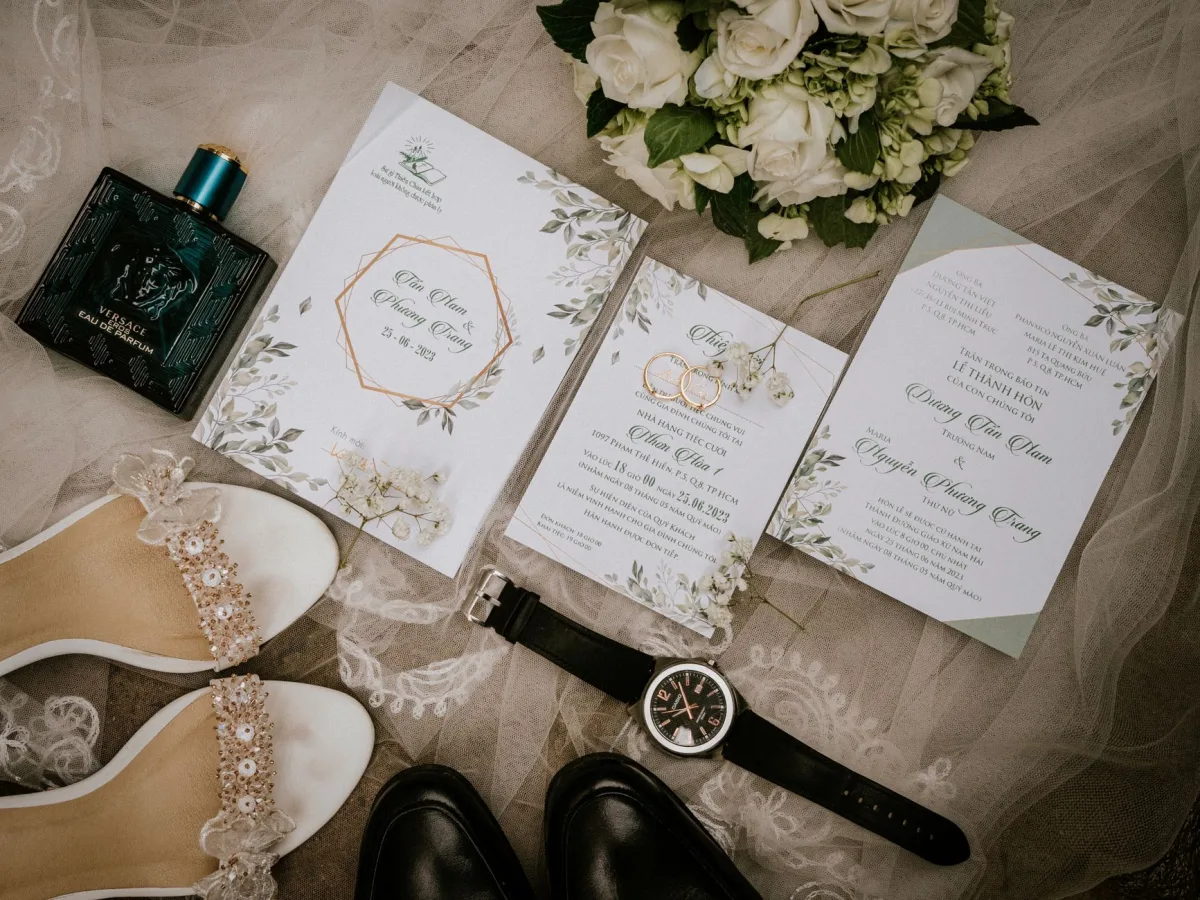
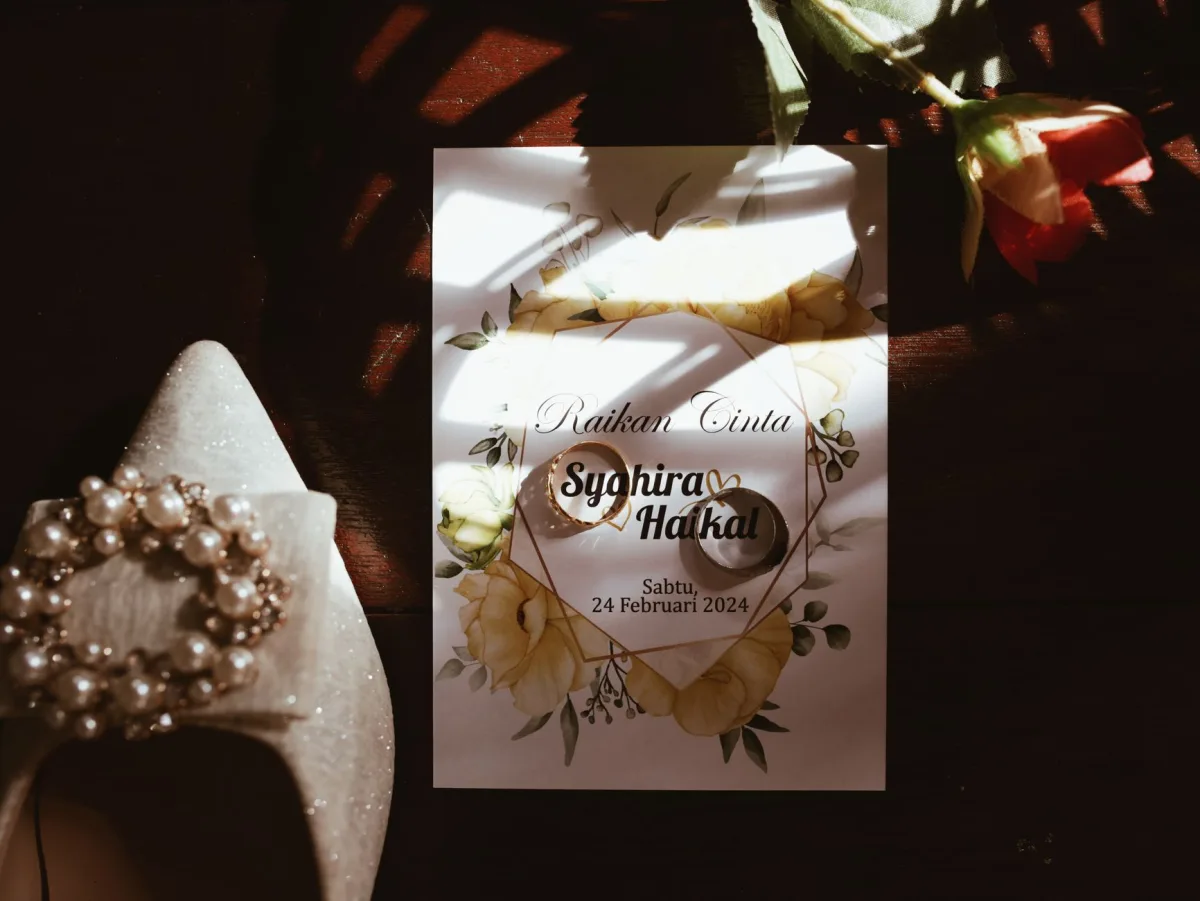
Communities differ, but a full suite tends to be built from the same recognisable parts. You will not always use every piece, yet knowing what each one does helps you decide what your celebration actually needs.
The main invitation
The formal centrepiece, opened by an invocation, naming the couple, both families and the primary ceremony. This is the card guests keep.
Event inserts
Separate cards or panels for the mehndi, sangeet, haldi and reception, each with its own date, time and venue. Some functions are smaller, closer guest lists.
The invocation panel
A deity symbol, a shloka or a religious blessing that opens the suite. It is chosen to reflect the family's faith and tradition.
Details and travel
Directions, hotel blocks, timings and dress notes for guests travelling in from other cities or countries.
The box and extras
An outer box, sweets or dry fruit, a ribbon or tassel. Elaborate suites arrive as a gift in themselves, especially for close family.
A practical tip that saves both money and confusion: keep the ceremonial main card clean and put the change-prone logistics, hotels, parking and timings, on a separate details insert. That way the piece guests are most likely to keep stays formal, and you can reprint the busy insert without touching it. If you want to see how this mirrors Western practice, our broader guide to wedding invitations lays out the same ceremonial-versus-practical split in more detail.
Symbols, deities and the invocation
Most Indian invitations open with an invocation, and for many Hindu families that means an image or name of Ganesha, the deity revered as the remover of obstacles and, as Wikipedia describes, traditionally invoked at the beginning of ceremonies and new undertakings. Placing him at the head of the card is a request for a smooth, blessed beginning. Other families open with a shloka, a couplet, or a symbol drawn from their own faith, and the choice is rarely casual: it signals the tradition the wedding belongs to before a single detail is read.
Beyond the opening invocation, motifs carry meaning throughout the design. Peacocks, lotuses, paisleys, kalash pots and elephants recur because each is read as auspicious. This symbolic layer is exactly why Indian invitations tend to be richly illustrated rather than minimal. The decoration is not ornament for its own sake; it is a visual language of blessing and good fortune, and guests from the community read it fluently.
Wording an Indian wedding invitation
The wording follows a logic that reflects the family structure. After the invocation, the invitation usually names the hosts, most often the parents or elders of both sides, and extends the request in their voice. The couple are named within that frame rather than as the sole hosts, which is a deliberate reflection of the idea that families, not just individuals, are marrying.
Language often blends English with Hindi, Urdu, Gujarati, Tamil or another regional tongue, and warm, slightly formal phrasing is the norm: families "request the pleasure of your gracious presence" and "solicit your blessings" for the couple. Each event is then listed with its own line, so a single card might set out the mehndi on one evening, the wedding ceremony the next morning, and the reception that night. If you want the full toolkit of phrases, host lines and etiquette for getting this right, our dedicated guide to wedding invitation wording walks through the formal and relaxed options side by side.
One event deserves special mention because it shapes the invitation's rhythm. The mehndi ceremony, where intricate henna is applied to the bride's hands and feet amid music and food, is a celebration in its own right and is very often given its own card or panel. Listing it clearly, with its own timing and often a lighter, more festive design, tells guests that this is a distinct night to dress for and enjoy, not a footnote to the main ceremony.
Paper, colour and printing choices
Colour is the loudest design decision, and it is not arbitrary. Red, maroon and gold dominate Indian invitations because these shades are read as auspicious, vibrant and celebratory across most of the country's traditions, echoing the palette of the Hindu wedding itself, where the bride classically wears red and gold. Contemporary couples do borrow pastels, ivory and jewel tones, particularly for the reception card, but the ceremonial main invitation still leans warm far more often than not.
Printing method sets both the texture and most of the cost. The choices below are the ones that move the price and the feel the most.
Digital printing
The most affordable route, fine for large guest lists and colourful designs. Best where the artwork carries the impact.
Foil and gold work
Metallic foil, embossing and screen-printed gold give the raised, glinting detail associated with premium Indian cards. It costs more and takes longer.
Laser-cut and handwork
Intricate cut panels, tassels, beadwork and hand-applied embellishment turn the suite into a keepsake. Reserve for close family or smaller runs.
A sensible strategy is to spend the embellishment budget on the copies going to close family and the people who will keep them, and to use a cleaner, digitally printed version for the wider list. Guests rarely compare notes on card weight, and the money saved on volume can fund the handwork where it will actually be treasured.
Digital and multi-event cards
Digital invitations have become genuinely mainstream for Indian weddings, and they suit the format unusually well. A multi-event celebration generates a lot of logistics, and a digital card or wedding website can hold every function, map and dress note in one place, update instantly if a timing changes, and collect responses without a stack of reply cards. Animated e-invites, shareable over messaging apps, have become a category of their own, letting couples reach a large, dispersed family quickly and cheaply.
The most common approach now is a hybrid. Families send an elegant printed box to elders and close relatives, for whom the physical card is a mark of respect, and a digital version to everyone else, which doubles as the practical hub for RSVPs and directions. If you are weighing this split, our guide to digital wedding invitations covers the tools, etiquette and trade-offs in depth. The card sets the tone; the digital layer carries the coordination.
Timeline and etiquette
Because Indian invitations are elaborate and often involve custom printing or boxes, the lead times are longer than for a single card. Design and printing can take several weeks, so ordering roughly two to three months before the wedding is wise, with the finished suites sent to guests about five to seven weeks ahead. Close family and out-of-town relatives are often invited earlier and more personally, sometimes in person, which is itself a mark of respect in many communities.
Etiquette here is warm rather than rigid, but a few conventions hold. Elders' names and titles should be spelt correctly and placed with care, since their inclusion honours them. The invocation should match the family's faith. And the sequence of events should be unambiguous, because a guest travelling for three days of functions needs to know exactly which they are welcome to. Get those right and the invitation does its deeper job: it makes every guest feel personally, respectfully drawn into the family's celebration. When the wedding is one chapter of a larger story that begins with finding the right partner, that is where Matrimony360 comes in, and our wedding planning checklist shows where stationery sits among everything else you are arranging.
Frequently asked questions
What should an Indian wedding invitation include?
A full Indian invitation suite usually opens with an invocation or deity symbol, then names the couple and both families as hosts, and lists the main ceremony along with separate cards or panels for events such as the mehndi, sangeet, haldi and reception. Many suites add a details insert with directions, hotels and timings, and arrive in a decorative box, sometimes with sweets. You do not need every piece, but the invocation, the family names and each event's timing are the essentials.
Why do Indian wedding invitations begin with Ganesha?
In many Hindu families the invitation opens with an image or name of Ganesha because he is revered as the remover of obstacles and is traditionally invoked at the start of ceremonies and new undertakings. Placing him at the head of the card is a request for an auspicious, obstacle-free beginning to the marriage. Families of other faiths open instead with their own blessing, shloka or symbol, so the invocation always signals the tradition the wedding belongs to.
What colours are used for Indian wedding invitations?
Red, maroon and gold dominate because they are read as auspicious, celebratory and full of life across most Indian traditions, echoing the red and gold of classic bridal wear. These warm tones are most common on the ceremonial main card. Contemporary couples increasingly borrow pastels, ivory and jewel tones, especially for reception cards or modern designs, but the traditional palette still leads, particularly for the primary invitation.
When should Indian wedding invitations be sent?
Because the cards are often custom-designed and elaborate, order them about two to three months before the wedding to allow for printing, foiling or handwork. Send the finished suites to guests roughly five to seven weeks ahead, and invite close family and out-of-town relatives earlier, often more personally. The longer lead time reflects both the complexity of the printing and the multiple events guests may need to arrange travel around.
Can Indian wedding invitations be digital?
Yes, and digital cards suit the multi-event format well. A digital invitation or wedding website can hold every function, map and dress note in one place, update instantly, and collect RSVPs without stacks of reply cards. Animated e-invites shared over messaging apps are now very common. Many families use a hybrid: an elegant printed box for elders and close relatives, and a digital version for the wider guest list that also serves as the practical hub.