Wedding Planning Checklist: Step by Step
A practical, timeline-based wedding planning checklist with budget percentages and a clear sequence, so nothing lands on you all at once.
A wedding planning checklist only works if it is honest about two things: money and time. Most couples do not run out of either because they are careless, they run out because the plan was never sequenced. Book the venue too late and every other date bends around whatever is left. Skip the budget split and the flowers quietly eat the honeymoon. This is a full, step-by-step wedding planning checklist organised by how far out you are, from twelve-plus months down to the morning after, with realistic budget percentages, a timeline you can actually follow, and the tips that save couples the most stress. Work it top to bottom and nothing lands on you all at once.
The short version
- Set the budget before the date. The number decides the guest list, and the guest list decides everything else.
- Book the big three first: venue, then the date, then the people who can only serve one couple a day.
- Roughly half your budget is venue and catering. Plan the other half around what is left, not the other way round.
- Keep a single master list. One shared document beats ten scattered wedding planning lists every time.
Start with the three numbers that anchor everything
Before a single vendor is contacted, settle three figures: your total budget, your rough guest count, and your target season. These three are locked together. Raise the guest count and the per-head catering cost climbs. Pick peak wedding season and venues quote more and sell out sooner. Cut the budget and the honest response is to cut the guest list, because a wedding is priced per person far more than most couples expect.
Do this together, on paper, before either of you falls in love with a venue you cannot afford. The couples who overspend almost always started with the venue and reverse-engineered a budget to justify it. Start with the number instead, and let it protect you.
Total budget
The all-in ceiling, including a contingency buffer. Agree it before you shop.
Guest count
The single biggest cost driver. Every head carries food, drink and a seat.
Season and date
Peak dates cost more and book out first. Flexibility is leverage.
Contingency
Hold back 5 to 10 percent. Something always moves. This is what absorbs it.
How to split the budget: a realistic breakdown


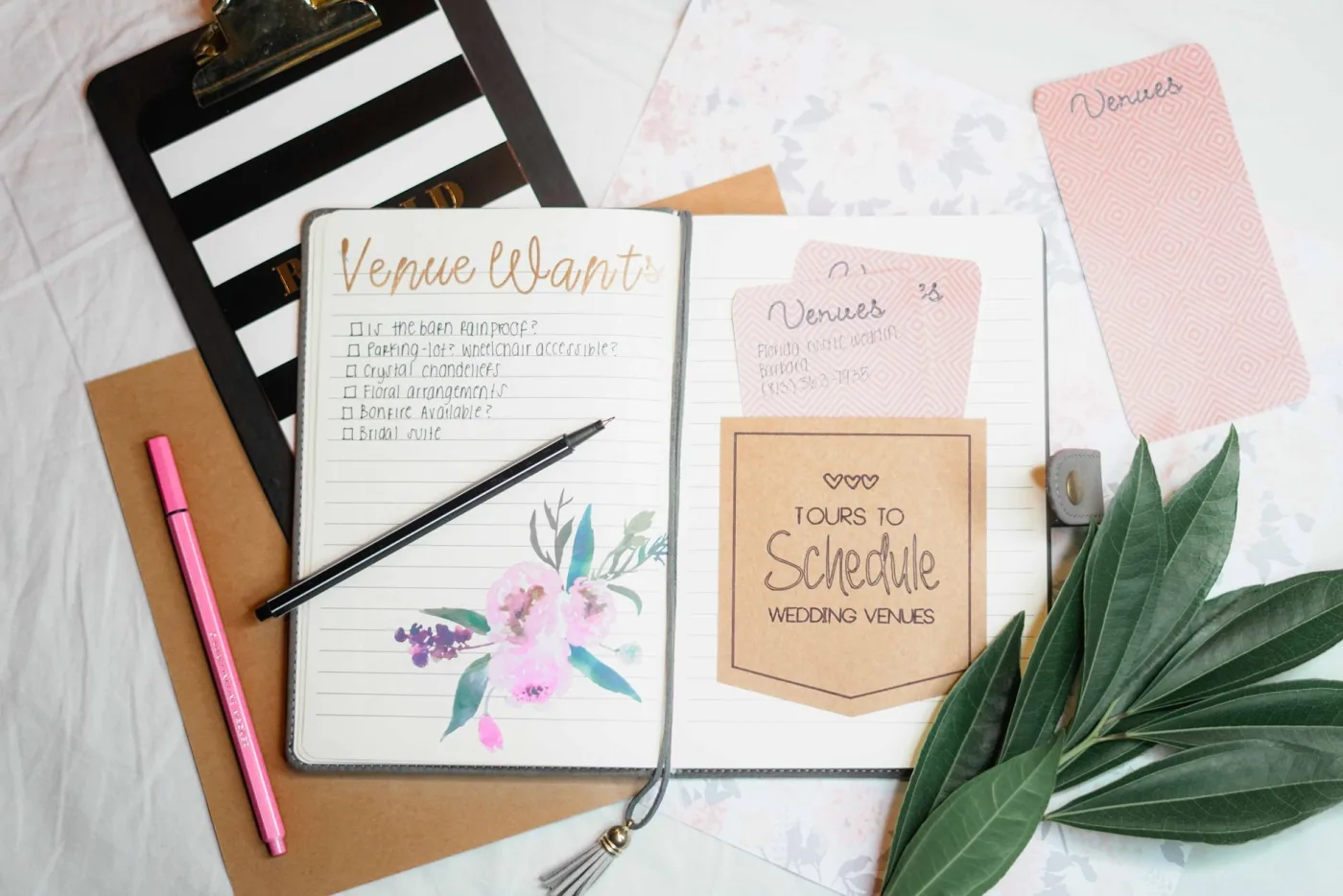
Currencies vary, but the proportions are remarkably consistent across markets. Treat the table below as percentages of whatever your total is. The two lines that dominate, venue and catering, typically swallow close to half of everything, which is exactly why you decide them first and build the rest around what remains.
| Category | Typical share of budget | What it covers |
|---|---|---|
| Venue and catering | 45 - 50% | Space hire, food, drink, service, rentals |
| Photography and video | 10 - 12% | The only thing you keep afterwards |
| Attire and beauty | 8 - 10% | Outfits, alterations, hair, makeup |
| Flowers and decor | 8 - 10% | Ceremony, tables, staging, lighting |
| Music and entertainment | 7 - 8% | Band, DJ, ceremony musicians |
| Stationery and invitations | 2 - 3% | Save-the-dates, invites, signage |
| Rings | 2 - 3% | The bands, not the engagement ring |
| Planner or coordinator | 5 - 10% | Full planning or day-of coordination |
| Contingency | 5 - 10% | The buffer that keeps you calm |
Add the numbers and you will notice they leave little slack, which is the point. If a category matters more to you than the average, raise it and cut somewhere else on purpose. That is a decision. Letting one category creep because you never set a share is not.
Where the money actually goes
Approximate share of a typical wedding budget, largest first.
If those splits are new to you, our companion wedding budget guide walks through how to set each figure against real quotes and where couples most often overspend.
The wedding planning timeline at a glance
Sequencing is the whole game. The checklist below is grouped by how far out you are. The single rule underneath all of it: lock anything that can only serve one wedding per day as early as you can. Venues, photographers and the best planners sell out first, not last.
The plan front-loads the irreversible decisions and leaves the reversible ones for later.
12+ months out: the foundations
This is the stage that makes or breaks the calm of everything after. Almost nothing here is creative. It is all structure.
- Agree the total budget and how it is being funded. Have the awkward money conversation now, not in month three.
- Draft the guest list in two tiers: must-invite and would-like-to-invite. The venue capacity will decide the second tier for you.
- Pick a season and a shortlist of dates, not one fixed date. Flexibility gets you better venues at better rates.
- Tour and book the venue. This is the anchor booking. Once it is signed, your real date is set.
- Decide whether you want a planner. If you do, hire early so they can steer the vendor choices that follow.
- Book the one-a-day vendors: photographer, and videographer if you want one.
Choosing a venue is the decision every other choice inherits, so it deserves the most homework. Our guide to choosing a wedding venue covers capacity, hidden costs and the questions that separate a good quote from a nasty surprise.
The one thing to lock first: the venue and the date move together, and they move everything else. Do not order invitations, book a honeymoon, or promise anyone a date until the venue contract is signed. A deposit paid on the wrong assumption is the most common early wedding planning mistake, and the least necessary.
9 months out: the core team
With the venue anchored, build the team around it. These vendors shape the day as much as the venue does.
- Book catering if the venue does not provide it, and schedule a tasting.
- Book the music: band or DJ, plus any ceremony musicians. Good acts book a year out.
- Choose your florist and decor direction. Share a single mood reference so quotes are comparable.
- Start attire early. Made-to-order and bridal gowns can take six months plus fittings.
- Finalise the guest list to a real number. Everything downstream is priced off it.
- Send save-the-dates, especially for a destination wedding or a peak-season date.
6 months out: the details take shape
The big bookings are done. Now the day gets its texture, and its paperwork.
- Order invitations and plan the stationery suite. Give yourself time for proofs and reprints.
- Book officiant and confirm ceremony requirements, including any documents or notice periods.
- Arrange transport for the couple and, if needed, for guests between venues.
- Book the honeymoon and check passports and visas are valid well past the travel date.
- Reserve guest accommodation or a room block if many are travelling.
- Register gifts or set up whatever gift approach suits you.
Invitations carry more weight than couples expect: they set the tone, encode the dress code, and drive your final numbers through the RSVP. Our wedding invitations guide covers wording, timing and how to phrase an RSVP that people actually return on time.
3 months out: lock the specifics
From here the work is confirmation rather than decision. If the earlier stages were done well, this stage is calm.
- Finalise the menu and drinks after your tasting, including vegetarian and allergy options.
- Confirm the ceremony order and readings, and brief anyone with a role.
- Buy the wedding bands and allow time for sizing and engraving.
- Book hair and makeup trials. Do the trial, do not skip it.
- Send the invitations with a clear RSVP deadline set about four weeks before the day.
- Draft the day-of timeline and share a first version with your key vendors.
| Timeline | Priority tasks | Why now |
|---|---|---|
| 12+ months | Budget, venue, date, photographer | The irreversible, one-a-day bookings |
| 9 months | Catering, music, florist, attire, guest list | The core team and the real headcount |
| 6 months | Invitations, officiant, honeymoon, transport | Long lead times and paperwork |
| 3 months | Menu, bands, trials, send invitations | Confirming, not choosing |
| 1 month | Final count, seating, payments, confirmations | Turning plans into instructions |
| Week of | Rehearsal, hand off to coordinator, rest | You should be a guest at your own wedding |
1 month out: turn plans into instructions
This is the busiest stretch on paper, but every task is small if the earlier ones were done.
- Chase outstanding RSVPs and lock the final guest count.
- Give the venue and caterer the final numbers, including dietary needs.
- Finish the seating plan. This is far easier once the count is truly final.
- Confirm every vendor in writing: arrival times, contacts, and what each is delivering.
- Make final payments that are due, and note the balances owed on the day.
- Do the final dress fitting and break in your shoes at home.
- Write a one-page run sheet for whoever is coordinating, with a phone contact for each vendor.
Assign a point person for the day. Whether it is a hired coordinator or a calm, organised friend, someone other than the couple must hold the run sheet and field the vendor calls. The couple should not be answering their phone during the ceremony. This one handoff is the difference between enjoying the day and managing it.
Week of the wedding: hand it over
The plan is finished. Your only job now is to protect your own energy and let the people you hired do their work.
- Confirm arrival times once more with the venue, photographer and any transport.
- Hand the run sheet, timeline and payments to your coordinator or point person.
- Pack an emergency kit: sewing kit, pins, plasters, pain relief, a phone charger, snacks.
- Attend the rehearsal if you are having one, and brief the wedding party.
- Delegate the small errands so you are not running them yourself the day before.
- Rest, hydrate and eat properly. Sleep is a planning task too.
The day after: the short but real list
A few loose ends are worth handling while everything is fresh, then genuinely stop.
- Arrange returns of hired suits, outfits or equipment before late fees start.
- Settle any final vendor balances or gratuities not paid on the day.
- Send the flowers onward to a hospital or care home rather than letting them wilt.
- Note thank-you gifts and cards while you still remember who did what.
- Enjoy the reception glow. The reason for all of this is the celebration itself.
The reception is where the plan finally becomes a party. If you want to understand the flow of the celebration itself, the customs behind a wedding reception are worth a read while you shape your own running order.
Do you actually need a wedding planner?
Not every couple does, but the question deserves an honest answer rather than a reflex. A wedding planner buys you time, vendor relationships and someone whose only job on the day is to keep the plan on the rails. Full planning suits large or destination weddings and couples short on time. Day-of coordination, which costs far less, suits couples who enjoy the planning but do not want to run the event themselves.
If you are weighing it up, our guide on hiring a wedding planner lays out what each level of service includes and how to tell whether it earns its place in your budget. And if you are still choosing partners for the whole journey, Matrimony360 exists to help couples plan the marriage as thoughtfully as the wedding day.
Frequently asked questions
How far in advance should I start wedding planning?
Twelve to fourteen months is comfortable for most weddings, and it is driven by the venue rather than the couple. Popular venues and sought-after photographers often book twelve to eighteen months out for peak-season dates. If your timeline is shorter, it is still very doable: prioritise the venue, date and photographer first, stay flexible on the date, and consider a shoulder or off-season month where availability and pricing both ease.
What percentage of the budget goes to the venue and catering?
Venue and catering together typically take 45 to 50 percent of the total, making them by far the largest line. Because they are also priced per guest, they are the reason your guest count matters so much. Set this figure first, then build photography, attire, flowers, music and the rest around what remains, keeping a 5 to 10 percent contingency untouched.
What should I book first?
Book the things that can only serve one wedding per day, in this order: the venue and date, then the photographer, then a planner if you want one, then catering and music. These sell out first and are the hardest to replace late. Reversible choices like flowers, stationery and favours can wait until the core team is locked.
How do I keep track of everything without getting overwhelmed?
Keep one master list rather than several scattered wedding planning lists. A single shared document or spreadsheet, organised by the timeline in this article, means both partners see the same status and nothing is tracked in two places. Work it top to bottom, tick as you go, and resist starting later-stage tasks before the foundations are signed.
Do I really need a wedding planner?
No, but many couples benefit from at least day-of coordination, which is much cheaper than full planning. Full planning makes sense for large or destination weddings and for couples short on time. If nothing else, assign one person other than the couple to hold the run sheet and manage vendors on the day, so you can actually be present at your own wedding.
How much contingency should I hold back?
Keep 5 to 10 percent of the total unallocated. Quotes shift, guest numbers move, and small extras accumulate as the day approaches. A buffer means those surprises are absorbed by the plan instead of by your stress levels or by cutting something you cared about.