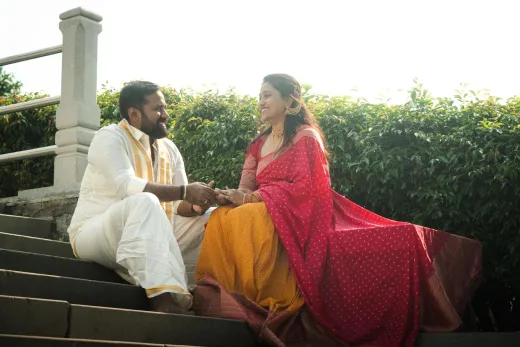
Arranged Marriage: The Complete Guide
A neutral pillar on arranged marriage: how it works, the vital arranged-versus-forced distinction, its history, and considering a match today.
An arranged marriage is one in which families, or a matchmaker acting for them, take the leading role in finding a partner, rather than the couple meeting entirely on their own. It is one of the oldest and most widespread ways humans have paired up, and it is often badly misunderstood in places where love marriage is the norm. This guide explains what arranged marriage actually is, how it differs from a forced marriage, how the modern version really works, and what the evidence does and does not say, all treated as a matter of fact rather than judgement.
The short version
- Families lead the introduction. The couple is matched through relatives or a matchmaker, then usually chooses whether to proceed.
- Arranged is not forced. Consent is the dividing line; a marriage without it is a forced marriage, which is a serious abuse.
- It has modernised. Today it often means an introduction plus courtship, not a decision made over the couple's heads.
- It remains common worldwide. Especially across South Asia, the Middle East and parts of Africa and East Asia.
What an arranged marriage actually is
An arranged marriage is a marriage in which the bride and groom are selected primarily by people other than the couple themselves, most often parents or extended family, sometimes with the help of a professional matchmaker. The key word is selected: families narrow the field, make introductions, and vouch for compatibility across background, values and family standing before the couple ever meets.
Crucially, in the mainstream form the couple retains a say. They meet, they spend time getting to know each other, and in most modern settings either party can decline. This is very different from the caricature of two strangers pushed together at an altar. Historically arranged marriage was the global default rather than an exception, and it was never a single practice; it ranged from purely parental choice to something close to an assisted introduction, depending on culture and era.
Arranged marriage
Families or a matchmaker lead the search and introduction. The couple typically meets and, in the modern form, consents before proceeding.
Forced marriage
One or both people are married without their free and full consent. This is a serious human rights abuse and is not the same as arranged marriage.
Love marriage
The couple chooses each other independently, with family involvement coming later, if at all. The default in most Western societies.
Assisted or introduced marriage
A modern hybrid: family or a service makes the introduction, then the couple courts and decides for themselves. Increasingly the norm.
Arranged is not forced: the line that matters
The single most important distinction in this whole subject is between arranged and forced marriage, and confusing the two does real harm to millions of people in legitimate, consensual marriages. A forced marriage is one in which one or both parties are married against their will, without free and full consent, often under pressure, coercion or threat. It is recognised internationally as a human rights abuse and is illegal in many countries.
An arranged marriage, properly understood, rests on consent. Families propose and facilitate, but the individuals agree. The presence of that genuine, uncoerced yes is what separates a respected cultural practice from an abuse. Any arrangement that removes a person's real ability to say no has crossed the line into forced marriage, regardless of what it is called. Keeping this distinction sharp protects both the tradition and the people within it.
How modern arranged marriage works
The contemporary process looks less like a decree and more like a carefully vetted introduction. It usually begins with families or a matchmaker identifying potential matches based on background, values, education, family reputation and, for many, faith or community. Where earlier generations relied on relatives and local networks, today much of this search happens through matrimonial services and community introductions.
Once a promising match is found, the couple meets, often several times and increasingly with a period of getting to know each other before any commitment. Families stay involved, but the emphasis has shifted toward the couple's own comfort and choice. In many communities the modern arranged marriage is best described as an introduction the couple is free to accept or decline, followed by a courtship that would look familiar to anyone.
Matrimonial platforms have reshaped this landscape by widening the pool far beyond a family's immediate network while keeping the family-led, intention-serious spirit intact. If you are exploring this route, it is worth understanding how the modern rishta process and the traditional marriage bureau fit together, and how a service like Matrimony360 supports family-involved introductions while leaving the decision with the couple. Always check any specific platform's own terms and features directly before relying on them.
A short history and where it happens
For most of recorded history, and in most cultures, marriage was arranged. It was tied to alliances between families, the transfer of property and status, and the continuity of lineage rather than to individual romantic choice, which is a comparatively recent basis for marriage. The idea that people should marry primarily for love became widespread in the West only in the last few centuries.
Today arranged marriage remains common across South Asia, the Middle East, and parts of Africa and East Asia, and it persists among diaspora communities worldwide. Its forms vary enormously by region, religion and class, from tightly family-directed matches to light-touch introductions. One custom historically bound up with arranged marriage in some regions is dowry, the transfer of parental property to a daughter at her marriage; it is a separate practice, legally restricted or banned in several countries, and not a defining feature of arranged marriage itself.
Strengths and criticisms, fairly stated
Arranged marriage attracts strong opinions in both directions, and an honest guide has to hold both. Supporters point to real strengths, while critics raise serious and legitimate concerns. The practice is neither the romantic tragedy of one stereotype nor the flawless system of another.
- Family support. Because families are invested from the start, couples often begin with a strong network behind them, which can steady a marriage through hard times.
- Shared foundations. Matching on values, background and expectations can reduce some common sources of conflict, though it guarantees nothing.
- Serious intent. Everyone involved is oriented toward marriage rather than casual dating, which some people find clarifying and efficient.
- The consent risk. The gravest criticism is that family pressure can shade into coercion, especially for young people, which is exactly where arranged can slide toward forced.
- Individual freedom. Critics argue the model can subordinate personal choice, particularly for women, to family and community priorities.
The evidence on outcomes is mixed and often poorly measured, so claims that arranged marriages are categorically happier or unhappier than love marriages should be treated with caution. What matters far more than the label is whether both partners freely consented and are treated as equals within the marriage. For the wider view of how people pair up, our overview of marriage itself sets arranged marriage in context.
If you are considering an arranged match
For anyone weighing this path, whether by family tradition or personal choice, a few grounded principles help. Above all, protect consent as non-negotiable: you should feel genuinely free to say no at any stage, and a healthy family process makes room for that. Take the time to actually know the person; a good arrangement gives you real opportunities to talk, meet and assess compatibility rather than rushing to commitment.
Ask the questions that matter to a shared life, about values, finances, family, faith, children and expectations, before the wedding rather than after it. Involve your family for their support and knowledge while keeping your own judgement in the driving seat. And treat the introduction as the beginning of a relationship to be built, not a finished decision. Whether a marriage begins with an arrangement or a chance meeting, the work of building it is the same, a theme our guide to making marriage work explores in depth.
The bottom line
Arranged marriage is a long-standing, widely practised way of pairing up in which families lead the introduction and the couple, in its mainstream modern form, consents and chooses. It is not the same as forced marriage, and keeping that line bright protects the millions of people in consensual arranged marriages from an unfair stereotype. Understood honestly, it is neither superior nor inferior to love marriage; it is simply a different starting point. What determines whether any marriage flourishes is not how it began but the free consent, respect and effort the two people bring to it.
Frequently asked questions
What is an arranged marriage?
It is a marriage in which the partners are selected primarily by families or a matchmaker rather than by the couple meeting entirely on their own. Families narrow the field and make the introduction based on background, values and compatibility. In the mainstream modern form the couple then meets, gets to know each other, and chooses whether to proceed, so it is a facilitated introduction rather than a decision made over their heads.
Is an arranged marriage the same as a forced marriage?
No, and the distinction is critical. An arranged marriage rests on the free and full consent of both partners; families propose and facilitate, but the individuals agree. A forced marriage is one where one or both people are married against their will, under pressure or coercion, which is a recognised human rights abuse and illegal in many countries. Consent is the line that separates the two.
How does a modern arranged marriage work?
Families or a matchmaker identify potential matches based on background, values, education and often faith or community, increasingly using matrimonial services to widen the pool. The couple then meets, usually more than once and often with a period of getting to know each other, before deciding. Family stays involved, but the emphasis has shifted toward the couple's own comfort and their freedom to accept or decline.
Where are arranged marriages common?
Arranged marriage remains common across South Asia, the Middle East, and parts of Africa and East Asia, and it persists among diaspora communities worldwide. Its forms vary widely by region, religion and class, ranging from strongly family-directed matches to light-touch introductions that the couple is entirely free to accept or decline.
Are arranged marriages happier than love marriages?
The evidence is mixed and often poorly measured, so confident claims in either direction should be treated with caution. What matters far more than whether a marriage was arranged or chosen is whether both partners freely consented, are treated as equals, and put in the ongoing effort a good marriage requires. How a marriage begins predicts its success much less than how the couple tends it afterward.
What should I ask before agreeing to an arranged match?
Cover the questions that shape a shared life before the wedding, not after: values, finances, family expectations, faith, whether and how you want children, and where you plan to live. Make sure you have real chances to talk and meet, involve your family for support while keeping your own judgement central, and confirm that you feel genuinely free to say no at any stage. That freedom is the mark of a healthy process.