Banquet Halls Near Me: How to Choose
How to find, shortlist and choose a banquet hall near you, with the hall-specific criteria, questions and contract red flags the map pins never show.
Type "banquet halls near me" into a map and you get a screen of pins, a few star ratings, and no real way to tell a hall that will host your wedding smoothly from one that will nickel and dime you into a bad month. Halls are their own kind of venue: they run on per-plate minimums, guaranteed guest counts and in-house catering rules that behave nothing like a garden or a barn hire. This guide is a repeatable method for your own area: how to search and shortlist the halls near you, the comparison criteria specific to halls, the questions to ask before you pay a deposit, the contract clauses that quietly cost couples the most, and a booking checklist. It does not invent hall names or citywide prices, because an honest guide cannot. It hands you the process and the price bands, so you can judge the real quotes you collect.
The short version
- Halls price by the plate, not the room. The per-head food and drink figure, times a minimum guaranteed count, is the real bill.
- You pay for the guarantee, not the attendance. A hall's minimum guest count is charged even if fewer people show up.
- The restrictions are the story. Outside-caterer bans, decor limits, corkage and overtime charges move the number more than the hire fee.
- Everything agreed on the tour goes in writing, or it did not happen. The contract, not the coordinator's smile, is what binds a hall.
What a banquet hall actually is, and when it fits
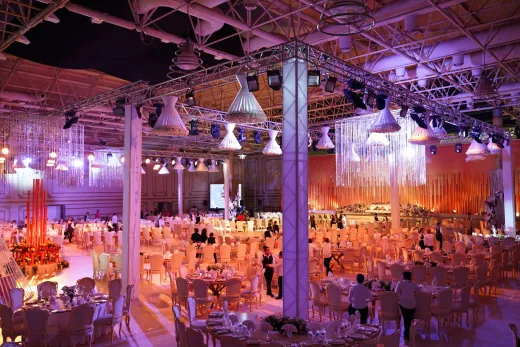
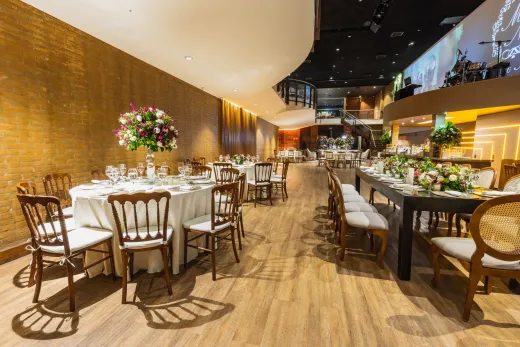
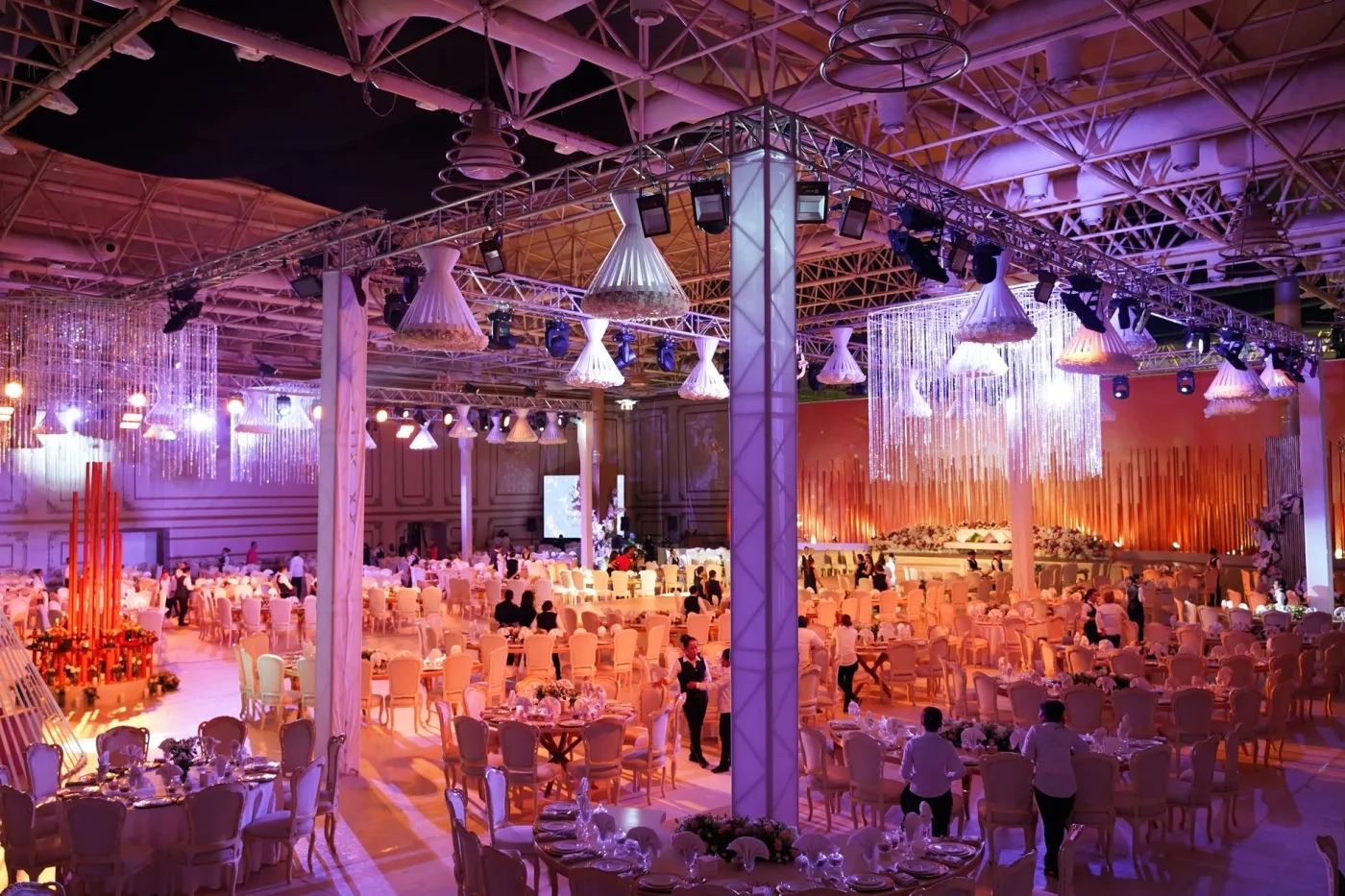
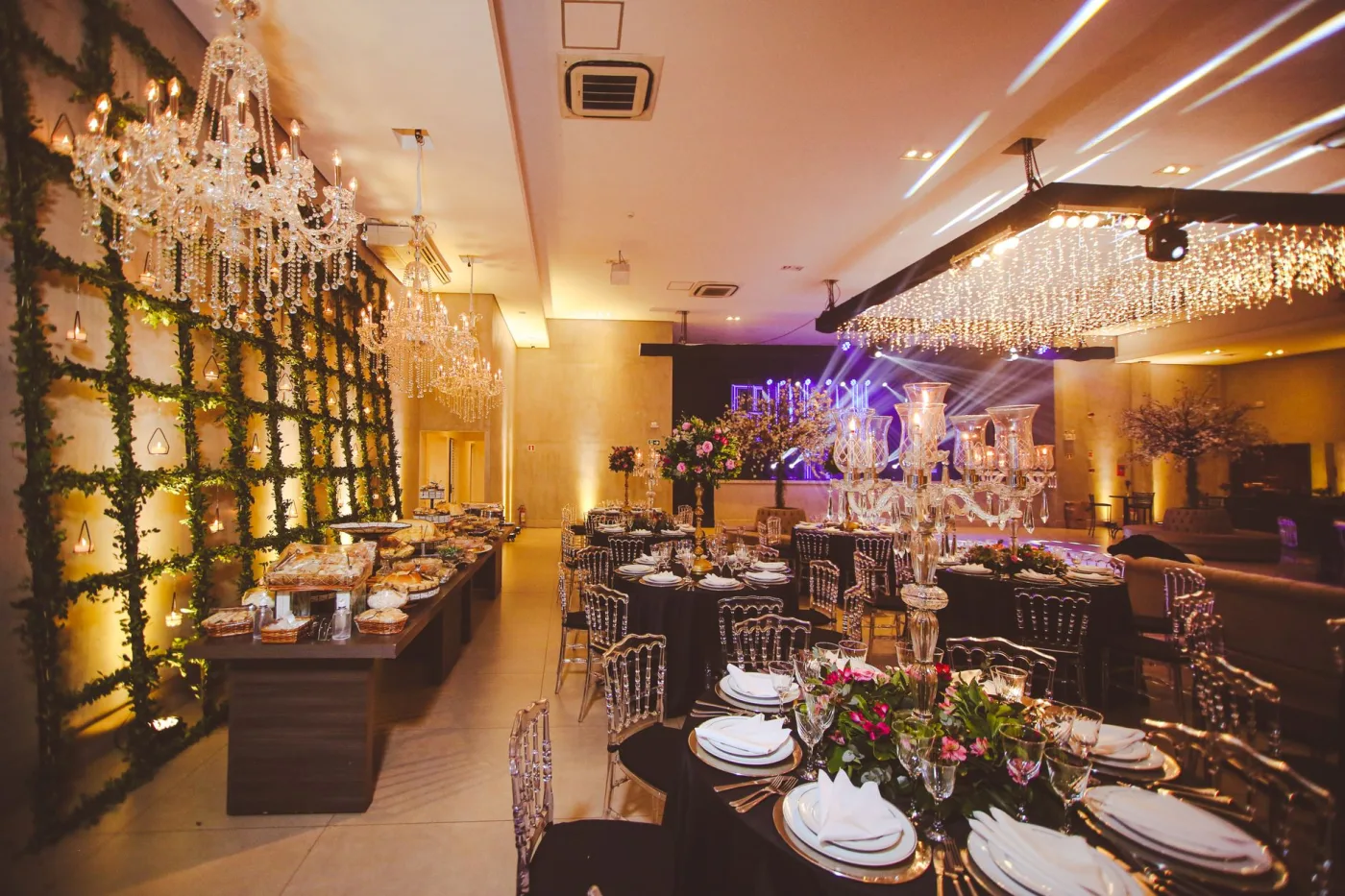
A banquet hall is a special-purpose room or building built to serve dozens to hundreds of people a seated meal in a timely fashion. That single design goal explains almost everything about how halls behave. They are commonly attached to hotels, restaurants and clubs, they come with their own kitchen and serving staff, and they are usually rented as a package rather than a bare space. That is the difference that matters when you shortlist: a hall is a catering operation with a room around it, so you are rarely booking four walls. You are booking food, service, staff and a set of rules about what you may bring in.
That makes a hall a strong fit when your wedding is a sit-down dinner for a large guest list and you want the food, tables and staffing handled under one roof. It is a weaker fit when you want full control over your caterer, bar and decor, because those are exactly the freedoms a hall tends to limit. If you are still weighing a hall against a hotel ballroom, a restaurant, a marquee or a dry-hire space, our deep guide to banquet halls breaks the format down in full. This article assumes you already want a hall and need to choose the right one near you.
How to search and shortlist halls near you
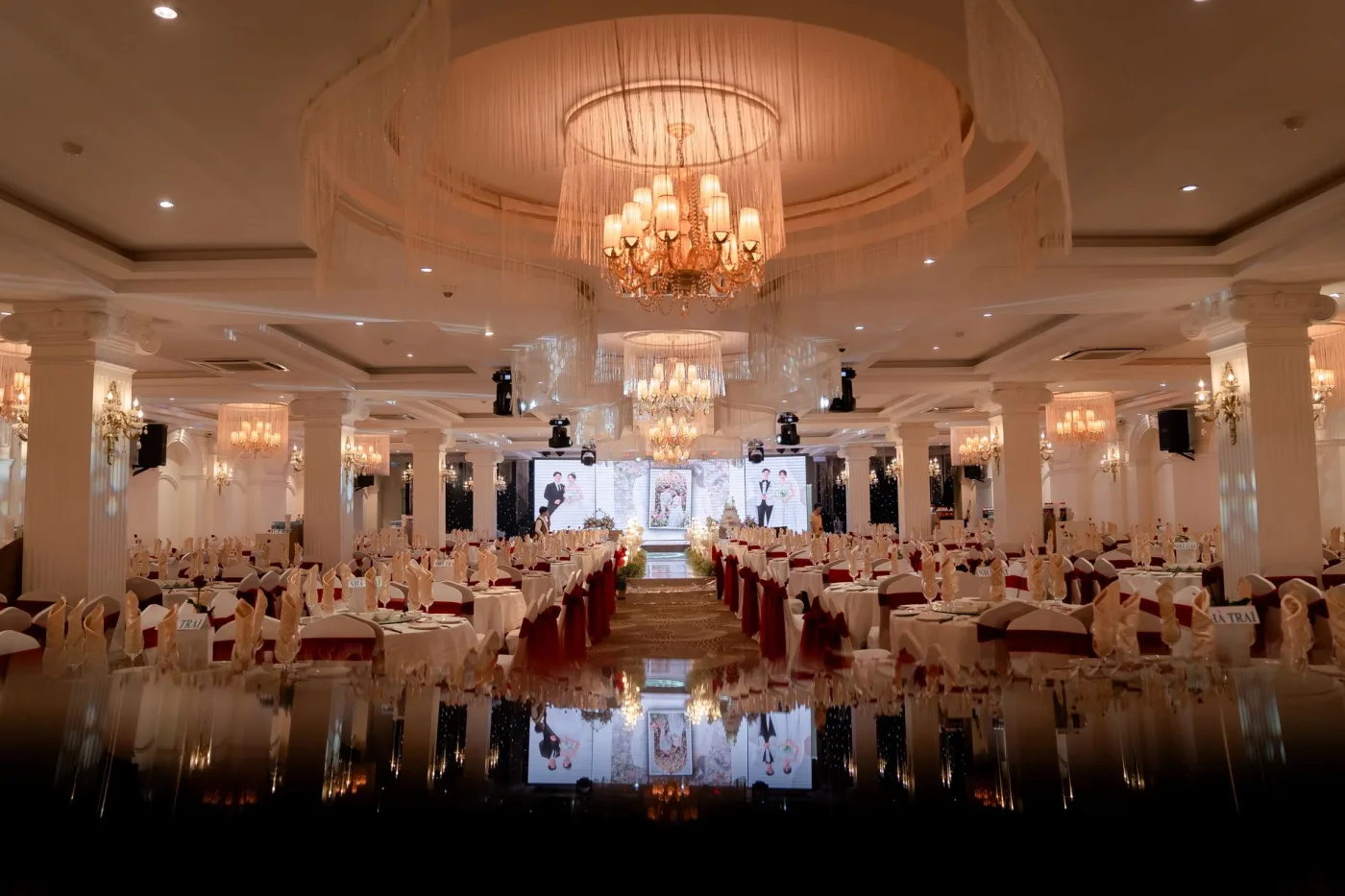
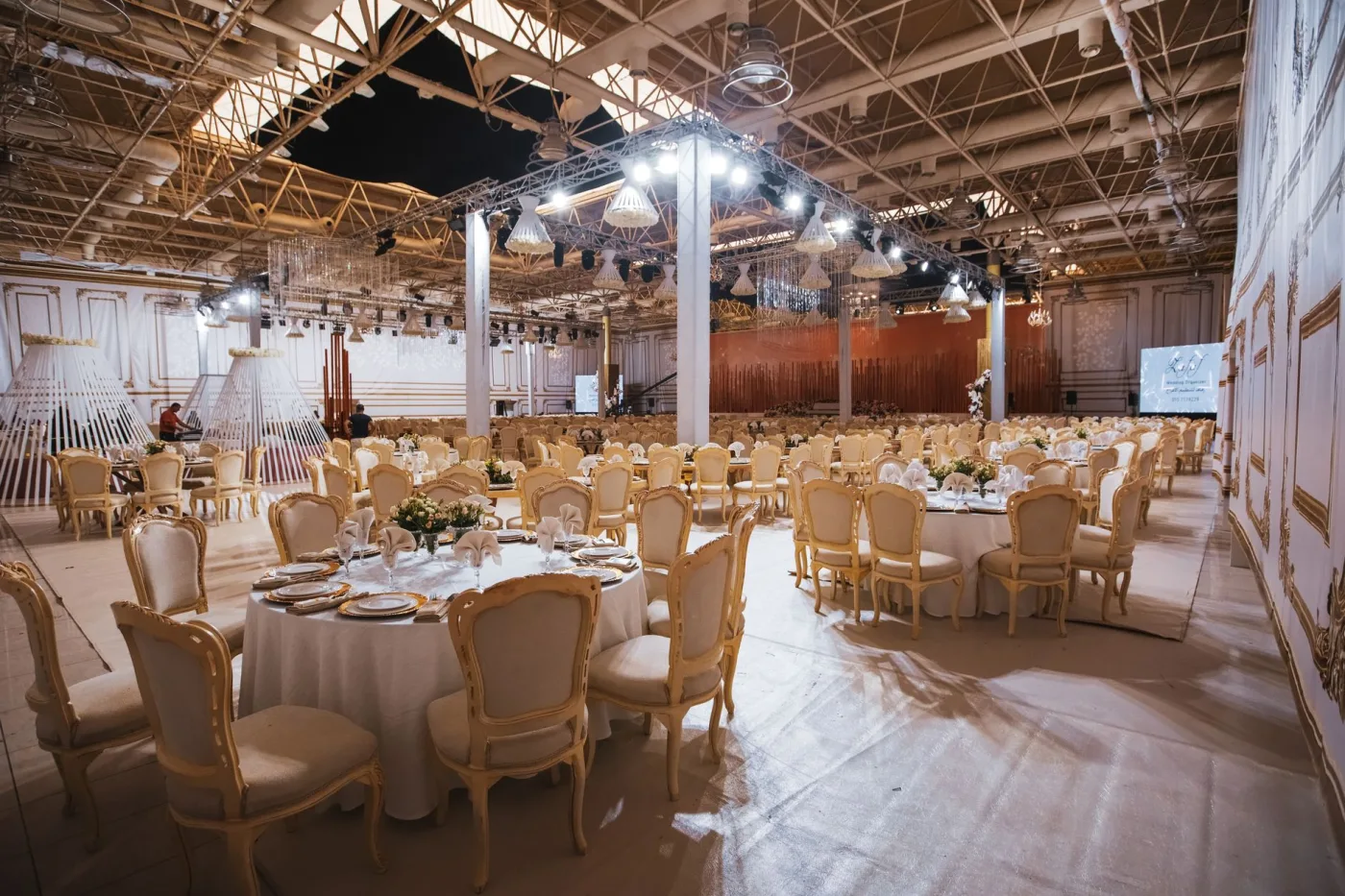
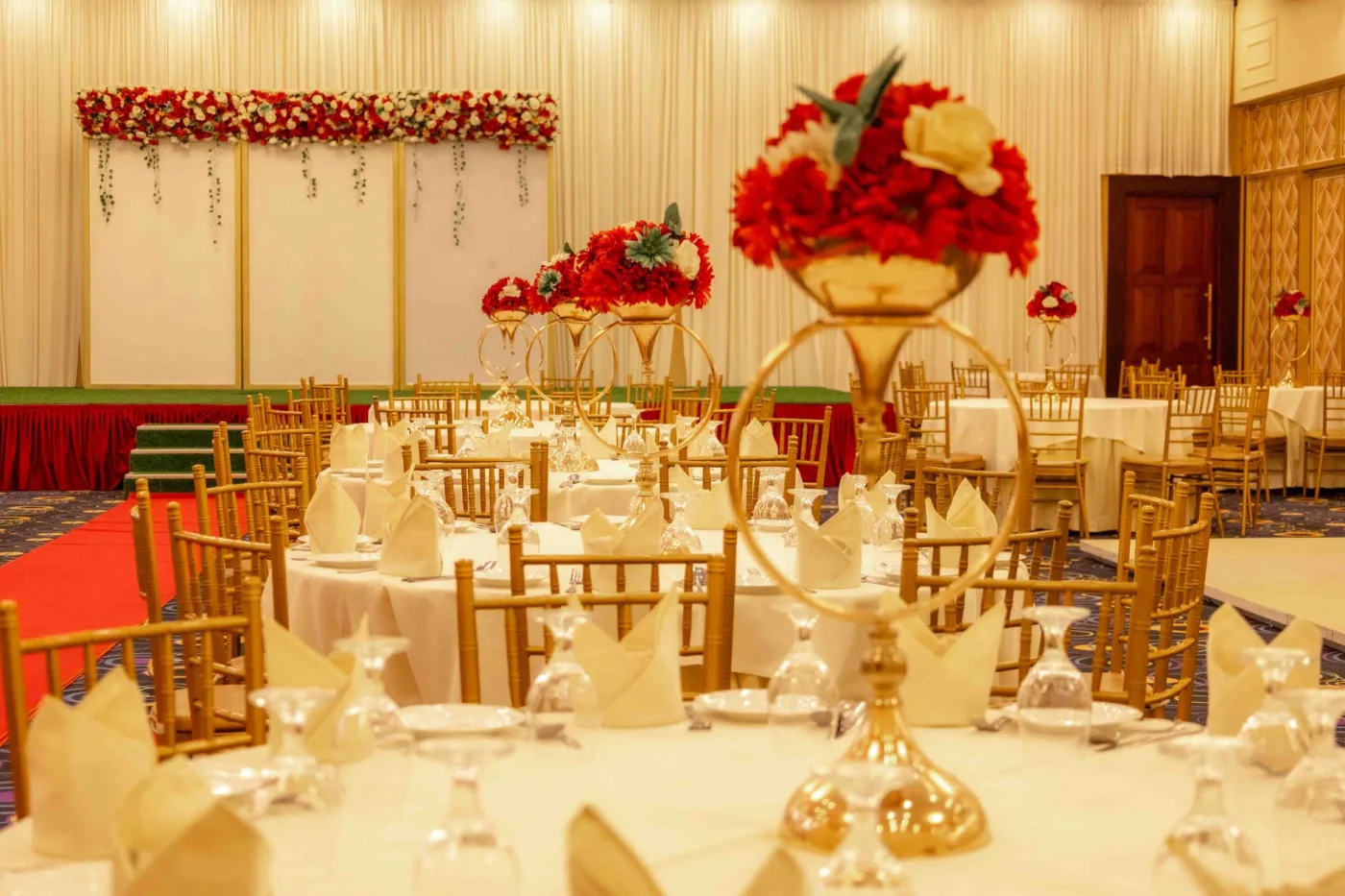
The mistake that wastes the most time is touring halls in the order the map lists them. A viewing eats an evening, so the goal is to walk into three or four genuine contenders, not a dozen maybes. Get there with a funnel: filter hard on paper first, so only halls that can actually host your wedding survive to the tour stage. Start broader than the aggregator pin. Read each hall's own site and real availability calendar, look for recent reviews that name an actual wedding date, and note which category it falls into, because a hotel banquet hall, a standalone marriage hall and a club function room can differ sharply on price and rules even when they sit on the same street.
A hall's guaranteed count is a floor on your bill. Book a minimum far above your real headcount and you pay for empty chairs.
The three hard gates are date, guest count and budget, and each is a yes or no. If the hall is booked on your date, it is out. If its comfortable seated capacity is below your guest list, it is out, and if its minimum guaranteed count is far above your guest list, it is also out, because you will pay for people who never arrive. If the per-plate minimum times that guaranteed count already blows your food-and-venue budget, it is out before you fall for the chandeliers. Apply those filters honestly and a list of twenty halls becomes a shortlist of four you would actually book.
The comparison criteria specific to halls
General venue advice tells you to compare capacity, location and reviews, and you should. But halls have their own set of criteria that a garden or a barn simply does not, and these are where the money and the frustration hide. Score every shortlisted hall on the same list, in the same order, so a prettier room with worse rules cannot quietly win.
Per-plate minimum
Most halls price by the head, not the room. Get the real per-plate figure for your menu tier, and confirm what it includes: food only, or food, soft drinks, service and tax.
Guaranteed guest count
The minimum number you are billed for regardless of turnout. A hall that "seats 400" may require you to guarantee 300. You pay for the guarantee, not the attendance.
Outside-caterer rules
Many halls require their in-house kitchen and ban outside food outright. Others allow an approved list, or an outside caterer for a fee. This decides whether you can shop your biggest cost.
Decor restrictions
Rules on what you may hang, pin, tape, light or drape. Open flames, confetti, nails in walls and certain draping are commonly banned, and some halls insist on their own in-house decorator.
Parking and access
Real parking capacity for your guest count, valet cost if any, step-free access, and how close the drop-off is. A hall for 300 with parking for 40 is a problem you inherit on the day.
Timing and overtime
The exact hours your booking covers, the hard end time, and the per-hour overtime charge if the party runs long. Ask how many hours setup and pack-down eat into your window.
Two of these deserve special attention because they are where a "cheap" hall becomes expensive. The first is outside-caterer rules. Because a hall is fundamentally a catering operation, in-house-only rules are common, and they remove your ability to compare food quotes on the single biggest line in a wedding budget. That is not automatically bad, in-house catering can be excellent, but you must know the rule and taste the food before you sign, not after. The second is drinks. If the hall lets you bring your own alcohol at all, it will usually charge corkage per bottle, and that fee across a large guest list can quietly rival the cost of the hall's own bar. Get the corkage number in writing, or confirm the bar arrangement, before you plan the drinks at all.
The math that catches couples: a hall quotes a low hire fee, then reveals a per-plate minimum and a guaranteed count of, say, 250 guests. Even if 180 people come, you are billed for 250 plates. Always multiply the real per-plate figure by the guaranteed count, add service and tax, and treat that as the true floor of your bill. A hall with a higher hire fee but a lower guaranteed count that matches your actual guest list is often the cheaper booking once you do the arithmetic.
Price bands, not made-up prices
An honest guide cannot tell you what a hall near you costs, because it swings enormously with city, season, weekday and menu tier. What it can give you is a way to read the quotes you collect. Halls almost always price in one of three shapes, and knowing which one you face is half the battle.
| Pricing shape | How it works | What to watch |
|---|---|---|
| Per-plate package | A price per head that bundles food, service and the room | The guaranteed minimum count, and what the plate excludes (bar, tax, tip) |
| Hire fee plus catering | A flat room charge, with food quoted separately per head | Whether catering must be in-house, and the true combined total |
| Minimum spend | No hire fee, but you must spend a set amount on food and drink | How the minimum shifts by season and weekday, and what counts toward it |
Whichever shape a hall uses, get the quote for your real date and headcount, never a vague "starting from" figure, and compare all-in totals rather than headline numbers. Off-peak dates, weekday weddings and lunch slots almost always carry lower minimums, so if your date is flexible, ask what moving it would save before you commit.
Questions to ask a banquet hall
A tour is a sales meeting, and the hall's coordinator runs it well. Your job is to steer it back to the numbers and the fine print. Take this list in, ask every question out loud, write down the answers, and then do the second half of the exercise: check that each answer reappears, in writing, in the contract they send. A yes on the tour that is silent in the contract is not a yes.
| Ask this | Why it matters | Get it in writing? |
|---|---|---|
| What is the per-plate price for my menu tier, and what does it include? | The plate, not the hire fee, is the real cost of a hall. | Yes |
| What is the minimum guaranteed guest count I must pay for? | You are billed for this number even if fewer guests arrive. | Yes |
| Must I use your in-house catering, or can I bring an outside caterer? | In-house-only rules remove your biggest chance to compare food costs. | Yes |
| Is there corkage, a bar minimum, a service charge or a cake-cutting fee? | These add-ons quietly inflate a hall that quoted cheap. | Yes |
| What are the decor rules: flames, confetti, draping, nails, in-house decorator? | Decides what your event can actually look like. | Yes |
| How many hours does the booking cover, and what is the overtime rate? | Setup and overrun eat your window at a per-hour cost. | Yes |
| What is the parking capacity, and is there a valet or overflow cost? | A hall too big for its car park becomes your problem on the day. | Yes |
| Is there another event in the hall on my date, and how tight is the changeover? | A shared day cuts your setup and party time. | Yes |
| What is the deposit, payment schedule and cancellation policy? | Where the money disputes live. Read every clause. | Yes |
| What happens if you double-book, oversell or change ownership? | Your protection when the hall, not you, causes the problem. | Yes |
Contract red flags that should slow you down
Walk away, or at least stop and question hard, if: the hall will not put a clear per-plate figure and guaranteed count in writing, and keeps steering you to a "starting from" price. The guaranteed minimum count is far above your real guest list and the coordinator shrugs it off. The in-house catering rule comes with no menu tasting and no pricing transparency. The contract is vague on overtime, so the per-hour charge appears only after the music has run past the curfew. The decor rules are verbal and not written down, so they can change after your deposit. The cancellation policy pairs a large non-refundable deposit with no protection if the hall double-books or oversells your date. Or you are pressured to sign tonight for a discount that vanishes tomorrow. A genuinely good hall near you does not need to rush you.
Your banquet hall booking checklist
You are ready to book when you can tick every one of these, and not before. Treat any unticked box as a question to resolve now, not a detail to handle later, because "later" on a hall contract means after your deposit is gone.
- Date confirmed available and held in writing, not just spoken.
- Per-plate price and menu tier confirmed, with a tasting done, and every inclusion and exclusion listed.
- Guaranteed guest count agreed at a number that matches your real headcount, not one far above it.
- All-in total calculated: per-plate times guaranteed count, plus service, tax, bar and every fee.
- Catering rule understood: in-house only, approved list or outside caterer allowed, and any fee spelled out.
- Drinks arrangement clear: in-house bar, bring-your-own with corkage, or a bar minimum, in writing.
- Decor rules documented: flames, confetti, draping, fixings and whether an in-house decorator is required.
- Timing confirmed: access hours, setup and pack-down, hard end time, and the overtime rate.
- Parking and access confirmed for your guest count, with valet or overflow costs named.
- Deposit, payment schedule and cancellation terms read in full, with double-booking protection checked.
- Every verbal promise written into the contract before you sign anything.
A hall is often the first big booking you make and the one that anchors your date, guest count and catering at once, so it belongs early on your timeline. Slot it into our wedding planning checklist so the hall you lock in lines up with everything downstream. And if you want to compare halls against every other kind of nearby venue first, our local guide to finding venues near you and its wedding-specific companion on wedding venues near me walk through the same method across gardens, hotels, restaurants and dry-hire spaces.
Choosing a hall near you is not about finding the single best one in town, because that place does not exist in the abstract, only the best fit for your date, your guest list and your budget. A local search narrows the field, but the same honest method decides it: run the per-plate math, check the guaranteed count against your real headcount, read the catering and decor rules before you fall for the room, ask the uncomfortable questions, and put every answer in writing.
Frequently asked questions
How do I find good banquet halls near me?
Start with a map search, then look past the pins. Visit each hall's own website and real availability calendar rather than trusting only the aggregator listing, read recent reviews that mention an actual wedding date, and confirm which category the place belongs to, since a hotel banquet hall, a standalone marriage hall and a club function room can differ sharply on price and rules. Then apply your three hard filters: your date, your guest count against both the seated capacity and the guaranteed minimum, and your budget once you have run the per-plate math. Only halls that clear all three should reach your tour list, so you spend evenings on real contenders rather than maybes.
What is a per-plate minimum and a guaranteed guest count?
Most banquet halls price by the head rather than by the room, so the per-plate figure, the cost of feeding one guest, is the real driver of your bill. The guaranteed guest count is the minimum number of plates you must pay for regardless of how many people actually attend. If a hall requires a guarantee of 250 and only 180 guests come, you are still billed for 250 plates. That is why you should multiply the real per-plate price by the guaranteed count, add service and tax, and treat that figure as the true floor of your cost, then favour a hall whose guaranteed count matches your genuine headcount rather than sitting far above it.
Can I bring my own caterer or alcohol to a banquet hall?
Often not, and this is one of the most important things to confirm before you book. Because a hall is fundamentally a catering operation, many require you to use their in-house kitchen and ban outside food entirely, while others allow an approved supplier list or an outside caterer for a fee. Alcohol works the same way: some halls run their own bar and do not allow outside drink at all, and those that do usually charge corkage per bottle, which adds up fast across a large guest list. Ask both questions directly, get the rules and any fees in writing, and taste the in-house food before you commit if you have no choice but to use it.
What questions should I ask before booking a banquet hall?
Ask for the per-plate price for your menu tier and exactly what it includes, the minimum guaranteed guest count, and whether catering must be in-house or an outside caterer is allowed. Ask about corkage, bar minimums, service charges and cake-cutting fees, the decor rules on flames, confetti and draping, the hours your booking covers and the overtime rate, and the parking capacity for your guest count. Confirm whether another event shares your date, and read the deposit, payment and cancellation terms in full. Then check that every answer you were given appears, word for word, in the contract before you sign.
How much does a banquet hall cost?
It varies too widely by city, season, weekday and menu tier for any honest guide to quote a single number, so be wary of sources that do. What matters is how the hall prices: a per-plate package that bundles food and room, a hire fee with catering quoted separately, or a minimum spend with no hire fee. Get a quote for your real date and headcount in whichever shape the hall uses, compare all-in totals rather than headline figures, and remember that off-peak dates, weekday slots and lunch receptions usually carry lower minimums. The cheapest headline price is often not the cheapest final bill once the guaranteed count and add-ons are counted.
Is a banquet hall better than other wedding venues near me?
It depends on the wedding you want. A hall is an excellent fit for a large seated dinner where you want food, tables and staffing handled under one roof, and it removes a lot of coordination. It is a weaker fit if you want full control of your caterer, bar and decor, because those are exactly the freedoms a hall tends to limit. Before you commit to the format, compare halls against gardens, hotels, restaurants and dry-hire spaces on the same criteria of total cost, capacity, restrictions and reviews. The best choice near you is the one that fits your guest list and your priorities, not simply the nearest or the grandest pin on the map.