Bridal Jewellery Sets: The Complete Guide
The pieces, the craft traditions, and how to match a coordinated set to your neckline, metal and hair, from minimal Western pairs to full South Asian ensembles.
A bridal jewellery set is jewellery designed to be worn together: pieces that share a metal, a stone and a design language so they read as one considered look rather than a handful of separate ornaments. What that set contains varies enormously by culture, from a simple Western pairing of necklace and earrings to an elaborate South Asian ensemble that dresses the head, neck, ears, arms and hands. This guide maps the whole subject, so you can choose a set that suits your outfit, your traditions and your budget.
The short version
- A set is coordinated, not just multiple pieces. Shared metal, stones and style are what make jewellery a set.
- Scale follows tradition. Western sets are minimal; South Asian bridal sets can dress head to hands.
- Let the neckline lead. The gown's neckline decides the necklace length before anything else.
- Mix heirloom and new with care. Match metal tone and gemstone colour so old and new pieces belong together.
What counts as a bridal jewellery set
Jewellery is decorative items worn on the body, and a bridal set is simply a group of those items designed to be worn together for a wedding. The defining word is coordination. Three pieces bought separately are an accumulation; three pieces sharing a metal, a gemstone and a repeated motif are a set. That shared thread is what lets the necklace, earrings and bangles look intentional in photographs rather than accidentally assembled.
At its simplest, a Western bridal set might be a necklace and matching earrings, sometimes joined by a bracelet. At its most elaborate, a South Asian bridal set covers the whole figure and can weigh a surprising amount. Neither is more correct; they answer to different outfits and different traditions. The useful first step is to know the vocabulary of the pieces, because that is how jewellers and family will talk to you about the set. If you are still assembling the whole look, our overview of everything bridal places the jewellery inside the wider picture of attire, beauty and pre-wedding events.
The pieces a set can contain
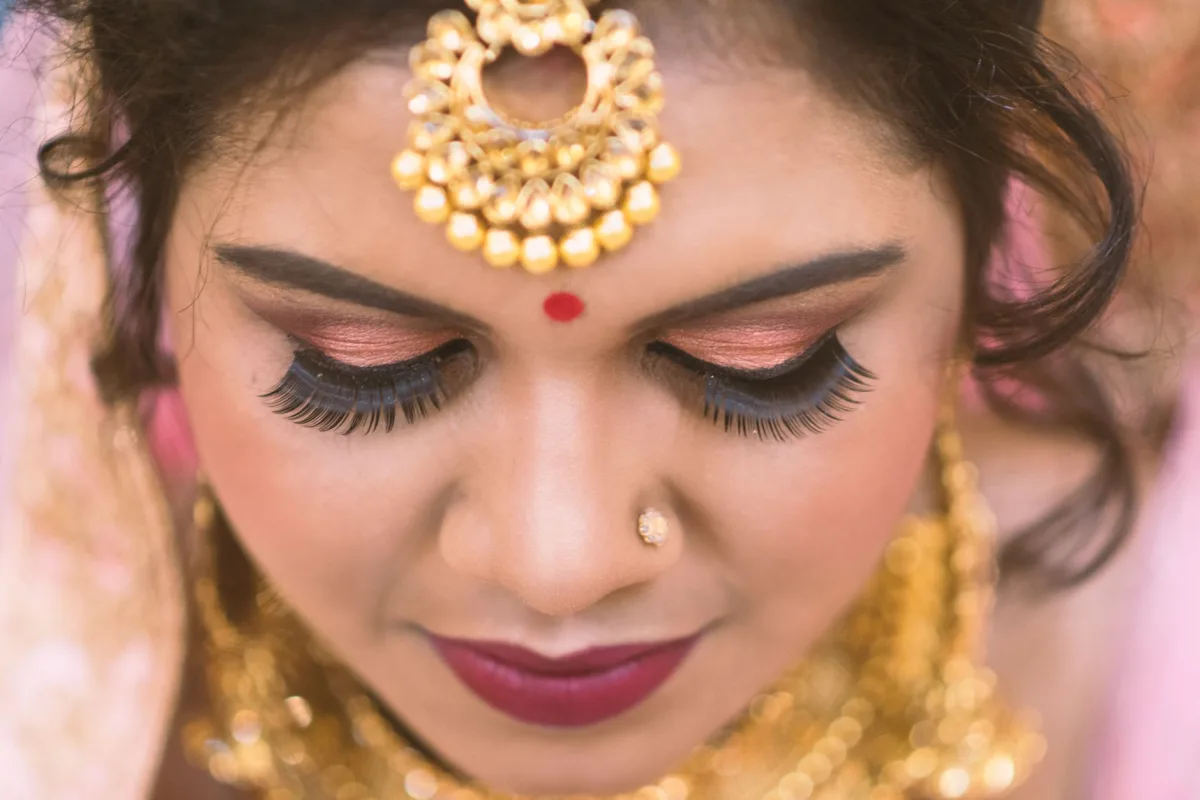
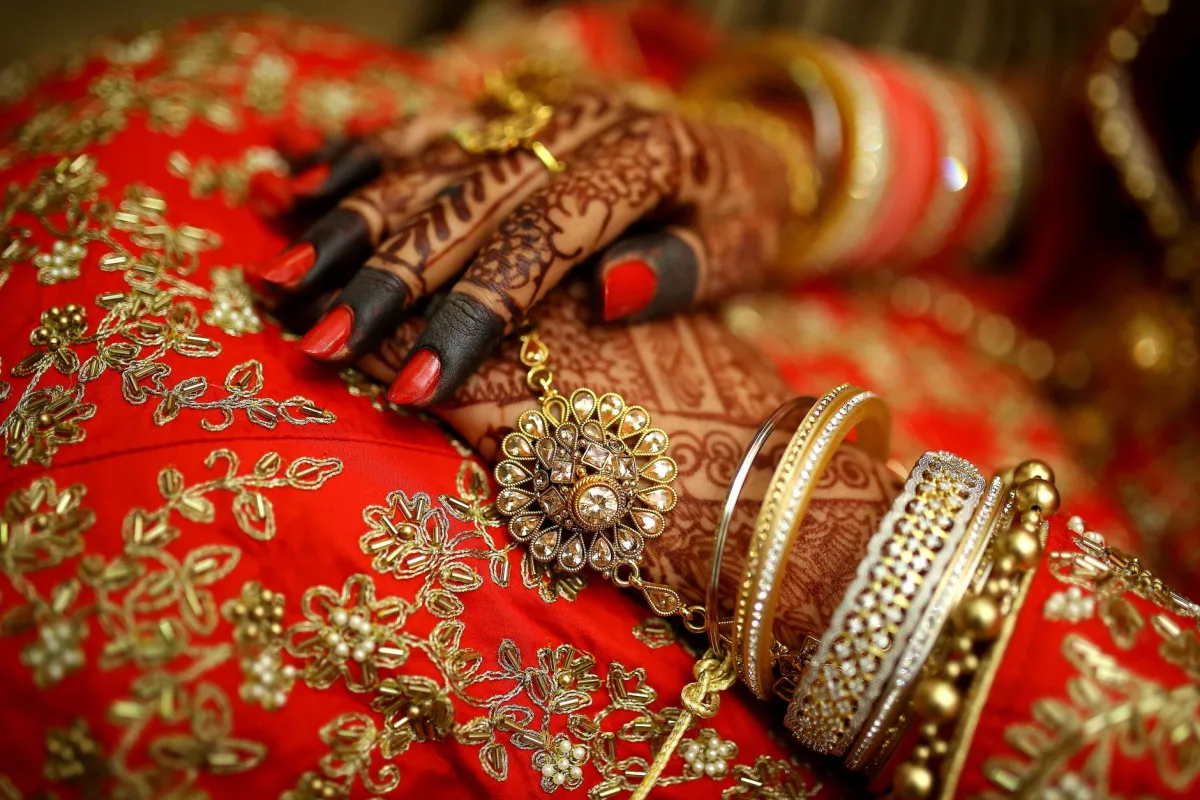
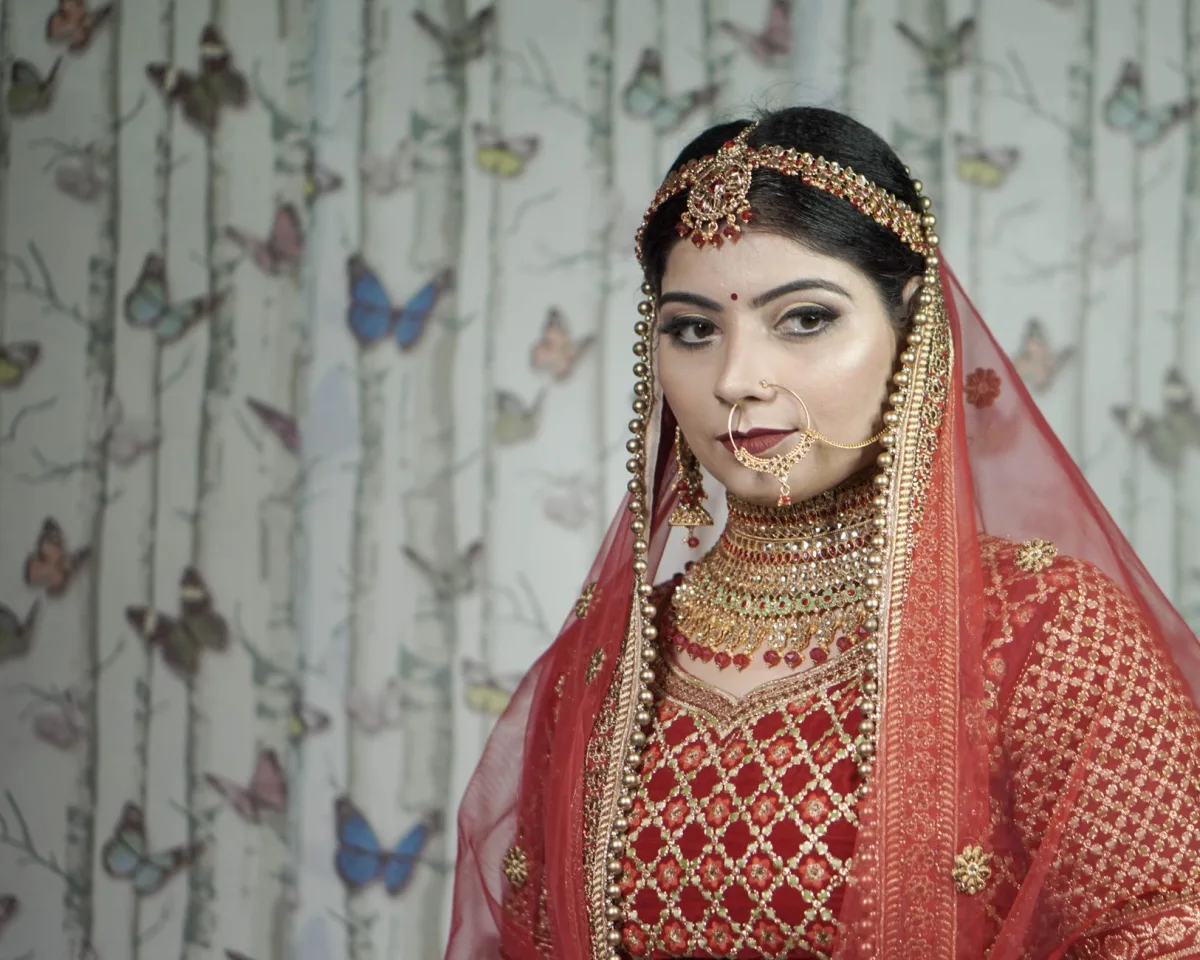
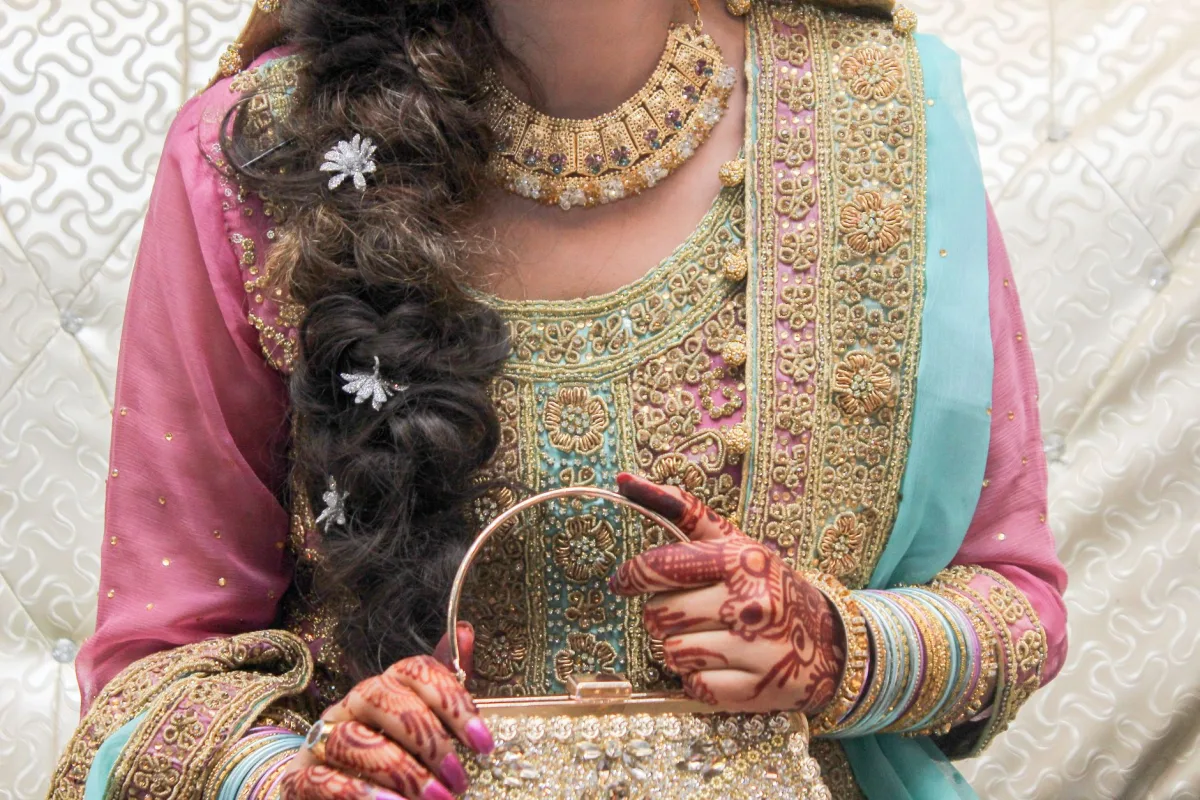
Most bridal sets are built from a recognisable cast of pieces. You will rarely wear all of them, but knowing what each one does helps you decide what your outfit needs and where to stop.
Necklace
The anchor of the set, and the piece the neckline dictates. It sets the metal and stone the rest of the set will echo.
Earrings
Studs, drops or chandeliers. They frame the face and, with an updo, often do more visual work than the necklace.
Bangles and bracelets
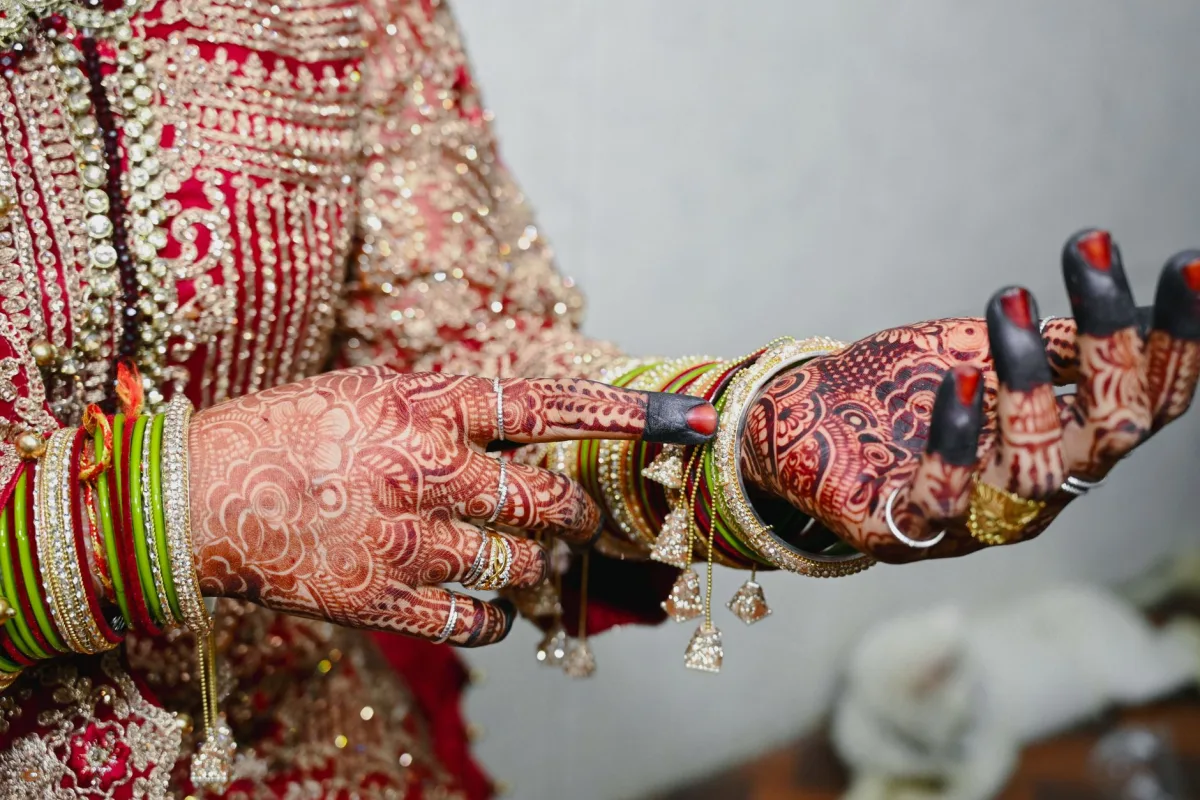
From a single bracelet to stacked bangles or a South Asian chura. They carry the set down the arms and catch the light in movement.
Head jewellery
A maang tikka, matha patti or tiara that decorates the parting and forehead. It draws the eye upward and photographs beautifully.
Hand and nose pieces
Rings, a haath phool that links ring to bracelet, and a nath or nose ring in many South Asian traditions. Small pieces that complete an ensemble.
The art is in restraint as much as accumulation. A statement necklace usually wants quieter earrings; bold chandelier earrings usually want a lighter neck. Choosing which single piece is the star, and letting the others support it, is the difference between a coordinated set and a look that competes with itself. Our broader guide to wedding jewellery goes deeper on balancing pieces across a whole outfit.
Bridal sets across cultures
The single biggest influence on a bridal set is tradition, and the contrast between styles is one of the genuine pleasures of the subject. Western bridal jewellery tends toward the minimal: often just earrings and a delicate necklace in white metal, chosen so the gown stays the centre of attention. The pieces are frequently something borrowed or inherited, folded into the old rhyme of something old and something new.
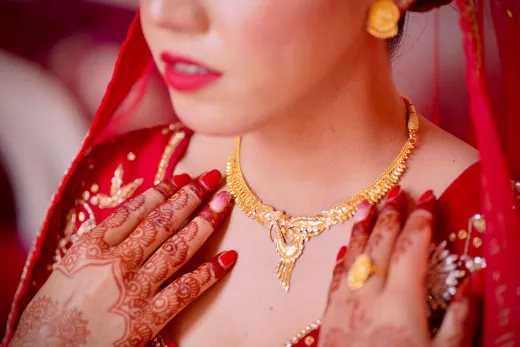
South Asian bridal jewellery works in the opposite direction, treating the set as a full, jewelled ensemble. Several distinctive craft traditions define it. Kundan is an ancient Indian technique of setting gemstones into refined gold, historically associated with royal courts, while meenakari is the art of colouring the surface of metal with enamel, often used on the reverse of a kundan piece so it is beautiful from both sides. Many South Asian brides also wear a mangalsutra, a sacred necklace tied by the groom during the ceremony that marks the bride as married, carrying meaning far beyond decoration.
East Asian, Middle Eastern and African traditions each add their own vocabulary again, from ceremonial gold to distinctive regional forms. The point is that "bridal set" is not one thing; it is whatever your culture has decided a bride should wear, and the most beautiful sets honour that lineage rather than ignoring it.
Matching a set to your outfit
Once you know the pieces, the choosing is governed by a few practical rules that hold across traditions. The first and most important is that the neckline leads. A high or covered neckline usually wants statement earrings and little or no necklace; a deep or wide neckline opens space for a necklace to sit against skin. Deciding the gown first and the jewellery second, never the other way around, saves a great deal of frustration.
Metal tone is the second rule. Match the dominant metal of the set to the undertones of the outfit and to your other jewellery, so a warm gold set sits with warm embroidery and a cool white-metal set with cooler fabrics. The third rule is hair: an updo exposes the ears and neck and invites bolder earrings, while hair worn down softens the neckline and often calls for a stronger necklace instead. Read those three, neckline, metal and hair, and most of the set almost chooses itself. For the earlier pre-wedding events that call for their own lighter jewellery, our guide to the engagement gown pairs naturally with a pared-back version of the same set.
Buying, renting or inheriting
Bridal sets can represent a large outlay, especially the gold-heavy South Asian ensembles, so it helps to know your routes. Buying new gives you a set that is exactly yours and, in the case of gold, holds real intrinsic value over time. Renting has become a sensible option for elaborate sets worn once, letting a bride carry a grander look than she would buy, particularly for a single ceremony among several outfit changes. Inheriting is the most meaningful of all: an heirloom set carries family history and often superb craftsmanship that new pieces struggle to match.
Many brides blend these routes, wearing an inherited necklace with newly bought earrings, and here the matching rules matter most. Bring the heirloom piece with you when buying the new one so the jeweller can match metal tone, gemstone colour and scale, otherwise the old and new can quietly clash. If your budget is the main constraint, prioritise the one hero piece that photographs closest to the face, usually the earrings or necklace, and keep the supporting pieces simple. Whatever you spend, the jewellery is the finishing touch on a journey that services like Matrimony360 help begin, by connecting the people these celebrations are actually for.
Caring for a bridal set
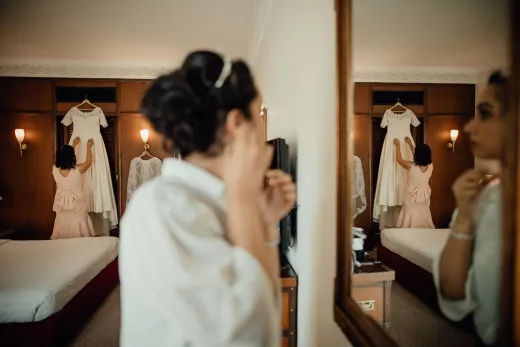
A little care protects both the look on the day and the value afterward. Store pieces separately or in a lined box so harder stones do not scratch softer ones, and keep gold and enamelled pieces away from perfume and hairspray, which dull the finish over time. Put jewellery on last, after hair and makeup and the gown, so nothing snags fabric or picks up product, and take it off first at the end of the night.
For enamelled kundan or meenakari work and for delicate strung pieces, avoid soaking and harsh cleaners; a soft dry cloth is usually enough, and anything more should be left to a professional. If a set is heirloom or high in value, have it checked and cleaned by a jeweller before the wedding rather than the week of, so any loose stone or worn clasp is fixed with time to spare.
The bottom line
A bridal jewellery set is coordination made visible: pieces chosen to share a metal, a stone and a spirit so they belong together. Whether your tradition calls for a single elegant pairing or a full jewelled ensemble, the same logic applies. Let the neckline and hair lead, pick one hero piece and support it, match metal tone across old and new, and buy, rent or inherit in whatever mix your budget and family allow. Choose that way and the set does its real job, framing you rather than upstaging you, on the day and in every photograph after.
Frequently asked questions
What makes jewellery a "set" rather than separate pieces?
Coordination. A set shares a metal, a gemstone and a design language, so the necklace, earrings and other pieces clearly belong together. Pieces bought independently, in different metals or styles, read as an accumulation rather than a set even when worn at once. That shared thread is what makes a set look intentional in photographs.
How many pieces should a bridal set include?
It depends entirely on tradition and outfit. A Western set may be just earrings and a necklace, while a South Asian bridal set can include head jewellery, necklace, earrings, bangles, hand pieces and a nose ring. Rather than counting pieces, choose one hero item to lead and let the neckline and hairstyle decide what the look actually needs.
Should the jewellery match the wedding dress?
It should coordinate with it, led by the neckline. A high or covered neckline suits statement earrings and a minimal necklace; a lower neckline opens space for a necklace. Match the set's dominant metal tone to the outfit's undertones, and let your hairstyle guide whether earrings or necklace carry more weight.
What are kundan and meenakari in Indian bridal sets?
Kundan is an ancient Indian technique of setting gemstones into refined gold, historically linked to royal courts. Meenakari is the art of colouring metal with enamel, often applied to the reverse of a kundan piece so it is beautiful from both sides. Both are hallmarks of traditional South Asian bridal jewellery and are prized for their craftsmanship.
Is it better to buy or rent a bridal jewellery set?
Buying suits pieces you will wear again or that hold value, such as gold. Renting suits an elaborate set worn once, letting you carry a grander look for a single ceremony without the full cost. Many brides blend the two, or wear an inherited piece with new ones; if you do, match metal tone and gemstone colour so old and new sit together.