Bridesmaid Makeup: The Complete Guide
Coordinated not identical: how to plan a bridesmaid look across different faces, decide on an artist, run a trial, and make it last a full day.
Bridesmaid makeup lives in a tricky middle ground. It should be polished enough to hold up in every photograph, coordinated enough to sit beside the bride and the other attendants, and personal enough that each face still looks like itself. Get the balance right and the whole party reads as a set; get it wrong and someone spends the day feeling like a stranger in their own skin. This guide covers how to plan the look, whether to book a professional, how to make it last through a long day, and how to keep the peace when several people share one mirror.
The short version
- Coordinated, not identical. Agree a shared direction, then adapt it to each person's colouring and comfort.
- Longevity beats drama. A long day of hugs, tears and dancing rewards primer, setting and a small touch-up kit.
- A trial prevents surprises, especially for anyone doing their own or trying a new artist.
- Agree who pays early. Money is the most common source of bridal-party tension, so settle it in writing.
What "bridesmaid makeup" really means
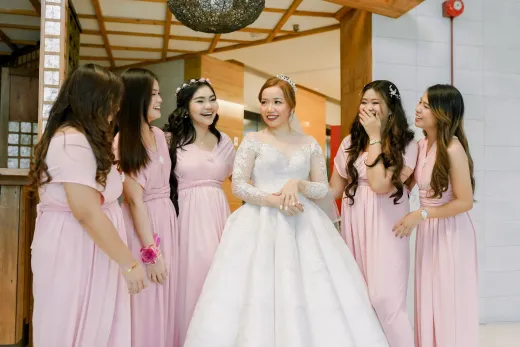
A bridesmaid is a member of the bride's attendant party, and bridesmaid makeup is simply the coordinated look worn by that group on the day. The word coordinated is doing quiet, important work. The aim is not to make several different people look the same, which almost never flatters everyone, but to give the party a shared finish that photographs as a family while letting each face keep its own character.
Cosmetics have been used to enhance and protect the face for thousands of years across almost every culture, so there is no single correct approach here, only one that suits the wedding's style and the people wearing it. A soft, natural finish suits a daytime garden ceremony; a stronger eye and defined lip suits an evening reception or a richly decorated cultural celebration. The bride usually sets the overall register, and the bridesmaids tune their own version to sit just inside it. For how the attendants fit into the day beyond their faces, our guide to choosing and looking after bridesmaids covers the wider role.
Coordinating a look across different faces
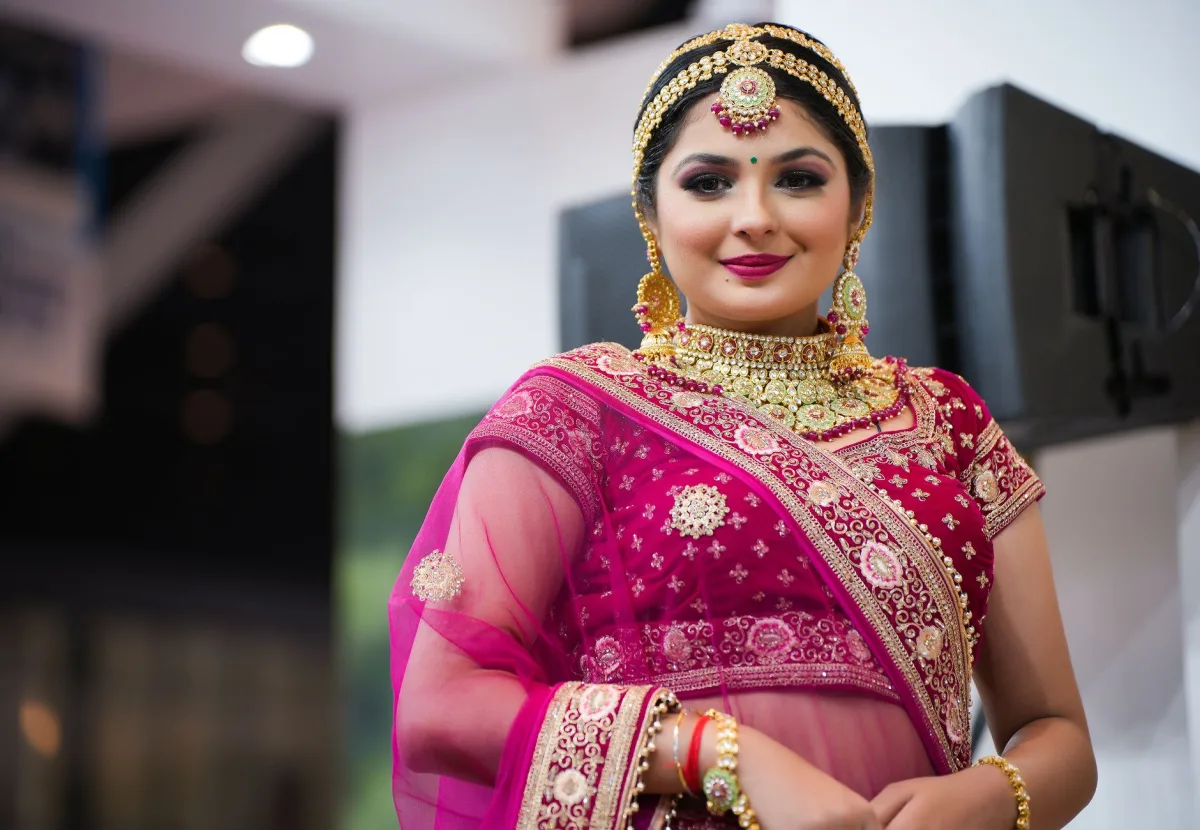
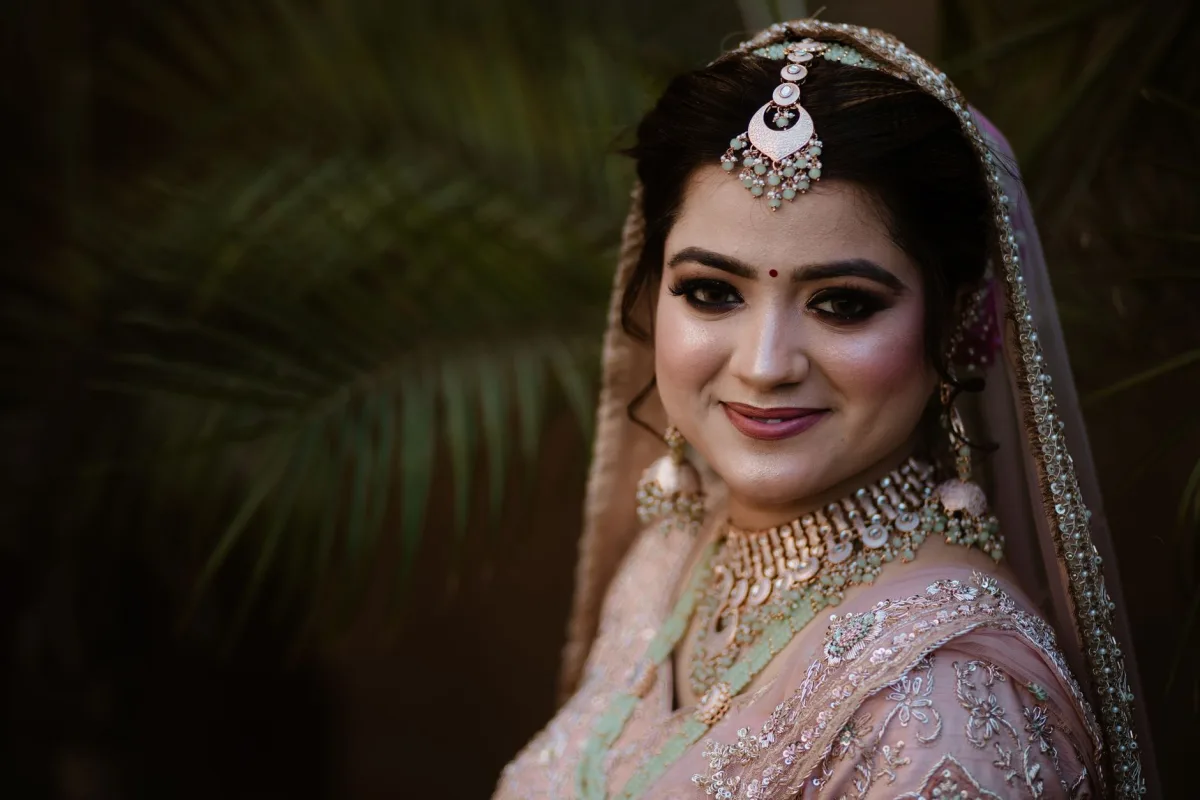
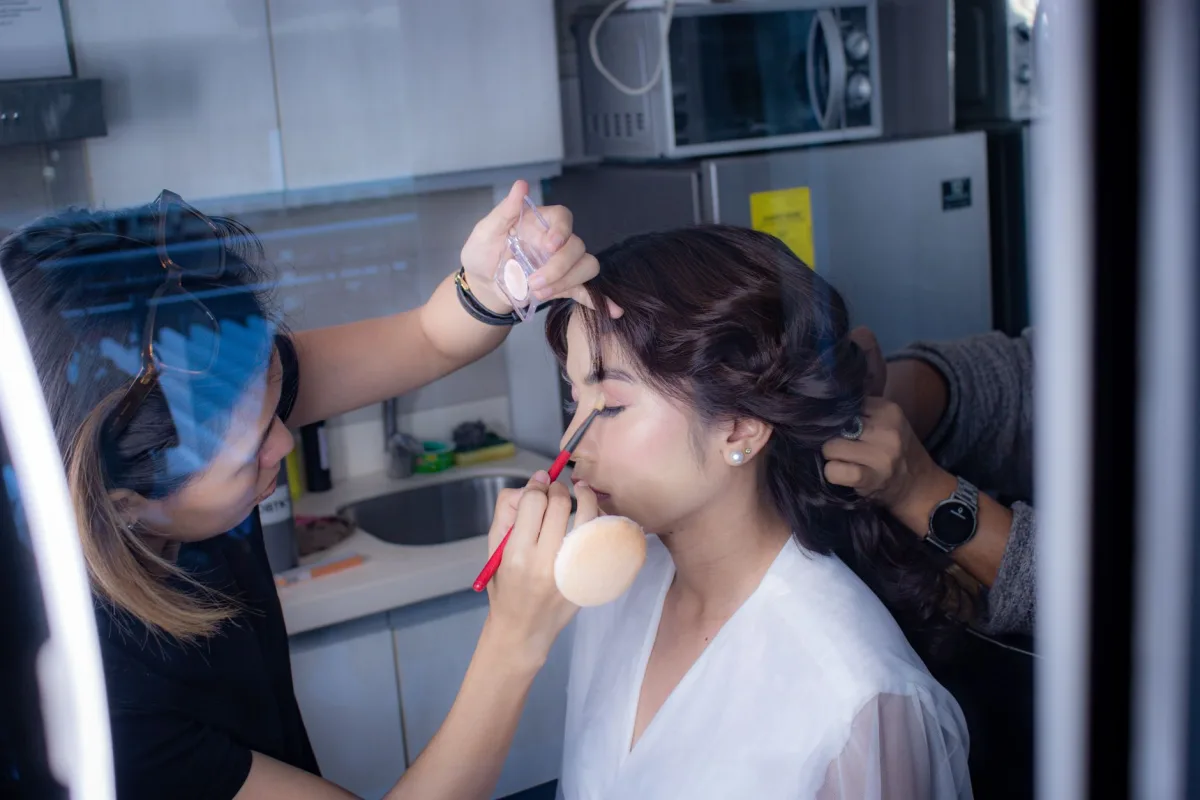
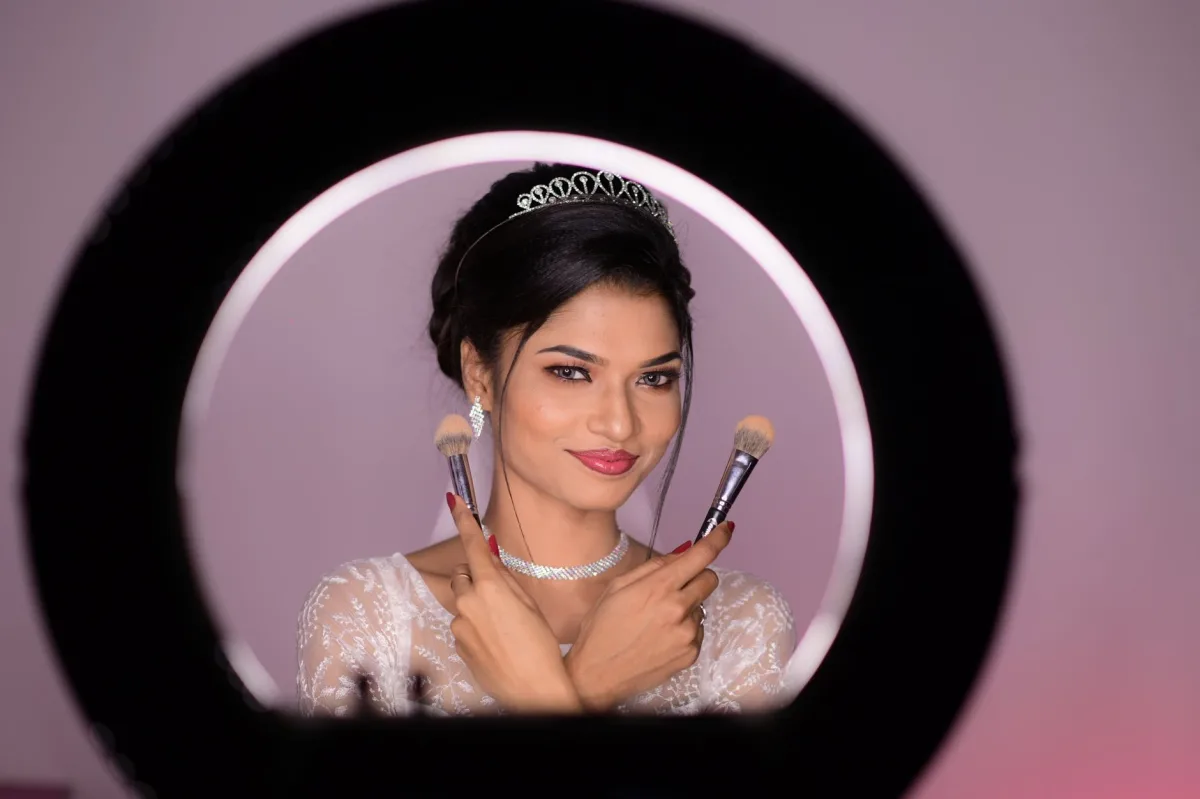
The most flattering bridesmaid looks start from a shared idea rather than a shared product. Agree on a direction first: soft and natural, classic and defined, or bold and glamorous. Then agree on one or two anchor points that everyone keeps, such as a similar lip family or a consistent finish on the skin, and let everything else flex to suit each person.
Skin tone is the reason identical rarely works. A lip shade that glows on one complexion can drain another, and a smoky eye that flatters deep-set eyes can overwhelm someone with a smaller lid. A good approach is to choose a mood and a rough intensity, then translate it: the same soft-rose idea becomes a warmer nude on one person and a deeper berry on another, all clearly related. This keeps the group photographs harmonious without asking anyone to wear a colour that fights their face.
Coordination should also reach the practical details. Agree roughly how strong the eye should be, whether lashes are being worn, and how bold the lip goes, so that no single bridesmaid ends up far louder or far softer than the rest. The bride's own look is the reference point: bridesmaids generally sit a notch below the bride's intensity so she remains the focus, an old and gentle courtesy rather than a rule.
Professional artist or do it yourself
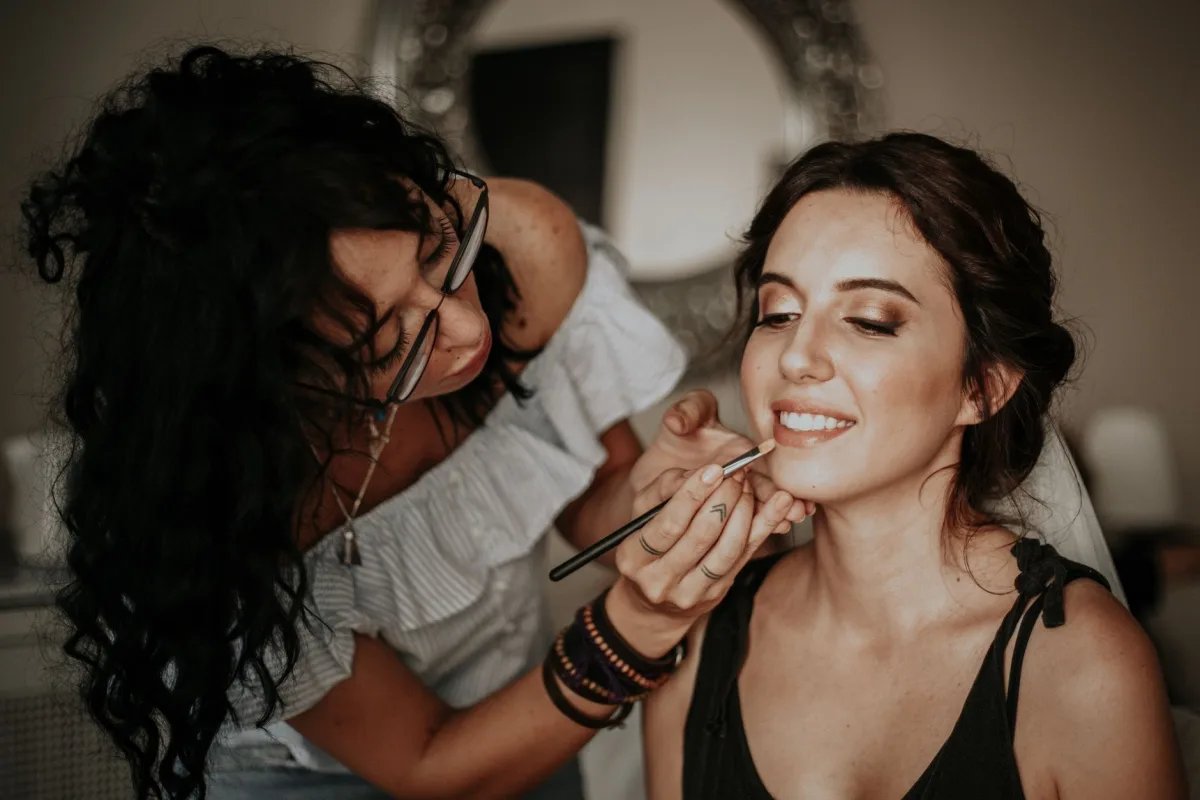
The first real decision is who applies the makeup. A professional artist brings skill, speed and products built to last, and can do the whole party in sequence on the morning. Doing your own makeup saves money and suits anyone confident with a brush. Many parties mix the two, with the bride and perhaps a nervous bridesmaid booking a professional while others do their own.
Professional artist
Skilled, fast and equipped for photography and longevity. Costs more and books up early, so secure a date well ahead. Ask to see recent, unfiltered work.
Self-applied
Free and fully in your control, ideal for the confident. Requires a proper practice run and a longer morning. Keep the look within your real skill level.
A mixed party
Common and sensible: the bride and any nervous attendants book a professional while others do their own, all working from one agreed direction.
The timeline
Professionals need roughly thirty to forty-five minutes per face. Count the heads, add buffer, and start earlier than feels necessary.
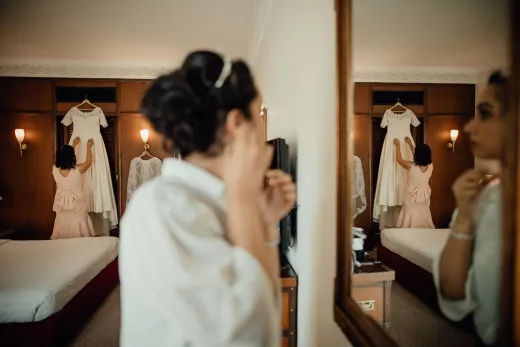
Whichever route you choose, timing is the hidden variable. A professional needs real minutes per face, so a party of five plus the bride is a long morning that has to start early. If people are doing their own, build in the same buffer, because a rushed self-application is where mistakes happen. The morning of a wedding is not the time to discover you are an hour behind.
The trial, and why it matters
A trial is a full practice run of the look before the day, and it is the single best insurance against a morning-of surprise. It is where you discover that a lip you loved on a screen washes you out in daylight, that lashes irritate your eyes, or that a foundation shade reads too pink in photographs. Booking the trial for the same time of day as the wedding, in natural light, and photographing the result on a phone tells you far more than a mirror can.
Not every bridesmaid needs a separate trial, but the bride almost always should, and anyone using a new artist or attempting an unfamiliar look benefits from one. Bring reference photos of what you want and what you do not, wear a pale top so colours read true, and be honest in the moment: an artist would far rather adjust at the trial than hear regret on the day. The overriding principle, borrowed from all good bridal preparation, is never to debut anything untested on the wedding day itself.
Making the look last a full day
A wedding day is long, warm and emotional, which is exactly the environment that breaks down makeup. The fix is structure, not more product. Start with well-prepared, moisturised skin, because makeup sits better on cared-for skin than on a rushed base. A primer helps the base grip; a foundation matched to your exact skin tone in daylight avoids the grey or orange cast that flash can reveal; and a light dusting of setting powder plus a setting spray locks the whole thing in place.
Plan for the moments that test makeup most. Tears are near-guaranteed, so waterproof mascara and a tissue-blot habit save a great deal of repair. Dancing and heat call for blotting rather than piling on more powder. A small shared touch-up kit carried by one organised bridesmaid covers almost everything: the lip colour used, a powder, blotting papers, cotton buds, a few spare pins and a mirror. That little bag has rescued more group photographs than any expensive product.
Keeping the peace and the budget
Makeup is a surprisingly common flashpoint in a bridal party, almost always because of money or comfort rather than colour. Settle both early. On money, decide clearly whether the bride is covering the bridesmaids' makeup, whether each attendant pays her own way, or some split in between, and say so in writing before anyone books. On comfort, remember that a bridesmaid who never wears bold makeup will not suddenly enjoy a heavy look, and forcing it shows in the photographs as tension.
The kindest and most practical stance is a firm shared direction with room for personal comfort inside it. Give people the mood, the intensity and any non-negotiables, then trust them to translate it to their own face. Coordinating the makeup alongside the wider party look, including hair, keeps everyone consistent, and our guide to wedding hair pairs naturally with this one for planning the whole finished look. Handled with a little warmth and a clear plan, bridesmaid makeup becomes one of the happiest parts of the morning rather than a source of stress.
Frequently asked questions
Should all the bridesmaids wear the same makeup?
No. The most flattering approach is coordinated rather than identical. Agree a shared direction and intensity, keep one or two anchor points consistent, such as a lip family or a skin finish, then adapt the detail to each person's colouring and features. A shade that glows on one complexion can drain another, so translating the same idea across different faces looks far better in group photographs than forcing one exact look on everyone.
Do bridesmaids need a separate makeup trial?
Not always, but it helps for anyone using a new artist or trying an unfamiliar look, and the bride almost always should. A trial reveals problems in advance: a shade that photographs wrong, lashes that irritate, or a finish that does not last. Book it for the same time of day as the wedding, in natural light, and photograph the result. The core rule is never to debut an untested look on the wedding day itself.
How do I make bridesmaid makeup last all day?
Build it on structure. Start with moisturised, well-prepared skin, use a primer, match foundation to your exact skin tone in daylight, then set with a light powder and a setting spray. Use waterproof mascara for the emotional moments, blot rather than re-powder when it is warm, and carry a small shared touch-up kit with the lip colour, powder, blotting papers and a mirror. Structure lasts longer than simply applying more product.
Who pays for the bridesmaids' makeup?
There is no fixed rule, which is exactly why it should be agreed early and in writing. Some brides cover the makeup for the whole party as a thank-you; in other weddings each bridesmaid pays her own; and many land somewhere in between. What matters is that everyone knows the arrangement before they book anything, because money is the most common source of bridal-party friction and is easily avoided with an early, honest conversation.
How much time should we allow for makeup on the morning?
Roughly thirty to forty-five minutes per face for a professional, so count every head, including the bride, and add a generous buffer. A party of five plus the bride can easily fill the whole morning, so the artist should start early. If people are doing their own makeup, allow similar time, since a rushed application is where mistakes happen. Starting earlier than feels necessary is the simplest way to avoid a stressful countdown.