Wedding Hair: The Complete Guide
From healthy hair and the perfect style to the trial that saves your day: a calm, complete plan for beautiful wedding hair.
Wedding hair sits at an odd crossroads. It is one of the most photographed things about you on the day, yet it is often the last thing anyone plans properly. The gown gets months of thought; the hair gets a hurried appointment two weeks out. This guide flips that around. It treats wedding hair as its own small project with its own timeline, its own decisions and its own rules, so that the version of you in every photograph is the one you actually chose, not the one you settled for at the last minute.
The short version
- Wedding hair is a plan, not an appointment. Health, style, trial and day-of run on a calendar.
- Trial before you commit. A style that holds and suits you in daylight beats one that only works on a screen.
- Match the hair to the whole picture, your veil or headpiece, your neckline, your venue and your climate.
- Book the right person early. The best stylists are reserved months ahead, especially in peak season.
What "wedding hair" really involves
A hairstyle is simply the shaping and arrangement of hair, and people have used it to signal status, culture and occasion for thousands of years. Wedding hair is that idea turned up to its highest setting: a style built to last a long day, survive dancing and embracing, photograph beautifully from every angle, and hold whatever headpiece your traditions call for. That is a lot to ask of a single arrangement, which is exactly why it deserves planning rather than improvisation.
It helps to break the subject into four moving parts. First, the health of your hair, which is built over months and cannot be faked on the morning. Second, the style itself, chosen to suit your face, your outfit and your setting. Third, the trial, where the plan meets reality and gets adjusted. Fourth, the day-of execution, which should be calm because everything before it was decided in advance. Keep those four in view and wedding hair stops being a source of anxiety and becomes one of the more enjoyable parts of getting ready.
Start with healthy hair, months ahead
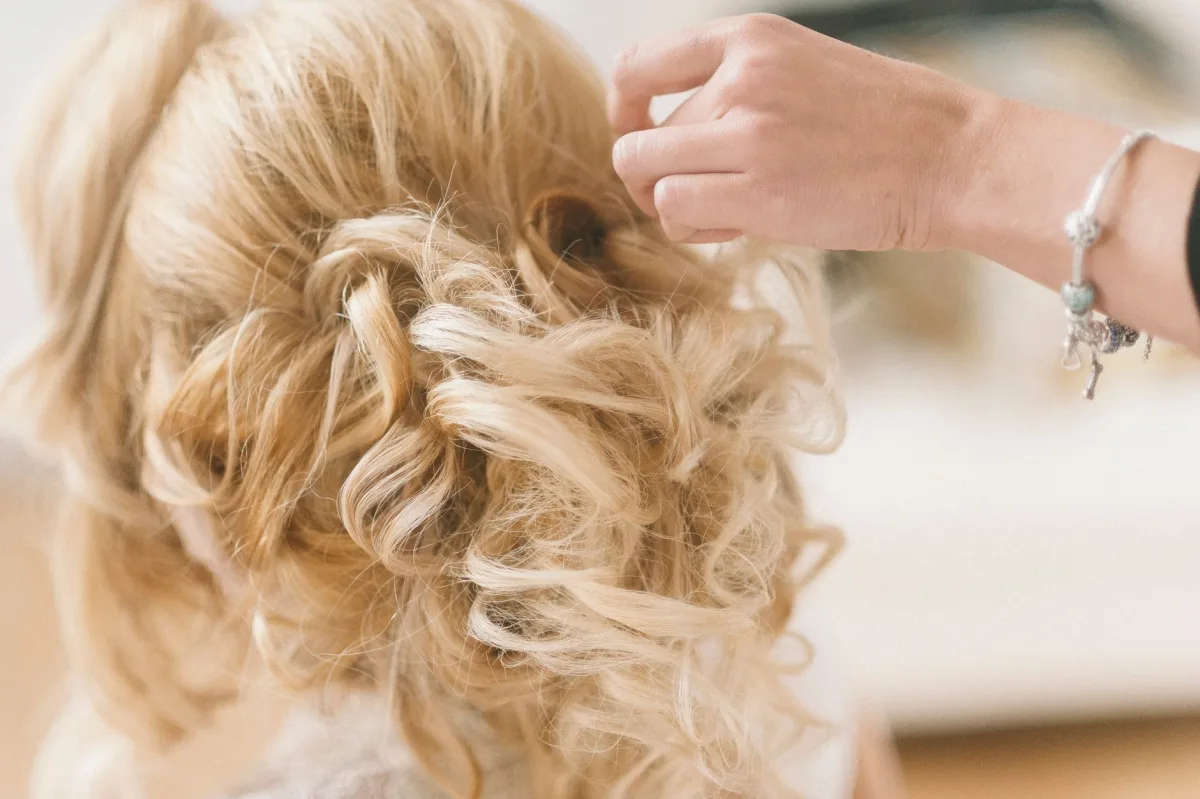
No style sits well on hair that is not in good condition, and condition is the one thing you cannot arrange the week before. Good hair care is the quiet foundation under every beautiful updo. If you colour your hair, plan the timing so your final appointment lands close enough to the day to look fresh but far enough that roots and tone have settled. If you are growing your hair for a particular style, count back generously, because hair grows slowly and unevenly.
The single most important rule mirrors the golden rule of all bridal preparation: do not debut anything new near the day. A drastic cut, a first-ever colour, a bold new treatment or a keratin process you have never tried all belong to the months before, never the final fortnight, so that if something reacts badly you have room to recover. In the last two weeks your job is to maintain and protect, trimming split ends, staying hydrated and resisting the urge to experiment.
Choosing a style that suits you
The best wedding hair is chosen for the whole picture, not in isolation. Four things should guide the decision far more than any trend: the shape of your face, the neckline of your outfit, the headpiece you plan to wear, and the setting and season of the day. A high, sculptural updo flatters an embellished neckline and a formal hall; loose waves suit a relaxed beach or garden; and a heavy embroidered dupatta or a long veil changes what a style can physically support.
The updo
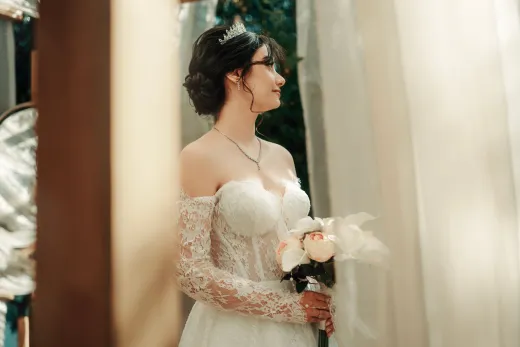
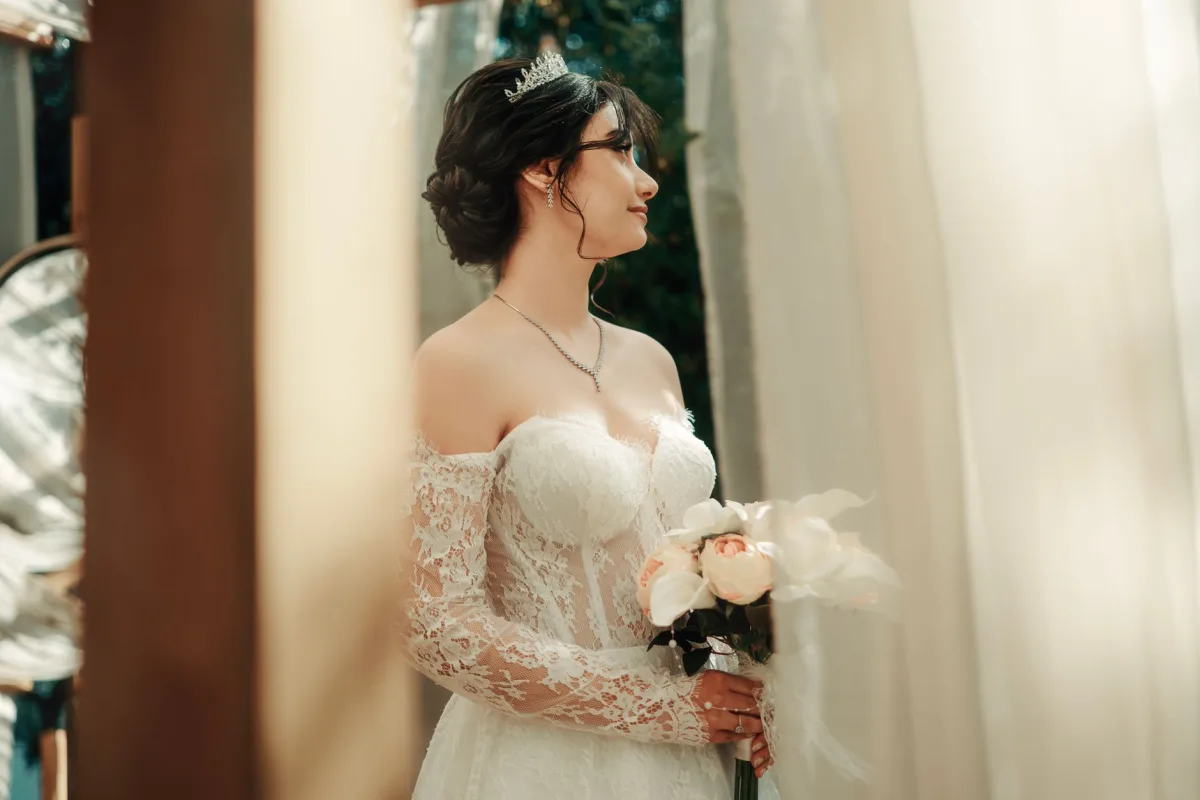
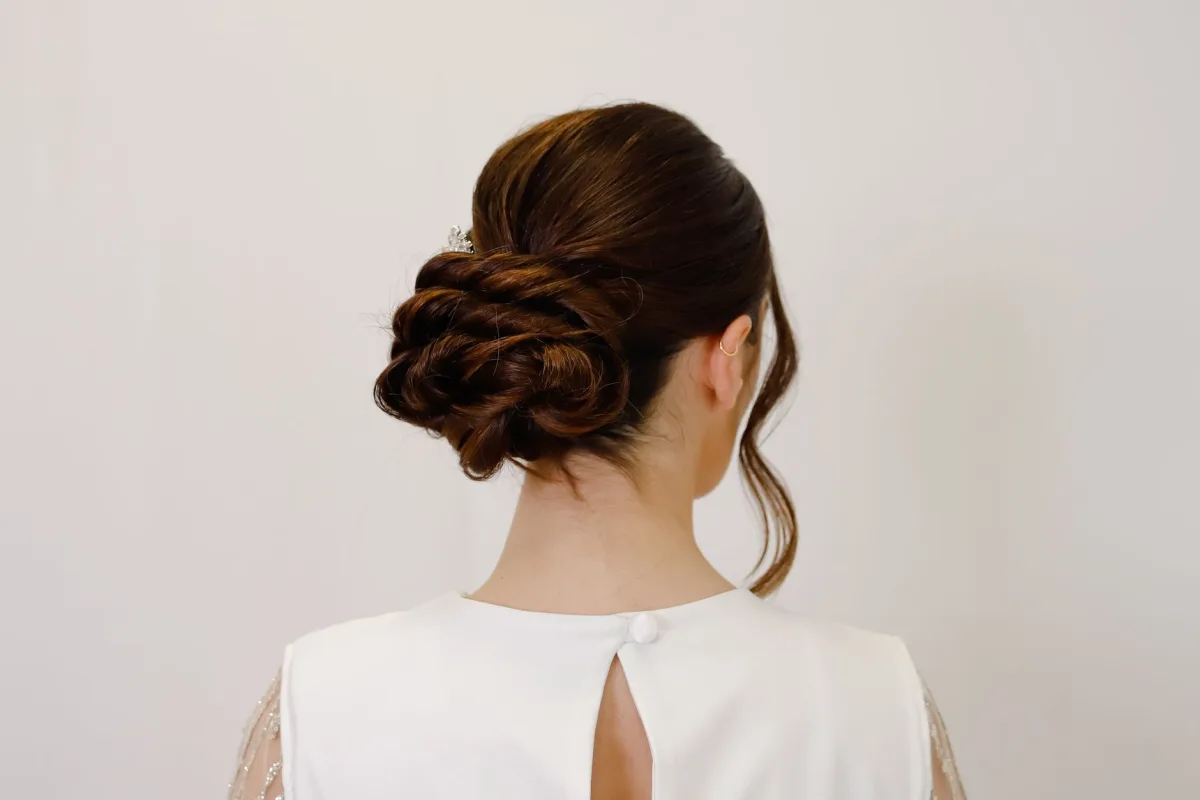
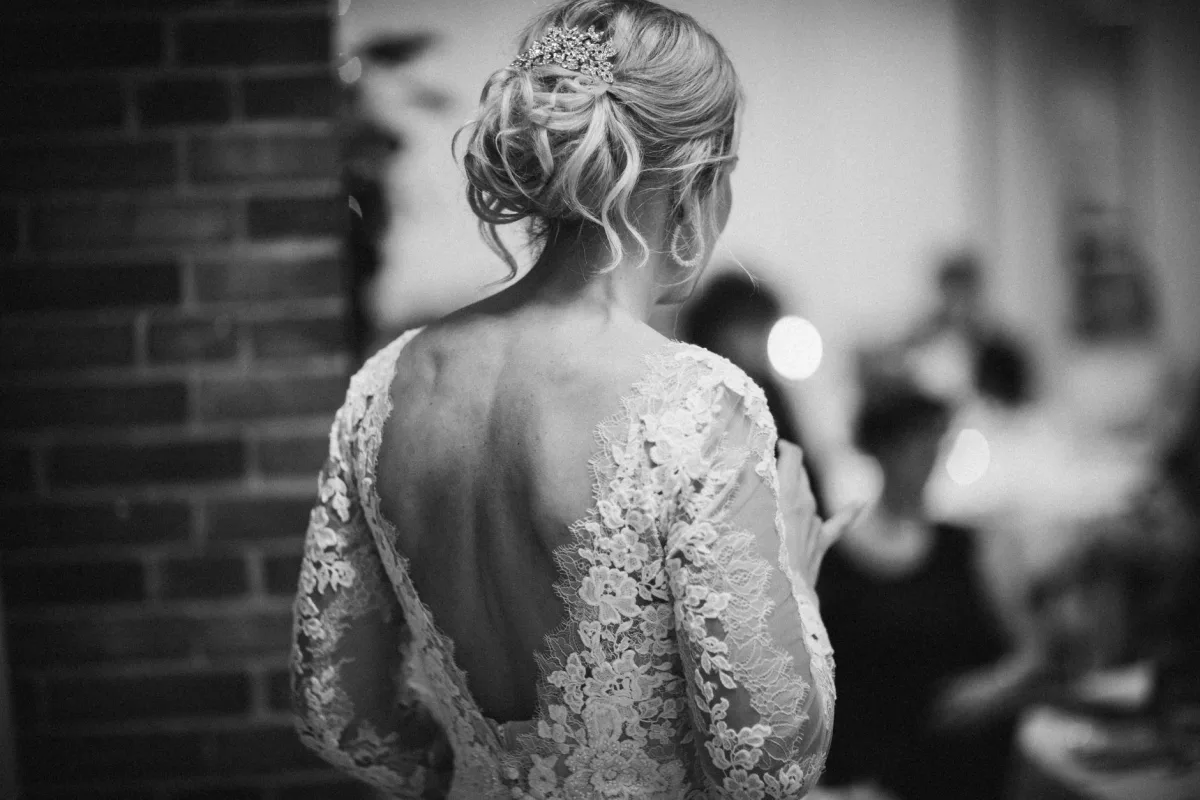
Hair gathered up and secured, from a sleek chignon to a soft, textured knot. Keeps the neckline clear, holds a veil securely and reads as classic and formal.
Down and waves
Hair worn loose with curls or soft waves. Romantic and relaxed, lovely for outdoor settings, though it needs more upkeep across a long, warm day.
The half-up
The top and sides pulled back while the length stays down. A middle path that frames the face, holds a tiara or comb, and keeps hair off the shoulders.
Braids and accents
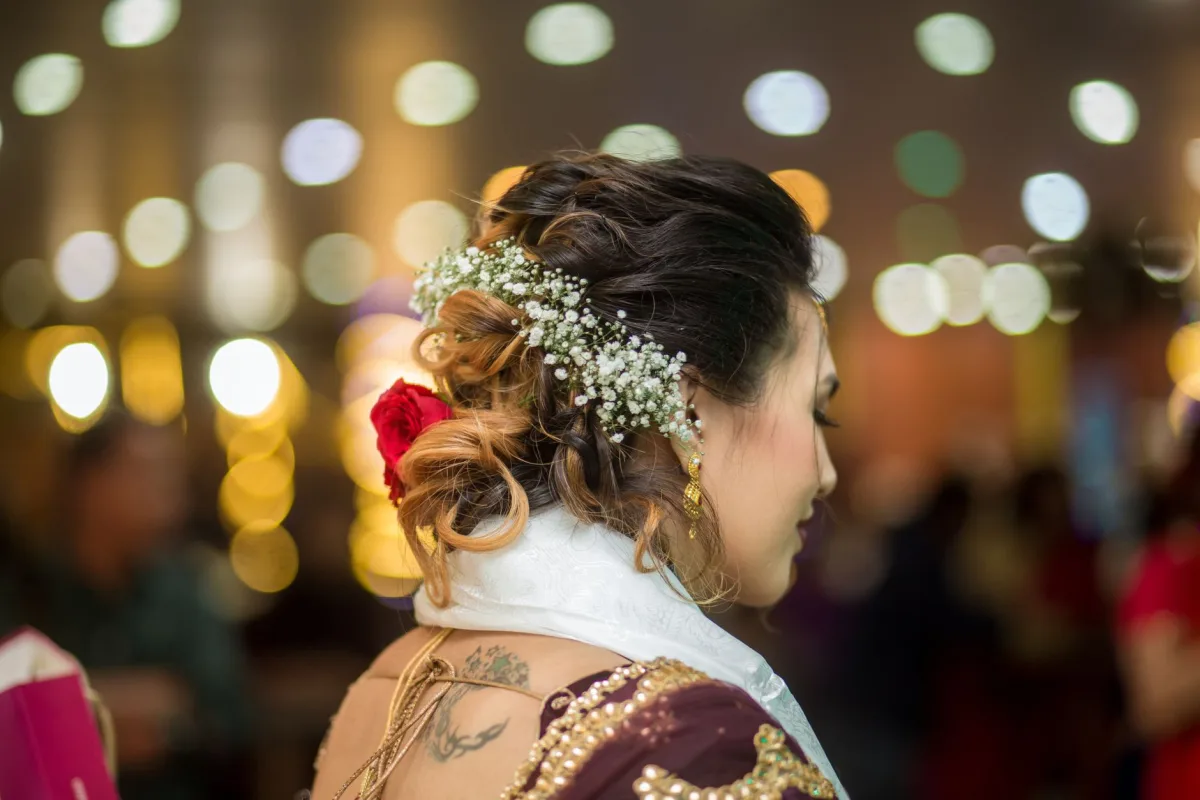
Plaits, twists and woven detail, sometimes threaded with flowers, jewellery or a maang tikka. Cultural and personal touches that make the look unmistakably yours.
If your hair is short, do not assume your options are narrow. Sculpted waves, jewelled pins, a small comb and clever accessorising can be every bit as striking as a long updo. Our dedicated guide to a short hair do for a wedding walks through styles built specifically for shorter lengths, so length is a starting point, not a limit.
Hair and the headpiece: veils, tiaras and flowers
Your hair and your headpiece are a single decision made twice, and they should be planned together. A veil has framed brides for centuries and carries deep symbolism across many cultures, but practically speaking it also needs an anchor. A secure updo or a well-placed comb gives a long veil something to hold onto; a soft down style may need extra pins to keep a heavy veil from dragging.
The same logic applies to a tiara, a jewelled comb, fresh or preserved flowers, or a South Asian maang tikka and matha patti. Decide where the weight sits and how it attaches before you finalise the style, and always test the headpiece at your trial rather than seeing it meet your hair for the first time on the morning. A stunning arrangement that cannot actually support your veil is a problem you want to discover weeks early, not minutes before you walk.
The hair trial: your most important appointment
If you take one piece of advice from this guide, make it this: book a trial. A trial is a full rehearsal of your wedding hair, done well ahead of the day, and it is where a good idea becomes a reliable plan. It is the moment you find out whether the style you saved actually suits your face, whether your hair will hold it for twelve hours, and whether the headpiece behaves.
Make the trial work harder with a few simple habits. Book it for a similar time of day to the wedding so the light matches. Come with your hair in its usual pre-wedding condition, and bring your actual veil or headpiece along with clear photographs of what you want and what you want to avoid. Wear a top with a neckline close to your outfit's. Then take your own photographs in natural daylight, because the camera reads a style differently from the mirror, and it is the camera that keeps the day. Leave the trial with notes, not just a memory.
When to trial
Roughly one to two months before the wedding, close enough that your hair length and colour match the day, early enough to change your mind.
What to bring
Your veil or headpiece, inspiration photos, a matching neckline, and any hair accessories or heirloom pieces you plan to wear.
What to capture
Photos in natural light from the front, sides and back, plus notes on what to tweak: more volume, a lower knot, a firmer hold.
Booking the right stylist
Wedding hair can be done by a dedicated bridal hair stylist, a salon professional who travels, or a combined hair and makeup artist. Whichever route you take, the good ones are booked early, sometimes a year ahead for peak dates, so treat this as a long-lead task rather than a last-minute one. Look at portfolios that show hair like yours in texture and length, ask whether they travel to your venue, and confirm exactly what the price includes, the trial, the day-of styling, and any additional heads if you want your bridal party done too.
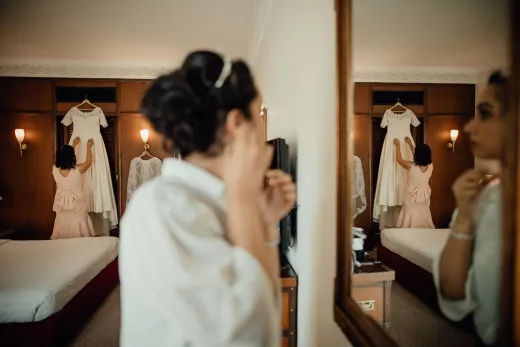
Coordinate timing with the rest of your morning as well. Hair usually comes before makeup and dressing, and a stylist doing several people needs a realistic schedule. This is the kind of logistics your planner or coordinator handles smoothly, and our overview of the wedding planner role explains how a professional keeps the getting-ready timeline from slipping. It also pays to talk to your wedding photographer about when hair will be finished, since the getting-ready shots depend on it.
The wedding-hair timeline
Everything above works better on a calendar. Health decisions go early because hair responds slowly; styling decisions sit in the middle; and the trial and final touches go late. Here is a broad, culture-agnostic sequence you can adapt to your own traditions and hair type.
- 9 to 12 months out. Start or improve a steady hair-care routine. Book your stylist for popular dates before they fill.
- 6 months out. Settle on a direction for the style, coordinated with your outfit, veil or headpiece and venue.
- 3 months out. Time any colour so it looks fresh on the day. Finalise your accessories and headpiece.
- 1 to 2 months out. Do the trial. Photograph it in daylight, adjust, and confirm the day-of schedule with your stylist.
- Final 2 weeks. A light trim if needed, deep conditioning, and no experiments. Protect condition and hydration.
- The morning. Hair first, then makeup, then dressing. Build in buffer time so nothing is rushed.
That last line matters. A style rushed against the clock rarely sits as well as one given room to breathe. Whether you are the bride or you are helping the wider party get ready, our guide to looking after your bridesmaids covers coordinating several heads of hair on one busy morning, and the broader bridal overview shows how hair fits alongside skin, makeup and the rest of the look.
The bottom line
Wedding hair rewards the same discipline as every other part of the day: decide early, test properly, and protect what you have built. Choose a style for your whole picture rather than a single saved photo, plan it hand in hand with your veil or headpiece, and never let the morning of the wedding be the first time you see the finished look. Do that, and your hair becomes one less thing to worry about and one more thing that simply looks like you.
Frequently asked questions
How far in advance should I book my wedding hair?
Book your stylist as early as you comfortably can, often six to twelve months ahead, because the most sought-after professionals fill peak dates quickly. The trial itself is best done later, roughly one to two months before the wedding, so your hair's length and colour on the trial day closely match how they will look on the wedding day. Early booking and a late trial are not in conflict; they are two separate steps.
Do I really need a hair trial?
Yes, if it is at all possible. A trial is a full rehearsal of your wedding hair, and it is where you discover whether a style suits your face, holds for a long day and works with your veil or headpiece. Do it at a similar time of day to the wedding, bring your actual headpiece and inspiration photos, and take your own pictures in natural light. The day itself is never the moment to test something for the first time.
Should my hair be up or down for my wedding?
There is no single right answer; it depends on your outfit, your setting and your comfort. An updo keeps the neckline clear, holds a veil securely and reads as formal, which suits an embellished dress or a grand hall. Hair worn down with waves is softer and more relaxed, lovely for gardens and beaches, though it needs more upkeep across a warm day. A half-up style is a popular middle path that frames the face and holds accessories.
Can I have great wedding hair with short hair?
Absolutely. Short hair opens up sculpted waves, sleek finishes, jewelled pins, small combs, flowers and other accents that can be every bit as striking as a long updo. The key is choosing a style built for your length rather than forcing a look designed for longer hair. A stylist who regularly works with shorter lengths, and a proper trial, will show you just how many options you have.
How do I keep my wedding hair in place all day?
Start with healthy, well-prepared hair, choose a style suited to your hair type, and let a skilled stylist use the right products and pinning for a long day. Secure updos and half-up styles generally hold better than fully down looks, especially in heat or humidity. Confirm the hold at your trial by wearing the style for a few hours, and keep a few pins and a small comb in your day-of kit for quick touch-ups.