Bridesmaids: The Complete Guide
What bridesmaids and the maid of honour actually do, how to choose them, what the role really costs, and how to be the kind of bride people are glad they said yes to.
Bridesmaids are the small team a bride builds around herself: part support crew, part planning committee, part the people who will hold the flowers and the nerves on the day. The role sounds simple until you are the one filling it, and then the questions arrive all at once. How many should you have? Who leads them? Who pays for the dresses? What do they actually do, and how do you ask people to spend their money and time without it turning awkward? This is the honest, modern version: what bridesmaids and the maid of honour really do, how to choose them, what it costs, and how to be the kind of bride people are glad they said yes to.
The short version
- Only one duty is truly required: to stand up with you on the day. Everything else is a kindness, not an obligation.
- The maid of honour leads; the bridesmaids support. One clear point person keeps the group from tangling.
- Being a bridesmaid costs real money. A considerate bride plans around the least flush person, not the most.
- Choose character over symmetry. Pick people who show up, not the ones who make the photo balanced.
What a bridesmaid actually is
A bridesmaid is a member of the bride's side of the wedding party, usually a close friend or relative, who attends to the bride before and during the wedding. The modern role blends three jobs: emotional support in the months of planning, practical help running the pre-wedding events, and a visible presence beside the bride during the ceremony itself. The lead bridesmaid holds the title of maid of honour, or matron of honour if she is married.
It is worth being clear about what the role is not. As the etiquette writer Judith Martin has put it, bridesmaids are not obliged to host events in the bride's honour, nor to wear dresses they cannot afford. According to the history of the tradition, the only strictly required duty is to take part in the ceremony. That single line is the most useful thing a bride can remember, because it reframes everything else the group does as generosity rather than duty, and generosity works far better when nobody feels trapped into it.
How many bridesmaids should you have?
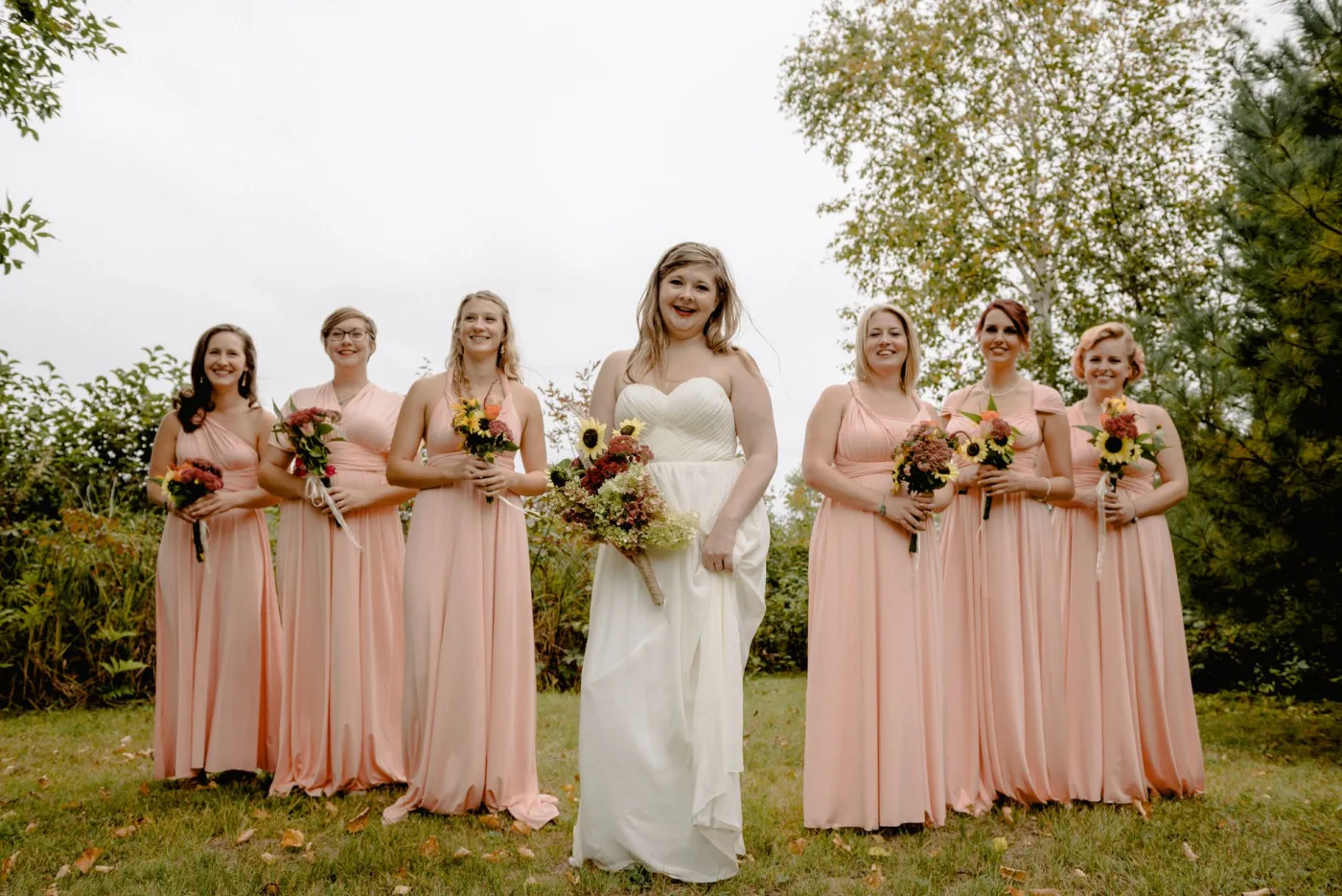
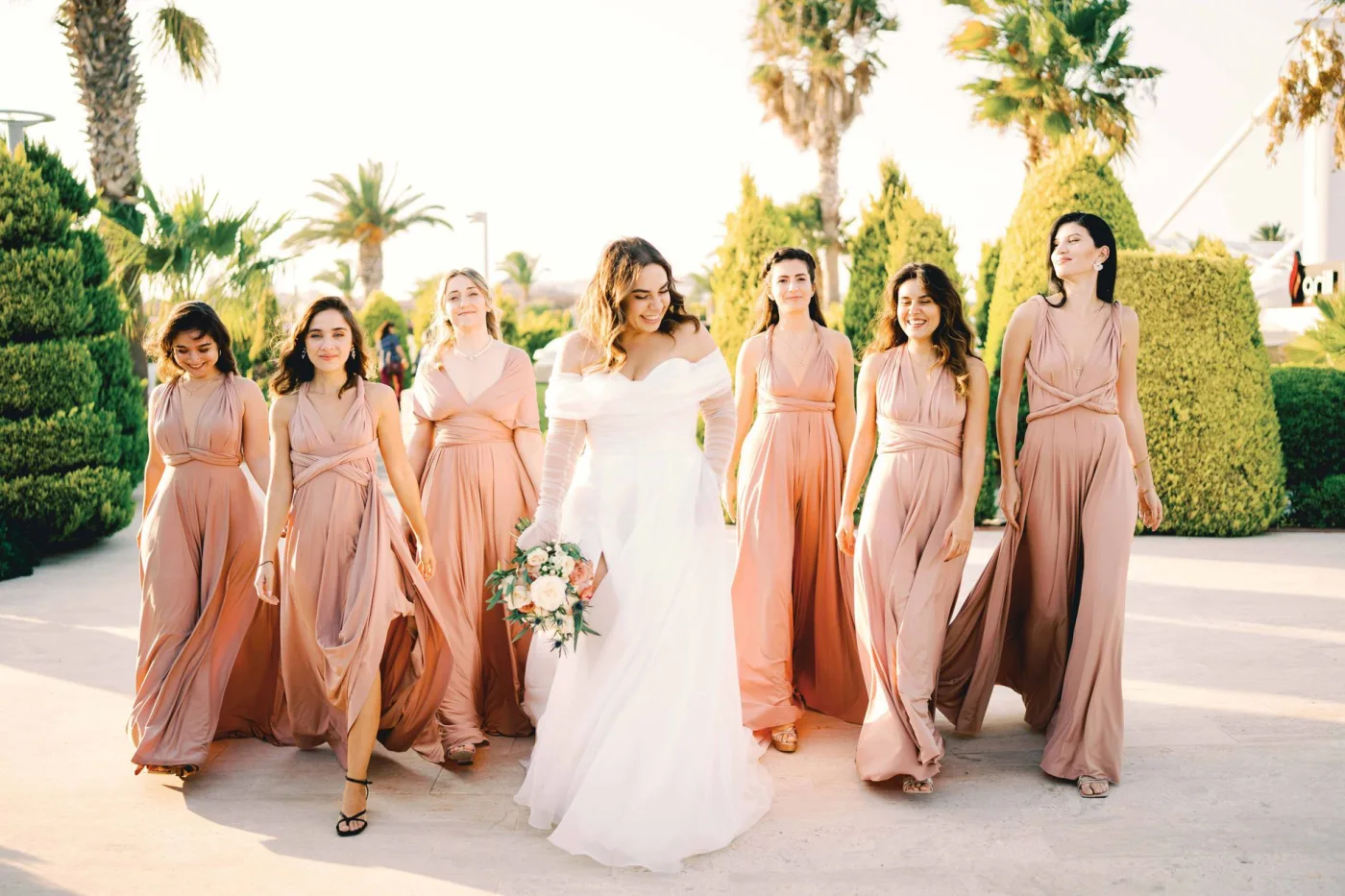
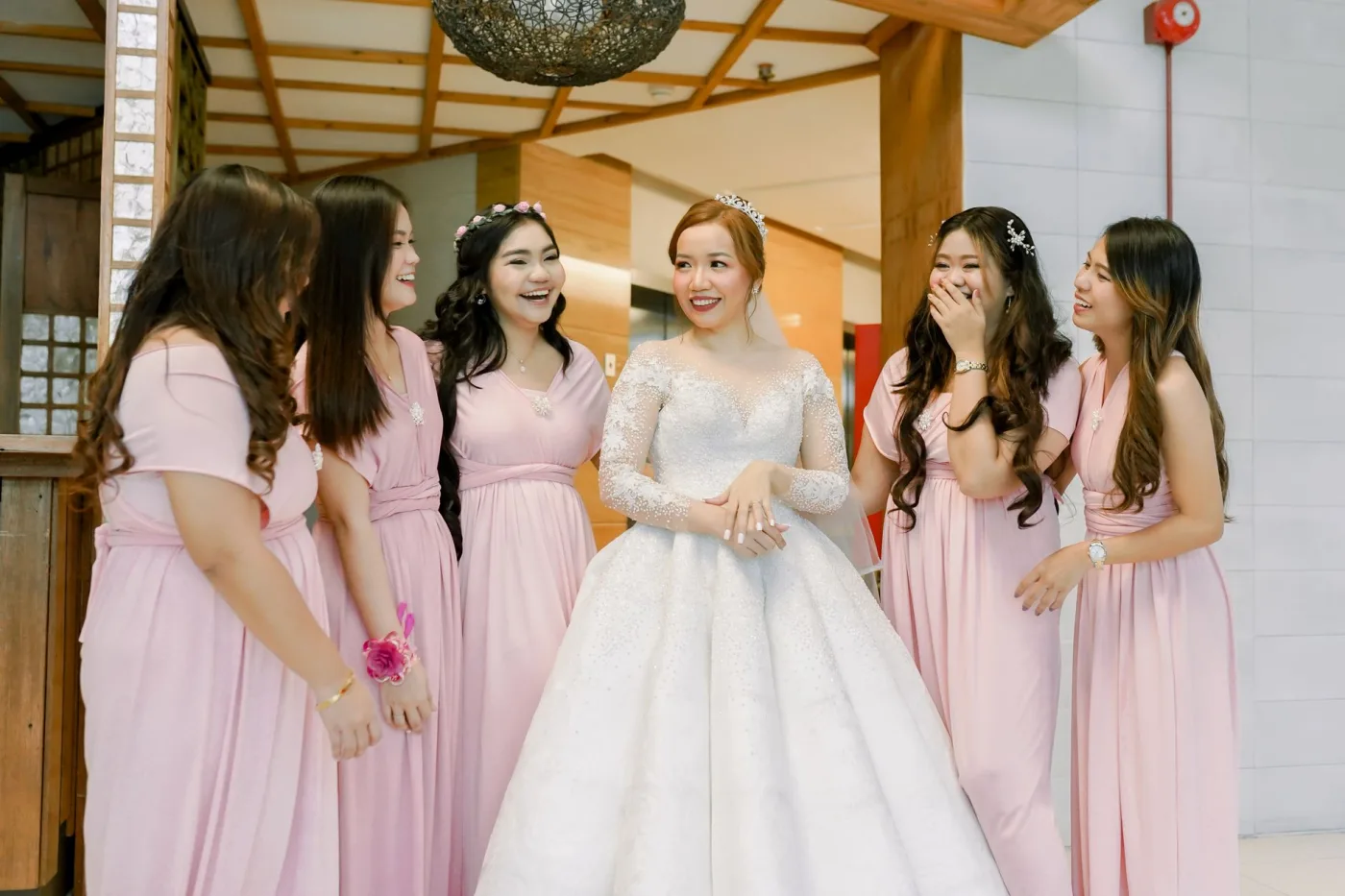
There is no correct number, only a number that fits your wedding. A small, intimate ceremony can have one bridesmaid, or none. A large formal wedding might have six or eight. Most weddings land somewhere between three and five. The honest guide is not the size of the room but the size of your real inner circle: the people who would show up for you whether or not there was a wedding.
A few practical anchors help. More bridesmaids means more people to coordinate, more dresses to align, and more schedules to juggle, so the planning effort rises faster than the number itself. It also drives cost, both yours and theirs, because gifts, bouquets and getting-ready logistics all multiply. If you are torn between including someone as a bridesmaid or in another role, a reading, a toast, a job on the day, remember that there are many ways to honour a friend that do not require a matching dress.
Choosing your bridesmaids without regret
This is the decision people most often get wrong, usually by choosing for symmetry or obligation rather than for who these people actually are. Choose bridesmaids the way you would choose who to call at midnight in a crisis, because in the run-up to a wedding that is roughly what you are doing. Reliability matters more than closeness on paper. A cousin you love but rarely speak to may be a warmer choice as a guest of honour than as someone you now need to coordinate with weekly.
Ask honestly, and give an easy exit. When you ask someone to be a bridesmaid, say what it will involve and roughly what it may cost, and make it genuinely fine for them to say no. A friend who declines because the timing or the money does not work is still your friend. A friend who says yes while quietly panicking about the cost is a resentment waiting to happen. The kindest ask is the one with a real door left open.
The maid of honour: the extra duties
The maid of honour is the bride's right hand and the bridesmaids' team captain. The role of a maid of honour in the modern sense grew out of an older court position, but today it is defined by function rather than rank: she is the one who leads, organises and steadies. Where the other bridesmaids help, she coordinates the helping.
In practice that means she often takes the lead on planning the bridal shower and the bachelorette or hen celebration, gathers the group so the bride does not have to chase everyone, keeps the bridesmaids informed about dress fittings and timings, and acts as the bride's calm point of contact when something wobbles. On the day she typically holds the bouquet during the vows, helps with the dress and veil, keeps the emergency kit, and, at many weddings, gives a toast. None of this is compulsory, but a good maid of honour absorbs a great deal of small stress the bride would otherwise carry alone.
Who does what: maid of honour versus bridesmaids
The clearest way to run a happy wedding party is to agree, early and out loud, who owns what. The table below is a starting point, not a rulebook. Shift the lines to suit your group, but do shift them together rather than leaving them vague.
| Task | Maid of honour | Bridesmaids |
|---|---|---|
| Emotional support for the bride | Leads, first point of contact | Share the load |
| Planning the bridal shower | Organises and hosts | Help plan and contribute |
| Bachelorette or hen celebration | Coordinates the group | Attend and pitch in |
| Dress shopping trips | Rallies everyone, helps decide | Attend, order and fit on time |
| Holding the bouquet at the vows | Yes, the classic job | Not usually |
| Emergency kit on the day | Keeps and carries it | Know where it is |
| Toast or speech at the reception | Often gives one | Optional, rarely expected |
| Wrangling the group on the day | Herds and times everyone | Follow the run sheet, be on time |
Bridesmaid dresses: choosing, colours and who pays
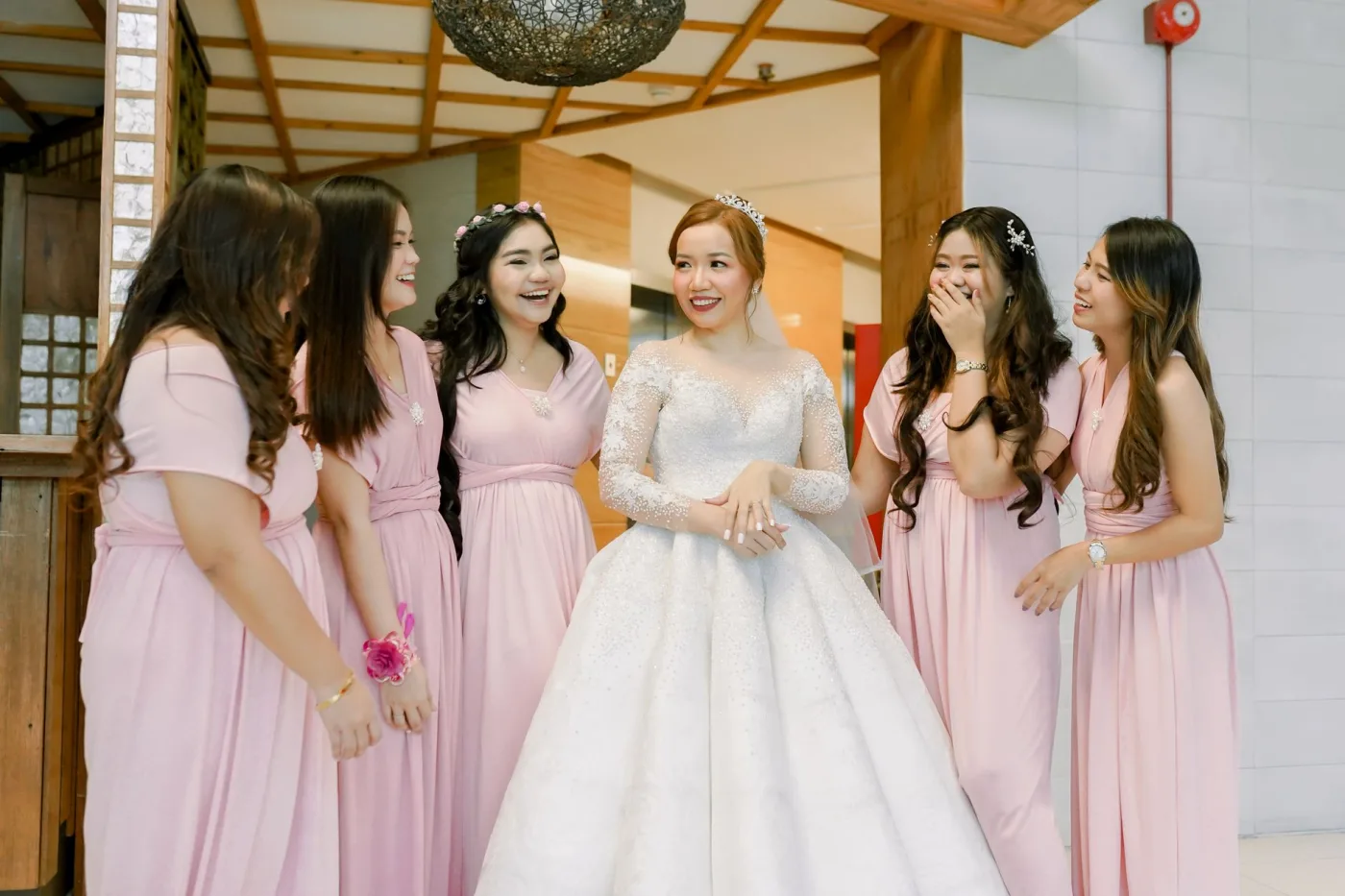
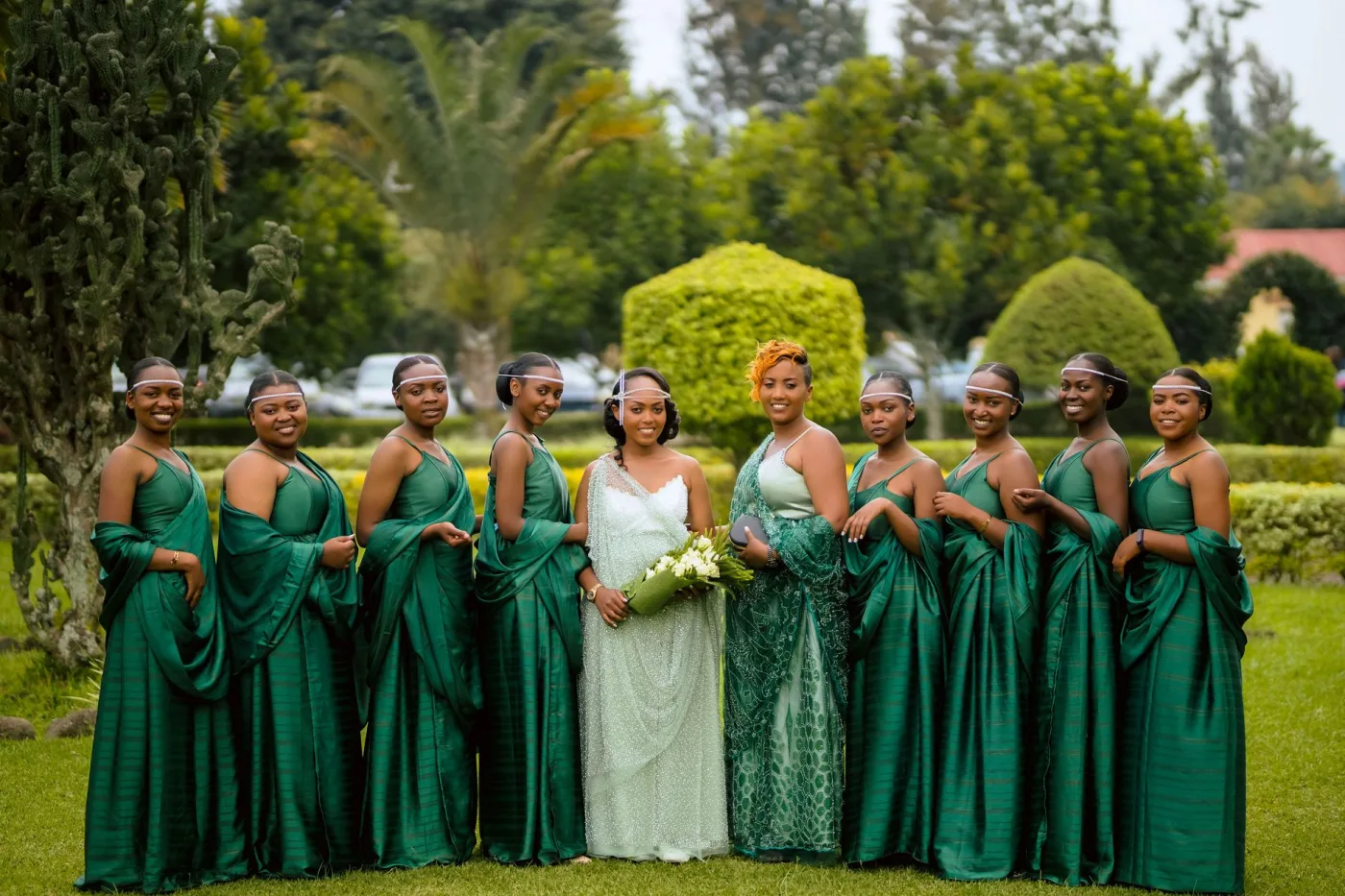
Dresses are where good intentions most often collide with real bodies and real budgets. The modern approach has loosened considerably, and for the better. The old ideal of identical dresses has given way to a spectrum: fully matching, same colour in different styles so each person wears what flatters them, or a shared palette where tones vary within an agreed range. Mismatched but coordinated is now completely mainstream, and it solves the age-old problem that one dress rarely suits five different shapes and heights.
On colour, work from your wider palette and your season, then sanity-check it against skin tones and the venue. A shade that photographs beautifully in a garden can look heavy indoors. If you care most about the group reading as a set in photos, fix the colour and free the style. If you care most about a single silhouette, fix the style and be generous about fit and alterations.
The honest line on who pays: traditionally, bridesmaids buy their own dresses, and that convention is still common. But it is a convention, not a law, and plenty of modern couples pay for some or all of the outfits precisely because they chose them. The rule that never fails: whoever chooses, considers the cost. If you insist on a specific expensive dress, the graceful move is to help pay for it. If you ask your bridesmaids to cover their own, keep the choice affordable and give them room to shop the price down.
The costs a bridesmaid quietly takes on
Being a bridesmaid is one of the most expensive kind gestures in modern social life, and much of the cost is invisible to the bride because it lands on other people's cards. Surveys of the role have put the typical all-in spend well into the hundreds, and for a destination celebration far beyond that. It adds up across many small line items, which is exactly why it sneaks up on people.
The dress
Plus alterations, and often shoes and accessories to match. Frequently the single largest item.
Hair and makeup
Salon styling on the day, or a trial beforehand, when the look is coordinated.
Travel and stays
Flights, fuel and a night or two in a hotel, especially for a wedding away from home.
Gifts
Often three: a shower gift, a wedding gift, and a share of a group present.
The hen or bachelorette
Their share of the trip or party, and sometimes a slice of the bride's share too.
Time off work
Unpaid days for the celebration, the travel, and the day itself. Real money, rarely counted.
Reading that list as a bride is the single best thing you can do for your friendships. You do not have to remove every cost, but you should see it clearly, and you should plan around the person with the least to spend rather than the most. A cheaper dress, a hen weekend closer to home, or simply saying out loud that no gift is expected can lift a weight your bridesmaids will never tell you they were carrying.
The pre-wedding events they help run
Two celebrations sit squarely in the wedding party's hands. The first is the bridal shower, a gift-giving gathering held for the bride ahead of the wedding. The custom of the bridal shower grew out of older traditions in which friends brought gifts to help set up the couple's new home, and it is usually held a few weeks before the wedding and hosted by the maid of honour or the bridesmaids. It is warm and low-key by design: tea, cake, and a slow afternoon rather than a big night out.
The second is the bachelorette party, or hen do, the bride's celebration with her closest friends. This one has no fixed shape at all, from a quiet spa weekend to a lively night out to a trip abroad, and the only rule that matters is that it fits the bride and the group's budgets. The maid of honour usually coordinates it, but the whole party shares the planning and the cost. The kindest version is planned in the open, with the price agreed before anyone books flights.
The bridesmaid year, front to back. Most of the effort is planning, and most of the joy is the last two stops.
Day-of duties: what actually happens
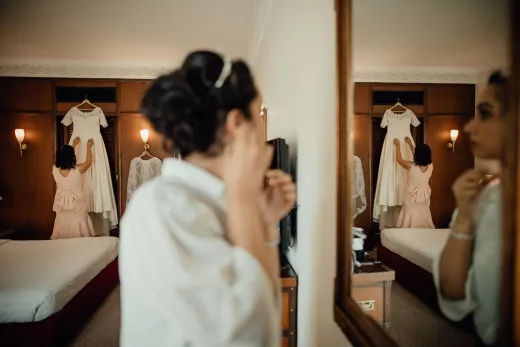
On the wedding day the bridesmaids shift from planners to a calm, present support team. The morning is theirs as much as the bride's: getting ready together, keeping the mood light, watching the clock so nobody has to nag. Practical jobs cluster around the ceremony. Someone helps with the dress and veil, the maid of honour holds the bouquet during the vows, and the group walks in as part of the processional in whatever order you have rehearsed.
- Keep the timeline moving gently, so the bride never has to be the one asking people to hurry.
- Carry the emergency kit: pins, plasters, a sewing kit, tissues, a snack and a phone charger.
- Greet and guide guests who look lost, and help elderly relatives find their seats.
- Handle small crises quietly: a stain, a missing button, a nervous wobble, all away from the bride's eyeline.
- Be visibly happy in the photos, because the bride will look back at these for decades.
- Make sure the bride eats and drinks water, which on a busy day she will otherwise forget.
Gifts and etiquette
Gifts flow in both directions, and the etiquette is gentler than people fear. Bridesmaids traditionally give the bride a shower gift and a wedding gift, though a shared group present is increasingly common and entirely acceptable, especially given what the role already costs. In the other direction, the couple usually gives each bridesmaid a thank-you gift, presented around the rehearsal or on the morning of the wedding. It need not be expensive; something personal and genuine lands far better than something costly and generic.
A few etiquette points smooth the whole thing. Thank people specifically and in writing, not just in the crowd of the day. If a bridesmaid has spent heavily to be there, acknowledge it privately and warmly. And keep the group informed rather than surprised: people give their best when they know what is coming, and resentment almost always grows in the gap between what was expected and what was said out loud.
How to be a good bride to your bridesmaids
The best brides treat the role as a gift they are receiving, not a service they are owed. That shift in mindset does most of the work. Be clear about what you are asking for and honest about what it will cost. Choose dresses and events with the tightest budget in the group in mind. Say thank you often and specifically. And remember that your bridesmaids have lives, jobs and money worries that do not pause for your wedding, however important the day feels to you.
It also helps to keep some perspective on the whole wedding party. Your bridesmaids are one circle of support among several; your family, your partner, and the people helping behind the scenes all carry part of the day too. If you are thinking about roles and speeches across the whole event, our guide to the father of the bride covers another role that is more felt than defined, and our overview of the bridal party and getting-ready morning shows how the bride's side fits together on the day. Both sit inside the bigger picture of planning a whole wedding without losing the friendships that make it worth celebrating.
Do that well and the reward outlasts the day. Handled with care, being asked to be a bridesmaid is remembered as an honour. Handled carelessly, it is remembered as the year a good friend cost someone a small fortune and a lot of stress. The difference is almost entirely in how the bride behaves, and it costs nothing but attention.
Frequently asked questions
How many bridesmaids should I have?
There is no right number. Small weddings often have one or none, large formal ones can have six or more, and most land between three and five. Choose based on your genuine inner circle rather than the size of the venue or the balance of the photo. Remember that every additional bridesmaid adds coordination, cost and scheduling, so more is not automatically better.
What is the difference between a maid of honour and a bridesmaid?
The maid of honour is the lead bridesmaid and the bride's main helper. She typically organises the bridal shower and hen celebration, keeps the group coordinated, holds the bouquet during the vows, carries the emergency kit and often gives a toast. Bridesmaids support all of this but do not lead it. If the lead is married she is usually called the matron of honour instead.
Who pays for bridesmaid dresses?
Traditionally the bridesmaids buy their own dresses, and that is still common, but it is a convention rather than a rule. Many modern couples pay for some or all of the outfits, particularly when they have chosen a specific expensive dress. The fair principle is that whoever chooses the dress should consider the cost, and if you require something pricey, offer to contribute.
What does a bridesmaid actually do on the wedding day?
On the day, bridesmaids get ready with the bride, help with her dress and veil, keep the timeline moving gently, carry an emergency kit, guide guests, handle small problems quietly, and offer calm, visible support in the photos and throughout the celebration. The maid of honour holds the bouquet during the vows and usually keeps the group organised.
How much does it cost to be a bridesmaid?
It varies widely, but it commonly runs into the hundreds once you add the dress and alterations, hair and makeup, travel and accommodation, gifts, and a share of the hen celebration. Destination weddings cost far more. The kindest thing a bride can do is plan around the person with the tightest budget and be open that no one is expected to spend beyond their means.
Is it rude to say no to being a bridesmaid?
No. Declining because of cost, timing, distance or personal circumstances is completely reasonable, and a good friend will understand. There are many ways to be part of a wedding without being a bridesmaid, from giving a reading to helping on the day. Saying an honest no is far kinder to the friendship than saying a stressed yes you cannot afford.