Father of the Bride: The Complete Guide
A plain, modern guide to the father-of-the-bride role: duties, the walk and giving away, the speech, attire, the father-daughter dance, hosting and the emotional side.
The father of the bride is one of the few wedding roles that everyone recognises and almost nobody explains. It carries a walk down the aisle, a speech, a dance and a whole day of quiet hosting, and it lands on someone who has usually never done any of it before. This guide sets out the role plainly: what the day actually asks of you, how the traditions have loosened, and how to handle the speech, the attire and the emotional weight without letting nerves run the show.
The short version
- The role is host, not centrepiece. Your job is to make others feel welcome.
- Every tradition here is optional. Walk, give away, speak, dance: keep what fits your family.
- The speech is short. Three to five minutes, warm, one story, no roasting.
- Plan the emotion. The feelings are real; a little rehearsal keeps them from ambushing you.
What the role actually is
Strip away the ceremony and the father of the bride is essentially the host of a party thrown in his daughter's honour. Historically he was also the one who paid for it, which is where much of the tradition comes from, but the modern version is less about the wallet and more about presence. You are the steady figure who greets people, keeps the mood warm, and quietly makes sure the day belongs to the couple rather than to any one guest.
It helps to say early that none of this is exclusive to fathers, and none of it is compulsory. A mother, a stepfather, a brother, an uncle, a grandparent or a close family friend can carry any part of this role, and many brides ask two people to share it or walk alone by choice. Everything below describes a set of options, not a script. Read it as the menu, then keep what suits your family and drop the rest without apology.
Traditional and modern duties
The classic checklist was long, and most of it has quietly relaxed. Here is the honest split between what tradition assigned to the father and what the role tends to look like now.
| Duty | Traditional version | Modern reality |
|---|---|---|
| Paying | Funded the whole wedding | Costs are usually shared, or the couple pays |
| Giving away | Formally handed the bride to the groom | Symbolic accompaniment, framed however the bride wants |
| Walking the aisle | Always the father, on the right | Anyone, both parents, or the bride alone |
| The speech | Opened the toasts, welcomed guests | Still common, but any parent may speak |
| Father-daughter dance | Formal set piece | Optional, often relaxed or skipped |
| Hosting | Greeted every guest personally | Shared with the couple and both families |
The through-line is that the ceremonial duties have softened into gestures, while the human ones, welcoming people and setting a warm tone, have stayed exactly as important as they ever were.
Walking down the aisle and giving away
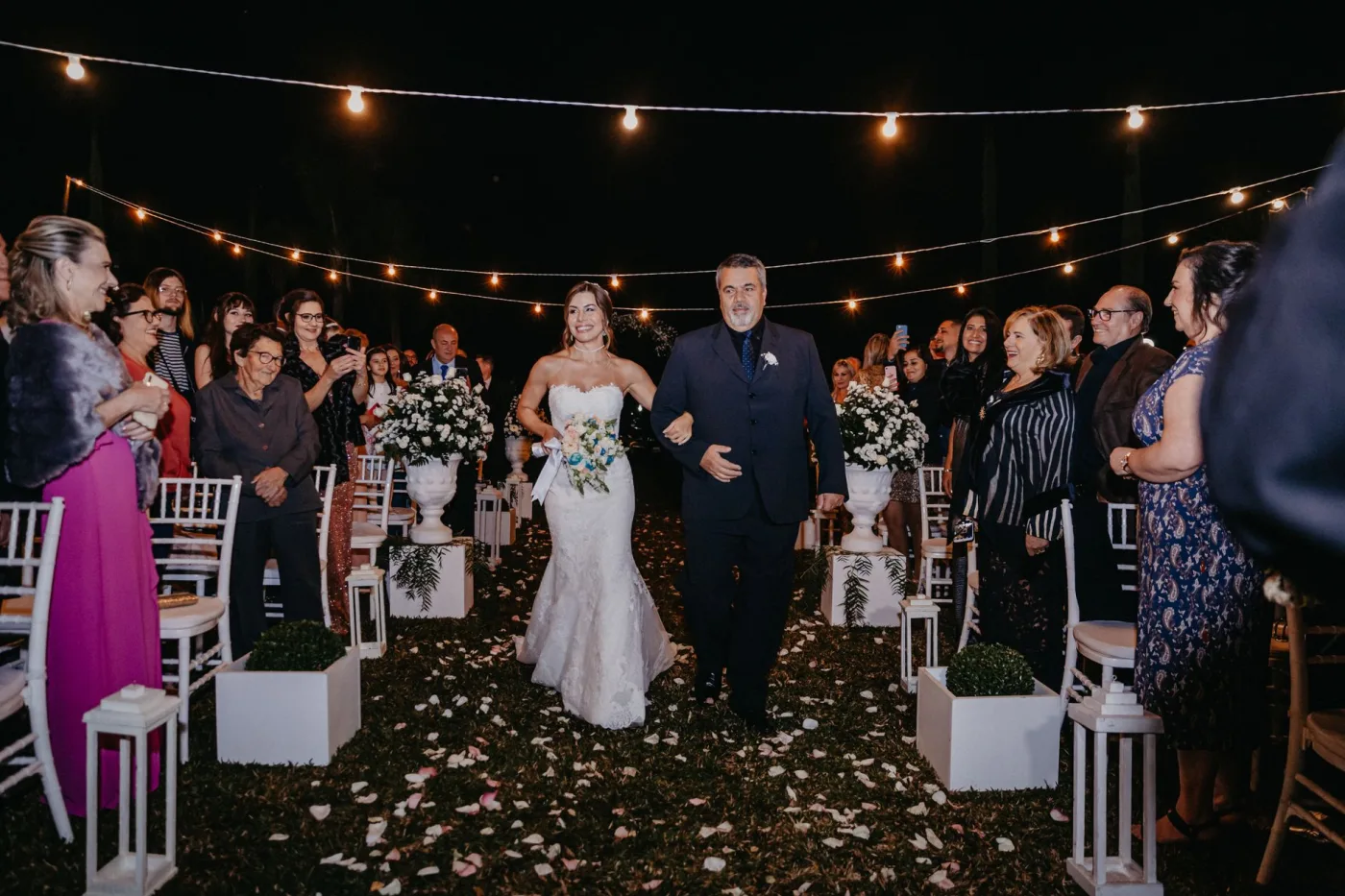
The walk is the moment most people picture first. In a traditional Western wedding ceremony the father escorts the bride down the aisle and, at the front, formally presents her, a custom historically known as giving the bride away. Its older meaning, a transfer of responsibility from one household to another, sits uncomfortably with most modern couples, so the gesture survives mainly as a symbol of support rather than a handover of a person.
Practically, keep it simple. Offer your left arm so your right stays free, set a slow, even pace, and let your daughter set the speed if she wants to linger. When the officiant asks who presents the bride, couples now answer in all sorts of ways: "her mother and I do", "her family does", or the line is dropped entirely. Agree the wording in advance so nobody is guessing at the altar.
A small rehearsal saves the big moment. Walk the actual aisle once at the rehearsal, in the shoes you will wear, so you learn the distance and the pace. The single most common regret fathers report is walking too fast because nerves pushed them forward. Slow is almost always right.
The father-of-the-bride speech
This is the part that keeps people awake at night, and it needs to. A good speech is short, warm and built around one real story. The wedding toast follows a fairly settled protocol: traditionally the father of the bride speaks first, welcoming guests and toasting the couple, before the best man and others follow. Standing to speak, raising a glass, and inviting the room to drink to the couple are all part of that ritual.
How to structure it
Almost every strong father-of-the-bride speech moves through the same five beats. Think of them as a frame you fill with your own material, not a set of lines to memorise word for word.
Welcome
Thank guests for coming and anyone who travelled far. Two sentences.
Your daughter
One short, specific story that shows who she is. Warm, not a full biography.
Welcome the partner
Say something genuine about their partner and the family they join.
A wish or word of advice
One piece of hard-won marriage wisdom, kept light and brief.
The toast
Ask everyone to stand, raise a glass, and toast the couple by name.
A short example outline
Filled in, that frame reads something like the outline below. Keep each beat to a few lines and the whole thing lands comfortably inside the sweet spot.
| Beat | Roughly what you say | Time |
|---|---|---|
| Open | "Good evening. For those who don't know me, I'm the lucky one who gets the bill." A warm laugh line, then a real thank-you to guests. | 30 sec |
| Her | One vivid memory that captures her character, ending on who she has become. | 60 sec |
| Them | How you knew this partner was right for her, and a welcome to their family. | 45 sec |
| Wish | A single line of advice, then your hope for their life together. | 30 sec |
| Toast | "Please stand and raise your glasses. To the happy couple." | 15 sec |
Length, delivery and what to avoid
Aim for three to five minutes. Under three can feel thin on a day this big; over five and even a loving room starts to drift. Write it out in full, then print it in large type on cards you can hold, because your hands will shake and memory is unreliable under that much feeling. Read it aloud several times before the day so the words are in your mouth, not just on the page.
The things to avoid are consistent and worth stating plainly: no roasting the couple, no in-jokes only three people understand, no mention of exes, no drinking heavily before you speak, and nothing that could embarrass your daughter in front of new in-laws. Aim for warmth over laughs. If a joke is a gamble, cut it. The audience wants to feel your affection far more than they want to be entertained.
The window is narrow on purpose. Rehearsed and read aloud, three to five minutes carries every beat you need.
What to wear
The rule for attire is short: match the couple, do not compete with them. Find out the dress code and the groom's outfit, then align with it. If the groom wears a dark suit, wear a dark suit; if the wedding is black tie, wear a tuxedo; for a morning or very formal ceremony, morning dress may be called for. Coordinate colours with the wider party so you sit inside the palette rather than clashing with the bridesmaids or the groomsmen.
A few practical notes. Break in your shoes before the day, because you will be standing and walking far more than usual. Carry a folded handkerchief, partly for show and partly because you may well need it. And if there is a buttonhole or pocket square coordinated with the bridal flowers, wear it: small signals of belonging to the wedding party matter more than the price of the suit.
The father-daughter dance
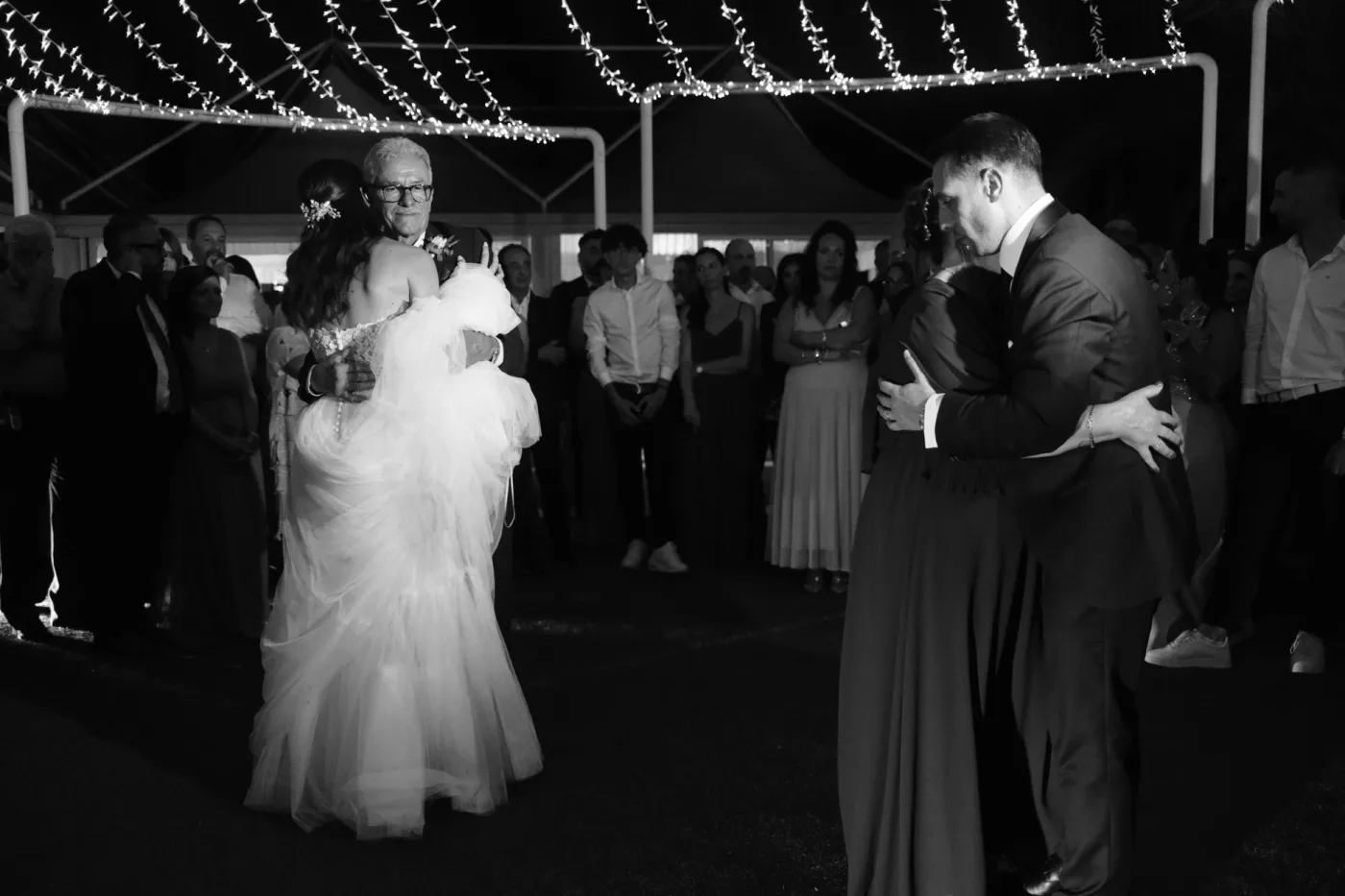
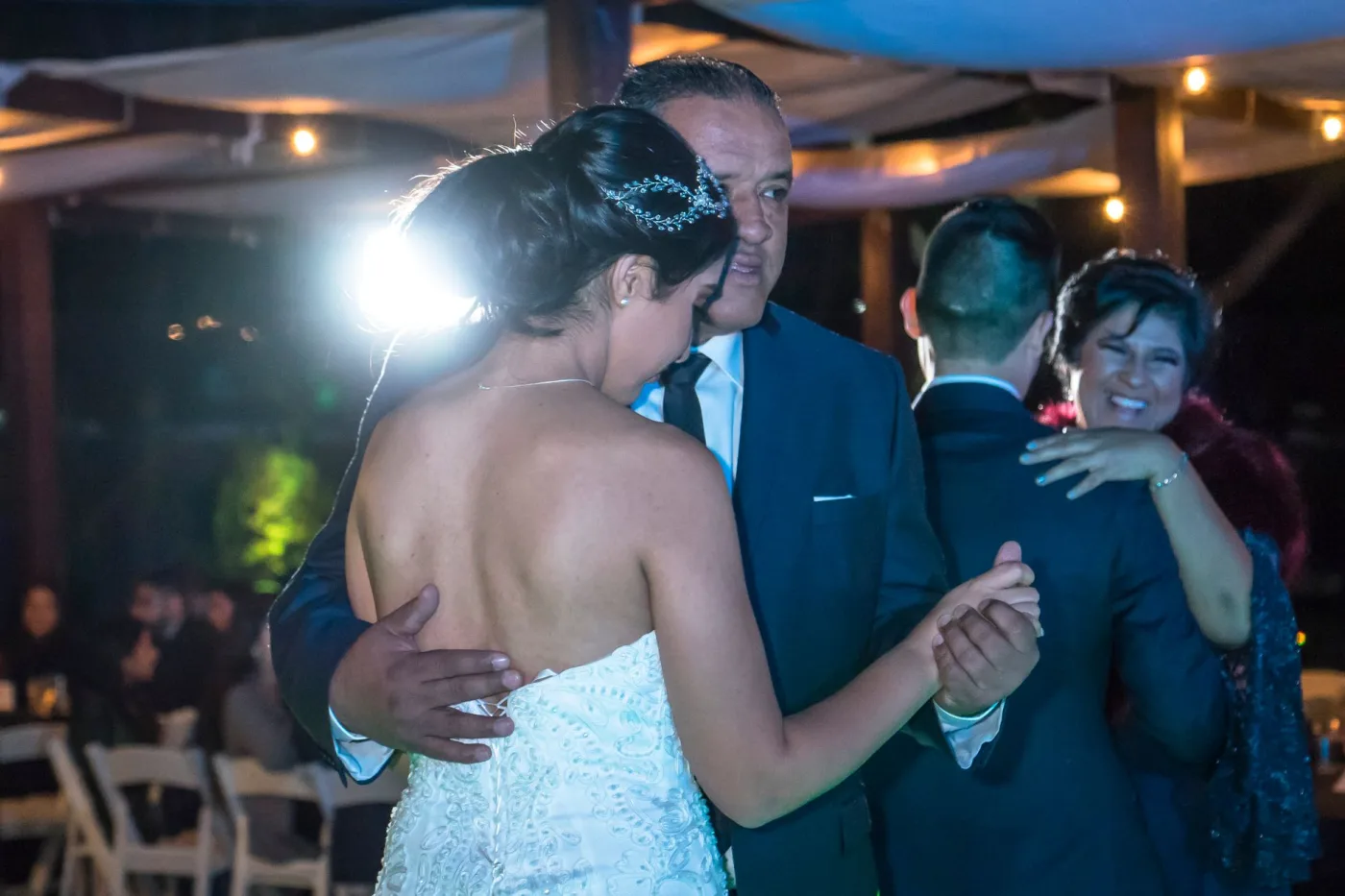
The father-daughter dance is a reception set piece, usually early in the evening, often just after the couple's first dance. It does not need to be skilful. A slow, simple sway to a song that means something to the two of you is exactly right, and guests read the meaning, not the footwork.
Choose the song together, well ahead of time, and check the lyrics all the way through so nothing catches you off guard mid-floor. Keep it to a comfortable length; many couples ask the DJ to fade the track after ninety seconds or so, which is plenty. And like every other tradition here, it is optional. Some families swap it for a dance with both parents, some fold it into a general dance, and some skip it entirely. If it would be painful rather than joyful, there is no obligation to stage it.
Hosting and toasting duties
Underneath the set pieces runs the quieter job that actually defines the role: hosting. On the day you are a fixed point that guests can orient around. Greet people as they arrive, especially older relatives and anyone who has travelled. Introduce guests who would not otherwise know each other. Keep a discreet eye on the flow of the reception and step in gently if something stalls, without ever taking the spotlight from the couple.
Toasting is the formal edge of that hosting. Beyond your own speech, you may be asked to welcome everyone at the start of the meal, to thank the caterers or venue, or to hand over to the next speaker. Standing when you speak, keeping remarks brief, and never drinking to a toast made in your own honour are the small courtesies that make the whole sequence feel gracious. Coordinate the running order with whoever is planning the reception so the speeches land at the right moment. If you want the full picture of how the day is sequenced, our guide to the wedding day walks through it in order.
A father-of-the-bride timeline
It helps to see the whole day laid out. Nothing here is mandatory, but this is the rhythm most fathers move through, from the weeks before to the last dance.
| When | What you are doing |
|---|---|
| Weeks before | Write and rehearse the speech; sort your outfit and shoes; agree the aisle wording and the dance song. |
| Rehearsal | Walk the actual aisle at real pace; confirm where you sit and stand; check timings with the officiant. |
| Morning of | Stay calm and available; help with logistics and last-minute nerves; keep yourself fed and steady. |
| Ceremony | Escort your daughter down the aisle; deliver the giving-away line if used; take your seat; be present. |
| Reception, early | Greet and mingle; welcome guests; deliver your speech and toast; enjoy the father-daughter dance. |
| Reception, later | Keep hosting quietly; thank suppliers and key guests; let the couple shine; savour the evening. |
The emotional side
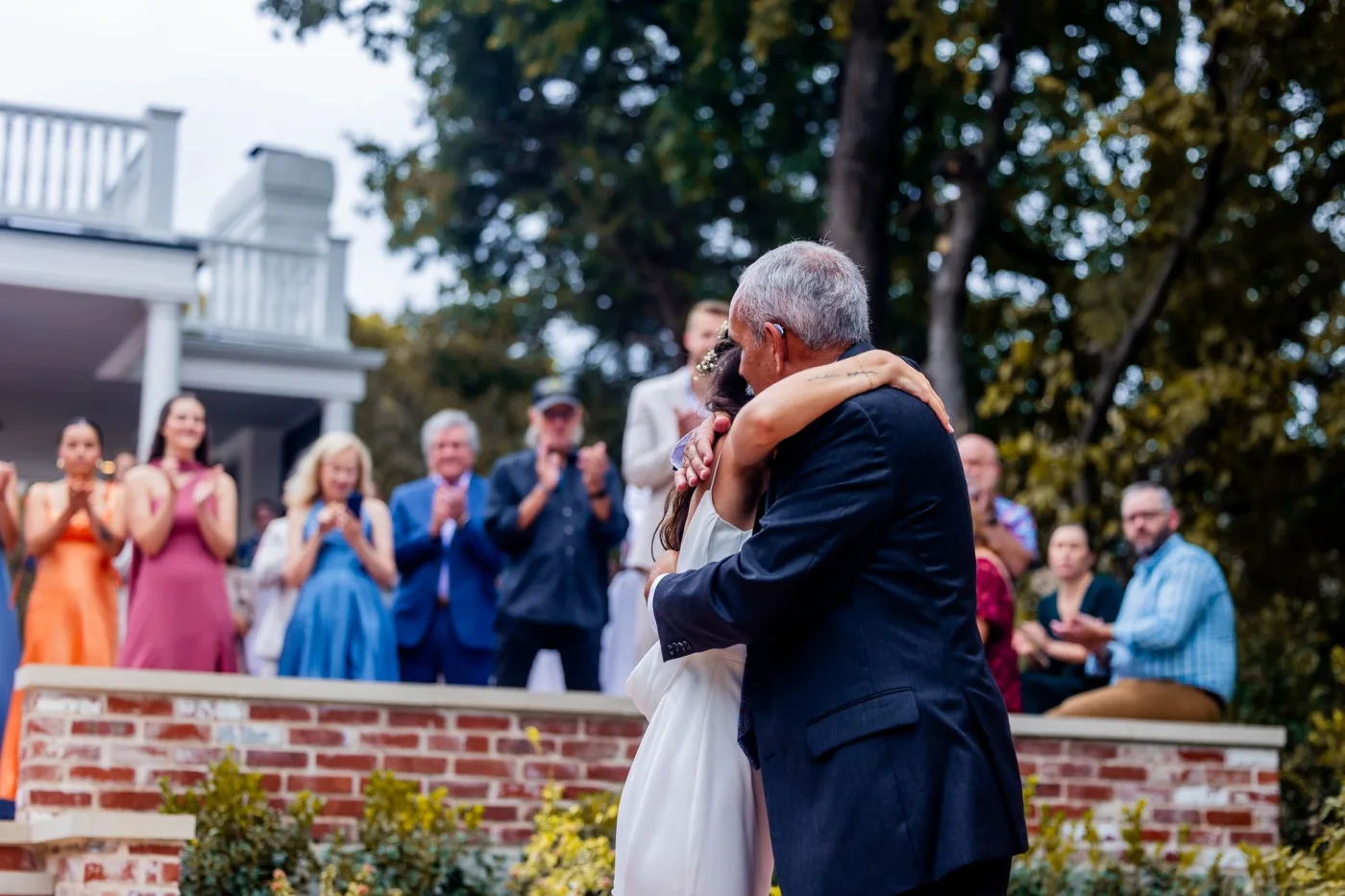
The feelings are the part no checklist prepares you for, and they are worth naming in advance. Watching a child you raised step into her own family stirs pride and loss at once, and both are appropriate. Fathers routinely find themselves undone by ordinary moments: the first look at her dressed, the top of the aisle, the opening bars of the dance song. That is not weakness, it is the whole point of the day made visible.
The trick is not to suppress the emotion but to give it somewhere to go before it ambushes you. Rehearse the speech aloud until the words survive a wobble in your voice. Let yourself feel the big moments at the rehearsal so the real ones are familiar rather than overwhelming. Keep that handkerchief handy and accept that you may use it. A father who tears up mid-toast and carries on is remembered far more fondly than one who stayed perfectly composed. Presence, warmth and a little planned vulnerability are the entire job.
Frequently asked questions
How long should a father-of-the-bride speech be?
Three to five minutes is the sweet spot. Shorter than three can feel thin on a day this significant, while longer than five risks losing even a warm room. Write it out in full, print it on cards in large type, and rehearse aloud several times so it stays inside that window.
What should the father of the bride avoid saying?
Skip roasting the couple, in-jokes only a handful of people understand, any mention of exes, and anything that could embarrass your daughter in front of new in-laws. Avoid drinking heavily before you speak. Aim for warmth over laughs; if a joke is a gamble, cut it.
Does the father still have to give the bride away?
No. Giving away is now entirely optional and, where kept, usually treated as a symbol of support rather than a literal handover. Couples adapt the officiant's wording freely, use "her mother and I", let the bride walk alone, or drop the line altogether. Agree the wording together beforehand.
Can someone other than the father walk the bride down the aisle?
Absolutely. A mother, stepfather, sibling, grandparent, close friend, both parents together, or the bride on her own are all common and completely valid. The role described here applies equally to any parent or loved one giving away or walking a bride; choose whoever the day is really about.
Is the father-daughter dance compulsory?
Not at all. It is a lovely tradition but purely optional. Some families swap it for a dance with both parents, fold it into a general dance, or skip it. If a track means something to the two of you, keep it simple and short; if it would be painful rather than joyful, leave it out.