Diamond Band: The Complete Guide
Setting styles, half versus full coverage, judging small diamonds, and the metals and care that make a diamond band the most versatile ring you can own.
A diamond band is the ring that turns light into a line. Instead of one large centre stone, it carries a row of small diamonds set into the metal, so the sparkle runs around the finger rather than rising above it. That simple idea comes in a surprising number of forms, from a discreet strip of tiny stones to a full circle of blazing brilliance, and the choices you make about setting, coverage and metal shape both the look and the price. This guide covers all of it, so you can buy with a clear eye rather than by instinct.
The short version
- A diamond band sets a row of small diamonds into the ring rather than a single centre stone, spreading sparkle around the finger.
- The setting style defines the look: pave, channel, prong and bar each show the stones differently and protect them to different degrees.
- Coverage sets the price: a half band with stones across the top costs far less than a full band or a true eternity ring.
- Diamonds are the hardest natural material, which makes a diamond band one of the most durable rings you can wear every day.
What a diamond band is
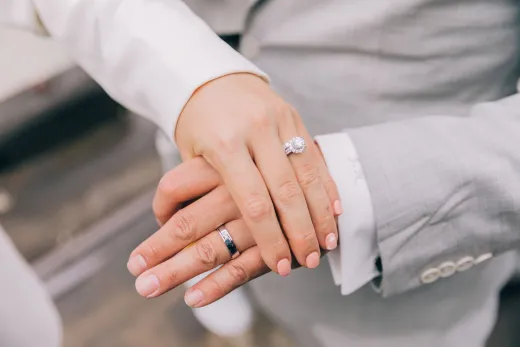
A diamond band is a wedding, anniversary or stacking ring in which small diamonds are set in a continuous row along the band. It is one of the most versatile pieces in wedding jewellery: worn on its own it reads as a modern wedding ring, worn beside a solitaire it frames the centre stone, and worn in a stack it adds a line of light between plainer rings. Because the stones are small and evenly matched, the effect is even and elegant rather than showy.
The term is broad on purpose. A "diamond band" can describe a slim ring with a short row of stones or a substantial band glittering all the way around. What holds the category together is the idea of many small diamonds working as a line, and understanding the variables within that idea is how you find the version that fits your hand, your life and your budget.
The diamond itself
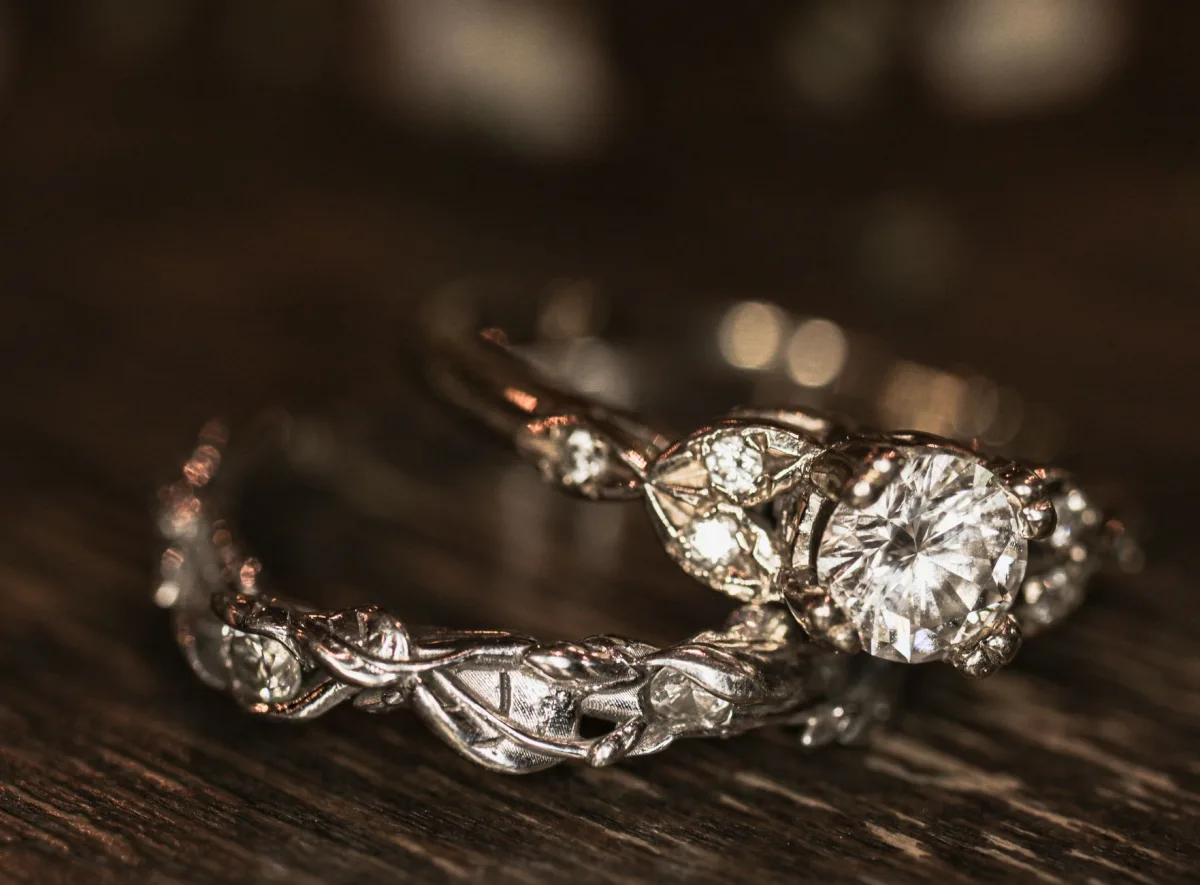
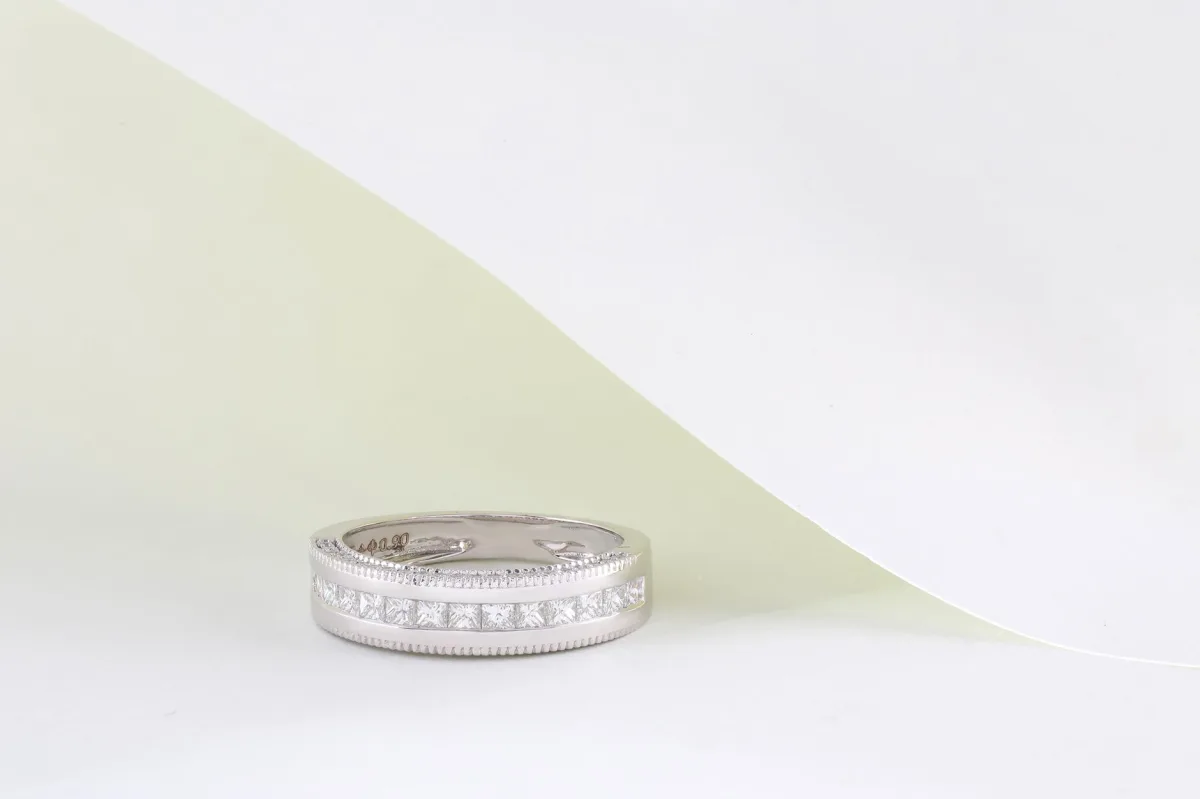
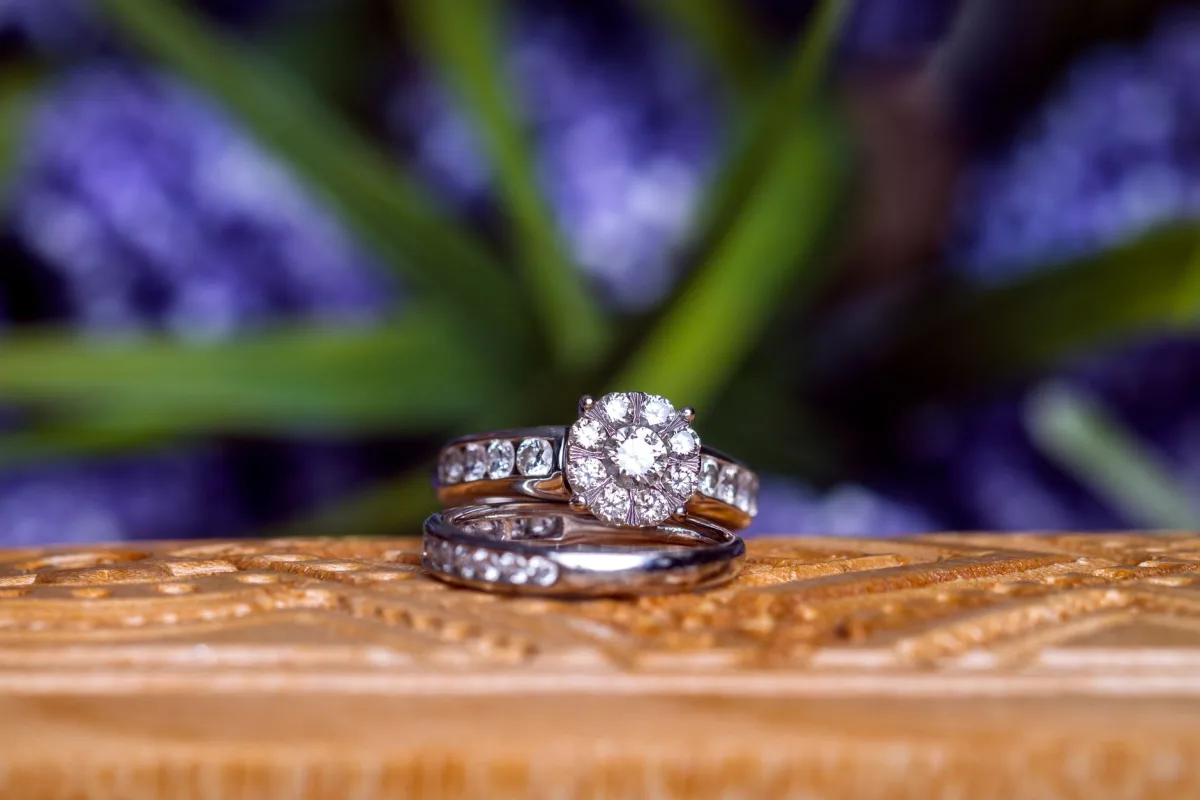
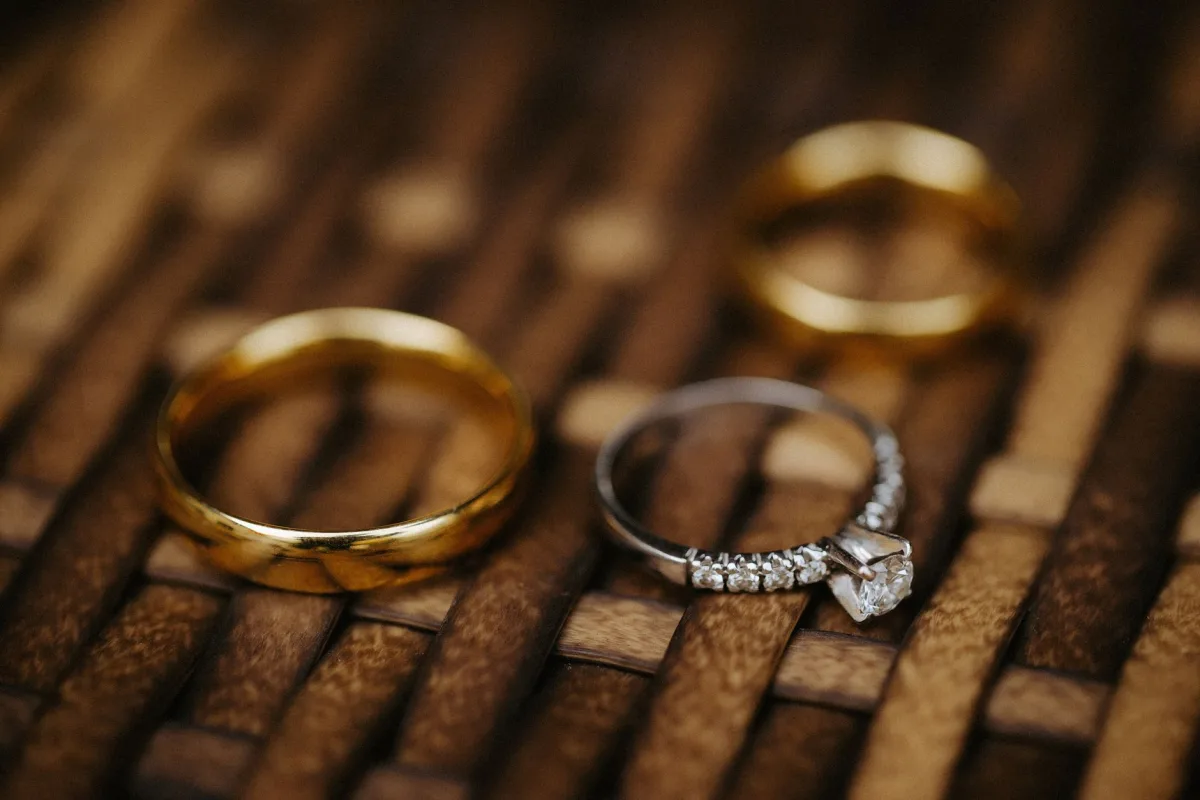
A diamond is a crystal of pure carbon, formed under enormous pressure and prized for two things above all: the way it bends and returns light, and its extreme hardness. On the Mohs scale of mineral hardness diamond sits at 10, the top of the scale and the hardest known natural material. That is why a diamond band survives daily wear so well: the stones resist the scratches and scuffs that would dull almost any other gem.
That durability is the quiet advantage of a diamond band over a coloured-stone one. Where an emerald wedding band needs a gentle routine to protect a brittle stone, a diamond band shrugs off ordinary life. It still pays to look after it, but the stones themselves are about as tough as jewellery gets, which makes this a sensible choice for anyone who wants a ring they can largely forget they are wearing.
The main styles of diamond band
Most of the visual difference between one diamond band and another comes down to how the stones are held. Four settings dominate, and each strikes its own balance between sparkle and security.
Pave
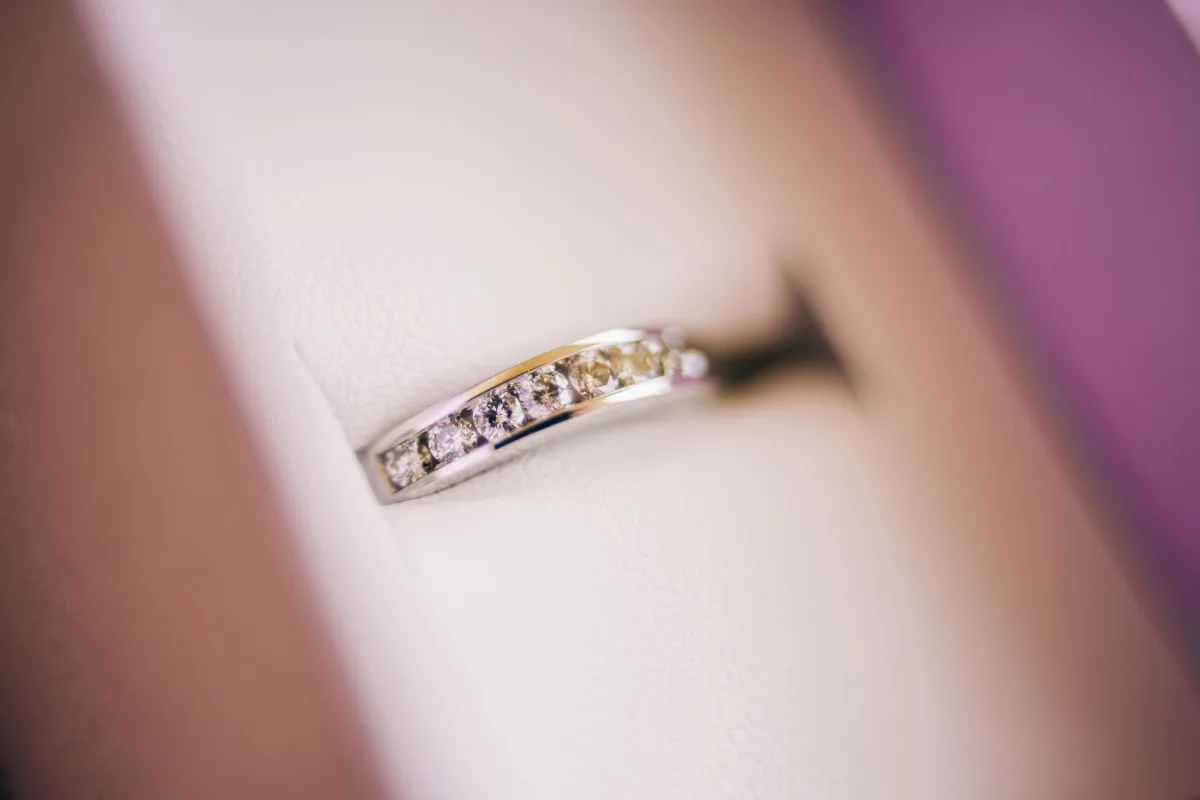
Tiny diamonds set close together and held by small beads of metal, so the surface looks paved with light. Maximum sparkle, but the little stones sit slightly more exposed.
Channel
Diamonds sunk in a row between two rails of metal, with no prongs showing. Sleek, snag-free and very secure, ideal for an active hand.
Prong or shared prong
Small claws grip each stone, often shared between neighbours. This lets in the most light from the sides and makes the diamonds look larger and brighter.
Bar and bezel
Short bars of metal separate the stones, or a rim wraps each one. Both give a cleaner, more geometric line and protect the diamonds well.
None of these is best in the abstract. Pave dazzles but wants a little more care; channel and bezel protect but show slightly less stone; prong settings maximise brilliance but leave more edges exposed. Match the setting to how you live, not just to how the ring looks in a photograph under studio lights.
Half band, full band or eternity
After the setting, the biggest decision is coverage, and it drives both the look and the cost. A half band, sometimes called a three-quarter band, carries diamonds across the top of the ring only, with plain metal underneath. A full band runs stones all the way around. When that full line is made of identically cut stones with no plain section at all, it becomes a true eternity band, which is its own category with its own trade-offs.
For most people a half band is the practical sweet spot. It shows a full line of sparkle from above, where anyone actually sees the ring, while the plain underside is more comfortable, easier to resize, and far cheaper because it uses fewer stones. A full or eternity band is more luxurious and sparkles from every angle, but it costs more, cannot usually be resized, and can feel harder against the fingers beside it. Neither is wrong; the half band simply solves more everyday problems.
Judging the diamonds
Diamonds are graded on the four Cs: cut, colour, clarity and carat weight. On a band, though, the way these matter shifts, because the stones are small and there are many of them rather than one large one to scrutinise. That changes where your attention and money should go.
- Cut matters most. Even at tiny sizes, a well-cut diamond returns far more light than a poorly cut one, and cut is what makes the whole line look alive rather than flat.
- Matching matters more than perfection. Stones that are consistent in colour and size make a clean, even line; one off-colour or oversized diamond stands out more than a slightly lower grade across the whole band.
- Clarity is forgiving at small sizes. Inclusions that would show in a large centre stone are usually invisible to the eye in a melee diamond, so paying for top clarity here often buys little you can see.
- Setting security is a fifth C in practice. With many small stones, how well they are held is as important as any grade, because a lost stone ruins the line.
Metals and how they change the look
The metal is not just a backdrop; it changes how white the diamonds appear. White gold and platinum blend with the stones so the sparkle reads seamless and bright, which is why they are the most common choice for diamond bands. Yellow and rose gold create contrast, framing the diamonds in warmth and giving a softer, more vintage feel, though they can make near-colourless stones look very slightly warmer by comparison.
Platinum has a particular advantage for a stone-set band: it is dense and holds small diamonds securely over long years of wear, and it does not need the periodic re-plating that white gold does to keep its colour. It costs more, but for a ring you intend to wear for life it can be worth it. For how metal choice plays out across every kind of ring, our broader guide to wedding bands is a good next step.
Wearing, stacking and caring
A diamond band is built for daily life, but a few habits keep it at its best. Diamonds attract grease, so the sparkle fades between cleanings faster than you might expect; a soft brush in warm, mildly soapy water once a week brings it straight back. Because diamond is so hard, stones can actually scratch each other, so store the band where it cannot rub against your other diamond pieces.
If you stack the band with an engagement ring or other bands, the constant rubbing can wear the metal and, over years, loosen a stone or two, so have a jeweller check the settings every year or so and re-tip any worn prongs. Handled this way, a diamond band is one of the lowest-maintenance fine rings you can own. Whether you wear it alone as a wedding ring, beside a solitaire, or in a stack for an anniversary, it earns its place as the most adaptable piece in the jewellery box, and Matrimony360's wider guides can help you plan the celebration it marks.
Frequently asked questions
What is the difference between a diamond band and an eternity band?
A diamond band is any ring set with a row of small diamonds, which may cover only the top of the ring. An eternity band is a specific type of diamond band in which identically cut stones run in an unbroken line all the way around, with no plain section. So every eternity band is a diamond band, but a diamond band that only carries stones across the top, a half band, is not an eternity band.
Can a diamond band be resized?
A half band, with plain metal on the underside, can usually be resized fairly easily because a jeweller has metal to work with. A full band or true eternity ring, with stones all the way around, is very hard or impossible to resize without remaking it, since there is nowhere to cut and rejoin. If you expect your ring size to change, a half band is the safer choice.
Which setting is most secure for a diamond band?
Channel and bezel settings are generally the most secure, because the metal surrounds or encloses the stones and nothing sits proud to catch or knock. Pave and prong settings sparkle more, since they expose more of each diamond to the light, but they leave the stones slightly more vulnerable and benefit from regular checks. Match the setting to how hard you are on your hands.
Do the diamonds on a band need to be high clarity?
Usually not. The stones on a band are small, so inclusions that would be obvious in a large centre diamond are typically invisible to the naked eye. It is generally better to prioritise good cut and consistent matching, which keep the line lively and even, than to pay a premium for top clarity grades you will not be able to see once the ring is on your finger.
How do I keep a diamond band sparkling?
Diamonds attract oils from skin and lotion, which dull their sparkle long before any real dirt does. A weekly soak in warm water with a little mild dish soap, a gentle scrub with a soft toothbrush behind and around the stones, and a rinse restores the brilliance. Because diamonds can scratch each other, store the band separately, and have the settings checked by a jeweller about once a year.