Emerald Wedding Band: The Complete Guide
What an emerald band really is, why green appeals, the durability question every buyer must ask, and the settings and care that keep it beautiful.
An emerald wedding band trades the white sparkle of a diamond line for a river of deep, living green, and that single decision changes almost everything else about the ring: the stone you are buying, the way it is set, how you care for it, and the meaning it carries. Emeralds are gloriously beautiful and genuinely more demanding than the stones most bands are built from, so a little knowledge before you buy is worth far more here than on a plain gold band. This guide walks the whole subject, from the mineral itself to the settings that keep it safe.
The short version
- An emerald band sets green beryl in a line or accent, usually alongside a wedding or anniversary ring rather than replacing an engagement diamond.
- Emeralds are softer and more brittle than diamonds, so protective settings and gentle wear matter more than they do for a diamond band.
- Inclusions are normal, not flaws. The internal "jardin" is part of a natural emerald's character, and most stones are treated with oil.
- Green carries meaning: emerald is the May birthstone and has long signified renewal, growth and enduring love.
What an emerald wedding band actually is
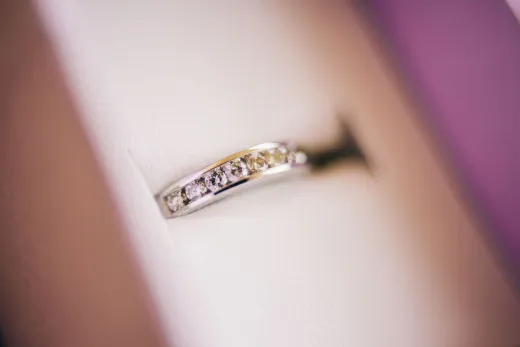
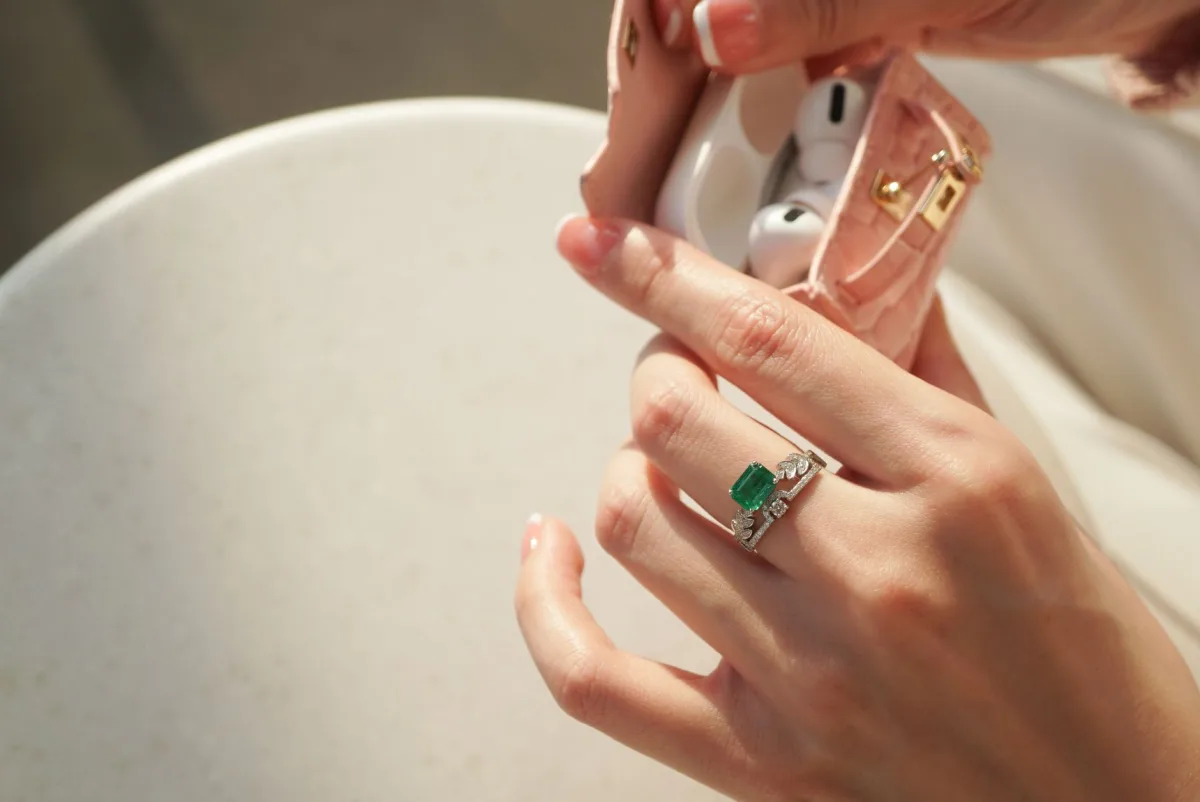
An emerald wedding band is a ring worn to mark a marriage or an anniversary in which green emeralds are the defining feature. That can mean a continuous line of small emeralds set all the way around the band, a half-band with emeralds across the top only, or a design that alternates emeralds with diamonds so the green reads brighter against the white. Some couples choose it as the wedding ring itself; many more choose it as an anniversary or stacking band that sits beside a more traditional diamond ring.
The appeal is easy to understand. Where a diamond band is about light, an emerald band is about colour, and colour photographs and ages differently. It reads as personal rather than default, it nods to heritage and birth month, and it stands out in a world where most wedding jewellery is white. The trade is that emeralds ask more of their owner than diamonds do, which is exactly why it pays to understand the stone before you commit.
The stone behind the colour
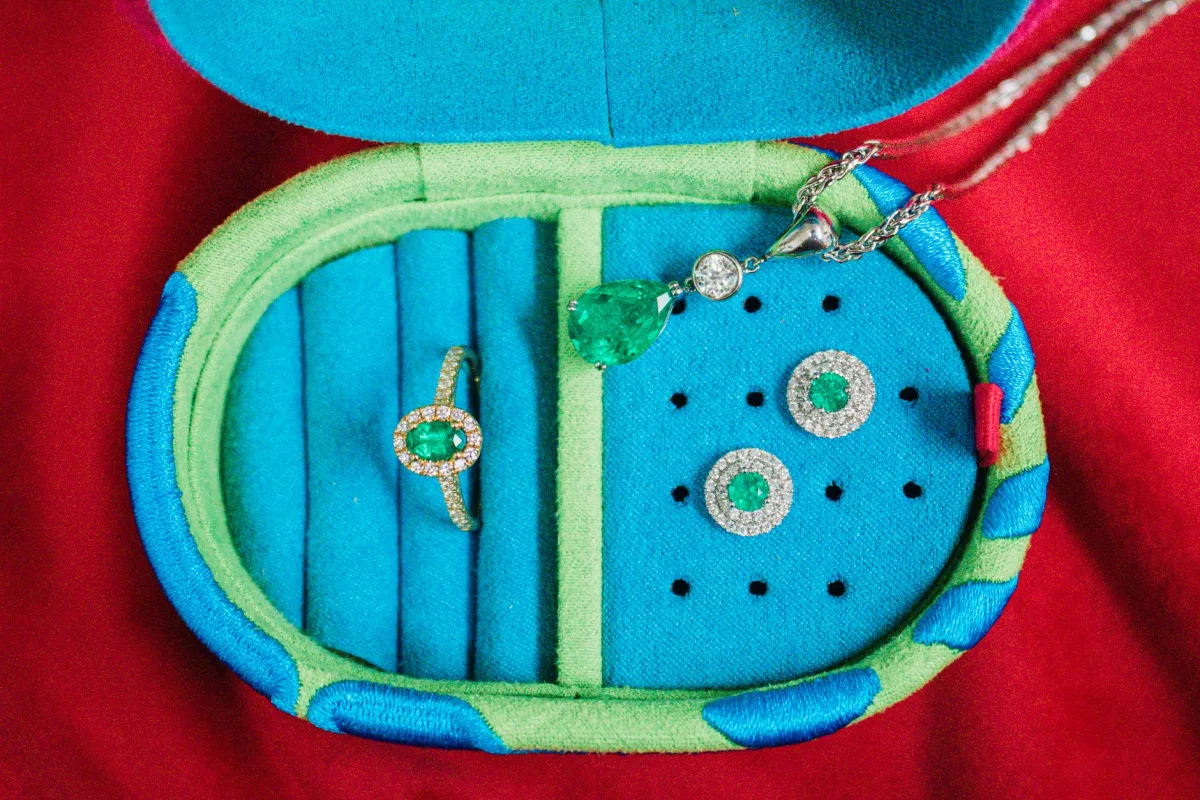
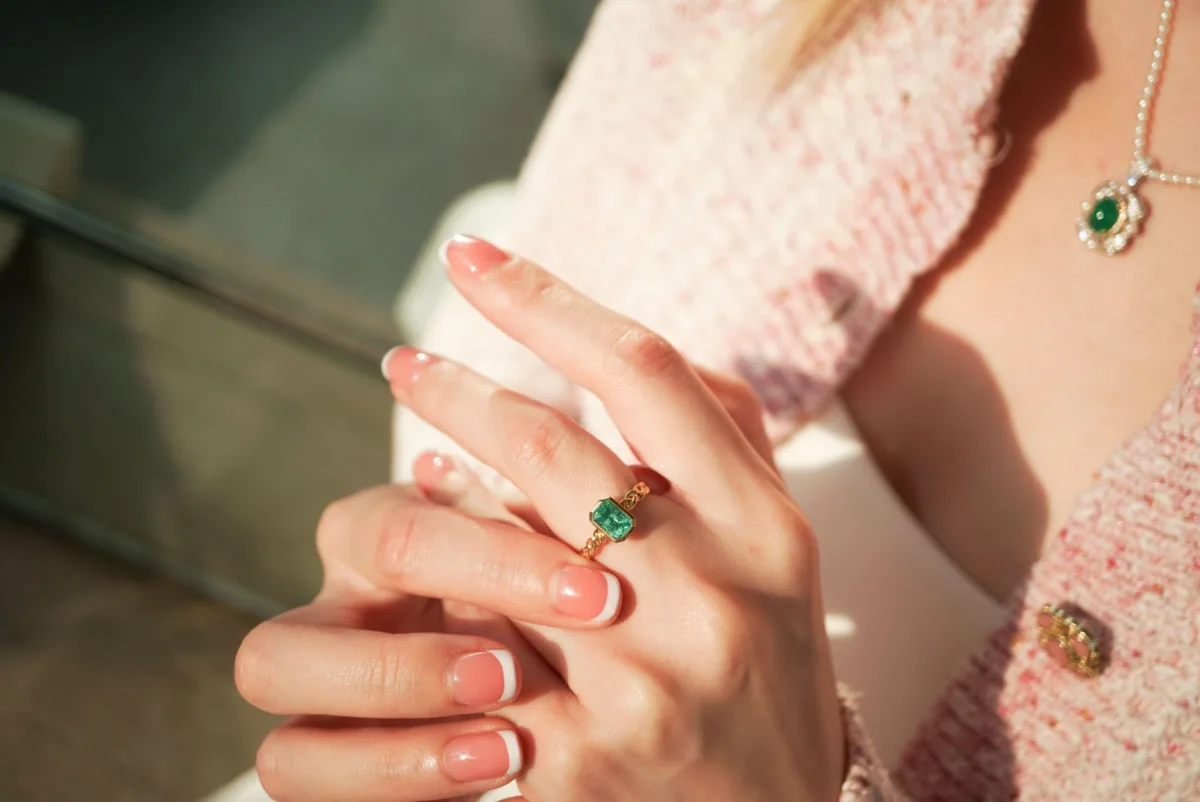
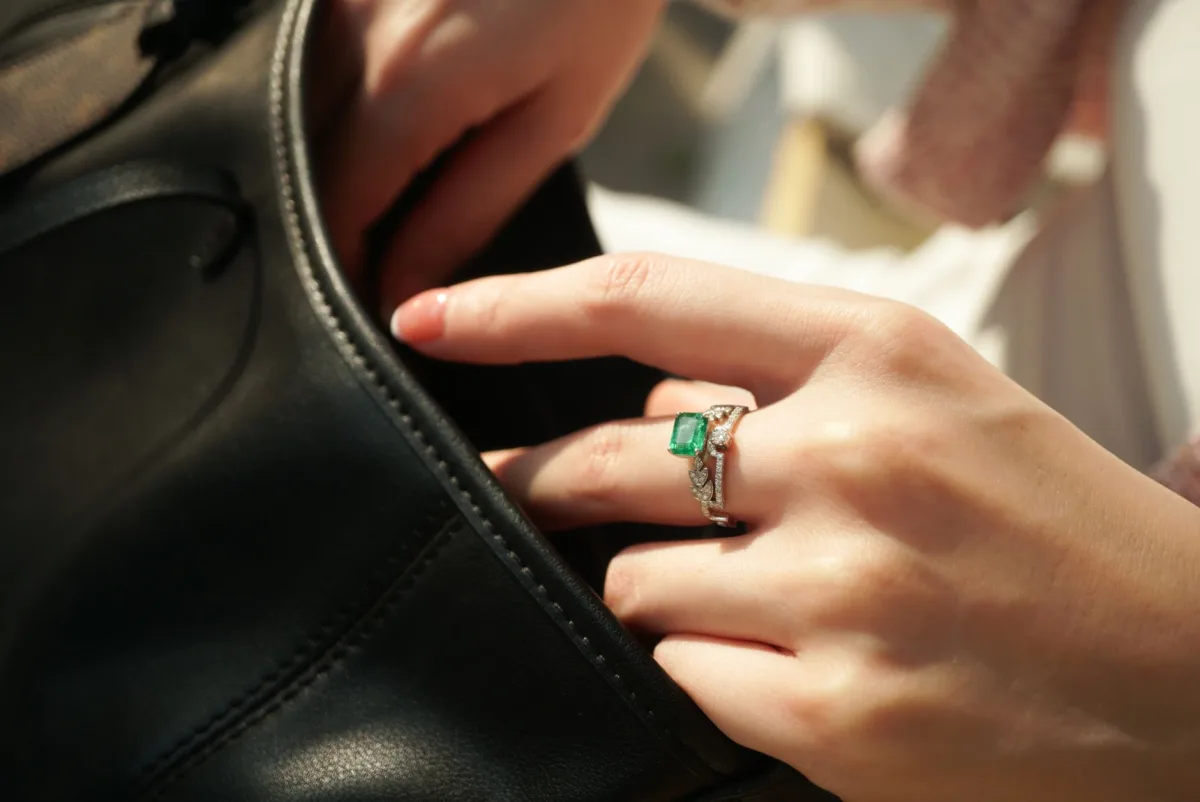
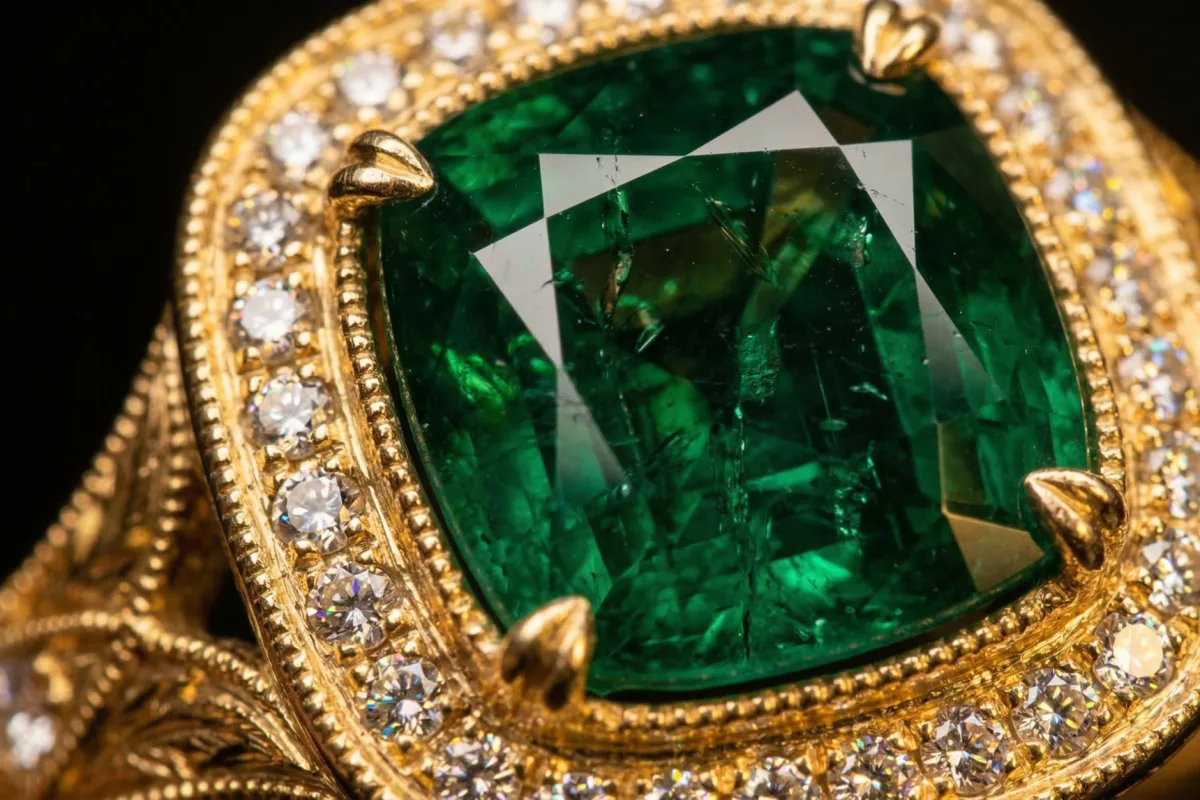
An emerald is the green variety of the mineral beryl, coloured by trace amounts of chromium and sometimes vanadium. The same mineral family gives us aquamarine, in a pale blue, and morganite, in a soft pink, so an emerald is a close cousin of stones you may already know. What sets emerald apart is that vivid, saturated green, prized for thousands of years and associated with some of the most famous jewels in history.
On the Mohs scale of mineral hardness, emerald sits around 7.5 to 8, which sounds hard and is, in isolation. The catch is that hardness is only resistance to scratching. Emeralds are also notably brittle and almost always contain internal fractures and inclusions, so a sharp knock can chip or split a stone that a scratch would never trouble. That distinction, hard but not tough, is the single most important thing to understand before you wear one every day.
Jardin
The French word for garden, used for the mossy pattern of inclusions inside a natural emerald. It is expected and often used to confirm a stone is genuine rather than synthetic.
Oiling
Most emeralds are treated with clear oil or resin to fill surface-reaching fractures and improve clarity. It is standard and accepted, but it means harsh cleaning can strip the treatment.
Saturation
The depth and purity of the green. Colour, more than clarity, drives an emerald's value, so a slightly included stone with rich colour can outshine a cleaner, paler one.
Bezel setting
A metal rim that wraps the whole edge of a stone. For a brittle gem like emerald it is the most protective mainstream setting and a smart choice for daily wear.
Why couples choose green
Colour meaning is part of why an emerald band feels different from a diamond one. Green has long been read as the colour of renewal, growth and fresh life, which makes it a fitting symbol at the start of a marriage or on an anniversary that celebrates one that has lasted. Emerald is also the traditional birthstone for May and a classic gift for the twentieth and fifty-fifth wedding anniversaries, so the stone often carries a personal date as well as a mood.
There is a practical layer to the appeal too. Because green sits opposite red on the colour wheel, an emerald reads as calm and cool against most skin tones and pairs naturally with both yellow and white metals. Set beside diamonds, the green looks deeper and the diamonds look whiter, each stone flattering the other. If you are weighing this against a classic all-diamond line, our guide to the diamond band lays out the alternative in full so you can compare the two head to head.
The durability question every emerald buyer must ask
This is where an emerald band earns its careful reputation. Because the stone is brittle and usually oil-treated, it is not the ring to wear while gardening, lifting weights, doing dishes or scrubbing a kitchen. None of those tasks would scratch it, but any of them can deliver the sharp knock or the hot, soapy water that emeralds dislike. This does not make an emerald band a poor choice; it makes it a considered one that rewards a slightly gentler routine.
The way to enjoy an emerald band for decades is to design around its nature rather than against it. That means favouring protective settings, keeping the stones small enough that they sit low and out of harm's way, and being willing to take the ring off for the roughest chores. Buyers who treat an emerald like a diamond and expect it to survive anything are the ones who end up disappointed; buyers who respect the stone tend to keep it looking beautiful indefinitely.
Settings and metals that suit emeralds
Setting choice matters more for emeralds than for almost any other wedding stone, because the setting is what stands between a brittle gem and daily life. A few approaches suit them especially well.
- Bezel and half-bezel settings wrap metal around the edge of each stone, guarding the vulnerable corners and giving a smooth, snag-free surface. This is the safest mainstream option for an everyday emerald band.
- Channel settings sink a row of emeralds between two rails of metal so no edge sits proud of the band. They protect well and give a sleek, modern line.
- Bar and flush settings similarly keep the stones low and shielded, which suits an active hand.
- Prong settings let in the most light and show the most stone, but they leave emeralds more exposed, so they are best kept for rings you wear occasionally rather than daily.
Metal is more about mood than protection. Yellow gold makes the green warmer and reads traditional and rich; white gold or platinum makes it cooler and crisper and lets the emeralds themselves carry the colour. Platinum in particular holds small stones securely over time, which is worth considering for a band you plan to wear for life. For the wider picture of how metals and stones work together across all your rings, our overview of wedding jewellery is a useful companion read.
Caring for an emerald band
Emerald care is simple once you know the rules, and they follow directly from the stone's chemistry. Clean the ring with a soft cloth and, at most, lukewarm water with a drop of mild soap, then dry it gently. Never put an emerald in an ultrasonic or steam cleaner, and keep it away from harsh household chemicals and prolonged heat, because all of these can strip the oil treatment and make hidden fractures suddenly visible.
Store the band on its own so harder stones, especially diamonds, cannot knock or scratch it, and have a jeweller check the setting every year or two. If the green ever looks a little dull or dry, a professional can usually re-oil the stone and restore its depth. Treated with this modest care, an emerald band stays as vivid as the day you bought it. Many couples pair it over time with a matching eternity band for a milestone anniversary, building a small stack that tells the story of the marriage.
Is an emerald band right for you?
An emerald wedding band is an excellent choice if you love colour over pure sparkle, if green means something to you, and if you are happy to give the ring a slightly gentler life than a plain metal band would need. It is a less natural fit if you want a ring you never have to think about, work hard with your hands, or expect a stone as bombproof as a diamond. Neither answer is wrong; the point is to match the ring to your life honestly.
If the green wins you over, buy the best colour you can rather than chasing flawless clarity, choose a protective setting, and accept the stone for the living, slightly wild thing it is. Do that and you end up with a band that looks like nobody else's and carries a meaning most white stones cannot. For a fuller look at the whole category these rings belong to, our guide to wedding bands sets the emerald option in context alongside every other style, and Matrimony360's wider library can help with the celebration around it.
Frequently asked questions
Can you wear an emerald wedding band every day?
Yes, with a little care. Emeralds rate about 7.5 to 8 for hardness, so they resist scratching well, but they are brittle and can chip from a sharp knock. Choosing a protective setting such as a bezel or channel, keeping the stones small, and removing the ring for rough chores like gardening or heavy cleaning lets most people wear an emerald band daily without trouble.
Why does my emerald have marks inside it?
Those internal marks are inclusions, collectively nicknamed the jardin, and they are completely normal in a natural emerald. Unlike diamonds, emeralds are valued mainly for the depth and purity of their green rather than for flawless clarity, so a richly coloured stone with visible inclusions is expected and often more prized than a paler, cleaner one. Inclusions can also help confirm the stone is natural rather than synthetic.
Should I clean an emerald band in an ultrasonic cleaner?
No. Most emeralds are treated with oil or resin to improve their appearance, and the vibration, heat and harsh detergents of ultrasonic or steam cleaners can strip that treatment and expose hidden fractures. Clean an emerald band only with a soft cloth and, if needed, lukewarm water with a little mild soap, then dry it gently. Leave any deeper cleaning or re-oiling to a jeweller.
Is an emerald band cheaper than a diamond band?
It depends entirely on the quality of the stones. Fine, richly coloured natural emeralds can rival or exceed diamonds in price, while smaller or more included emeralds set as accents can make for a very affordable band. Because colour drives an emerald's value, you can control the cost by prioritising a good green in modest sizes rather than chasing large, top-clarity stones.
What does an emerald symbolise on a wedding ring?
Green has long been linked with renewal, growth and enduring life, which makes an emerald a fitting symbol at the start of a marriage or on a milestone anniversary. Emerald is also the traditional May birthstone and the classic gift for the twentieth and fifty-fifth anniversaries, so the stone often marks a personal date as well as carrying its general meaning of lasting, living love.