Wedding Bands: The Complete Guide
The band is the ring you actually live in. Here is how to choose its style, pair it with an engagement ring, and pick a width and fit you will still love in decades.
Once you know what metal you want, the band still has to be chosen: its shape, its stones, whether it sits flat or curves, and how it lives next to whatever is already on the finger. That is a different question from which ring to buy, and it is the one this guide answers. A wedding band is the plainer, everyday ring exchanged at the ceremony, and its whole job is to be worn for decades without complaint. This article works through the styles you will be shown, how a band pairs with an engagement ring, the difference between women's and men's bands and matching sets, and the small decisions about width and fit that quietly decide whether you actually enjoy wearing it. No prices are invented here, only the trade-offs that move them.
The short version
- The band is the ceremony ring; the engagement ring is a separate piece it usually lives beside.
- Style is a durability decision. A plain band lasts hardest; the more stones, the more care.
- Pairing matters more than looks. How a band sits against an engagement ring decides comfort.
- A contoured band closes the gap that a straight band leaves under a raised stone.
- Width and fit are felt daily. Choose them for the hand, not for the photograph.
Band, ring or engagement ring
The words get muddled at the counter, so start clean. In everyday use "wedding band" and "wedding ring" describe the same object, and the terms are interchangeable, as the Wikipedia entry on wedding rings records. "Band" simply leans on the plainer, everyday character of the ring: a continuous loop of metal, with or without stones, worn to signal that its wearer is married. The engagement ring is the separate, usually showier piece given at the proposal. For the full history and the metal choices behind all of this, our broad pillar on choosing wedding rings is the place to start; this guide assumes you have the ring's meaning in hand and want to choose the band.
Why treat the band as its own subject? Because the band, not the engagement ring, is the ring you actually live in. It is on the finger while you type, cook, lift and sleep, so its style is really a long argument about wear. That is the lens for everything below: not which band looks best in a lit display case, but which one you will be glad to look down at in thirty years.
The band styles you will be shown
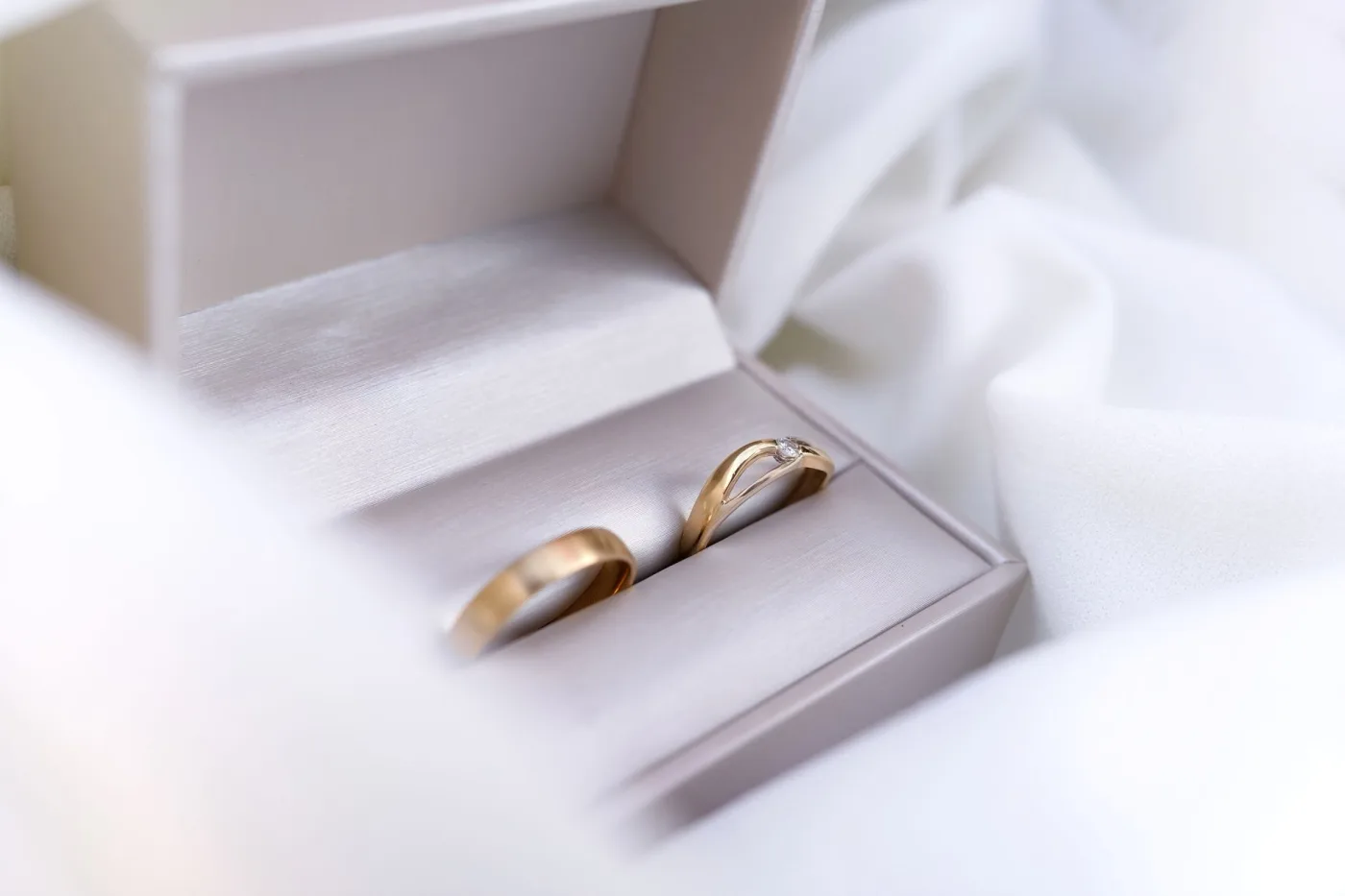
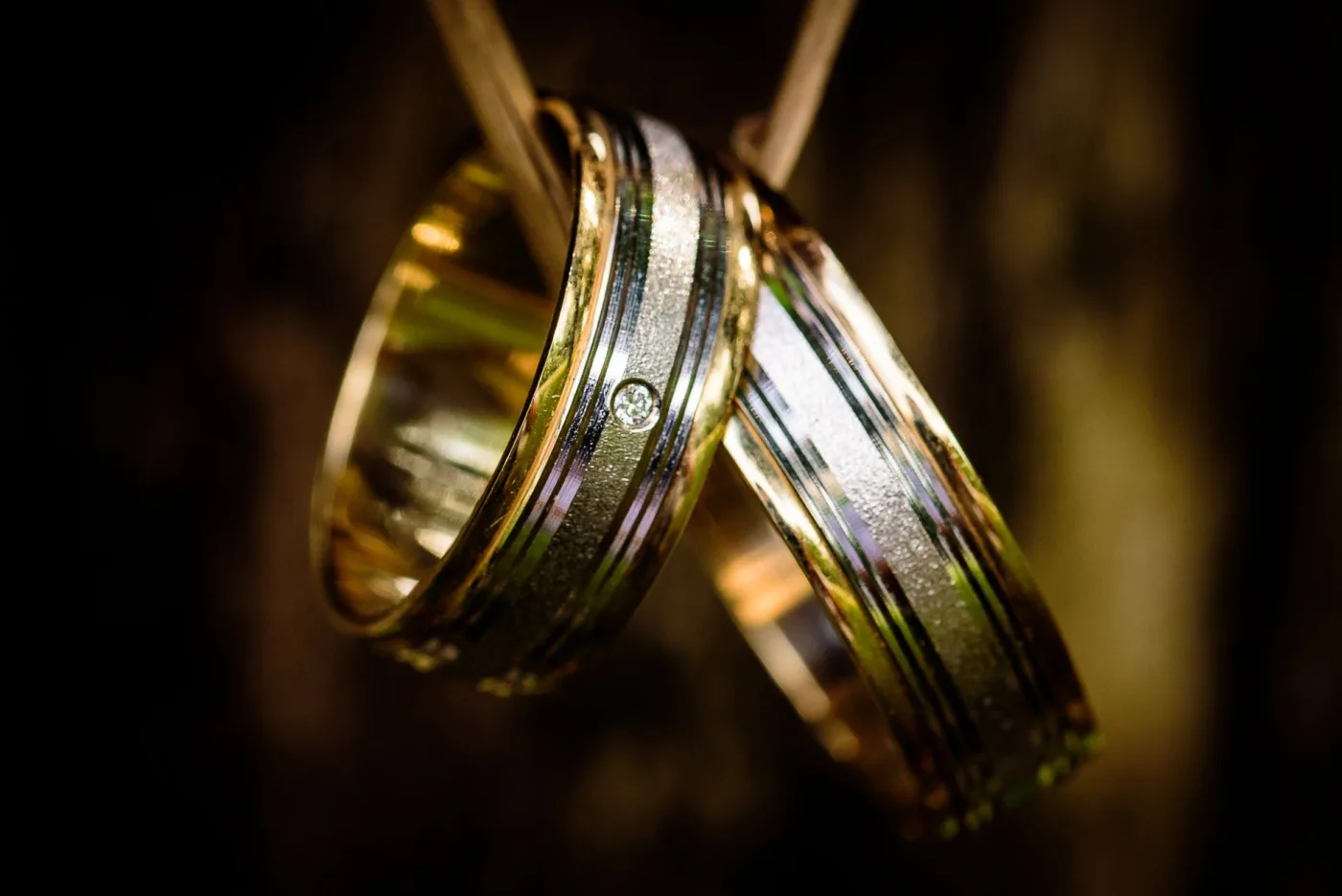
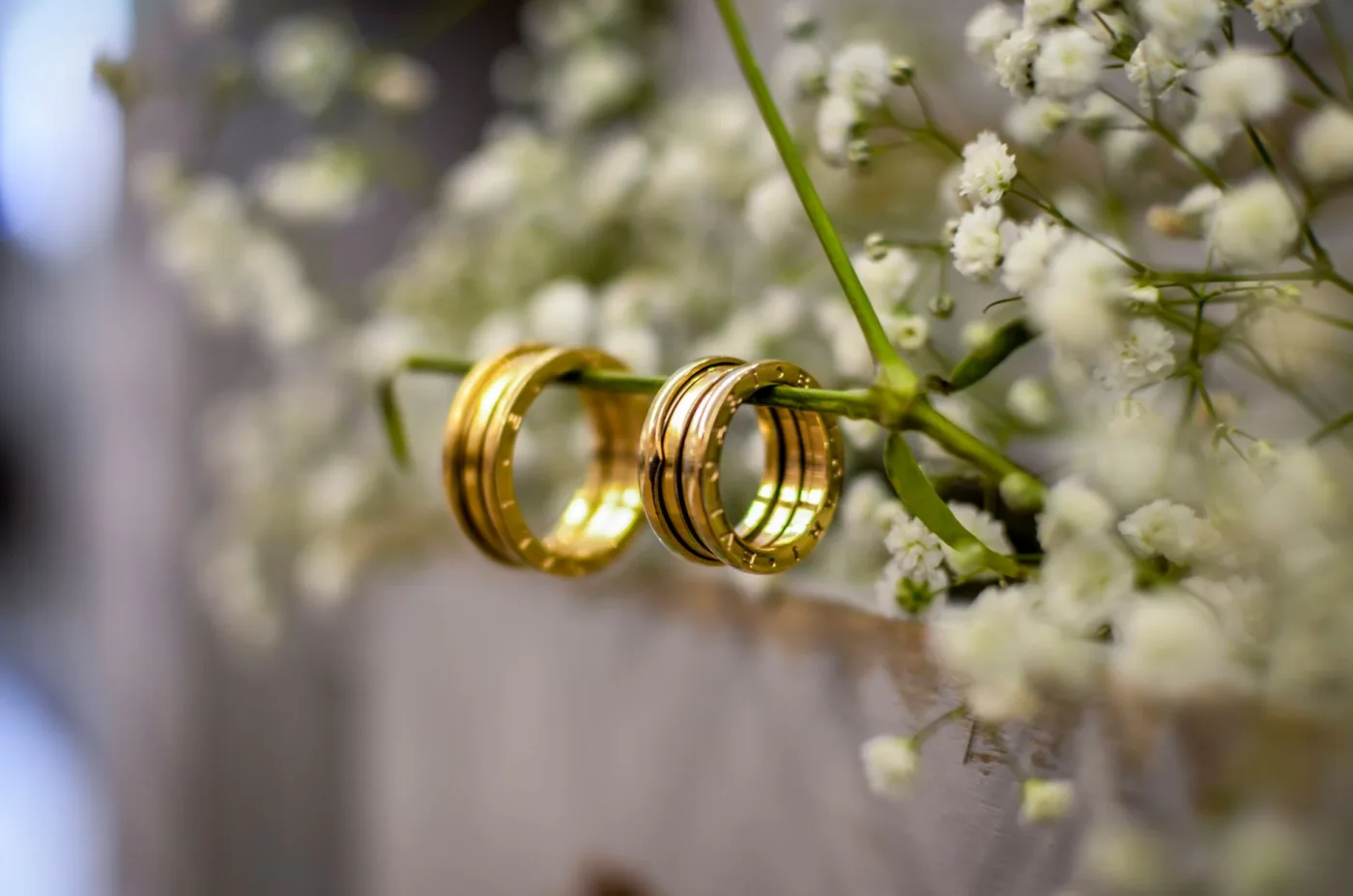
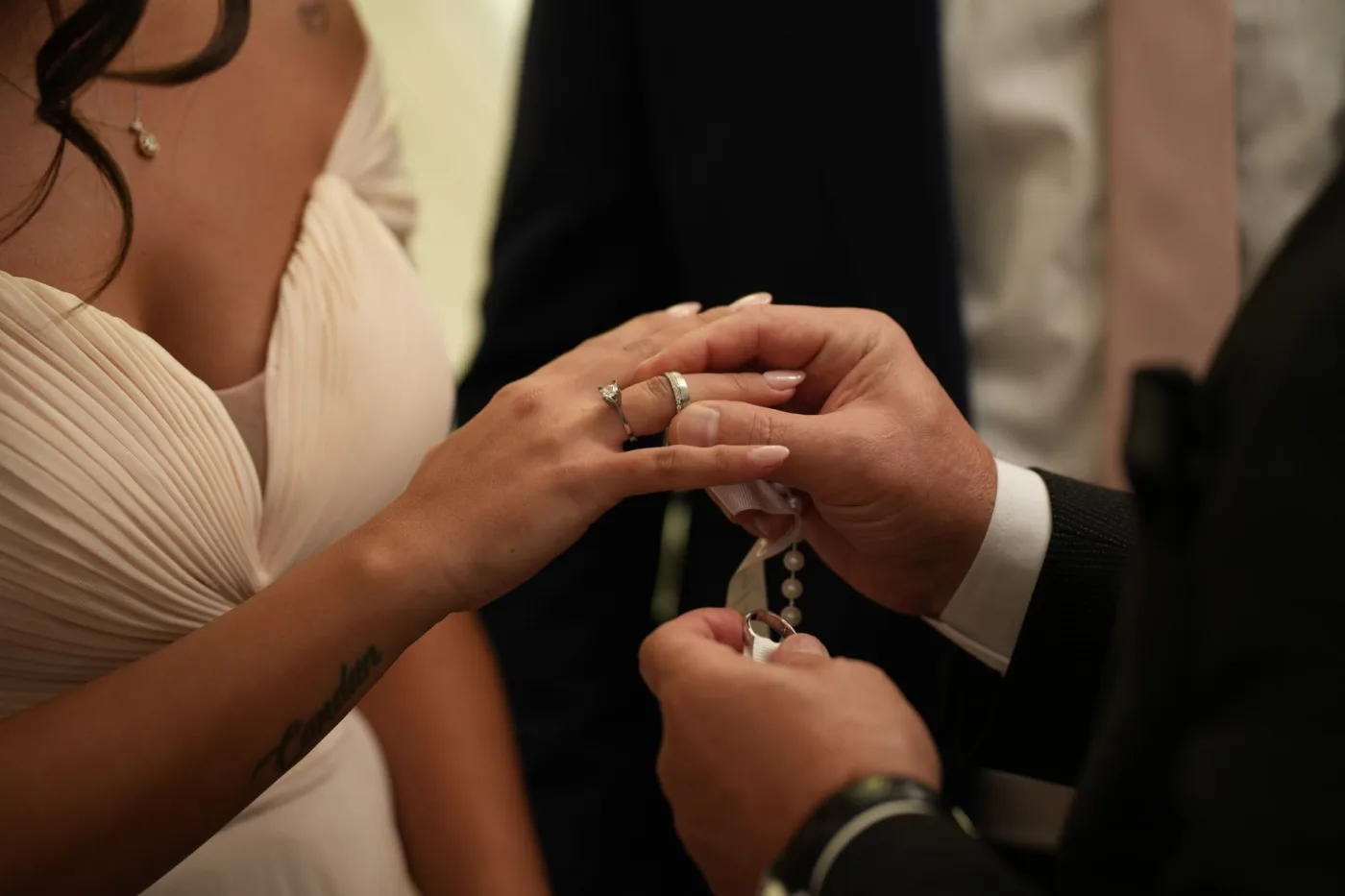
Almost every wedding band on the market is a variation on a handful of styles. They differ mostly in how many stones they carry and how those stones are held, which in turn sets how the band sparkles, how much it costs and how much care it will ask of you over a lifetime. Here are the ones worth knowing by name.
Classic / plain
No stones at all, just shaped metal. The toughest, cheapest to maintain and most timeless band, and a deliberate choice, not a lesser one.
Full eternity
Identically cut stones set in an unbroken line all the way around the band. Maximum sparkle, but stones sit against the palm and it cannot be resized.
Half eternity
Stones across the top half only. Nearly the same look face-on, more comfortable, easier to resize, and the smart everyday compromise.
Pave
Many tiny stones set close together with small beads of metal, giving a continuous glittering surface that hides the band beneath.
Channel-set
Stones dropped into a groove between two metal walls, flush and protected. Low-profile sparkle that snags on nothing.
Shaped / contoured
A band curved or notched to nest against an engagement ring so the two sit flush with no gap. Made to pair, not to stand alone.
Two of these deserve a footnote. The eternity band began life not as a wedding band at all but as an anniversary gift: as the Wikipedia entry on eternity rings explains, it is a ring set with a continuous line of stones symbolising unending love, often given to mark a milestone such as a decade of marriage or the birth of a child. Many couples now use one as the wedding band itself, which is fine, but it is worth knowing the full-eternity style carries a real penalty: because stones run the whole way round, the band sits harder against the neighbouring fingers and generally cannot be resized without destroying the pattern. The half-eternity exists precisely to keep the look while dodging both problems, which is why it outsells the full version for daily wear.
Band styles compared
The table below is a decision aid, not a price list. Real figures move with the metal, the size and number of stones, and the day's market, so it ranks styles in bands rather than numbers. Read across to weigh sparkle against the two things people forget to ask about: whether the ring can ever be resized, and how much upkeep it will quietly demand.
| Style | Stones | Sparkle | Resizable? | Upkeep | Relative cost |
|---|---|---|---|---|---|
| Classic / plain | None | None, all metal | Yes, easily | Lowest | Lowest |
| Half eternity | Front half | High face-on | Yes, within limits | Low to moderate | Mid |
| Full eternity | All the way round | Highest, all angles | Rarely | Moderate | High |
| Pave | Many tiny | Continuous shimmer | Limited | Higher, small stones loosen | Mid to high |
| Channel-set | A protected row | Moderate, flush | Limited | Low, stones shielded | Mid |
| Shaped / contoured | Optional | Depends on stones | Depends on setting | Moderate | Mid |
The one line most shoppers miss: every stone you add is a future maintenance appointment. Pave and eternity bands look spectacular and can loosen a small stone over years of knocks, which means the occasional tightening. A plain or channel-set band asks for almost nothing. Neither choice is wrong, but decide it with your eyes open: you are choosing a level of upkeep as much as a level of shine.
Pairing with an engagement ring
For many people the band does not live alone. It shares a finger with an engagement ring, and how the two meet is the single most important comfort decision in this whole article. A tall engagement ring with a raised stone leaves a wedge of empty space beneath its setting, and a straight band butted up against it never sits flush: it rocks, it gaps, and it wears unevenly. There are four common ways to solve that, and knowing them by name saves a frustrating conversation at the counter.
Contour the band
Buy a shaped band curved or notched to nest around the engagement ring's setting, so the pair meets with no gap. The purpose-built fix.
Solder them together
Have a jeweller weld the two rings into one piece. It removes the gap, stops them spinning, and reduces the chance of losing one, at the cost of never wearing them apart.
Add a spacer
A thin filler ring slots between engagement ring and band to take up the gap and steady the stack, without permanently joining anything.
Buy a bridal set
Purchase the engagement ring and band designed and sold together, so they interlock by design from the start.
A little vocabulary helps here. A Wikipedia entry on engagement rings calls a matched pair bought together a bridal set or wedding set, and notes that some couples later have the two pieces welded together for convenience and to reduce the chance of losing one. Soldering is permanent and worth thinking through: it makes a rock-solid, non-spinning stack that always aligns, but you can no longer wear the band on its own, resize easily, or clean the rings separately. Contouring and spacers keep the pieces independent, which most people prefer until they are certain. Whichever route you take, bring the engagement ring when you shop for the band, because the band has to be fitted to it, not the other way round.
Left, a three-ring stack most people build over time. Right, why a shaped band exists: a straight band leaves a wedge under a raised stone, and a contoured band, shown in accent, curves up to close it.
Stacking bands, on purpose
Stacking has grown from an accident of pairing an engagement ring with a band into a deliberate style of its own. The idea is simple: wear two or three slim bands together and treat the group as the statement rather than any single ring. A common pattern is the engagement ring in the middle, a plain wedding band below it closest to the heart, and a slim eternity or anniversary band above, added years later to mark a milestone. Mixing metals is not a mistake here, it is the point, and a rose-gold band between two white ones reads as intentional. The practical caution is that stones set on adjacent bands can rub and abrade one another over time, so if you plan to stack, favour a plain or channel-set band next to a stone-heavy one rather than pave against pave.
Women's and men's bands, and matching sets
The band is where the his-and-hers question actually gets decided, because the engagement ring is usually one partner's alone while both partners wear a band. Women's bands tend to run narrower and are more often set with stones, partly so they sit neatly against an engagement ring. Men's bands tend to run wider and plainer, and open onto a far broader range of metals; the whole subject of metal, width and lifestyle for men is covered in our dedicated guide to men's wedding bands, which is the right next stop if you are choosing a groom's ring.
Matching is a spectrum, not a rule. At one end a fully matched set shares metal, finish and profile in two widths and photographs as an obvious pair. In the middle, the most popular choice, the bands coordinate on one shared detail, a common metal or a matching inner engraving, while differing in width and texture so each suits its wearer. At the far end the partners choose entirely independently, which is increasingly common as bands become personal rather than uniform. None of these is more correct than the others. The only real mistake is buying a band you dislike because it matches one your partner loves, since you are the one who has to wear it every day.
Width and comfort
Two measurements decide how a band feels on the hand: its width across the top, in millimetres, and its fit, the shape of the inner surface against your finger. Width is mostly aesthetic and proportional. A narrow band of two or three millimetres disappears and flatters a slim finger; a wider band of six or more makes a statement and suits a larger hand, but carries more metal, which means more weight and, in precious metals, more cost. There is no correct width, only the one that looks right on your hand, so try several rather than trusting a number.
Fit is the detail people underrate. A standard fit is flat on the inside and touches the finger along a square edge. A comfort fit is domed on the inside, so it rides over the knuckle more easily and rests on a curve rather than an edge, which most people find kinder across a long day and especially in wider bands. Comfort-fit rings run slightly large, so order about half a size down from a standard fitting. And measure the finger warm, at the end of the day, never cold, because a ring sized to a cold finger will spin loosely most of the time. Fingers swell in heat and shrink in cold, so aim for the size that is comfortable across that range, not perfect on one mild afternoon.
Choosing a band that lasts
A wedding band is bought to outlast almost everything else from the day, so choose it for the long haul. Three habits of thought help. First, favour resizable where you reasonably can: fingers change over decades, and a full-eternity or hard contemporary band that cannot be adjusted is a band you may one day have to replace rather than mend. Second, match the stone count to your patience for upkeep, because every stone is a future tightening and a plain band is close to maintenance free. Third, protect the band from the situations that damage it, taking it off for heavy lifting, the gym and harsh chemicals, and giving any stone-set ring a check-up every year or two so a loose setting is caught while it is still cheap to fix.
Do those three things and the band genuinely can last a lifetime, which is the entire idea. The ring is the smallest object from the wedding and the one most couples keep the longest, so a band chosen for durability rather than only for shine is a band you will still be glad of when the photographs have faded. If your interest runs past the ring to the union it stands for, our pillar on what it means to marry picks up where the jewellery leaves off.
Frequently asked questions
What is the difference between a wedding band and a wedding ring?
None: "wedding band" and "wedding ring" are interchangeable names for the same object, the ring exchanged during the ceremony to show that its wearer is married. "Band" simply emphasises its plainer, everyday character. The distinction that does matter is between the wedding band and the engagement ring, which are separate pieces given at different moments, the engagement ring at the proposal and the band at the wedding, and which are then usually worn together on the same finger.
What is the difference between a full and a half eternity band?
A full eternity band is set with stones all the way around the ring, so it sparkles from every angle but presses stones against the neighbouring fingers and generally cannot be resized. A half-eternity band carries stones across the top half only. Seen from the front the two look almost identical, but the half-eternity is more comfortable, easier to resize and less expensive, which is why it is the more practical choice for a ring worn every day.
How do I pair a wedding band with a raised engagement ring?
A tall engagement ring leaves a gap under its setting that a straight band cannot fill, so you have four options. Buy a shaped or contoured band curved to nest against the setting; have a jeweller solder the two rings together into one piece; slot a thin spacer ring between them; or buy a bridal set designed to interlock from the start. Bring the engagement ring when you shop, because the band has to be fitted to it.
Should our wedding bands match?
They do not have to. Matching runs on a spectrum: a fully matched set shares metal, finish and profile in two widths; a coordinated pair shares one detail such as metal or an inner engraving while differing in width and texture; and some couples choose entirely independent bands. The most popular route is the coordinated middle, and the only real mistake is wearing a band you dislike just to match your partner's, since each of you wears your own every day.
Can a wedding band be resized later?
It depends on the style and metal. A plain precious-metal band resizes easily up or down. A half-eternity can usually be resized within limits, but a full-eternity band generally cannot, because sizing it would break the unbroken line of stones. Many hard contemporary metals cannot be resized at all. If your finger is likely to change over the years, this is the most important question to settle before you buy.