Male Wedding Bands: The Complete Guide
The metal is the whole decision. Compare precious and contemporary band metals on durability, resizing, weight and price, then match the ring to how you use your hands.
A man buying a wedding band faces one decision that quietly settles all the others: what metal it is made of. Get that right and the width, the finish and the price fall into place around it. Get it wrong and you end up with a ring that scratches on day one, cannot be resized when your fingers change, or sits heavy and unworn in a drawer. This guide is the overview for the whole subject. It walks through the two families of metal a groom actually chooses between, weighs each on the things that matter (durability, weight, resizing, price and skin comfort), explains width and comfort fit in plain terms, and then matches the choice to how you use your hands for a living. Read it start to finish, then follow the links to the deeper guides for the option you land on.
The short version
- Metal is the decision. Everything else on a band is downstream of it.
- Two families: precious metals (gold, platinum, palladium) and contemporary metals (tungsten, titanium, cobalt, tantalum, ceramic).
- Precious metals resize; most contemporary metals do not. That single fact decides more than price does.
- Match the band to your hands. A tradesman and an office worker should rarely buy the same ring.
- Comfort fit and width change how a ring wears far more than men expect.
Why the metal is the whole decision
Men often start ring shopping by browsing shapes and finishes, but that is the last step, not the first. The material sets the ceiling on how a band ages: whether it can be scratched, bent, resized or cut off in an emergency, how much it weighs on your hand for the next several decades, and how much you pay. Two bands that look almost identical in a photograph can behave like completely different objects because one is platinum and the other is ceramic. So before anything else, decide which family of metal fits your life. If you want the broader picture of ring choice for both partners, our guide to choosing wedding rings sets the scene; this article zooms in on the metal question for men.
It helps to know that men wearing wedding bands at all is a relatively modern convention. As the Wikipedia entry on wedding rings records, in the United States and Canada wedding rings were initially worn only by wives and became customary for both spouses during the twentieth century. Because the men's tradition is younger, it carries less rigid convention, which is exactly why the modern market is so open: a groom today can reasonably choose anything from classic yellow gold to a matte tungsten band without raising an eyebrow.
The two families of metal
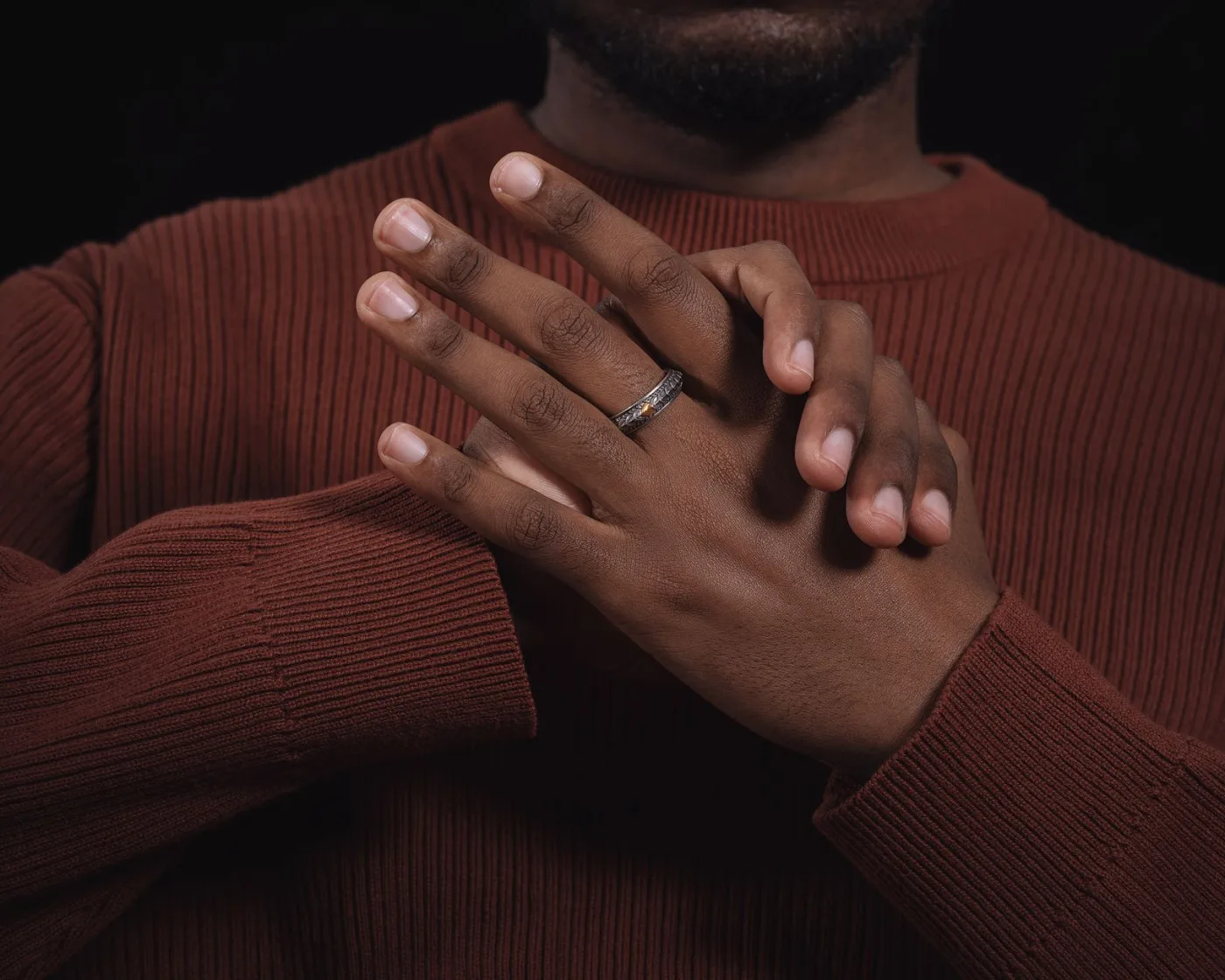
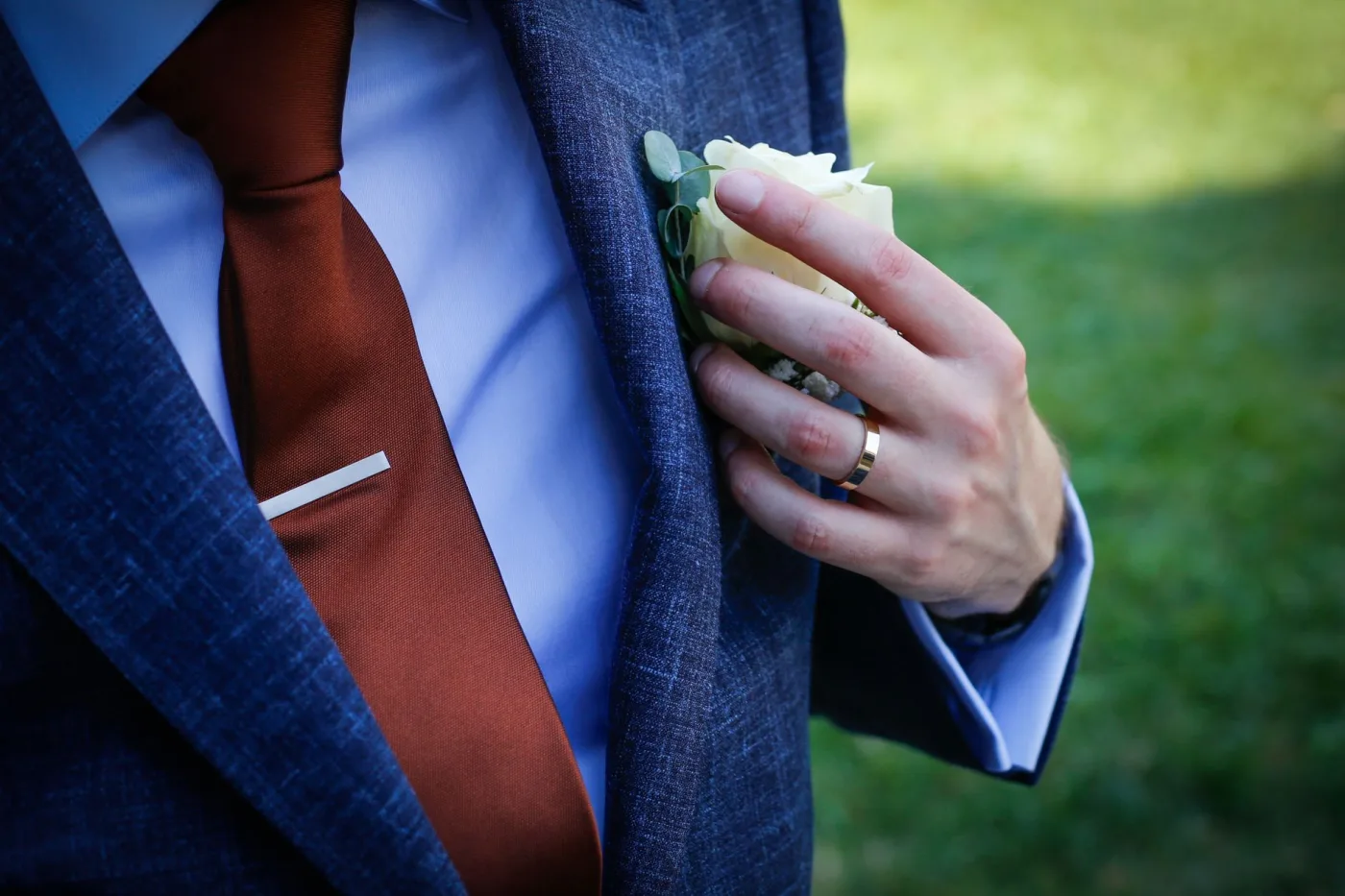
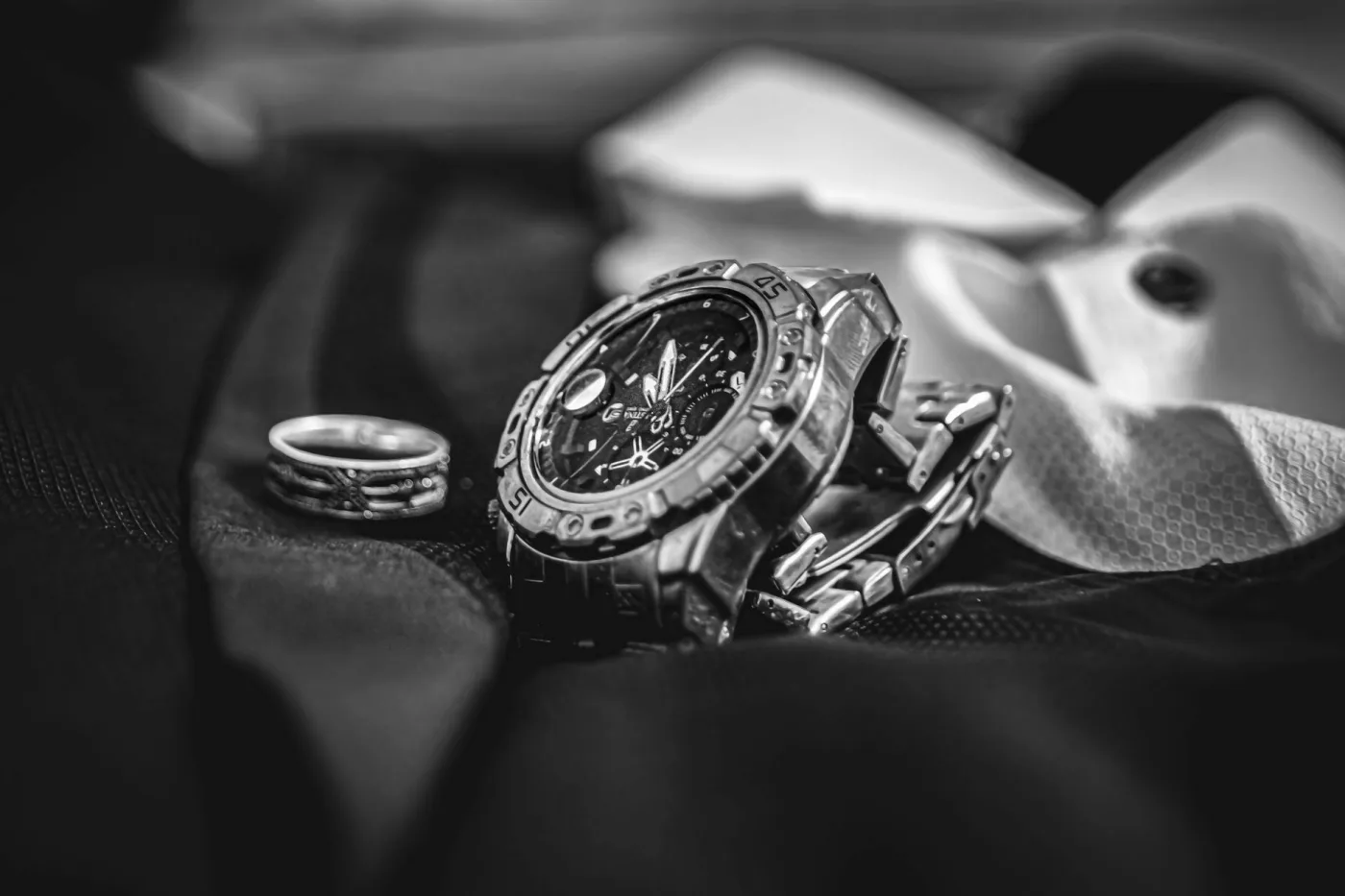
Almost every men's band on the market belongs to one of two groups, and the split matters more than any individual metal within them. The first group is the traditional precious metals, prized for heritage, resale value and the ability to be worked by any jeweller. The second is the contemporary or industrial metals, prized for extreme hardness, low weight and lower price. The trade-offs run in opposite directions, so knowing which group you are shopping in narrows the field before you compare a single ring.
Precious metals
Gold, platinum, palladium. Traditional, resizable, hold value, softer and pricier.
Contemporary metals
Tungsten, titanium, cobalt, tantalum, ceramic. Hard, light or heavy, affordable, mostly not resizable.
The resize divide
Precious metals can be sized up or down for life. Most contemporary metals cannot be worked at all.
The price gap
Contemporary bands often cost a fraction of a comparable precious-metal ring.
Precious metals, one by one
These are the metals a jeweller can cut, solder, resize and refinish indefinitely. That workability is their great advantage: a precious-metal band is a lifelong object that can follow your finger through weight changes, damage and the decades. They are softer than the industrial metals, so they mark and scratch more readily, but those marks can be polished out, and many men grow to like the lived-in patina.
Gold is the anchor of the tradition. For men it usually appears in white, yellow or rose, and in 9, 14 or 18 carat. Carat is a purity measure, not a size: higher carat means more pure gold, a richer colour and a softer, more dent-prone metal, while lower carat is harder and cheaper. White gold is plated with rhodium for its bright finish and needs re-plating every few years. Because gold is the deepest topic of its own, we cover carats, colours and care in a dedicated guide to men's gold wedding bands.
Platinum is denser and rarer than gold. It is naturally white, so it never needs plating, and it is genuinely hypoallergenic for almost everyone. It is also the heaviest common band metal, which some men love as a sense of substance and others find tiring. Platinum still scratches, but rather than losing metal it displaces it, developing a soft patina many owners prefer. It sits at the top of the price range.
Palladium is platinum's lighter, quieter cousin. It belongs to the same metal family, shares the natural white colour and the hypoallergenic quality, but weighs far less and usually costs less than platinum. For a man who wants a white precious metal without the heft or the plating upkeep of white gold, palladium is an underrated middle path.
Contemporary metals, one by one
This second family exists because modern grooms asked for bands that shrug off a hard day's work and do not cost a month's salary. These metals are harder, or lighter, or both, and dramatically cheaper. The catch is almost always the same: most cannot be resized, and some cannot be repaired at all, so if the fit changes you replace the ring rather than adjust it.
Tungsten (properly tungsten carbide) is the scratch-resistance champion. It is roughly 10 times harder than 18 carat gold and holds a polish almost permanently. The Wikipedia article on tungsten carbide notes it has become popular in bridal jewellery precisely for its extreme hardness and resistance to scratching. The trade-off is that this same hardness makes it brittle: a tungsten band can shatter under a sharp impact rather than bend. Many people treat that as a safety feature, because a shattered ring comes off an injured finger easily, whereas a metal band may have to be cut. It cannot be resized, and it is heavy.
Titanium is the opposite trade. It is remarkably light, with the highest strength-to-weight ratio of any crystalline metal, and it is biocompatible and non-toxic, so it suits men with sensitive skin. The Wikipedia entry on titanium rings describes it as difficult but possible to resize within limits, and notes its resistance to sawing is comparable to steel, so emergency removal is no harder than for gold. It is affordable and highly corrosion resistant. If you dislike the feel of weight on your hand, titanium is often the first band to try.
Cobalt chrome gives you a bright, naturally white, platinum-like look at a fraction of the price. It is harder than precious metals but more fracture resistant than tungsten, a useful middle ground, and it holds a white shine without plating. Tantalum is the connoisseur's contemporary metal: a rare, dense, dark bluish-grey that is more forgiving than tungsten and, unusually for this family, can sometimes be worked by a specialist. Ceramic (usually a high-tech zirconia) is extremely light, completely hypoallergenic and available in deep colours, including a true black that will not fade, though like tungsten it can chip under a hard enough blow.
The metals compared
The table below is a decision aid, not a price list. It ranks each metal on the five things men most often weigh, using bands rather than exact figures, since real prices move with weight, brand and the day's metal market. Read it to shortlist two or three candidates, then handle those in person.
| Metal | Look | Durability | Resizable? | Price band |
|---|---|---|---|---|
| Yellow / rose gold | Warm, classic | Softer, scratches | Yes | Mid to high |
| White gold | Bright white (plated) | Softer, needs re-plating | Yes | Mid to high |
| Platinum | Natural white, heavy | Dense, patinas | Yes | Highest |
| Palladium | Natural white, light | Durable, hypoallergenic | Yes | Mid to high |
| Tungsten carbide | Gunmetal to bright | Hardest, but brittle | No | Low |
| Titanium | Grey, very light | Tough, light, hypoallergenic | Limited | Low |
| Cobalt chrome | Bright white | Hard, fracture resistant | No | Low to mid |
| Tantalum | Dark blue-grey | Dense, less brittle | Rarely | Mid |
| Ceramic | Deep colour, black | Light, can chip | No | Low |
The one line most grooms miss: if your weight or your fingers are likely to change, or you simply want a ring you can pass on and have reworked, buy a precious metal. If you want maximum toughness for the lowest price and you are comfortable replacing the band should your size change, a contemporary metal is the smarter buy. That single question settles the family before you ever discuss colour.
Width, profile and comfort fit
Metal chosen, the next thing you feel every day is the shape of the band. Two numbers describe it: width, measured across the top of the ring in millimetres, and profile, the cross-section shape of the metal against your finger. Men's bands typically run from about 4mm to 8mm wide. Narrower reads understated and disappears on the hand; wider makes a bolder statement and feels more present. Wider bands also carry more metal, which matters for both weight and, in precious metals, price.
Width sets the look; profile sets the feel. A comfort-fit band domes its inner surface so it glides on and sits softer, shown here in accent.
Profile is the detail men underrate. A flat profile has square inner and outer edges and a modern, architectural feel. A court or domed profile rounds the outside for a classic, comfortable look. The one worth understanding is comfort fit: the inside of the band is domed rather than flat, so it touches your finger along a curve instead of a squared edge. Comfort-fit bands slide over the knuckle more easily, sit more kindly across a long day, and are especially welcome in wider or harder rings. They do run slightly large, so buy comfort-fit rings half a size down from a standard fitting.
Choose by lifestyle
Here is the part that turns all of the above into a decision. The best band for a man is the one that suits how he actually uses his hands, not the one that looked best in a display case. Find yourself below and let it steer the metal.
Hands-on trades
Builders, mechanics, electricians. Choose tough and cheap: titanium, cobalt or a silicone spare for the job site. Avoid soft gold and heavy platinum.
Office and desk work
Low daily abrasion means you can enjoy the softer, finer metals. Gold, platinum and palladium wear beautifully when they are not being knocked about.
Active and outdoors
Gym, climbing, DIY, cycling. Prioritise light and durable: titanium or ceramic sit unnoticed, and a shatter-prone ring can be a safety plus around machinery.
Sensitive skin
Reactions to nickel are common. Platinum, palladium, titanium and ceramic are biocompatible choices; avoid low-carat white gold, which may contain nickel.
Heirloom minded
Want a ring to last a lifetime and be reworked or passed on? Only precious metals can be resized, repaired and refinished indefinitely.
Budget led
Maximum ring for minimum outlay points straight at the contemporary metals: tungsten, titanium and ceramic all look sharp for very little.
A common and sensible answer is two bands: a precious-metal ring for the wedding and social life, and a cheap silicone or titanium band for work and sport. That protects the meaningful ring from the exact situations most likely to damage it, and it removes the daily temptation to wear something valuable into a workshop. Nobody will judge a plumber for taking his platinum off before a shift.
A note on maintenance
Every band needs a little care, and the care follows the metal. Precious metals want an occasional professional polish to lift scratches, and white gold needs re-plating every couple of years to keep its brightness. Contemporary metals are close to maintenance free on the surface, but remember they cannot usually be repaired: a chipped ceramic or a cracked tungsten band is replaced, not mended. All metals benefit from being taken off before heavy lifting, gym sessions with bars, and any work with harsh chemicals. The habit that saves the most rings is simply removing the band before the activity most likely to harm it, and having a set place to put it so it does not vanish down a drain.
Once you have settled on a family and a metal, the next step is the ring itself: the finishes, the detailing and the specific styles available in each material. Our companion guide to men's wedding bands picks up there, covering finishes from high polish to matte and hammered, inlays, edge treatments and how to try a shortlist on before you commit.
Frequently asked questions
What is the best metal for a man's wedding band?
There is no single best metal, only the best fit for your life. If you want a ring you can resize and keep for a lifetime, choose a precious metal such as gold, platinum or palladium. If you want maximum toughness for a low price and are comfortable replacing the band if your size changes, a contemporary metal such as titanium, tungsten or ceramic is the smarter choice. Match the metal to how you use your hands, then choose the look.
Can men's wedding bands be resized?
It depends entirely on the metal. Precious metals (gold, platinum, palladium) can be resized up or down by any jeweller. Titanium can be resized only slightly and with difficulty. Tungsten, cobalt and ceramic generally cannot be resized at all, so if your finger changes you replace the ring rather than adjust it. If your weight is likely to shift, this is the single most important question to ask before buying.
Which wedding band metals are hypoallergenic?
Platinum, palladium, titanium and ceramic are all biocompatible and suit men with metal sensitivities, since none rely on nickel. The metal to watch is white gold, which can contain nickel in some alloys and is rhodium-plated; a reaction usually appears once that plating wears. If you know you react to jewellery, tell the jeweller and steer toward titanium, platinum, palladium or ceramic.
Is a tungsten or titanium ring better for a man who works with his hands?
Both are excellent for manual work, but they trade differently. Tungsten is the most scratch resistant metal available and keeps its polish almost permanently, though it is heavy and can shatter under a sharp blow, which some see as a safety feature since it frees an injured finger. Titanium is far lighter, tough, corrosion resistant and hypoallergenic, and its resistance to sawing is comparable to steel, so emergency removal is straightforward. Choose tungsten for scratch resistance, titanium for lightness.
How wide should a man's wedding band be?
Most men's bands run from about 4mm to 8mm. A 4mm band is subtle and disappears on the hand, a 6mm band is the balanced middle that suits most men, and an 8mm band makes a bolder statement and carries more weight. Choose based on the size of your hand and how present you want the ring to feel, and consider a comfort-fit profile, which domes the inside of the band so wider widths still wear easily.