Wedding Rings: The Complete Guide
An all-genders overview of the wedding ring: its meaning and history, the metals and settings, sizing and fit, and the practical calls on engraving, budget and care.
A wedding ring is the smallest object in the whole wedding and, for most couples, the one they keep the longest. Everything else about the day is spent or eaten or packed away; the ring stays on the hand for decades. That makes it worth understanding properly before you buy. This guide is the hub for the subject. It covers what a wedding ring actually means, how it differs from an engagement ring and a plain band, the metals and settings you will be asked to choose between, how to get the size and fit right, and the unglamorous but important parts: engraving, budgeting, insurance and care. Read it in full for the complete picture, or jump to the section you need.
The short version
- The ring is the symbol; the marriage is the thing it stands for. Spend accordingly.
- Ring, band and engagement ring are three different jobs, even when they sit on the same finger.
- Metal is the first real decision, and it sets both the look and the long-term durability.
- Fit matters as much as size. A comfort-fit band wears very differently from a standard one.
- Budget as a share of your means, not a fixed number someone else invented for you.
What a wedding ring means, and where it came from
A wedding ring is a finger ring that signals its wearer is married. That is the whole of its formal definition, and the plainness is the point: the ring is a public, permanent, wordless declaration. The custom is genuinely ancient. As the Wikipedia entry on wedding rings records, the Western tradition traces back to ancient Rome and Greece, where the ring was first tied to the marital dowry and later to a promise of fidelity. What began as a token of an economic contract between families slowly became a symbol of the bond between two people.
The finger is not an accident either. In much of the West the ring is worn on the fourth finger of the left hand, a placement rooted in the old belief in the vena amoris, or "vein of love", once thought to run directly from that finger to the heart. The anatomy is a myth, but the idea stuck, and the placement is now convention across many cultures, though by no means all of them: several European and South Asian traditions favour the right hand. If you want to read more about the union the ring marks rather than the ring itself, our companion pillar on what it means to marry picks up that thread.
Ring vs band vs engagement ring
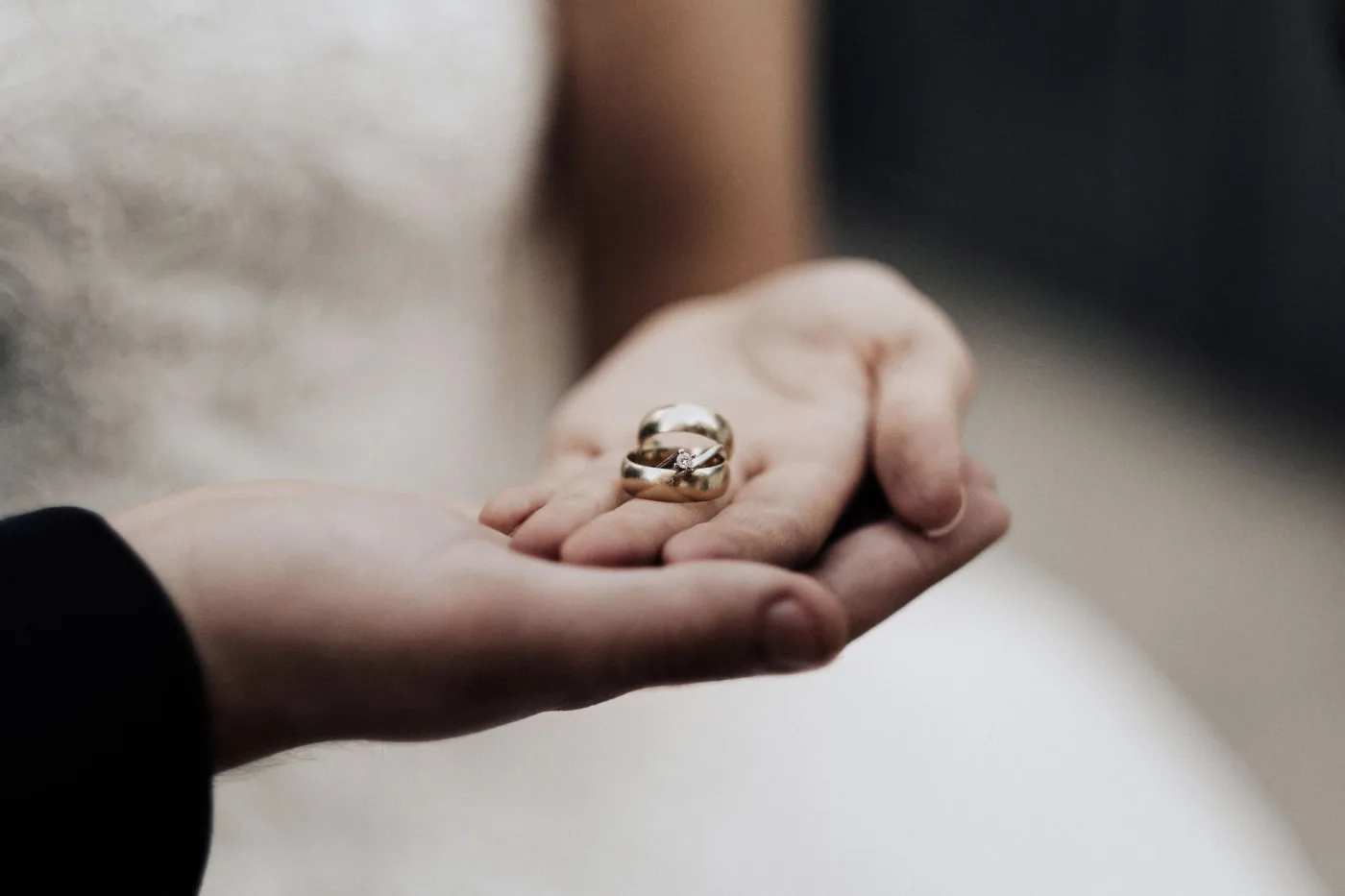
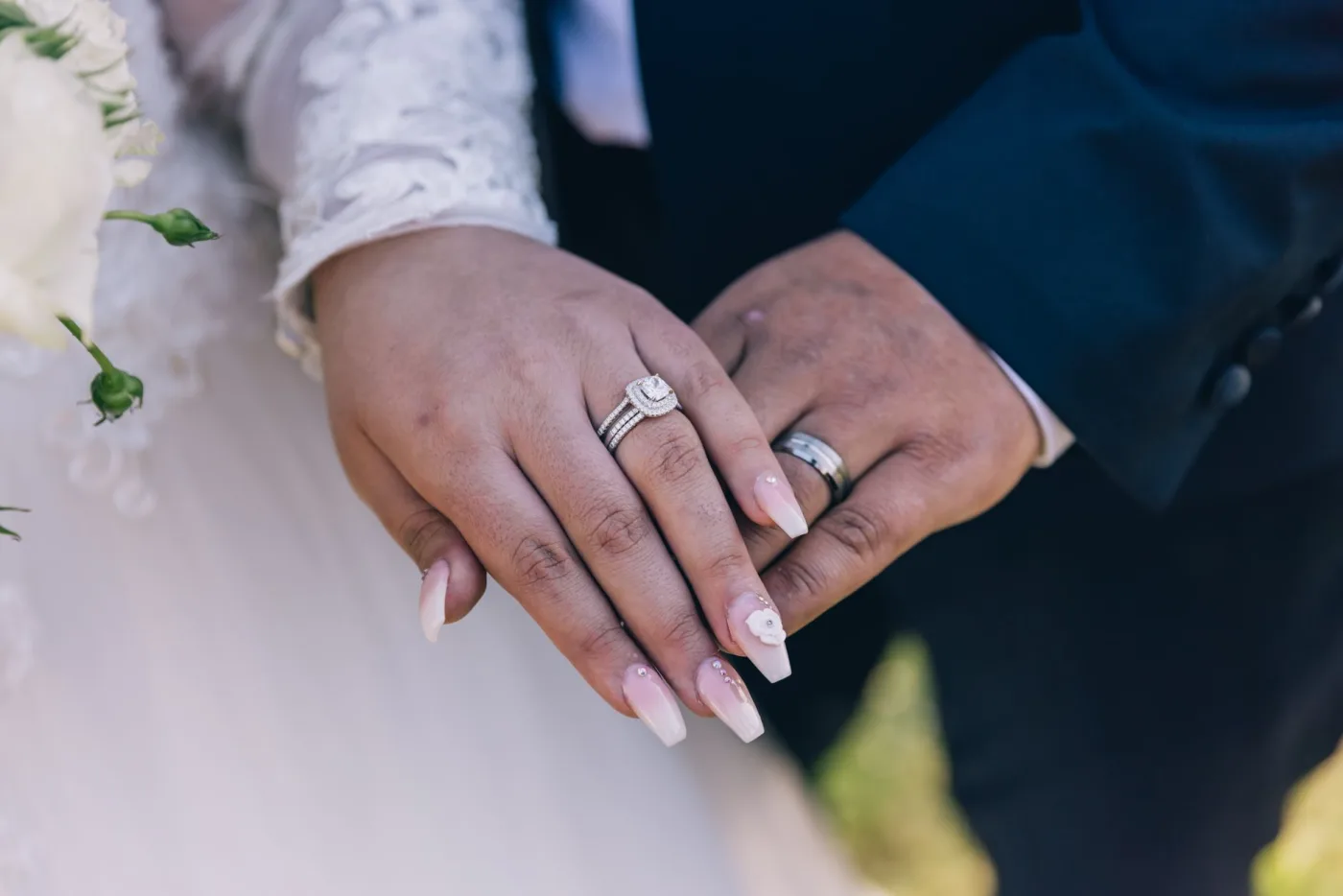
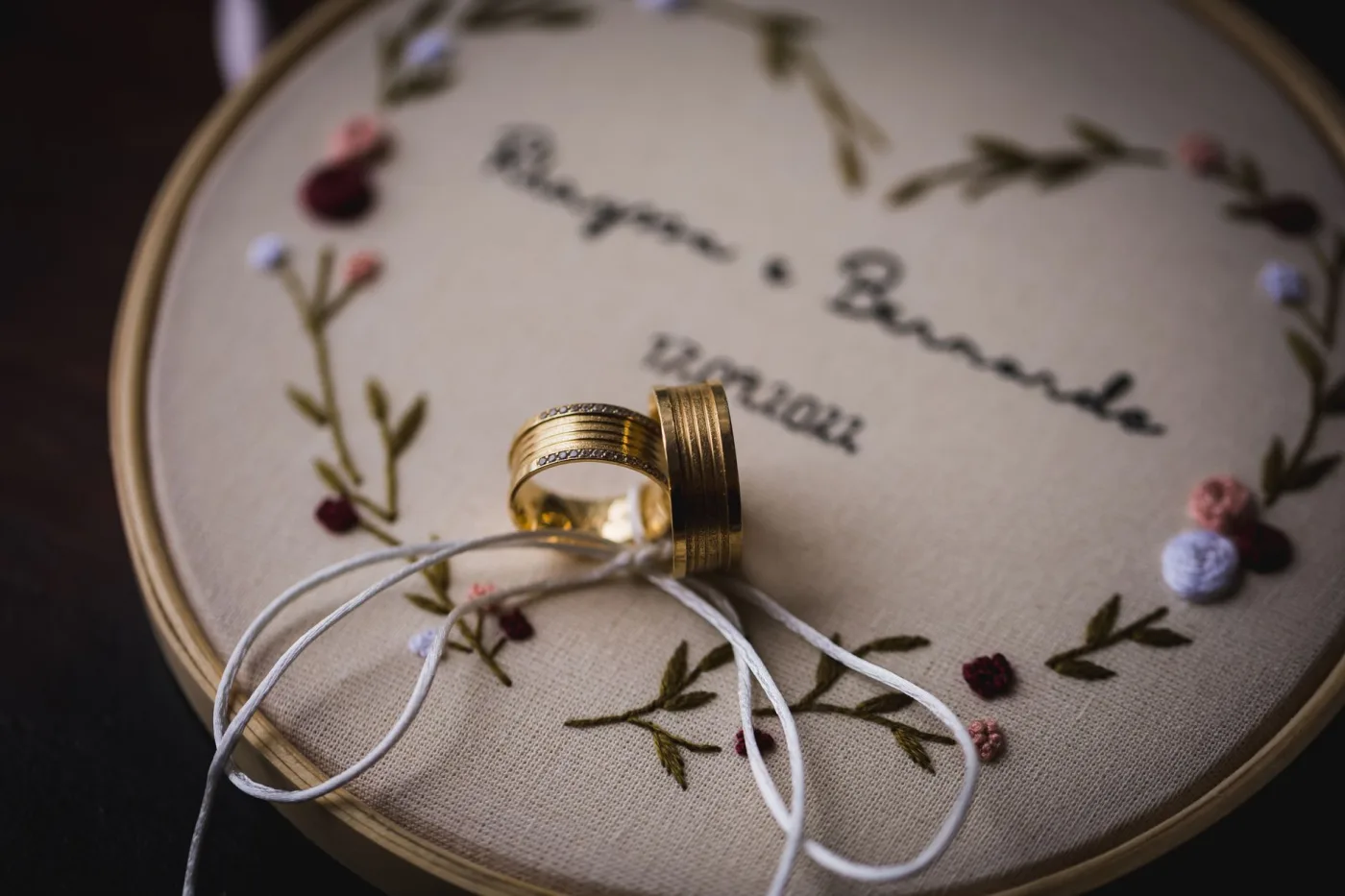
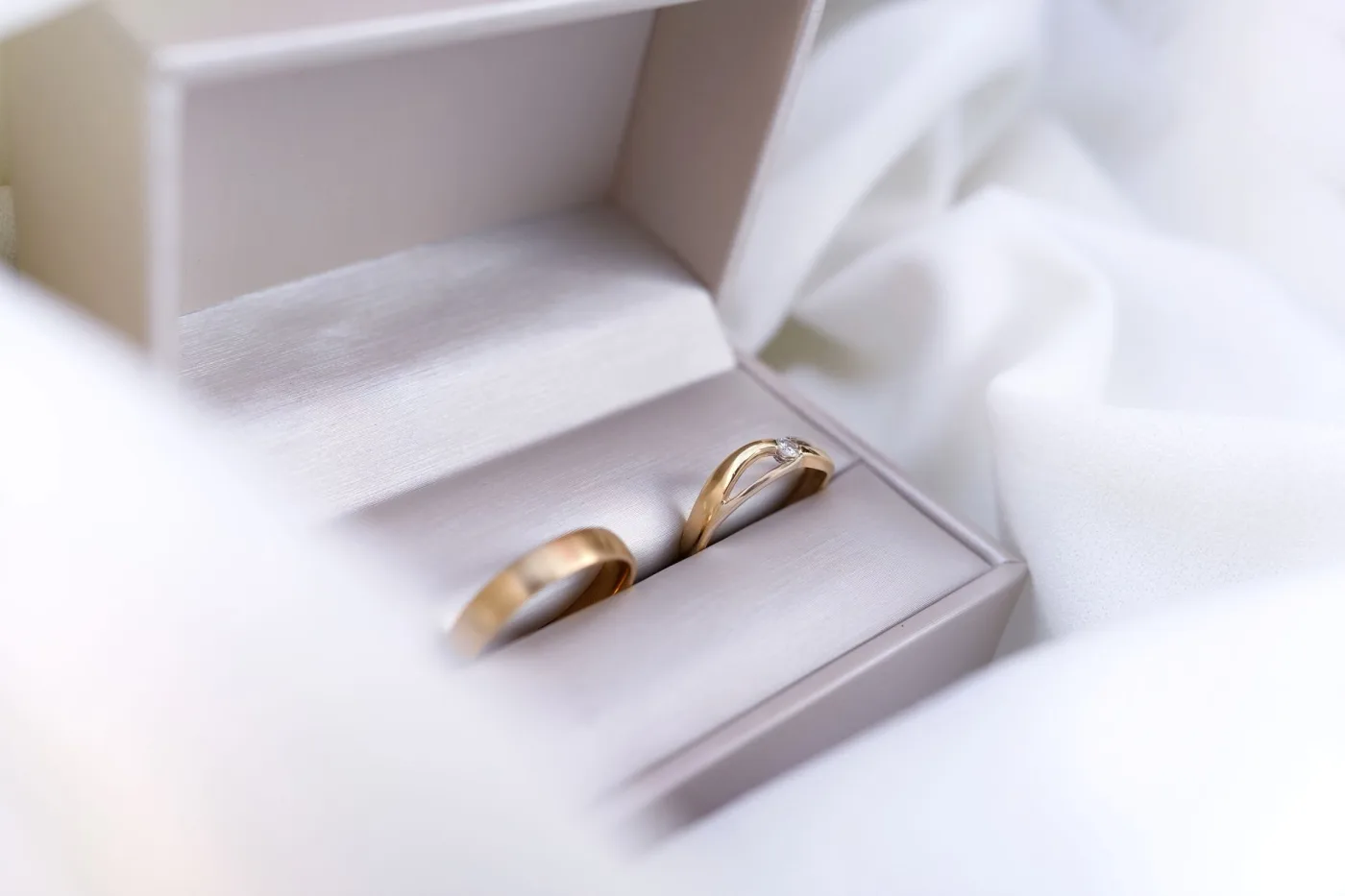
The three terms get used loosely, and jewellers rarely stop to untangle them, so here is the clean version. In American English "wedding ring" and "wedding band" are used interchangeably for the same object. Where the words do a different job is in separating the wedding ring from the engagement ring, which are two distinct pieces bought and given at different moments.
| Piece | When it appears | Typical form | Who wears it |
|---|---|---|---|
| Engagement ring | Given at the proposal, before the wedding | Usually a single prominent stone, often a diamond | Traditionally one partner, increasingly either or both |
| Wedding ring | Exchanged during the ceremony itself | A simpler band, plain or lightly set | Both partners |
| Wedding band | The same object as the wedding ring | The plainer, everyday ring; the words are interchangeable | Both partners |
The neat way to hold it in your head: the engagement ring asks the question, the wedding ring answers it. Traditionally the engagement ring is slipped off at the altar so the wedding band can go on closest to the heart, then the engagement ring is replaced on the outside, which is why so many people wear the two stacked together. The history of the engagement ring is worth knowing here: the diamond association most people treat as timeless is largely a twentieth-century marketing creation. Before the De Beers campaign of 1939 and its "a diamond is forever" slogan of 1947, only about one in ten American engagement rings held a diamond at all. Tradition, in other words, is younger and more optional than the jewellery counter implies.
Choosing a metal
Metal is the first decision that actually changes the ring, and it drives both the look and how well the band survives a lifetime of daily wear. The headline choice is usually gold versus platinum, but "gold" itself splits into colours and purities that are easy to confuse. Here is the overview.
Gold karat
Purity, not colour. 24k is pure gold; 18k is 75 percent gold; 14k is 58.3 percent. Lower karat means a harder, more hard-wearing ring.
Yellow gold
Gold alloyed with silver and copper. The classic, warm, traditional look and the easiest to resize and repair.
White gold
Gold mixed with a white metal such as palladium, then usually rhodium-plated for a bright silver finish that needs re-plating over time.
Rose gold
A gold and copper alloy; more copper gives a redder tone. Warm, distinctive and very durable thanks to the copper.
Platinum
Naturally white, dense and hypoallergenic. Wears to a soft patina rather than losing metal, but costs more and is heavier.
Alternative metals
Titanium, tungsten, palladium and cobalt: tough, light and affordable, but generally cannot be resized, which matters over decades.
Two facts settle most metal debates. First, karat is about purity, and the colours of gold come from what the pure gold is mixed with: copper pushes it toward rose and red, white metals and rhodium plating make white gold, and everyday yellow gold is balanced with silver and copper. Second, higher karat is softer. Pure 24k gold is too soft for a ring you wear daily, which is why 18k and 14k are the practical wedding-ring standards, trading a little purity for a lot of durability. If you love the idea of an unresizable alternative metal, choose it with your eyes open: it looks superb on day one, but fingers change size over a marriage, and a band that cannot be adjusted is a band you may have to replace.
Settings and stones, in brief
Plenty of wedding bands carry no stones at all, and a plain band is a completely legitimate, often deliberate choice: nothing to snag, nothing to lose, nothing to re-plate. If you do want stones, the setting is what holds them, and it is a trade-off between sparkle and security. The solitaire and its prongs let the most light in but leave the stone most exposed; lower, more enclosed settings protect the stone at the cost of a little brilliance. For a band you wear while typing, cooking and carrying, that trade tilts toward the protective end more than it would on an engagement ring that spends its life being admired.
Prong
Small metal claws grip the stone and let light flood in. Maximum sparkle, minimum protection; prongs need occasional checking.
Bezel
A metal rim wraps the stone entirely. The most secure setting and the kindest to an active hand.
Channel and pave
Small stones set flush into a groove or scattered across the surface. Low-profile sparkle that sits close to the band.
Plain band
No stones at all. The most durable, lowest-maintenance and most timeless option, and a classic for good reason.
On the stone itself, the familiar shorthand is the four Cs: cut, colour, clarity and carat. Cut, not size, does the most for how a stone catches the eye, so a smaller, well-cut stone often outshines a larger, dull one. Diamonds remain the default, but sapphires, moissanite and lab-grown diamonds are all common now, and a coloured stone can carry meaning a colourless one cannot.
His-and-hers: matching or contrasting
A pair of wedding rings does not have to match, and the modern instinct runs the other way: pick the metal, width and finish that each person will actually enjoy wearing, then decide how much they should echo one another. There are three broad approaches, and none is more correct than the rest.
- Fully matched. The same metal, finish and profile in two widths. Reads as a set and photographs beautifully, but constrains both partners to one taste.
- Coordinated, not identical. A shared metal or a shared detail, such as a common inner engraving or edge finish, with different widths and surface textures. The most popular middle path.
- Deliberately contrasting. Two rings chosen entirely independently. Best when the partners have genuinely different tastes, and increasingly common as rings become personal rather than uniform.
Men's bands in particular have opened up enormously, from classic gold to brushed titanium, black finishes and mixed-metal inlays, and they deserve their own decision rather than being treated as a smaller copy of a partner's ring. Our deeper guide to choosing a wedding band works through widths, profiles and finishes in detail, and the dedicated guide to men's wedding bands covers the metals and styles that suit an active hand, including the alternative metals that plain gold does not offer.
Getting the size and fit right
Size and fit are two different things, and confusing them causes most of the "my ring never felt right" complaints. Size is the diameter of the band. Fit is the shape of its inner surface, and the choice is between a standard fit, which is flat on the inside, and a comfort fit, which is domed on the inside so it slides over the knuckle more easily and rests more gently on the finger.
Same size, different feel. The domed inner surface of a comfort fit is why two bands marked the same number can wear so differently.
A few practical rules save a lot of regret. Measure the finger warm and at the end of the day, never cold, because cold fingers run smaller and a ring sized to them will spin loosely most of the time. Account for the width of the band: a wide band needs a slightly larger size than a thin one to clear the same knuckle. And if you are choosing a metal that cannot be resized, get the sizing checked more than once before you commit, because that decision is permanent. Fingers swell in heat and after salty food, and shrink in cold, so aim for a size that is comfortable across that range rather than perfect on one mild afternoon.
Engraving
An engraving turns a bought object into a personal one, and it is the detail couples most often say they are glad they added. The inside of the band is the usual home for it, hidden against the skin, which keeps the outside clean and the message private. Common choices are the wedding date, each other's initials, a short phrase, coordinates of a meaningful place, or a line that means something only to the two of you. Keep it short: the inner surface is small, and a deep, simple engraving lasts far better than a long, fine one that wears smooth. If you are choosing an alternative metal, ask first, because the hardest metals can be difficult or impossible to engrave by hand and may need laser work.
Budgeting without a made-up number
Ignore the old "two" or "three months' salary" rule for engagement rings. It was invented by an advertising campaign, not by anyone thinking about your finances, and it has no bearing on a wedding band at all. A better frame is to treat the rings as a share of what you can comfortably spend, decided by you, and then let the levers below move the figure up or down without guilt.
The levers that actually move the price: metal and karat first (platinum and high-karat gold cost more; 14k and alternative metals cost less), then stones (a set band costs far more than a plain one, and lab-grown stones far less than mined), then width and weight (more metal, more money), and finally finish and engraving. Change the metal and you change the total more than any other single decision. Nothing here requires overspending: a plain 14k gold band and a heavy platinum ring both do the one job a wedding ring exists to do.
The honest guidance is that there is no correct amount, only an amount that is right for you. A ring you can afford without strain, in a metal you like, sized and fitted well, will serve you far better than an expensive one bought to hit a number someone else invented.
Insurance and care
Once the ring is on the hand it becomes a valuable you wear into the world every day, which is exactly the risk profile insurers worry about. If the ring is worth insuring, do it properly: either add a scheduled item to a home contents policy or take a standalone jewellery policy, and keep the receipt and, for anything with significant stones, an independent appraisal. Photograph the ring. These are dull steps that matter enormously on the day a stone goes missing down a drain.
Care is mostly gentle habit. Take the ring off for heavy manual work, gym sessions and anything involving harsh chemicals or chlorine, which can attack certain alloys and loosen settings over time. Clean it occasionally with warm water, a drop of mild soap and a soft brush. Have a jeweller check the prongs on any stone-set ring every year or two, because a loose prong is cheap to fix and catastrophic to ignore. White gold will need its rhodium plating refreshed periodically as the finish wears; platinum will develop a soft patina that many owners prefer and others have polished back. None of this is onerous, and a ring looked after this way genuinely can last a lifetime, which after all is the entire idea.
Where to go from here
This guide is the map of the whole subject; the deeper articles are the territory. If you are now choosing an actual ring, move on to the detailed guide to wedding bands for widths, profiles and finishes, and if you are shopping for a men's ring specifically, the guide to men's wedding bands covers the metals and styles built for an active hand. And if your interest runs past the ring to the commitment it stands for, our pillar on what it means to marry picks up where the jewellery leaves off. Whatever you choose, keep the proportion in view: the ring is small, the marriage is the point, and the best ring is simply the one you will be glad to look down at in thirty years.
Frequently asked questions
What is the difference between a wedding ring and a wedding band?
There is no difference: "wedding ring" and "wedding band" are two names for the same object, the ring exchanged during the marriage ceremony to show that its wearer is married. The terms are used interchangeably. The distinction worth learning is between the wedding ring and the engagement ring, which are separate pieces given at different moments: the engagement ring at the proposal, the wedding ring at the ceremony.
Which finger and hand does a wedding ring go on?
In much of the Western world the wedding ring is worn on the fourth finger of the left hand, a custom rooted in the old belief in the vena amoris, a vein once thought to run from that finger straight to the heart. The anatomy is a myth, but the tradition endured. Customs vary widely, though: several European and South Asian cultures wear the ring on the right hand, so there is no single universal rule.
What is the difference between karat and carat?
They sound identical but measure different things. Karat is the purity of gold: 24 karat is pure gold, 18 karat is 75 percent gold, and 14 karat is 58.3 percent, with the rest made up of other metals that add hardness. Carat, spelled with a c, is the weight of a gemstone. So an 18k gold ring set with a one-carat diamond is describing its metal purity and its stone weight with two different words.
Which metal is best for a wedding ring?
There is no single best metal, only the best for you. Platinum is naturally white, very durable and hypoallergenic but heavier and pricier. Gold comes in yellow, white and rose, with 14k and 18k the practical choices because pure 24k gold is too soft for daily wear. Alternative metals such as titanium and tungsten are tough and affordable but usually cannot be resized. Weigh colour, durability, whether it can be resized and budget together rather than chasing one factor.
How much should we spend on wedding rings?
As much as is comfortable for you, and no more. The "months of salary" rules are advertising inventions with no bearing on your finances, and they were aimed at engagement rings, not wedding bands, in any case. The biggest lever on price is the metal, followed by whether the band holds stones, then its width and weight. A modest plain band and an expensive platinum ring perform the same symbolic job, so choose the amount that fits your means and your taste.