Eternity Band: The Complete Guide
Full versus half eternity, the meaning behind the unbroken circle, when it is given, and the resizing and comfort trade-offs to weigh before you buy.
An eternity band is the ring that makes a promise out of its own shape. A continuous line of matched stones runs the whole way around, with no beginning and no end, and that unbroken circle is the entire point: it stands for love without a stopping place. It is one of the most romantic pieces in wedding jewellery and also one of the most misunderstood, because the same feature that gives it meaning, the full circle of stones, is also what makes it tricky to resize and worth thinking through before you buy. This guide covers both the romance and the reality.
The short version
- An eternity band sets an unbroken line of matched stones all the way around, symbolising love with no beginning or end.
- Half eternity is the practical everyday choice; full eternity is more luxurious but harder to resize and less comfortable against neighbouring rings.
- It is traditionally a gift ring, often given on a milestone anniversary or the arrival of a child rather than as the first wedding ring.
- Sizing is the big decision. A full eternity ring cannot easily be resized, so getting the fit right at purchase matters more than usual.
What an eternity band is
An eternity ring, also called an eternity band, is a ring set with a continuous line of identically cut gemstones, usually diamonds, running around the entire band. The defining feature is that the line is unbroken: there is no plain section of metal anywhere. That complete circle is what separates a true eternity band from an ordinary diamond band, which may carry stones across the top only.
The result is a ring that sparkles from every angle, on the palm side as well as the back of the hand, and reads as a single ribbon of light rather than a decorated band. It is prized as much for what it means as for how it looks, which is why it tends to be given to mark something rather than bought at random. Understanding that gifting tradition is part of understanding the ring.
Full eternity versus half eternity
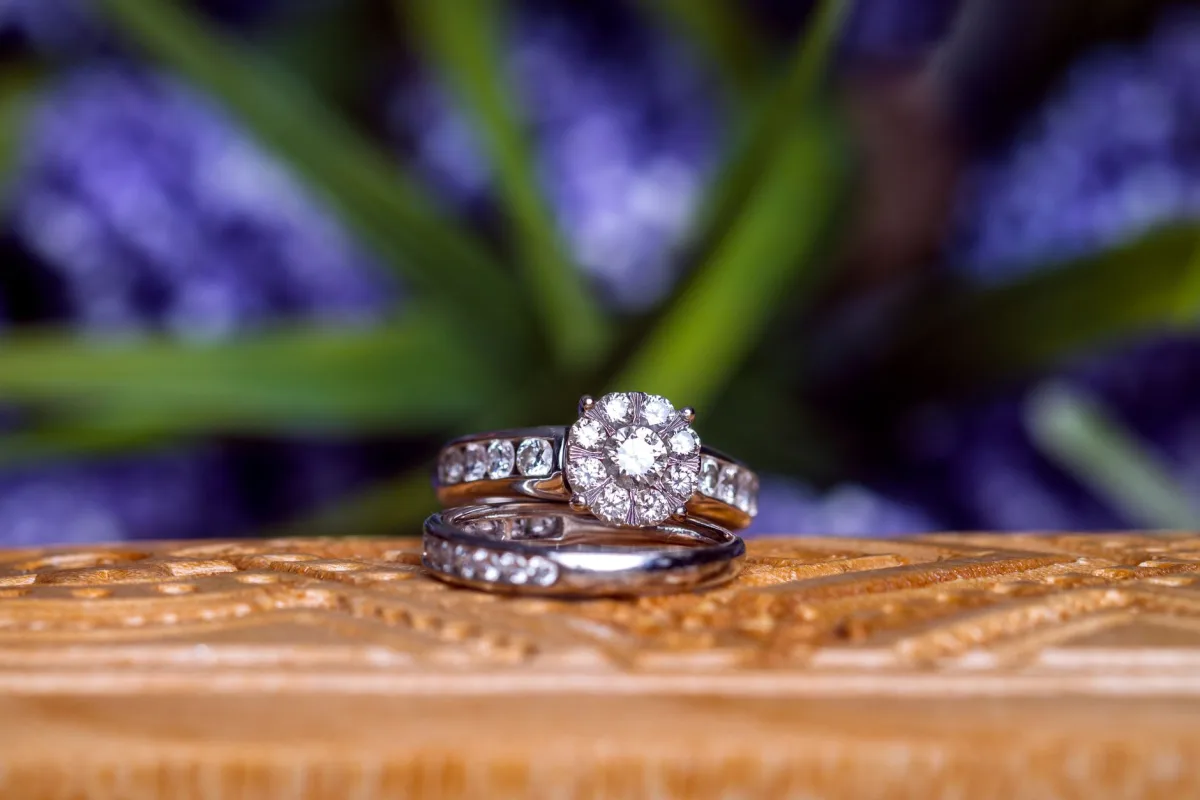
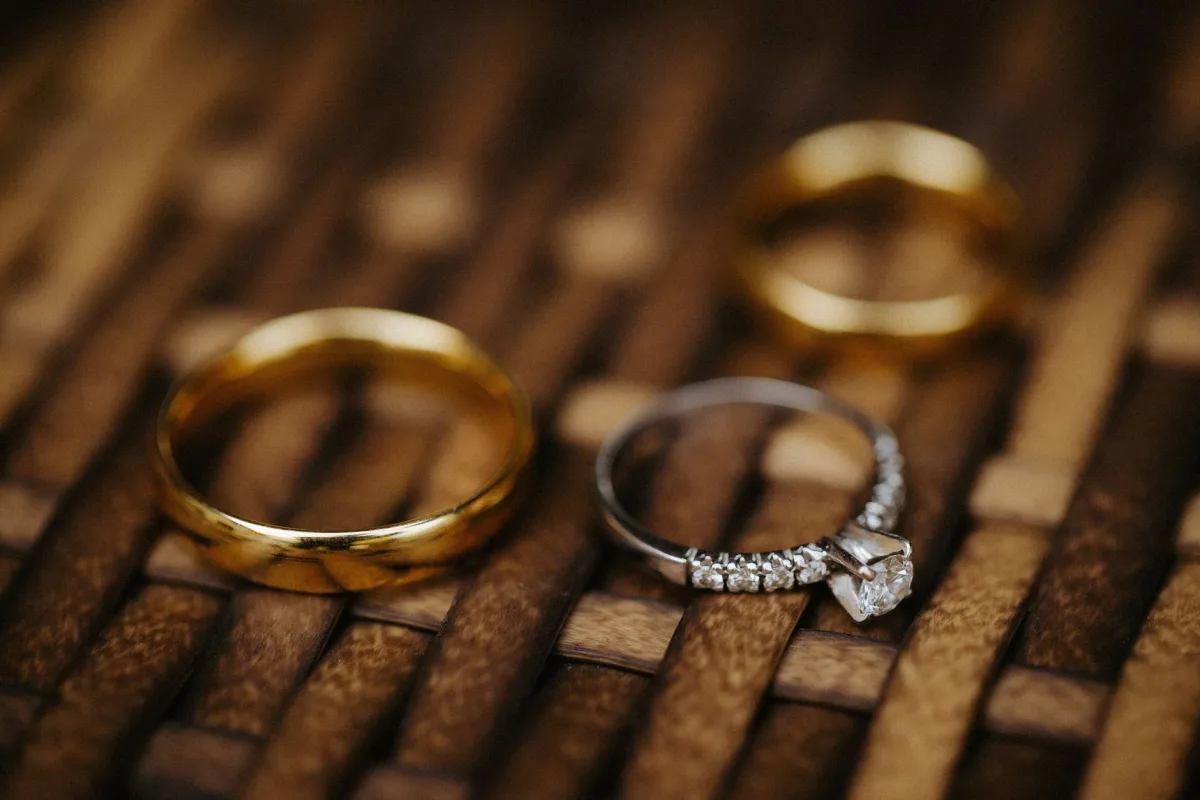
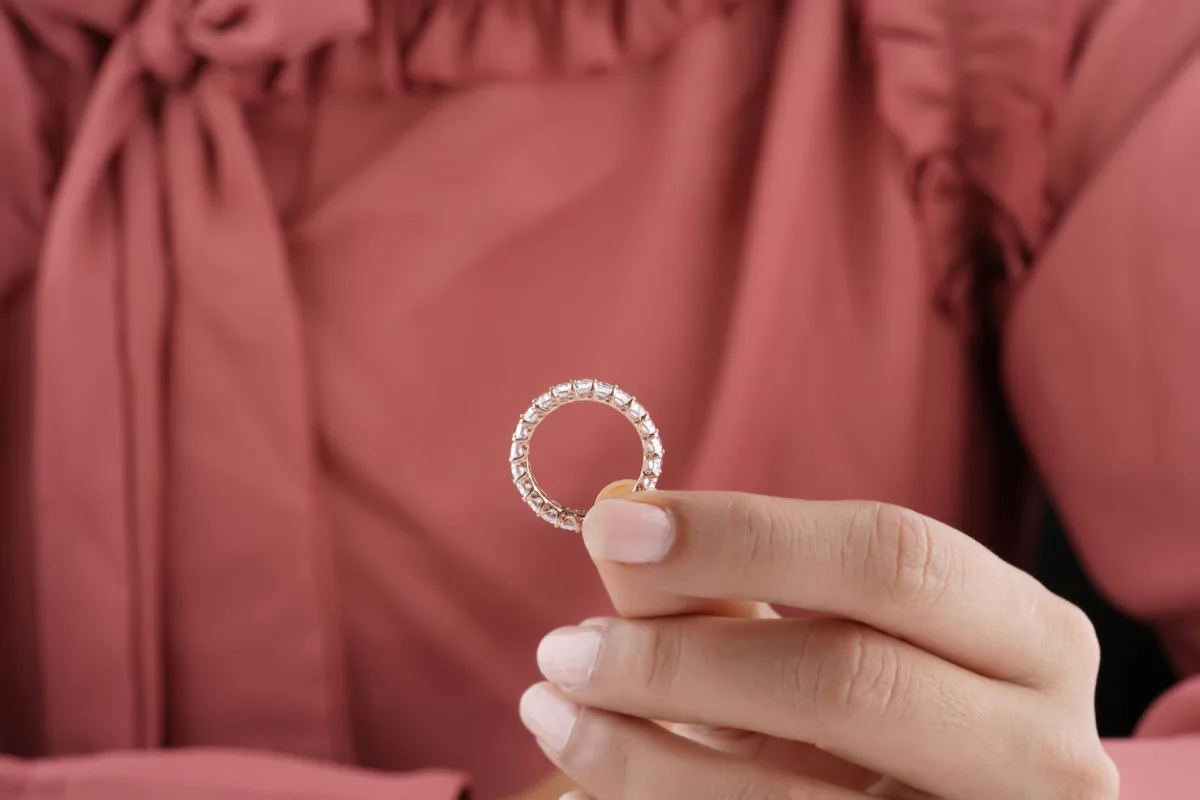
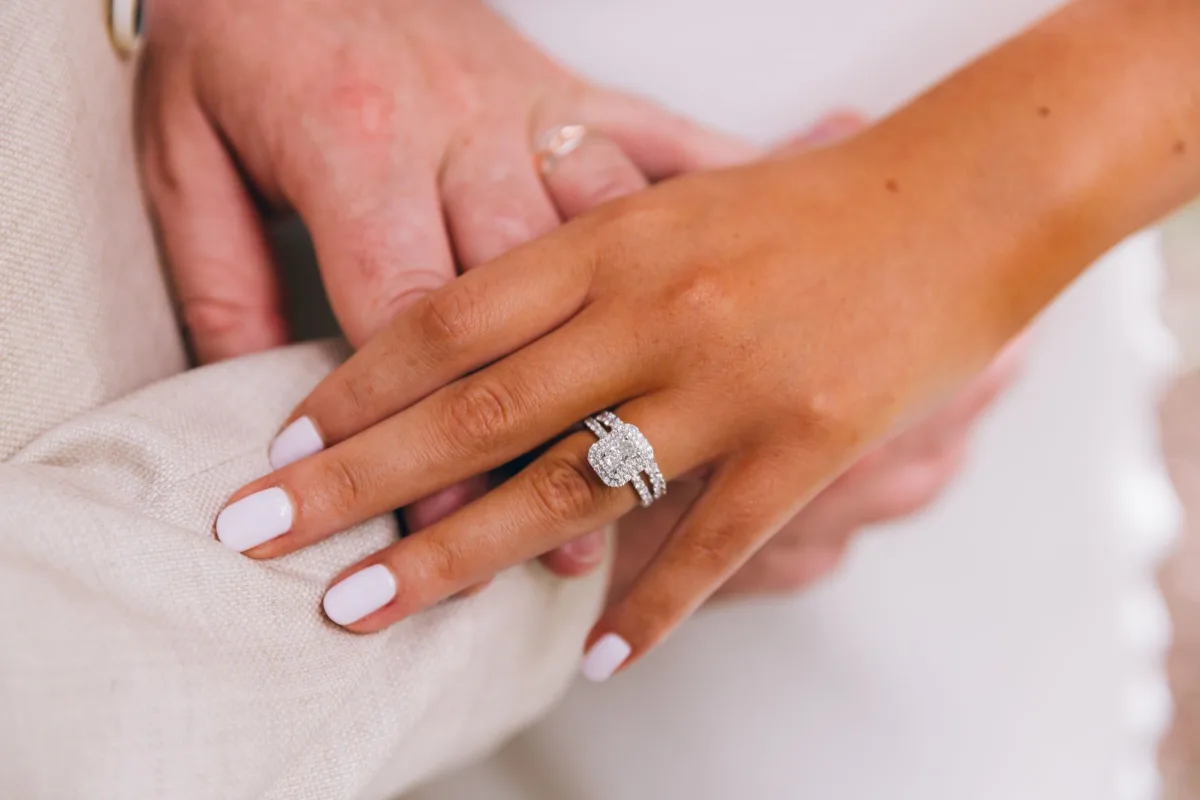
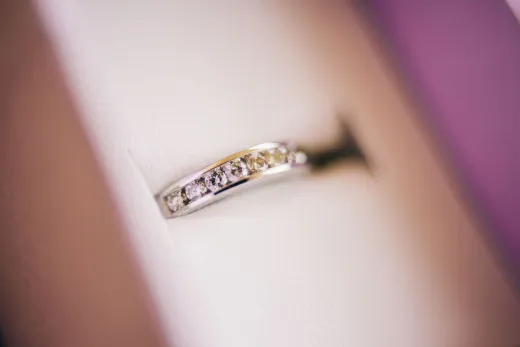
The first thing to settle is how far the stones travel around the band, because it changes everything else. A full eternity band carries stones the whole way around. A half eternity band, strictly a variation on the theme, sets stones across the top half or two-thirds only, leaving plain metal underneath where the ring meets the palm.
Full eternity
Stones all the way around. Maximum sparkle and the truest expression of the symbol, but heavier, pricier and very hard to resize.
Half eternity
Stones across the top only. Lighter, more comfortable, easier to resize and cheaper, while still looking like a full line from above.
Comfort underside
The plain metal on a half eternity sits smoothly against the fingers beside it and the palm, which many wearers find far more comfortable for daily wear.
Fixed size
Because a full eternity ring has no plain section to cut, it usually cannot be resized. It must be ordered in the correct size, or remade if the fit changes.
For most people who want an eternity band to wear every day, a half eternity is the sensible answer: it delivers the look where it shows, costs less, sits more comfortably against an engagement ring, and can be adjusted if your finger size changes. A full eternity is the choice when the symbol itself, the truly unbroken circle, matters more than practicality, and when you are confident about the size.
The meaning and history
The symbolism is written into the geometry. A ring is already a circle with no end, and an eternity band carries that idea to its conclusion by never breaking the line of stones, so the whole ring reads as constancy made visible. The tradition of exchanging a wedding ring as a token of enduring commitment is ancient, and the eternity band is that idea intensified into a single, glittering statement of permanence.
The eternity ring as we know it rose to popularity in the twentieth century, helped along by the diamond trade, which promoted it as a way to celebrate a long marriage and to keep giving diamonds after the engagement ring. That commercial history does not cheapen the sentiment; it simply explains why the ring is so firmly associated with anniversaries and milestones rather than with the wedding day itself.
When an eternity band is given
Unlike an engagement ring or a first wedding band, an eternity band is usually a marker of time already shared. It is a classic anniversary gift, especially for milestone years, and it has become a popular way to celebrate the birth of a child, sometimes nicknamed a "push present". Some couples also choose one as the wedding ring itself, particularly when they want a single striking band rather than a plain one.
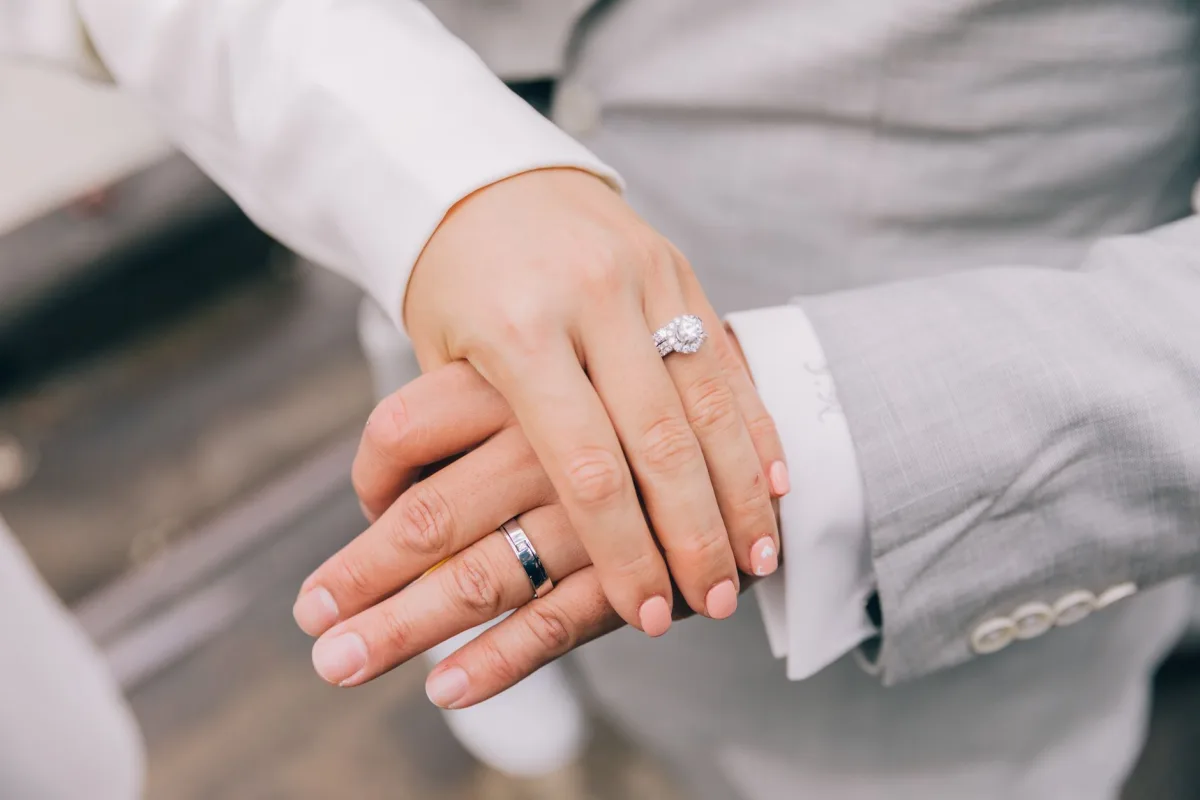
There is no rule about when it must appear, and that freedom is part of its charm. The common thread is that an eternity band tends to say "look how far we have come" rather than "will you". If you are building a small collection of rings over the years, it stacks beautifully with a plainer wedding band and an engagement ring, and our guide to the diamond band covers the everyday companion pieces it sits alongside.
Choosing stones and settings
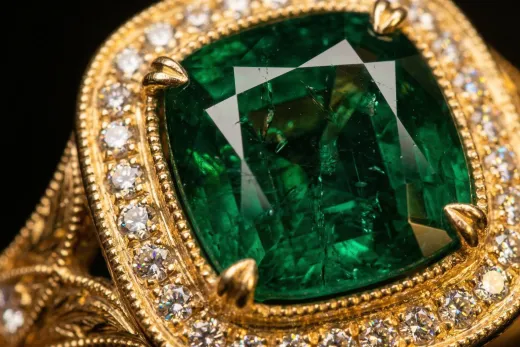
Diamonds are the classic choice for an eternity band, because their hardness lets them survive the stones-all-the-way-around exposure of daily wear, and because a diamond is the hardest natural material there is. Coloured stones such as sapphires and rubies also work well and add personality, though softer gems need more care in a ring that has stones on the underside too. If you love colour, an emerald wedding band shows how a green stone can carry the same idea with a very different mood.
Settings for eternity bands favour security, because a lost stone breaks the very symbol the ring is about. Channel settings, which sink the stones between two rails of metal, and shared-prong or scalloped settings, which let in more light, are the two mainstays. Channel protects best and gives a smooth line; shared prongs sparkle more but expose the stones slightly. Whichever you choose, insist on stones that are well matched in size and colour, because the beauty of an eternity band lives in the evenness of its line.
The resizing and comfort trade-offs
Here is the practical catch that catches people out. A full eternity band generally cannot be resized, because there is no plain metal to cut and rejoin without disturbing the stones. That means you must get the size right at purchase, and it means the ring may not fit forever, since fingers change with age, temperature, pregnancy and weight. If your size shifts significantly, a full eternity ring often has to be remade rather than adjusted.
Comfort is the second consideration. Stones running along the underside can feel harder against the fingers on either side and against the palm than a smooth band does, and they can wear against a neighbouring ring over time. Neither issue is a dealbreaker, but both are reasons the half eternity exists and why it suits so many wearers. Choose a full eternity with open eyes: for its meaning and its all-around sparkle, accepting the fixed size and the firmer feel as the price of that unbroken circle.
Making the eternity band yours
An eternity band is at its best when the choice reflects a real decision rather than a default. Decide first what the ring is for: an everyday piece points you toward a comfortable, resizable half eternity, while a symbolic anniversary statement may justify the full circle. Then match the stones to your life, the setting to how hard you are on your hands, and the size to a finger measured carefully, ideally at the end of a warm day when it is at its largest.
Get those decisions right and the eternity band does exactly what its shape promises: it becomes a quiet, constant reminder of a commitment that keeps going. For the wider family of rings it belongs to, from plain metal to gemstone lines, our overview of wedding bands puts the eternity option in context, and Matrimony360's guides can help you plan the anniversary or milestone it so often marks.
Frequently asked questions
What is the difference between an eternity band and a wedding band?
A wedding band is any ring exchanged to mark a marriage, and it can be plain metal or set with stones. An eternity band is a specific style set with an unbroken line of matched stones running all the way around, symbolising endless love. An eternity band can serve as a wedding ring, but it is more often given later, as an anniversary or milestone gift, rather than at the wedding itself.
Can an eternity ring be resized?
A full eternity ring, with stones all the way around, usually cannot be resized, because there is no plain metal to cut and rejoin. It must be ordered in the correct size or remade if the fit changes. A half eternity ring, which has plain metal on the underside, can normally be resized within a limited range, which is one of the main reasons many people prefer it for everyday wear.
When should you give an eternity ring?
There is no fixed rule, but eternity rings are traditionally given to celebrate time already shared: milestone wedding anniversaries are the classic occasion, and the birth of a child is another popular one. Some couples choose an eternity band as the wedding ring itself. The common thread is that it marks an ongoing commitment rather than a proposal, so it usually comes after the engagement ring.
Is a half eternity band better than a full one?
Neither is objectively better; they suit different priorities. A half eternity is lighter, more comfortable against neighbouring rings, cheaper and resizable, while still looking like a full line from above. A full eternity offers the truest version of the unbroken-circle symbol and sparkles from every angle, at the cost of price, comfort and the ability to resize. For daily wear, most people find a half eternity the more practical choice.
What stones work best in an eternity band?
Diamonds are the classic and most durable choice, because their hardness lets them survive being set on the underside of a ring that is worn every day. Sapphires and rubies are also hard enough to work well and add colour. Softer stones such as emeralds can be used but need more care, since a ring with stones all the way around exposes them to more knocks than a top-set band would.