Marriage Ceremony: The Complete Guide
The universal elements of a marriage ceremony, its religious and civil forms worldwide, and how to plan one that is both legal and meaningful.
A marriage ceremony is the moment a couple formally becomes married, the ritual heart of the whole wedding. Everything else, the food, the flowers, the dancing, gathers around this one act. Yet "ceremony" means wildly different things across the world: a fifteen-minute civil signing, a multi-day Hindu celebration, a church service, a beach exchange of vows. This guide explains what a marriage ceremony actually is, the elements that nearly all of them share, the main religious and civil forms, and how to plan one that is legally sound and genuinely meaningful.
The short version
- The ceremony is the marriage. It is the act that makes a couple married; the reception is the celebration that follows.
- Most share the same core. An officiant, a declaration of consent, vows, often rings, and a pronouncement.
- Forms vary enormously. Religious, civil, and secular ceremonies differ in ritual but perform the same function.
- Legality and meaning are separate. A ceremony can be beautiful without being legal, so handle the paperwork deliberately.
What a marriage ceremony is
A marriage ceremony is the formal event, usually a wedding, at which two people are united in marriage. It is worth separating from the party. The ceremony is the part that actually changes the couple's status, through words spoken, consent given, and often documents signed. The reception, the meal and the celebration, follows it and marks the change but does not create it. Confusing the two is a common planning error that leads people to lavish attention on the party while under-thinking the ceremony that is the entire reason for the day.
Because it performs a legal and social function, a marriage ceremony sits at the intersection of law, faith, and family. In some traditions the religious ceremony is also the legal one; in others a couple has a civil ceremony for the law and a religious or cultural ceremony for meaning. Knowing which applies to you is the first practical step, and it shapes everything from who officiates to what paperwork you need. For the wider context of what marriage itself means as an institution, our guide to marriage takes the longer view.
The universal elements
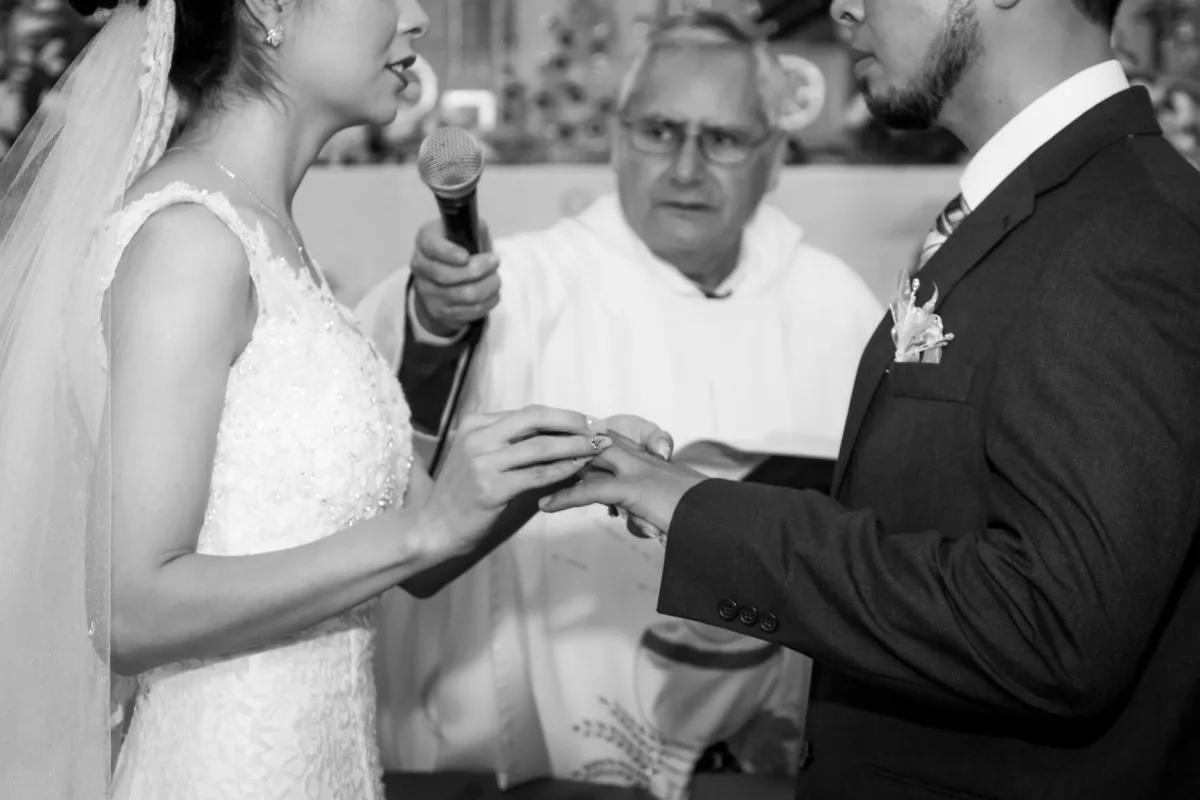
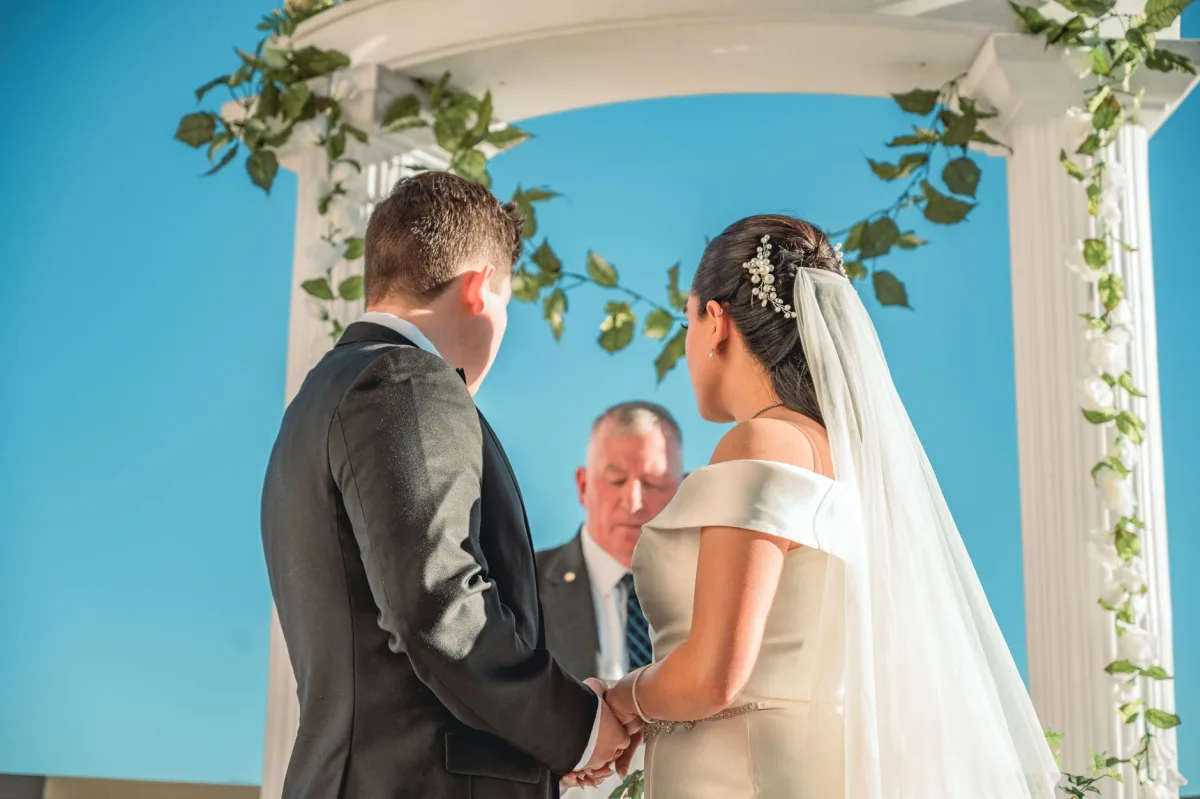
Ceremonies look different everywhere, but a surprising core recurs across cultures and centuries. Once you can see these elements, any ceremony, however unfamiliar, becomes readable.
The officiant
The person who leads and validates the ceremony: an officiant may be a priest, imam, rabbi, registrar, or civil celebrant, depending on the tradition and the law.
Consent
A declaration that both partners enter the marriage freely. This willing agreement is the legal and moral heart of the ceremony everywhere.
The vows
The promises the couple make to each other. A vow may be traditional and fixed or written by the couple themselves.
Symbols and the pronouncement
Rings, garlands, the seven steps, a shared cup, or a signed contract, followed by a formal declaration that the couple is now married.
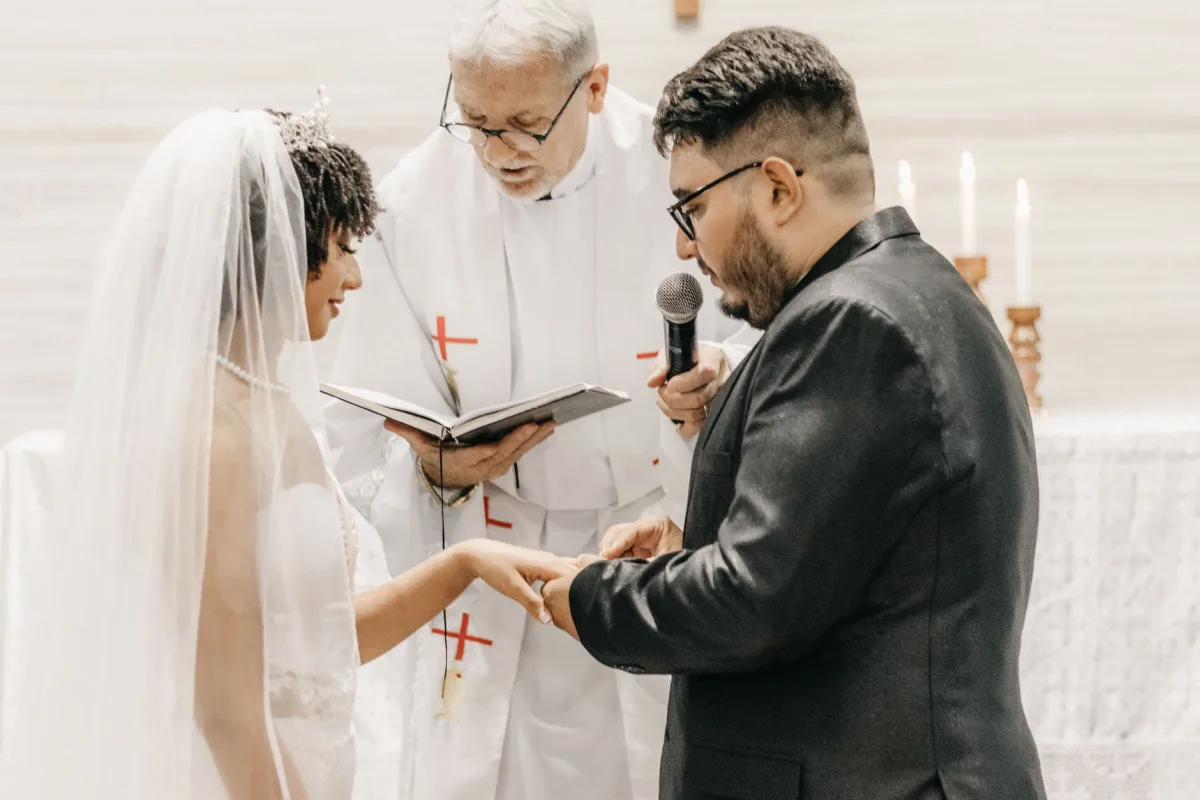
Notice how these map onto ceremonies you may know. In a Christian church wedding the officiant is a minister, consent is the "I do," the vows are spoken, rings are exchanged, and the couple is pronounced married. In a Hindu wedding the priest leads, and the vows are enacted through rituals such as the seven steps around the sacred fire. In a civil ceremony a registrar takes the consent and the couple signs the register. Different clothes, different words, same underlying architecture.
Religious ceremonies around the world
Religious marriage ceremonies are where the deepest cultural variety lives, and each tradition invests the union with its own meaning. A brief and respectful tour shows the range:
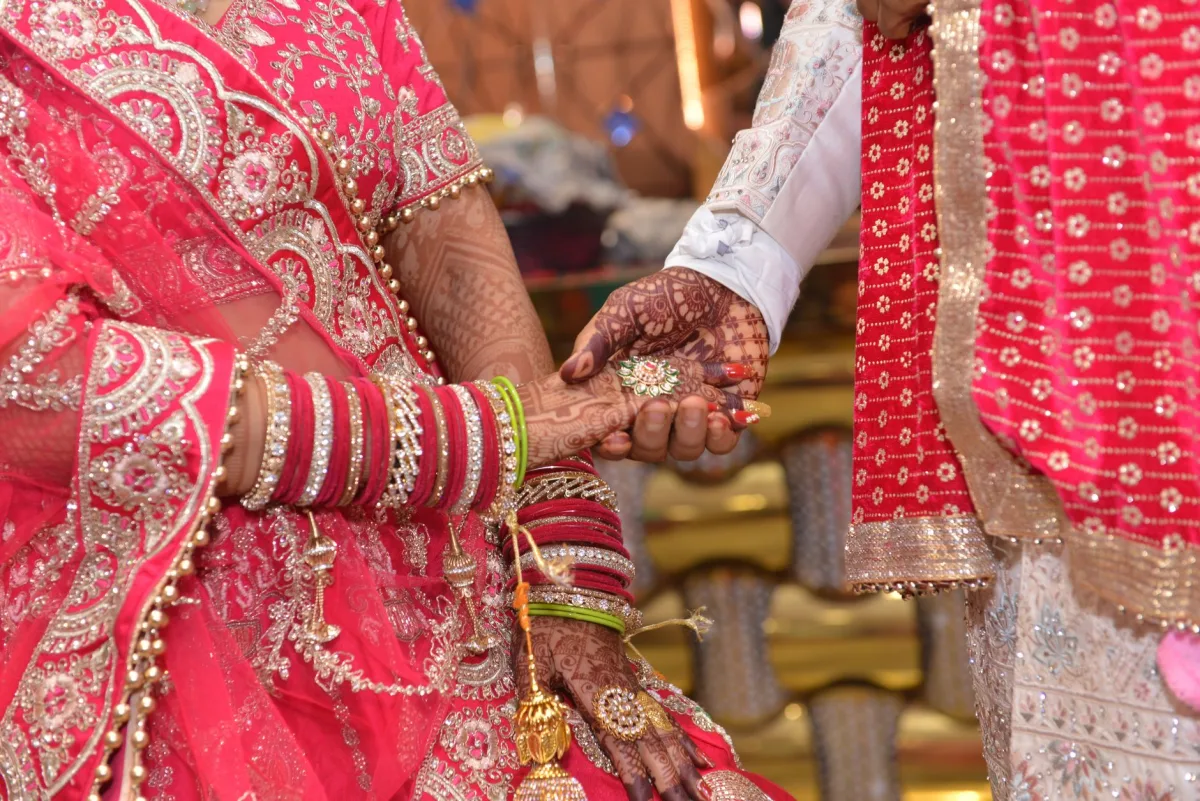
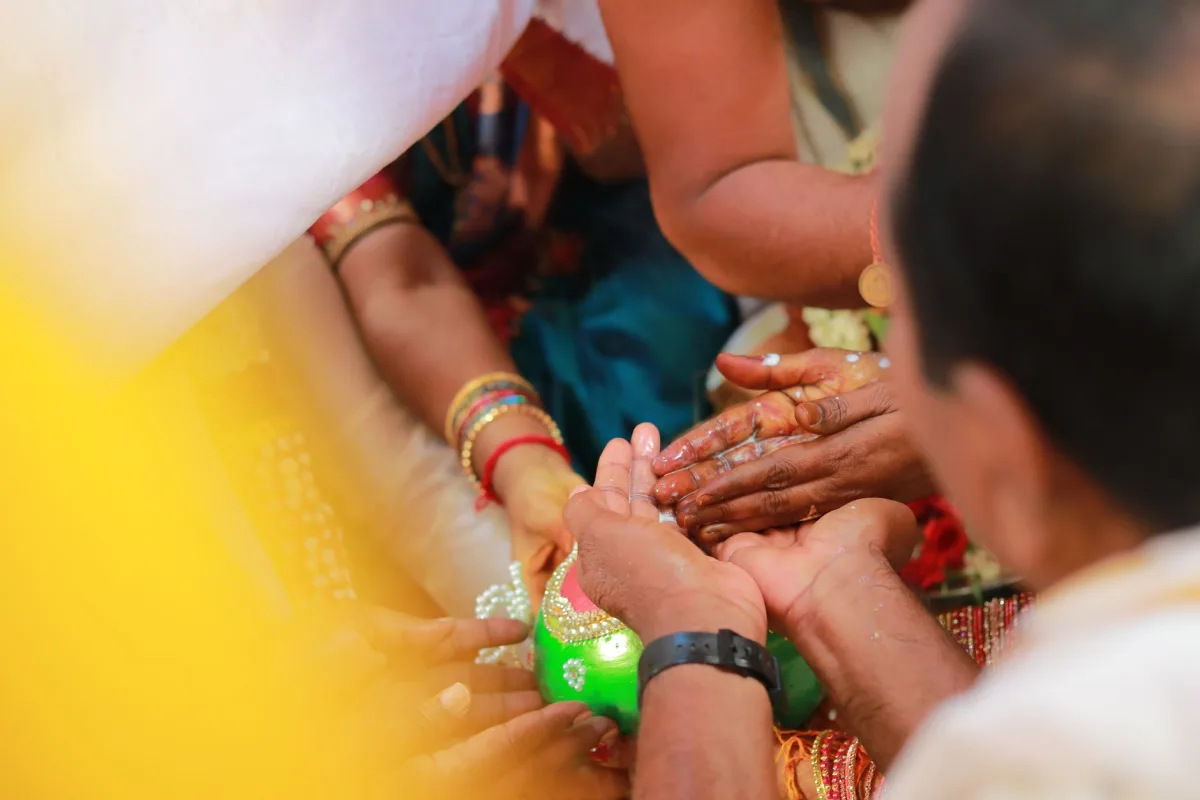
- Hindu ceremonies are often multi-day and rich in ritual, centred on rites such as the pheras, the circling of a sacred fire, and vows enacted through symbolic steps.
- Christian ceremonies typically take place in a church, led by a minister or priest, built around vows, the exchange of rings, and a blessing of the union.
- Muslim ceremonies centre on the nikah, a marriage contract witnessed and agreed, with the couple's consent and terms recorded.
- Jewish ceremonies are held under a canopy, the chuppah, and include the ketubah marriage contract and the breaking of a glass.
- Sikh ceremonies, the Anand Karaj, involve the couple circling the holy scripture as hymns are sung.
Each of these deserves study in its own right, and the details matter to the families who hold them. The point here is simply that a religious marriage ceremony fuses the universal elements, consent, vows, a leader, a pronouncement, with the specific rites and beliefs of a faith. Where a couple comes from two backgrounds, the ceremony often becomes a thoughtful blend, a theme our guide to inter caste marriage explores in more depth.
Civil and secular ceremonies
Not every marriage ceremony is religious. A civil ceremony is conducted by a state official such as a registrar and grants the legal status of marriage without a religious framework. For many couples it is the whole event; for others it is the legal step that sits alongside a separate cultural or religious celebration. Because it is often shorter and simpler, it appeals to couples who want the marriage without the liturgy, and it is the standard route where partners come from different faiths or none. Our overview of the court marriage covers the legal mechanics in detail.
Between the fully religious and the purely administrative sits the secular or celebrant-led ceremony, which has grown quickly in popularity. Here a professional celebrant crafts a personalised ceremony around the couple's story and values, with readings, rituals, and personally written vows, but without religious content. It offers the emotional depth of a traditional ceremony and the freedom of a blank page. In some places a celebrant-led ceremony is legally binding on its own; in others the couple pairs it with a brief civil signing to satisfy the law. Which is true depends entirely on your jurisdiction, so confirm it locally rather than assuming.
Planning a ceremony that is legal and meaningful
A good marriage ceremony balances two things that people often muddle: the legal requirements and the personal meaning. Handle them as separate tracks and both improve. On the legal side, find out exactly what your jurisdiction requires, who may officiate, what notice or licence you need, how many witnesses, and what must be signed and when. This is unglamorous but decisive; a moving ceremony that fails a legal formality leaves a couple believing they are married when they are not. Build these checks into your wider wedding planning checklist early rather than late.
On the meaning side, the work is to make the ceremony feel like yours. Choose or write vows that sound like the two of you, select readings and music that carry weight, and fold in the family and cultural rituals that matter, whether that is a parent's blessing, a shared tradition, or a symbolic act you both love. Keep the ceremony well paced, brief the officiant thoroughly, and think about the guests' experience, warmth and clarity beat length. However you meet your partner, and a modern platform such as matrimony360 is built to help serious, marriage-minded couples and families do exactly that, the ceremony is where two lives become formally joined, so it deserves as much thought as any other part of the day.
Frequently asked questions
What is the difference between a wedding and a marriage ceremony?
The terms overlap, but there is a useful distinction. The marriage ceremony is the specific ritual that makes a couple married, the officiant, consent, vows, and pronouncement. The wedding is the broader event that surrounds it, including the ceremony plus the reception and celebrations. Put simply, the ceremony is the act; the wedding is the whole day built around it.
What are the essential parts of a marriage ceremony?
Most ceremonies, across cultures, share a core: an officiant who leads and validates the union, a declaration of consent from both partners, vows or promises, usually an exchange of rings or another symbol, and a formal pronouncement that the couple is now married. The specific rituals differ enormously, but this underlying structure recurs almost everywhere.
Does a marriage ceremony have to be religious to be legal?
No. A civil ceremony conducted by a registrar or state official is fully legal without any religious element, and in many places a secular celebrant-led ceremony can be binding too. Conversely, in some jurisdictions a religious ceremony alone is not legally sufficient and must be paired with civil registration. What counts as legal depends entirely on where you marry, so always check locally.
Can we write our own wedding vows?
Very often, yes, though it depends on the type of ceremony. Civil and secular celebrant-led ceremonies usually welcome personally written vows, while some religious ceremonies require set liturgical wording. Many couples keep a required legal or religious form and add personal vows alongside it. Check with your officiant early so you know what is permitted before you write.
How far ahead should we plan the ceremony?
Begin the legal side as soon as you set a date, since notice periods, licences, and officiant availability can take weeks or months. The personal side, vows, readings, rituals, can come together later, but should be settled well before the day so nothing is rushed. Treating the ceremony as seriously as the reception, rather than an afterthought, is the single best habit.