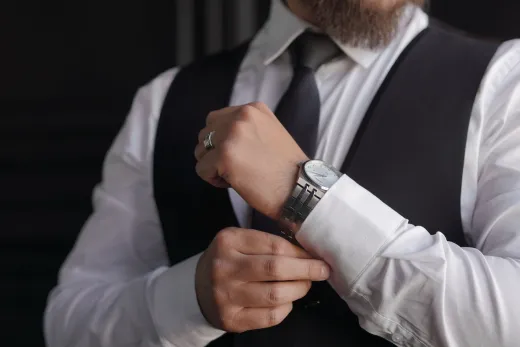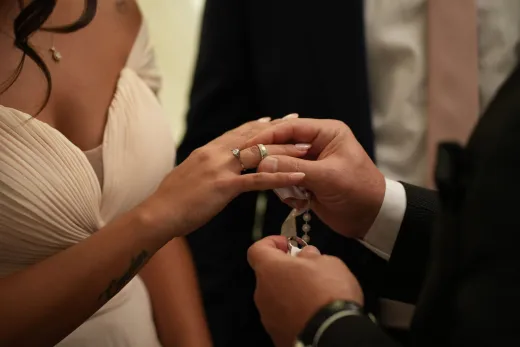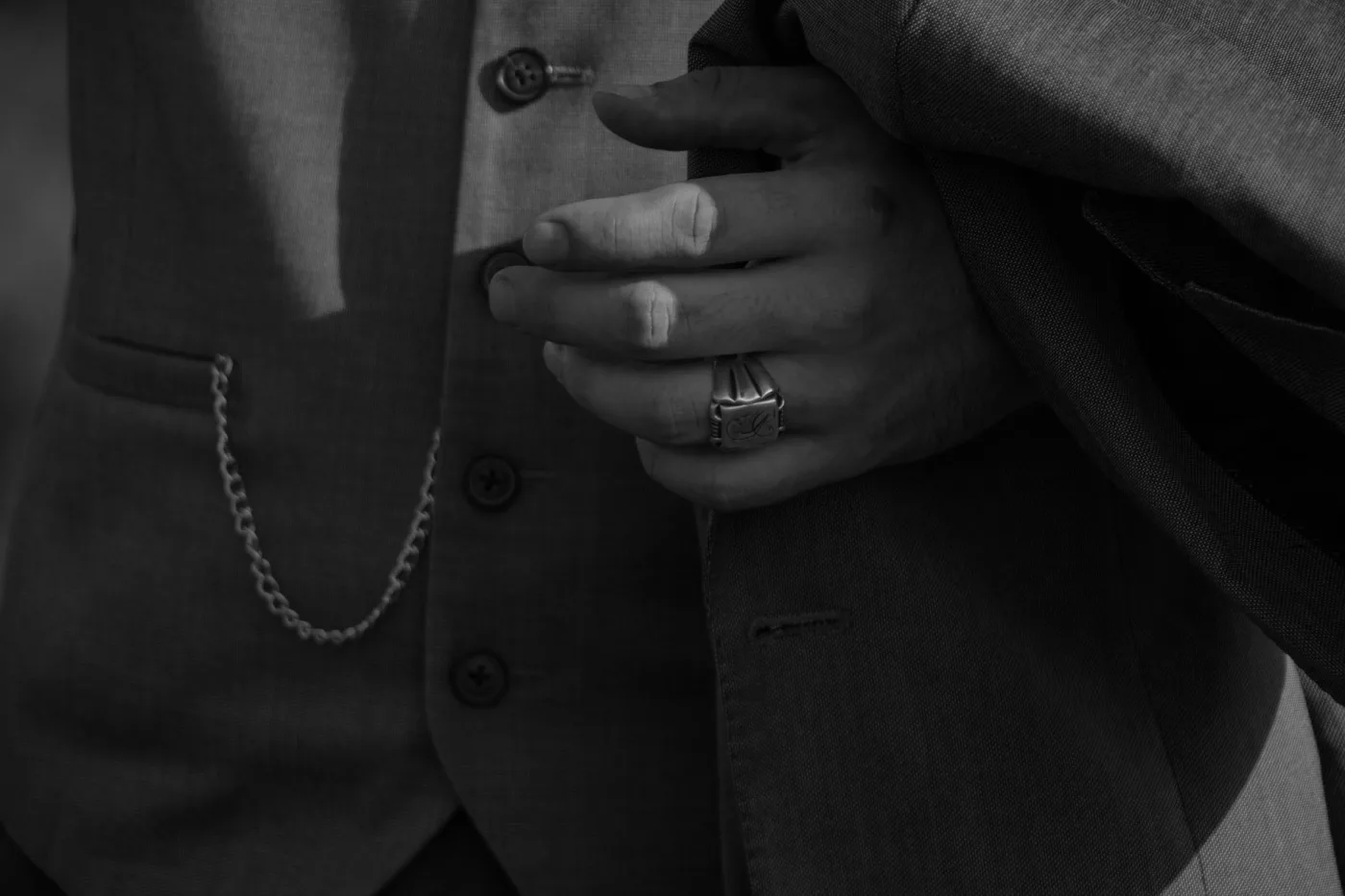
Mens Wedding Rings: The Complete Guide
Metal is only half the choice. This is the design half: finishes, profiles, edges, stones, inlays and engraving, and how to pick a look that suits a man taste and hand.
Once a man has settled which metal his ring is made of, a second question opens up that is every bit as personal: what should it actually look like? Two bands cast from the very same gold can read as completely different objects depending on how the surface is finished, how the edges are shaped, whether a stone sits in the metal, and what has been inlaid or engraved into it. This guide is about that second decision, the look and the design, and it deliberately leaves the metal question to its own companion piece. We will walk through finishes, profiles and edge detailing, the stones men actually wear, the growing world of inlays and unusual materials, personalisation through engraving, and finally how to pick a style that suits both your taste and the shape of your hand.
The short version
- Style is separate from metal. Finish, profile, stones and inlays all sit on top of the material choice.
- Finish sets the mood. Polished reads formal, matte and brushed read modern, hammered reads handmade.
- Profile is felt daily. Flat, domed, beveled and court shapes change both the look and the comfort.
- Men wear stones too. Flush-set diamonds and black diamonds add detail without turning a band flashy.
- Inlays personalise. Wood, carbon fibre, meteorite and antler make a ring unmistakably yours.
Style is a separate decision from metal
It is worth being clear about the division of labour before we start. The metal a band is made from decides how it ages, whether it can be resized, how heavy it feels and what it costs. That is a big subject in its own right, and our guide to male wedding bands covers it in full, with a deeper dive into the classic option in men's gold wedding bands. What this article is about is everything you choose once the metal is settled: the surface, the shape, the detailing and the personal touches. Those are the elements that turn a plain circle of metal into a ring that looks like it belongs to you and no one else.
That freedom is a fairly modern luxury. As the Wikipedia entry on wedding rings records, in the United States and Canada wedding rings were initially worn only by wives and became customary for both spouses during the twentieth century. Because the men's tradition is younger, it carries far less rigid convention, and that is precisely why the design market for men is now so open. A groom can choose a mirror-polished classic, a stone-cold matte band or a slab of meteorite set into titanium, and every one of those reads as entirely appropriate.
Finishes: the surface changes everything
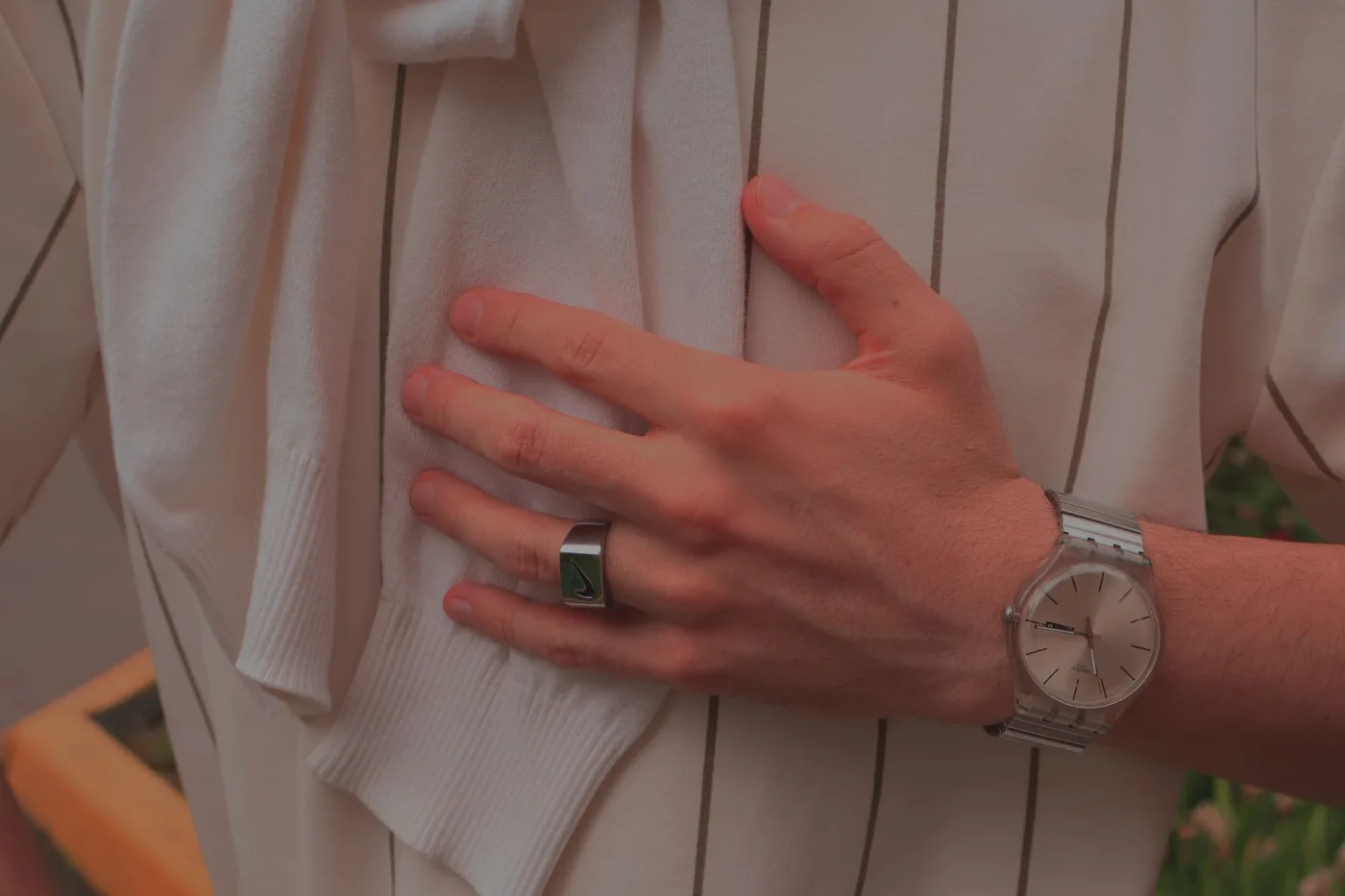
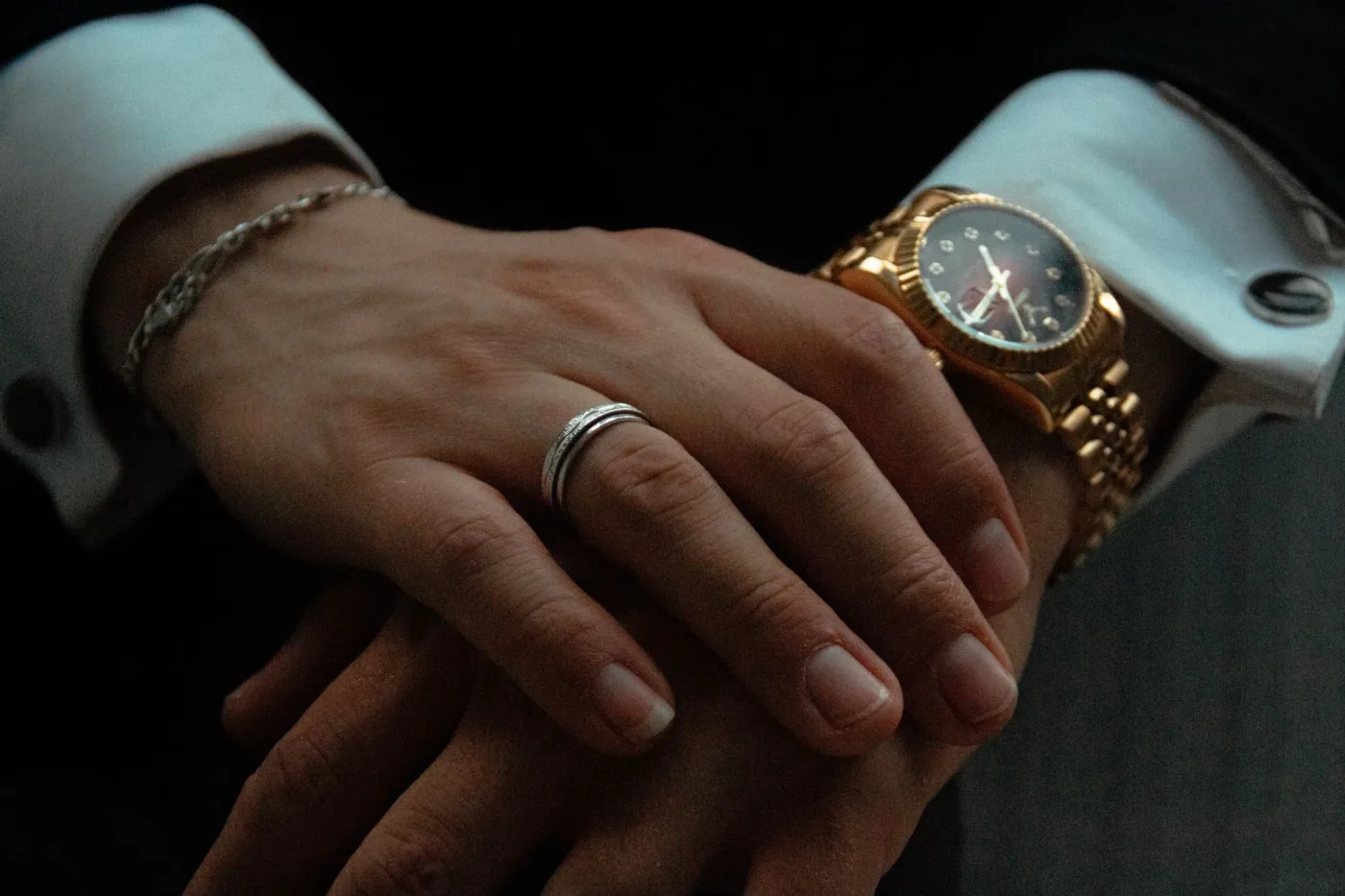
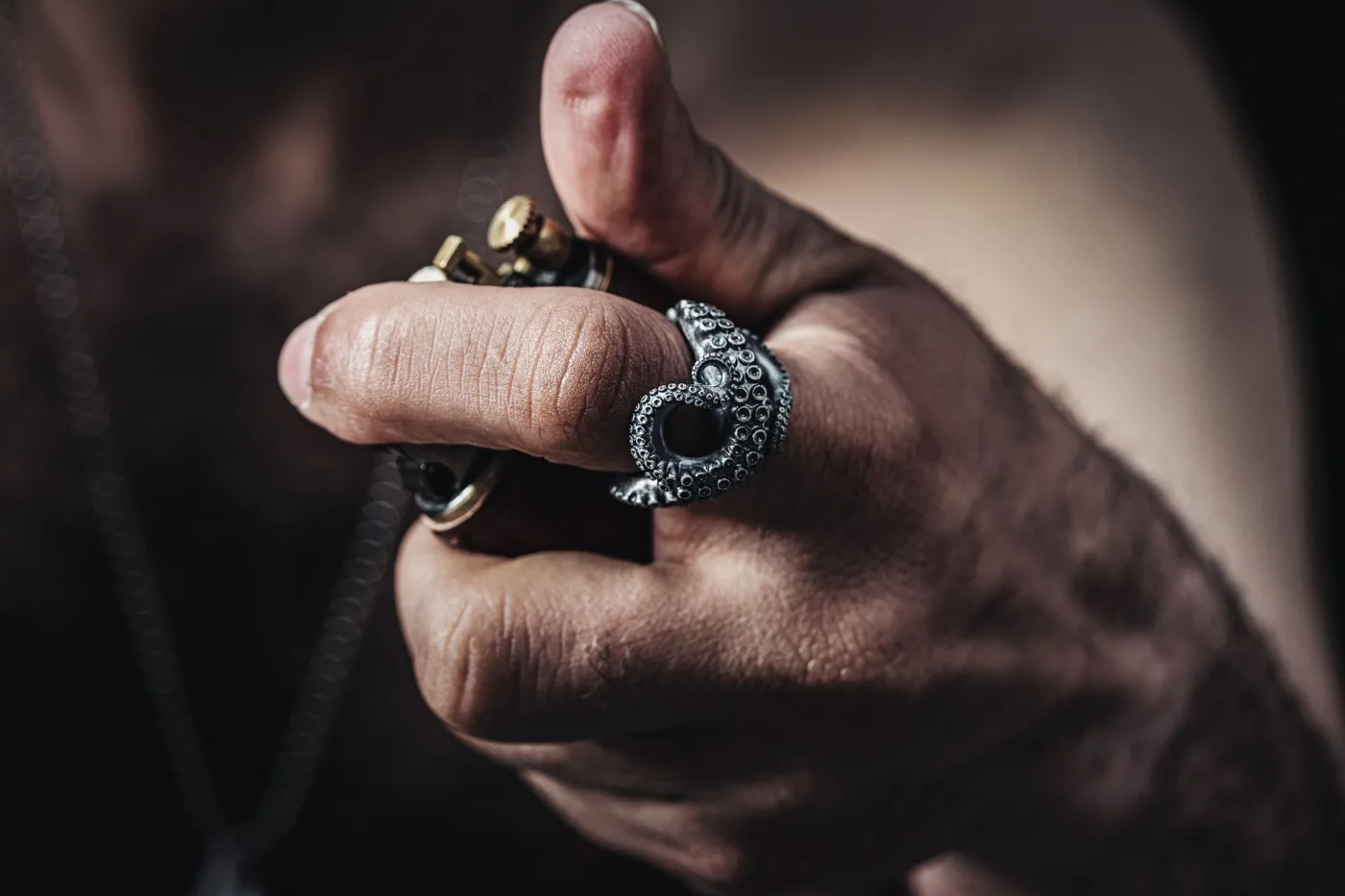
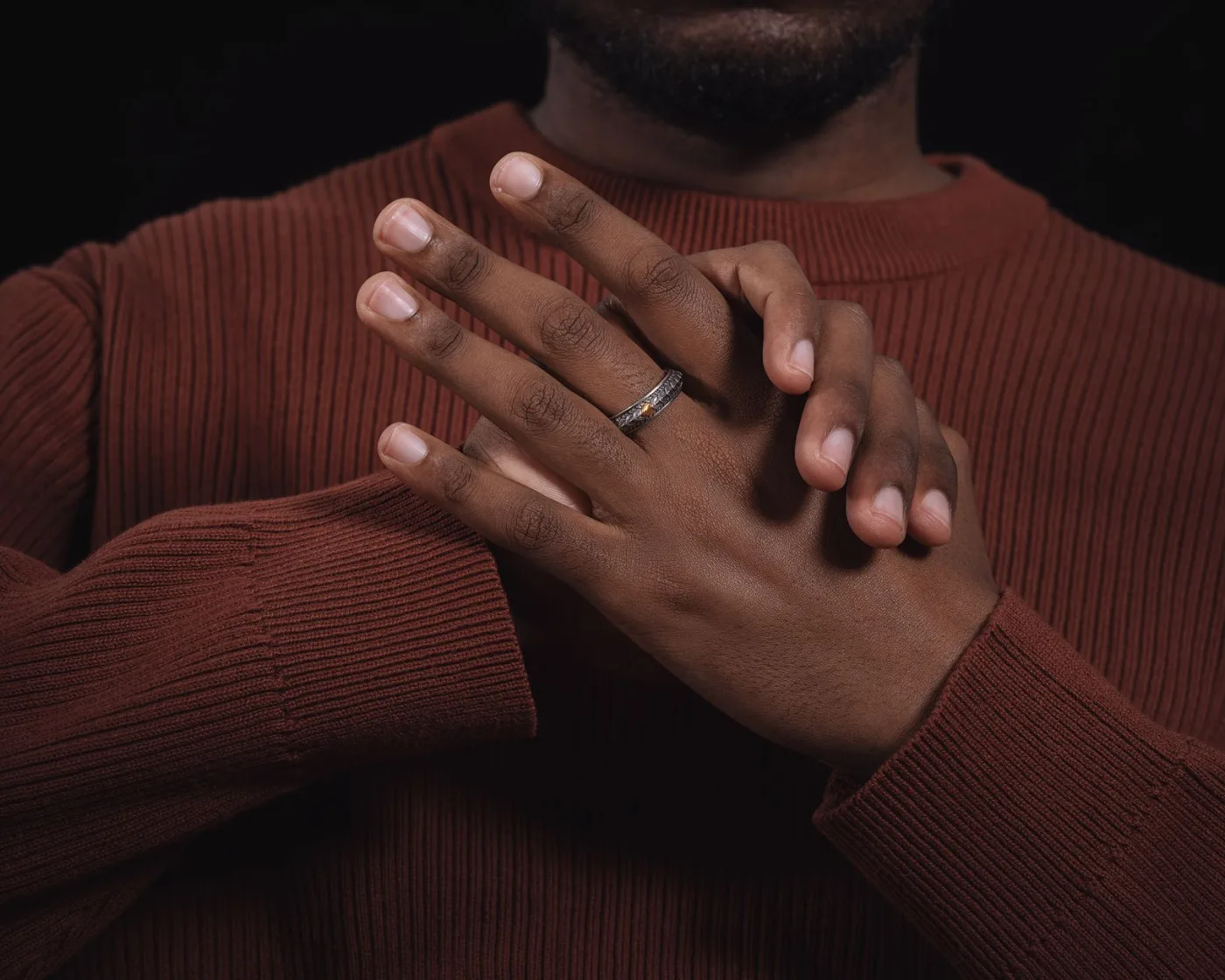
The finish is the texture and reflectivity of the metal's surface, and it is the single biggest lever on how a ring feels to look at. The same band in high polish and in matte can look like it came from two different centuries. Finishes also age differently: a mirror shine shows every scuff, while a brushed or matte surface hides daily wear and can be refreshed at home. Here are the five you will meet most often.
Polished
A mirror-bright, reflective surface. The traditional, formal, dressy look. Shows fine scratches but polishes back easily.
Matte / satin
A soft, low-sheen surface with no reflection. Modern and understated, and forgiving of everyday marks.
Brushed
Fine parallel lines drawn along the band. A muted, textured look that sits between polished and matte and hides wear well.
Hammered
A faceted, dimpled surface beaten by hand. Catches light in scattered sparkles and reads artisanal and rugged.
Sandblasted
A fine, even, frosted texture created by blasting the surface with grit. Deeper and grainier than matte, very contemporary.
You are not limited to one finish across the whole ring. A very popular men's look is a two-tone or mixed-finish band: a brushed or matte centre with polished bevelled edges, so the bright edges frame a quiet middle. That contrast adds visual interest and depth without any stones at all, and it is one of the most versatile choices a man can make because it flatters almost every hand and outfit.
Profiles and edges: the shape you feel
Where finish is what you see, profile is what you feel. The profile is the cross-section of the band, the shape of the metal as it curves around your finger, and it changes both the silhouette from the outside and the comfort against your skin. Edge detailing then refines the outline further. These are quiet decisions that men often skip past, and yet they are worn every single day, so they deserve a moment's thought.
Four profiles in cross-section. A flat band reads modern and architectural; domed and court feel classic and comfortable; beveled edges, shown in accent, add a bright facet that frames the face of the ring.
A flat profile has square inner and outer edges and a crisp, architectural, distinctly modern feel. A domed profile rounds the outside into a gentle curve for a classic, timeless silhouette that flatters most fingers. A court profile is rounded on both the outside and the inside, historically the most comfortable traditional shape, since it has no hard edges touching your skin. A beveled edge takes a flat or domed band and chamfers the corners at an angle, creating two bright facets that frame the face of the ring and make even a plain band look considered. Edge detailing does not stop there: milgrain adds a fine beaded border for a vintage note, stepped edges create a layered industrial look, and a rolled edge softens a flat band without fully doming it.
Finishes and profiles at a glance
The table below pulls the two together so you can shortlist quickly. Think of it as a way to pair a surface with a shape and see the overall mood that results, then take two or three combinations to try in person. There are no prices here on purpose, because finish and profile move the cost far less than the metal and any stones do.
| Feature | Type | Reads as | Hides wear? | Best for |
|---|---|---|---|---|
| Finish | Polished | Formal, classic, bright | No | Dressy taste, willing to re-polish |
| Finish | Matte / satin | Modern, quiet | Yes | Understated everyday wear |
| Finish | Brushed | Textured, muted | Yes | A middle path with grain |
| Finish | Hammered | Handmade, rugged | Yes | Artisanal, outdoorsy style |
| Finish | Sandblasted | Frosted, contemporary | Yes | Bold modern statement |
| Profile | Flat | Sharp, architectural | - | Modern minimalists |
| Profile | Domed | Classic, timeless | - | Most hands and tastes |
| Profile | Court | Traditional, soft | - | Maximum daily comfort |
| Profile | Beveled | Refined, faceted | - | Plain bands wanting detail |
The pairing most men overlook: a matte or brushed centre with polished beveled edges gives you the best of both worlds. The low-sheen middle hides the scuffs of daily life, while the bright chamfered edges keep the ring looking finished and deliberate. It is the single most flattering, low-maintenance combination for a man who wants his band to look sharp without fuss, and it works in every metal.
Stones for men: subtle by default
Plenty of men assume stones are only for a bride's ring, but a small, well-set diamond can add quiet detail to a man's band without ever tipping into flashy. The trick is in the setting. Where a woman's ring often raises the stone up to catch light, a man's ring usually sets it down flush, so the surface stays smooth and snag-free and the stone reads as a glint rather than a centrepiece.
The classic choice is a diamond, valued as much for its toughness as its sparkle. The Wikipedia entry on diamond notes it is the hardest natural material, rating 10 on the Mohs scale, which is exactly why it survives decades of daily wear on a hand better than softer coloured gemstones. For men who want the detail without the traditional white sparkle, a black diamond is an increasingly popular alternative. The same source explains that so-called black diamonds, technically carbonado, are not truly black but are full of dark inclusions that give them their moody, matte-dark appearance, and that carbonado is actually tougher than ordinary single-crystal diamond. Set flush into a dark or brushed band, a black diamond adds presence without shine, which suits a lot of men far better than a white stone.
Flush / gypsy set
The stone sits level with the surface, protected and snag-free. The default men's setting.
Channel accents
A row of tiny diamonds sunk into a groove along the band. Detail that stays low-profile.
Single black diamond
One dark stone, flush set. Adds a focal point with no sparkle, ideal for darker bands.
Bezel accent
A stone rimmed fully in metal. Sturdy, modern and secure against knocks.
Inlays and unusual materials
The most distinctive men's rings of the last decade have come from inlays: a channel cut into the band and filled with a contrasting material. This is where a wedding ring becomes genuinely personal, because the inlay can carry meaning, texture and colour that no plain metal can. It also lets a man wear something with a story, which is a large part of the appeal.
Wood inlays, often in koa, rosewood or walnut, bring warmth and grain to a metal band, and koa in particular is prized for its rich, rippling figure. Carbon fibre is the modern-tech option: light, jet black and woven with a subtle geometric weave that reads engineered and contemporary. Antler and bone appeal to outdoorsmen and hunters and can even be sourced from a personally significant animal. The showpiece, though, is meteorite. Slices of iron meteorite are inlaid into a band and acid-etched to reveal a crystalline lattice unique to space metal. As the Wikipedia entry on meteorites explains, iron meteorites are composed of iron-nickel alloys thought to come from the molten cores of ancient planetesimals, and material from the Gibeon meteorite of Namibia is among the most commonly used in jewellery. Wearing a band inlaid with metal that is billions of years old, older than the Earth itself, is about as personal a story as a ring can carry.
One practical caution on natural inlays: wood, antler and bone are organic and need a little more care than metal. They dislike prolonged soaking, harsh chemicals and extreme dryness, and they may need occasional re-oiling to stay looking their best. Meteorite, being iron, can rust if neglected and is usually sealed to protect it. None of this should put you off, but if you want a ring you can wear hard and forget about, a full-metal band with a finish and profile you love may serve you better than an organic inlay.
Engraving and personalisation
Even the plainest band becomes one of a kind the moment it is engraved. Interior engraving is the classic choice: a hidden message against the finger that only the wearer knows is there. The wedding ring tradition has long included engraving spouse names, the wedding date or a meaningful phrase inside the band, and that remains the most requested personalisation of all. Common choices include initials, the date in numerals or Roman numerals, coordinates of where you met or married, a line from your vows, or a short phrase in a language that means something to the two of you.
Beyond the hidden interior, men increasingly personalise the exterior too. A fingerprint engraving presses a partner's actual fingerprint into the metal for a texture no one else can duplicate. A sound wave of a spoken phrase can be laser-etched along the band. A handwriting engraving reproduces a loved one's actual writing. And for the plainest possible statement of individuality, a section of the band can be left with a custom finish or a single milgrain line. The point of all of it is the same: to take a shape that is, by design, identical to millions of others and make it unmistakably yours.
Style by personality
With the vocabulary in hand, the fastest way to a decision is to start from the man rather than the ring. A wedding band is worn for a lifetime, so it should feel like an extension of his taste, not a costume he is trying on. Find the description that fits and let it point you at a direction.
The minimalist
Wants nothing fussy. A flat or domed band in a matte or satin finish, no stones, perhaps one hidden engraving. Quiet and timeless.
The classicist
Loves tradition. A domed or court profile in high polish, maybe a single flush-set diamond. The look a grandfather would recognise.
The modernist
Drawn to tech and edges. A flat profile, sandblasted or carbon-fibre inlay, sharp beveled corners. Engineered and contemporary.
The outdoorsman
Wants a ring with a story from nature. A hammered finish or a wood, antler or meteorite inlay. Rugged and personal.
The individualist
Refuses the ordinary. A black diamond, a mixed-finish two-tone band, a fingerprint or sound-wave engraving. Unmistakably his.
The understated dresser
Sharp but never loud. A brushed centre with polished beveled edges, no stones. Refined detail that reads well in any setting.
How to pick a style that suits your hand
Taste comes first, but the hand has a vote too, because the same ring looks different on different fingers. A few simple rules of proportion help a band flatter rather than fight the hand it sits on, and trying styles on is the only way to be sure, since a ring almost always looks different on a finger than it does in a photograph.
- Slimmer or shorter fingers are flattered by narrower bands, roughly 4mm to 6mm, and by rounded domed or court profiles that do not visually chop the finger into segments.
- Larger hands and longer fingers can carry wider bands, 7mm to 8mm and above, and bolder flat profiles or heavy inlays without looking overwhelmed.
- An active or hands-on wearer is better served by a flush-set stone rather than a raised one, and by a matte or brushed finish that hides the inevitable marks.
- If in doubt, go quieter. A style that feels a touch understated in the shop tends to feel exactly right after a year on the hand, whereas a bold flourish can start to grate.
Remember too that style and metal interact. A high polish sings on platinum and white gold, a warm hammered finish suits yellow and rose gold, and dark inlays like meteorite and carbon fibre look their best against grey metals such as titanium and tantalum. If you have not yet locked down the material, read the overview in our guide to choosing wedding rings, which sets the scene for both partners, and then return here to settle the look. Style and metal are a conversation, and the most satisfying rings are the ones where the two were chosen together.
Whatever you land on, resist the urge to rush the final choice. The design details covered here, the finish, the profile, the edge, the stone, the inlay and the engraving, are what make a band feel like his rather than a generic circle of metal. Try a shortlist on, live with photographs of your favourites for a few days, and choose the one that still looks right once the novelty has worn off.
Frequently asked questions
What is the most popular style of men's wedding ring?
The most consistently popular men's style is a domed band with a brushed or matte centre and polished beveled edges, in a width of around 6mm. It is popular because it flatters almost every hand, the low-sheen centre hides daily scratches while the bright edges keep it looking finished, and it suits both formal and everyday wear. Beyond that safe favourite, taste splits widely: classic high-polish bands, modern flat sandblasted bands and inlaid rings all have devoted followings.
Can a man's wedding ring have a diamond?
Yes, and it is increasingly common. Men's rings usually use a small stone set flush with the surface, so it sits smooth and snag-free rather than raised up. A single flush-set diamond or a discreet row of channel-set accents adds detail without looking flashy. Diamonds suit daily wear because they are the hardest natural material and resist scratching, and men who prefer a darker look often choose a black diamond, which reads as moody detail rather than sparkle.
What finish hides scratches best on a men's wedding band?
Matte, satin, brushed, hammered and sandblasted finishes all hide daily wear far better than a high polish, because their texture disguises fine scratches that would show clearly on a mirror surface. A hammered finish is especially forgiving, since new marks simply blend into the existing texture. A polished finish looks the sharpest when new but shows every scuff, though it can be re-polished. For a ring you want to look good with minimal fuss, choose a textured finish.
Are meteorite or wood inlay rings durable enough for daily wear?
They can be, but they need a little more care than a plain metal band. Meteorite is iron and can rust if neglected, so it is usually sealed and should be kept dry. Wood, antler and bone are organic and dislike prolonged soaking, harsh chemicals and extreme dryness, and may need occasional re-oiling. Set into a durable metal band and looked after sensibly, both last well, but a man who wants a ring he can wear hard and forget may prefer full metal with a textured finish.
How should I choose a men's ring style to suit my hand?
Match the proportions of the ring to the proportions of your hand. Slimmer or shorter fingers are flattered by narrower bands of about 4mm to 6mm and by rounded domed or court profiles. Larger hands and longer fingers can carry wider bands of 7mm to 8mm and bolder flat profiles or heavy inlays. Active wearers should favour flush-set stones and textured finishes. Above all, try styles on in person, since a ring almost always looks different on a finger than it does in a photograph.