Silver Wedding Rings: The Complete Guide
Sterling silver as a wedding-ring metal: tarnish, durability, care and how it compares with white gold and platinum, plus the silver anniversary myth.
Silver wedding rings are the most affordable route into a cool, white-metal look, and they are far more considered a choice than a simple compromise. Sterling silver has a bright, classic shine, a long history in jewellery, and a price that leaves room in the budget for the rest of the wedding. It also has real quirks: it is softer than gold and it tarnishes, so it rewards owners who know what they are buying. This guide covers what silver actually is, how it behaves on a hand worn every day, how to care for it, and when a harder white metal makes more sense. It also clears up the common mix-up with the "silver wedding" anniversary.
The short version
- Sterling silver is 92.5 percent silver, bright and beautiful but softer than gold and prone to tarnish.
- It is the most affordable white metal, which makes it ideal for a first ring, a budget, or a backup band.
- Tarnish is cosmetic and removable, not damage; regular wear and simple cleaning keep silver bright.
- For a lifetime daily band, weigh silver against white gold, platinum or palladium, which resist wear and tarnish better.
What silver wedding rings are made of
Pure silver is too soft to hold a ring's shape, so jewellery silver is always an alloy. The standard is sterling silver, which is 92.5 percent silver mixed with 7.5 percent of another metal, usually copper, to add strength. That is where the "925" stamp inside a silver ring comes from: it is the fineness mark confirming the sterling standard. The copper is what makes the ring wearable, but it is also, as we will see, part of why silver tarnishes.
You will occasionally meet other grades. Argentium and similar modern alloys swap some copper for germanium to resist tarnish better, and "fine silver" at 99.9 percent purity exists but is too soft for a practical band. For almost every silver wedding ring on sale, sterling is what you are buying. For how silver sits among the other ring metals, our pillar on wedding rings puts gold, platinum and silver side by side.
The honest pros and cons
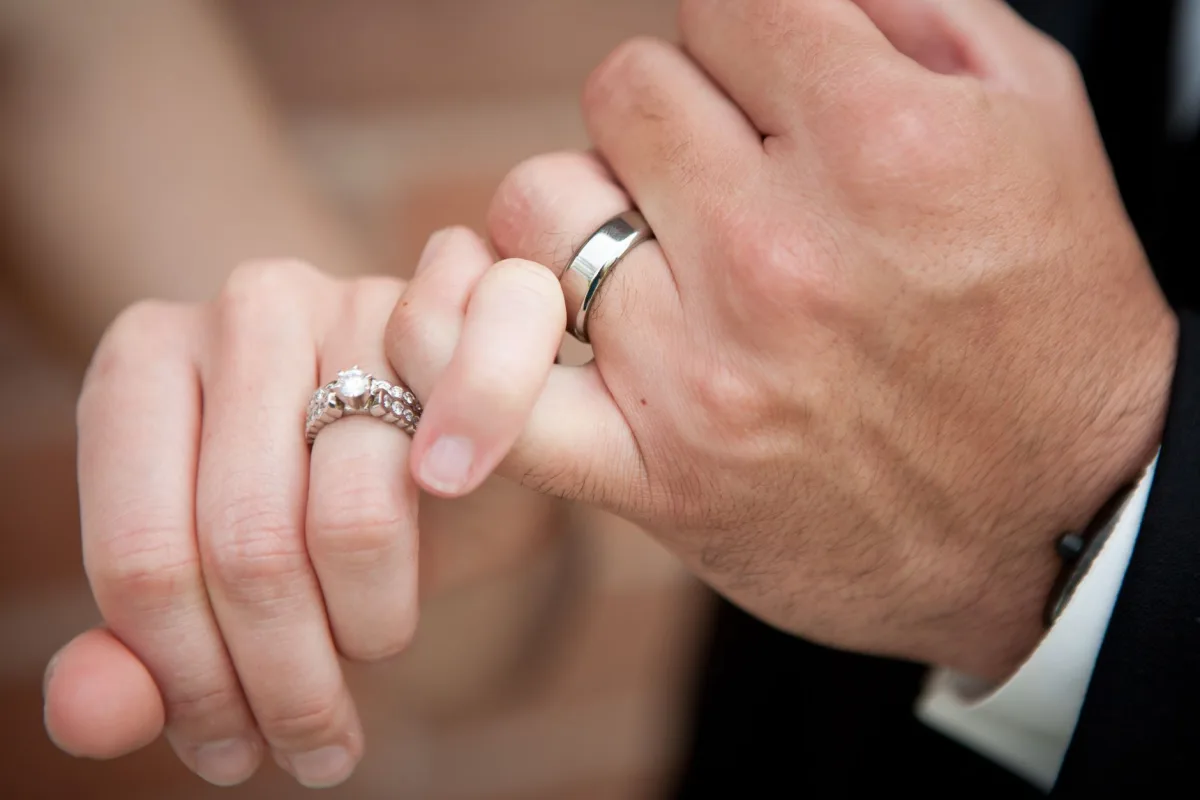
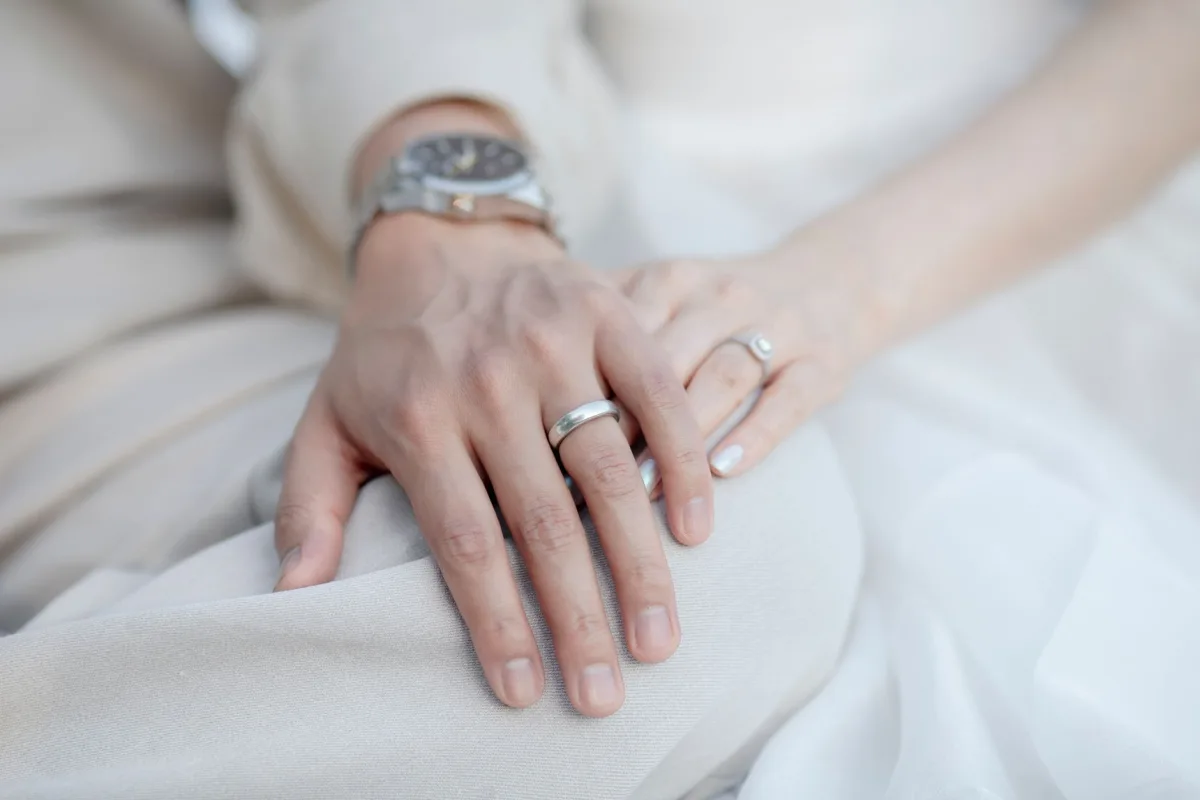
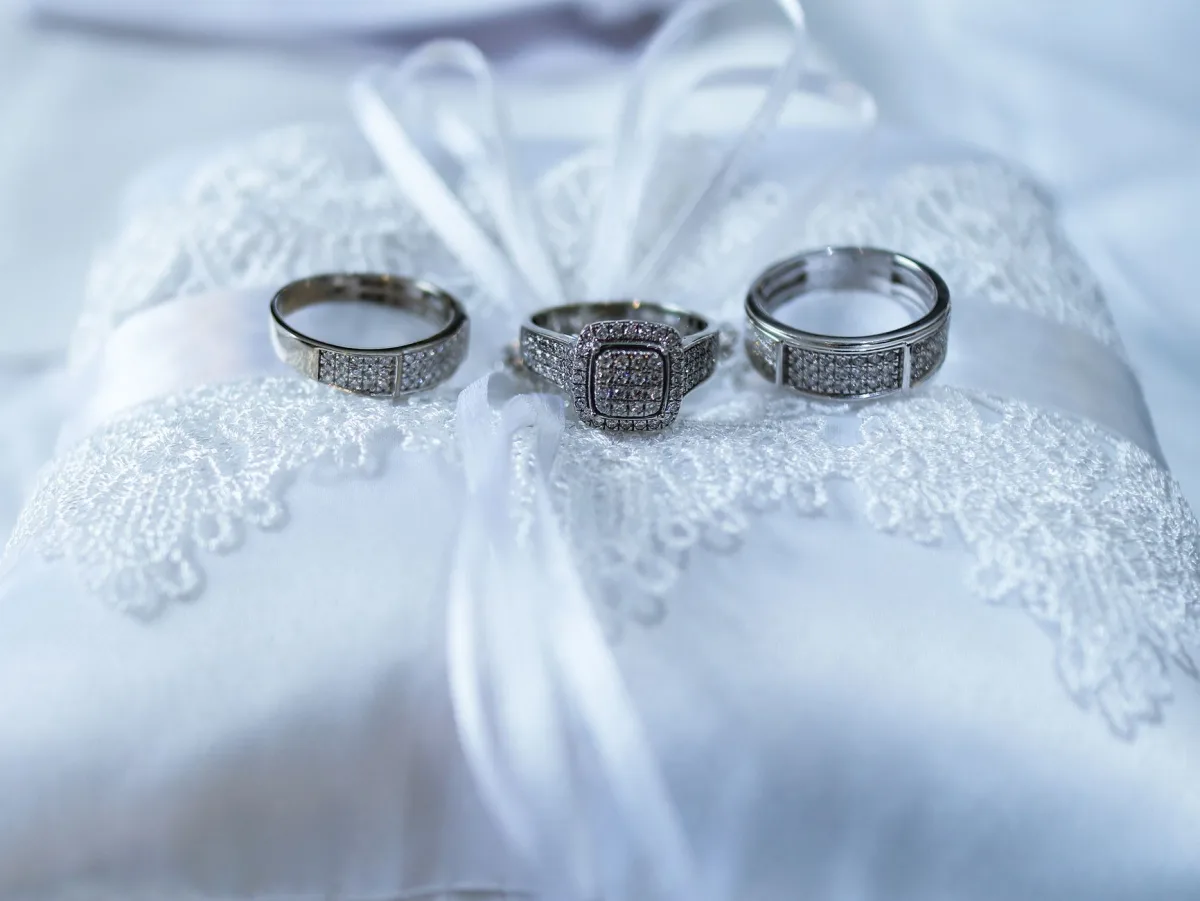
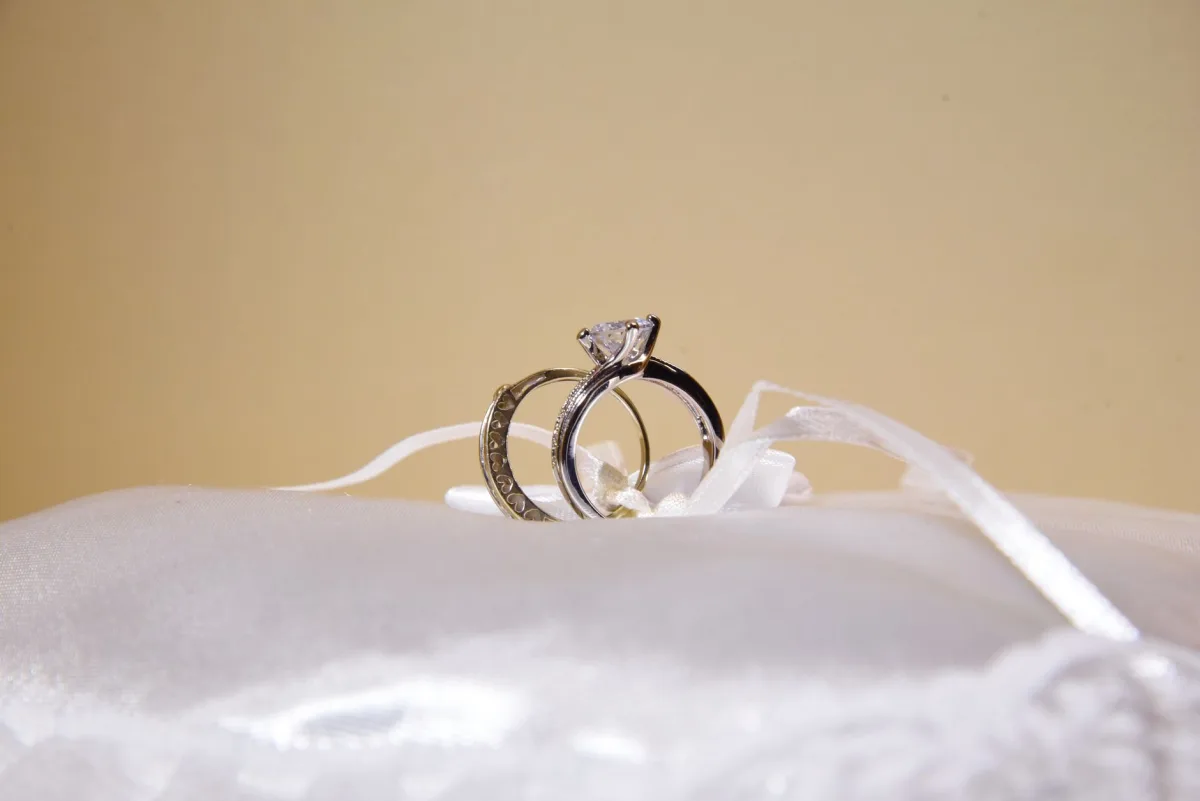
Silver earns its place through a clear set of strengths, balanced by limitations worth knowing before you commit to wearing one every day.
Affordability
By a wide margin the cheapest of the precious white metals, so it delivers a real jewellery look for a modest outlay.
Bright, classic colour
A cool, mirror-white shine that suits cooler skin tones and pairs cleanly with diamonds and cool-toned stones.
Softness
Softer than gold or platinum, so it scratches and can bend more easily over years of hard daily wear.
Tarnish
The copper in the alloy reacts with air and moisture, dulling the surface over time. Cosmetic and removable, but a recurring chore.
Put simply, silver is the metal to choose when budget matters, when you want a white look without a white-gold or platinum price, or when the ring is a secondary or travel band rather than the one heavy heirloom. It is a less obvious pick for someone who wants a single band to survive fifty years of daily manual work untouched, where a harder metal repays its higher cost. If affordability is the driving factor, our guide to cheap wedding rings lays out the full range of budget options.
Understanding tarnish
Tarnish is the single fact that most changes how people feel about silver, so it is worth understanding rather than fearing. Tarnish is a thin surface layer that forms when the copper in sterling silver reacts with sulphur compounds in air, water, cosmetics and even skin. It shows as a yellowing and then darkening of the surface. Crucially, it is not corrosion eating into the metal and it is not damage: it is a surface film that polishes straight off, leaving the silver as bright as before.
A helpful quirk is that a ring worn constantly tarnishes more slowly, because the gentle friction of daily wear keeps the surface polished. Silver left sitting in a drawer, exposed to humid air, tarnishes faster. So the everyday wedding band you never take off is often the piece of silver that stays brightest with the least effort. When it does dull, a silver polishing cloth or a warm bath of mild soapy water and a soft brush restores it in minutes.
Caring for a silver wedding ring
Silver rewards a few simple habits, none of them onerous.
- Wear it often. Counterintuitive but true: regular wear slows tarnish by keeping the surface burnished.
- Take it off for chemicals. Chlorine, bleach, and sulphur-rich products such as some cosmetics and even certain foods accelerate tarnish and can pit the metal.
- Store it dry and airtight. When not worn, keep it in a sealed bag or a lined box, ideally with an anti-tarnish strip, away from humidity.
- Clean gently. A silver cloth or warm soapy water and a soft brush is enough. Avoid abrasive pastes on any stones or fine detail.
- Have it checked. Because silver is soft, a jeweller should look over any stone settings periodically, as prongs can loosen faster than in a harder metal.
Done as routine, this keeps a silver ring looking its best for years. The effort is real but small, and for many owners it is a fair trade for the price and the colour.
Silver against the harder white metals
If you love the white look but want to weigh durability, three metals sit above silver, each at a higher price.
White gold
Gold alloyed white and usually rhodium-plated. Harder and more valuable than silver, though the plating needs periodic refreshing.
Platinum
Naturally white, dense, hypoallergenic and highly durable. It does not tarnish and wears to a soft patina, at a premium price.
Palladium
A lighter platinum-group metal, naturally white and tarnish-resistant, often cheaper than platinum but pricier than silver.
Sterling silver
The most affordable of the group, bright and classic, but softer and tarnish-prone. Best for budget, secondary or first rings.
The honest summary: if you want a permanent, low-maintenance white band and the budget stretches, platinum or white gold repay the cost. If budget leads, or the ring is a starter or secondary band, silver gives you the look now with the option to upgrade later. Our guides to gold wedding rings and platinum wedding rings cover the alternatives in depth, and matrimony360 exists to help couples make these trade-offs calmly.
Silver rings and the "silver wedding" anniversary
One common source of confusion is worth clearing up, because the phrase "silver wedding" sends people looking for the wrong thing. A "silver wedding" does not mean a wedding where silver rings are exchanged. It refers to the twenty-fifth wedding anniversary, traditionally associated with silver gifts. A couple celebrating twenty-five years might well mark it with a silver anniversary ring or an eternity band, so the two ideas do overlap, but the original wedding rings can be any metal at all.
This makes silver a lovely, meaningful choice for a milestone anniversary gift specifically, quite apart from its role as a budget-friendly wedding band. If you are shopping for that occasion rather than the wedding itself, a silver or silver-toned eternity ring carries the anniversary's traditional symbolism directly.
Frequently asked questions
Are silver wedding rings a good choice for everyday wear?
They can be, with realistic expectations. Sterling silver is softer than gold or platinum, so it scratches and dents more easily and will tarnish over time, though tarnish polishes straight off. Worn constantly, silver actually stays brighter because friction keeps it burnished. For a budget or a secondary band it is an excellent everyday choice; for a single ring meant to survive decades of hard manual work untouched, a harder metal may suit better.
Why do silver rings tarnish, and can it be removed?
Sterling silver is 92.5 percent silver mixed with copper, and the copper reacts with sulphur in air, water and cosmetics to form a surface film called tarnish. It is cosmetic, not damage, and it polishes off completely with a silver cloth or warm soapy water and a soft brush. Wearing the ring often, keeping it away from chemicals, and storing it dry and airtight all slow tarnish down.
Is sterling silver strong enough for a wedding ring?
Yes, for normal wear, though it is softer than gold or platinum. A sterling silver band holds its shape fine in daily life but will show scratches and can bend under heavy impact more readily than a harder metal. Choosing a slightly thicker band adds durability, and having any stone settings checked periodically matters more with silver because prongs can loosen a little faster.
Does a "silver wedding" mean the rings are silver?
No. A "silver wedding" is the twenty-fifth wedding anniversary, which is traditionally associated with silver, not a wedding where silver rings are exchanged. Couples can wear any metal for their original wedding rings. A silver anniversary ring or eternity band is a fitting gift for that twenty-fifth-year milestone, which is where the two ideas overlap.
Should I choose silver or white gold?
It depends on budget and how the ring will be worn. Silver is far cheaper and has the same cool white colour, but it is softer and tarnishes. White gold is harder, more valuable and does not tarnish, though its rhodium plating needs occasional refreshing. Choose silver if budget leads or the ring is a starter or secondary band, and white gold or platinum if you want a permanent, lower-maintenance daily band.