Cheap Wedding Rings: The Complete Guide
Realistic ranges, budget metals and stones, and how to spend less on a wedding ring without buying a false economy.
A cheap wedding ring and a bad wedding ring are two very different things. Plenty of couples buy beautiful, durable rings for a small fraction of what the jewellery industry would have you spend, and they do it by understanding where the price of a ring actually comes from. This guide sets out honest price ranges, the metals and stones that keep costs down without falling apart, and the traps that make a cheap ring a false economy. The goal is a ring you are proud of and a budget you can defend.
The short version
- Cheap does not mean disposable. Sensible materials and simple designs can be both affordable and long-lasting.
- Metal and stone drive the price. Precious metal weight and diamond size are the big costs; change those and the price drops fast.
- Prices are ranges, not promises. Any figure here is a rough guide; actual cost swings with material, weight, retailer and market rates.
- Beware the false economy. The cheapest ring that cannot be resized or repaired can cost more over a lifetime than a slightly dearer one that can.
Where a ring's price comes from
To spend less wisely, you first need to know what you are paying for. The price of a wedding ring breaks down into four things: the metal and its weight, the stones and their size and quality, the complexity of the craftsmanship, and the retailer's markup and brand premium. Every one of those is a lever you can pull to lower the cost, and the good news is that the two biggest levers, metal and stones, are also the easiest for a buyer to control.
That is why two rings that look similar across a room can differ wildly in price. A slim band in a less costly metal with a small or lab-grown stone, bought from a value retailer, sits at one end. A heavy band in platinum with a large natural diamond from a luxury house sits at the other. Choosing where you land on that scale is what "cheap" really means: a series of deliberate trade-offs, not a compromise on the marriage itself.
Affordable metals that last
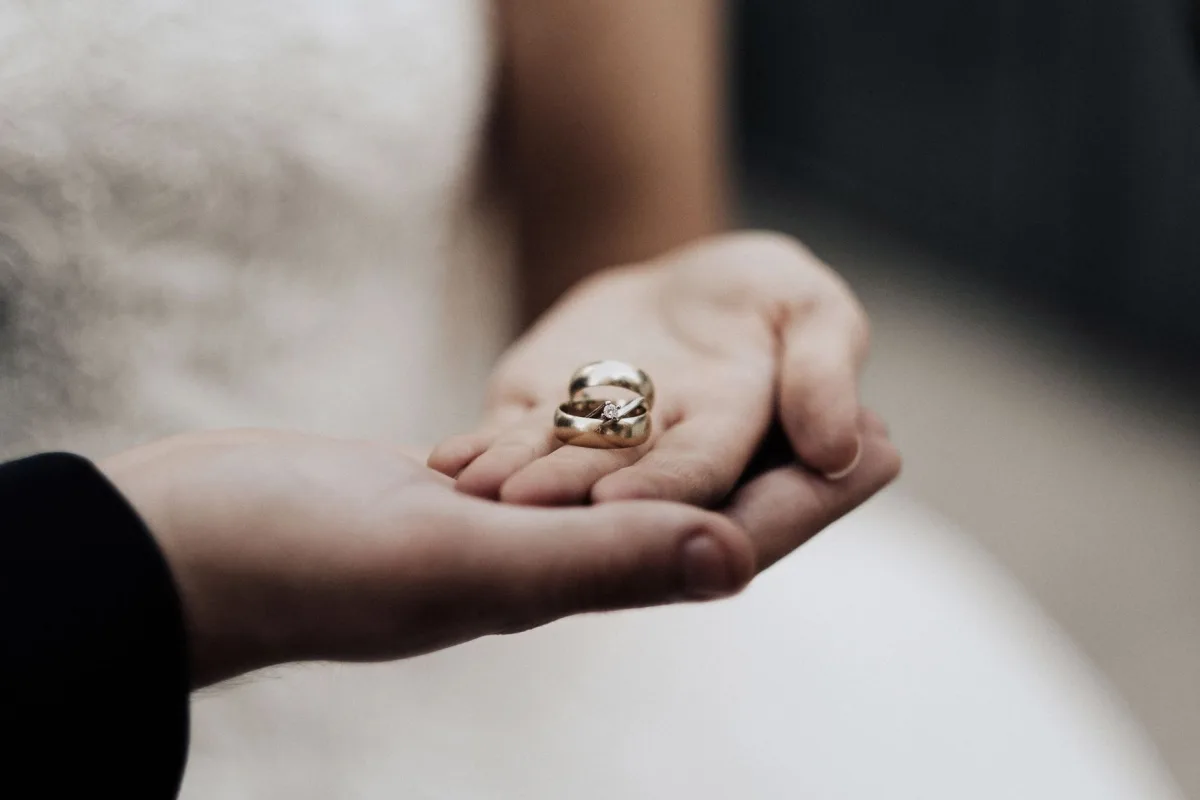
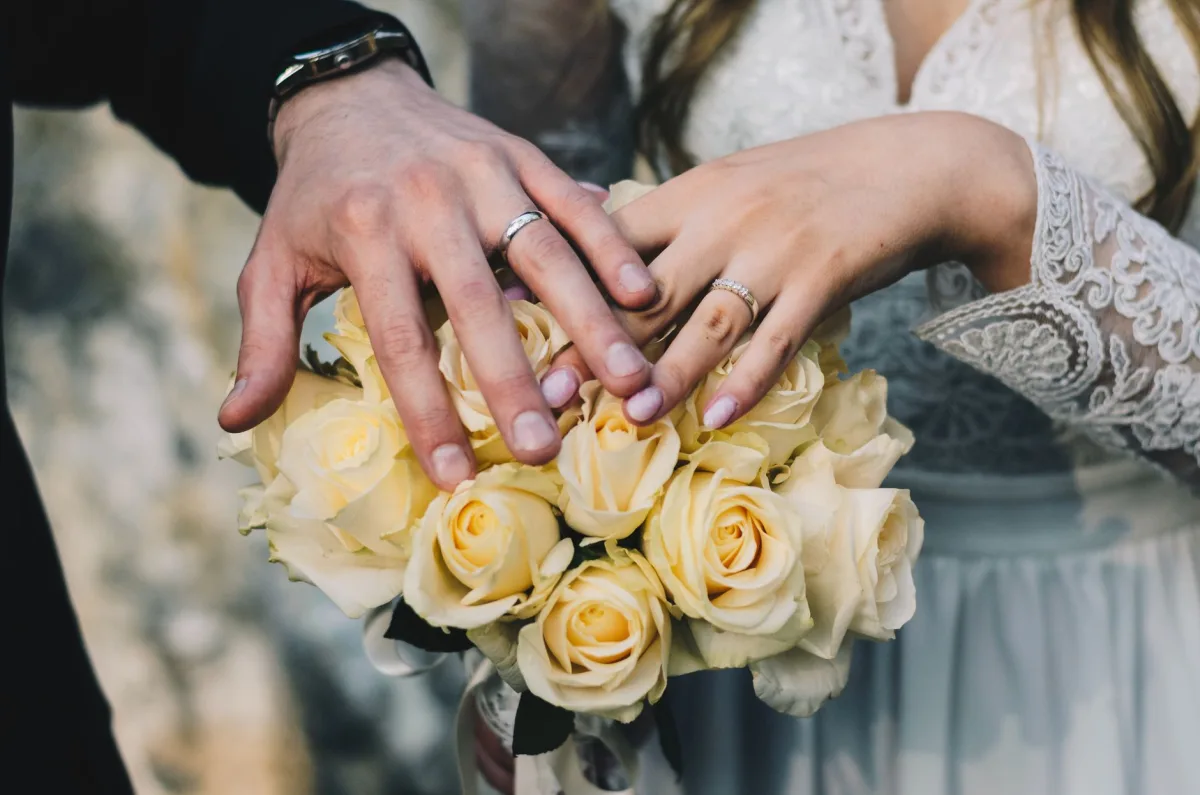
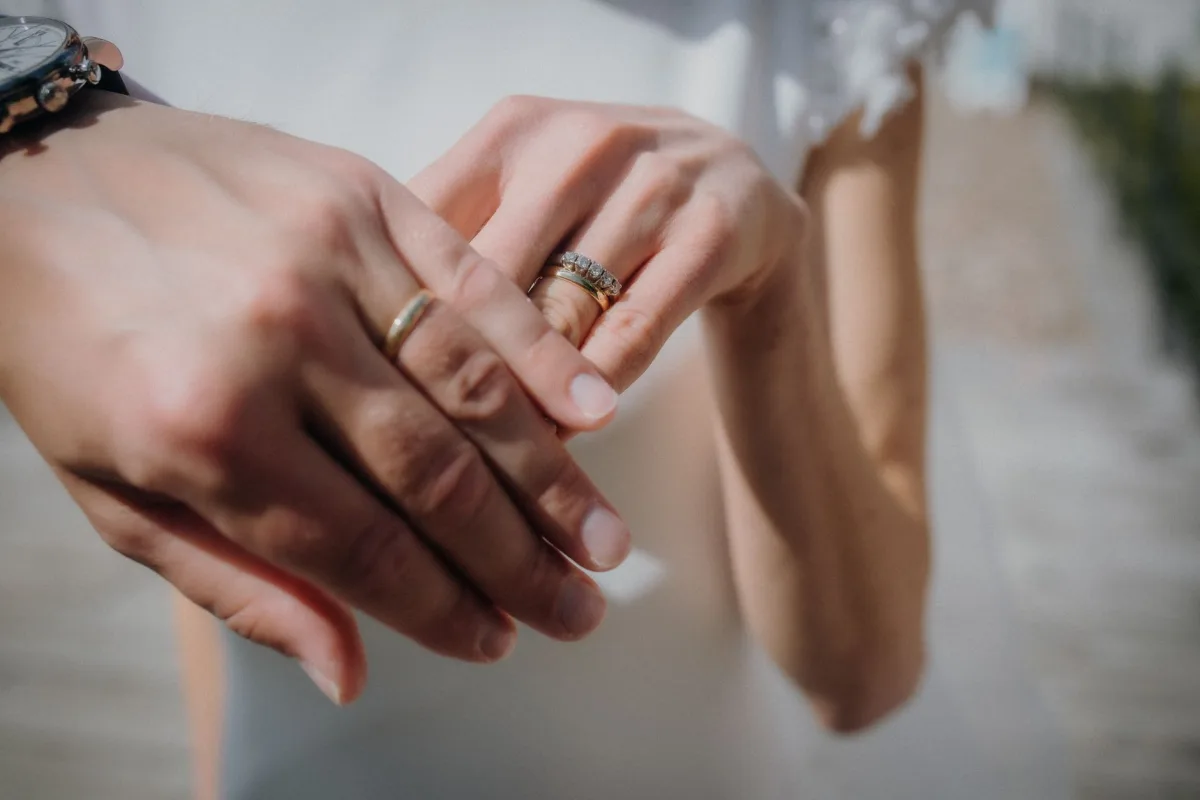
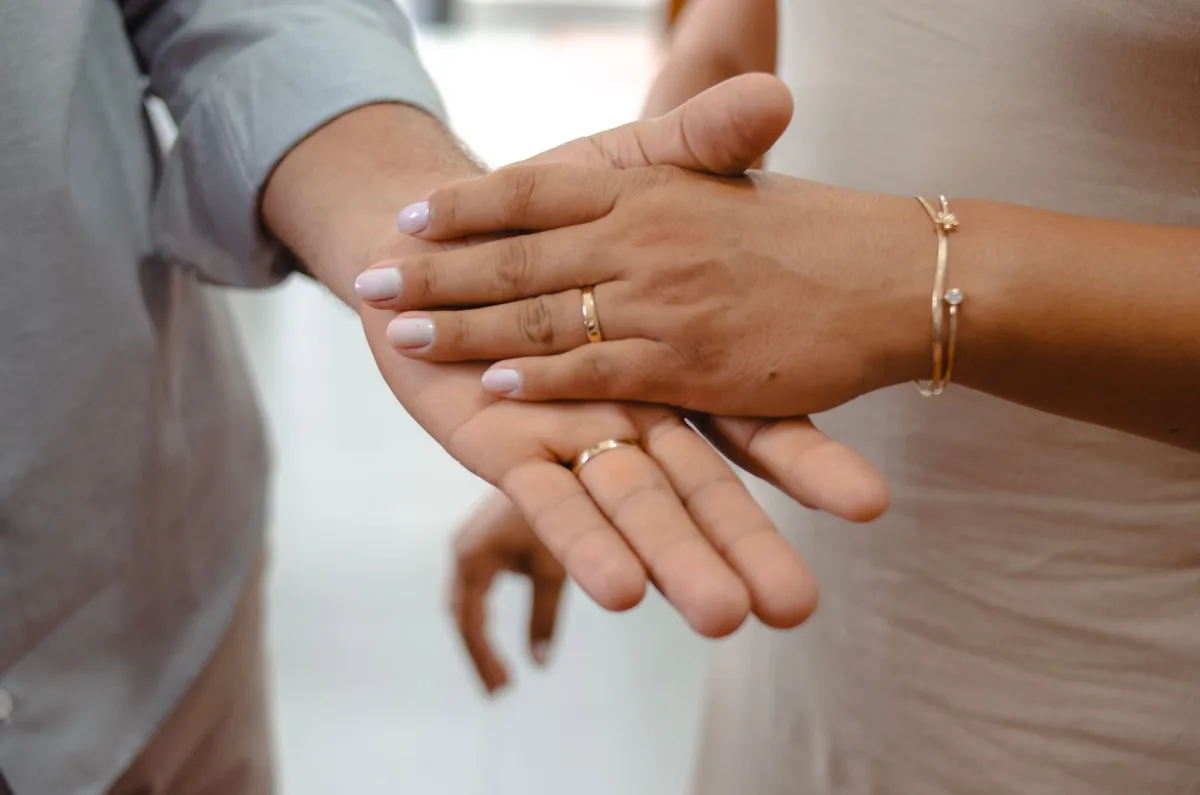
Metal is the fastest place to save, because precious metals are priced by weight and market rate. You can keep the look of a quality band while spending far less by choosing a more affordable metal or a lower gold purity.
Sterling silver
An alloy of 92.5% silver with copper, bright and genuinely inexpensive. Softer and prone to tarnish, so best for lighter wear or as a starter ring.
Titanium and tungsten
Strong, very scratch-resistant contemporary metals at low prices. The trade-off is that they generally cannot be resized, so measure carefully.
Lower-karat gold
10k or 14k gold contains less pure gold than 18k, making it cheaper and, usefully, harder and more durable for daily wear.
Gold-filled and plated
A base metal bonded or coated with gold. Affordable and attractive, but the gold layer wears over time, so treat these as budget rather than lifetime pieces.
A couple of facts help you choose. Sterling silver is defined as 92.5% silver, which is why you see the "925" stamp; it is beautiful and cheap but soft. Titanium is prized for a very high strength-to-weight ratio and excellent corrosion resistance, which makes it tough and light, though hard to resize. And because gold alloys mix pure gold with other metals, a lower karat is not only cheaper but often more hard-wearing than pure gold. For a fuller look at the budget-metal options, our guides to silver wedding rings and titanium wedding rings go deeper on each.
Smart stone choices on a budget
After the metal, the stone is the biggest cost, and the diamond in particular. The single most effective saving is to rethink the centre stone, because there are now excellent, honest alternatives that cost a fraction of a natural diamond.
- Lab-grown diamonds. Chemically and physically identical to mined diamonds, they typically cost far less for the same size and quality, which makes them the standout budget choice for a real diamond look.
- Moissanite. A lab-made stone with brilliance close to diamond and near-diamond hardness, at a small fraction of the price. A genuine stone in its own right, not an imitation.
- Cubic zirconia. Very inexpensive and convincing when new, but softer, so it clouds and scratches over years of daily wear. Better for a temporary or travel ring than a lifetime one.
- Smaller or plain. A smaller stone, or a plain metal band with no stone at all, is timeless and cuts the cost dramatically. Many couples choose a simple band for exactly this reason.
Two honest notes on the alternatives. Cubic zirconia is an inexpensive synthetic that looks the part but is softer and less durable than diamond or moissanite, which is why it dulls over time. Moissanite, by contrast, is a naturally occurring silicon carbide, now mostly lab-grown, that rates near the top of the hardness scale, so it wears far better for the money. If a real diamond is non-negotiable for you, our guide to diamond wedding rings for women explains how to get the most stone for the least money using the quality factors.
Realistic price ranges
Exact prices move constantly with metal markets, retailer and design, so treat every figure here as a broad guide rather than a quote. Still, rough bands help you set expectations. A simple sterling silver or titanium band, or a plain low-karat gold band, sits at the budget end. A gold band with a small lab-grown diamond or a moissanite centre occupies a comfortable middle. A heavier gold or platinum band set with a natural diamond climbs quickly from there.
The practical takeaway is that you can buy a genuinely nice wedding ring across a very wide range, and the difference between the low end and the middle is usually the stone and the metal weight, not the beauty of the ring. Set a firm number before you shop, tell the retailer that number, and let it steer you toward the metal and stone combination that fits. To see how the ring sits inside the total cost of the day, our wedding budget checklist keeps the whole plan honest.
Avoiding the false economy
The cheapest ring is not always the best value, and this is where careless bargain-hunting bites. A ring in a metal that cannot be resized may need full replacement when your finger changes. A ring set with a soft stone will cloud and need re-stoning. A gold-plated band will wear through to the base metal and need re-plating or replacing. None of these make a cheap ring wrong, but they mean the sticker price is not the lifetime price, and a slightly dearer ring that lasts can be the cheaper choice in the end.
Protect yourself with a few simple checks. Confirm the exact metal and stone, not just a vague description. Ask whether the ring can be resized and repaired. Read return and warranty terms before you buy. And favour a simple, well-made ring in a sensible material over a flashy one in a fragile one. Matrimony360's fashion guides exist to help you spend less without being sold less, so that affordable never has to mean regret. For the full range of styles and settings to compare against, start with our overview of wedding rings, and if you are buying two at once, our guide to wedding bands covers coordinating a pair affordably.
Frequently asked questions
How much should I spend on a cheap wedding ring?
There is no fixed figure, only what fits your budget. Simple sterling silver, titanium or plain low-karat gold bands sit at the affordable end, while gold rings with small lab-grown or moissanite stones occupy a comfortable middle. Prices swing with metal markets, design and retailer, so treat any range as a guide. The sensible approach is to set a firm number first, then choose the metal and stone that fit it, rather than starting from a stone you love and hoping the price works.
Are cheap wedding rings good quality?
They can be. Affordable materials like sterling silver, titanium and lower-karat gold, paired with lab-grown diamonds or moissanite, produce rings that are both inexpensive and genuinely durable. The key is to distinguish a low price from poor value: a well-made simple ring in a sensible material is a fine lifetime piece, while a fragile stone or a metal that cannot be resized may cost more over time. Judge the ring on its materials and craftsmanship, not on the price alone.
What is the cheapest good stone for a wedding ring?
Lab-grown diamonds and moissanite offer the best balance of low cost and long-term durability. Lab-grown diamonds are physically identical to mined ones but far cheaper, and moissanite is nearly as hard as diamond at a small fraction of the price. Cubic zirconia is cheaper still and looks convincing when new, but it is softer and clouds with daily wear, so it suits a temporary ring better than a lifetime one.
Can cheap wedding rings be resized?
It depends entirely on the metal. Gold and silver rings can usually be resized, but contemporary metals like titanium and tungsten generally cannot, and gold-plated bands wear rather than adjust. Because fingers change over a lifetime, ask whether a ring can be resized before buying, and if you choose a metal that cannot be, measure your finger very carefully, ideally at a jeweller, before ordering.
Is it acceptable to have an inexpensive wedding ring?
Completely. The value of a wedding ring is in what it represents, not what it costs, and many couples deliberately choose simple, affordable bands and put their money toward a home or the day itself. A modest ring says nothing about the strength of a marriage. Choose a ring you love within a budget you can defend, and let the meaning, not the price, be the point.