Titanium Wedding Rings: The Complete Guide
Light, tough, hypoallergenic and affordable, with one honest trade-off: what titanium does brilliantly, where resizing limits it, and how it compares.
Titanium wedding rings sit at the practical end of the ring world: light on the finger, tough against a working life, gentle on sensitive skin, and priced well below precious metals. They have become a favourite for men's bands and for anyone who wants a ring they can genuinely wear every day without worrying about it. But titanium also comes with a real trade-off, one that matters over a lifetime, and this guide lays out both sides plainly so you can decide whether the metal suits the way you actually live.
The short version
- Titanium is tough and light. A strong, low-density, corrosion-resistant metal that wears comfortably all day.
- It is kind to skin. Titanium is biocompatible and hypoallergenic, ideal for people who react to other metals.
- It resists damage but is hard to resize. The very hardness that protects it makes resizing difficult or impossible.
- It is affordable. A durable band at a fraction of the price of gold or platinum.
What titanium is
Titanium is a chemical element, a silvery metal prized in engineering and medicine for an unusual combination of properties: it is strong, notably low in density, and highly resistant to corrosion, including from seawater and many chemicals. Those same qualities make it excellent for a ring you intend to wear constantly. A titanium ring is simply a finger ring made from the metal or its alloys, a category that has grown steadily as couples look beyond traditional gold.
The metal comes in different grades. Commercially pure titanium is softer and easier to work, while aircraft-grade titanium alloys are harder and more scratch-resistant, and are what most quality bands are made from. When buying, it is worth asking which grade a ring uses, because it affects both durability and how the ring can be finished. If you are weighing titanium against the wider field of options, our overview of men's wedding bands sets it beside the other metals side by side.
Why couples choose titanium
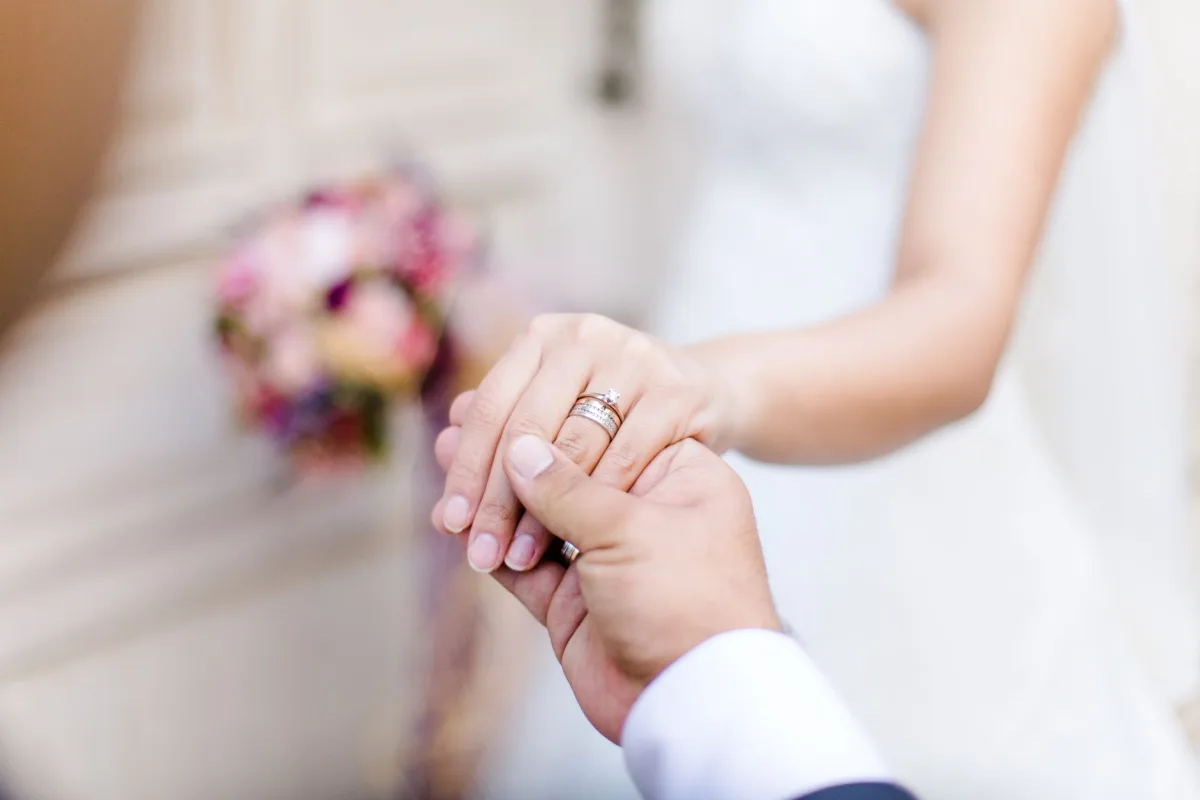
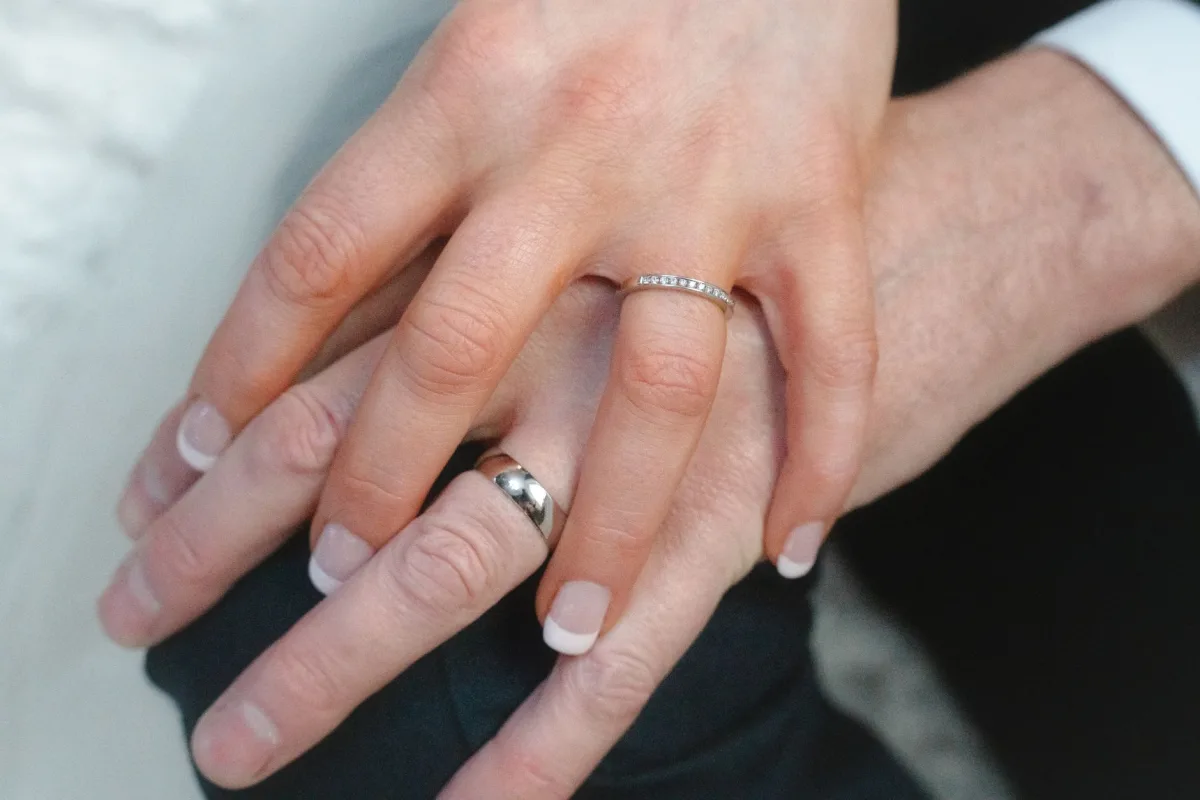
Titanium's appeal is entirely practical, and the practical case is strong. Its advantages cluster around daily wearability, which is exactly what a wedding ring is asked to deliver.
Lightweight
Titanium's low density makes a band that is barely noticeable on the finger, a real advantage for anyone unused to wearing a ring.
Strong and durable
It resists bending, corrosion and everyday knocks far better than soft gold, holding its shape through heavy use.
Hypoallergenic
Titanium is biocompatible, the reason it is used in medical implants, so it rarely irritates skin. Ideal for people who react to nickel or other alloys.
Colour options
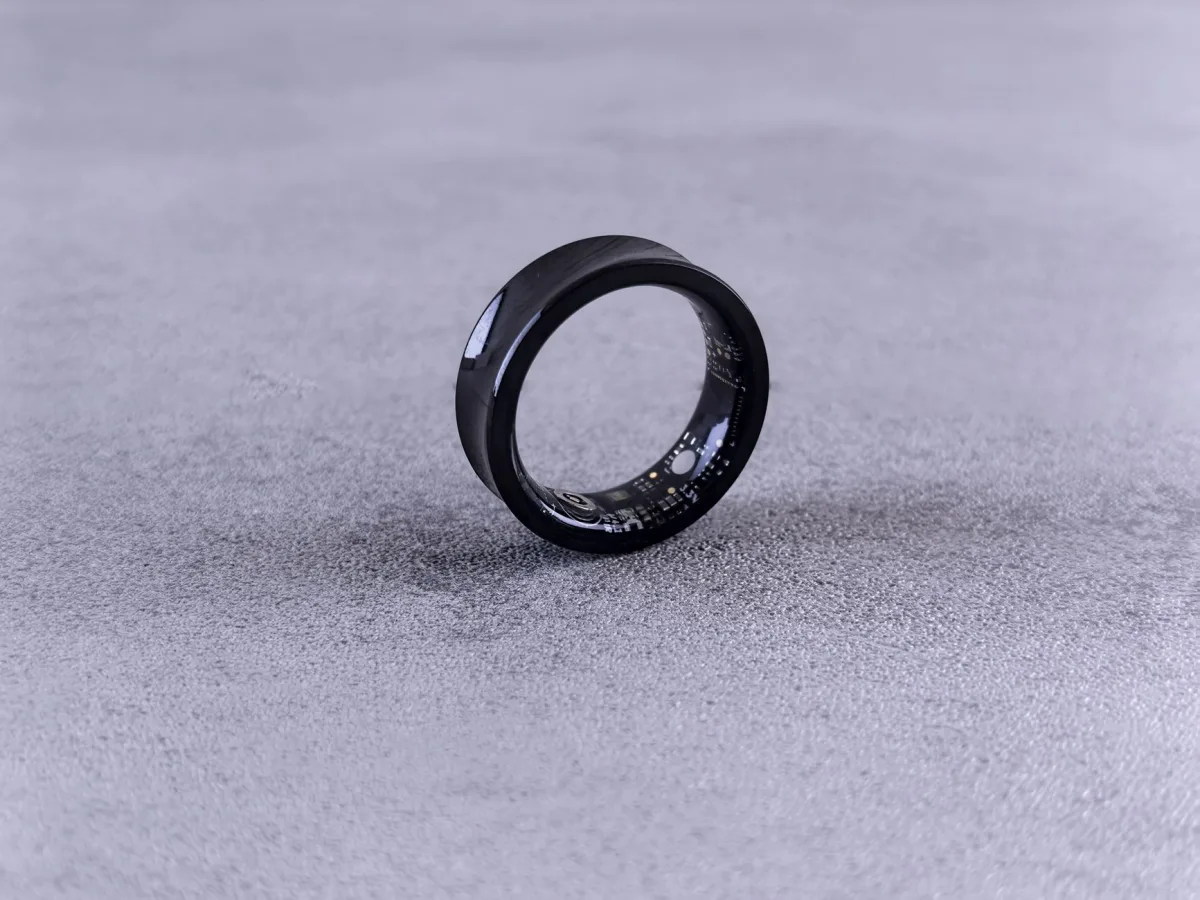
Through anodizing, titanium can take on blues, purples and other hues without any dye, alongside natural grey and black finishes.
Add to that its low price relative to precious metals, and the attraction is clear. For a groom who works with his hands, plays sport, or simply wants a ring he never has to baby, titanium answers nearly every requirement. It is also a natural choice for anyone whose skin has objected to gold or silver alloys in the past. Our guide to men's black wedding bands covers the darker anodized and coated finishes the metal does so well.
The honest trade-off: resizing
The one drawback you must weigh before buying is resizing, and it is a direct consequence of the very hardness that makes titanium attractive. Because the metal is so tough, most titanium rings cannot be resized in the way a gold ring can. A jeweller can sometimes shave a ring very slightly larger, but meaningful resizing is usually impossible, and a ring that becomes too small often has to be replaced rather than adjusted.
This matters more than it first appears, because finger size genuinely changes over a lifetime, with weight, with age, with pregnancy, even with the seasons and the time of day. A precious-metal ring absorbs those changes with a quick resize; a titanium ring cannot. So the golden rule with titanium is to get the sizing exactly right at purchase, measured properly and at a normal time of day, and to accept that if your finger changes substantially, replacement rather than adjustment is the likely fix. For many people the ring's affordability makes eventual replacement a non-issue; for others, that inflexibility is reason enough to choose a resizable metal instead.
Titanium next to other metals
It helps to place titanium among its peers. Compared with gold and platinum, titanium is far lighter, far cheaper, more scratch-resistant and hypoallergenic, but it lacks their intrinsic material value and their easy resizability, and it does not carry the same traditional prestige. Compared with other contemporary metals such as tungsten and cobalt, titanium is the lightest and among the most skin-friendly, though tungsten is even harder and heavier.
There is one safety point worth knowing about all these very hard metals, told honestly. A common worry is that a hard ring cannot be cut off in an emergency; in reality, medical and emergency teams have tools that remove titanium rings when necessary, so this should not deter you, though it is a fair question to ask. What genuinely separates the metals for most buyers is the resizing question above, plus the look: titanium's natural grey and its anodized colours give it a distinctly modern character that suits some couples perfectly and feels too contemporary for others.
Choosing and caring for a titanium ring
When buying, ask three questions: which grade of titanium the ring uses, whether the finish is natural, anodized or coated, and what the seller's exact policy is on sizing and any future adjustment or replacement. Aircraft-grade alloys resist scratches best; a plain brushed or polished natural finish will age most gracefully, since a scratch on bare metal can be refinished, whereas a scratch through a coloured coating is harder to hide.
Care is refreshingly simple, which is part of the point. Warm water, mild soap and a soft cloth keep a titanium ring clean; it does not tarnish and needs no special polish. A brushed finish can be gently refreshed, and a natural surface scratch can often be buffed out by a jeweller. Because the metal is so stable, it asks almost nothing of you day to day, which is exactly why so many people who dislike fuss choose it. If you are buying as a pair, our guide to his and hers wedding rings explains how to coordinate a titanium band with a partner's ring in another metal.
The bottom line
Titanium is the sensible modern choice for a wedding ring you want to wear hard and forget about: light, tough, kind to sensitive skin, available in natural grey through anodized colour, and affordable. Its one real limitation is resizing, which its hardness makes difficult, so the metal rewards getting your size exactly right and accepting replacement rather than adjustment if your finger changes a lot. Weigh that single trade-off against everything titanium does well, and for a great many couples, especially for a hard-working hand, it comes out looking like one of the smartest bands you can buy.
Frequently asked questions
Are titanium wedding rings good quality?
Yes. Titanium is a strong, lightweight, corrosion-resistant metal, and aircraft-grade titanium alloys resist scratches and daily wear very well. It is the same material valued in engineering and medicine, which is why it makes a durable everyday ring. For a hard-working hand or an active lifestyle, its toughness is a genuine advantage.
Can a titanium ring be resized?
Usually not in the way a gold ring can. Because titanium is so hard, most titanium rings cannot be meaningfully resized; a jeweller can sometimes enlarge one very slightly, but a ring that becomes too small often has to be replaced. Get the size measured accurately at purchase, since finger size changes over a lifetime and titanium cannot easily follow it.
Is titanium safe for sensitive skin?
Very. Titanium is biocompatible and hypoallergenic, the reason it is used in medical implants, so it rarely causes irritation. It is an excellent choice for anyone who reacts to nickel or to the alloys in some gold and silver jewellery, since it does not contain those common irritants.
Can titanium rings be different colours?
Yes. Through anodizing, an electrochemical process, titanium can take on colours such as blue and purple without any added dye, alongside its natural silvery grey and popular black finishes. Bear in mind that a scratch through a coloured coating is harder to refinish than a mark on bare metal, so ask how a coloured ring is finished before buying.
Can a titanium ring be cut off in an emergency?
Yes. A common worry is that a hard metal ring cannot be removed urgently, but medical and emergency teams have tools designed to cut titanium rings when necessary. It is a fair question to ask, but it should not put you off the metal; the more practical consideration is titanium's difficulty with resizing.