Wedding Rings His and Hers: The Complete Guide
Matching metals, coordinating styles, widths and sizing: how to buy a his and hers set that still looks intentional decades from now.
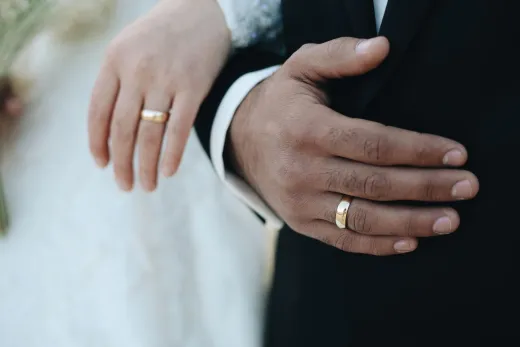
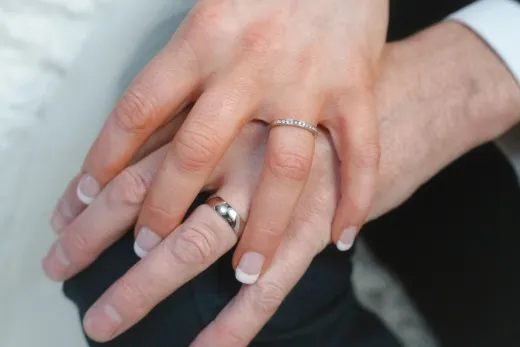
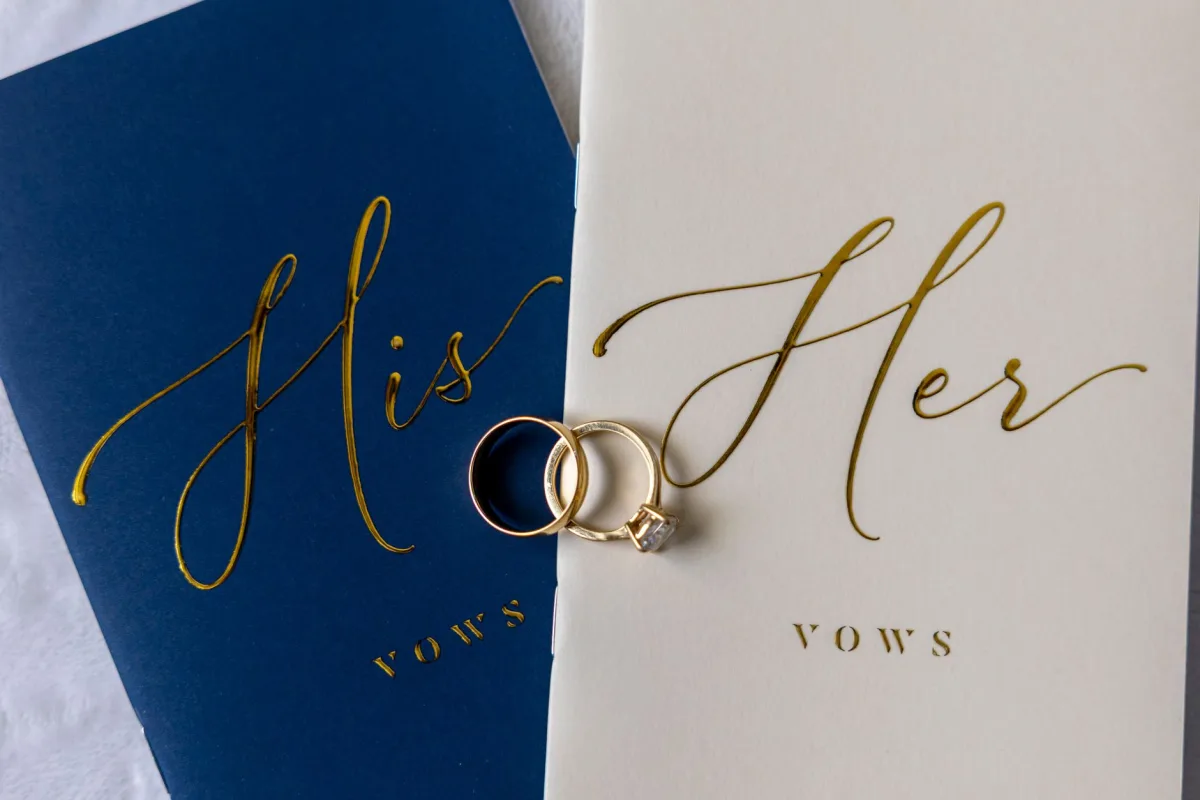
A "his and hers" wedding ring set is really a small design brief: two bands, worn by two different people with two different hands and habits, that still read as a pair. Shopping for them together is one of the nicer decisions of an engagement, but it comes with its own logic, from matching metals that age at the same rate to choosing widths that suit each hand. This guide walks the whole choice in one pass, so you can buy a set that looks intentional rather than two rings that happen to share a receipt.
The short version
- His and hers is a pair, not a clone. The goal is coordination, not two identical rings on different hands.
- Match the metal first. Same metal family means the rings wear, tarnish and scratch at the same rate over the years.
- Width follows the hand. Wider bands suit larger hands and active lifestyles; narrower bands flatter slimmer fingers.
- Buy them as a budget, not two prices. Splitting one ring budget across two rings keeps the set balanced.
What "his and hers" wedding rings really mean
A wedding ring is a finger ring that signals its wearer is married, traditionally forged from metal and often worn for life. A "his and hers" set simply means two of them chosen to belong together: bought at the same time, from the same designer or metal, with a shared thread running through both. That thread might be the metal, a repeated engraving, a matching finish, or a single design idea scaled up for one hand and down for the other.
The important word is coordination. People sometimes assume his and hers means the two rings are identical, but a band that flatters a slim finger rarely suits a broad one, and a style that reads as elegant at three millimetres can look slight at six. The most satisfying sets share a family resemblance while respecting that two different hands are wearing them. Think siblings, not twins.
If you are still deciding between a matched pair and two rings chosen independently, our broader guide to wedding rings for couples lays out that fork in more detail. This article assumes you have decided to shop as a set and want to get the pairing right.
Choosing metals that work as a pair
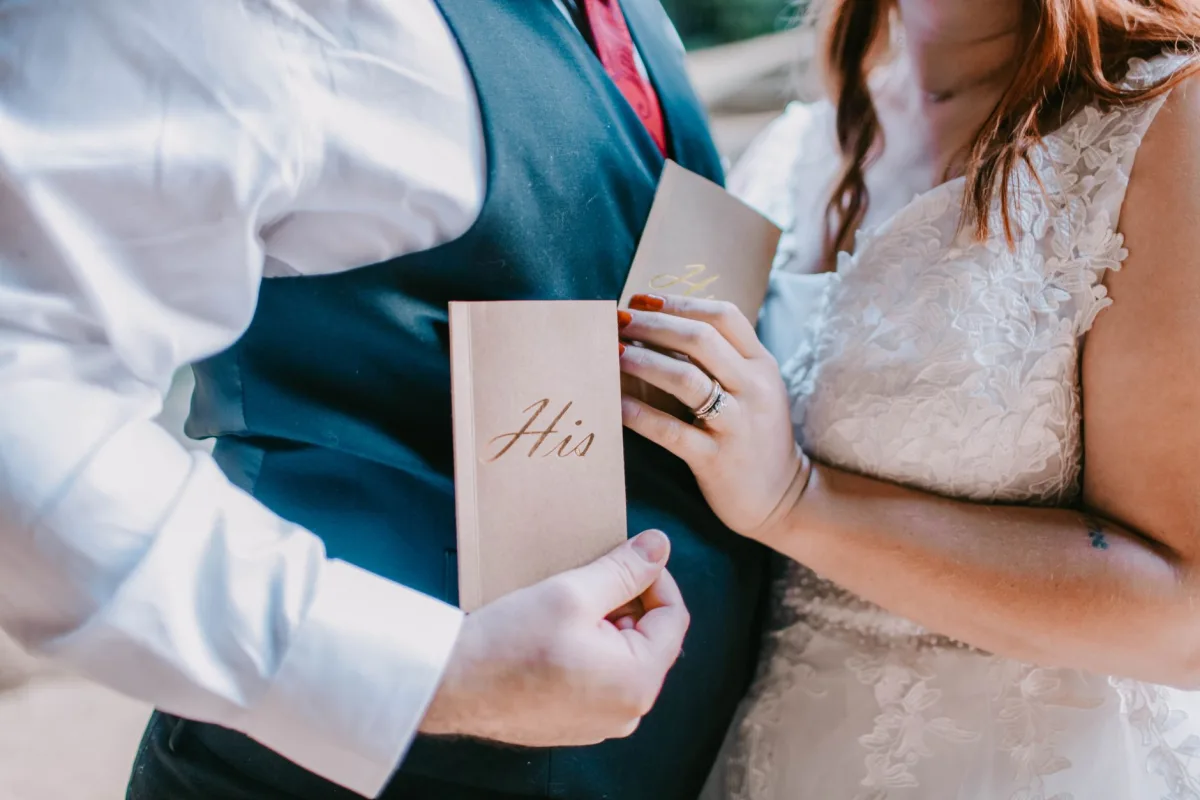
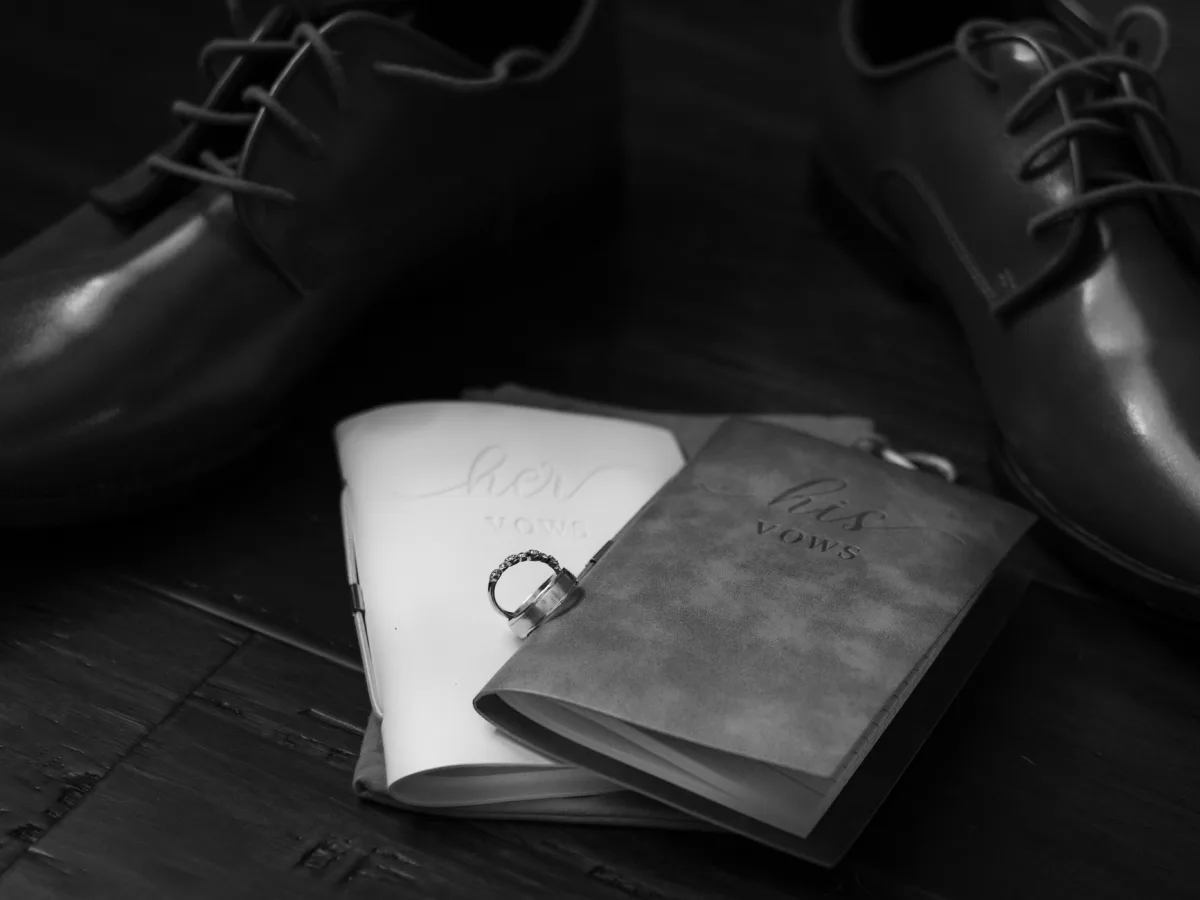
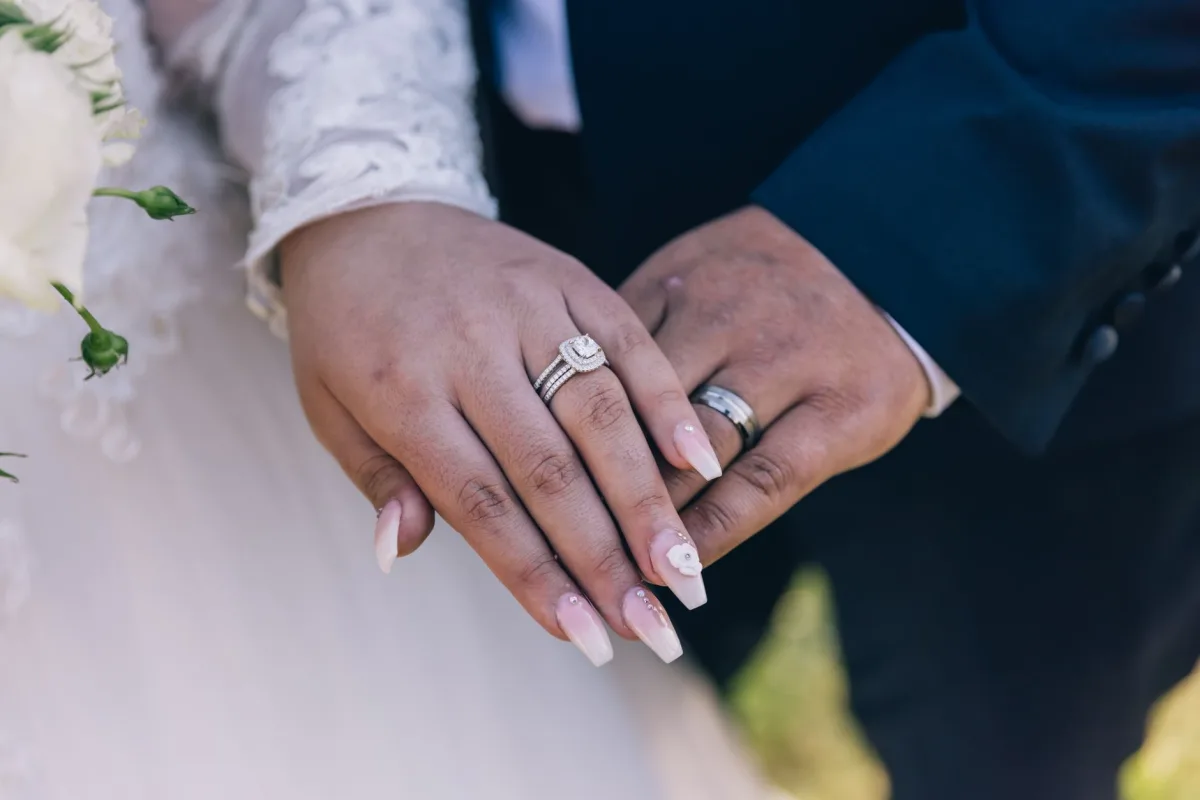
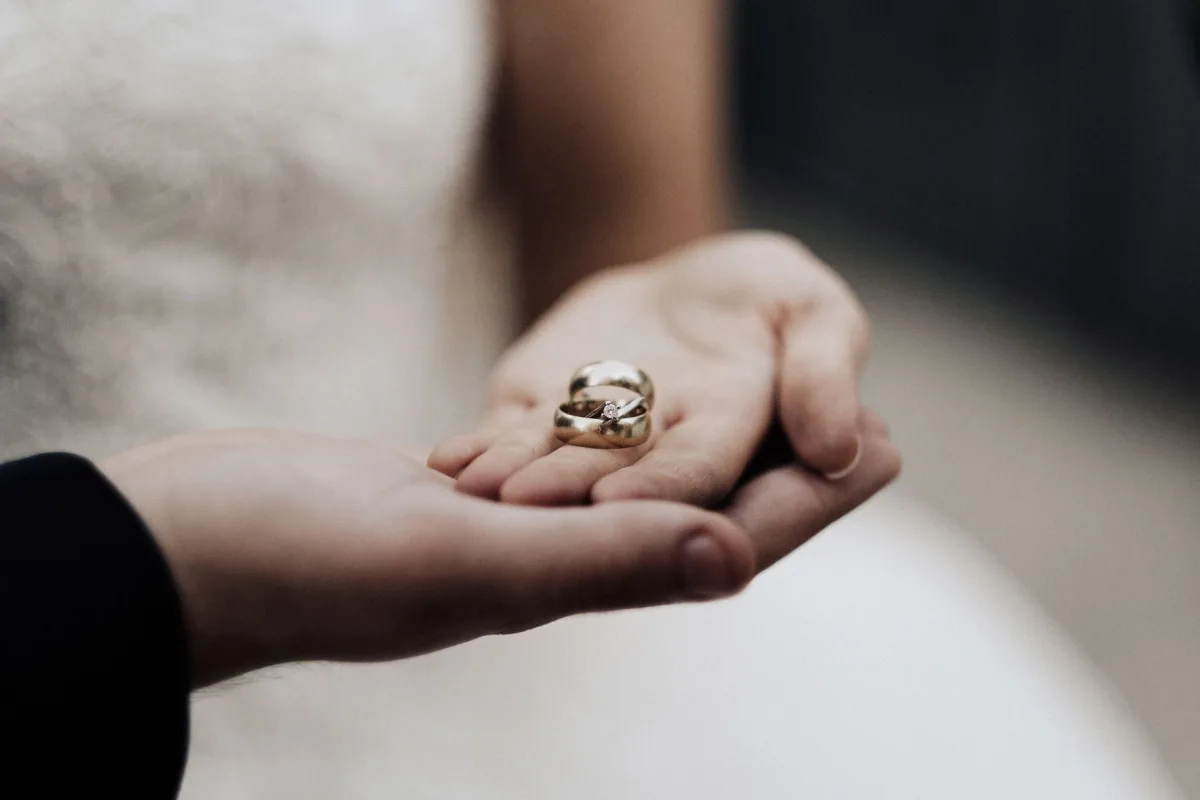
Metal is the first and most consequential choice, because it sets the colour, the price, the weight and how the rings will age. The single most useful rule for a his and hers set is to keep both rings in the same metal family wherever you can. Two rings in the same metal scratch, dull and patina at the same rate, so a decade on they still look like a matched pair rather than one fresh ring beside one that has clearly lived a different life.
Yellow and white gold
Warm and classic, or cool and modern. Coloured gold is an alloy, so purity is graded in karats; higher karat is softer and richer, lower karat is harder and more durable.
Platinum
Dense, naturally white and hypoallergenic. Platinum is heavier and pricier than gold, and it develops a soft patina rather than wearing away, which many people prefer.
Rose gold
Gold alloyed with copper for a pink blush. It hides small scratches well and pairs beautifully as a warm accent when both rings share the tone.
Contemporary metals
Titanium, tungsten and cobalt suit an active hand and a lower budget. They resist scratches superbly but generally cannot be resized, which matters for a lifelong ring.
Mixing metals is not forbidden, only more advanced. A couple can absolutely wear yellow gold and platinum side by side, but then the shared thread has to come from somewhere else, a matching profile, a repeated engraving, an identical finish. If you love two different metals, choose one deliberate element to echo across both rings so the pairing still reads on purpose. Our overview of platinum wedding rings is worth a read if one of you is leaning that way.
Matching, coordinating or contrasting
Once the metal is settled, you are choosing how closely the two rings should echo each other. There are three honest approaches, and none is more correct than the others.
Fully matched sets use the same design in two widths, most often a plain or lightly detailed band. They are the safest and most timeless option, and they photograph beautifully together. Coordinated sets share a metal and a mood but differ in the details: her ring might carry small diamonds while his stays plain, or the two might share an engraving pattern at different scales. Contrasting sets lean into difference, pairing, say, a delicate diamond eternity band with a broad brushed men's band, held together only by a shared metal. This last approach gives each person the ring they actually want while still buying as a set.
A practical tip: decide which ring has to sit against an engagement ring, because that constraint usually belongs to one hand. If one partner already wears an engagement ring, that person's wedding band has the harder job of nesting neatly against it, so choose theirs first and let the other band take its cue.
His and hers ring styles and widths
Style and width are where two hands genuinely diverge, and where trying to force true identical rings tends to disappoint. Width is measured across the band, and it changes both the look and the feel of a ring dramatically. As a loose guide, narrower bands of two to four millimetres flatter slimmer fingers and pair easily with an engagement ring, while wider bands of five to seven millimetres suit larger hands and stand up better to heavy daily use.
Common style choices worth weighing as a pair include the classic domed band, the flat modern band, the comfort-fit band with a rounded inside edge that slides on easily, and detailed bands carrying diamonds, milgrain edges or a brushed matte finish. A frequent and happy compromise is a shared profile, both rings comfort-fit and domed, for instance, with one partner's set with small stones and the other left plain. The shape ties them together while the detailing lets each person keep their own taste. If one of you wants something plainer and sturdier, our guide to men's wedding bands covers the widths and finishes that hold up best on a working hand.
Sizing, comfort and living in the rings
A wedding ring is worn more than almost anything you own, so comfort quietly outranks looks over a lifetime. Get both partners professionally sized, and size at a normal time of day, because fingers swell in heat and after salt or exercise and shrink in the cold. Aim for a fit that takes a little effort over the knuckle but does not spin loosely once seated.
Consider each person's daily life honestly. Hands that do manual work, lift weights or handle tools may prefer a lower-profile band that will not snag, and some trades require the ring to come off entirely at work. If either of you plans to have children, remember that finger size can change with pregnancy and over the decades, which is another reason resizable metals like gold and platinum have an edge over the harder contemporary metals. Whichever route you take, ask the jeweller directly whether each ring can be resized later, and by how much, before you buy.
Engraving is the small touch that turns two rings into your rings. A shared date, initials, a short phrase or coordinates of a meaningful place, echoed inside both bands, is the least expensive way to make a his and hers set feel unmistakably paired. Keep the message short so it fits comfortably inside a narrower band.
Budgeting for two rings, not one
The mental shift that saves the most money and heartache is simple: you are buying one budget split across two rings, not two separate purchases. Decide the total you are comfortable spending on the pair, then divide it in a way that suits your priorities. Some couples split evenly; others put more toward a diamond-set band and keep the partner's ring plain to balance the total.
Metal drives most of the cost. Platinum sits at the top thanks to its density and rarity, gold varies by karat and colour, and contemporary metals such as titanium and tungsten offer a durable pair for a fraction of the price. Buying as a set often unlocks a modest saving too, since many jewellers price matched bands together. If budget is the main constraint, our guide to affordable wedding rings covers where the real savings live and which corners are safe to cut. Whatever you spend, a matchmaking service like Matrimony360 exists for the part before the rings, helping people find the partner these decisions are actually for.
The bottom line
A his and hers wedding ring set works when it reads as a pair without pretending two different hands are the same. Match the metal so both rings age together, choose a shared thread whether that is a profile, a finish or an engraving, and then let each band flex in width and detail to suit the person wearing it. Size for comfort over looks, plan for a lifetime rather than a photograph, and treat the two rings as one budget. Do that, and you end up with a set that still looks intentional on your tenth anniversary and your fiftieth.
Frequently asked questions
Do his and hers wedding rings have to match exactly?
No. The goal is coordination, not duplication. A band that flatters a slim finger rarely suits a broad one, so most well-made sets share a family resemblance, the same metal, a repeated finish or a matching engraving, while differing in width and detail. Fully identical rings are one valid option among several, not a rule.
Should both rings be the same metal?
It is the easiest way to make a set look intentional, because two rings in the same metal scratch and age at the same rate and still look like a pair years later. You can mix metals, but then you need another shared element, a matching profile or engraving, so the pairing still reads on purpose rather than as two unrelated rings.
How do we choose the right widths?
Let each hand lead. Narrower bands of roughly two to four millimetres flatter slimmer fingers and nest neatly against an engagement ring, while wider bands of five to seven millimetres suit larger hands and heavier daily wear. A common approach is to share a style and finish but choose a different width for each person.
Can wedding rings be resized after buying?
Gold and platinum rings can usually be resized within a couple of sizes, which matters because finger size changes over the years. Harder contemporary metals such as titanium and tungsten generally cannot be resized, so if either partner might need a different size later, ask the jeweller about resizing before you commit to those metals.
How should we budget for a matched set?
Treat it as one budget split across two rings rather than two separate purchases. Decide a comfortable total, then divide it to suit your priorities, evenly, or weighted toward a diamond-set band with a plain partner ring to balance the cost. Metal is the biggest lever: platinum sits highest, gold varies by karat, and contemporary metals keep the pair affordable.