Wedding Rings for Couples: The Complete Guide
Matching does not mean identical, metal is the choice that lasts, and there is no correct amount to spend. A calm, honest guide to buying your rings together.
Choosing wedding rings as a couple is one of the first real decisions you make together as a married pair, and it is a lovely rehearsal for all the ones to come: two tastes, one shared object, a budget, and the goal of ending up somewhere you both love. This guide walks through the whole decision, from what "matching" actually means and which metals last, to realistic budgets and the traditions behind the rings, so you can shop with a shared plan instead of a showroom panic.
The short version
- Matching does not mean identical. Most couples coordinate through metal or theme, not exact twin rings.
- Metal is the decision that lasts. Choose for daily wear and skin first, colour second; it is what you feel every day.
- Budget as a pair, not per ring. Decide a combined figure and split it by preference, not down the middle by default.
- Comfort and lifestyle rule. A ring lives on a working hand for decades; fit and durability matter more than flash.
What "wedding rings for couples" really means
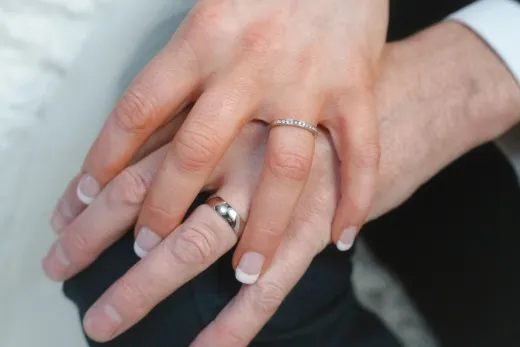
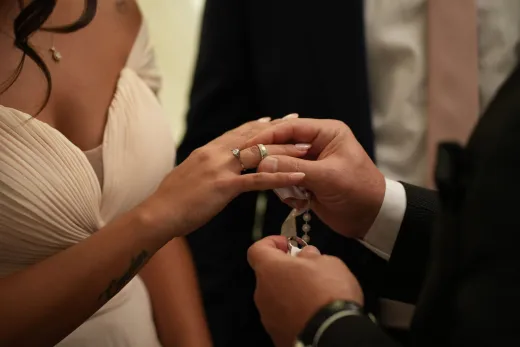
A wedding ring is a finger ring that signifies its wearer is married, traditionally forged from metal and given during the wedding ceremony. Shopping for them "as a couple" simply means choosing both rings together, with an eye to how they relate to each other, rather than each person buying in isolation. That relationship between the two rings is where couples get pleasantly stuck, because "matching" turns out to mean very different things to different people.
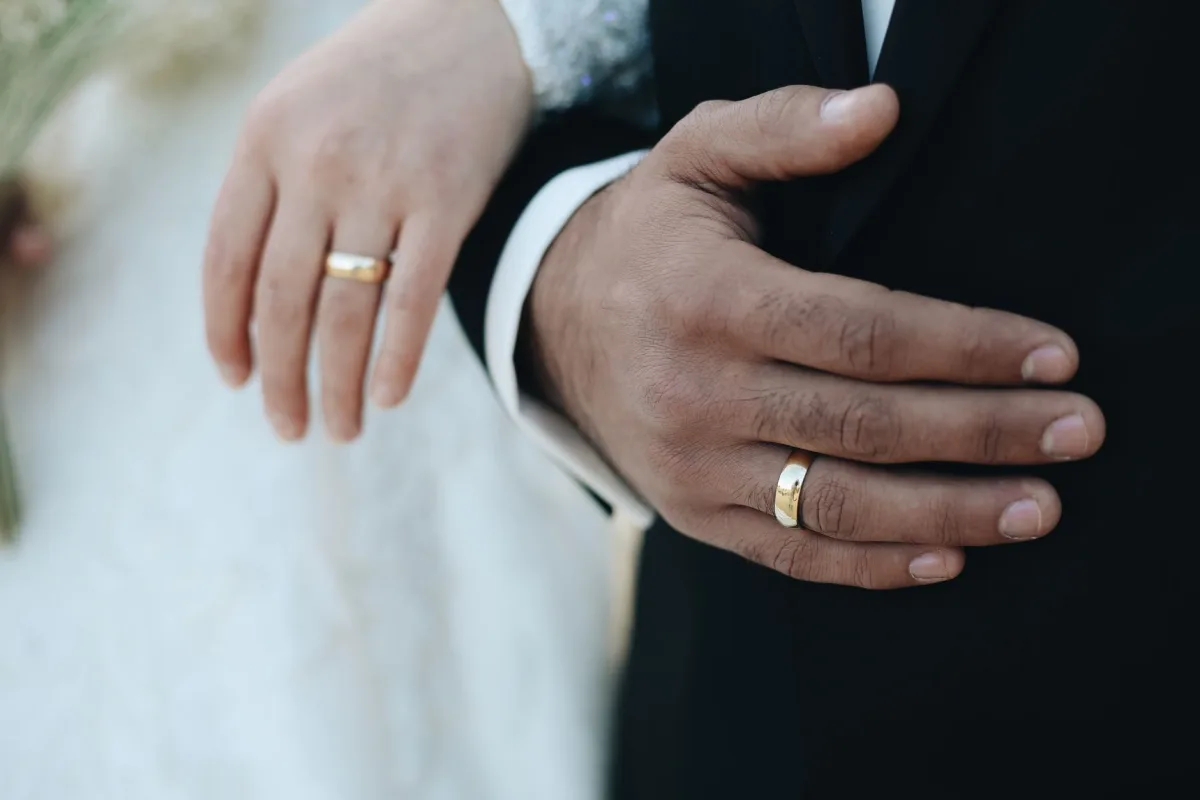
At one end, some couples want truly identical bands, same metal, same width, same finish. At the other, two people with very different tastes each choose a ring they love and coordinate loosely, perhaps through a shared metal colour or an engraved date. Neither is more correct. The useful move is to talk early about how connected you want the rings to feel, because that single decision quietly shapes every other choice, from budget to shopping strategy.
Matching sets
Rings designed as a pair, sharing metal, profile and finish. The most visually unified option, and often sold together.
Coordinated rings
Different designs linked by one shared element, such as the same gold colour or a matching engraving. Individual taste with a common thread.
Bridal set
An engagement ring and wedding band made to sit together, sometimes soldered. This is about how one person's two rings pair, then coordinated with a partner's band.
Personalised bands
Otherwise independent rings unified by a private detail: coordinates, a date, a fingerprint or a shared inscription inside the band.
The metals, and why the choice lasts
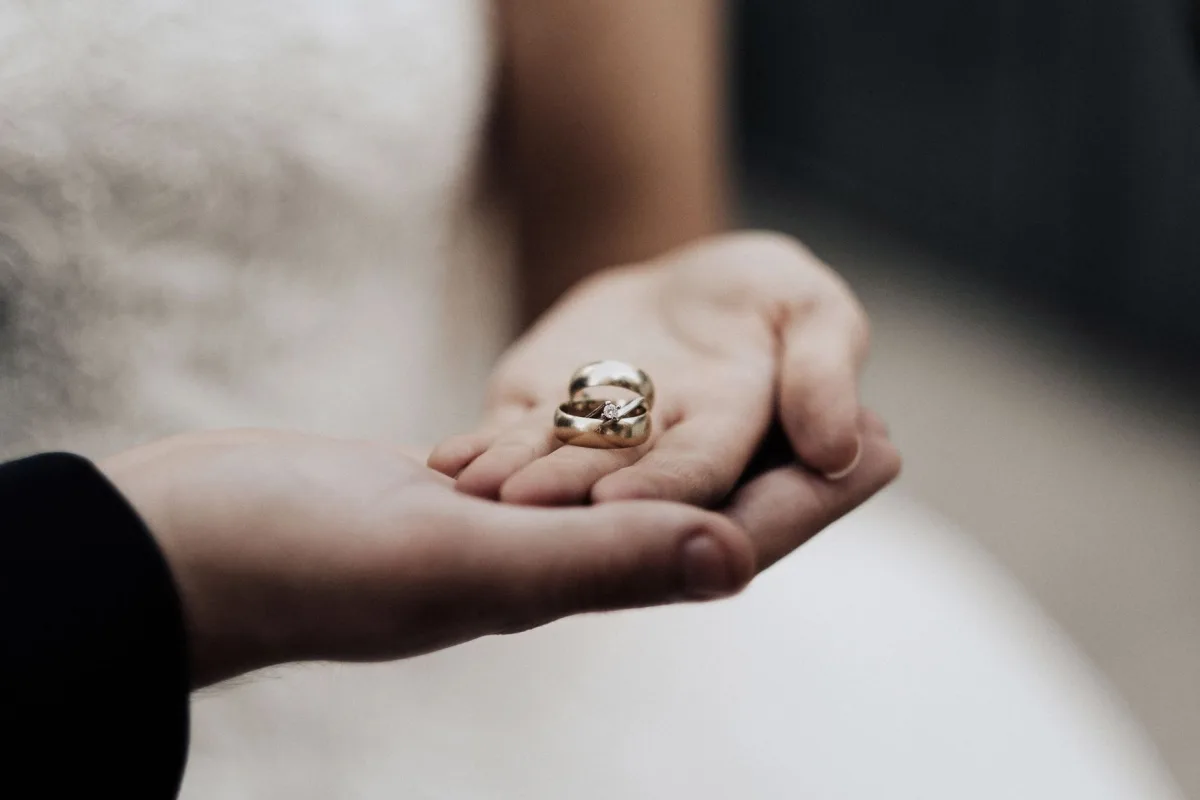
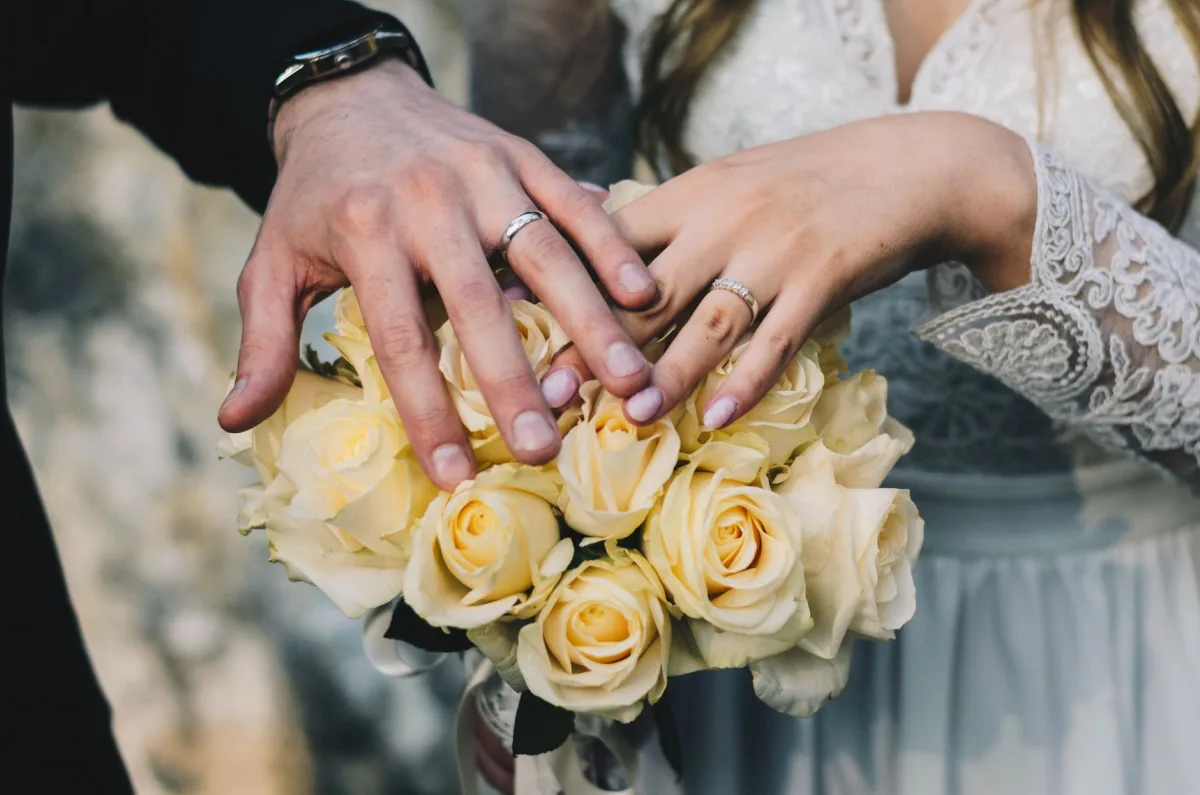
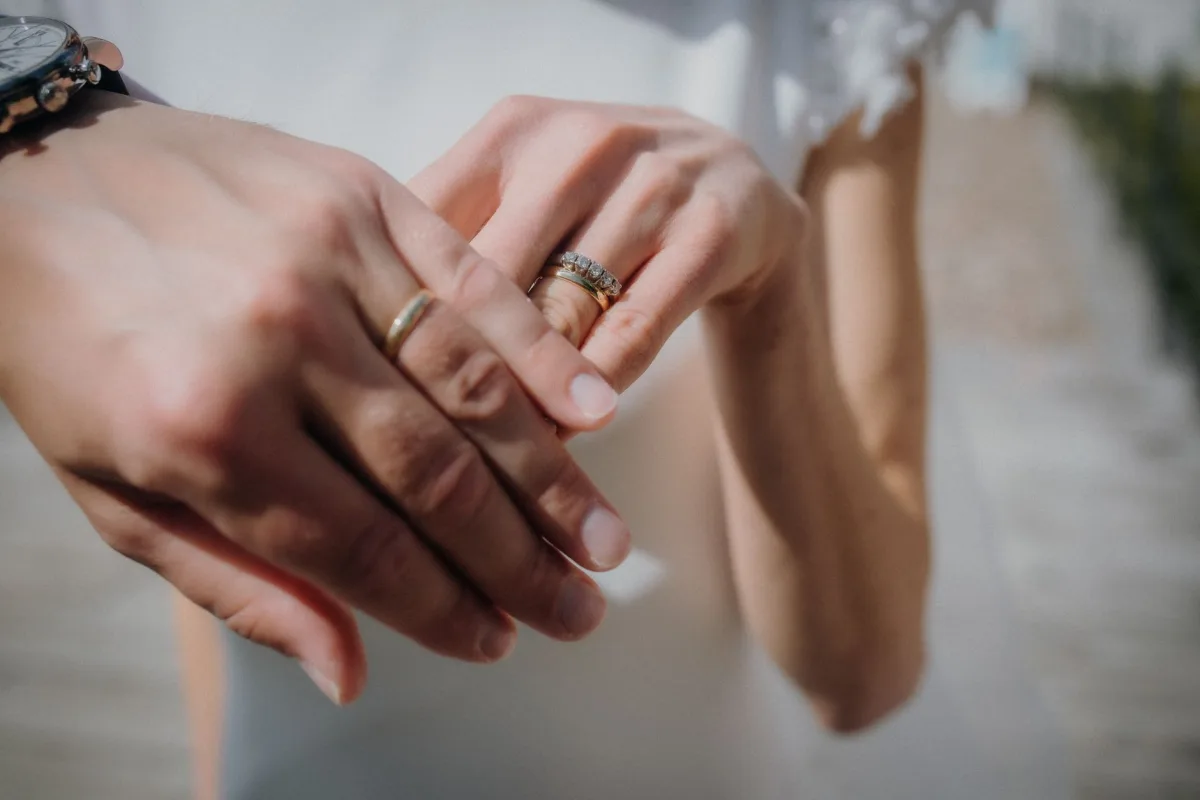
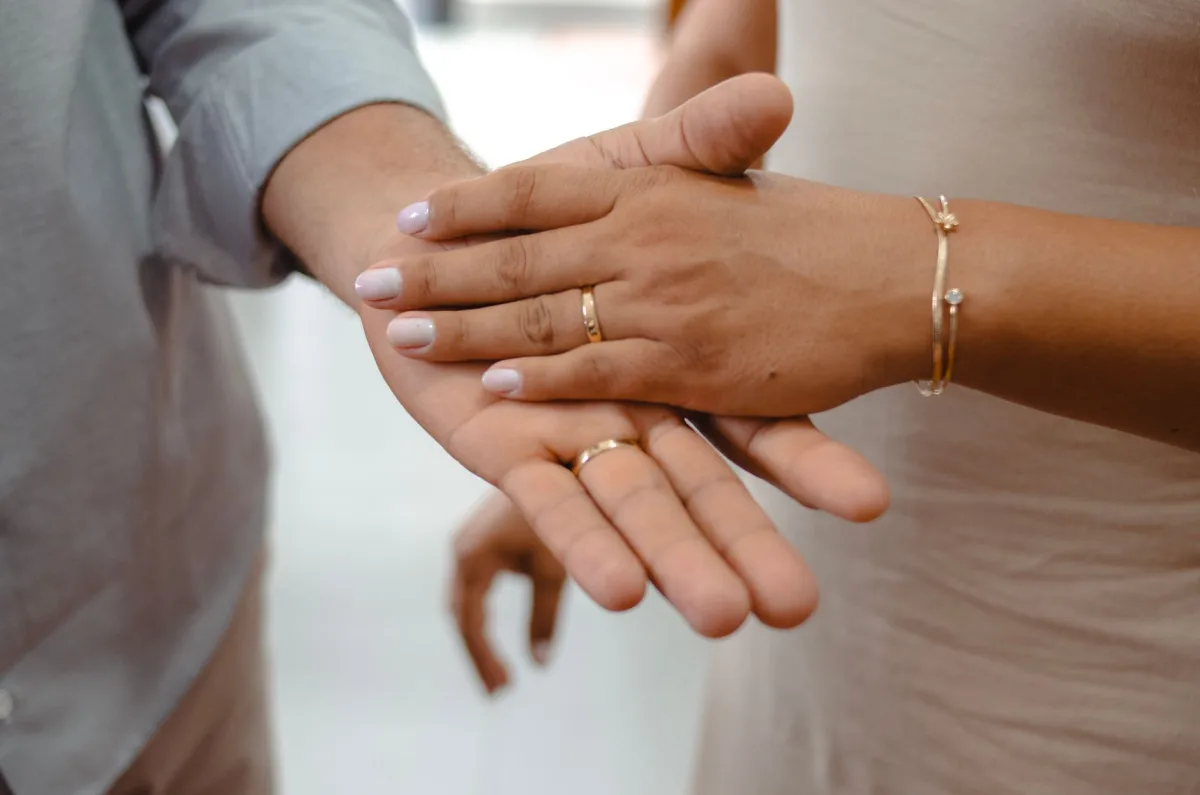
Of every decision you will make, metal is the one you live with most closely, because it is the part touching your skin every hour of every day for decades. Fashion in stones and settings comes and goes, but a well-chosen metal is a background you stop noticing in the best way. Choose it for how you live first, and for colour second.
- Yellow gold. The classic, warm and timeless. Softer at higher purities, so most rings use an alloy such as 14 or 18 carat for durability. Easy to resize and repair.
- White gold. Gold alloyed for a silvery look, usually finished with rhodium plating that refreshes the shine but needs occasional re-plating over the years.
- Rose gold. Gold with a copper alloy for a pink hue, durable and distinctive, and flattering against many skin tones.
- Platinum. Dense, naturally white and highly durable, hypoallergenic and prized for holding stones securely. Heavier on the hand and on the budget.
- Alternative metals. Titanium, tungsten and cobalt are hard, affordable and popular for men's bands, though most cannot be resized and some cannot be cut off easily in an emergency.
Two practical notes save regret. First, if either of you has sensitive skin, lean toward platinum or higher-carat gold and avoid high-nickel alloys. Second, think about your hands at work: a tradesperson, a nurse or a keen gardener wears a ring far harder than a desk worker, and that should steer you toward tougher metals and simpler profiles. For a fuller look at men's options in particular, our guide to men's wedding bands compares the metals side by side.
Do your rings have to match?
In a word, no. The idea that a couple's rings must be identical is a modern marketing convention more than a real tradition. Historically, the emphasis was on the ring given during the ceremony as a symbol, and there was no rule that both partners' rings resemble each other. Plenty of happy couples wear rings that share nothing but the finger they sit on, and plenty of others love the unity of a true matching set. This is purely a taste decision.
A middle path suits most people: pick one shared thread and let everything else be individual. That thread might be the metal colour, so both rings read as gold or both as white, or a hidden engraving that only the two of you know is there. This gives each partner a ring that genuinely suits their hand and style while keeping a quiet sense of pair. If your tastes are far apart, that is not a problem to solve; it is simply a reason to coordinate loosely rather than force a match neither of you truly wants.
Setting a shared budget
Wedding rings span an enormous price range, and the honest truth is that there is no "correct" amount to spend. A simple pair of gold bands might sit in the low hundreds; rings with diamonds, premium metals or bespoke work climb into the thousands and well beyond. Where you land depends entirely on your means, your priorities and how the rings fit into the wider cost of the wedding. Treat any figure you see quoted as a marketing anchor, not a rule.
The couple-specific tip is to budget as a pair, not per person. Decide a combined amount you are comfortable with, then divide it by preference rather than automatically down the middle. It is entirely normal for one partner to want a plainer, cheaper band and the other to want something more elaborate; splitting by desire rather than by fairness-to-the-penny usually leaves both people happier. Remember too that a wedding ring is a lifelong daily object, so it is reasonable to weigh it differently from a one-day expense. For the bigger picture of where rings sit among all your costs, our wedding planning checklist helps you slot the ring budget into everything else.
Wedding rings and engagement rings
It helps to be clear on the difference, because the two are often confused. An engagement ring is given at the proposal to mark an agreement to marry, and in many Western traditions features a prominent stone, classically a diamond. The wedding ring is exchanged during the ceremony itself and is traditionally a simpler band. Many people wear both, which is why bridal sets, designed for the two to sit flush together, are so popular.
If a diamond is part of your plan, a little vocabulary helps you shop wisely. Diamonds are commonly graded on the "four Cs": carat, colour, cut and clarity, which describes the absence of internal flaws called inclusions. You rarely need the top grade in every category; a stone that looks flawless to the eye can sit well below the highest clarity rank and cost dramatically less. Understanding the trade-offs lets you spend where it shows and save where it does not. Not every couple wants stones in their wedding bands at all, and a plain, well-made band is a timeless, hard-wearing choice with nothing to apologise for.
Buying together without the stress
The showroom can rush you, so decide the big things before you walk in. Agree your rough budget, your metal, and how matched you want to be while you are still calm at home. That way the shop trip is about trying on and confirming, not making three large decisions at once under a bright light and a salesperson's timeline.
Get properly sized, ideally at the time of day and temperature when you will usually wear the ring, since fingers swell and shrink. Try wearing a band for a few minutes to feel the width and weight, because a ring that looks perfect can feel wrong after an hour. Ask about resizing, engraving, warranties and re-plating up front, and factor lead times into your calendar so the rings are not a last-minute scramble. Above all, enjoy it. This is one of the more genuinely fun errands of getting married, and choosing well as a pair is a small, happy sign of the teamwork ahead. As you settle in to married life, our guide for the newly married couple picks up where the rings leave off.
The bottom line
Wedding rings for couples come down to a few honest decisions made together: how matched you want to feel, which metal you will happily wear for decades, and a combined budget split by preference rather than by the penny. Ignore the rules that say rings must be identical or must cost a set amount; they are conventions, not truths. Choose for comfort, durability and shared taste, settle the big questions before you shop, and treat the whole thing as the first of many good decisions you will make as a team.
Frequently asked questions
Do a couple's wedding rings have to match?
No. The idea that both rings must be identical is a modern convention, not a real tradition. Many couples wear rings that share nothing but the finger, while others love a true matching set. A popular middle path is to coordinate through one shared element, such as the same metal colour or a hidden engraving, while letting each ring suit its wearer. It is entirely a matter of taste, and no option is more correct than another.
What is the best metal for wedding rings?
There is no single best, but the choice matters because it is what you wear every day. Yellow, white and rose gold are classic and easy to resize and repair; platinum is exceptionally durable, naturally white and hypoallergenic but heavier and pricier; and alternative metals like titanium and tungsten are hard and affordable but usually cannot be resized. Choose for your skin sensitivity and how hard your hands work first, and for colour second.
How much should a couple spend on wedding rings?
There is no correct amount. Simple gold bands can sit in the low hundreds, while rings with diamonds, premium metals or bespoke work climb into the thousands. Any figure quoted as a rule is really a marketing anchor. The sensible approach is to set a combined budget you are comfortable with, then split it by each partner's preference rather than automatically down the middle, and to weigh it as a lifelong daily object rather than a one-day cost.
What is the difference between a wedding ring and an engagement ring?
An engagement ring is given at the proposal to mark the agreement to marry, and in many Western traditions features a prominent stone such as a diamond. A wedding ring is exchanged during the ceremony itself and is traditionally a simpler band. Many people wear both together, which is why bridal sets, designed for the two rings to sit flush, are common. Not every couple uses engagement rings, and customs vary widely across cultures.
Should we buy our wedding rings together?
Buying together is a good idea if you want the rings to feel coordinated, and it turns a purchase into a shared experience. Decide the big things, budget, metal and how matched you want to be, while you are calm at home, so the shop visit is about trying on rather than making several large decisions at once. Get sized carefully, ask about resizing and lead times, and enjoy it as one of the more pleasant errands of getting married.