Mens Black Wedding Band: The Complete Guide
Black is a finish, not a metal. Here is how ceramic, tungsten, titanium and coatings compare, and how to choose one that lasts.
A black wedding band says something different from a plain gold one. It reads modern, understated and quietly bold, and it has moved in a decade from niche choice to mainstream favourite for grooms who want a ring that looks like them. But "black" is not one material: the colour can come from tungsten, ceramic, titanium, tungsten with a coating, or even blackened gold, and each behaves differently on the hand and over the years. This complete guide explains what black bands are made of, how they wear, what they cost and how to choose one you will still love a decade in.
The short version
- Black is a finish, not a metal. It comes from black ceramic, black tungsten, black titanium, coatings or blackened gold, and each ages differently.
- Durability varies a lot. Solid black ceramic and black tungsten hold their colour; thin coatings on other metals can wear at the edges.
- Most black bands are affordable. Ceramic, titanium and tungsten typically cost far less than a gold or platinum band of the same size.
- Comfort and resizing matter. Hard black metals cannot be resized and can shatter under sharp impact, so get sized carefully and consider your job.
Where the black comes from
A wedding ring is traditionally a plain metal band, and for most of history that metal was gold. The black band is a modern take made possible by materials that were never used for jewellery until recently. The single most useful thing to understand is that "black" is achieved in several very different ways, and the method matters more than the colour, because it determines how the ring survives daily life.
Some black bands are black all the way through, so a scratch simply reveals more of the same colour. Others are a pale metal given a black surface, where deep wear can eventually expose the lighter metal beneath. Neither is wrong, but they age differently, and the price gap between them is not always a quality gap. Knowing which type you are looking at is the foundation of a good choice, so start there before you compare styles or prices.
The main black band materials, compared


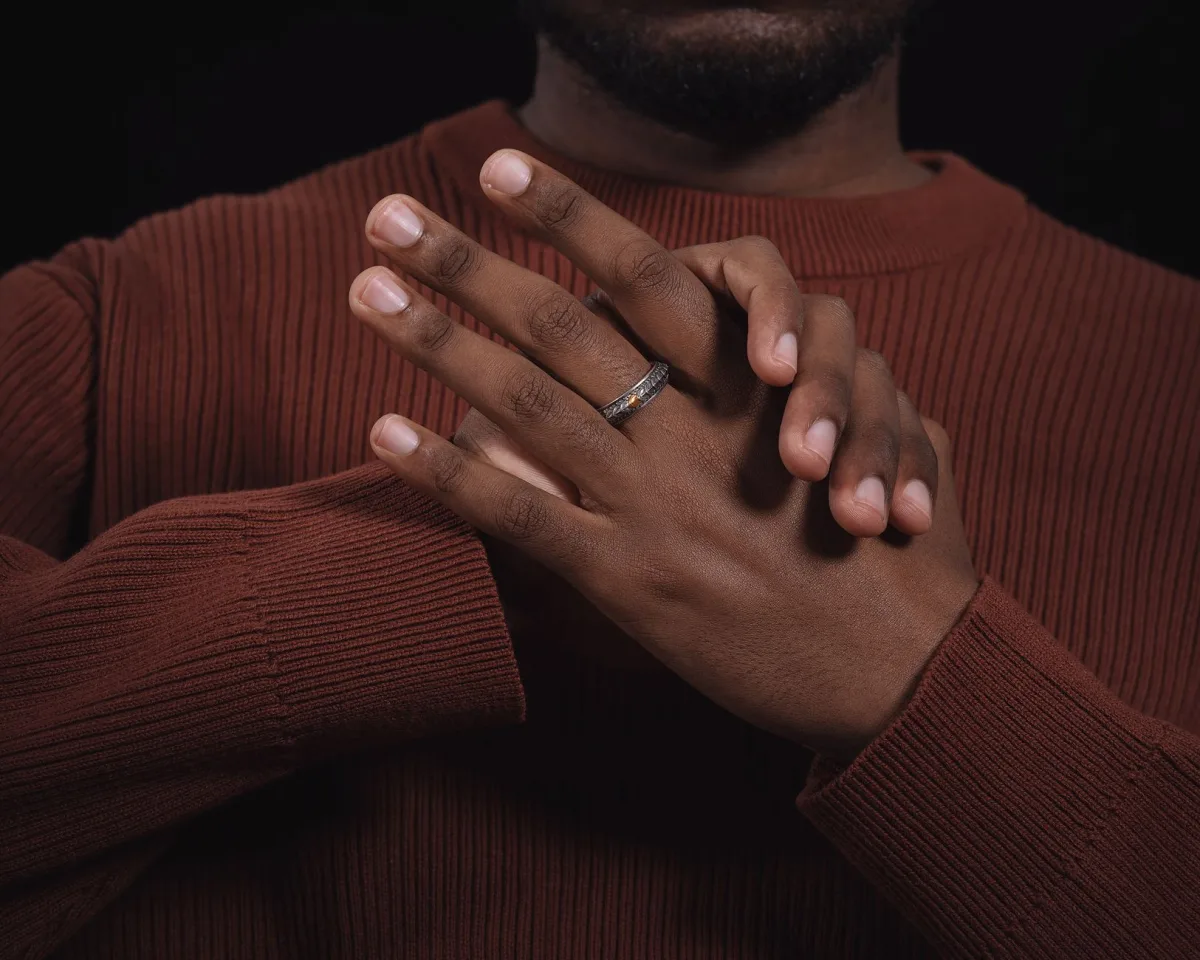
Five materials account for almost every black men's band on the market. Here is what each one is and how it behaves, so you can match the material to your hands and your habits rather than to a photograph.
Black ceramic
A hard, lightweight ceramic that is black throughout, so its colour never wears off. Very scratch resistant and hypoallergenic, though it is brittle and can crack under a sharp blow.
Black tungsten
Extremely hard tungsten carbide with a black finish. Heavy, highly scratch resistant and permanent in colour when solid, but hard enough to shatter rather than bend in an accident.
Black titanium
Light, strong and hypoallergenic titanium with a black surface treatment. Comfortable for all-day wear, though the black layer can show wear at high-contact edges over time.
Coated metals
Steel, cobalt or gold given a black coating such as a physical vapour deposition layer. Affordable and sharp-looking when new, but the coating is the part most likely to thin with years of wear.
Blackened gold
Real gold treated or alloyed for a dark, gunmetal look. The most precious and resizable option, and the priciest, blending traditional value with a modern colour.
Mixed and inlaid designs
Black paired with wood, carbon fibre, a metal inlay or a brushed groove. A way to keep the black look while adding texture and personality.
If you are weighing black against the classic options, our pillar on men's wedding bands sets the whole field side by side, and the deeper dive into titanium wedding rings is worth reading if that lightweight metal appeals to you in black or its natural grey.
Pros and cons of a black wedding band
A black band is a genuinely good choice for a lot of grooms, but it is not the right ring for everyone. Weigh the honest trade-offs before you commit to a colour you will wear every day for decades.
- For: a distinctive, modern look that stands apart from a sea of gold and silver bands.
- For: excellent value, since ceramic, titanium and tungsten cost far less than precious metal for the same substantial look.
- For: hardness and scratch resistance in the hard metals, which suits hands that work.
- Against: hard black metals such as ceramic and tungsten cannot be resized, so an accurate fitting is essential.
- Against: those same hard metals can crack or shatter under a sharp impact rather than bending, unlike gold.
- Against: coatings on cheaper bands can wear thin at the edges, revealing a lighter metal beneath over the years.
None of these is a dealbreaker, but they point you toward the right material. A groom in a hands-on trade might favour solid black ceramic or a band he can cheaply replace; a groom who wants a family heirloom he can pass on or resize might lean toward blackened gold.
What a black band costs
One of the strongest arguments for a black band is price. Because the popular black materials are not precious metals, they deliver a bold, substantial ring for a fraction of what gold or platinum costs. As a realistic guide, black ceramic, titanium and tungsten bands generally sit at the affordable end of the market, with coated steel bands cheaper still and blackened gold at the top, priced like the precious metal it is. Exact figures vary by brand, width, inlay and where you buy, so treat these as tiers rather than fixed prices and always confirm the current cost from the retailer.
The affordability cuts two ways, and it is worth saying plainly. A very cheap coated band can look superb on the day and tired in a few years as the finish wears, while a solid ceramic or tungsten band holds its look but cannot be resized or repaired if your finger changes. Spending a little more on a solid black material is often the better long-term value than buying the cheapest coated option. For a broader look at keeping ring costs sensible without regret, our guide to men's wedding rings covers the same trade-offs across every metal.
Fit, sizing and everyday care
Because the hardest black metals cannot be resized, getting the size right the first time is more important here than with gold. Have your finger measured professionally, ideally at the time of day and temperature you will usually wear it, since fingers swell in heat and shrink in cold. If your size is likely to change, through weight change, pregnancy in a partner's ring, or a physical job, factor that in or choose a resizable material such as blackened gold.
Care is refreshingly simple. Ceramic, titanium and tungsten shrug off most daily knocks and clean up with mild soap, warm water and a soft cloth. The two rules that matter most: avoid sharp, hard impacts that could crack a brittle metal, and remove the ring for heavy manual tasks where it could be caught or struck. For coated and blackened bands, be gentler still, since abrasives and harsh chemicals shorten the life of a surface finish. Store it away from harder jewellery that could scratch it.
Choosing a black band that lasts
Pull the threads together and a clear decision emerges. First choose the material honestly against your life: solid ceramic or tungsten for permanence and hardness, titanium for lightness, blackened gold for value you can resize and pass on, coated metals only if you accept the finish may not be forever. Then choose a width and finish that suit your hand, remembering that a matte or brushed black hides small scratches better than a high polish. Finally, size it precisely, especially in a metal that cannot be altered later.
A black band also pairs beautifully with a partner's ring, whether matched in black or deliberately contrasted with a warmer metal. If you are shopping as a couple, our guide to wedding bands helps you think about how two rings read together rather than in isolation, so the pair tells one story. Chosen with a little care, a black wedding band is a modern classic: distinctive, hard-wearing and honest about who you are.
Frequently asked questions
Does the black colour wear off a black wedding band?
It depends entirely on the material. Black ceramic and solid black tungsten are black throughout, so their colour does not wear off and a scratch simply reveals more of the same colour. Coated metals, including many affordable steel or gold bands, carry the black as a surface layer that can thin at high-contact edges over the years. If permanence matters to you, choose a material that is black all the way through rather than one that is coated.
Are black wedding bands durable enough for daily wear?
Yes, and often more so than gold. Ceramic, tungsten and titanium are highly scratch resistant and handle daily life well. The one caution is that the hardest of them, ceramic and tungsten, are brittle and can crack or shatter under a sharp, direct blow rather than bending. For most people that is a minor risk, but in a heavy manual trade a solid ceramic band or an inexpensive band you can replace is the sensible choice.
Can a black wedding band be resized?
Hard black metals such as ceramic and tungsten cannot be resized, because they are too hard to work without damage, so an accurate fitting is essential. Blackened gold can be resized like ordinary gold. If your finger size is likely to change, either choose a resizable material or have your finger measured carefully at a neutral time of day, since fingers swell in heat and shrink in cold.
Are black wedding bands cheaper than gold ones?
Usually, yes. Black ceramic, titanium and tungsten are not precious metals, so they deliver a bold, substantial ring for far less than gold or platinum of the same size. Coated steel bands are cheaper still, while blackened gold is priced like the precious metal it is. Bear in mind that the cheapest coated bands can wear over time, so a solid black material is often better long-term value than the lowest price.
How do I care for a black wedding band?
Clean it with mild soap, warm water and a soft cloth, and store it away from harder jewellery that could scratch it. Avoid sharp impacts on brittle metals like ceramic and tungsten, and remove the ring for heavy manual work where it could be struck or caught. Coated and blackened bands need gentler care still, so keep them away from abrasives and harsh chemicals that can shorten the life of the finish.