Diamond Wedding Rings for Women: The Complete Guide
The four Cs, settings, metals and the natural-versus-lab-grown choice: how to buy a woman's diamond wedding ring with real confidence.
A diamond wedding ring is the piece of jewellery most women wear every single day for the rest of their lives, which makes it worth understanding properly before you buy. The good news is that the whole subject rests on a small, learnable set of ideas: the four qualities that decide a diamond's value, the setting that holds it, the metal that carries it, and the choice between natural and lab-grown stones. Learn those and you can walk into any jeweller able to judge a ring on its merits rather than on the price tag.
The short version
- The four Cs decide value. Cut, colour, clarity and carat together set what a diamond is worth, and cut matters most for sparkle.
- Bigger is not automatically better. A smaller, well-cut diamond outshines a larger, poorly cut one, and costs far less.
- Lab-grown is a real option. Lab-grown diamonds are chemically identical to mined ones and cost significantly less for the same look.
- Setting and metal are half the ring. They protect the stone, shape the style and decide how the ring holds up to daily wear.
Why the diamond became the default
A diamond is a form of pure carbon whose atoms are arranged in a crystal structure that makes it the hardest known natural material, rating a perfect 10 on the Mohs scale. That extraordinary hardness is not just a marketing line; it is the practical reason a diamond suits a ring worn every day, because it resists the scratches and knocks that would dull a softer stone over decades. The diamond's brilliance and its durability together explain why it became the classic centre stone for wedding and engagement rings.
That said, "default" does not mean "compulsory," and the more you understand what actually drives a diamond's beauty and price, the better a decision you can make, whether you buy a large stone, a small one, or a different stone entirely. Everything below is aimed at giving you that understanding.
The four Cs, explained plainly
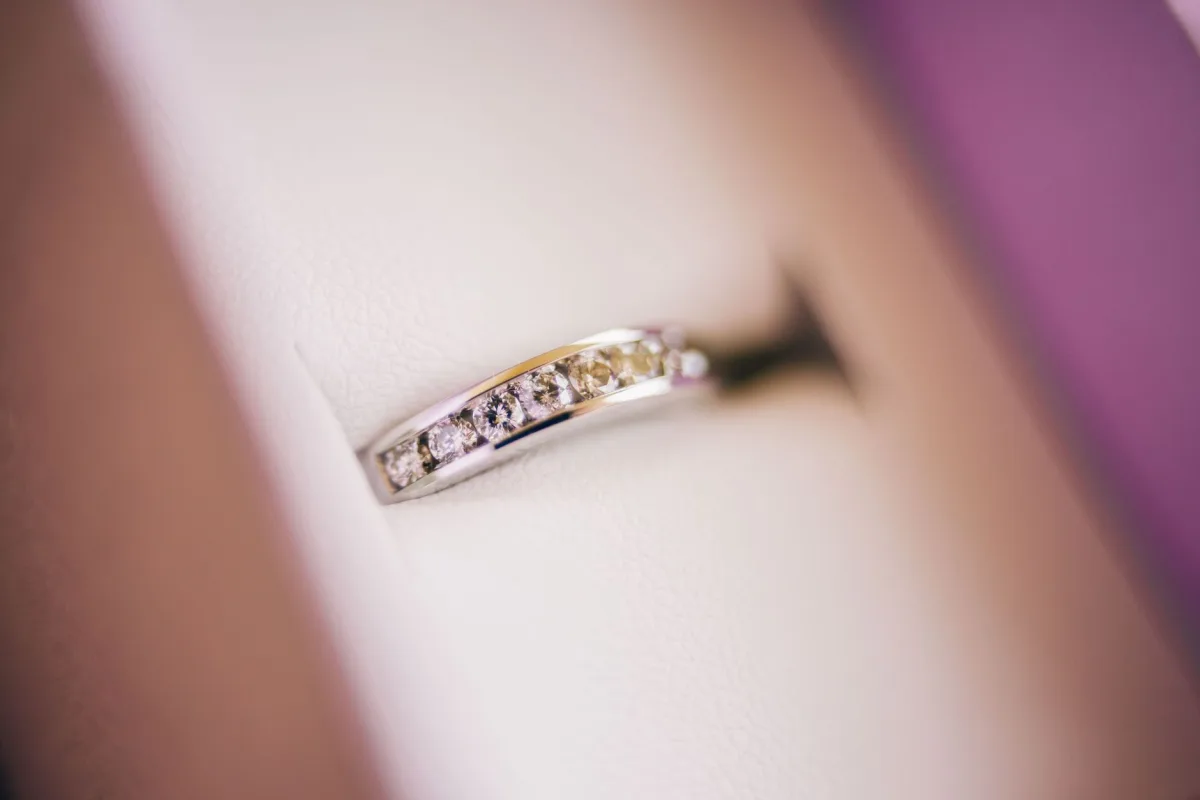
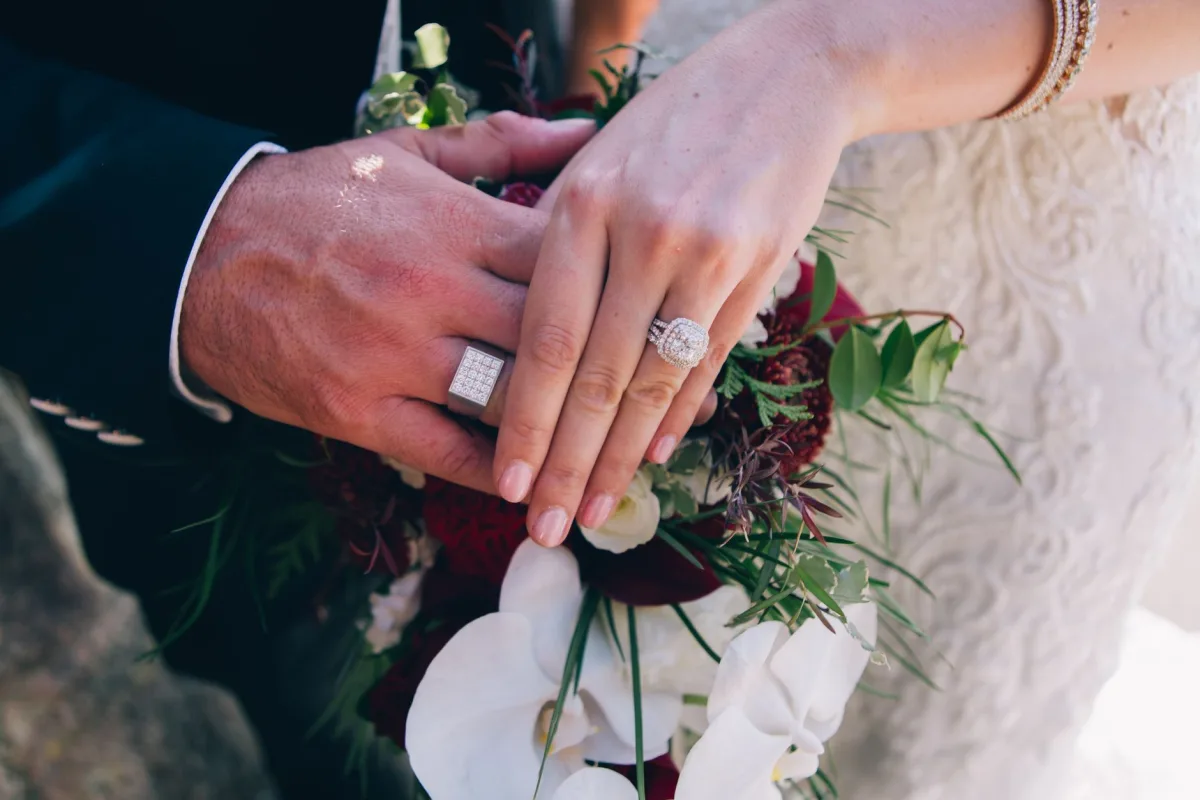
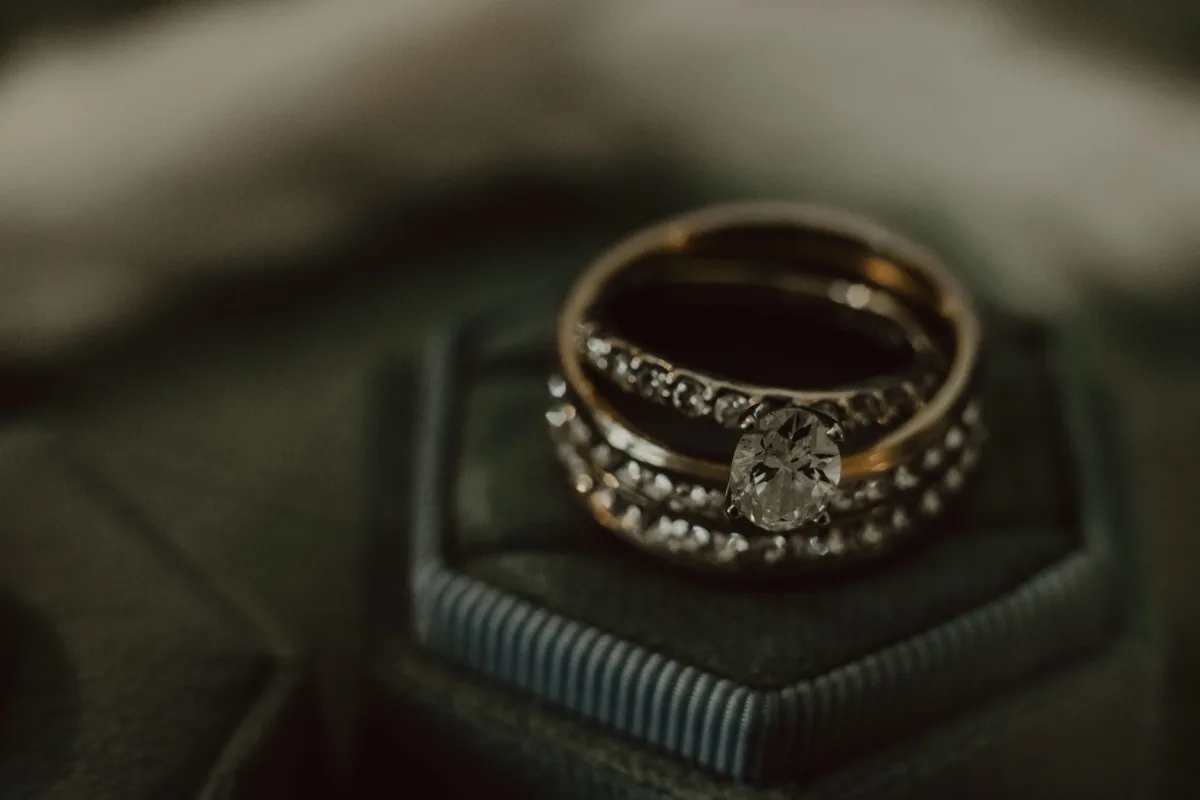
The value and appearance of a diamond as a gemstone are judged on four characteristics, universally known as the four Cs. Understanding them is the single most useful thing a buyer can do, because it lets you trade one against another to get the look you want at a price you can afford.
Cut
How well the diamond is faceted and proportioned. Cut governs sparkle more than anything else, and a superb cut can make a modest stone dazzle. Prioritise it.
Colour
Graded from colourless to faintly tinted. Truly colourless stones are rarest and dearest, but a slight warmth is often invisible once the diamond is set.
Clarity
The presence of tiny internal marks called inclusions. Many are invisible to the naked eye, so an "eye-clean" stone gives the look of flawlessness for less.
Carat
The diamond's weight, not its size directly. Price rises sharply at popular round weights, so a hair under a round number can save a lot.
The word carat is worth a footnote: the carat is a unit of mass equal to exactly 200 milligrams, used specifically for gemstones. The practical lesson of the four Cs is that they are levers, not a ranking. Spend on cut, accept a colour and clarity that look perfect to the eye rather than to a microscope, and choose a carat weight just below the popular round numbers, and you get a ring that looks superb without paying for qualities no one can see. If a diamond band rather than a solitaire appeals, our guides to the diamond band and the eternity band cover those styles in depth.
Settings and ring styles
The setting is how the diamond is held on the band, and it shapes both the ring's look and how well the stone survives daily life. The right setting balances beauty against protection, and the balance you choose should reflect how you use your hands.
- Solitaire. A single diamond raised on the band, usually held by prongs. Timeless and lets maximum light into the stone, though a high setting can catch on things.
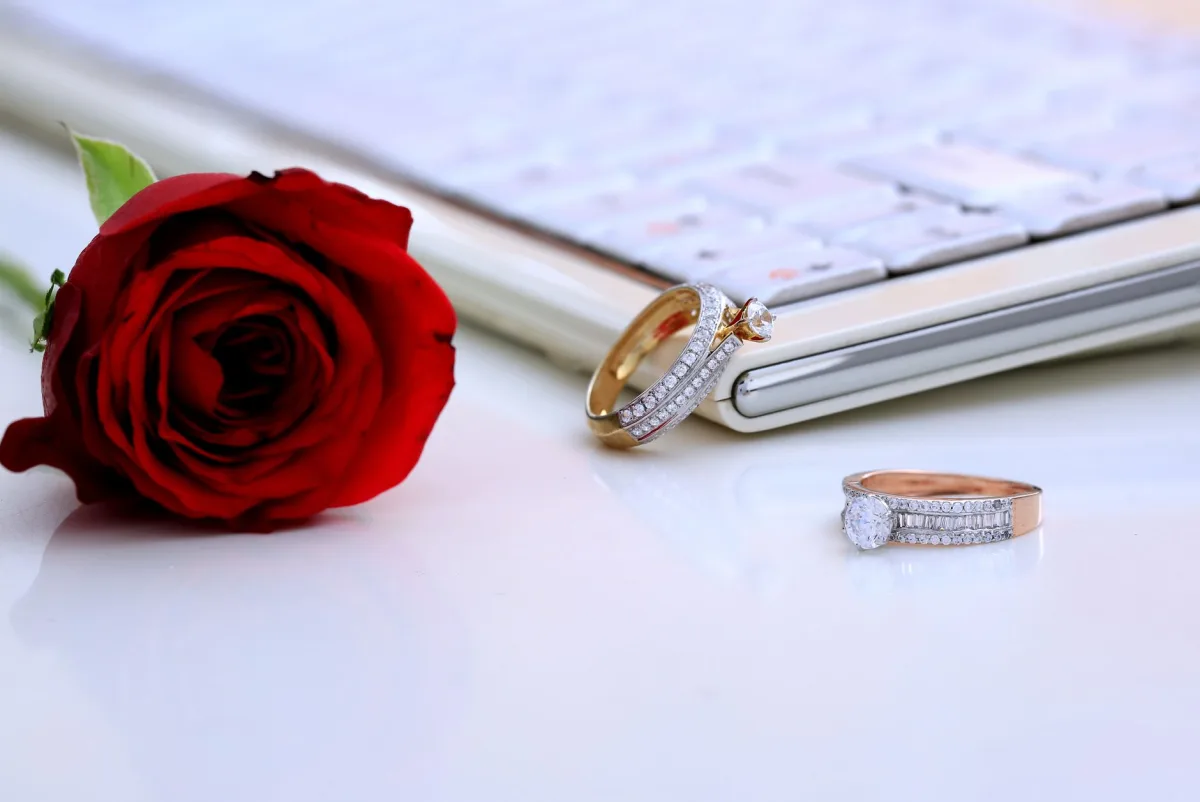
- Halo. A ring of small diamonds encircling the centre stone, making it look larger and adding sparkle for the money.
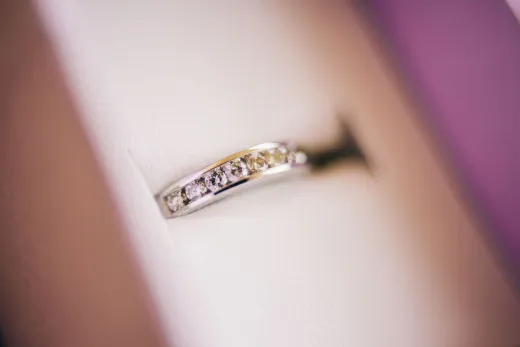
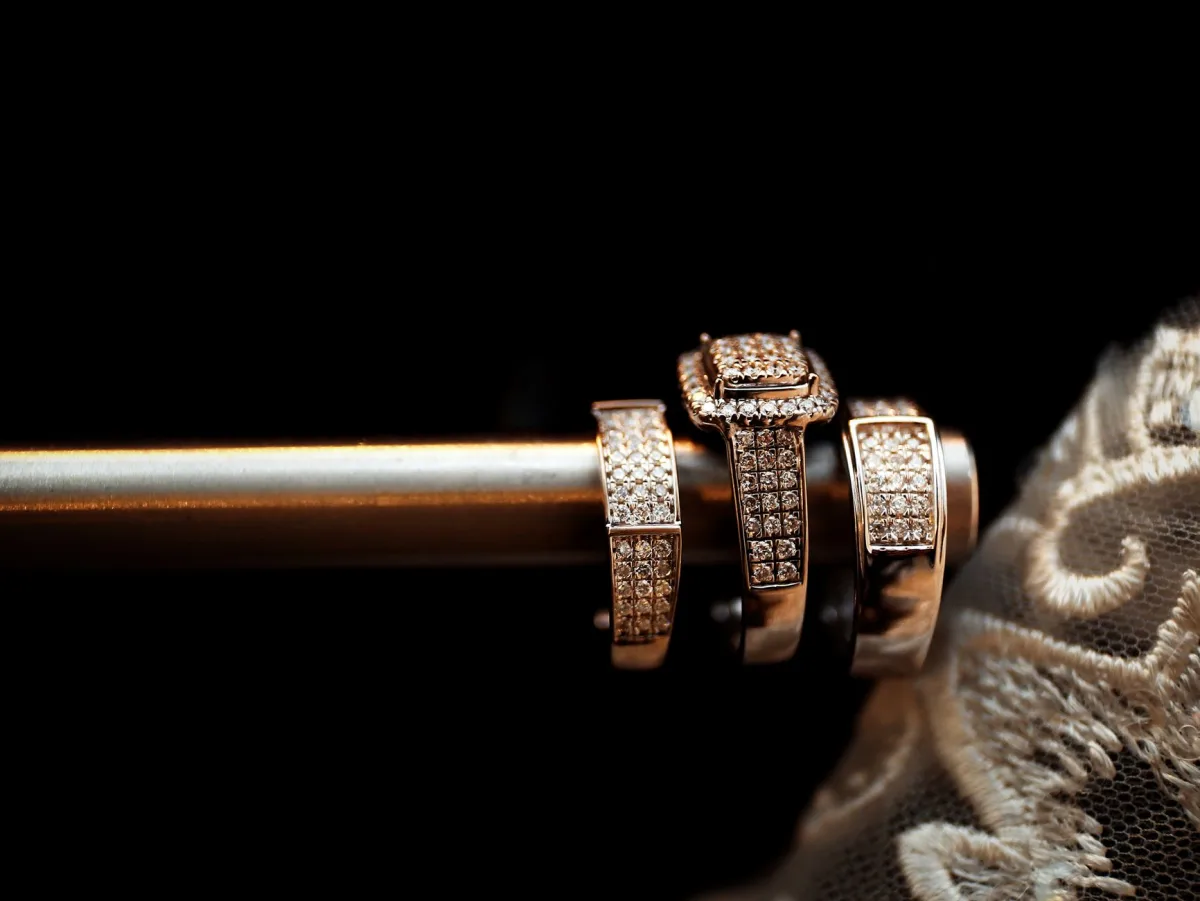
- Pave and eternity. Small diamonds set along the band itself, either partway or all the way around, for continuous shimmer. Full eternity bands are hard to resize.
- Bezel. A rim of metal wrapping the diamond's edge. The most protective setting, excellent for active hands, at the cost of a little sparkle.
- Three-stone. A centre diamond flanked by two smaller ones, often read as past, present and future. Meaningful and substantial.
A woman who works with her hands is usually better served by a lower, more protected setting like a bezel, while someone who wants maximum brilliance may prefer a raised solitaire and accept the extra care it needs. For the wider range of women's ring styles beyond diamonds, our guide to wedding rings for women puts these options side by side.
Choosing the metal for the band
The band does more than hold the stone; its colour changes how the diamond reads, and its metal decides how the ring wears. White metals like white gold and platinum make a diamond look brighter and are the most popular choice for diamond rings, while yellow and rose gold lend warmth and a more vintage or contemporary feel depending on the design. Platinum is denser and more durable but pricier; white gold is more affordable but is usually rhodium-plated and needs occasional re-plating to stay bright.
None of these is objectively best; the right metal depends on your colouring, your style and your budget. If a white metal appeals, our guides to white gold wedding rings for women and gold wedding rings for women weigh up the trade-offs between the popular options in detail, including maintenance and longevity.
Natural or lab-grown
One of the most consequential choices a modern buyer faces is between a mined diamond and a lab-grown one. A lab-grown diamond is a real diamond, produced in a controlled process rather than mined, and it has essentially the same physical, chemical and optical properties as a natural stone. To the eye, and to standard testing, it is a diamond in every meaningful sense.
The practical difference is price and origin. Lab-grown diamonds typically cost significantly less than mined stones of the same size and quality, which means a larger or higher-grade diamond for the same budget. Natural diamonds carry the appeal of rarity and a billion-year geological history. On ethics, the mined-diamond trade has worked to exclude conflict stones through the Kimberley Process, an international certification scheme intended to keep so-called blood diamonds out of the market, while lab-grown stones sidestep mining concerns entirely. Neither choice is wrong; the right one depends on what you value most, and it is worth asking your jeweller which you are actually being shown.
Buying with confidence
Putting it together, a confident diamond purchase follows a simple order. Decide your budget first. Put cut at the top of your priorities so the stone actually sparkles. Choose colour and clarity grades that look perfect to the naked eye rather than paying for microscopic perfection. Pick a setting that suits your daily life and a metal that suits your style. Decide honestly between natural and lab-grown. And always ask for independent grading documentation for any significant diamond, so you are buying a verified stone rather than a salesperson's word.
Do that, and you will own a ring that looks beautiful, wears well and represents genuine value rather than an inflated price. Matrimony360's jewellery guides exist to arm you with exactly these questions before you shop. For the complete overview of every ring type, from metals to settings to budgets, our main guide to wedding rings is the natural place to continue, and if budget is your main concern, our companion on cheap wedding rings shows how to keep the diamond look affordable.
Frequently asked questions
What are the four Cs of a diamond?
The four Cs are cut, colour, clarity and carat, the four characteristics that together decide a diamond's value and appearance. Cut is how well the stone is faceted and drives its sparkle; colour ranges from colourless to faintly tinted; clarity measures tiny internal marks called inclusions; and carat is the diamond's weight. They work as levers you can trade against one another, so prioritising cut while accepting eye-clean clarity and a slight colour warmth gives a beautiful ring for less.
Are lab-grown diamonds real diamonds?
Yes. A lab-grown diamond is a genuine diamond made in a controlled process rather than mined, and it has essentially the same physical, chemical and optical properties as a natural stone. It is not an imitation like cubic zirconia. The main differences are price and origin: lab-grown diamonds usually cost significantly less for the same size and quality, while natural diamonds carry the appeal of rarity and geological history. Both are real diamonds.
How big a diamond should a woman's wedding ring have?
There is no correct size, only what suits your hand, your style and your budget. A smaller, well-cut diamond looks more brilliant than a larger, poorly cut one, so quality of cut matters more than sheer weight. Because price jumps sharply at popular round carat weights, choosing a stone just below a round number, or opting for a halo setting that makes the centre look larger, gets you visual impact without overspending.
What is the best setting for a diamond ring?
It depends on your lifestyle. A raised solitaire lets in the most light and maximises sparkle but can catch on things, while a bezel setting wraps the stone in metal for the best protection, ideal for active hands. Halo settings add apparent size and sparkle, and eternity or pave bands add continuous shimmer but are harder to resize. Choose the balance of brilliance and protection that matches how you use your hands day to day.
How can I be sure a diamond is what the seller claims?
Ask for independent grading documentation from a recognised laboratory for any significant diamond, which reports the four Cs and confirms whether the stone is natural or lab-grown. Buy from a reputable seller, read the return and warranty terms, and be wary of a large stone at a surprisingly low price without paperwork to back it up. A verified grading report is your protection against paying for quality that is not actually there.