Gold Wedding Rings for Women: The Complete Guide
Yellow, white or rose, and 22k, 18k or 14k: how to choose the gold wedding ring that suits your complexion, your culture and your daily life.
Gold has carried the meaning of marriage for thousands of years, and for a woman choosing a wedding ring it still offers something no other metal quite matches: warmth, heritage and a colour that can be tuned to her skin and style. But "gold" is not one thing. It comes in three colours and several purities, each with its own look, cost and durability. This guide helps you choose the gold wedding ring that suits your complexion, your culture and your daily life, so the ring you wear for decades feels genuinely, personally right.
The short version
- Gold comes in three colours. Yellow is classic and warm, white is cool and modern, rose is soft and romantic.
- Karat is purity, not colour. 22k is rich but soft; 18k and 14k trade a little purity for daily durability.
- Skin tone can guide the colour, though the right answer is always the one you love wearing.
- Gold carries deep cultural meaning, especially in South Asian and Middle Eastern weddings, where higher-karat gold leads.
Why gold endures for women's wedding rings
Gold has been tied to marriage since antiquity. As the reference on wedding rings records, the Western custom reaches back to ancient Rome, and across much of Asia and the Middle East gold is woven even more deeply into wedding tradition, valued as much for its permanence and its role as family wealth as for its beauty. For a woman choosing a ring, that history is part of the appeal: a gold band connects a modern promise to one of the oldest symbols people have.
Practically, gold also flatters. Its warmth suits a wide range of complexions, it never tarnishes the way silver does, and it can be worked into everything from a plain band to an intricately set ring. The one thing to understand before you choose is that the word "gold" hides two separate decisions: the colour and the karat. Get both right and the ring will feel like it was made for you.
The three colours of gold
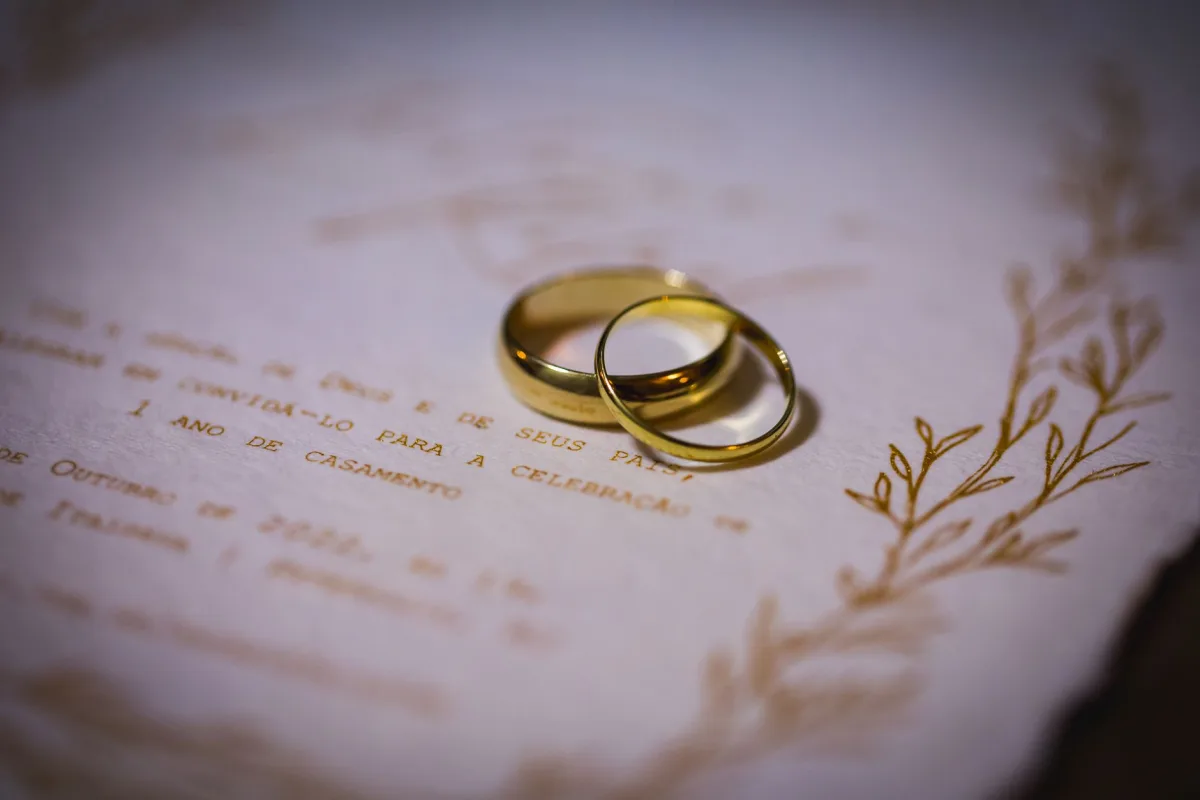
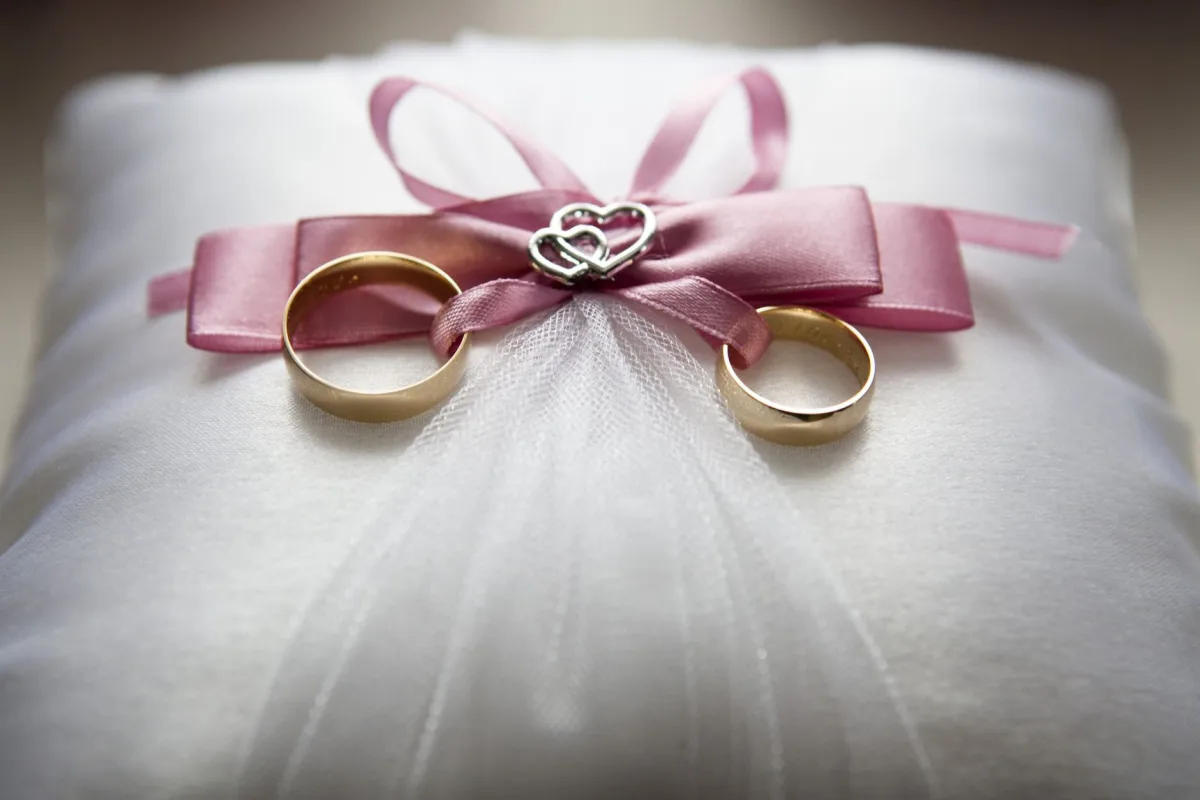
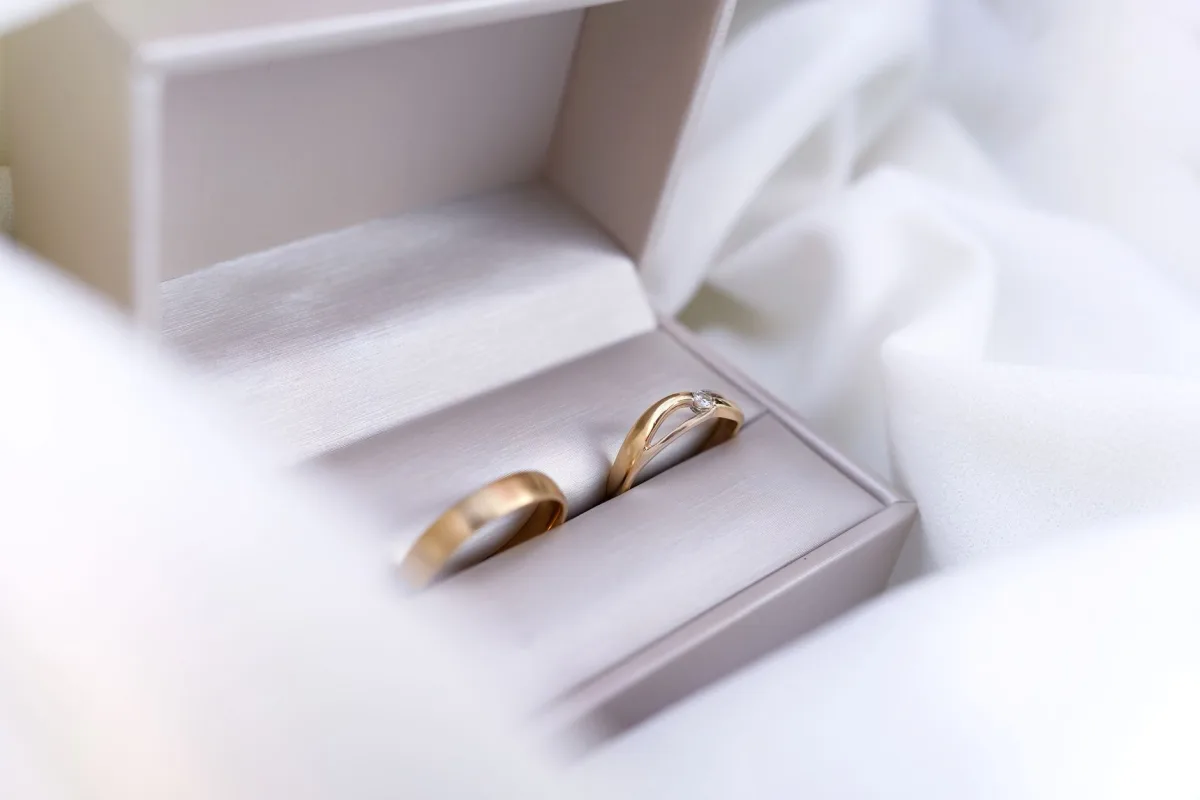
Pure gold is yellow, and the other colours are created by what it is mixed with. As the reference on coloured gold explains, copper pushes gold toward rose and red, while pale metals such as palladium or nickel turn it white. Each colour gives a wedding ring a different character.
Yellow gold
Gold alloyed with silver and copper for the classic, warm, traditional look. The easiest colour to resize and repair, and the natural choice where heritage matters.
White gold
Gold whitened with pale metals and usually rhodium-plated for a cool, silvery finish. Modern and diamond-friendly, though the plating needs occasional refreshing.
Rose gold
A gold and copper alloy with a soft pink blush. Romantic and distinctive, very durable thanks to the copper, and flattering on many skin tones.
Karat
The purity of the gold, stamped inside the ring. 22k is very pure and rich but soft; 18k and 14k are harder and better suited to daily wear.
If the cool, silvery look draws you, our dedicated guide to white gold wedding rings for women goes deeper on that colour, its plating and its styling. For the full picture of gold as a metal across all wearers, the broader complete guide to gold wedding rings is the companion pillar.
Understanding karat: purity versus durability
Karat measures how much of the metal is pure gold. 24k is pure gold, 22k is 91.6 percent, 18k is 75 percent, and 14k is 58.3 percent, with the rest made of alloy metals that add hardness and, in white and rose gold, colour. The trade-off is the key thing to grasp: the higher the karat, the purer, richer and more valuable the gold, but also the softer and more prone to scratching and bending it is.
For a woman's wedding ring worn every day, this matters. Very high-karat gold such as 22k or 24k is prized in many cultures for its deep colour and purity, but it dents and scratches more easily, so it suits a ring worn with care or on special occasions. 18k is a lovely balance of richness and resilience, and 14k is the hardest-wearing of the common choices, ideal for hands that are always busy. If your ring will take daily knocks, lean toward 14k or 18k; if purity and colour matter most, higher karat rewards you at the cost of a little toughness.
Matching gold to your skin tone
Colour is where the choice becomes personal, and while there are no strict rules, skin tone offers a gentle guide. Think of your undertone rather than how light or dark your skin is: warm undertones lean golden or peachy, cool undertones lean pink or blue, and neutral undertones sit between.
- Warm undertones. Yellow and rose gold echo the warmth of the skin and tend to glow against it. This is the classic, harmonious pairing.
- Cool undertones. White gold's silvery tone often looks crisp and flattering, though rose gold can also complement cool skin beautifully with its pink cast.
- Neutral undertones. The lucky in-between, where all three colours tend to work, leaving the decision entirely to taste.
Treat this as a starting point, not a verdict. The most reliable test is simply to try each colour against your own hand in natural daylight and see which lifts your skin and which you keep coming back to. Many women also mix colours across their ring stack, so nothing here locks you in.
Gold and cultural tradition
For many women, the choice of gold is not only aesthetic but cultural. In South Asian, Middle Eastern and many other traditions, gold is central to a wedding: it is given, worn and treasured as both adornment and family security, and higher-karat yellow gold, often 22k, is the classic choice precisely because its purity is valued. A wedding ring in these traditions frequently sits within a wider set of gold jewellery given at the marriage.
If your wedding carries these customs, it is worth honouring the karat and colour your family expects while still choosing a design you love, and considering how the ring will sit alongside the rest of the gold you will wear. Our guide to bridal jewellery sets shows how the ring fits with the necklace, earrings and bangles, and the wider guide to wedding jewellery covers the whole picture of what a bride wears.
Matching your wedding ring to your engagement ring
Most women wear the wedding ring beside an engagement ring, so the two should agree. The simplest harmony is to match the colour of gold, so a yellow gold engagement ring pairs with a yellow gold band, though mixing metals deliberately is increasingly popular and can look striking when done with intent. Beyond colour, check that the profiles sit flush: a straight band suits a high, simple engagement setting, while a low or unusual stone may need a contoured band shaped to nest around it.
If you are buying both together, a matched set designed as a pair takes the guesswork out entirely. Our guide to wedding rings for women walks through pairing the two pieces in more detail, whichever colour of gold you settle on.
Caring for a gold wedding ring
Gold is low-maintenance but not maintenance-free. All gold benefits from a gentle clean every few weeks in warm water with a drop of mild soap and a soft brush, followed by a thorough dry. Higher-karat gold is softer and shows scratches more readily, so treat a 22k ring more gently than a 14k one, and take any ring off for heavy manual work, the gym and cleaning with harsh chemicals. White gold additionally needs its rhodium plating refreshed periodically to stay bright.
Have a jeweller check the setting of any stone-set ring every year or two, since a loose claw is cheap to fix and costly to ignore, and consider insuring a ring of real value. Looked after this way, a gold wedding ring holds its beauty for a lifetime and beyond, which is exactly why gold has marked marriage for so long. When you are ready to see how the ring fits into the whole look, our overview of bridal attire and preparation puts every piece in context.
Frequently asked questions
Which colour of gold is best for a woman's wedding ring?
There is no single best colour, only the one that suits you. Yellow gold is warm, classic and rich in tradition; white gold is cool, modern and flatters diamonds; rose gold is soft, romantic and very durable. Your skin's undertone can guide the choice, with warm undertones suiting yellow and rose, and cool undertones often suiting white, but the most reliable test is trying each against your own hand in daylight.
What karat of gold should I choose for a wedding ring?
It depends on how you weigh purity against durability. Higher-karat gold such as 22k is richer in colour and prized in many cultures, but it is softer and scratches more easily. 18k balances richness with resilience, and 14k is the hardest-wearing common choice, best for busy, hands-on days. For a ring worn through everyday life, 14k or 18k is usually the practical pick.
Does gold suit every skin tone?
Gold is flattering across a very wide range of skin tones, which is part of its enduring appeal. Undertone matters more than how light or dark your skin is: warm undertones tend to glow with yellow and rose gold, cool undertones often suit white gold, and neutral undertones work with all three. These are gentle guides rather than rules, so try the colours on before deciding.
Why is high-karat gold so important in some cultures?
In South Asian, Middle Eastern and many other traditions, gold is treasured as both adornment and family wealth, and its purity carries real meaning, so high-karat yellow gold such as 22k is the classic wedding choice. Gold is often given and worn as a set at the marriage, making it central to the celebration. Honour the karat your family expects while still choosing a design you personally love.
Should my gold wedding ring match my engagement ring?
Matching the colour of gold is the simplest and most harmonious approach, so a yellow gold band with a yellow gold engagement ring, though deliberate metal mixing is increasingly popular. Beyond colour, make sure the profiles sit flush together; a low or unusually shaped engagement setting may need a contoured band. Buying both as a matched set removes the guesswork entirely.