White Gold Wedding Rings for Women: The Complete Guide
Matching the engagement ring, choosing settings and widths, stacking and daily care, so your white gold wedding ring looks like you and wears beautifully.
White gold has become the quiet default for women's wedding rings, and it is easy to see why: its cool, silvery tone flatters a diamond, sits neatly beside an engagement ring, and suits almost any skin. Where the real decisions lie is not in the metal itself but in the style: the width, the setting, whether it stacks with an engagement ring, and how the two pieces speak to each other. This guide focuses on those choices, so you can pick a white gold wedding ring that looks like you and wears beautifully every single day.
The short version
- Match the wedding band to the engagement ring first. They live together, so they should agree in metal and profile.
- Setting decides sparkle versus security. Pave dazzles; a plain or bezel band survives an active hand better.
- Width changes the whole feel. A slim band reads delicate; a wider one makes more of a statement.
- Plan for the plating. White gold is rhodium-plated and needs an occasional refresh to stay bright.
Why white gold suits women's wedding rings
White gold is real gold whitened with pale metals and finished with a bright rhodium coating, giving the icy look of platinum at a gentler price. For a women's wedding ring that is often worn beside a diamond engagement ring, that neutral white tone is a real advantage: it lets the stones do the talking without a warm cast competing with them. If you want the full detail on how the alloy and plating work, our complete guide to white gold wedding rings covers the metal itself. Here we stay on the styling.
The other reason white gold dominates women's rings is versatility. It reads modern next to a contemporary setting and classic next to a vintage one, it pairs happily with both white and coloured stones, and it coordinates with the silver-toned jewellery many people already wear. That flexibility is why it so often wins over yellow or rose gold when a bride wants a ring that will never look dated.
Match it to the engagement ring first
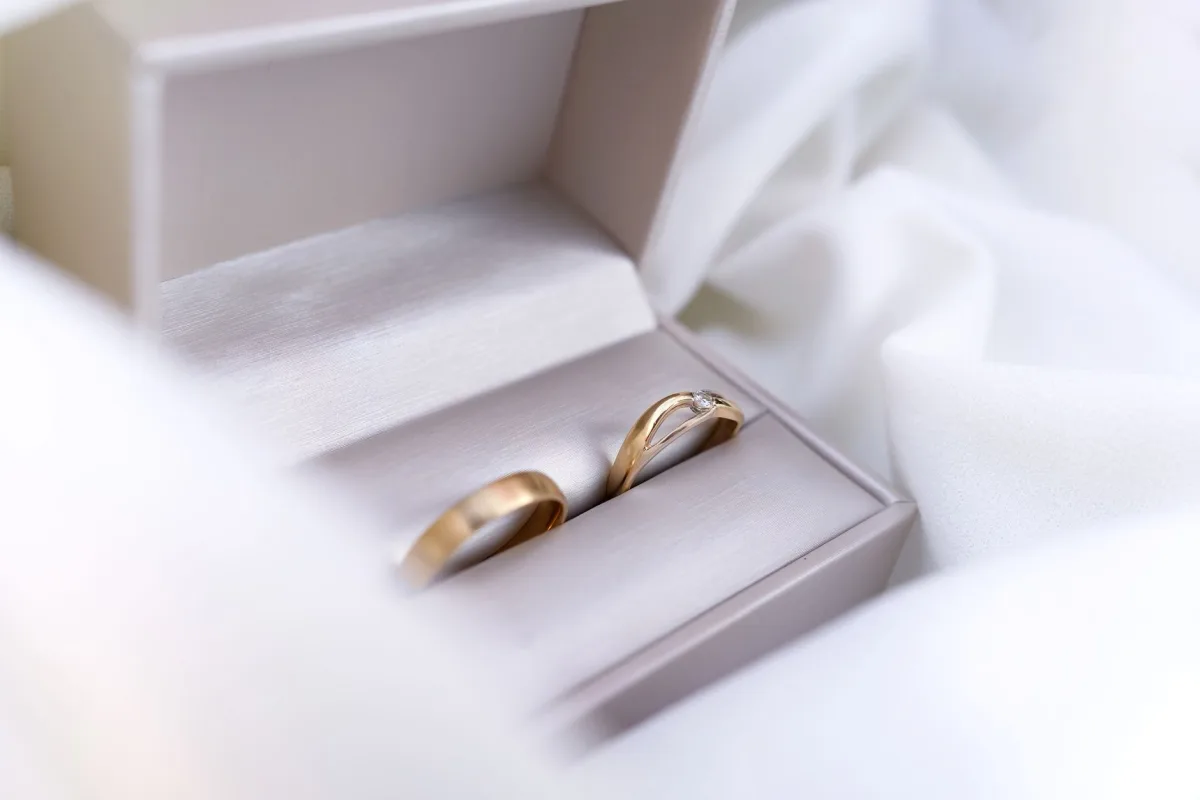
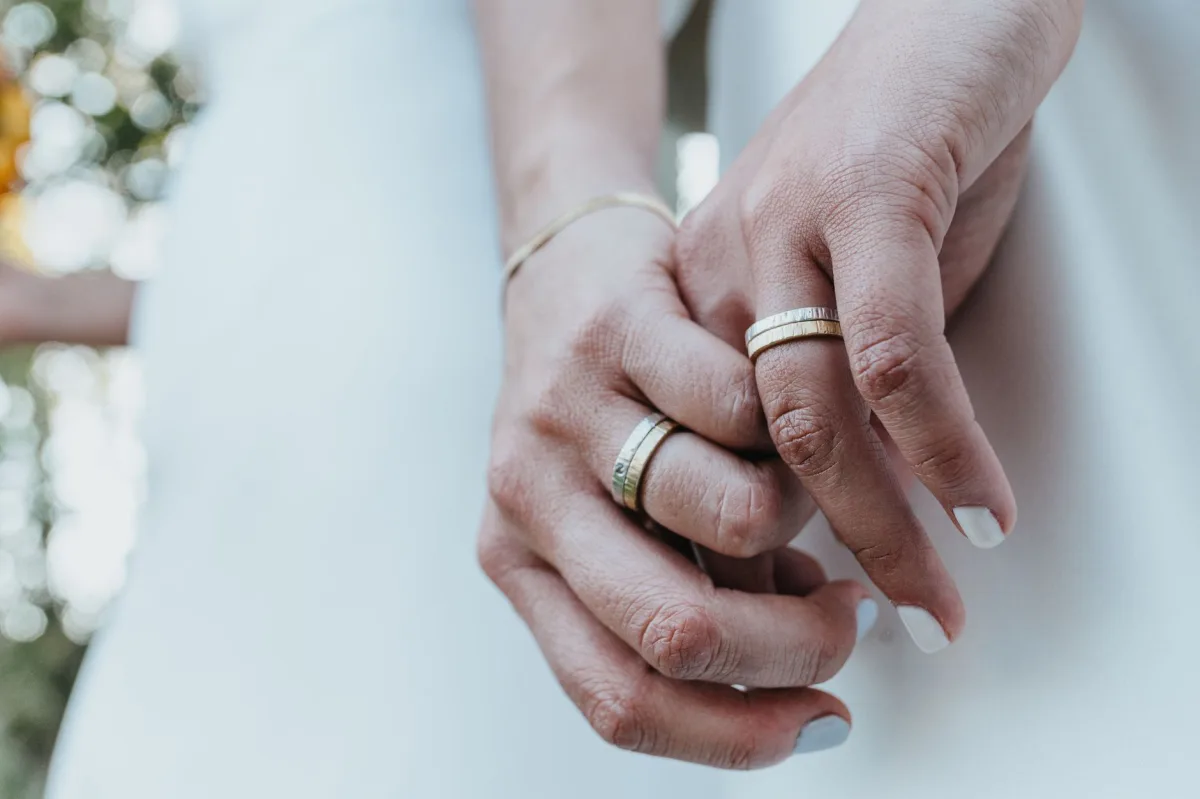
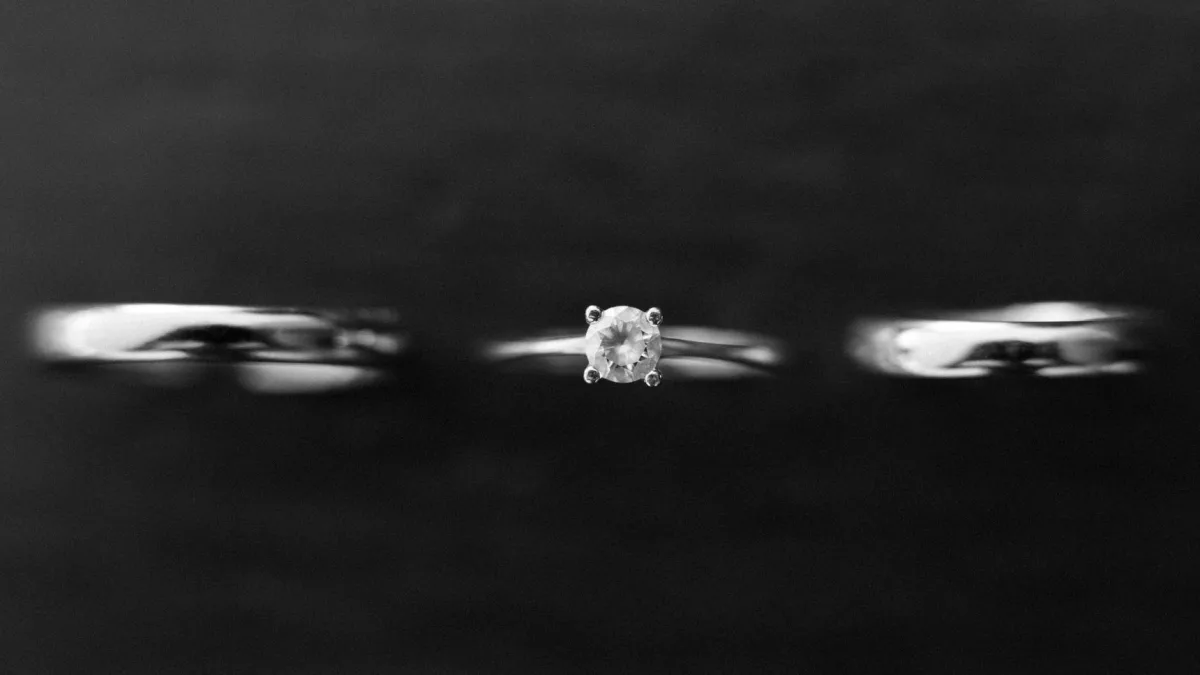
The most important styling decision comes before you look at a single band: how it will sit with the engagement ring. The two are worn together for a lifetime, and as the history of the engagement ring shows, the tradition of stacking the wedding band beneath it is long established. That means the metals should usually match, so a white gold engagement ring calls for a white gold wedding band, and the profiles should sit flush without an awkward gap.
Two features decide whether a pair nests neatly. The first is the shape of the engagement ring's base: a low, straight setting takes a plain flat band, while a ring with a low-set stone or a distinctive gallery may need a contoured or curved band shaped to fit around it. The second is height, since a very tall setting can make a straight band gape. If you already have the engagement ring, take it with you, or better still buy the wedding band from the same jeweller so the two are designed to marry.
Choosing a setting
The setting is where a white gold women's band gains its personality, and it is a trade-off between how much it sparkles and how well it survives daily life. As the reference on wedding rings notes, plenty of bands carry no stones at all, and a plain white gold band is a completely deliberate, timeless choice. If you do want stones, the setting is what holds them.
Pave and micro-pave
Tiny diamonds set close across the surface for maximum sparkle. Beautiful, but the small stones and their claws need occasional checking.
Channel set
Stones held in a groove between two walls of metal, flush and protected. A good balance of shine and security for an active hand.
Bezel or half-bezel
Metal wraps around the stone, the most secure setting of all and the kindest to a busy lifestyle. Modern and clean in look.
Plain band
No stones at all, letting the white gold and the engagement ring take centre stage. The most durable and lowest-maintenance option.
If your hands are busy with children, cooking or work, favour the more protective end of that list. A pave-set band is exquisite but demands more care and the occasional trip to reset a stone, while a plain or channel-set band shrugs off daily wear. For a fully stone-set look you can also explore an engagement and wedding ring set designed as a matched pair from the start.
Width, profile and finish
Three quiet details change how a white gold band looks and feels far more than most people expect: its width, its profile and its finish. Width is the most visible. A slim band of around two millimetres reads delicate and lets the engagement ring dominate, while a wider band of three millimetres or more makes a statement of its own and balances a larger stone. Try both, because the right width is a matter of hand size and taste, not a rule.
Profile is the cross-section shape, and it decides comfort as much as looks. A court or comfort profile is domed on the inside so it slides over the knuckle easily and rests gently, which most women find more comfortable for all-day wear than a flat profile. Finish is the surface texture: a high polish is bright and classic, a brushed or matte finish is understated and hides fine scratches well, and a milgrain or beaded edge lends a vintage feel. None is better than another; they simply set different moods.
Stacking and the modern ring wardrobe
Many women no longer wear just two rings but build a small stack: the engagement ring, the wedding band, and sometimes an eternity or anniversary ring added later. White gold is ideal for this because its neutral tone lets you mix in different stones and even the occasional accent of another metal without clashing. If you imagine adding to the stack over the years, it is worth choosing a wedding band with that future in mind, leaving room and keeping the profiles compatible.
A common and elegant approach is to keep the wedding band relatively simple so it works whether worn alone or stacked, then let the engagement ring and any later additions carry the sparkle. If diamonds are central to your vision, our guide to diamond wedding rings for women goes deeper on stones and settings, and for the wider view across all colours of gold see our guide to wedding rings for women.
Everyday wear and upkeep
A women's wedding ring is worn through everything, so it pays to buy for the life you actually lead. If your days are hands-on, a lower-profile setting and a slightly harder 14k white gold will take the knocks better than a tall, delicate 18k design. The rhodium plating that makes white gold so bright does wear over time, warming toward the alloy underneath, and a quick re-plate by a jeweller restores it. Budget for that as a small recurring cost rather than a surprise.
Simple habits keep the ring at its best: take it off for the gym, gardening and cleaning with harsh chemicals, clean it gently every few weeks in warm soapy water, and have any stone-set band checked yearly so a loose claw is caught early. A white gold ring cared for this way stays bright and secure, ready to sit beside the engagement ring for decades. If you are also assembling the wider bridal look, our guide to bridal jewellery sets shows how the ring fits with the rest of the pieces.
Frequently asked questions
Should my white gold wedding ring match my engagement ring?
Usually yes, because the two are worn together for life. Matching the metal, so a white gold band with a white gold engagement ring, keeps them looking like a considered pair, and the profiles should sit flush without a gap. If the engagement ring has a low stone or an unusual base, you may need a contoured band shaped to nest around it. Buying both from the same jeweller makes the fit easiest.
Which setting is best for a woman's white gold wedding ring?
It depends on your lifestyle. Pave and micro-pave settings give the most sparkle but need more care and occasional stone checks. Channel and bezel settings hold stones more securely and suit busy, hands-on days. A plain band is the most durable and lowest-maintenance of all, and lets the engagement ring take the spotlight. Match the setting to how hard you use your hands, not just to the look.
What width should a women's white gold wedding ring be?
There is no fixed rule, but slim bands of around two millimetres read delicate and let the engagement ring lead, while wider bands of three millimetres or more make more of a statement and balance a larger stone. Try a few widths on your own hand, since the right choice depends on finger size and personal taste. A comfort or court profile is domed inside and tends to feel best for all-day wear.
Does a white gold ring need re-plating?
Yes. White gold is finished with a bright rhodium plating that gradually wears with daily contact, letting the warmer alloy beneath show through. A jeweller can re-plate it to restore the icy shine, typically every one to three years depending on how hard you wear it. It is an inexpensive but recurring service, and it is the main piece of upkeep white gold asks for compared with platinum.
Can I stack other rings with a white gold wedding band?
Absolutely, and many women do. White gold's neutral tone makes it easy to stack with an engagement ring and to add an eternity or anniversary ring later, even ones set with coloured stones. If you plan to build a stack over time, choose a relatively simple wedding band and keep the profiles compatible so the rings sit neatly together as the collection grows.