Wedding Rings Sets: The Complete Guide
Bridal, trio and his-and-hers sets explained, the soldering decision, and whether a matched set or separate rings suits you best.
A wedding ring set solves a problem that trips up a lot of couples: making two or three separate rings look as though they were always meant to sit together. Instead of buying an engagement ring, a wedding band and perhaps a partner's band piece by piece and hoping they match, a set is designed as one coherent group from the start. This guide explains the kinds of ring set on the market, what each is for, the practical questions of nesting and soldering, and how to decide whether a set or separate rings is the smarter buy for you.
The short version
- A ring set is designed to match, so the pieces nest cleanly instead of leaving gaps or clashing metals.
- Bridal, trio and his-and-hers sets serve different jobs; pick the one that fits who is wearing what.
- Sets usually cost less than buying separately, but they trade away some flexibility if tastes change.
- Soldering the rings together is optional, convenient day to day, but harder to resize or wear apart later.
What a wedding ring set actually means
A wedding ring set is a group of rings sold together and designed to be worn together. At its simplest that means an engagement ring and a matching wedding band; at its fullest it can mean a complete set covering both partners. The point of a set is coordination. Because the pieces are made as a family, the metals match exactly, the profiles line up, and a shaped band curves precisely around an engagement ring's centre stone so the two sit flush with no awkward gap.
To understand a set you first need the pieces it is made from. The engagement ring is given at the proposal and usually carries a prominent stone; the wedding ring, or band, is exchanged during the ceremony and is typically plainer. A set simply supplies these as a matched pair rather than leaving you to reconcile two independent purchases. For the wider background on the individual pieces, our pillar on wedding rings covers meaning, metals and settings in full.
The three kinds of set
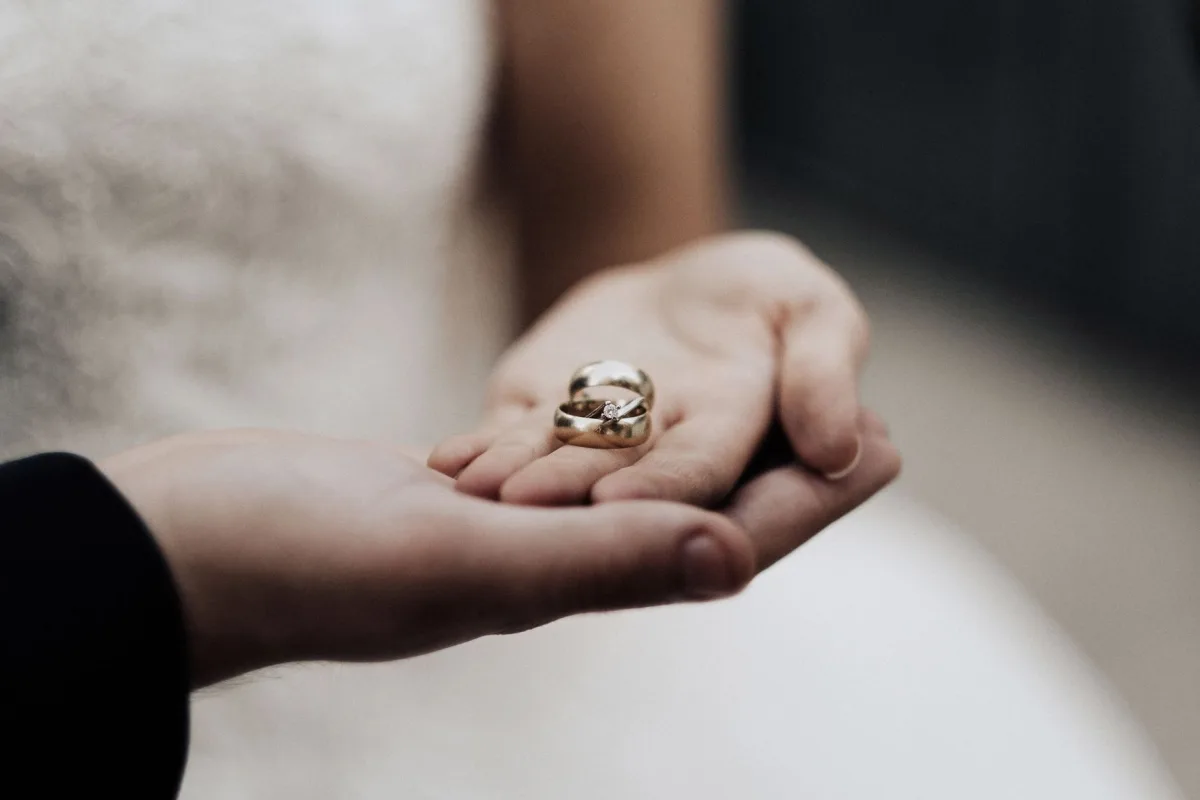
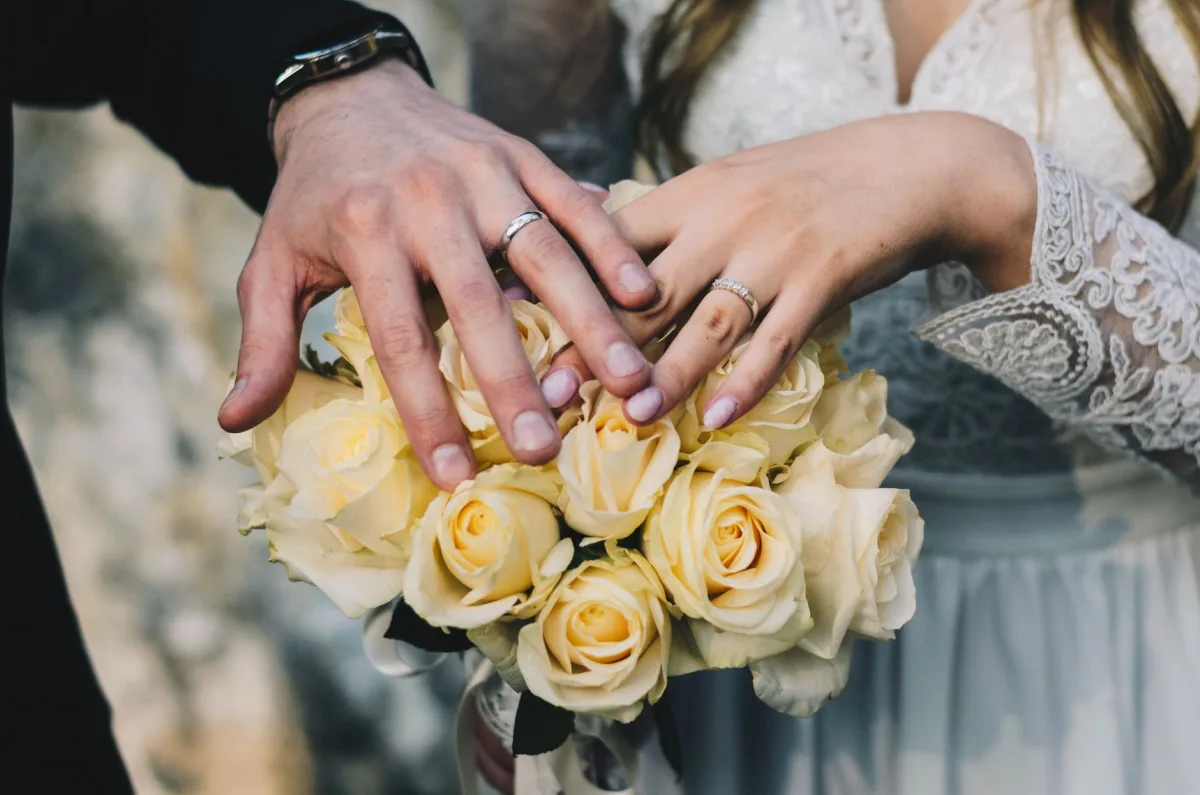
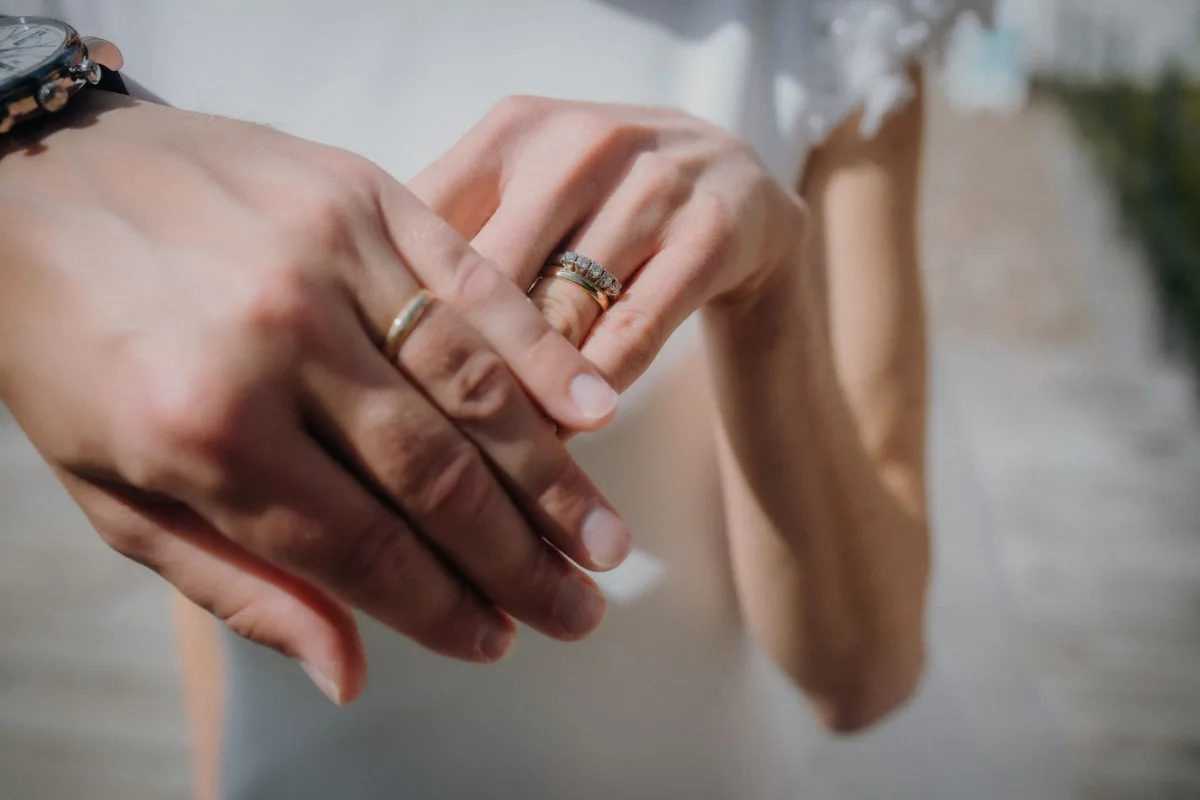
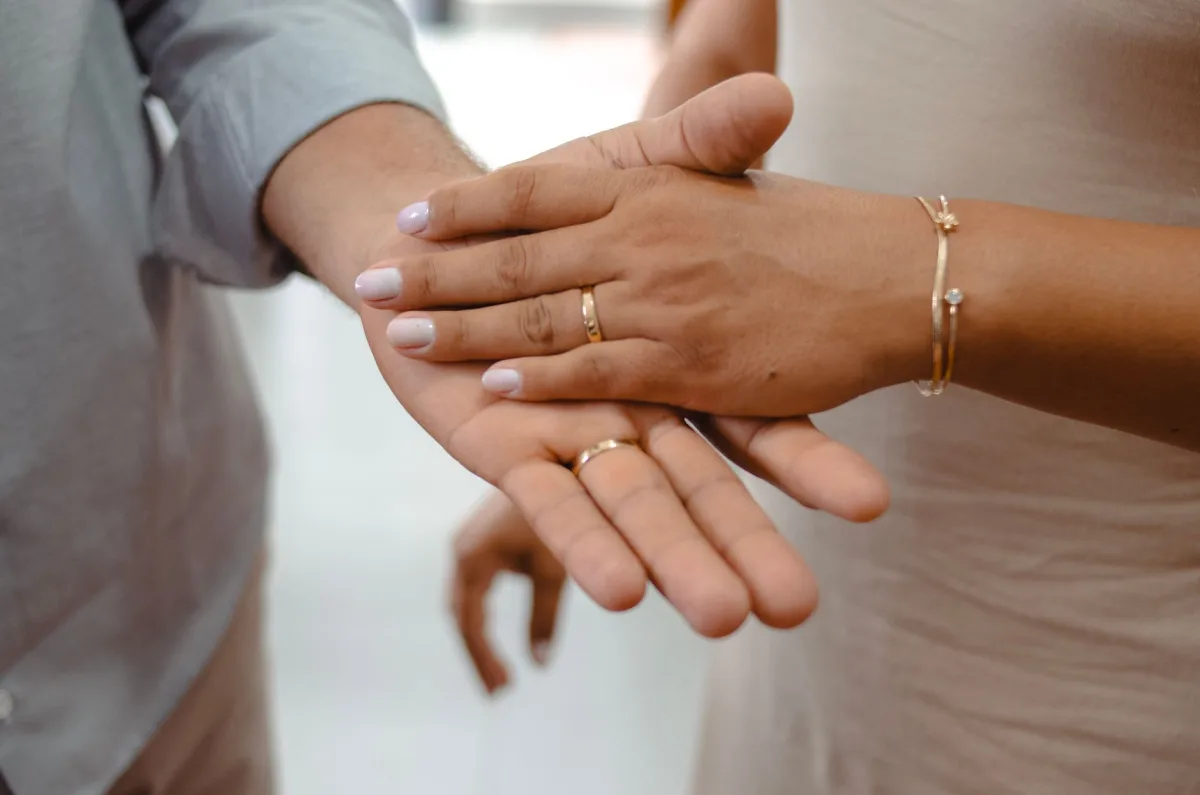
"Wedding ring set" is used loosely for several different products, and knowing which is which saves a lot of confusion at the counter.
Bridal set
An engagement ring plus a matching wedding band for one person, designed to nest together. The most common meaning of the term.
Trio set
A bridal set plus a coordinating band for the partner: three rings in one purchase, so both partners and the engagement ring all match.
His-and-hers set
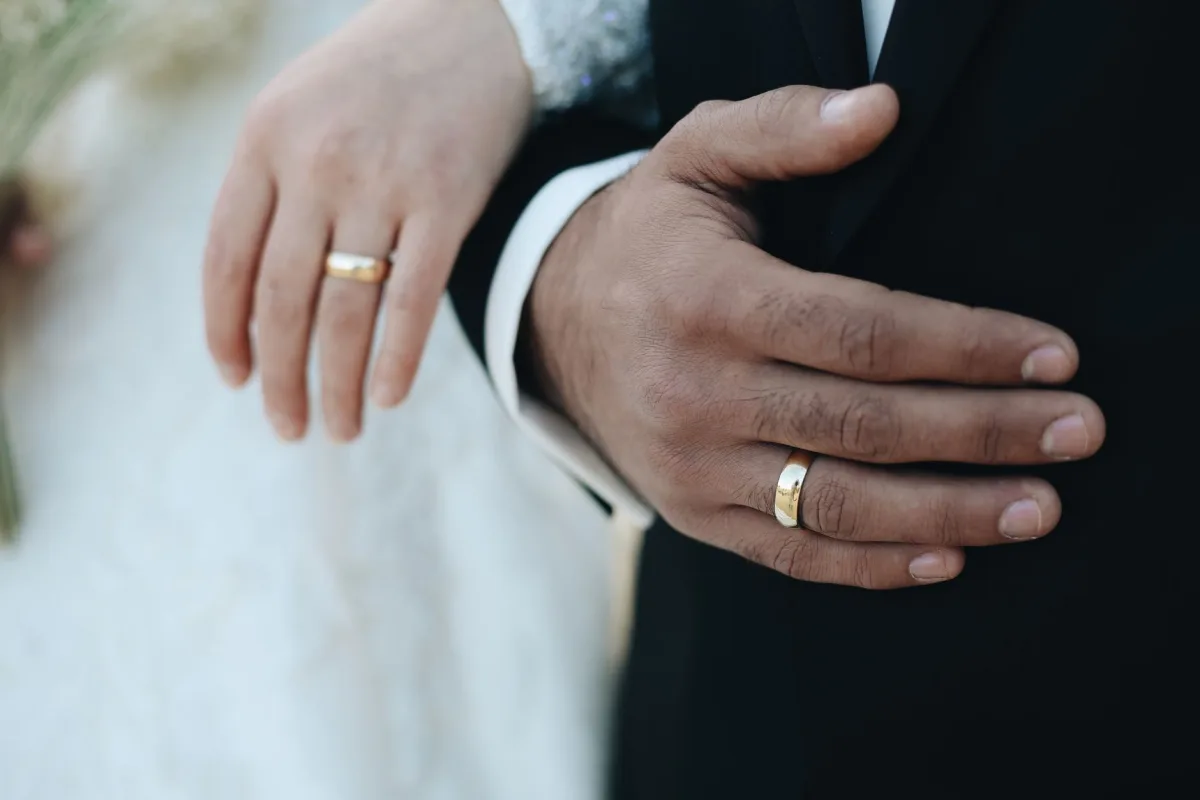
Two wedding bands designed to complement each other, in matching or deliberately paired metals and finishes, with no engagement ring involved.
Shaped or contoured band
A wedding band curved to fit around a specific engagement ring. Sold within a set, it guarantees the two pieces sit gap-free.
A bridal set is the right choice when one partner wears an engagement ring and wants a wedding band that fits it perfectly. A trio set suits couples who want everything matched in a single decision. A his-and-hers set is for couples who are exchanging plain bands with no engagement ring, or who want their two bands to echo one another. Our companion guides to his-and-hers wedding rings and wedding bands for couples dig into the matched-versus-contrasting question for two people.
Why buy a set rather than separate rings
The case for a set comes down to three genuine advantages, and one honest caveat.
- Guaranteed match. The metals, colours and profiles are made to agree. A white-gold band from one maker and a white-gold ring from another can differ subtly in tone; a set removes that risk entirely.
- A better nesting fit. A set band is often shaped to the engagement ring, so there is no wedge of skin between them and the pair reads as one piece.
- Usually cheaper. Buying the rings together commonly costs less than sourcing them separately, and it settles several decisions in one visit.
- The caveat: less flexibility. A set locks in a look. If your taste shifts, or you later want to wear the bands independently, a matched set gives you less room to change course than pieces chosen on their own.
If flexibility matters more than a perfect match, buying separately is perfectly valid. The trick, if you go that route, is to take the engagement ring with you when choosing the band so you can check the metal tone, height and curve in person rather than trusting a description.
To solder or not to solder
Once a bridal set is worn, many jewellers offer to solder the engagement ring and wedding band together into a single unit. This is optional and reversible with effort, and it is worth weighing rather than agreeing to on the spot.
Soldering has real conveniences. The two rings stop spinning independently, they always sit in the right orientation, and they wear evenly instead of rubbing against each other. It also stops one ring slipping off while the other stays on. The downsides are equally real: a soldered pair is harder and sometimes more expensive to resize, you can no longer wear the engagement ring on its own for a formal occasion, and cleaning the joined pair is slightly fiddlier. A sensible middle path is to wear the rings unsoldered for the first year, see whether the spinning genuinely bothers you, and only join them if it does.
Metals, stones and matching finishes
A set still asks you to make the core jewellery decisions; it simply keeps them consistent across the pieces. Metal is the first and biggest, driving both colour and durability. Within gold, 14k and 18k are the practical standards because higher karat is softer, and the colour of gold depends on what it is alloyed with, from warm yellow to blush rose to rhodium-finished white. Platinum is naturally white, dense and hypoallergenic but heavier and pricier.
On stones, a set often carries a matched theme: a diamond solitaire engagement ring paired with a pave or channel-set band, or a plain band that lets the engagement stone lead. If you want a band with stones all the way round, an eternity ring is a striking choice, but remember most full eternity rings cannot be resized because the stones run the whole circle, so the fit must be right from the start. For couples who want the same design logic extended to two plain bands, our guide to wedding band sets focuses on that pairing, and matrimony360 is a useful place to think these choices through together without a salesperson at your elbow.
Budgeting for a set
Set aside any "months of salary" rule; it was an advertising invention aimed at engagement rings and has no bearing on how you should budget for a set. The levers that actually move the price are, in order: the metal and karat, the number and quality of stones, the total weight of metal, and finally the finish and any engraving. A trio set naturally costs more than a bridal set simply because it contains an extra ring, so if the budget is tight, a bridal set now with the partner's band added later is a legitimate plan.
The honest guidance is the same as for any wedding jewellery: there is no correct amount, only an amount that is right for you. A modest matched set in 14k gold and an expensive platinum trio do the same symbolic job. If value is your priority, compare a set against buying separately, since the set usually wins on price, and read our overviews of silver wedding rings and affordable metals before deciding.
Frequently asked questions
What is a bridal set versus a trio set?
A bridal set is an engagement ring plus a matching wedding band for one person, designed to nest together. A trio set adds a third ring, a coordinating band for the partner, so both partners and the engagement ring all match in a single purchase. Choose a bridal set when one person wears an engagement ring, and a trio set when you want everything, including the partner's band, matched at once.
Are wedding ring sets cheaper than buying rings separately?
Usually, yes. Buying the rings together as a set commonly costs less than sourcing each piece independently, and it settles several decisions in one visit. The trade-off is flexibility: a set locks in a matched look, so if your taste changes or you later want to wear the pieces apart, you have less room to adapt than with rings chosen individually.
Should I have my engagement ring and wedding band soldered together?
It is optional. Soldering stops the rings spinning and rubbing, keeps them correctly oriented and prevents one slipping off alone. The downsides are that a soldered pair is harder to resize, cannot be worn separately, and is slightly fiddlier to clean. A good approach is to wear them unsoldered for a while first and only join them if the independent spinning genuinely bothers you.
Can a wedding ring set be resized?
Plain and partially set bands in gold or platinum can generally be resized, but two things complicate it. A full eternity ring cannot easily be resized because stones run the whole circle, and a soldered bridal set is harder and sometimes costlier to adjust than two separate rings. If you expect your finger size might change, favour resizable designs and get the initial measurement confirmed more than once.
Do both partners need matching rings?
Not at all. A his-and-hers set makes two bands that echo each other, but many couples deliberately choose contrasting rings that each partner will genuinely enjoy wearing. A shared metal or a common inner engraving can tie two different bands together without forcing them to be identical. Matching is a style choice, not a rule.