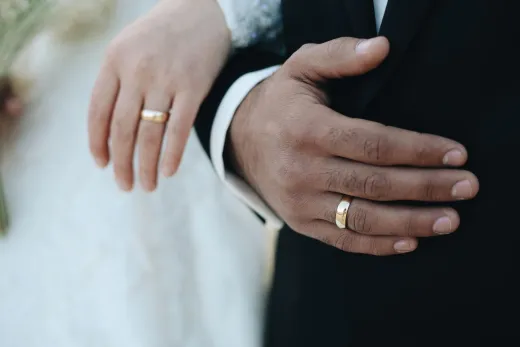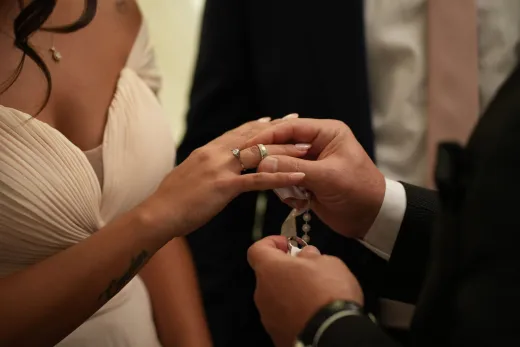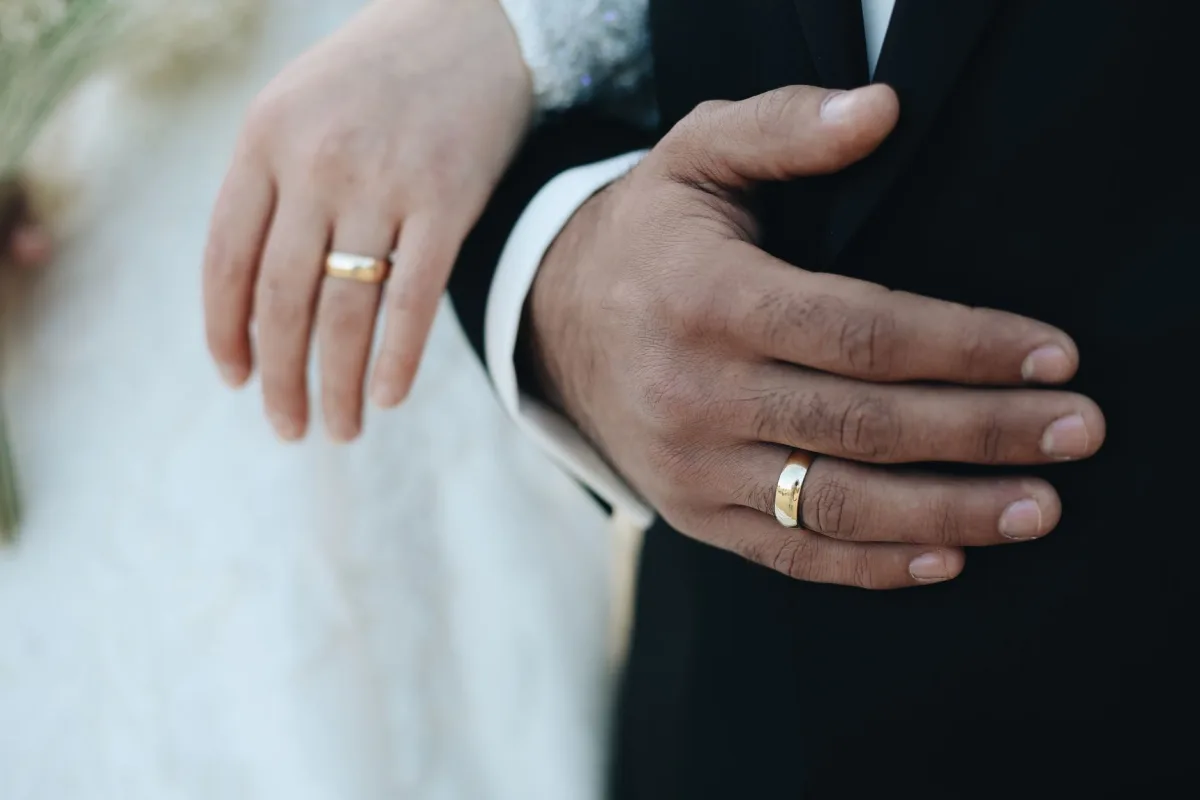
Wedding Bands for Couples: The Complete Guide
Choosing wedding bands as a couple: matching versus complementary, metals, style and width, lifetime sizing, and setting a sensible budget.
Wedding bands for couples are the pair of rings two people exchange and then wear for the rest of their lives together, which makes them one of the few purchases you genuinely buy forever. Beyond the romance, there are practical choices to get right: whether to match or complement, which metal suits each of your hands and jobs, how to size for comfort over decades, and how to spend sensibly. This guide walks through all of it so you can choose a pair you will both still love long after the wedding photos have faded.
The short version
- Matching is optional. Couples' bands can be identical, complementary or entirely different; coordinate on metal or theme instead.
- Metal drives durability and price. Gold, platinum and modern metals like tungsten each behave and cost differently.
- Fit is for life. Comfort-fit interiors, correct width and lifestyle all matter more than they seem at the counter.
- Set a budget first. Rings span a huge price range; the meaning does not scale with the receipt.
What a wedding band is, and why couples buy in pairs
A wedding ring is a finger ring worn to signal that its wearer is married, traditionally a plain or lightly decorated band exchanged during the ceremony. The custom is ancient and cross-cultural, and the familiar habit of wearing it on the fourth finger of the left hand comes from an old belief in a vein running from that finger to the heart, a lovely idea even though anatomy does not quite support it.
Buying as a couple simply means choosing both rings together as a set rather than separately. This is partly romantic and partly practical: shopping together lets you coordinate metal, finish and style, compare how designs sit on very different hands, and often negotiate better as a pair. It does not oblige you to wear identical rings; it just means the two bands are chosen with each other in mind.
Matching, complementary or different
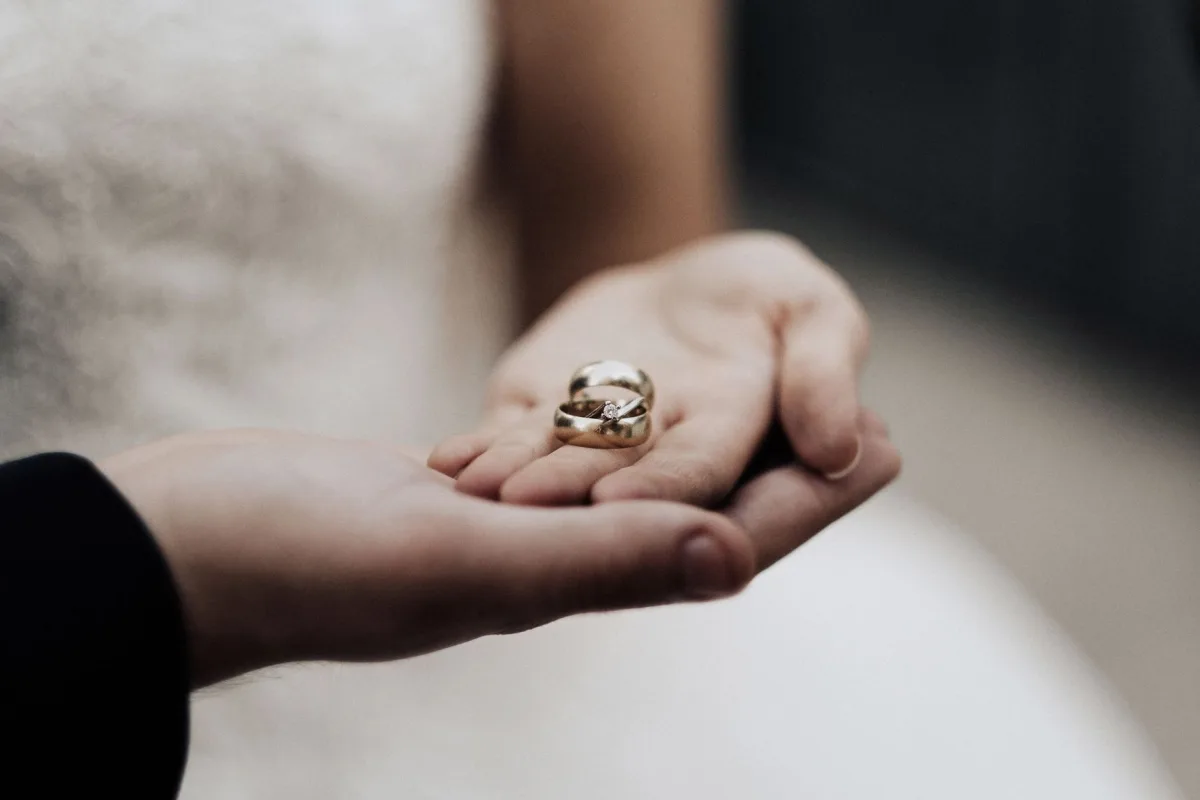
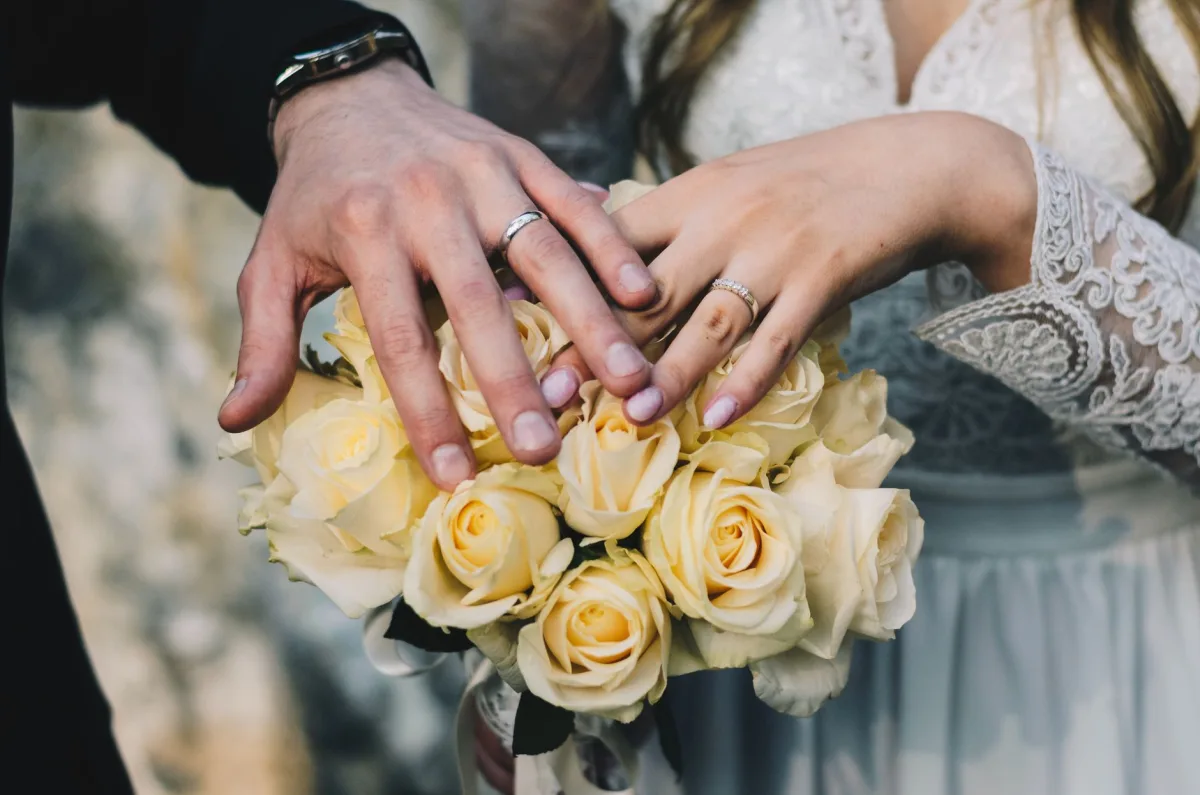
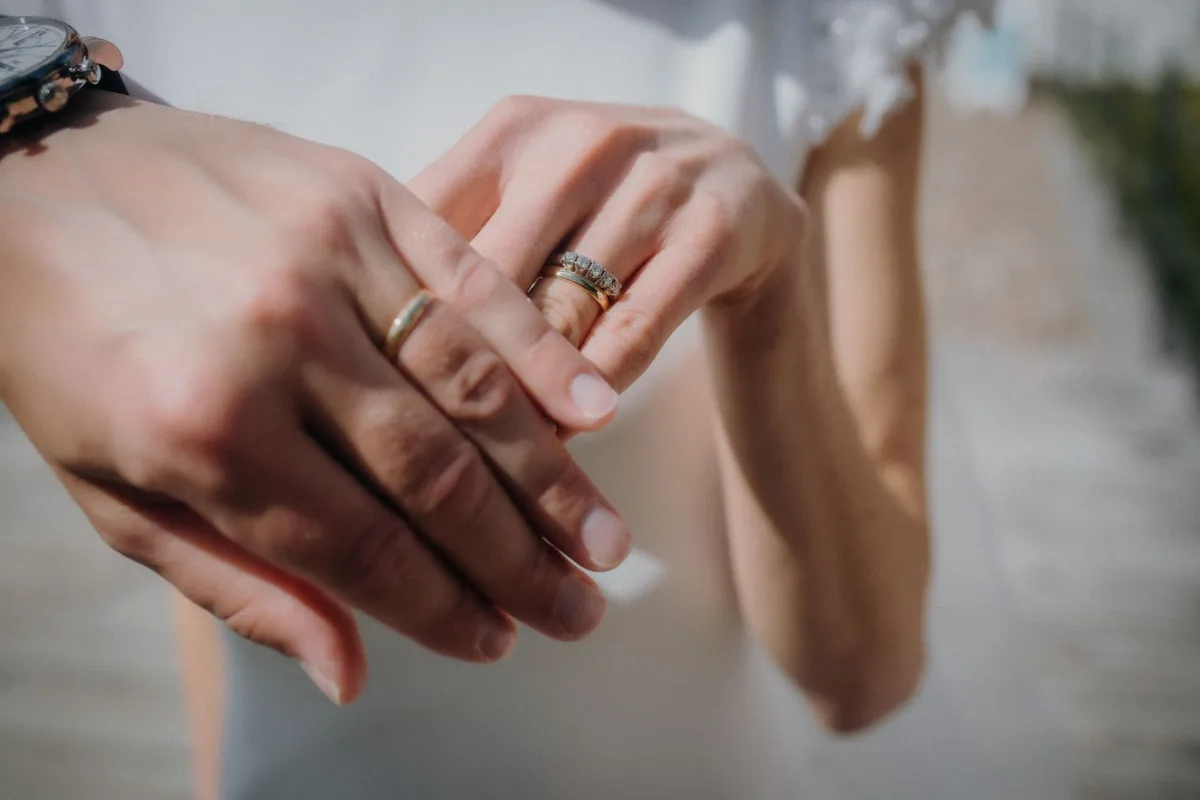
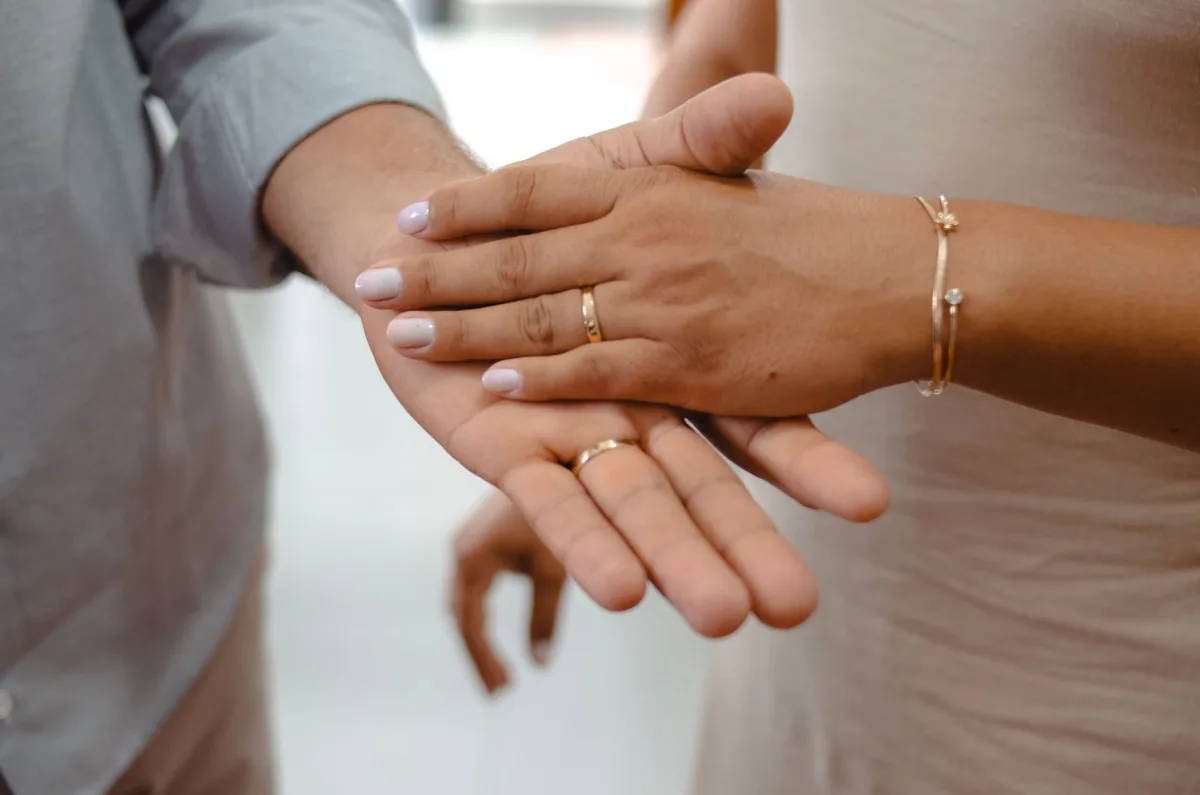
The first real decision is how closely the two bands should relate. There is no rule here, only what feels right to you, and all three approaches are common and correct.
Matching bands
Identical or near-identical rings, often the same metal, width and finish. A clear visual symbol of unity, popular for its simplicity.
Complementary bands
Different rings that share a thread: the same metal, a repeated engraving, a shared motif or matching inner finish. Unity with room for individuality.
Individual bands
Two rings chosen purely for each wearer, with no attempt to coordinate. Increasingly common as couples prioritise personal taste.
Bridal set pairing
One partner's band designed to sit with an engagement ring, while the other's is chosen to echo it in metal or detail.
A middle path suits many couples: pick a shared element, usually the metal, then let each ring's width, finish and detailing suit the individual hand and lifestyle. A jeweller may wear a delicate band she admires while he wears a broad, rugged one, both in the same gold. If you want to explore paired designs specifically, our companion guide to wedding rings for couples goes deeper on coordinated sets.
Choosing the metal
Metal is the choice that most affects how a band looks, wears and costs, so it deserves real thought. Each option is a trade-off between colour, durability, weight, price and how easily it can be resized or repaired down the line.
- Yellow gold. The classic. Warm, traditional and easy to resize and repair. Purity is measured in karats; lower karats are harder and more scratch-resistant, higher karats are richer in colour but softer.
- White gold. Gold alloyed for a silvery look, usually finished with rhodium plating that occasionally needs refreshing to keep its brightness.
- Rose gold. Gold with a copper alloy for a warm pink tone; the copper also makes it fairly durable.
- Platinum. A naturally white, dense and highly durable metal. Platinum is rarer and heavier than gold and typically the most expensive mainstream choice, prized for holding stones securely and ageing to a soft patina.
- Tungsten and titanium. Modern, hard-wearing and affordable. Tungsten carbide is extremely scratch-resistant but cannot be resized and can crack under sharp impact; titanium is light and tough. Both are popular for active wearers.
Match the metal to the hand it will live on. Someone who works with their hands, in a trade, a kitchen or a gym, may be happier with a hard, inexpensive metal they will not fret over, while someone wanting a ring they can resize and pass on for generations may prefer gold or platinum. For deeper detail on men's options in particular, see our guides to men's wedding bands and men's gold wedding bands.
Style, width and finish
Within any metal, a band's character comes from three details: its width, its profile, and its surface finish. Getting these right is what makes a ring feel like it belongs on a specific hand rather than just fitting it.
Width is measured in millimetres and changes the whole look. Narrow bands, roughly two to four millimetres, read delicate and are easy to wear all day; wider bands, five to eight millimetres and up, make a bolder statement and suit larger hands. The profile, whether the band is flat, gently domed (often called court) or squared, decides how it feels against the finger, with domed comfort-fit profiles being the most forgiving over long wear.
Finish sets the mood. A high polish is bright and traditional but shows fine scratches; a matte or brushed finish is understated and hides wear well; a hammered or textured surface adds character and disguises daily knocks. Couples often use finish as their shared thread, matching a brushed exterior across two otherwise different bands. Details like engraving, a hidden inner gemstone, or a contrasting inner sleeve let you personalise without changing the outward look.
Sizing and comfort for a lifetime
A wedding band is one of very few things you will wear every day for decades, so fit is not a detail. A ring should slide on with a little resistance and come off over the knuckle with a gentle tug; too loose and it will be lost, too tight and it becomes uncomfortable and hard to remove. Fingers change size through the day and across the years, so it is worth being sized more than once, ideally at a neutral time of day rather than when hands are hot or cold.
Two practical points reward attention. First, ask about comfort-fit interiors, a slightly domed inner surface that slides on more easily and feels better on wider bands. Second, factor in life changes: weight shifts, pregnancy and age all alter finger size, so choose a metal that can be resized if you want that flexibility, remembering that tungsten generally cannot be resized. If a ring ever needs to come off in an emergency, resizable metals are simpler for a professional to cut and repair.
Budgeting sensibly
Wedding bands span an enormous price range, from very affordable modern-metal pairs to high-end platinum sets with diamonds, and the meaning of the rings does not scale with the price. The sensible approach is to set a combined budget for the pair before you shop, then let that number guide the metal and detailing rather than the other way around.
A few honest levers keep costs reasonable without compromising what matters. Simpler bands with less intricate work and fewer or no stones cost far less and often wear better. Modern metals such as titanium and tungsten deliver serious durability at a fraction of precious-metal prices. Lower-karat gold is cheaper and harder than higher-karat gold. And buying the pair together sometimes earns a better deal than two separate purchases. Prices vary widely by region, metal weight and jeweller, so treat any figure you see as a starting point and confirm current pricing directly with the seller. For how the rings fit into the wider budget, our guide to wedding rings sets them in context alongside the engagement ring.
The bottom line
Wedding bands for couples are a small pair of objects carrying an outsized meaning, and choosing them well is mostly about honesty: about your tastes, your hands, your daily lives and your budget. Decide first how closely you want the two rings to relate, then let metal, width, finish and fit follow from how you actually live rather than from a jeweller's window. Get the fit right for the decades ahead, spend what feels comfortable rather than what feels expected, and remember that the ring's whole job is to remind you of a promise. Chosen with a little care, a simple band does that just as well as an elaborate one.
Frequently asked questions
Do couples' wedding bands have to match?
Not at all. Matching bands are a popular symbol of unity, but complementary and entirely individual rings are equally valid and increasingly common. Many couples choose a shared thread, usually the same metal or finish, then let each ring's width and detailing suit the individual hand. The right choice is simply whichever feels right to both of you.
What is the best metal for a wedding band?
There is no single best; it depends on taste, lifestyle and budget. Gold is classic, warm and easy to resize and repair. Platinum is naturally white, very durable and typically the most expensive. Tungsten and titanium are modern, extremely hard-wearing and affordable, though tungsten cannot be resized. Match the metal to the hand: hard, inexpensive metals suit active wearers, while gold and platinum suit those who want an heirloom they can resize.
How much should a couple spend on wedding bands?
There is no correct figure, and prices range enormously from affordable modern-metal pairs to high-end platinum-and-diamond sets. Set a combined budget before shopping and let it guide the metal and detailing. Simpler bands, modern metals and lower-karat gold all reduce cost without reducing meaning. Because prices vary widely by region, weight and jeweller, confirm current pricing directly with the seller rather than relying on a single quoted number.
How do I get the right ring size?
Have each finger professionally sized, ideally more than once and at a neutral time of day, since fingers change size with temperature and across the years. A band should slide on with slight resistance and come off over the knuckle with a gentle tug. Ask about comfort-fit interiors for easier wear, and if you want the option to resize later for weight or life changes, choose a metal that allows it, as tungsten generally does not.
Can wedding bands be resized later?
It depends on the metal. Gold and platinum can usually be resized and repaired by a jeweller, which matters because finger size changes with weight, pregnancy and age. Tungsten carbide generally cannot be resized and would need replacing, and some titanium is difficult to resize. If you expect to want adjustments over the years, or value being able to cut the ring off easily in an emergency, favour a resizable metal like gold or platinum.
Which hand and finger do wedding bands go on?
The most widespread custom places the wedding band on the fourth finger of the left hand, a tradition rooted in an old belief in a vein running from that finger to the heart. This is not universal, though: in a number of countries the ring is worn on the right hand instead. There is no single correct choice, so follow your own culture, faith or preference.