Wedding Rings for Women: The Complete Guide
The metals, shapes and fit that suit a woman's wedding ring, how it sits with an engagement ring, and how to budget without a made-up number.
A woman's wedding ring is chosen once and worn for decades, so it pays to understand it before a single glossy display case gets a chance to hurry you. This guide is the practical overview for anyone shopping for a woman's wedding ring: how it sits alongside an engagement ring, the metals and shapes that suit a hand that works, how to get size and fit genuinely right, and how to spend sensibly without chasing a number an advertiser invented. Read it in order for the full picture, or jump to the part you need.
The short version
- The wedding ring answers the engagement ring, so the two should be planned as a pair even when bought apart.
- Metal is the first real decision, setting both the look and how well the band survives daily wear.
- Fit matters as much as size, and a hand that cooks, types and carries needs a low, secure profile.
- There is no correct price. The right ring is the one you will be glad to look down at in thirty years.
What a woman's wedding ring actually is
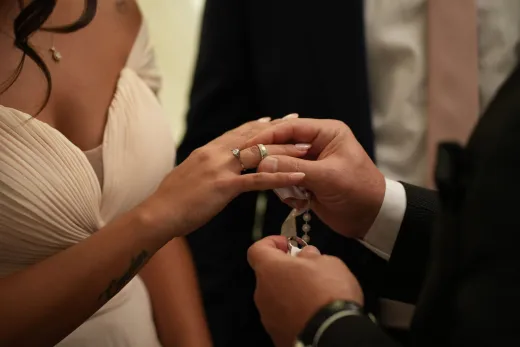
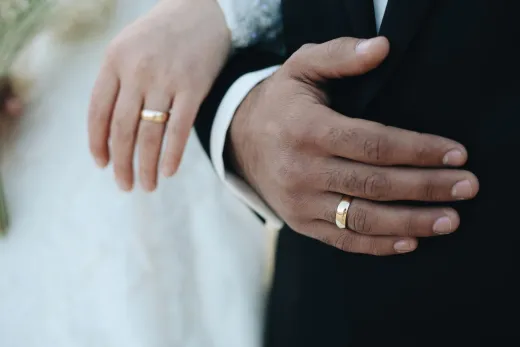
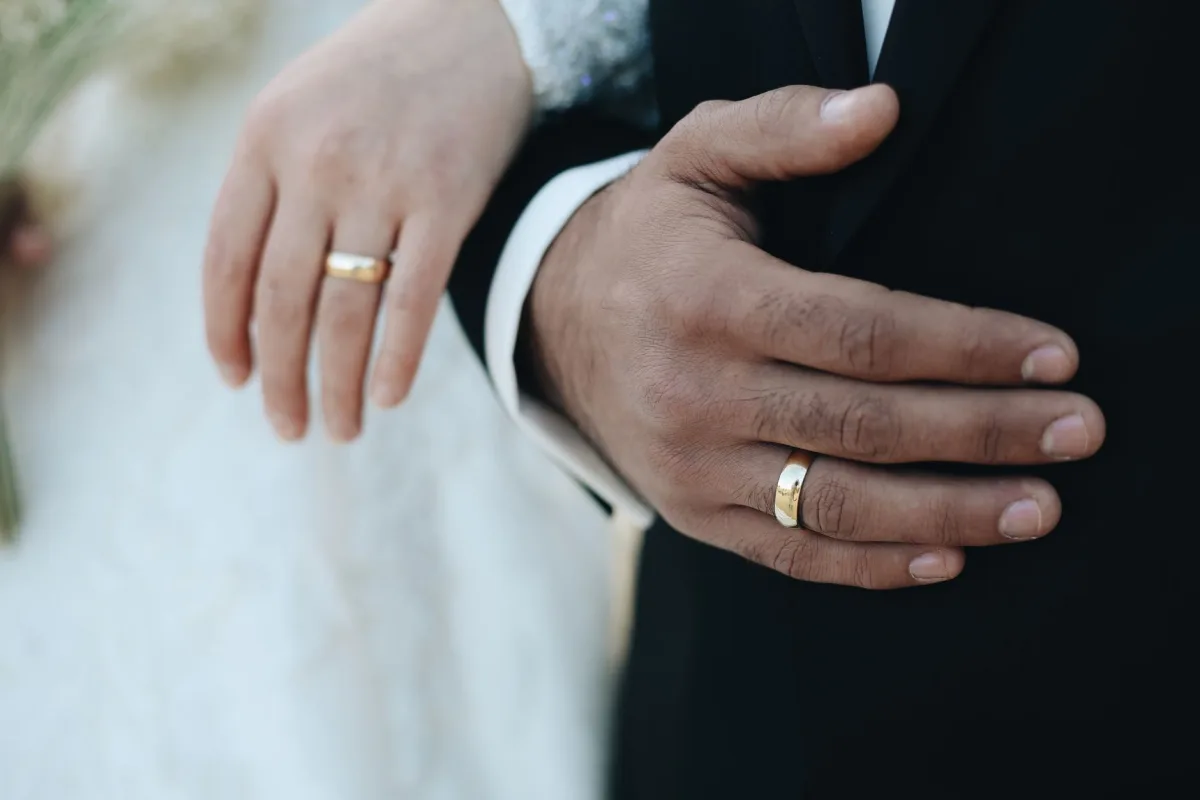
A wedding ring is the band exchanged during the marriage ceremony to show that its wearer is married, and in modern practice both partners wear one. For women, though, the ring usually has a companion: the engagement ring given earlier at the proposal, which is why so many women wear two rings stacked on the same finger. The wedding band is the plainer of the two, designed to sit flush against an engagement ring or, increasingly, to stand alone as a single confident piece.
That pairing is the first thing to hold in your head. If a woman already owns an engagement ring, the wedding band should be chosen to sit with it: same or complementary metal, a profile that nests against the engagement setting without a gap, and a height that does not fight the centre stone. If there is no engagement ring, the wedding band carries the whole job on its own, which frees you to choose something more substantial. For the broader, all-genders view of the subject, our pillar on wedding rings covers history, meaning and the ring versus band question in full.
Choosing the metal
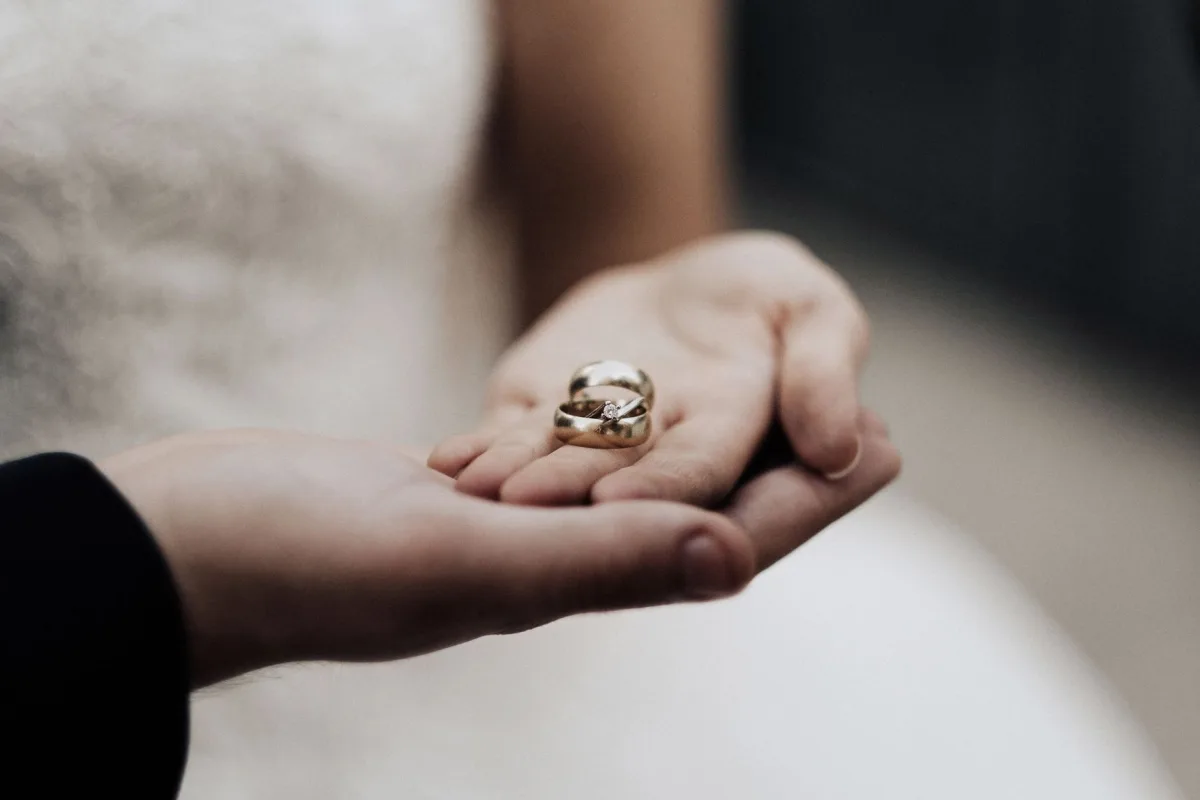
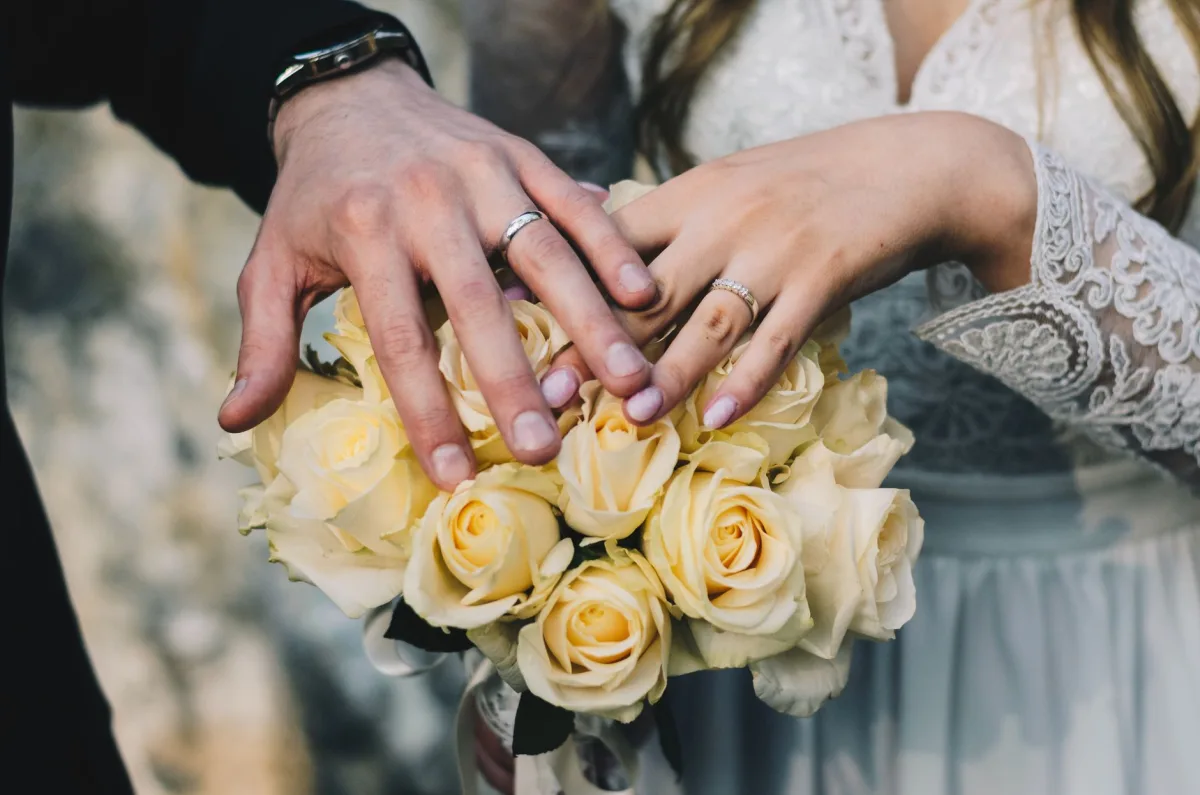
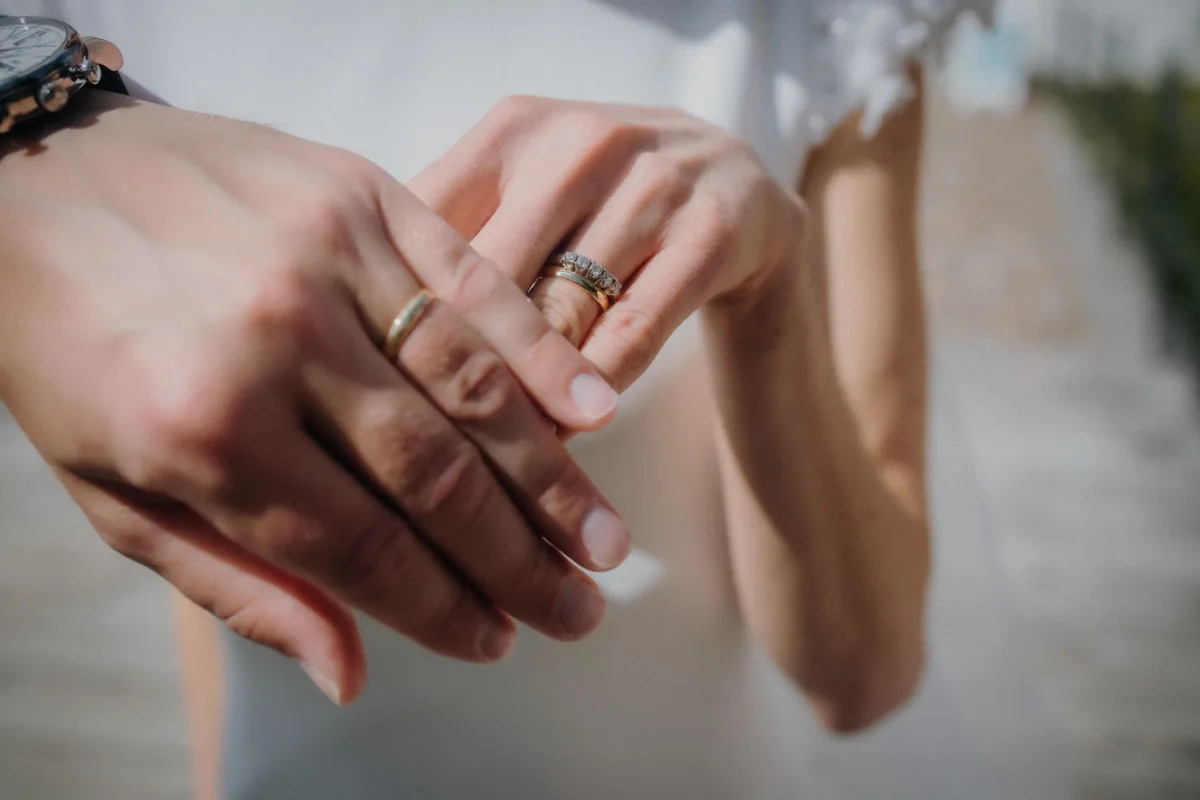
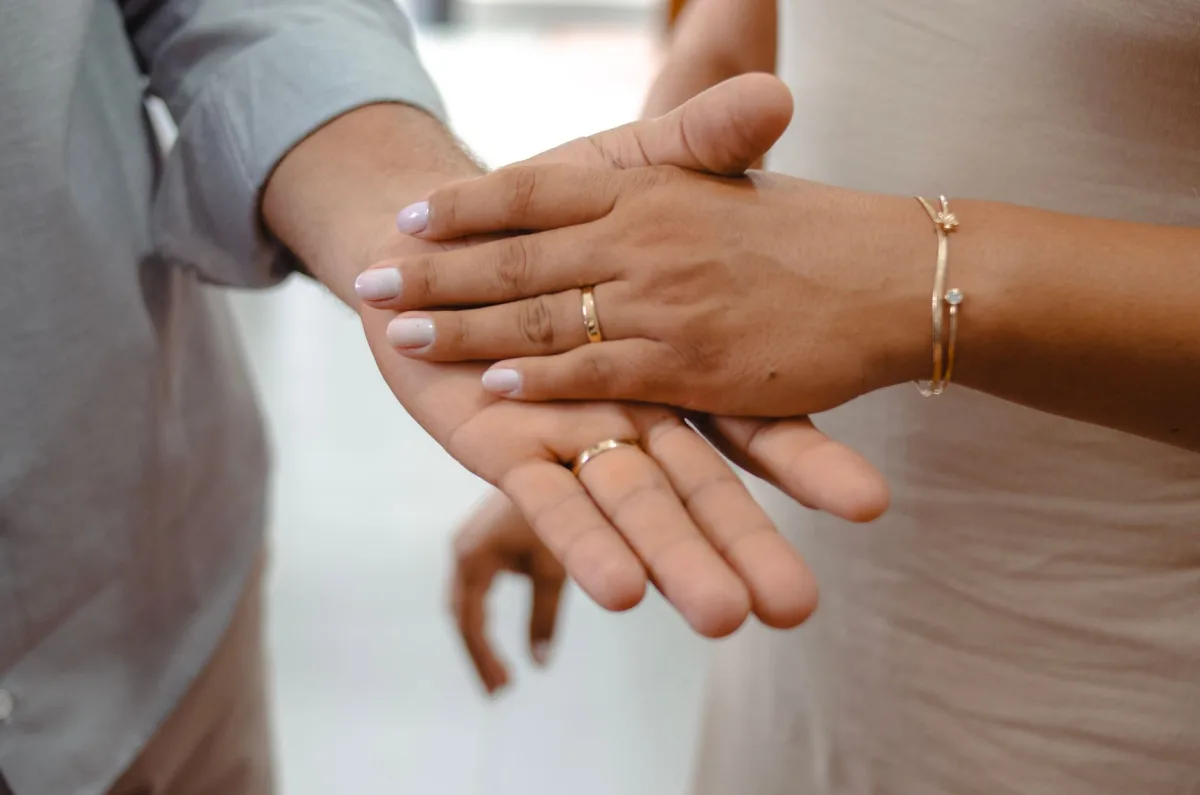
Metal is the decision that changes the ring most, driving both its colour and how well it survives a lifetime of daily wear. The headline choice is gold versus platinum, but gold itself splits into colours and purities that are easy to muddle. Here is the honest overview.
Yellow gold
The warm, traditional classic, alloyed with silver and copper. Flatters warmer skin tones and is the easiest metal to resize and repair.
White gold
Gold mixed with a white metal and usually rhodium-plated for a bright silver finish. Cool and modern, but the plating needs refreshing over the years.
Rose gold
A gold and copper alloy with a soft blush tone. Distinctive, romantic and very hard-wearing thanks to the copper content.
Platinum
Naturally white, dense and hypoallergenic. It wears to a soft patina rather than losing metal, but costs more and sits heavier on the hand.
Gold karat
Purity, not colour. 18k is 75 percent gold; 14k is 58.3 percent. Lower karat is harder and more scratch-resistant for everyday women's rings.
Alternative metals
Titanium and palladium are light and affordable but usually cannot be resized, which matters over a marriage as fingers change.
Two facts settle most metal debates. First, the colours of gold come from what pure gold is mixed with: copper pushes it toward rose, white metals and rhodium make white gold, and yellow gold is balanced with silver and copper. Second, higher karat is softer, which is why 14k and 18k are the practical standards for a ring worn every day rather than delicate 22k or 24k. If white gold appeals but you dislike re-plating, platinum gives the same cool colour permanently. Our dedicated guides to gold wedding rings for women and white gold wedding rings for women go deeper on each.
Shapes, widths and styles
Beyond metal, a woman's wedding ring is shaped by three choices: width, profile and how much sparkle it carries. Narrow bands, roughly two to three millimetres, sit delicately and stack cleanly with an engagement ring; wider bands make a statement on their own. The profile, meaning the cross-section, is a matter of feel: a court or comfort profile is rounded inside and out and slips over the knuckle easily, while a flat profile reads more contemporary.
On decoration, women's wedding bands span a wide range, and each has a trade-off between shine and practicality.
Plain band
No stones at all. The most durable, lowest-maintenance and most timeless choice, and a classic for good reason.
Pave or channel-set
Small diamonds set flush into the surface or a groove. Low-profile sparkle that stacks well and stays close to the finger.
Eternity ring
Stones set all the way around, or halfway for a half-eternity. Beautiful and meaningful, though a full eternity ring is usually not resizable.
Shaped or contoured
Curved to nest around an engagement ring's centre stone so the two sit together without a gap. A tailored, cohesive look.
The eternity ring, with its unbroken line of stones, is a popular wedding-band choice and a classic anniversary gift, but note the practical catch: because the stones run the full circle, most full eternity rings cannot be resized later, so the size must be right from the start. If you love diamonds but want flexibility, a half-eternity or a pave band gives most of the sparkle while keeping a plain section that a jeweller can adjust. Our guide to diamond wedding rings for women weighs those options in detail.
Matching the ring to a real life
The single most useful question when choosing a woman's wedding ring is not "what looks best in the case" but "what will this be like on an ordinary Tuesday". A ring is worn while typing, washing up, lifting a child and opening doors, and a design that ignores that becomes a design you take off and lose. A few honest guidelines help.
- Active hands favour low settings. A bezel or flush setting protects stones far better than tall prongs that snag on gloves, hair and fabric.
- Softer metals scratch faster. High-karat gold and platinum both mark over time, though platinum's marks are a patina rather than lost metal. If a pristine finish matters, 14k wears harder.
- Consider the stacking gap. If the band will sit beside an engagement ring, a contoured or shaped band removes the little wedge of skin that a straight band leaves.
- Think about allergies. Nickel in some white-gold alloys can irritate sensitive skin; platinum and higher-karat gold are gentler.
None of this argues against a beautiful ring. It argues for a beautiful ring that also fits the life it has to live in.
Getting the size and fit right
Size is the diameter of the band; fit is the shape of its inner surface. Confusing the two causes most of the "it never felt right" complaints. Measure the finger warm and at the end of the day, because cold fingers run smaller and a ring sized to them spins loosely most of the time. Account for the band's width, since a wide band needs a slightly larger size than a thin one to clear the same knuckle. And if you choose a full eternity ring or an alternative metal that cannot be resized, have the size confirmed more than once, because that decision is permanent.
Fingers naturally swell in heat and after salty food and shrink in cold, so aim for a size that is comfortable across that range rather than perfect on one mild afternoon. A comfort or court profile, rounded on the inside, forgives small daily changes better than a flat one.
Buying as a set, and budgeting honestly
Many women buy the engagement ring and wedding band together as a matched bridal set, which guarantees the two nest perfectly and often costs less than buying them separately. The trade-off is less flexibility if tastes change later. If you prefer to choose the pieces independently, take the engagement ring with you when selecting the band so the metal, height and curve genuinely match. Our guide to wedding rings sets works through matched sets, trio sets and the soldering question in full.
On price, ignore any "months of salary" rule. It was an advertising invention aimed at engagement rings and has no bearing on a wedding band. The levers that actually move the total are, in order: the metal and karat, whether the band holds stones, its width and weight, and finally the finish and any engraving. A modest 14k gold band and an expensive platinum ring both do the one job a wedding ring exists to do, so choose the amount that fits your means and your taste, not a figure someone else invented. If budget is the priority, our overview of silver wedding rings and affordable options is a sensible next read, and platforms like matrimony360 exist to help couples make these decisions calmly rather than under pressure.
Frequently asked questions
What is the difference between an engagement ring and a wedding ring for women?
The engagement ring is given at the proposal and usually carries a prominent centre stone; the wedding ring is exchanged during the ceremony and is typically a simpler band. Many women wear both stacked on the same finger, with the wedding band sitting closest to the hand. They are two separate pieces bought at different moments, which is why so many women's wedding bands are shaped to nest neatly against an existing engagement ring.
Which metal is best for a woman's wedding ring?
There is no single best metal, only the best for you. Yellow gold is warm and traditional, white gold is cool and modern but needs occasional re-plating, rose gold is distinctive and hard-wearing, and platinum is naturally white, durable and hypoallergenic but heavier and pricier. Within gold, 14k and 18k are the practical choices because higher karat is softer. Weigh colour, durability, skin sensitivity and budget together rather than chasing one factor.
Can a woman's wedding ring be resized later?
Usually yes, if it is a plain or partially set band in gold or platinum, which a jeweller can size up or down within reason. Two designs resist resizing: a full eternity ring, because stones run the whole circle, and alternative metals such as titanium, which cannot be cut and rejoined easily. If you expect your size might change, favour a resizable design and get the initial measurement checked more than once.
Should I buy the engagement ring and wedding band as a set?
A matched bridal set guarantees the two rings nest perfectly and often costs less than buying them separately, which is why many women choose it. The trade-off is less flexibility if your taste changes later. If you buy the pieces independently, bring the engagement ring along when choosing the band so the metal, height and curve line up, and consider a contoured band that removes the gap around the centre stone.
How much should a woman's wedding ring cost?
As much as is comfortable for you, and no more. The old "months of salary" rules are advertising inventions aimed at engagement rings, not wedding bands. The biggest lever on price is the metal, followed by whether the band holds stones, then its width and weight. A modest plain band and an expensive stone-set platinum ring perform the same symbolic job, so pick the amount that suits your finances and the design you will genuinely enjoy wearing.