White Gold Wedding Rings: The Complete Guide
What white gold wedding rings are made of, why they need re-plating, and how they compare with platinum and silver, so you buy knowing exactly what you get.
White gold gives you the cool, silvery look of platinum at a friendlier price, which is exactly why it has become one of the most requested metals at the wedding-ring counter. But "white gold" hides a little chemistry that catches many couples out: it is not naturally white, it is usually coated, and that coating wears. This guide explains what a white gold wedding ring actually is, how the karats and the rhodium plating work, who should think twice about the alloy, and how it stacks up against platinum and silver, so you can buy one knowing precisely what you are getting.
The short version
- White gold is gold mixed with white metals, then usually rhodium-plated for its bright finish.
- That plating wears and needs refreshing, typically every one to three years, which is the metal's main upkeep.
- Karat is purity, not colour. 14k is harder and cheaper; 18k is purer, softer and a touch whiter underneath.
- It costs less than platinum for a similar look, but platinum needs no plating and holds its colour.
What white gold actually is
Pure gold is yellow, so a white gold wedding ring is not pure gold at all. It is gold blended with one or more pale metals to mute the yellow and lift the colour toward silver. As the reference on coloured gold explains, the whitening metals are usually nickel, palladium, silver or, in modern alloys, a mix designed to be skin-friendly. The result is a metal that is genuinely gold by weight but reads as a bright, neutral white, ideal for showing off a diamond without the warm cast that yellow gold throws.
There is a catch that no jewellery advert mentions. Even the best white gold alloy is not perfectly white on its own; it carries a faint grey or straw tint. To reach the mirror-bright, icy finish people picture, almost all white gold rings are plated with rhodium, a rare, brilliant white member of the platinum family. That plating is what you actually see and touch on a new ring, and understanding it is the single most useful thing you can know before you buy.
White gold alloy
Gold mixed with pale metals such as palladium, nickel or silver. Gold by weight, but toned down from yellow toward a soft white.
Rhodium plating
A thin, bright white coating from the platinum group, applied over the alloy. It delivers the icy finish and hides the alloy's underlying tint.
Karat
The purity of the gold: 18k is 75 percent gold, 14k is 58.3 percent. Lower karat is harder and cheaper; higher karat is purer and softer.
Palladium white gold
White gold whitened with palladium rather than nickel. Naturally whiter, nickel-free and kinder to sensitive skin, though usually a little pricier.
Karat: what 14k and 18k really mean
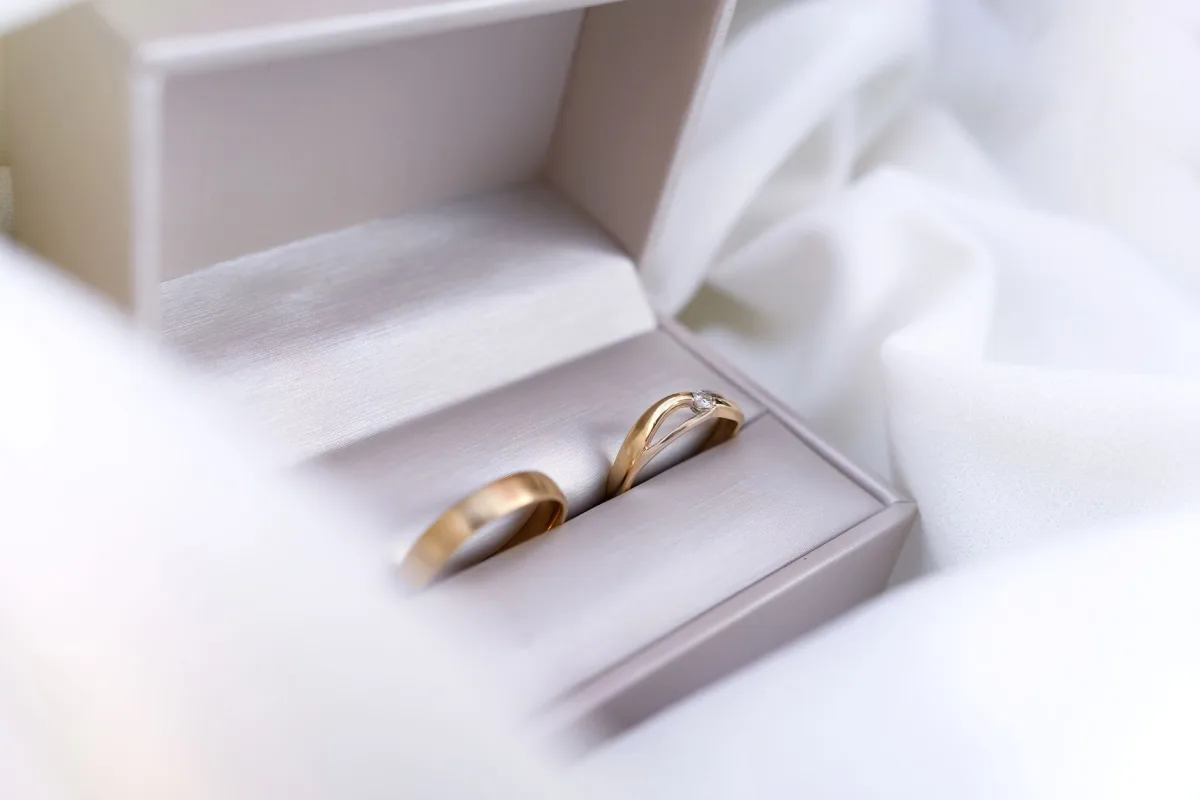
Karat measures how much of the metal is pure gold, and it is stamped inside almost every ring. 18k is 75 percent gold, 14k is 58.3 percent, and 9k, common in the UK, is 37.5 percent. The rest is the alloy that whitens and hardens it. The trade-off is neat and worth committing to memory: more gold means a purer, slightly warmer, softer metal, while less gold means a harder, more scratch-resistant, cheaper one.
For a wedding ring worn every day, both 14k and 18k are sound choices, and neither is "better" in the abstract. 14k white gold is the practical workhorse: harder, more affordable, and a touch whiter under the plating because it contains more of the whitening alloy. 18k white gold is purer and a little more precious, with a marginally softer feel that some people prefer and a slightly warmer base tone. If your hands take a beating, lean toward 14k. If purity and a higher gold content matter to you, 18k earns its premium. Our broader guide to wedding rings works through karat across all the gold colours if you want the wider view.
The rhodium plating, and why it matters
Because rhodium plating is what gives white gold its signature shine, and because that plating is thin, it slowly wears away with daily contact. As it thins, the warmer, slightly grey tone of the underlying alloy begins to show through, most often first on the underside of the band and around any edges that rub. This is not a fault or a sign of a cheap ring: it is simply how white gold behaves, and it is the one piece of upkeep the metal demands.
Re-plating is straightforward. A jeweller cleans, polishes and re-coats the ring with fresh rhodium, and it comes back looking new. How often you need it depends entirely on wear: someone who works with their hands might notice the change within a year, while a lighter wearer can go three years or more. It is an inexpensive service, but it is a recurring one, and it is the honest cost of choosing white gold over a metal that keeps its colour on its own. If a lifetime of zero maintenance appeals more, the comparison with platinum wedding rings is the one to read next.
Allergies and skin sensitivity
Some older and cheaper white gold is whitened with nickel, and nickel is one of the most common causes of contact allergy. On a plated ring the rhodium sits between your skin and the alloy, so many people never react, but as the plating wears the nickel can be exposed, and a sensitive wearer may then develop redness or irritation under the band. If you know your skin reacts to costume jewellery or watch backs, this is worth taking seriously.
The clean solution is to ask for nickel-free white gold, most often whitened with palladium instead. Palladium white gold is naturally whiter, needs less reliance on plating, and is a genuinely hypoallergenic choice. When you buy, simply ask what the ring is whitened with; a good jeweller will know at once, and the answer decides whether the ring is right for sensitive skin.
White gold versus platinum versus silver
All three metals look silvery, so couples often line them up side by side, but they behave very differently over a lifetime of wear. The short version: white gold is the affordable middle path that needs plating, platinum is the premium option that needs none, and silver is beautiful but too soft and tarnish-prone for daily wedding-ring duty.
- White gold. Bright and precious, priced below platinum, but rhodium-plated and needing occasional re-plating to stay icy white. The best value for a platinum-like look.
- Platinum. Naturally white all the way through, so it never needs plating and never changes colour. Denser, more durable, hypoallergenic and noticeably more expensive. It develops a soft patina rather than losing its colour.
- Silver. Lovely and inexpensive, but far softer than gold and prone to tarnish, which makes it a poor everyday wedding band. Better suited to fashion jewellery. Our guide to silver wedding rings covers where it does and does not make sense.
The honest way to choose is to weigh how much the recurring plating matters to you against the price gap. If you want the look for less and do not mind an occasional visit to the jeweller, white gold is superb value. If you want to buy once and never think about the metal again, platinum earns its higher price.
Cost, and what moves it
White gold sits comfortably in the middle of the wedding-ring price range: dearer than silver, cheaper than platinum for a comparable ring. Several levers move the final figure, and knowing them helps you spend where it counts. Karat comes first, since 18k contains more gold than 14k and costs more. Width and weight come next, because a heavier band simply uses more metal. Then come any stones, which can dwarf the cost of the metal itself, and finally the brand and craftsmanship.
A sensible frame is to treat the rings as a share of what you can comfortably spend rather than a number someone else invented. A plain 14k white gold band and a heavily set 18k one do the same symbolic job. If you are pairing your band with an engagement ring, our companion guide to gold wedding rings across all the colours can help you keep the two in harmony, and the specific guide to white gold wedding rings for women goes deeper on styles, settings and stacking.
Caring for a white gold ring
White gold care is easy once you know the two things that dull it: grime, which any ring collects, and the slow wear of the plating, which is unique to white gold. Clean the ring gently every few weeks in warm water with a drop of mild soap and a soft brush, then dry it fully. Take it off for heavy manual work, gardening, the gym and anything involving harsh chemicals or chlorine, all of which accelerate wear on both the metal and any stones.
Beyond that, plan for periodic re-plating rather than being surprised by it. When the band starts to look warmer or greyer than it did, that is your cue for a refresh, not a defect. Have a jeweller check the setting of any stone-set ring every year or two while they are at it, since a loose prong is cheap to fix and expensive to ignore. Looked after this way, a white gold wedding ring stays bright and can genuinely last a lifetime, which is the entire point of the thing.
Frequently asked questions
Is white gold real gold?
Yes. White gold is real gold, blended with pale metals such as palladium, nickel or silver to change its colour from yellow to white. An 18k white gold ring is still 75 percent pure gold by weight; a 14k one is 58.3 percent. It is only the colour that differs from yellow gold, achieved through the alloy and, on the surface, a bright rhodium plating.
Why does my white gold ring look yellowish?
Because the rhodium plating that gives white gold its icy shine has worn thin, letting the warmer tone of the underlying gold alloy show through. This is normal and expected, not a fault. A jeweller can re-plate the ring with fresh rhodium and it will look bright and new again. Depending on how hard you wear it, re-plating is usually needed every one to three years.
Is white gold or platinum better for a wedding ring?
Neither is universally better; they suit different priorities. Platinum is naturally white, never needs plating and never changes colour, but it costs more and is heavier. White gold gives a very similar look for less, at the cost of occasional re-plating to keep it bright. Choose platinum if you want zero colour maintenance, and white gold if you want the platinum look on a smaller budget.
Can white gold cause a skin allergy?
It can, if the alloy is whitened with nickel and your skin is sensitive to it. While the rhodium plating is intact it usually separates your skin from the alloy, but as the plating wears the nickel can be exposed and cause irritation. The fix is simple: choose nickel-free white gold, most often whitened with palladium instead, which is naturally whiter and hypoallergenic.
How much does a white gold wedding ring cost?
It sits in the middle of the range, more than silver and less than platinum for a comparable ring. The main price levers are the karat, since 18k contains more gold than 14k, then the width and weight of the band, and then any stones, which can cost far more than the metal itself. A plain 14k white gold band is an affordable, hard-wearing choice, while an 18k stone-set ring costs considerably more.