Wedding Cakes: The Complete Guide
Everything couples need to choose a wedding cake: the styles compared, flavours and fillings, a servings sizing table by guest count, how bakers price the work, and how to order.
A wedding cake is the one decoration on the whole day that you eat, photograph, and cut on cue in front of everyone. That triple duty is exactly why it confuses couples: you are choosing a centrepiece, a dessert, and a ritual prop all at once, and each pulls the decision a different way. The tallest tiered showpiece can taste ordinary; the best-tasting cake can look plain in photos. This guide untangles the whole thing, from the styles and flavours to the sizing maths, how bakers actually price the work, the alternatives worth considering, and the questions to ask at the tasting. By the end you will know what you are buying and how much cake you truly need.
The short version
- Size by servings, not tiers. Guest count decides the cake, and one tier does not mean one slice.
- Style is mostly finish. Fondant, buttercream and naked cakes are the same sponge dressed differently.
- You pay per serving, plus delivery and setup. Detail and sugar flowers move the number most.
- Book and taste 4 to 6 months out. Good bakers take one wedding a day and fill up fast.
What the wedding cake is actually for
Before you choose anything, it helps to know why this object carries so much weight. The wedding cake is one of the oldest surviving parts of the celebration, with roots in ancient Greek and Roman ceremonies, and the tall tiered version we picture today only became fully edible in the late nineteenth century. For most of that history the cake signalled status and prosperity: pillars between the layers stood for good fortune, and a bigger cake announced a bigger family standing.
The white finish most people default to is younger than the tiers. It followed Queen Victoria's white wedding in 1840 and came to read as purity and celebration rather than any rule of baking. Knowing that frees you up. There is no correct colour, no required height, and no law that says the cake must be the biggest thing in the room. It has three jobs at your wedding, and you get to decide which one matters most.
A centrepiece
It anchors the room and the photos. Height and finish do this work.
A dessert
People actually eat it. Flavour, filling and freshness do this work.
A ritual
The cutting is a shared, photographed moment. It needs a clean tier to cut.
The popular wedding cake styles, compared
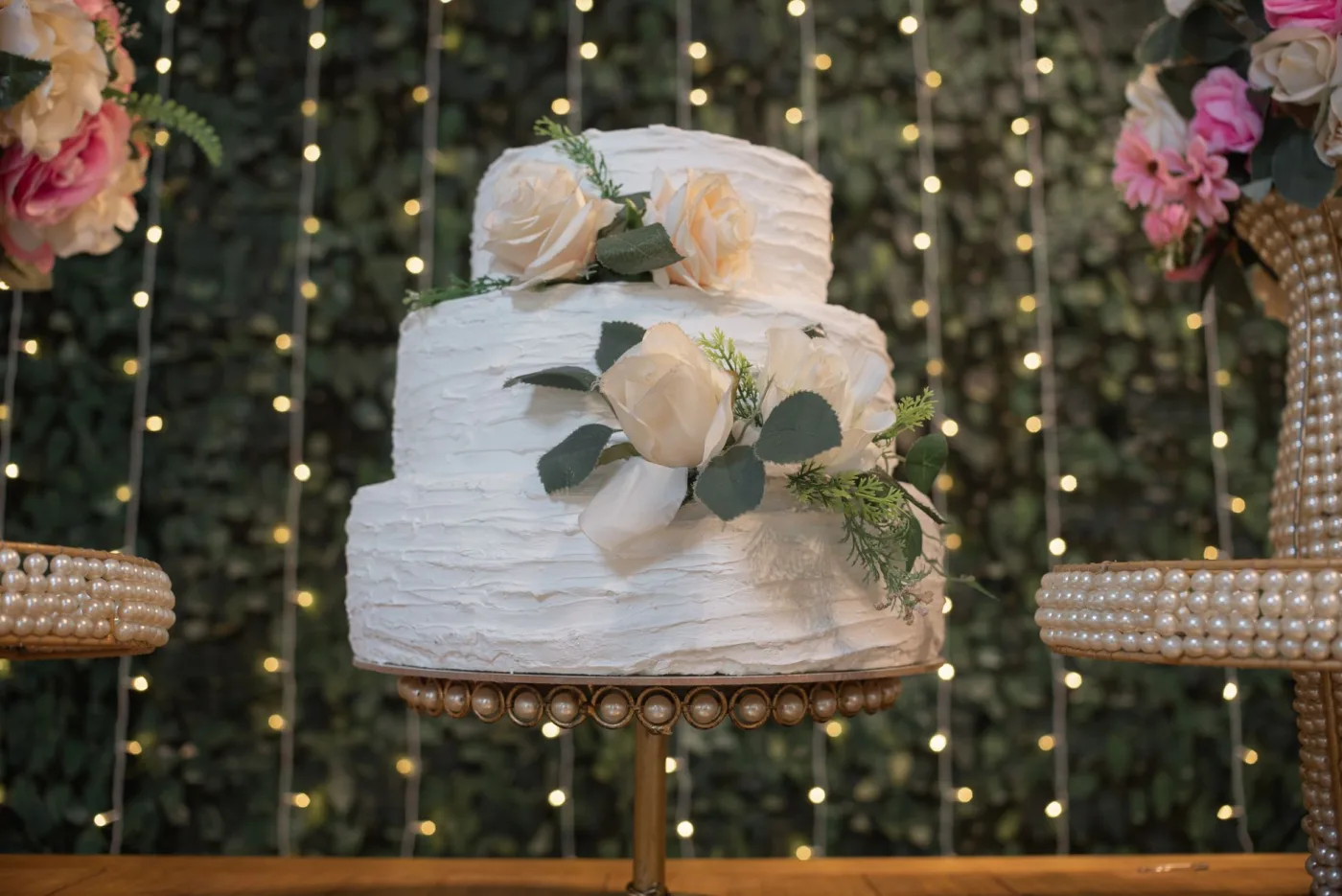
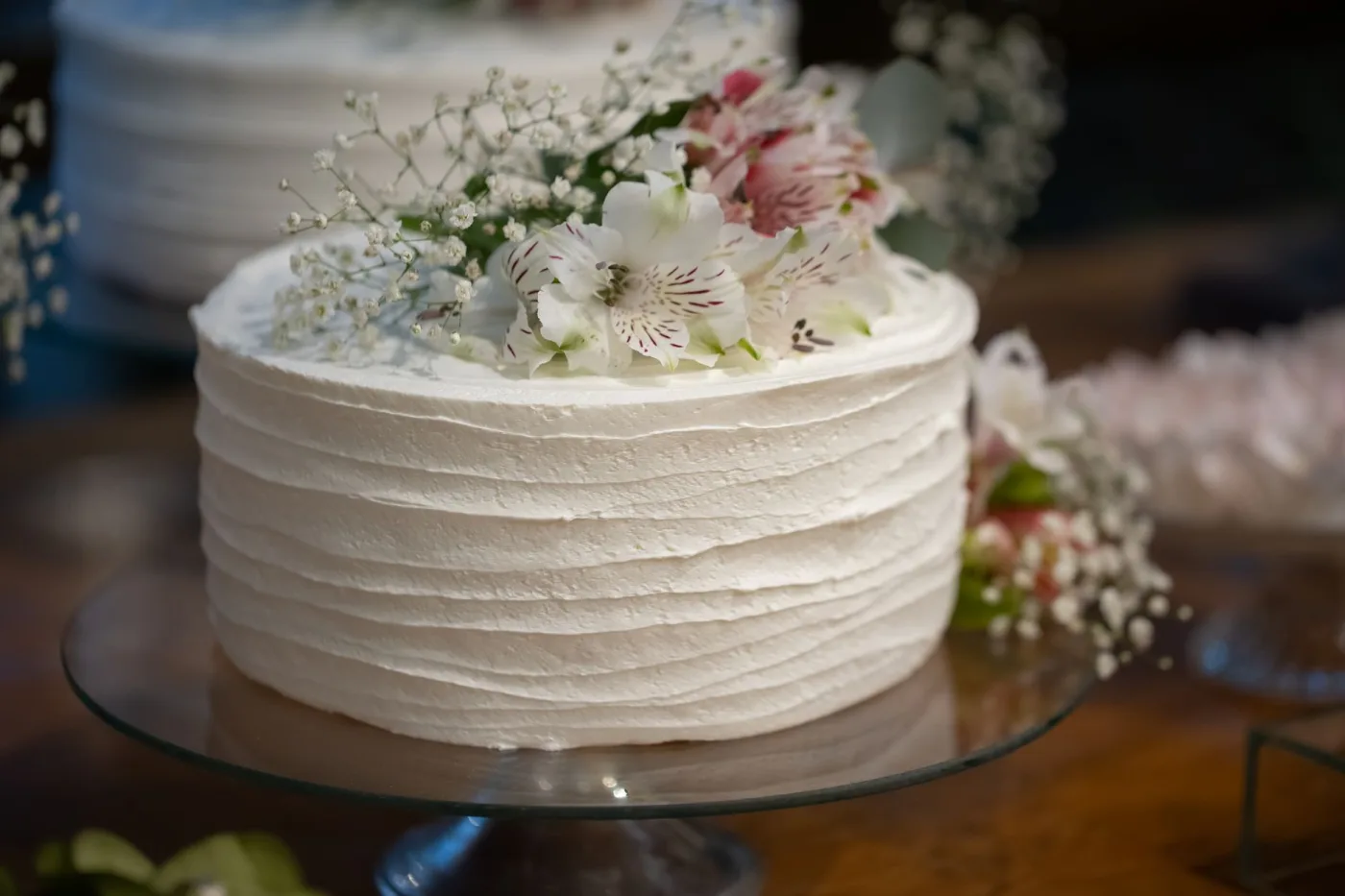
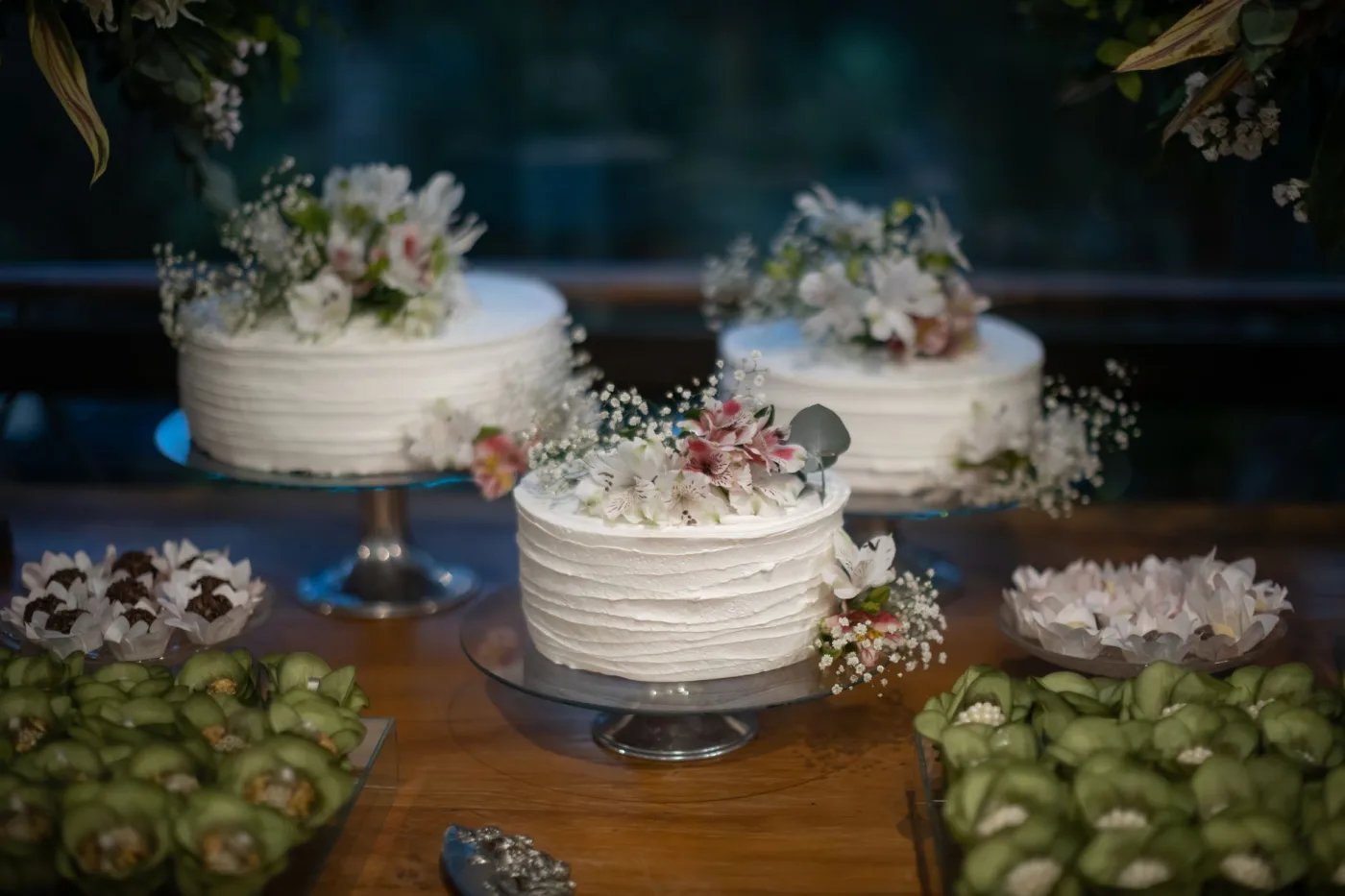
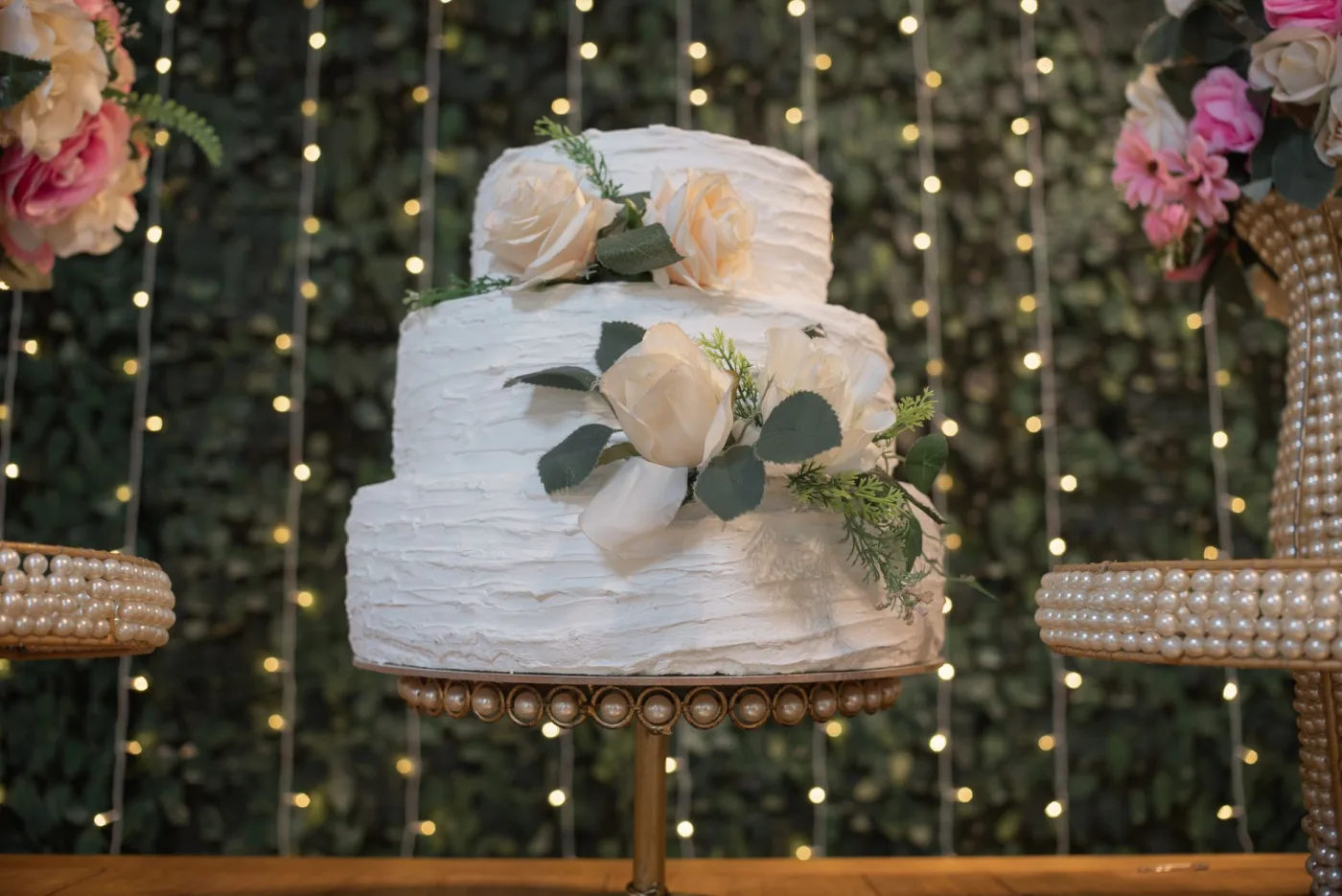
Almost every wedding cake is the same idea underneath: layers of sponge, a filling, and an outer finish. What people call a style is really a choice of that outer finish, and it changes the look, the price and how the cake behaves in a warm room far more than it changes the taste. Here are the five you will be offered most often.
Tiered fondant
Rolled sugar paste over each tier for a flawless, sculptural surface. The classic formal look.
Buttercream
Whipped butter and sugar, smoothed or textured. Softer edges, richer taste, less heat stable.
Semi-naked
A thin, barely-there coat that lets the sponge show through. Rustic but still tidy.
Naked
No outer coat at all. Exposed layers and visible filling, usually dressed with fruit or flowers.
Statement fondant
Fondant plus sugar flowers, painting or sculpting. The most labour, the highest price.
Fondant is popular for a reason: rolled fondant icing behaves like edible modelling clay, so it wraps a tier in a smooth, sharp-edged surface that holds crisp detail and copes better with warm rooms. The trade-off is honest and worth knowing: fondant is chosen for how it looks more than how it tastes, and many people peel it off before eating. If flavour is your priority, that points you toward buttercream or a naked finish.
Buttercream is the taste-first option. Buttercream is simply butter whipped with sugar and flavouring, and it comes in several forms: quick, sweet American buttercream, and the silkier, more stable meringue-based Swiss and Italian versions that bakers prefer for a smooth finish in a warm venue. Naked and semi-naked cakes skip the heavy outer coat entirely, which reads as relaxed and modern and often costs a little less in finishing labour, but they dry out faster and must be assembled close to serving time.
Match the finish to the venue, not just the mood board. A soft American buttercream or a naked cake can slump or sweat at a hot outdoor summer wedding. If your reception is in high heat or long sun, tell the baker up front. They will steer you to fondant or a meringue-based buttercream that holds its shape, and that one conversation prevents the most common cake disaster in the photos.
Flavours and fillings: where the taste really lives
The sponge sets the base note, but the filling between the layers is what most guests actually taste. This is where you can be adventurous without touching the look of the cake at all, and where tiers earn their keep: a multi-tier cake can carry a different flavour on each level, so you are not forced to please everyone with one choice.
| Sponge | Pairs well with | Good to know |
|---|---|---|
| Classic vanilla | Fresh berries, vanilla bean buttercream | The safe crowd-pleaser. Hard to get wrong. |
| Chocolate | Salted caramel, chocolate ganache | Rich and popular, but heavier per slice. |
| Lemon or citrus | Raspberry, elderflower, curd | Light and fresh. Reads well at a summer wedding. |
| Red velvet | Cream cheese frosting | Distinctive colour and tang. Divides opinion. |
| Carrot or spiced | Cream cheese, walnut | Autumn and winter favourite. Moist and forgiving. |
| Fruit cake | Marzipan, brandy | The traditional keeper tier. Ages and travels well. |
A practical rule at the tasting: taste the sponge and the filling together, never separately. A filling that is delicious on a spoon can overwhelm a delicate sponge on the plate. And if you plan to keep a tier for a first anniversary, a dense fruit cake survives freezing and storage far better than a light sponge, which is one reason the tradition of the keeper tier has lasted.
How much cake do you actually need?
This is where couples over-order or under-order most, because tiers are misleading. A tier is a round of a given diameter, and the number of servings depends on that diameter and how the cake is cut, not on how many tiers you stack. Wedding-style portions are cut into slim finger slices, which is why a modest-looking cake can feed far more people than it appears to.
Servings come from tier diameter and cut style, not from the number of tiers. Dowels carry the weight so tiers do not sink.
Use the table below as a planning guide. It assumes standard wedding portions, which are smaller than the generous wedges you would serve at a birthday. If your cake doubles as the only dessert, plan for larger slices and add roughly a quarter to every figure.
| Guest count | Typical tier setup | Approx. wedding servings | Notes |
|---|---|---|---|
| Up to 30 | Single 8 in tier | ~ 20 | Intimate. Consider a dessert table alongside. |
| 40 to 60 | Two tiers (6 in + 8 in) | ~ 40 | The workhorse small-wedding cake. |
| 70 to 100 | Three tiers (6 + 8 + 10 in) | ~ 75 to 95 | The classic. Keep the 6 in as a keeper tier if you wish. |
| 110 to 150 | Four tiers (6 + 8 + 10 + 12 in) | ~ 120 to 145 | Add a cutting cake if numbers are tight. |
| 160 to 200 | Four tiers + hidden sheet cake | 200+ | A plain back-of-house sheet cake stretches servings cheaply. |
Two tricks worth knowing. First, if you are serving cake as an evening snack rather than a plated dessert, you can size down by ten to fifteen percent, because not everyone takes a slice. Second, a display cake paired with a plain "kitchen" or sheet cake sliced out of sight is the standard way caterers feed a large crowd without paying for a giant decorated showpiece. Ask about it.
How wedding cake pricing works
Cake quotes look mysterious until you see the three parts every honest one is built from. Almost no baker prices by the cake as a whole; they price the servings, the labour of the finish, and the logistics of getting it to you intact. Understand those three and any quote becomes readable.
Per serving
The base rate times your serving count. Flavour and filling nudge this up or down.
Finish and detail
Sugar flowers, hand painting, sculpting and fondant work are billed as skilled labour.
Delivery and setup
Transport, on-site stacking and a return trip for the stand. Distance drives this.
The per-serving rate rises in clear bands from a simple buttercream cake, to a fully fondant-covered cake, to a statement cake dripping in handmade sugar flowers, which can cost several times the base rate per slice. That premium is not markup for its own sake: a single realistic sugar peony can take an hour to make. If a quote feels high, ask how many hours of decoration it includes rather than assuming you are being overcharged.
| Line item | Often forgotten? | What drives it |
|---|---|---|
| Per-serving cake price | No | Serving count, flavour, filling |
| Fondant vs buttercream finish | Sometimes | Fondant costs more in materials and labour |
| Sugar flowers and detail | Yes | Hours of hand work, billed per piece |
| Delivery | Yes | Distance and how far the cake must travel assembled |
| On-site setup and stacking | Yes | Cakes over two tiers are often stacked at the venue |
| Cake stand hire and return | Yes | A deposit plus a second trip to collect it |
| Cutting or kitchen cake | Sometimes | Extra plain cake to stretch servings |
The lines couples miss are almost always delivery, setup and the stand. A tall cake is rarely transported fully stacked; the baker delivers the tiers and assembles them on site, which is skilled, time-boxed work on your wedding morning. Get all three parts, the per-serving price, the finish, and the logistics, itemised in writing so you are comparing like with like across quotes.
Alternatives to the traditional tiered cake
A single stacked cake is a default, not a requirement. If your priorities are flavour variety, budget, or a particular kind of drama, several alternatives do the job better, and some still give you a cutting moment for the photographs.
Cupcake tower
Individual portions on a tiered stand, often with a small top cake to cut. Easy variety, no slicing labour.
Dessert table
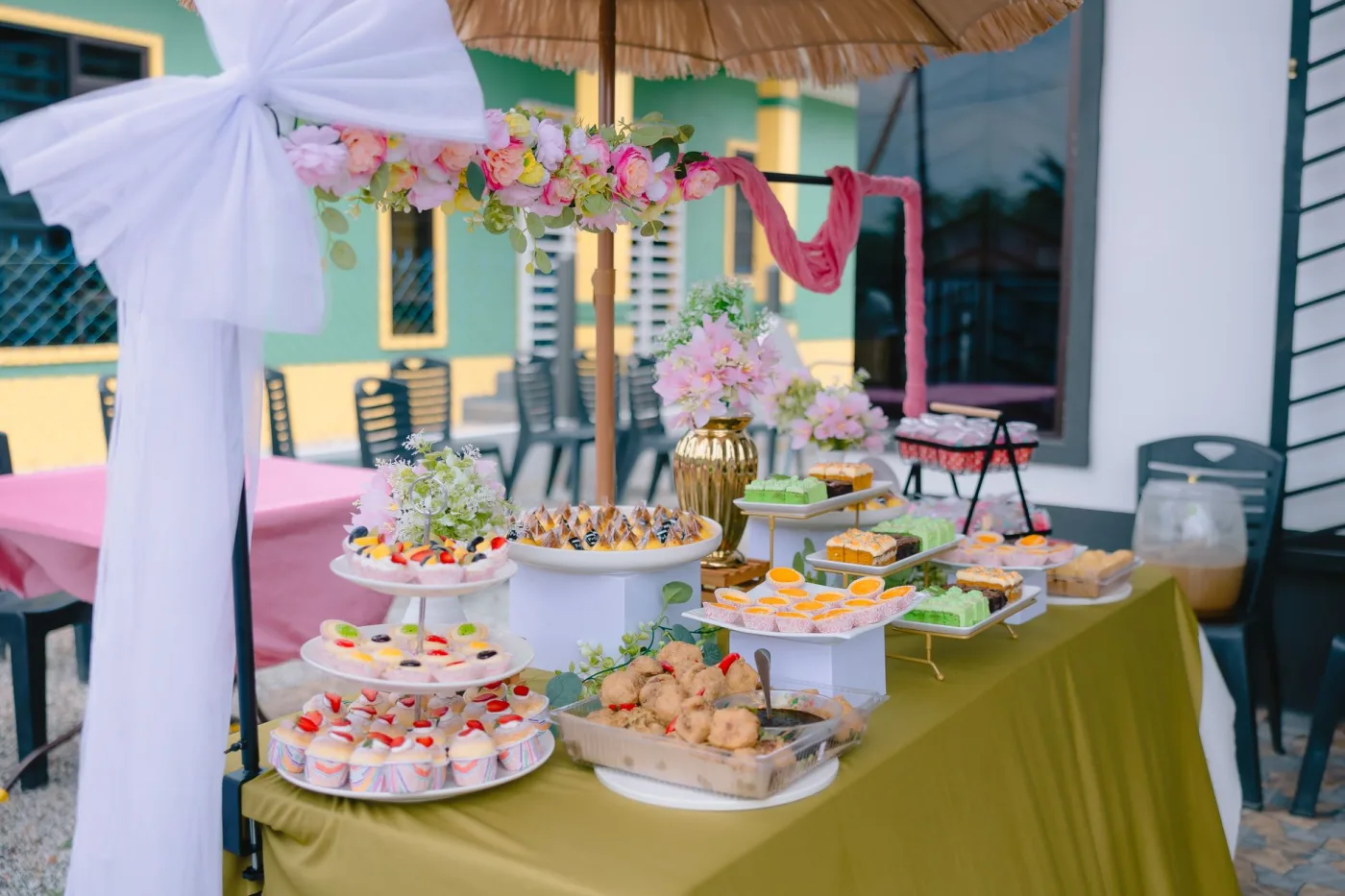
A spread of tarts, macarons, brownies and mini cakes. Great for mixed tastes and dietary needs.
Croquembouche
A French tower of cream-filled choux bound in caramel. A showpiece with built-in portions.
Cheese tower
Stacked wheels of cheese as a savoury "cake". Suits couples who prefer a cheese course.
Each has a catch worth naming. Cupcakes and dessert tables win on variety but can look less formal and give you a smaller cutting moment. A croquembouche is spectacular but must be built close to serving and does not survive heat or long waits well. A cheese tower photographs beautifully but is a savoury course, not a dessert, so pair it with something sweet. Pick the alternative that matches what you actually want the moment to be.
Dietary options: plan them into the order
Dietary needs are not a niche request any more, and a good baker handles them routinely, but only if you flag them at the order stage rather than the week before. The two common approaches are a fully inclusive cake that everyone can eat, or a main cake plus a small batch of separate portions for specific guests.
- Gluten-free: widely offered as a full cake or a separate tier. Ask whether the kitchen can avoid cross-contamination if a guest is coeliac, not just gluten-avoiding.
- Vegan: increasingly standard, using plant-based sponge and buttercream. Best decided early, as it changes the recipe rather than a topping.
- Nut-free: important to confirm across the whole kitchen. Note that fondant is often chosen precisely because it avoids the almond marzipan of traditional cakes.
- Egg-free or dairy-free: usually possible, sometimes as a small separate batch rather than the main cake.
The reliable move is to collect dietary needs on your RSVP, hand the baker a clear count, and get the accommodations written into the contract. A separate boxed portion for a coeliac or vegan guest, served on their plate, is often cleaner than trying to make one cake serve every restriction.
How to choose and order from a baker
The cake sits on the critical path of the wedding morning, so the baker's reliability matters as much as their piping. Treat the search like hiring any other one-a-day vendor: the best ones book out months ahead, so start early and lock the date before you refine the design.
Front-load the tasting and the booking; leave only the final headcount for the last fortnight.
The tasting is the decisive step, and it is where you should be most systematic. Taste sponge and filling together, bring photos of the look you want, and be honest about your venue and the weather so the baker can steer the finish. Ask the questions that catch problems early:
- Is my date free, and how many weddings do you take that day? You want to be the only one, or know the backup plan.
- What is your price per serving, and what pushes it up? Get the bands for buttercream, fondant and sugar flowers.
- Are delivery, setup and the stand included or extra? The classic hidden lines. Get them itemised.
- How and when is the cake assembled? Confirm whether tiers are stacked at the venue and who sets it up.
- What is your deposit, balance and cancellation policy? Numbers and dates, in writing.
- Can you handle my dietary needs safely? Especially cross-contamination for coeliac or serious allergies.
The cake is one vendor inside a much larger plan, and its timeline should slot into the rest. If you are still mapping the sequence, our wedding planning checklist shows where the cake tasting falls against the venue, catering and everything else, so you book it neither too early nor too late.
Coordinate the cake with the venue and caterer, not just the baker. Ask the venue whether there is a cakeage or cutting fee, where the cake will be displayed and away from direct sun, and whether the caterer or the venue slices and serves it. Many couples discover a per-slice cutting charge only after booking. A five-minute call between your baker and venue settles delivery timing, the table, and who handles the knife.
Bringing it together
A wedding cake decision gets simple once you take it in order: size by servings from your final guest count, choose a finish that suits your venue and your priority between looks and taste, pick flavours at a proper tasting, and get the per-serving price, the finish and the delivery all itemised before you pay a deposit. Do that and the cake stops being a source of anxiety and becomes what it is meant to be, a centrepiece you are genuinely happy to cut.
The cake lives inside the wider celebration, so let the rest of the plan guide it. Our overview of the wedding day puts the cake in the context of the whole running order, and our guide to choosing a wedding venue covers the cakeage fees, display space and setup logistics that quietly shape what cake will actually work in your room.
Frequently asked questions
How far in advance should I order a wedding cake?
Aim to book your baker four to six months before the wedding, and earlier for a peak-season date, a popular baker, or an elaborate design. Good bakers usually take one wedding cake per day, so the best ones fill up first. Book the date first to secure your slot, then do the tasting and finalise the design, and leave only the final guest count and balance for the last two to three weeks.
How many servings do I need for my guest count?
Plan servings to your final headcount, not tiers, because a single tier can yield roughly twenty slim wedding portions. As a guide, a two-tier cake feeds around forty, a three-tier cake feeds seventy-five to ninety-five, and a four-tier cake feeds well over a hundred. If the cake is your only dessert, add about a quarter for larger slices. For big crowds, a plain hidden sheet cake sliced out of sight stretches the servings cheaply.
What is the difference between fondant and buttercream?
Fondant is a rolled sugar paste that wraps each tier in a smooth, sharp-edged surface, holds fine detail, and copes better with warm rooms, but it is chosen for looks more than taste and is often peeled off before eating. Buttercream is whipped butter and sugar, so it tastes richer and softer but is less heat stable, especially the simple American kind. For hot or outdoor weddings, choose fondant or a meringue-based buttercream that holds its shape.
How does wedding cake pricing work?
Most bakers price in three parts: a rate per serving times your serving count, the labour of the finish such as fondant work and sugar flowers, and logistics like delivery, on-site setup and stand hire. The per-serving rate rises in bands from simple buttercream to full fondant to statement cakes with handmade sugar flowers. Ask for all three parts itemised in writing so you can compare quotes fairly, and do not overlook delivery and setup, the lines couples most often forget.
What are good alternatives to a traditional tiered cake?
Popular alternatives include a cupcake tower with a small top cake to cut, a dessert table of mixed sweets that suits varied tastes and dietary needs, a French croquembouche of caramel-bound choux for drama, or a savoury cheese tower. Each has a trade-off: cupcakes and dessert tables feel less formal, a croquembouche must be built close to serving and dislikes heat, and a cheese tower is a savoury course rather than a dessert, so pair it with something sweet.
Can wedding cakes be made gluten-free or vegan?
Yes. Most bakers now offer gluten-free and vegan wedding cakes, either as a fully inclusive cake or as a small separate batch for specific guests. Decide early, because vegan and gluten-free are recipe changes rather than toppings, and confirm the kitchen can avoid cross-contamination if a guest is coeliac or has a serious allergy. Collect dietary needs on your RSVP, give the baker a clear count, and write the accommodations into the contract.