Wedding Garter: The Complete Guide
What a wedding garter is, its history and the toss, keepsake versus toss garters, and how to choose, wear or skip the tradition.
The wedding garter is one of those small traditions that carries far more history than its size suggests: a band worn on the leg beneath the gown, tangled up with luck, ceremony, and a reception ritual that has drifted in and out of fashion for centuries. Some couples treasure it, some skip it, and plenty are simply unsure what it is for. This guide covers the whole subject in one pass: what a wedding garter is, where the custom comes from, how the toss works, how to choose and wear one, and how to make the tradition yours or leave it out entirely with no loss to the day.
The short version
- A wedding garter is a decorative band worn on the leg beneath the dress, long linked to luck and tradition.
- The garter toss is optional. It is a reception custom, not a requirement, and skipping it costs the day nothing.
- Many brides wear two: a keepsake to keep and a toss garter to throw, so the sentimental one stays with you.
- Comfort and fit come first. A garter should sit snugly on the thigh without pinching or sliding all day.
What a wedding garter is
A garter is a band worn around the leg to hold up stockings, and for most of its history it was purely practical, used by people of every gender to keep hosiery from falling. The wedding garter is the ceremonial descendant of that everyday item: a decorative band, usually of lace, satin or ribbon, worn by the bride on her thigh beneath the gown on her wedding day. Modern elastic means it no longer holds anything up; it is worn for tradition, sentiment and a touch of hidden detail rather than for function.
Because it is hidden for most of the day, the garter occupies a quiet, personal place in bridal attire. It is often chosen to carry meaning, a favourite colour, a scrap of heirloom lace, or a small charm, and for many brides it doubles as part of the old rhyme of wedding tokens. For the wider world of bridal attire that surrounds it, from the gown to the veil to the shoes, our broad guide sets the garter in its full context.
The history behind the tradition
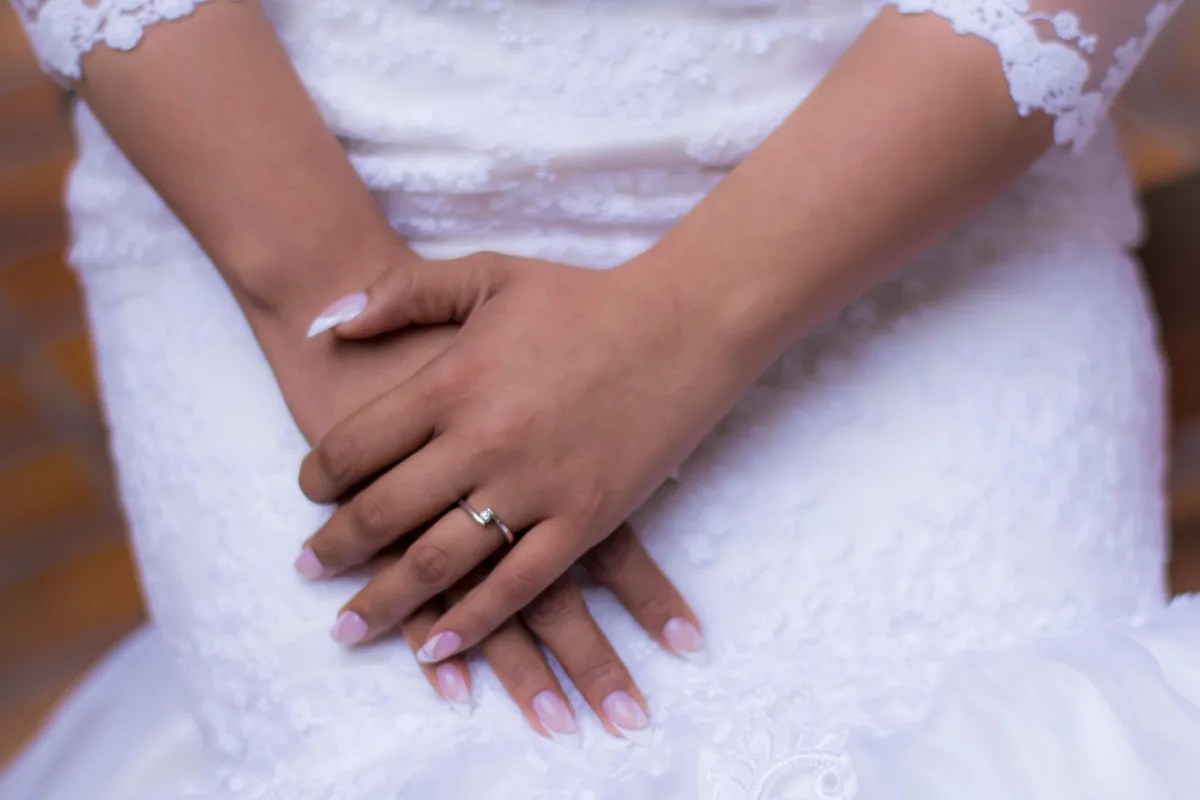

The garter's link to weddings runs back centuries, and its origins are a little rowdier than its dainty modern form suggests. In parts of medieval Europe, guests treated a piece of the bride's clothing as a token of good luck, and the garter became a prize they would try to obtain after the ceremony. Over time, and to spare the bride the scramble, the custom softened into the groom removing the garter himself and tossing it to the unmarried guests, a gentler counterpart to the bride tossing her bouquet.
Threaded through this is the garter's place in the well-known bridal rhyme, in which a bride wears "something old, something new, something borrowed, something blue". A garter is a natural home for the "something blue", often trimmed with a blue ribbon for luck, or for a borrowed or heirloom element passed down the family. Knowing the history helps you decide how much of it to keep: you can honour the sentiment of the token while quietly setting aside the parts of the old custom that no longer suit you.
The garter toss explained
The garter toss is a reception custom, the male counterpart to the bouquet toss. In its classic form, partway through the celebration the groom removes the garter from the bride's leg and throws it over his shoulder to a group of unmarried guests, with folklore holding that whoever catches it will be the next to marry. It is usually staged as a light, playful moment, sometimes paired with the bouquet toss so both traditions happen together.
It is worth saying plainly that the toss is entirely optional and has become less common in many weddings, partly because some couples and guests find the removal awkward or out of keeping with the tone they want. There is no obligation whatsoever to include it. If you love the fun of it, keep it and set the mood with the right music and a good-humoured host. If it does not suit you, leave it out; the reception loses nothing, and plenty of couples wear a garter purely as a private keepsake with no toss at all. For how this and other rituals fit the flow of the day, our guide to wedding events maps the whole sequence.
Types of wedding garter
Garters come in a handful of common forms, and knowing the difference helps you choose. The most useful distinction is between a keepsake garter and a toss garter, since many brides wear both.
Keepsake garter
The sentimental one you keep. Often the finer of the two, worn higher on the leg, saved as a memento and never thrown.
Toss garter
A simpler, less precious band worn lower down, made to be removed and thrown if you are doing the toss.
Heirloom or something-blue garter
Carries a borrowed or handed-down element, or a blue trim, to fulfil the traditional rhyme and family sentiment.
Personalised garter
Embroidered with initials, a date or a short phrase, or trimmed to match the wedding palette for a bespoke touch.
Wearing two, a keepsake higher up and a toss garter lower, is the neat solution to a common worry: it means the meaningful, often heirloom garter stays safely with you while a plainer one takes the flight across the room. If you are not doing the toss, a single keepsake garter is all you need.
How to choose and wear one
Comfort comes first, because a garter is worn against the skin for a long, active day. Measure your thigh where the garter will sit, usually a little above the knee, and choose a size that holds snugly without pinching, digging in or leaving a mark. A band that is too tight is uncomfortable and can affect circulation, while one that is too loose will slide down and need constant adjusting, so an accurate fit matters more than any detail of the design.
On the day, put the garter on after your stockings if you wear them and before the gown, and position it where you can reach it comfortably if a toss is planned. Match the style to the rest of your look: delicate lace for a classic gown, a bold colour for a playful touch, or a simple satin band for a modern, understated feel. If you want it to carry the "something blue" or an heirloom element, plan that in advance rather than the morning of. And a practical note often forgotten: if you are wearing a fitted or thin-fabric gown, choose a flatter garter so it does not show through, and test it under the dress at a fitting.
Modern takes and skipping it altogether
Like much of the wedding, the garter has loosened from its old rules, and couples now treat it as a menu rather than a mandate. Many keep the garter purely as a private keepsake and drop the toss entirely. Some replace the toss with a gentler alternative, giving the garter to a specific person as a gift, or folding it quietly into the keepsakes with no public moment. Others lean into it as pure fun, and that is equally valid when it matches the couple and the room.
The freeing truth is that none of it is compulsory. A garter is a small, optional piece of tradition, and your wedding is complete with it, without it, or with your own version of it. The considerate approach is to decide together what feels like you, keep the parts that carry meaning or joy, and let go of anything that feels awkward or dated, without a shred of guilt. For how the couple sets the tone for the whole celebration, our guide to the bride and groom is a natural companion read.
Frequently asked questions
What is the purpose of a wedding garter?
Today a wedding garter is worn for tradition and sentiment rather than function. Historically a garter held up stockings, but the modern elastic version holds nothing and is worn beneath the gown as a decorative, often meaningful token. It is frequently tied to the old bridal rhyme, carrying the "something blue" or a borrowed heirloom element, and in some weddings it features in the garter toss. Many brides simply keep it as a private keepsake of the day.
Do you have to do the garter toss?
No. The garter toss is entirely optional and has become less common in many weddings. It is a light reception custom, not a requirement, and some couples find it awkward or out of keeping with the tone they want. Skipping it costs the day nothing, and plenty of brides wear a garter purely as a keepsake with no toss at all. Keep it if you love the fun of it, and leave it out if it does not suit you.
Which leg does the wedding garter go on?
There is no fixed rule, and it comes down to comfort and preference. Many brides wear the garter just above the knee on whichever leg feels most comfortable, and if a toss is planned, on the side that is easiest to reach. Brides who wear two, a keepsake and a toss garter, usually place the keepsake higher up and the toss garter lower down on the same leg. Choose whatever sits securely without sliding.
Why do brides wear two garters?
Wearing two garters solves a simple problem. The keepsake garter is often the finer, more sentimental or heirloom one that a bride wants to keep, while the toss garter is a plainer, less precious band made to be thrown. Wearing the keepsake higher on the leg and the toss garter lower means the meaningful one stays safely with you while the other takes the flight across the room. If you are not doing the toss, a single keepsake garter is all you need.
What is the something blue connection to the garter?
The garter is a popular home for the "something blue" from the traditional bridal rhyme of "something old, something new, something borrowed, something blue", which is thought to bring the couple luck. Many wedding garters are trimmed with a blue ribbon precisely for this reason, letting one small item fulfil the custom discreetly beneath the gown. A garter can equally carry the "something borrowed" or "something old" through an heirloom or handed-down element woven into it.