Wedding Guest Gowns: The Complete Guide
What to wear as a wedding guest, from decoding the dress code to choosing colour, length and accessories, and how to do it without outshining the couple.
Getting dressed for someone else's wedding is a small act of etiquette. The couple has told you, in one line on the invitation, roughly how formal the day will be, and your job is to answer that signal without pulling focus. This guide decodes the dress codes you will actually meet, helps you choose a gown by season and venue, and draws a clear line around the few things a wedding guest should never wear. Read it once and you will never open a wardrobe in a panic again.
The short version
- The dress code is the brief. White tie and black tie mean floor and evening length; cocktail means the knee.
- Read the venue and the hour. A beach at noon and a ballroom at eight ask for different fabrics.
- Three golden rules: no white or ivory, nothing too revealing, and never outshine the couple.
- You do not have to buy. Rental and resale get you a designer gown for a fraction of the price.
Start with the dress code, because it is a brief
A dress code is not the couple being fussy. It is a shorthand that has been refined over more than a century to communicate, in two words, how formal an event will be, what it expects of you, and what everyone else in the room will be wearing. The whole point of a dress code is to save you from guessing. When you match it, you disappear pleasantly into the day. When you miss it by a wide margin, you become the person who is overdressed for a garden lunch or underdressed for a ballroom, and both are uncomfortable in their own way.
The trick is that the same words appear on invitations for wildly different events, so the code sets the ceiling and the venue sets the tone. Learn the ladder first. Below is the full range you are likely to meet, from the most formal wedding you will ever attend down to the relaxed one in a friend's back garden.
| Dress code | What it means for gowns | Length | Fabric and finish |
|---|---|---|---|
| White tie | The most formal code there is: a full-length evening gown, often with gloves | Floor | Silk, satin, chiffon, structured |
| Black tie | An evening gown, though a dressy midi or elegant jumpsuit now passes | Floor to below mid-calf | Satin, velvet, crepe, embellished |
| Formal / black tie optional | A long gown or a polished cocktail dress; you have room to choose | Knee to floor | Crepe, lace, jacquard |
| Cocktail | A cocktail dress, classically at or just below the knee | Knee to midi | Crepe, satin, lace |
| Semi-formal | A midi or knee-length dress; less elaborate, still put together | Knee to midi | Crepe, chiffon, ponte |
| Festive / cultural | Colour, shine and, where invited, traditional dress | Any | Silk, brocade, embellished |
| Casual / dressy casual | A sundress or a smart day dress; still a step above everyday | Knee to midi | Cotton, linen blend, jersey |
Two of these lines cause most of the confusion, so it helps to know their history. Black tie is, strictly, a semi-formal evening code that emerged from British and North American convention and is traditionally worn after six in the evening. Modern black tie for women is deliberately flexible: a dinner-length gown at the ankle, a tea-length gown below mid-calf, and increasingly a sharp evening jumpsuit are all correct. Cocktail is the friendlier cousin. A cocktail dress is built for semi-formal occasions that begin in the late afternoon, which is why it sits around the knee rather than the floor: it is made to be walked and mingled in, then dressed up entirely by its accessories.
When in doubt, ask, then round up. If the invitation gives no code at all, the venue is your clue: a hotel ballroom at seven implies formal, a vineyard at noon implies dressy casual. If you still cannot tell, it is almost always safer to be slightly too dressy than too casual. A guest who looks like they made an effort is never the problem.
Choosing a gown for the season and the venue

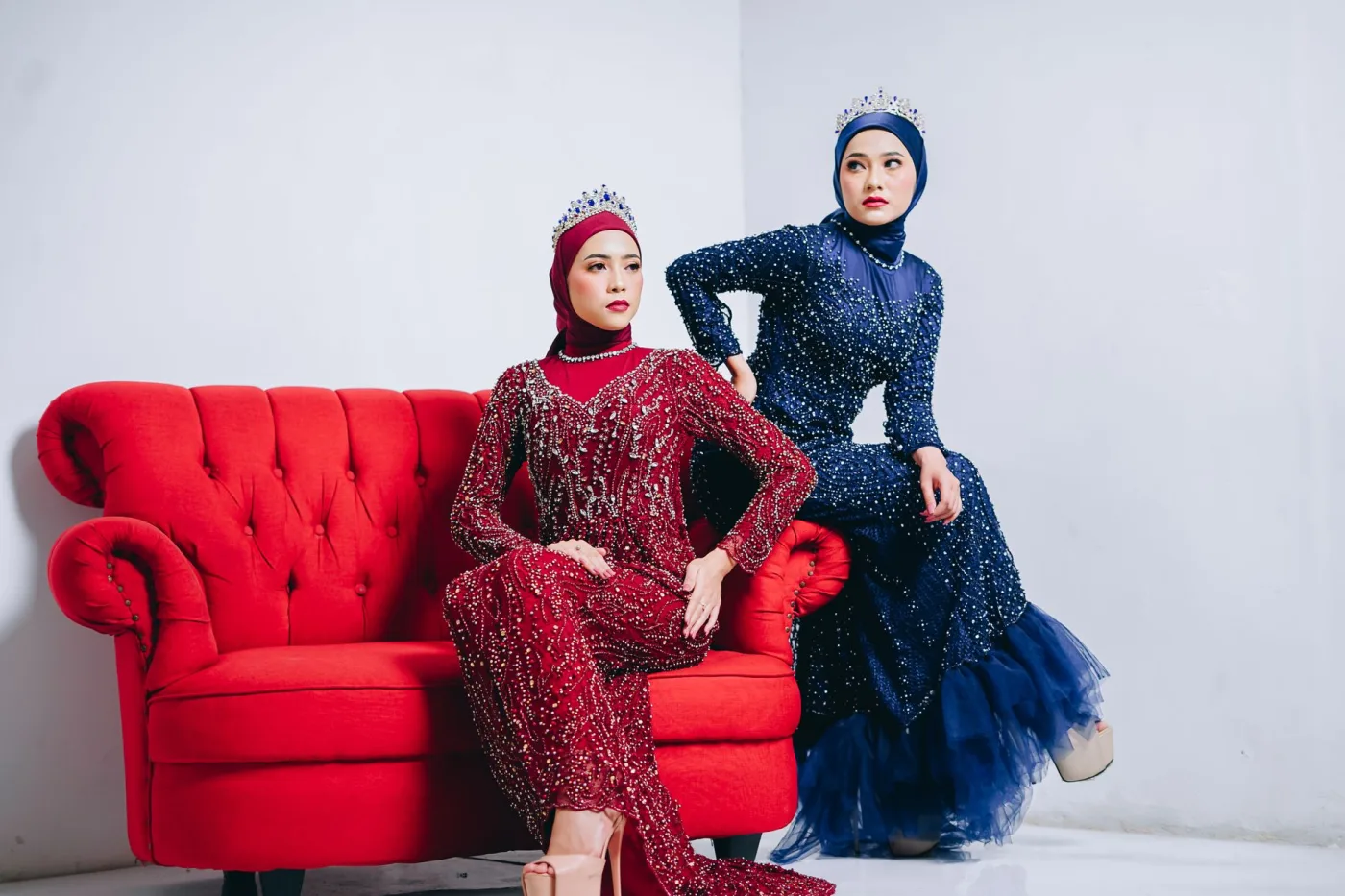

Once the code sets your length and formality, two practical things decide whether you will enjoy wearing the gown or spend the day fighting it: the weather and the ground under your feet. A stunning floor-length satin gown is a poor choice for a beach at noon and a perfect one for a winter ballroom. Match the fabric and the silhouette to where you are actually going.
Garden or vineyard
Soft, breathable fabrics: chiffon, crepe, cotton-silk. Florals and midis suit the setting. Choose block heels or wedges so you are not aerating the lawn.
Beach or waterside
Flowing, lightweight and forgiving in wind: a midi or maxi in chiffon or linen blend. Skip stilettos on sand and pick sandals or espadrille wedges.
Ballroom or hotel
The place to go long and structured. Satin, velvet and beading read well under chandeliers. This is where a true evening gown belongs.
Place of worship
Cover the shoulders and knees; carry a wrap or a bolero even if the reception is relaxed. Modesty here is respect, not restriction.
Season layers over venue. In high summer you want natural fibres and pale-to-mid tones that hold up to heat and photographs. In deep winter you can lean into velvet, long sleeves, jewel colours and a proper coat you are not ashamed to be photographed in. Spring and autumn are the forgiving middle, where a midi with a light wrap covers most eventualities. When you buy or rent, think in terms of the whole day, from a warm ceremony to a cool evening, and bring a layer.
The code sets the length, the venue sets the fabric, and the two together choose the gown.
Colours and lengths that work
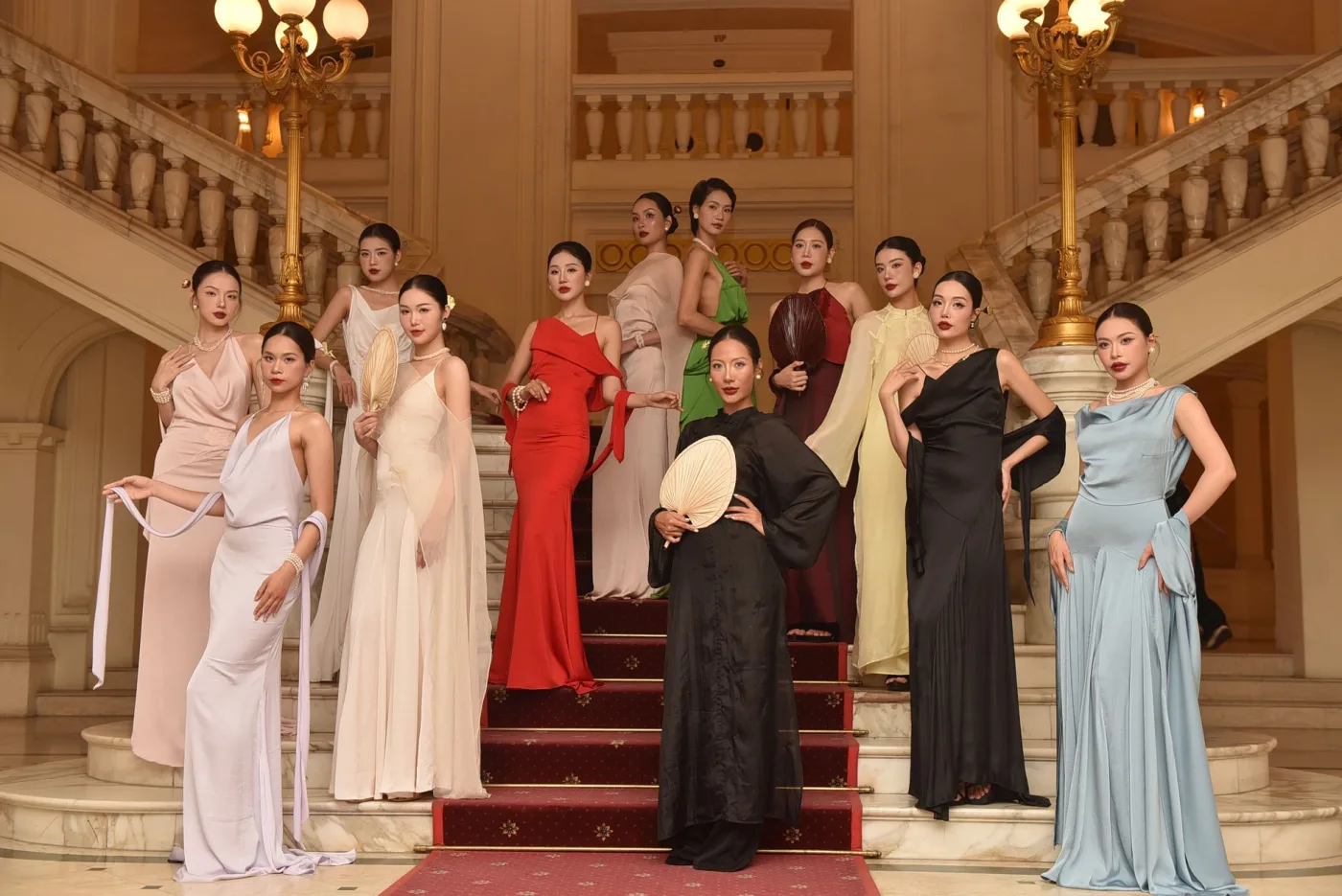
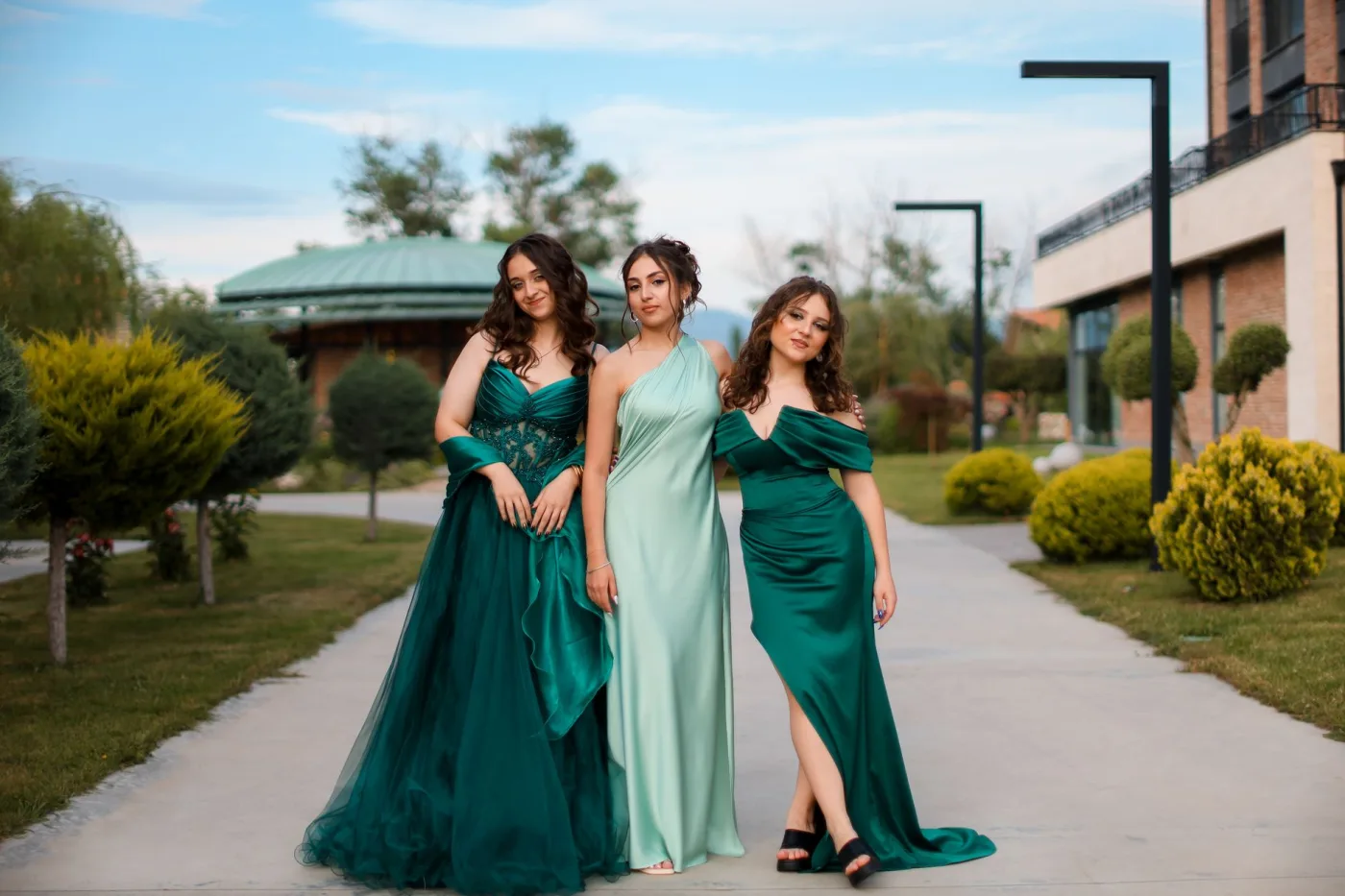
Within the boundaries the code gives you, colour is where you get to be yourself. The good news is that almost everything is available to you. Jewel tones photograph beautifully and suit most complexions. Dusty and muted shades, sage, terracotta, mauve, slate, feel current and quietly elegant. Deep, saturated colours read as formal in the evening. Bold prints are welcome at relaxed and festive weddings. Metallics are a safe way to look dressed up without going near a ballgown.
Length follows the code, but a few pairings are worth memorising. A floor-length gown answers white tie and black tie. A midi is the modern all-rounder that suits formal, cocktail and semi-formal alike. A knee-length dress is the natural cocktail choice and the safest length for a daytime wedding. When you are unsure, a well-cut midi in a mid-tone almost never looks wrong.
What to avoid, without exception
There are only a handful of hard rules for a wedding guest, and they all come down to one idea: the day is not about you. Keep these three in mind and the rest is preference.
- No white, ivory, cream or champagne. This is the oldest rule for a reason. Anything that could read as bridal in a photograph, including very pale blush or an all-over sparkle that mimics a gown, is off the table. If you have to squint to decide whether it is white, it is white.
- Nothing that upstages the couple. Avoid a full-length beaded ballgown at a garden brunch, a tiara or anything veil-like, and outfits so dramatic they pull every eye. Standing out and standing above are different things.
- Nothing overly revealing. Very short hems, plunging necklines and sheer panels can feel out of step, especially in a place of worship or a family-heavy crowd. Pick one focal point, a neckline or a leg, not several at once.
- Do not ignore a stated colour. If the couple has asked for a specific palette or said no black, honour it. It is their day, and the request is rarely arbitrary.
- Do not treat casual as an excuse. Dressy casual still means a dress, not the jeans you wore to travel. Casual is the floor, not the goal.
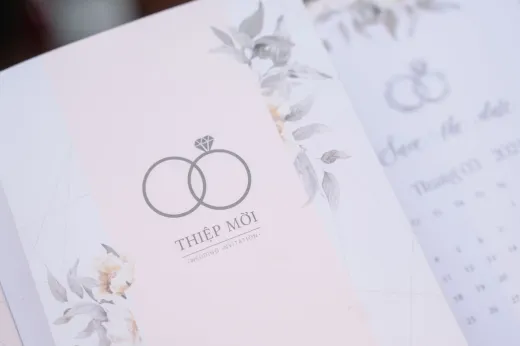
If the couple has sent a beautifully designed invitation with a clear code and colour note, take the hint and read it closely. Our guide to wedding invitations explains how much information a good suite is actually carrying, and dress instructions are usually the part guests skim past.
Modest and cultural options
Dressing modestly and dressing well are not in tension. Long sleeves, higher necklines and floor-skimming hems are all firmly in fashion, and a great deal of formalwear is designed with coverage in mind. If you want more skin covered than a given gown offers, layer intelligently: a fine bodysuit or a long-sleeved top under a sleeveless gown, a tailored bolero or a structured blazer over a strappy dress, or a wrap that doubles as evening cover. A satin slip under lace solves sheerness in seconds.
Many weddings are cultural celebrations first, and the invitation may specifically invite traditional dress. When it does, that is an opportunity, not an obligation to fret over. Wear the colour and shine the occasion calls for, follow any guidance the couple gives on their customs, and when you are a guest at a tradition that is not your own, err toward respect: cover what the setting expects, and ask the couple or a family member if you are unsure. For a broader sense of how these days are structured and what is expected of guests, our overview of the wedding itself sets the scene.
Budget routes: buy, rent or resale
A gown you will wear for six hours does not need to cost a fortune, and increasingly it does not. There are three sensible routes, and the right one depends on how often you attend formal events and how much you want to own the dress afterward.
| Route | Best when | Upside | Watch out for |
|---|---|---|---|
| Buy new | You will re-wear it, or want it in your wardrobe | Perfect fit, yours to alter, wear again | Highest cost; a formal gown can sit unworn for years |
| Rent | One-off formal code, or you like variety | Designer labels for a fraction of retail; nothing to store | Book early for popular sizes; check the fit window and return date |
| Resale / pre-loved | You want to own it but not pay full price | Big discounts, often barely worn, more sustainable | Final-sale returns; measure against the listed dimensions, not the label size |
| Shop your wardrobe | You already own something close | Free; a tailor and new accessories transform a dress | Be honest about whether it truly fits the code |
Whichever route you take, budget a little for a tailor. A hem taken up, a waist nipped in or straps shortened is the difference between a dress that fits and a dress that fits you. It is the cheapest upgrade in fashion, and it makes an inexpensive gown look considered.
Accessorising the gown
Accessories are not an afterthought; for a cocktail dress in particular they are the outfit. The classic advice is that a simple dress plus the right shoes, bag, jewellery and a wrap becomes a complete look, while an already busy gown wants restraint. Choose one hero piece, a statement earring or a bold clutch, and let everything else support it.
Jewellery
Match the metal to the gown's undertone. Let a plain neckline carry statement earrings; let an embellished gown stay quiet.
The bag
A small clutch for formal, a slightly larger one for a long day. It needs to hold your phone, lipstick and the invitation, nothing more.
A wrap or jacket
Ceremonies run cold and venues over-air-condition. A pashmina, bolero or blazer is insurance that can also add polish.
Shoes
Height for a ballroom floor, block heels or wedges for grass and sand. Break them in at home first; nobody enjoys a barefoot exit.
Comfort is a strategy, not a compromise. You will be standing, dancing and sitting through a long meal, so choose shoes you can survive in and a neckline you are not forever adjusting. The best-dressed guest is usually the one who looks entirely at ease, because ease is what lets the couple, and the camera, forget you are working at it.
The bottom line
Dressing for a wedding is a solved problem once you take the code as your brief. Let the two words on the invitation set your length and formality, let the venue and season choose your fabric, and keep the three golden rules in your back pocket: no white, nothing too revealing, and never outshine the couple. Rent or resell to keep the cost sane, tailor whatever you land on, and let one good accessory do the talking. Do that and you will look right, feel comfortable, and give the couple the one thing a guest can truly offer: your full, unfussy attention.
If you are the one getting married rather than attending, the same logic runs in reverse, and our bridal guide starts from the gown and works outward to the whole look.
Frequently asked questions
Can a wedding guest ever wear white?
As a rule, no. White, ivory, cream and champagne belong to the bride, and even a mostly-white print or an all-over pale sparkle can read as bridal in photographs. The only exception is when the couple explicitly asks guests to wear white, which some do for a themed celebration. Unless you have that instruction in writing, choose another colour.
What length gown should I wear to a wedding?
Let the dress code decide. White tie and black tie call for floor-length or evening-length gowns. Formal and cocktail codes are happy with a midi or a polished knee-length dress. For daytime and casual weddings, knee to midi is the natural range. When you are unsure, a well-cut midi in a mid-tone is the safest choice across almost every code.
Is a jumpsuit acceptable at a formal wedding?
Yes, increasingly so. Modern black tie and formal codes for women are deliberately flexible, and a sharp, floor-skimming evening jumpsuit in a rich fabric is now considered correct at formal weddings. Treat it as you would a gown: keep the fabric elevated, add proper evening accessories, and make sure the tailoring is clean.
How do I dress modestly and still look formal?
Coverage and elegance go together easily. Choose long sleeves, a higher neckline or a floor-length hem, or create them by layering: a fine bodysuit under a sleeveless gown, a bolero over straps, or a wrap for the ceremony. A satin slip fixes any sheerness. Modest formalwear is widely available and entirely on-trend, so you rarely have to compromise on either front.
Should I buy or rent a gown for a one-off wedding?
If you will only wear it once and do not need to own it, renting is usually the smart route: you get a designer gown for a fraction of retail with nothing to store afterward. Buy new when you will re-wear the dress or want it in your wardrobe, and consider resale for a middle path, where you own a barely-worn gown at a steep discount. Whichever you choose, budget a little for a tailor.