Wedding Hair for Medium Length Hair: The Complete Guide
Updos, chignons, half-up styles and soft waves for medium hair, with the prep, accessories and trial process that keep them looking perfect all day.
Medium-length hair is quietly the most versatile length a bride can bring to her wedding. It is long enough to pin into an elegant updo, short enough to fall in soft waves without becoming heavy, and flexible enough to swing between polished and relaxed as the day goes on. This guide is a complete look at wedding hair for medium length hair: the styles that flatter it, the prep that makes them hold, the accessories that lift them, and the trial process that keeps the morning of your wedding calm rather than fraught.
The short version
- Medium hair is the flexible middle ground. It handles updos, half-up styles and worn-down waves with equal ease.
- Texture and hold come from prep. Day-old hair, the right products and a little backcombing let styles actually stay put.
- Accessories change everything. A veil, comb, pins or fresh flowers reframe the same style for ceremony and reception.
- Always trial before the day. Test the full look in natural light so nothing is a surprise on the morning.
Why medium-length hair is so wedding-friendly
A hairstyle is simply the way hair is cut, arranged and styled, and the length you start with sets the range of what is possible. Medium hair, roughly between the collarbone and just past the shoulders, sits in a genuine sweet spot. It has the length to be gathered up and pinned, which very short hair cannot do, yet it stays light and manageable rather than dense and demanding like very long hair. For a wedding, where you want a look that survives hours of hugging, dancing and heat, that balance is a real gift.
The practical upshot is choice. Medium-length brides can go fully up, half up, or entirely down, and can move between registers across the day. Many choose a more structured style for the ceremony and let it loosen for the reception, which medium hair takes to naturally. Before you fall for a single image, it helps to understand the main families of style available to you, because each asks slightly different things of your hair and your prep.
The main style families for medium hair
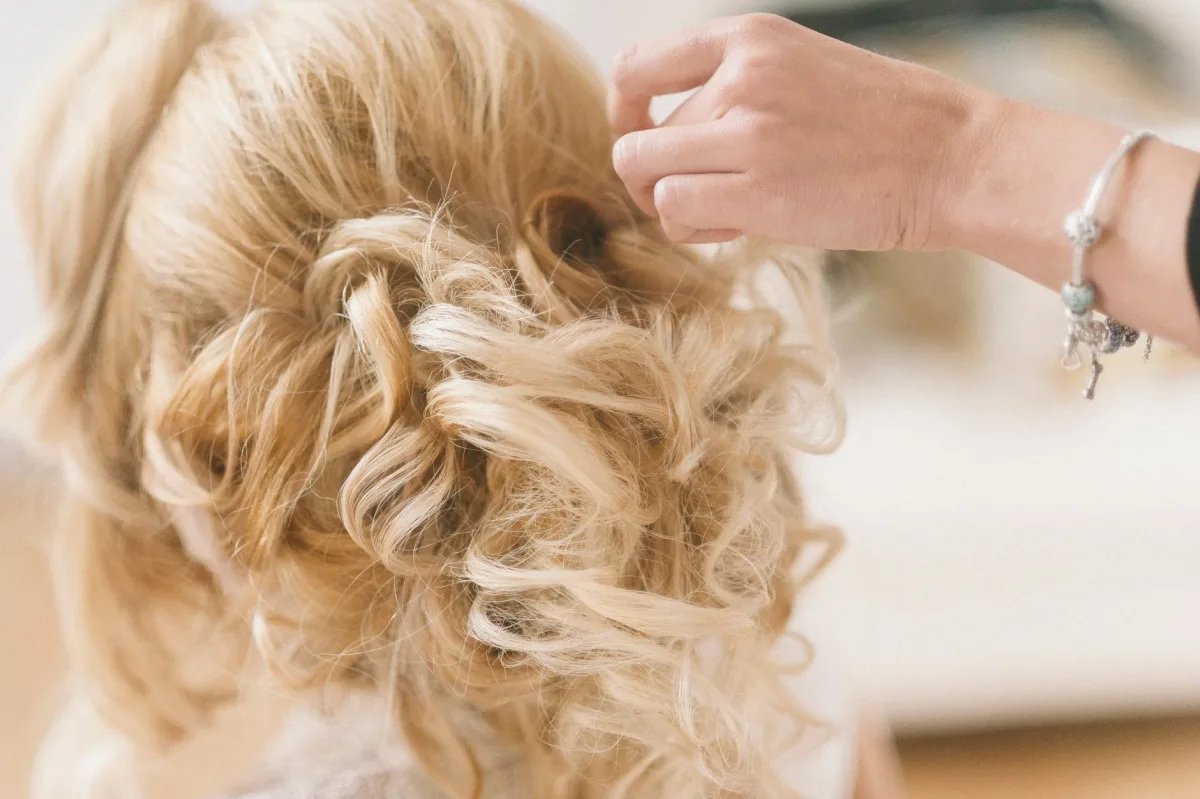
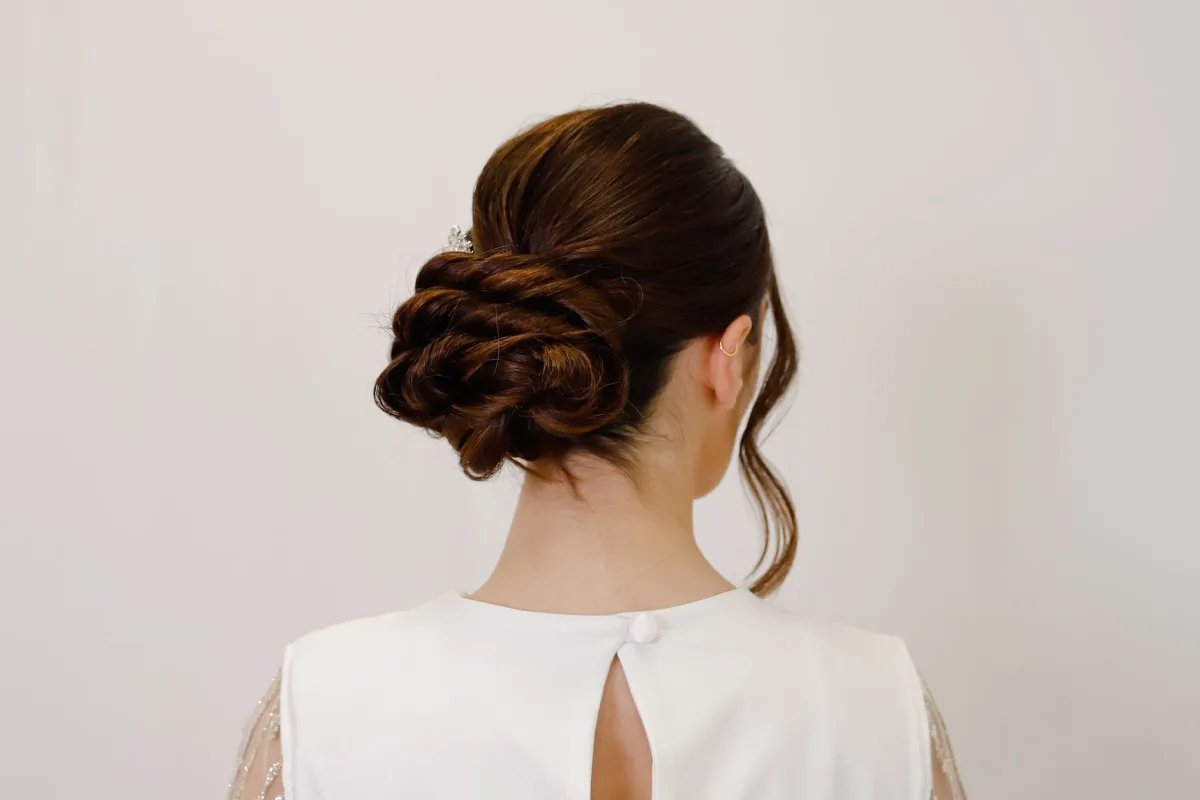
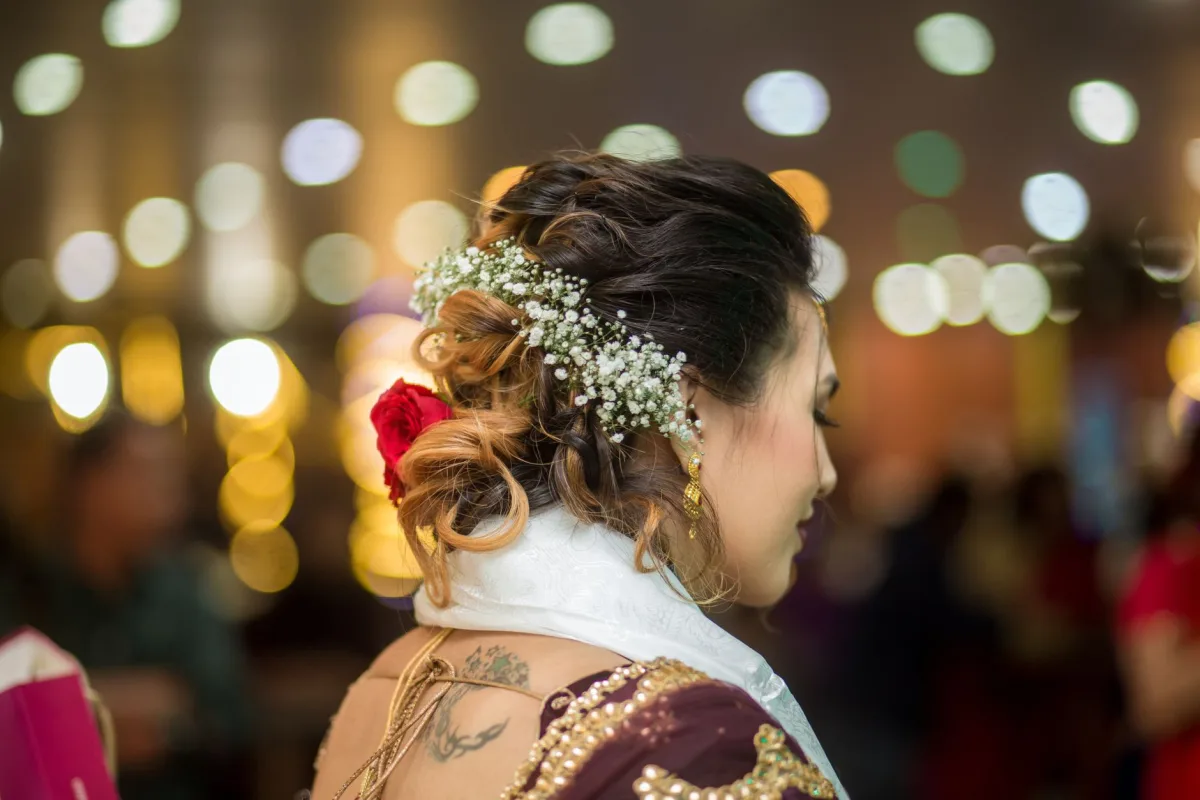
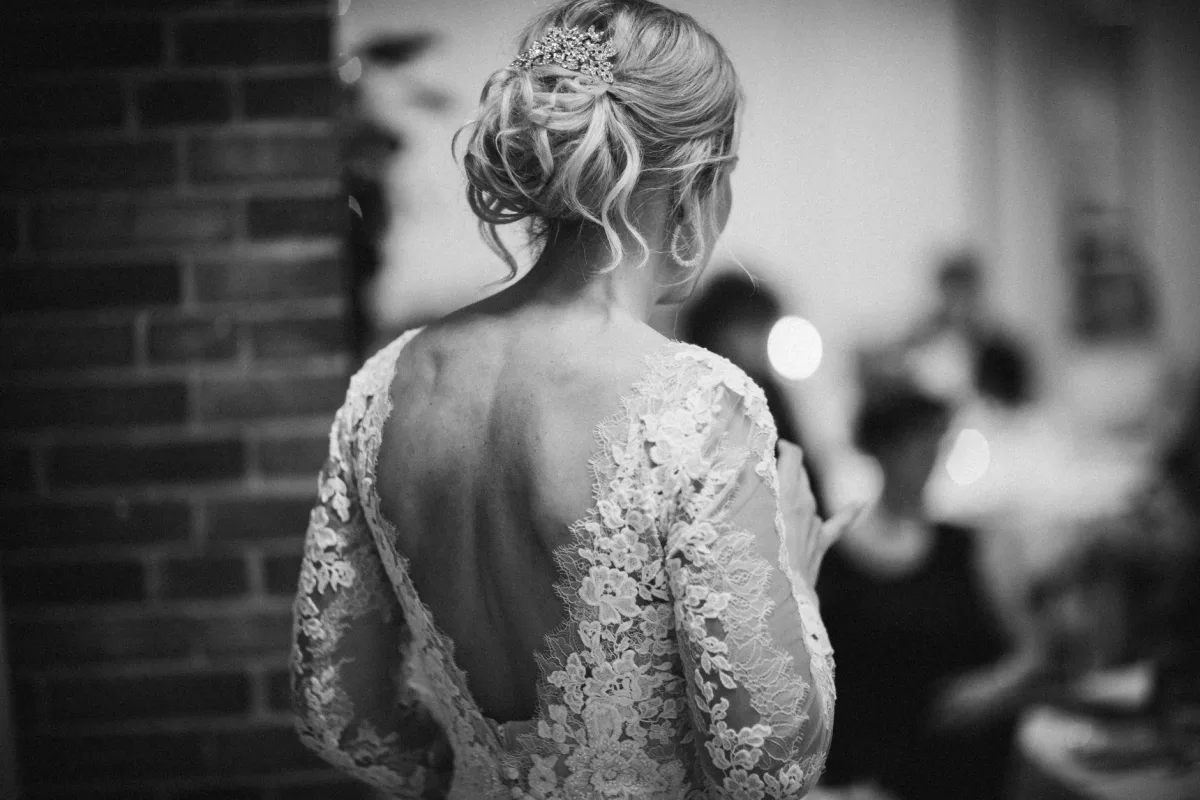
The updo
An updo gathers the hair up and off the neck. On medium hair a soft, textured version reads elegant without needing extreme length.
The chignon or low bun
A chignon is a knot pinned at the nape. Classic, secure and ideal for medium hair, since it needs less length than a high style.
Half-up, half-down
The top is pinned back while the rest falls loose. It shows off your length, frames the face, and holds beautifully at medium length.
Soft waves worn down
Loose, glossy waves are effortless and romantic. Medium hair curls without the weight that drags long hair straight by evening.
Braided and woven styles
A braid across the crown, a plaited half-up or a woven side detail adds texture and interest, and hides pins neatly.
Notice that every one of these works on medium hair, which is exactly the point. The decision is less about what is possible and more about what suits your dress neckline, your face shape and the overall mood you want. A high neckline often pairs well with hair up to keep the line clean, while a bare shoulder or a plunging back can be beautifully framed by waves worn down.
Prep: the secret to hair that holds
The most common bridal hair disappointment is a style that looked perfect at nine in the morning and collapsed by noon. Medium hair, being lighter, actually holds well, but only if it is prepared right, and preparation starts before the styling ever begins. The counterintuitive rule most stylists swear by is to arrive with day-old hair, not freshly washed. Freshly washed hair is slippery and refuses to grip; hair washed the day before has a little natural texture that lets pins and curls stay put.
Product does the rest. A light texturising spray or a touch of dry shampoo adds grip, a flexible-hold hairspray locks curls without turning them crunchy, and a little backcombing at the roots gives an updo the volume and anchor it needs. If your hair is very fine or very smooth, this prep is the difference between a style that lasts twelve hours and one that slides out during the first dance. Talk your stylist through your hair's real behaviour, not its best day, so they can build in the right hold from the start.
Day-old hair
Wash the day before, not the morning of. A little natural texture grips pins and holds curl far better than squeaky-clean hair.
Grip products
Texturising spray, dry shampoo or mousse give fine or smooth hair the traction it needs to keep a style in place.
The right hairspray
A flexible-hold spray locks the shape while letting hair move naturally. Skip stiff, heavy sprays that look lacquered in photos.
Backcombing and pins
Gentle backcombing at the roots and well-placed grips give updos volume and an anchor so nothing slips as the day goes on.
Accessories that transform medium-length styles
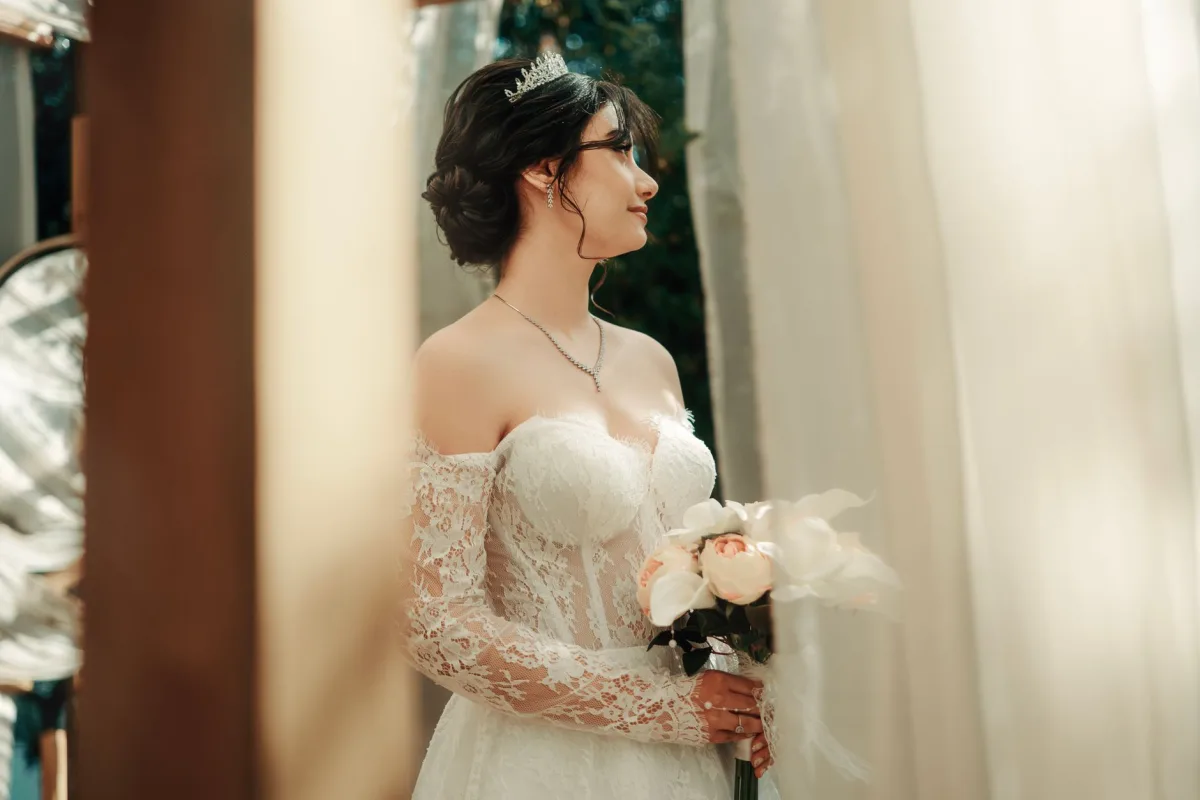
Accessories are where a good bridal hairstyle becomes yours, and medium hair takes them especially well because there is enough hair to secure them and not so much that they get lost. A veil is the classic, and it can be pinned above or below an updo, tucked under a half-up style, or worn with waves down. Because a veil often comes off after the ceremony, it is worth planning a style that still looks complete once it is removed, which is easy to arrange with a stylist who knows it is coming.
Beyond the veil, small pieces do a lot. A decorative comb or a scatter of pins catches the light in photographs. A delicate hair vine woven through a braid feels romantic and organic. Fresh or preserved flowers tucked into a chignon tie your hair to your bouquet. If your wedding follows a cultural tradition, heirloom pieces such as a maang tikka or ornamental hairpins carry real meaning and sit beautifully on medium-length styles. The trick is restraint: choose one hero accessory and let it lead, rather than crowding the style.
The trial: rehearse before the real thing
No bride should meet her wedding hairstyle for the first time on the wedding morning. A hair trial, a full run-through with your stylist in advance, is the step that turns hope into certainty, and it matters just as much as a makeup trial. It is where you discover that the pinterest updo needs adjusting for your density, or that the waves you love drop after two hours and need a firmer set. Far better to learn that in a calm rehearsal than in a panic on the day.
Make the trial realistic. Book it for a similar time of day to the wedding, come with your hair in the same condition you plan to arrive in, and bring your veil or hair accessory so you can see the whole picture together. Photograph the finished look from several angles in natural light, because the camera reads hair differently from the mirror, and it is the photographs you will keep. This is exactly the logic our broader guide to wedding hair sets out, and it applies to every length. For how hair fits into the wider morning routine of skin, makeup and dressing, our overview of all things bridal puts it in sequence.
Coordinating with your party and your look
Your hair does not sit in isolation. It works with your dress neckline, your makeup, your jewellery and, if you have them, your attendants. Many brides like a loose theme running through the bridal party, for instance soft waves or half-up styles across the bridesmaids, so the group reads as one in photographs without everyone being identical. If you are coordinating a group, it pairs naturally with planning bridesmaid makeup at the same time, so hair and face are considered together.
Length is also not a permanent limit. If you love an elaborate updo but feel your medium hair is just short of it, clip-in extensions matched to your colour can add the length and volume a style needs, and a skilled stylist will blend them invisibly. And if you are weighing a shorter cut, or your hair sits at the shoulder rather than below it, our companion guide to wedding hair for shoulder length covers that range in the same detail. The platform behind this guide, matrimony360, is here to help you join up every one of these decisions calmly.
The bottom line
Medium-length hair gives you the widest menu of any length: updos, chignons, half-up styles and soft waves all sit comfortably within reach. The looks that last are built on smart prep, day-old hair, the right grip products and a flexible hold, and lifted by one well-chosen accessory rather than many. Above all, trial the style in advance, in natural light, with your veil in place, so the wedding morning holds no surprises. Do that, and your hair will carry you gracefully from the first look to the last dance, exactly the way you pictured it.
Frequently asked questions
Is medium-length hair long enough for a bridal updo?
Yes, comfortably. Medium hair, roughly collarbone to just past the shoulders, has ample length for soft updos, low buns and chignons, which need less length than a high, elaborate style. If you want a fuller or higher updo than your hair naturally allows, colour-matched clip-in extensions blend in seamlessly. A good stylist will show you the range at your trial.
What bridal styles suit medium-length hair best?
Medium hair is the most versatile length, so almost everything is on the table: textured updos, a low chignon at the nape, half-up half-down styles that show your length, loose romantic waves worn down, and braided or woven details. The best choice depends on your dress neckline, face shape and the mood you want, rather than on any limit of the length itself.
How do I stop my wedding hairstyle from falling out?
Preparation is the secret. Arrive with day-old hair rather than freshly washed, because a little natural texture grips far better. Use texturising or grip products, a flexible-hold hairspray, and gentle backcombing at the roots for anchor. Tell your stylist how your hair really behaves so they can build in the right hold. Medium hair holds well when prepped correctly.
Should I wash my hair the morning of the wedding?
No. Most stylists recommend washing the day before, not the morning of. Freshly washed hair is slippery and resists holding pins and curl, while day-old hair has a touch of natural texture that lets a style stay put through hours of celebration. If you feel your hair gets oily quickly, a little dry shampoo on the morning refreshes it without losing that helpful grip.
Do I really need a hair trial?
Strongly recommended. A trial lets you test the full look in advance, discover any adjustments your hair density or texture needs, and see how the style holds over a couple of hours. Book it for a similar time of day, bring your veil and accessories, and photograph the result in natural light. It removes the risk of meeting your wedding hairstyle for the first time on the morning itself.
Can I wear a veil with medium-length hair?
Absolutely. A veil pins securely into updos, half-up styles or waves worn down on medium hair. Because many brides remove the veil after the ceremony, plan a style that still looks complete once it comes off, and bring the veil to your trial so you can see the whole look together. A stylist who knows the veil is coming will position the pins to hold it cleanly.