Wedding Places Near Me: How to Choose
Not just banquet halls. The full range of spots you can marry near you, how to find each locally, the permits outdoor places need, and how to match the place to your size and vibe.
A search for "wedding places near me" is broader than it looks, and that is the whole point. You are not just asking where to hold a reception, you are asking where to get married at all, and near you that could mean a public rose garden, a stretch of quiet beach, a heritage hall, the local registry office, a family farm or simply your own back garden. Each of those is a genuine wedding place, and each one comes with a different set of rules, costs, weather risks and permissions that a map pin never shows. This guide walks the full range of places you can marry locally, how to find each type in your own area, what permits and restrictions apply to the public and outdoor ones, how to plan a real weather backup, and how to match the place to the size and feeling of the day you actually want. No invented place names, no fabricated prices, just the honest shape of the choice.
The short version
- "Wedding place" is wider than "reception venue." Gardens, beaches, heritage sites, places of worship, courthouses and homes all count, and each behaves differently.
- Public and outdoor places need permits. A park, a beach or a lakeside is rarely just free to use, and the paperwork is the part couples forget.
- Match the place to the vibe and the size first. The setting sets the tone of the whole day, so choose the feeling before you chase the pin.
- Every open-air place needs a weather plan. Beauty without a backup is a bet on the forecast, and the forecast does not care about your date.
What counts as a wedding place
Most guides quietly narrow "wedding place" down to "banquet hall or hotel" within a paragraph. That is a mistake, because the law and modern custom both allow a far wider range. In many places the rules that once limited weddings to a church or a register office have been relaxed for decades: the range of approved wedding locations now stretches to hotels, stately homes, beaches, sports grounds and many spaces in between. So the real question is not "which hall," it is "which kind of place fits the wedding I want," and that is a much more interesting question with a lot more room in it.
It helps to separate two things that a single search jumbles together. There is the place where the marriage itself happens, the ceremony, and the place where you celebrate afterwards, the reception. Sometimes they are the same spot, often not. If your search is really about the formal reception space, our companion guide to wedding venues near me covers the contracts, capacity and cost comparison in depth, and if you are weighing a wedding against any other kind of event, the broader venues near me guide sorts the whole map by event type. This article is about the ceremony place and the setting: the full menu of spots you can actually get married in near you.
The types of wedding places, compared
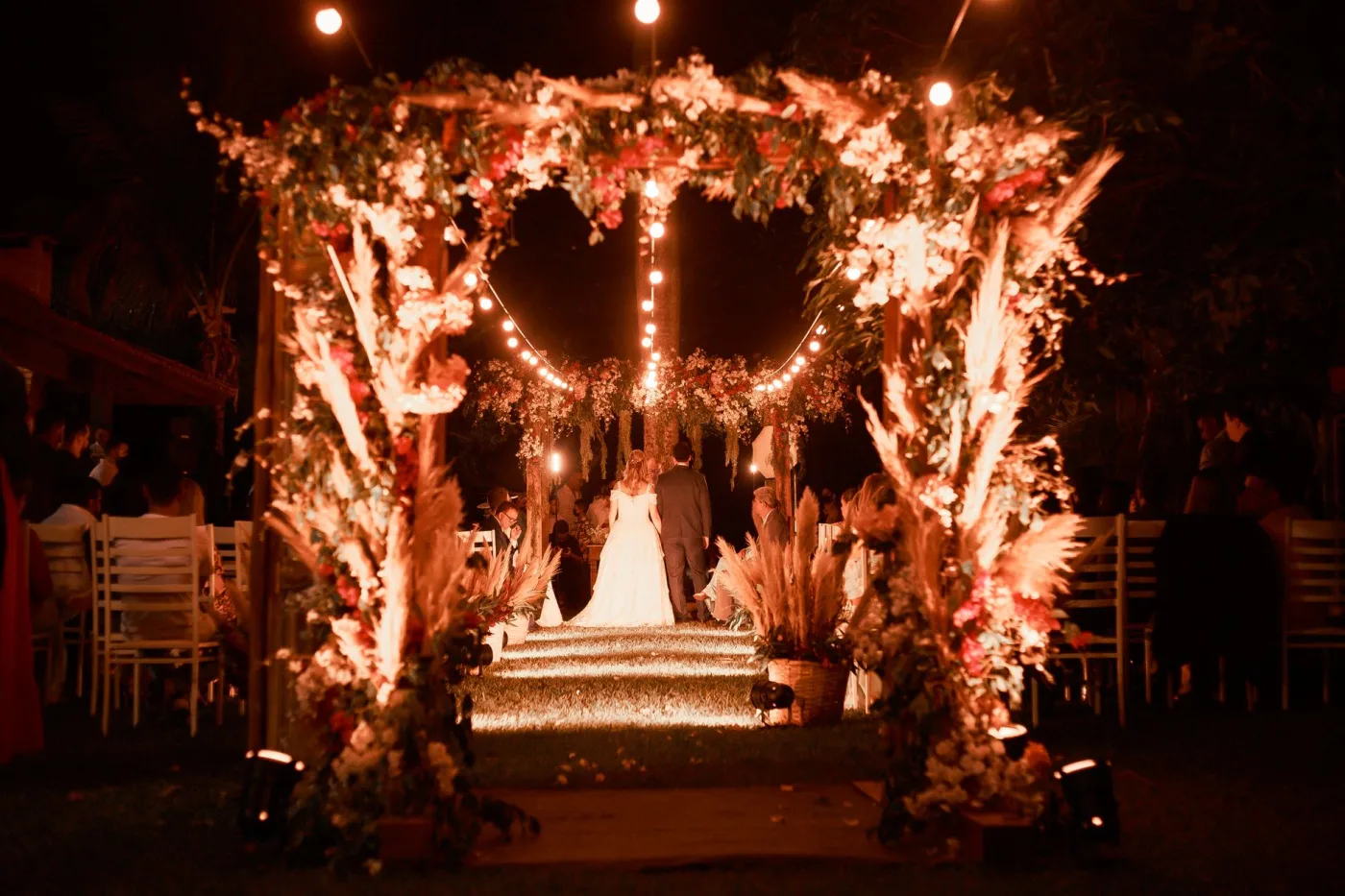
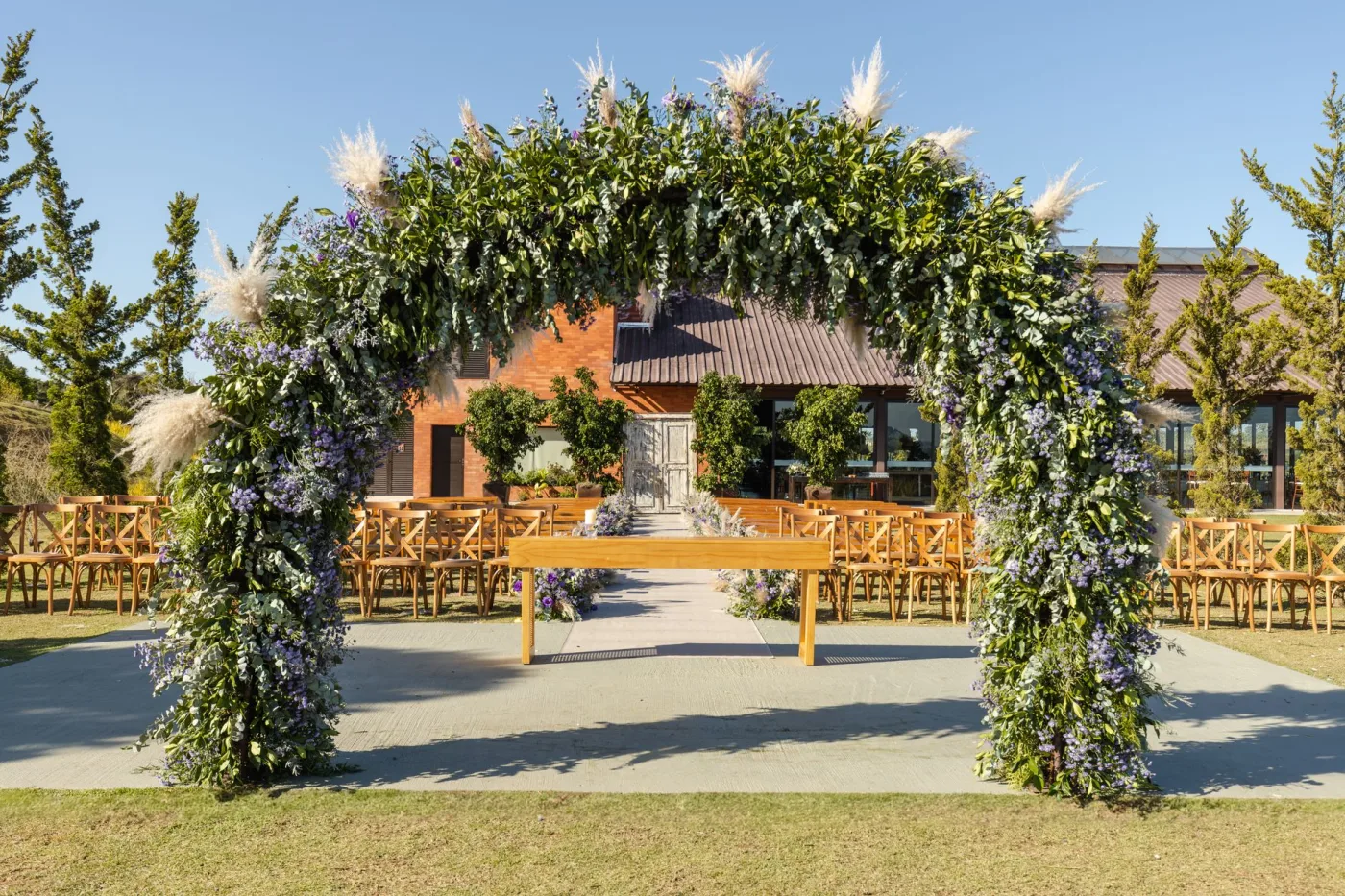
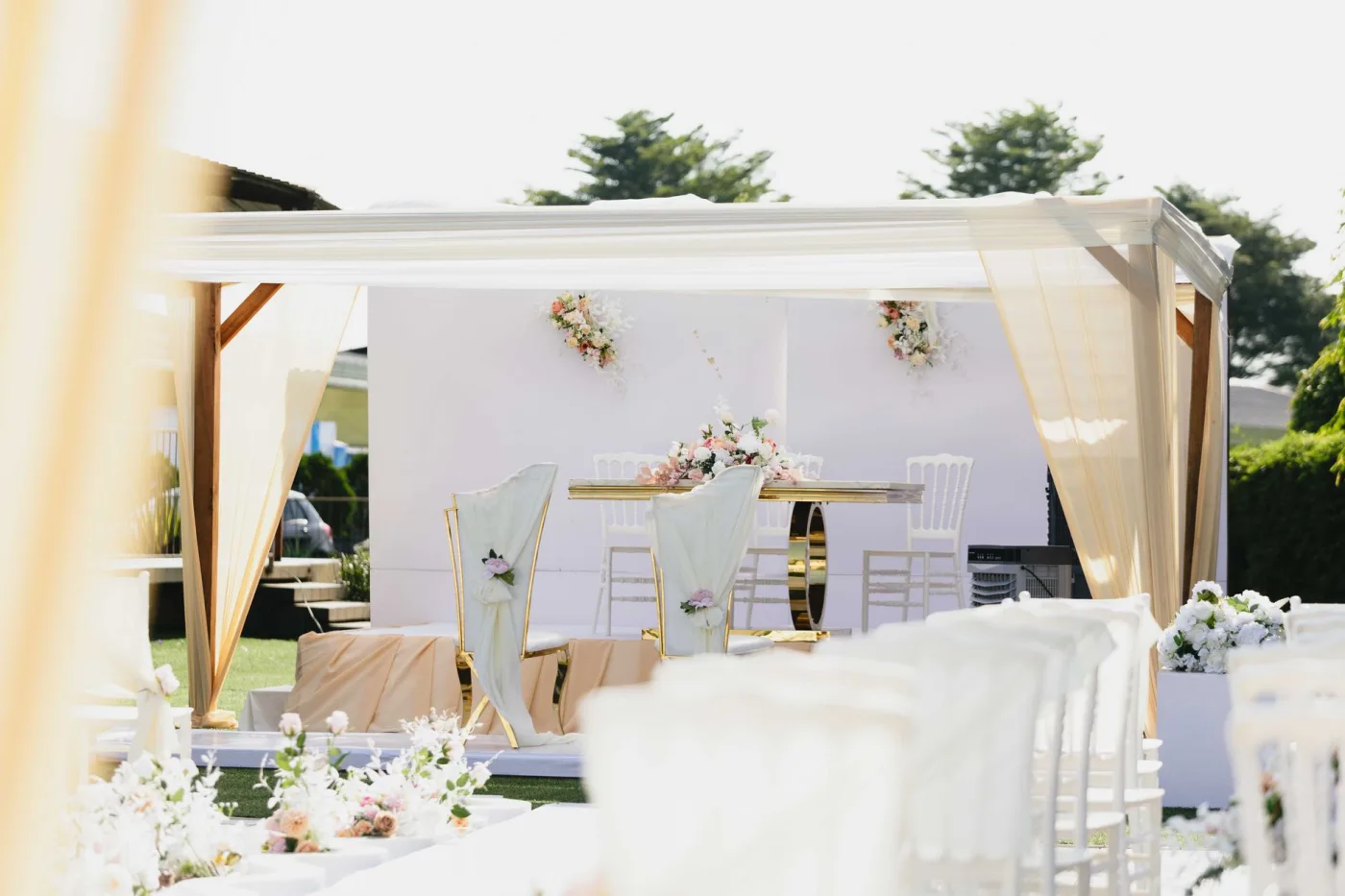
Below is the honest range. Read the vibe column first, because the feeling of a place decides more about your day than its address does, then check the capacity band and the watch-outs before you fall for the photos. No single type is best; the best one is the one whose watch-outs you are happy to live with.
| Place type | The vibe | Typical capacity | Watch out for |
|---|---|---|---|
| Garden or public park | Green, relaxed, seasonal | 20 - 150 | Permits, public access, no shelter, power and toilets |
| Beach or lakeside | Open, natural, romantic | 10 - 120 | Tides, wind, permits, sand and heels, sound carrying off |
| Historic or heritage site | Grand, characterful, storied | 40 - 200 | Strict rules, no confetti or open flame, protected fabric |
| Place of worship | Sacred, traditional, formal | 50 - 300 | Membership or faith requirements, music and dress rules |
| Courthouse or registry office | Simple, quick, official | 2 - 30 | Guest caps, fixed slots, little room for decor |
| Hotel or resort | Turnkey, comfortable, all-in-one | 30 - 400 | Premium price, package minimums, less individuality |
| Farm, barn or vineyard | Rustic, warm, scenic | 50 - 200 | Access roads, parking, weather, bring-in infrastructure |
| Backyard or family home | Personal, intimate, free-form | 10 - 80 | Hire everything, neighbours, parking, noise limits |
For the built, roofed options in that list, the hotel, the heritage hall, the barn run as a dedicated venue, our wedding venue types pillar breaks each format down in far more depth than a single row can. The rest of this guide leans into the parts that pillar covers less: the outdoor and public and personal places, where the real work is permits, weather and matching the setting to the day.
Gardens, parks, beaches and lakesides
Open-air places give you the most beautiful settings and the least built-in support. A garden or a beach hands you a backdrop no ballroom can buy, but it hands you a bare site: no chairs, no power, no toilets, no shelter and, crucially, no automatic right to be there. Finding them locally is the easy part. Search your municipal parks department, botanical gardens and arboretums, and ask at nature reserves and lakeside parks, most of which have a formal private-hire process that never appears on a wedding aggregator.
The part couples skip is permission. A public park, a popular beach or a lakeside is rarely just free to use for a ceremony, even though anyone can walk through it. Most require a permit, a fee and often proof of liability insurance, and they may cap your numbers, restrict amplified sound, ban stakes in the ground for arches, or forbid confetti, rice and open flame entirely. Popular spots book their permit slots months ahead, and a public place stays public: you may be sharing your sunset with joggers, dog walkers and a children's football game. None of that is a reason to rule out the outdoors. It is a reason to treat the permit as the first phone call, not the last.
The prettier the outdoor place, the more it leaves to you. Price in the permit, the hire kit, the toilets and the shelter before you fall for the light.
Beaches and lakesides add their own physics. Tides move, so a beach ceremony has a real deadline set by the water, not by you. Wind off open water carries sound away and topples light decor, sand punishes formal shoes, and bright midday sky is unkind to eyes and cameras alike. All solvable, with a sound plan, weighted decor, a better slot and a local who knows the tide table, but solved in advance or not at all.
Heritage sites, places of worship and the official route
Some places carry meaning a garden cannot. A historic or heritage site, a castle, a restored manor, a botanical glasshouse, a listed civic hall, lends a wedding instant gravity and a backdrop with a story already in it. The trade is control. Protected buildings often come with strict conservation rules: no confetti, no open flame, no fixings to the walls, capped numbers to protect the fabric, and a shorter, tightly managed access window. Find them through your national heritage body, local conservation trusts and historic-house associations, many of which license weddings specifically to fund their upkeep.
A place of worship is a wedding place in the oldest sense, and for many couples the only one that matters. The considerations here are about eligibility and custom rather than hire fees: many faiths ask that one or both of you be members, or complete preparation classes, and set their own rules on music, dress, photography and who may officiate. If your faith is central to the day, this is the first place to enquire, not the last, because its calendar and requirements shape everything that follows. Note too that some traditions actively discourage marrying away from home, the way the Catholic Church, for instance, teaches that a wedding belongs in the parish where the couple's faith began rather than at a distant destination. Custom, not just cost, can decide the place.
Then there is the plainest wedding place of all: the courthouse or registry office. Every marriage needs a legal act somewhere, and doing it at the register office, often for a modest fixed fee, is the simplest, cheapest and fastest route there is. Expect a booked slot, a firm guest cap, little scope to decorate, and a short ceremony. That minimalism is exactly why it suits a small, private wedding or an elopement, which today simply means any small, low-cost wedding, often with family fully in the know, rather than the runaway match the word once described. Many couples marry legally at the courthouse and celebrate separately later, which cleanly splits the official place from the party place.
The permit is the part people forget. For any public, outdoor or protected place, ask three questions before you fall in love with it: do I need a permit or licence to hold a ceremony here, what does it cost and how far ahead must I apply; is amplified sound, confetti, open flame or a ground-fixed arch allowed; and is the space held exclusively for me, or does the public still have access. If the answer to the first is yes and you have not asked it, you do not yet have a wedding place, you have a nice photo of one.
Farms, vineyards, backyards and the do-it-yourself places
The most personal weddings often happen on the least commercial land: a working farm, a barn, a family vineyard, or the back garden of a home. These places trade polish for warmth and freedom. Nobody hands you a package; you build the day yourself, which is the appeal and the workload in one. Find rural options through farm-stay and agritourism listings, local vineyard and winery tours, and word of mouth in the area, and remember that the most personal place of all, a relative's garden or a family home, is the one that never appears in any search because it was never listed.
The catch with all of these is infrastructure. A barn or a backyard is a blank site with even less built in than a park. You will likely hire or arrange everything: seating, a marquee or wet-weather cover, power or a generator, portable toilets, catering, lighting and a plan for parking on ground that turns to mud in rain. There are neighbours to consider and, in many areas, real limits on how late amplified music can run at a residential address. A backyard wedding can be the cheapest and the most meaningful day imaginable, but "free venue" is a myth once you total the hire list, so cost it out honestly before you count the saving.
Match the place to the vibe and the size
With the full range in view, the choice gets easier if you decide two things before you compare a single specific spot: the feeling you want, and the number of people who will be there. Setting carries tone more than any other single choice, so a place that fights the mood you are picturing will quietly undermine the whole day no matter how lovely it is on its own.
Decide the feeling first
Grand and formal, or relaxed and natural, or small and private. The setting sets the tone, so name the mood before you name the place.
Be honest about size
An intimate courthouse suits ten, a heritage hall swallows thirty. Match the capacity band to your real guest list, not your dream one.
Count the true cost
A "free" garden plus permit, hire kit, toilets and shelter can beat a hotel package. Compare all-in totals, never headline fees.
Respect the weather
Every open-air place needs a real backup, not a hopeful one. If plan B embarrasses you, it is not a plan.
Check the access
How guests arrive, park and reach the spot. A stunning place an hour down a dirt track thins your guest list for you.
Confirm the legals
Whether the ceremony is legally binding where you plan to hold it, or whether you need a separate official step first.
Size is the gate that quietly rules places in and out. A place rated comfortably for eighty does not become right for a hundred and forty because you love the view, and a hall built for two hundred makes a wedding of thirty feel hollow. Fix your real headcount early, then read the capacity column of the table above as a hard filter rather than a suggestion.
Every outdoor place needs a weather plan
The single most broken promise in outdoor weddings is "it will be fine on the day." Sometimes it is. When it is not, the couples who are glad are the ones who planned for rain, heat or wind as if it were certain. A weather plan is not a gloomy afterthought, it is what lets you relax and actually enjoy an open-air ceremony, because the decision has already been made and nobody is watching the sky in a panic at breakfast.
A real backup means a specific, decent alternative, not a vague hope: a marquee already booked, an indoor room on the same site held in reserve, a nearby hall on standby, or a clear cutoff time and a person whose job it is to make the call. It also means the small mercies: shade and water for heat, a windbreak and weighted decor for an exposed spot, umbrellas and firm ground for rain. Think it through when you view the place, in the season you will actually marry in, and you turn the weather from a threat into a footnote.
Once you have chosen the place, it becomes the anchor for everything else on your timeline, the date, the guest list, the catering and the travel all hang off it. Slot it in early using our wedding planning checklist so the spot you commit to lines up with every downstream booking. And if coordinating a bare outdoor site starts to feel like more than you signed up for, that is exactly the work a professional absorbs: our guide to hiring a wedding planner covers when that help earns its fee and when a turnkey place with its own coordinator is all you really need.
Choosing your place
"Wedding places near me" is not one question, it is a menu, and the couples who choose well read the whole menu before ordering. The grand heritage hall, the wild beach at low tide, the register office on a Tuesday morning and the back garden strung with lights are all real, valid wedding places, and the right one is simply the one whose feeling matches your day, whose capacity matches your list, and whose watch-outs you are content to manage. Decide the mood, count the people, cost it honestly, sort the permits, plan for the weather, and the place you choose will still feel right long after the search results have scrolled away.
Frequently asked questions
What counts as a wedding place, beyond a reception venue?
Far more than most couples assume. A wedding place is anywhere you can legally and comfortably hold the ceremony, which today includes public gardens and parks, beaches and lakesides, historic and heritage sites, places of worship, courthouses and registry offices, hotels and resorts, farms, barns and vineyards, and even a family backyard or home. The reception, the celebration afterwards, is a separate space that may or may not be the same spot. Deciding the feeling and the size of your day first is what narrows that wide menu down to the types worth touring.
Do I need a permit to get married in a park or on a beach?
Usually yes. Public parks, popular beaches and lakesides are open to everyone, but holding a private ceremony there almost always needs a permit, a fee and often proof of liability insurance, arranged through the municipal parks department or the body that manages the site. Permits commonly cap guest numbers, restrict amplified sound, and ban confetti, rice, open flame or stakes fixed into the ground, and popular slots book months ahead. Treat the permit enquiry as your first phone call, not a formality to sort out later, because without it you do not actually have the place secured.
What is the cheapest place to get married near me?
The courthouse or registry office is typically the cheapest and simplest, often a modest fixed fee for a short ceremony in a booked time slot with a firm guest cap. A backyard or a family home can also be very low cost, and deeply personal, but "free venue" is misleading once you total the hire list: seating, wet-weather cover, power, toilets, catering, lighting and parking all cost money on a bare site. Compare the true all-in figure rather than the headline, because a modest package at a turnkey place can undercut a "free" garden once you add everything the garden does not provide.
How do I plan for bad weather at an outdoor wedding place?
Plan for rain, heat or wind as if it is certain, not as if it might happen. A real backup is a specific alternative held in reserve: a marquee already booked, an indoor room on the same site, a nearby hall on standby, plus a clear cutoff time and a named person to make the call. Add the small mercies too, shade and water for heat, a windbreak and weighted decor for an exposed spot, umbrellas and firm footing for rain. View the place in the season you will actually marry in, and a plan made calmly in advance turns the weather from a threat into a footnote.
Should the ceremony place and the reception place be the same?
They can be, and an all-in-one hotel or resort makes that easy, but they often are not, and there is no rule that says they must match. Many couples marry legally at a courthouse or in a place of worship and then celebrate somewhere entirely different, which cleanly separates the official act from the party. Splitting them can save money, satisfy a faith or family expectation, and let you choose each place for what it does best. Just factor in the travel time and logistics of moving your guests between the two, and confirm which spot carries the legally binding ceremony.
Is a place of worship harder to book than a garden or hotel?
It is different rather than simply harder. A place of worship usually asks about eligibility and custom rather than hire fees: many faiths require that one or both of you be members or complete preparation, and set their own rules on music, dress, photography and who may officiate. Some traditions also prefer you marry in your home parish or community rather than at a distant location. If faith is central to your day, enquire there first, because its calendar and requirements shape every other booking, whereas a garden or hotel is mostly a question of availability and budget.