Wedding Stores Near Me: How to Choose
The stores behind a wedding are a supply chain of specialists, each with its own lead time and deposit habit. Here is how to find, choose and time every one near you.
"Wedding stores near me" is not one search, it is seven or eight searches wearing a single phrase. A wedding is not supplied by a shop, it is assembled from a small supply chain of specialists: the salon that fits the gown, the menswear shop that tailors the suits, the jeweller who sizes the rings, the printer who sets the invitations, the decor and rental firm that dresses the room, the favour supplier, and the bakery that builds the cake. Each is a different trade with a different lead time, a different deposit habit and a different reason it can go wrong. This guide maps the stores you will actually need close to home, how to find and judge each one, what to check before you hand over a deposit, and, crucially, when in your timeline to walk through each door. It names no shops and quotes no prices, because an honest local guide cannot, but it hands you the method those roundups skip.
The short version
- "Wedding stores" is a category, not a shop. You are choosing several specialists, each judged on its own merits.
- Lead time decides the order. The gown and anything tailored or printed to order start first; favours and the cake come late.
- Alterations, deposits and returns are where the money hides. Ask about all three before you pay, at every store.
- Local buys you fittings and fixability. In store you can try, tailor and return in person; online trades that away for range and price.
The stores behind a wedding, and what each one is for
Before you can choose stores near you, it helps to see them as distinct trades rather than a single errand. Each one below solves a different problem, keeps a different calendar, and rewards a different kind of shopping. Read them as a shortlist of specialists to line up, not a single high-street trip to tick off in an afternoon.
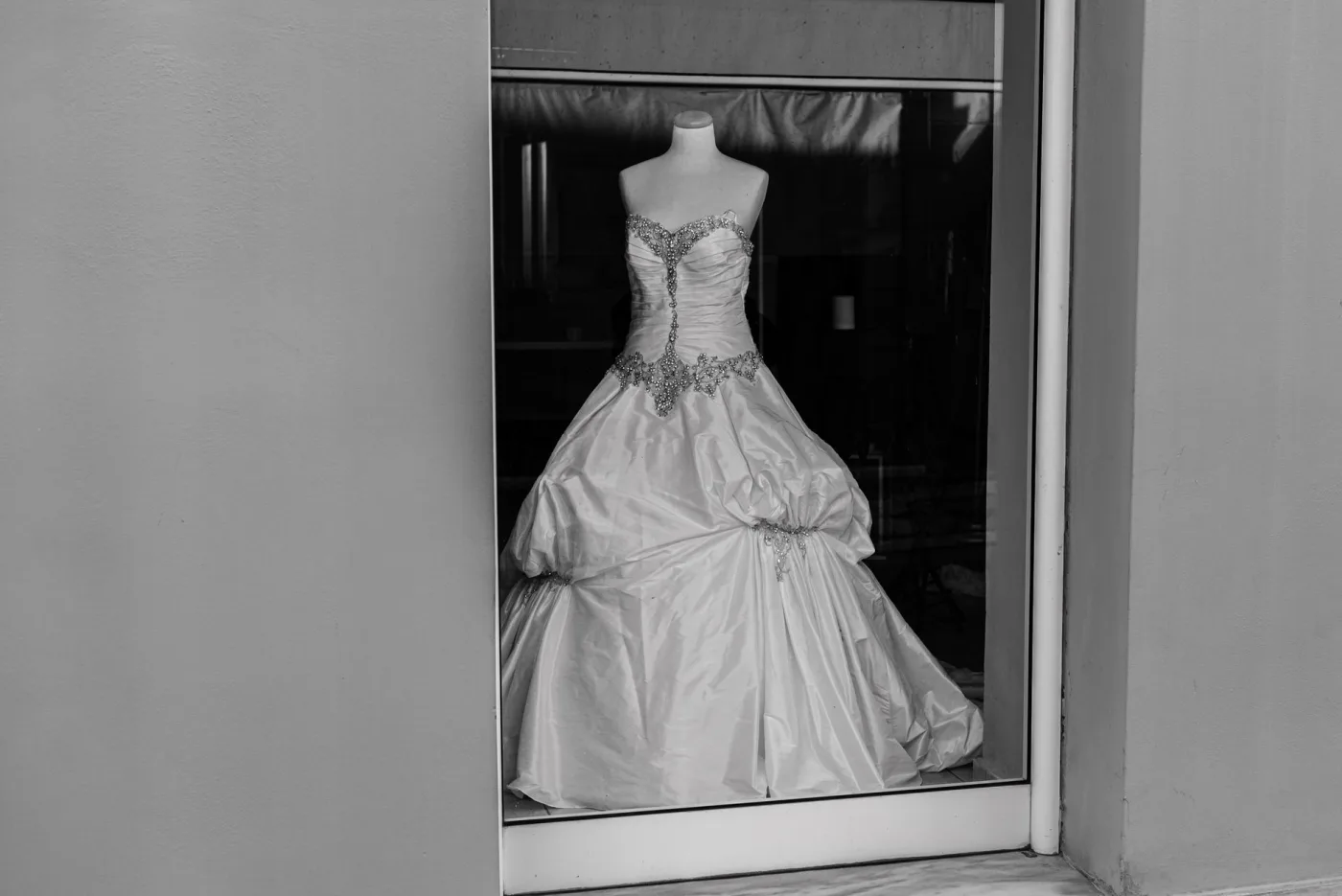
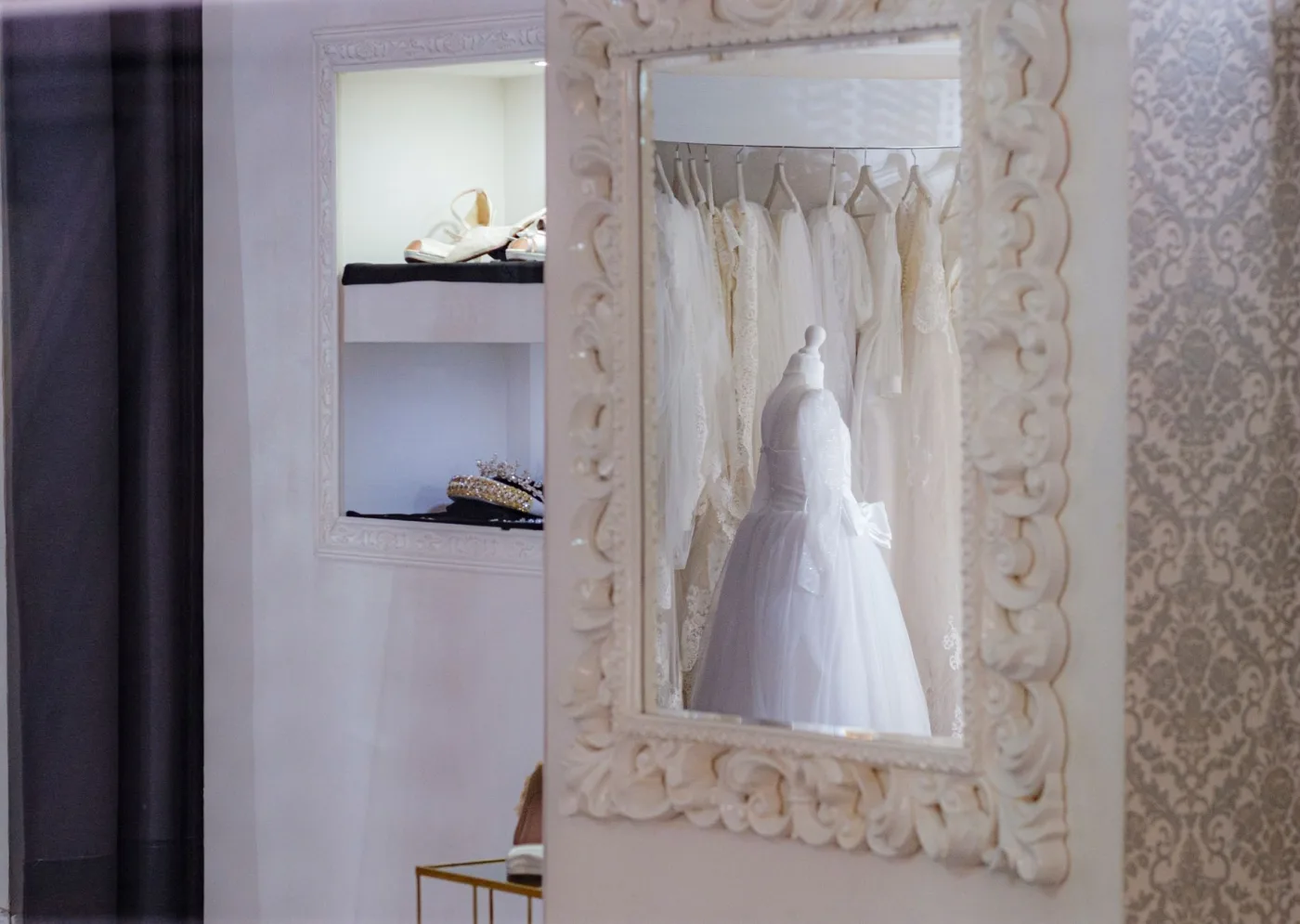
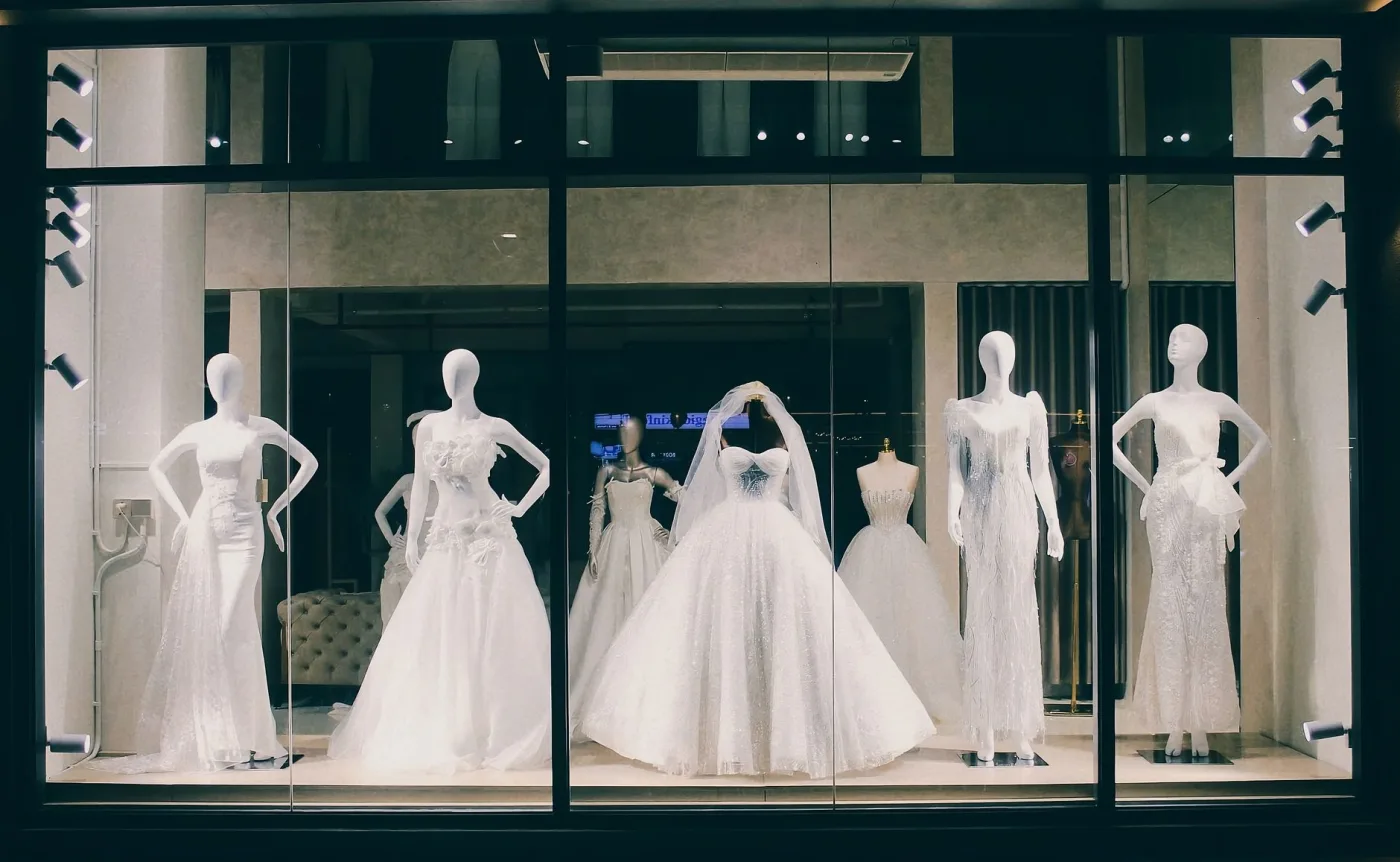
Bridal and gown salon
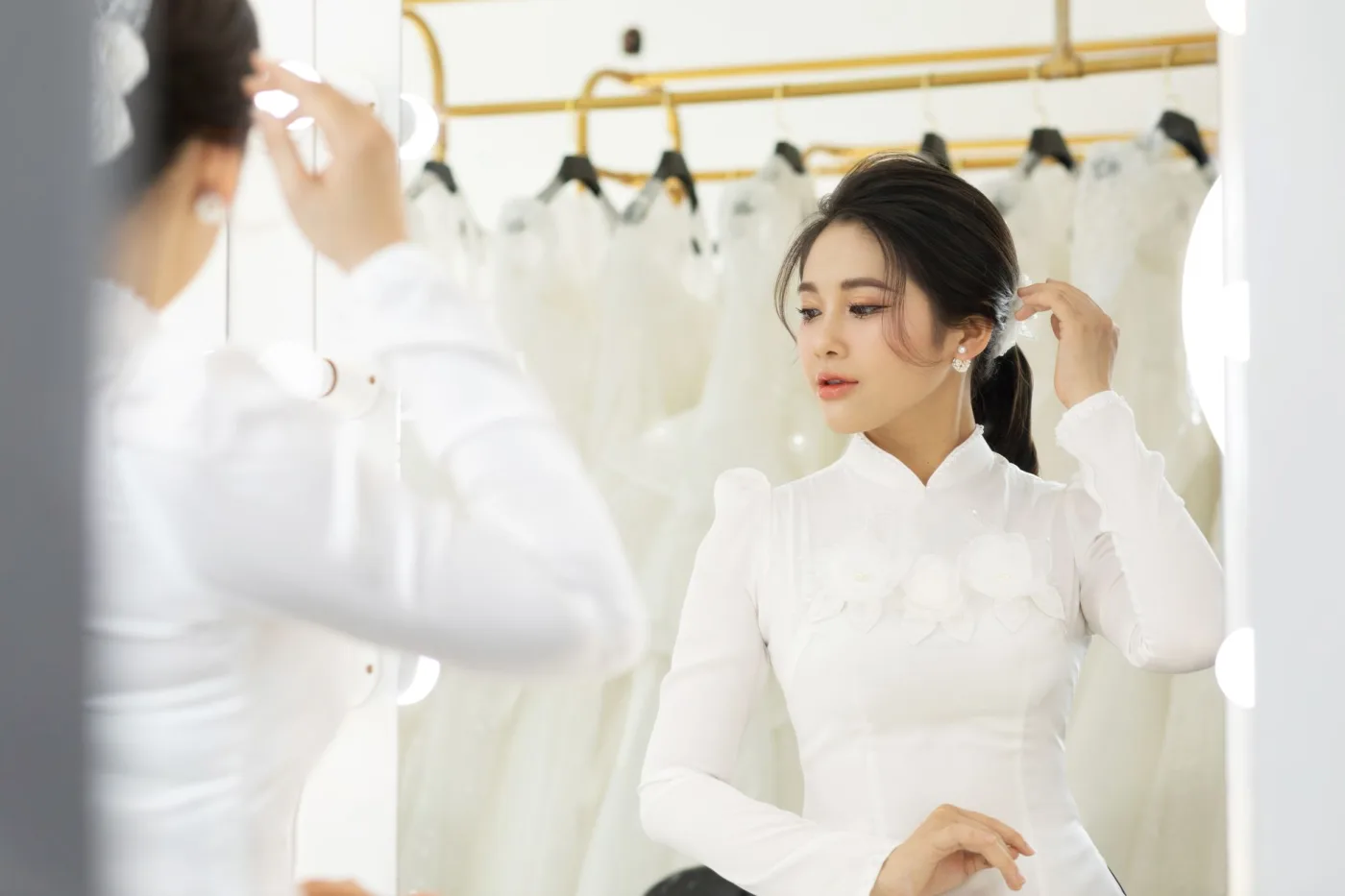
Fits the wedding dress and often the bridesmaids. The longest lead time of any store, because gowns are frequently made to order and then altered.
Menswear and suit shop
Suits or formalwear for the groom and party, bought or hired. Tailoring is the whole point, so build in fitting time.
Jeweller
Engagement ring, wedding bands and sizing. Engraving and resizing add days or weeks you must plan for.
Stationery and print
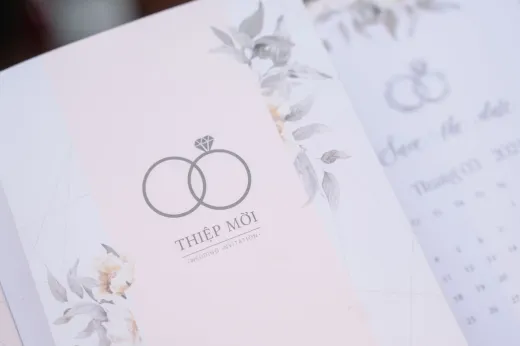
Save-the-dates, invitations, menus, signage. Anything printed to order needs proofing time before it can ship.
Decor and event rental
Linens, chairs, tableware, arches, lighting. You are hiring, not buying, so availability on your date is the gate.
Favours and gifts
Guest favours, party gifts, welcome-bag fillers. Low stakes and late in the timeline, but easy to leave too late.
Cake and bakery
The wedding cake and any dessert table. Tastings first, then a build slot booked well ahead of the date.
Notice that these split cleanly into two families. Some stores sell you an object that must be made or altered to fit you: the gown, the suits, the rings, the printed stationery, the cake. Those carry real lead time and cannot be rushed at the end. The others hire you something for a day or hand you a stock item off a shelf: rental decor and favours. Knowing which family a store belongs to tells you roughly how early to visit it, before you even walk in.
How to find the good ones near you
A map search gives you pins, not judgement. The way to turn a screen full of listings into a short list worth visiting is the same for every store type. Start with the shop's own website and recent, dated reviews rather than the aggregator blurb, and read the reviews that mention a real wedding and a real timeline, because a five-star rating from someone who bought a scarf tells you nothing about how the shop handles a gown three fittings deep. Check that the store actually specialises in what you want: a general clothing shop that stocks a rail of prom dresses is not a bridal salon, and a print-on-demand website is not a stationer who will proof your invitations with you.
Then weigh what "near me" genuinely buys you, because it differs by store. For anything fitted or tailored, the gown, the suits, the rings, local is worth a lot: you can be measured in person, return for fittings without a day of travel, and collect the finished item safely. For a wedding dress in particular, proximity to your salon is close to essential, because a gown is measured, ordered, and then altered over several appointments that are painful to do from far away. For favours or stock decor, distance matters far less, and a shop two hours away or a good website can serve you just as well. Match the effort of finding a store to how much its being local actually helps.
Which family a store belongs to tells you how local it must be and how early to visit. Fitted things first, hired and stock things later.
What to check before you pay, at every store
The stores differ, but the four questions that protect your money do not. Whether you are standing in a gown salon or a bakery, ask about the same four things, and get the answers in writing on the order form or contract rather than trusting a friendly conversation across the counter.
Selection and whether it is really in stock. Ask what is on the floor to try today versus what must be ordered in, and how long an order takes. A rail of samples is not the same as stock you can walk out with, and "we can get that" can mean two weeks or three months.
Alterations and who does them. For anything fitted, this is the question that decides whether the item works on the day. Ask whether alterations are done in house or sent out, how many fittings are included, what they cost, and how long they take. A cheap gown with expensive, slow, outsourced alterations can cost more and stress you more than a dearer one tailored on site.
Timelines and your real deadline. Tell them your wedding date and ask, plainly, what their cut-off is to guarantee delivery with time to spare. Then work backwards from a date a comfortable margin before the wedding, not the wedding itself, so a delay does not become a crisis.
Deposits, balances and returns. Ask what deposit is required, when the balance is due, and, above all, what the return or cancellation policy is. Made-to-order and personalised items, a tailored gown, engraved rings, printed invitations, a custom cake, are very often non-returnable once production starts, which is entirely reasonable but must be known before you commit.
The rule that saves the most weddings: anything made, altered, engraved or printed to order is usually non-refundable the moment work begins, so approve every proof, every measurement and every spelling with the care of a final decision, because it is one. Read your own name, your partner's name, and above all the wedding date on every proof out loud before you sign off. A misprinted invitation or a misspelled engraving is not a store's mistake to fix for free if you approved it, it is a reprint you pay for and a deadline you just lost.
Which store, and when to visit
This is the part the map never tells you: the order matters as much as the choice. Anything made or altered to fit you has to start early, because its clock runs on production and fittings, not on how organised you are. The favours and the cake tasting can wait, but the gown and anything tailored or printed cannot. Use the table as a rough working order, then shift it to your own runway, and if your date is closer than these windows assume, start with whatever is furthest down the list and has the least slack.
| Store | What you are buying | Typical window before the day | Why then |
|---|---|---|---|
| Bridal and gown salon | Wedding dress, bridesmaid dresses | 9 to 12 months | Made-to-order gowns plus several fitting appointments need the most runway of anything. |
| Jeweller | Wedding bands, engraving, sizing | 4 to 6 months | Resizing and engraving add time, and you want the rings safely in hand well before the week of. |
| Stationery and print | Invitations, save-the-dates, signage | 4 to 6 months | Save-the-dates go out early; invitations need proofing, printing and posting with reply time built in. |
| Decor and event rental | Linens, chairs, arches, lighting | 3 to 6 months | Popular items book out on peak dates, so reserve early even though delivery is near the day. |
| Menswear and suit shop | Suits or formalwear, bought or hired | 2 to 4 months | Enough time to order sizes and complete tailoring, but bodies change, so not so early it misfits. |
| Cake and bakery | Wedding cake, dessert table | 2 to 4 months | Taste and book the slot ahead of peak season; the cake itself is built in the final days. |
| Favours and gifts | Guest favours, welcome bags | 1 to 2 months | Low stakes and mostly stock, so late is fine, but personalised favours nudge this earlier. |
Two lines in that table trip people up most. The gown window looks alarmingly early, and it is meant to, because a salon orders your dress and then alters it across appointments, and shortening either stage is how brides end up in a gown that does not quite fit. The menswear window, by contrast, is deliberately not the earliest, because ordering a groom's suit a year out risks it fitting a body that has since changed. Early is not always better; the right store visit happens in its own window.
In store versus online: an honest trade-off
Every store above has an online equivalent, and for some items the website genuinely wins. The honest split is about fit and fixability. Anything that must sit correctly on a body, or be corrected if it does not, favours the physical store: you try it, a person measures you, and if the alteration goes wrong you can walk back in and have it put right before the day. That is why the gown salon, the menswear shop and the jeweller reward an in-person visit despite the wider choice online. A bride ordering a made-to-measure gown from a screen is betting on a size chart against a body, with no fitting room to catch the mistake.
Online earns its place at the other end of the list. Favours, printed stationery you have already proofed, and even some decor can be cheaper and wider in range online, and the loss of a fitting room costs you nothing because there was nothing to fit. The sensible pattern for most couples is a hybrid: buy or hire the fitted, alterable, day-critical items from good stores near you, and let the internet handle the stock, the printed and the low-stakes. The point of a wedding supply run is not to do it all in one place or all one way; it is to match each purchase to the channel that protects it best.
Line the stores up with the rest of the plan
None of these store visits happen in isolation. The gown appointment, the stationery order and the cake tasting are milestones on one shared timeline, and the fastest way to miss a cut-off is to treat shopping as separate from planning. Fold each store window into your broader schedule using our wedding planning checklist, so the salon deposit, the print deadline and the rental reservation all sit where they belong rather than piling up in the final month. Two of the stores here also have their own deeper guides worth reading before you visit: our walkthrough of choosing and wording wedding invitations covers the proofing and posting timeline that makes or breaks a stationery order, and our guide to wedding cakes explains what to ask at a tasting and how far ahead to book the bakery. Read those two, run the checklist, and the phrase "wedding stores near me" stops being an overwhelming map and becomes a short, ordered list of appointments you can actually keep.
Frequently asked questions
What counts as a wedding store, and how many do I need?
"Wedding store" is really a category covering several specialists: a bridal or gown salon, a menswear or suit shop, a jeweller, a stationery and print supplier, a decor and event rental firm, a favours and gifts supplier, and a cake bakery. Very few couples need all of them, and some roll together, a single shop might handle gowns and bridesmaid dresses, for example. Decide which of these trades your wedding genuinely requires, then find and judge each one separately, because they keep different lead times and reward different kinds of shopping. Thinking of them as one errand is what leads to missed deadlines.
How far in advance should I visit each wedding store?
Work backwards from your date and start with whatever takes longest to make. The bridal salon comes first, often nine to twelve months out, because gowns are frequently made to order and then altered across several fittings. Jewellery, stationery and decor rental sit in the middle, roughly three to six months ahead, since engraving, proofing and peak-date availability all need buffer. Menswear and the cake usually fall two to four months out, and favours can wait until the final month or two. Anything made or altered to fit you should never be left to the end; only stock and hired items are safe to arrange late.
Should I shop for wedding items in store or online?
Split it by fit and fixability. Buy or hire anything that must sit correctly on a body, or be corrected if it does not, the gown, the suits, the rings, from a good store near you, because you can try it, be measured in person, and return for alterations before the day. Let online handle the stock, the printed and the low-stakes: favours, already-proofed stationery, and some decor are often cheaper and wider in range online, and you lose no fitting room because there was nothing to fit. A hybrid approach, local for fitted and day-critical items, online for the rest, works best for most couples.
What should I ask before paying a deposit at a wedding store?
Ask the same four things at every store. First, what is genuinely in stock to try or take today versus what must be ordered, and how long an order takes. Second, how alterations work: in house or outsourced, how many fittings are included, what they cost, and how long they take. Third, the store's cut-off date to guarantee delivery with a comfortable margin before your wedding. Fourth, the deposit, the balance schedule, and the return or cancellation policy. Get the answers written on the order form, and remember that made-to-order and personalised items are usually non-refundable once production starts.
Are made-to-order wedding items refundable if something goes wrong?
Usually not, once work has started, and that is standard rather than a red flag. A tailored gown, engraved rings, printed invitations and a custom cake are all built for you specifically, so most stores treat them as non-returnable from the moment production begins. That makes the approval stage critical: check every measurement, read every proof, and confirm every spelling and the wedding date before you sign off, because a mistake you approved is a reprint or remake you pay for, not the store's error to fix free. Only stock items and hired decor typically carry a normal return or cancellation window.
Do I really need local wedding stores, or can I do it all online?
You can do a surprising amount online, but not all of it wisely. Fitted and alterable items, above all the wedding dress, strongly favour a local store, because a size chart is a poor substitute for a fitting room and there is no way to correct a made-to-measure mistake from a distance. Jewellery sizing and menswear tailoring lean the same way. For favours, proofed stationery and stock decor, online is perfectly fine and often better on price and range. So the honest answer is a mix: keep the fitted, day-critical purchases local where you can try, tailor and return in person, and let the internet cover the rest.