Elopement: The Complete Guide
The modern guide to eloping: what it means today, why couples choose it, how it compares to a micro-wedding, the legal basics, costs, choosing a location, and telling family gracefully.
For most of its history the word elopement carried a whiff of scandal: a couple slipping away in the night to marry against their families' wishes. That is not what it means for most couples who choose it today. A modern elopement is a deliberate decision to marry small, close and on your own terms, with the promise itself at the centre and the production stripped away. It can happen on a clifftop, in a courthouse, or in a friend's back garden, with parents present or a phone call made afterward. This guide explains what elopement means now, why so many couples are choosing it, how it differs from a micro-wedding and a traditional wedding, and how to plan one that is legally real and genuinely yours.
The short version
- Elopement is a choice, not an escape. The modern meaning is an intimate, intentional wedding, often planned in full.
- Couples elope for the marriage, not the show: lower cost, less stress and more presence.
- The legal part is small. A licence, an authorised officiant, and, where required, a witness or two.
- Nothing sacred is skipped. You keep the vows and the meaning; you drop the scale and the logistics.
- Telling family well matters more than the guest count. How you share the news shapes how it lands.
What elopement means today
The older definition still lives in the dictionary. Historically, to elope was to marry in a sudden and secretive fashion, sometimes involving a hurried journey to avoid disapproval or legal obstacles. The modern usage has widened almost beyond recognition. The same source notes the term is now applied to any small, inexpensive wedding, even when it is performed with the full foreknowledge of the couple's families. The secrecy has largely fallen away; what remains is the smallness and the intent.
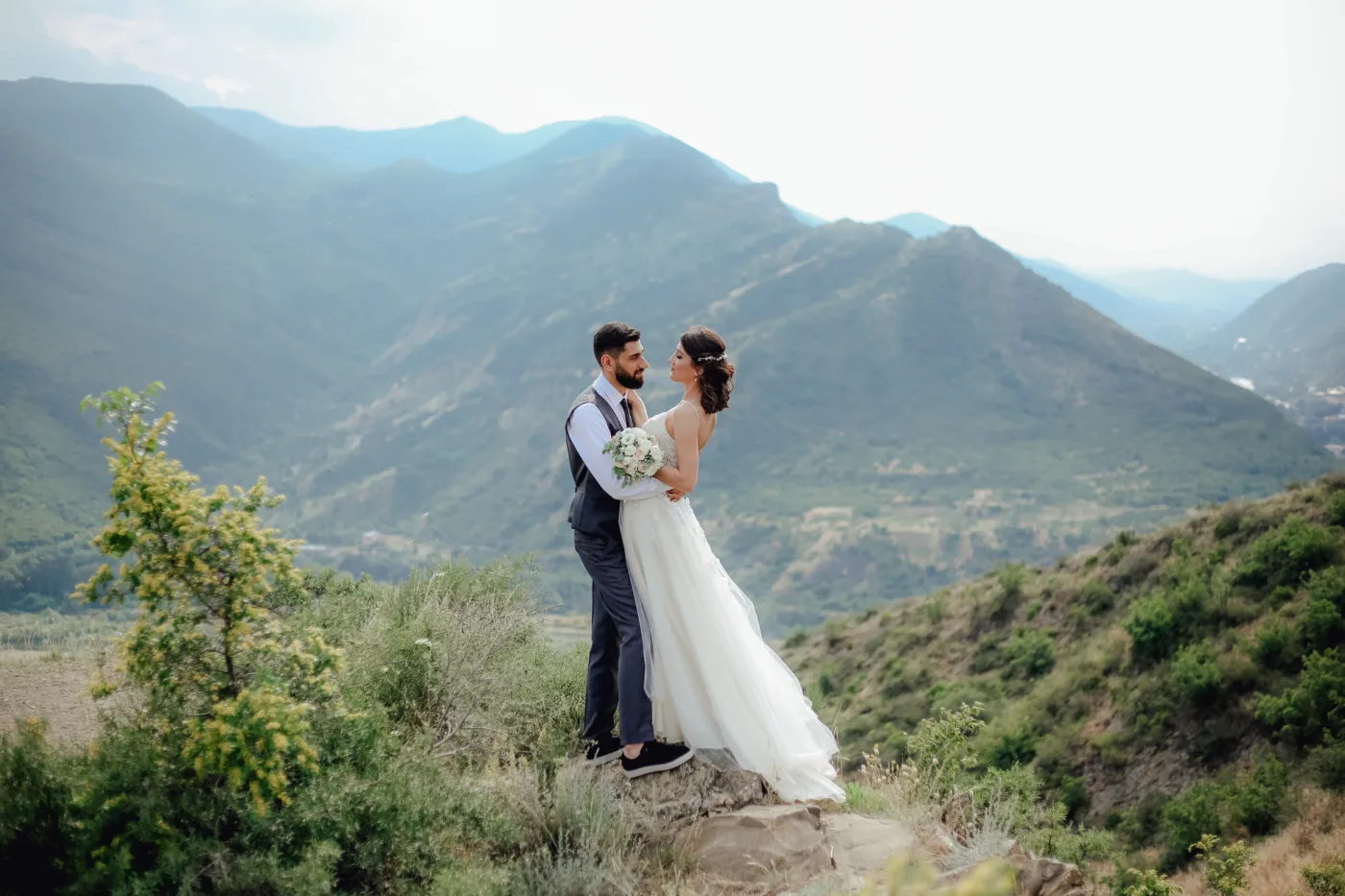
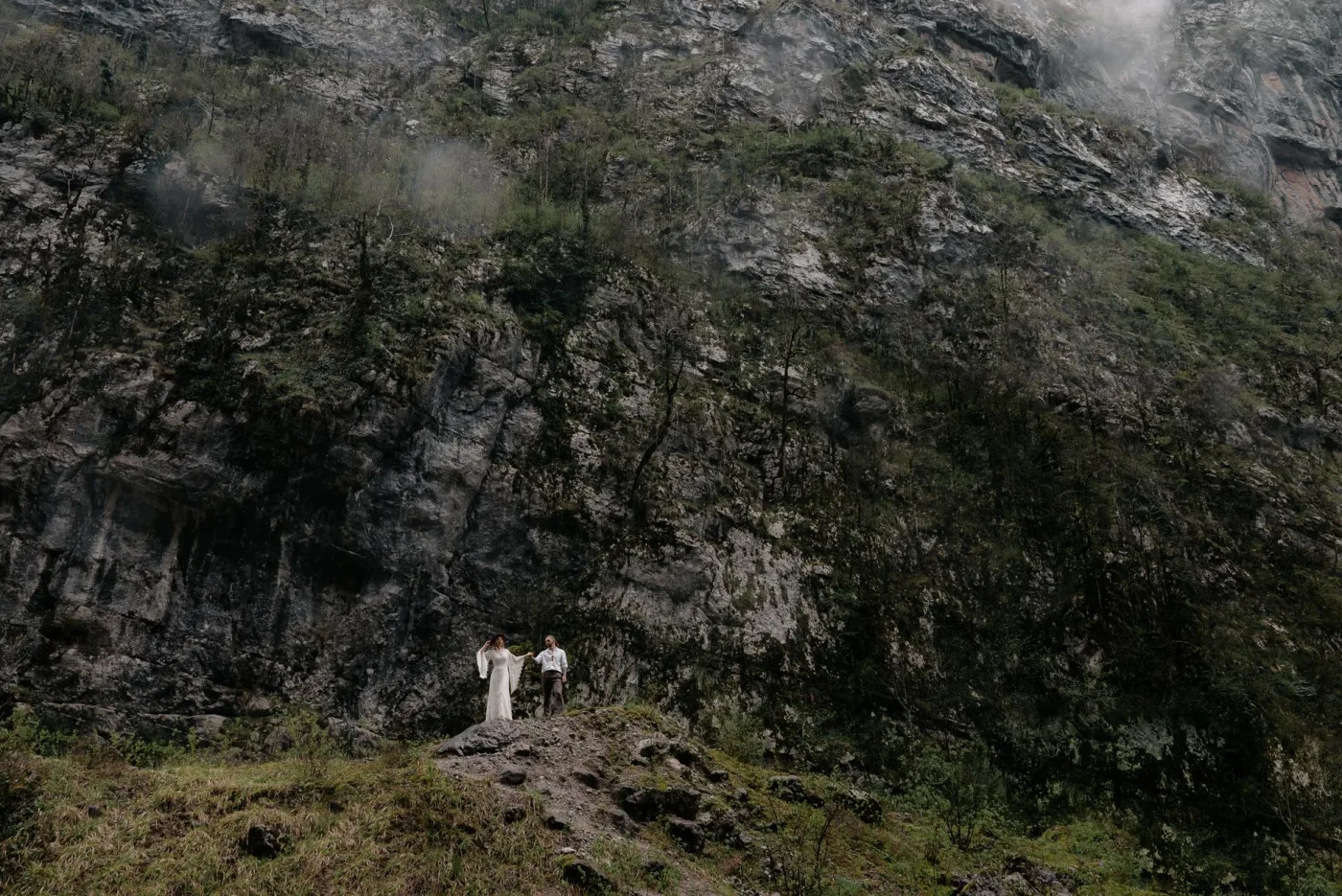
That shift is worth sitting with, because it changes the whole emotional register of the word. An elopement is no longer defined by who you are running from. It is defined by what you are running toward: a wedding reduced to its essentials, and a marriage that begins without the weight of a large event around it. Interest has grown accordingly. The rise of elopement photography as a genre, with couples deliberately hiring a photographer to document a two-person ceremony in a dramatic setting, tells you how far this has travelled from the runaway image. This is now a considered, often beautifully documented, way to marry.
Why couples elope

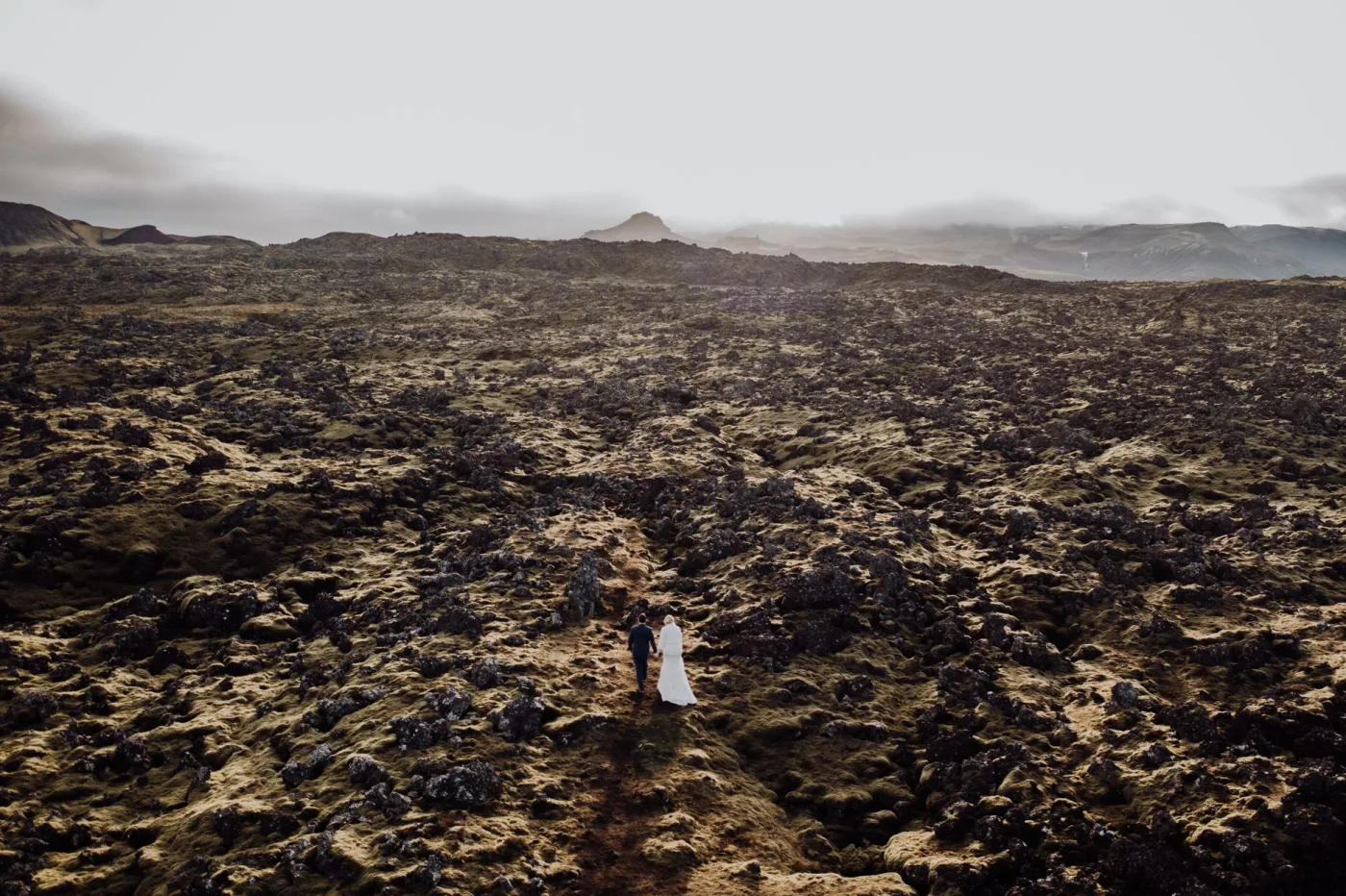
People arrive at elopement from very different directions, but the reasons cluster into a few honest themes. None of them is about avoiding commitment. If anything, they are about protecting it.
Cost
A full wedding is one of the largest single purchases many couples make. Eloping redirects that money to a home, a honeymoon, or simply nowhere.
Intimacy
Some couples want the day to be about the two of them, without an audience to perform for or a room to work.
Less stress
No seating charts, no guest politics, no year of logistics. The planning shrinks from a project to a plan.
Focus on the marriage
Stripping away the spectacle puts the vows back at the centre, where the actual decision lives.
There are practical reasons too. Couples marrying across cultures or distances sometimes find an elopement simpler than reconciling two families' expectations into one event. Couples on a tight timeline, or those who simply dislike being the centre of a crowd, find relief in the format. Whatever the trigger, the common thread is a preference for depth over scale. As the survey of wedding customs notes, smaller weddings grew in popularity partly because their size keeps costs down, and the same economics apply here in their most concentrated form.
Elopement vs micro-wedding vs traditional wedding
Elopement sits at one end of a spectrum, not in a category of its own. The clearest way to place it is against its two nearest neighbours. A micro-wedding is a genuinely small but still hosted event, typically a handful to a few dozen guests, planned in advance with many traditional beats intact. A traditional wedding is the full-scale version most people picture. Reading across the table below is the fastest way to work out which one you actually want, because the differences are less about budget than about how much of the day is for other people.
| Feature | Elopement | Micro-wedding | Traditional wedding |
|---|---|---|---|
| Typical guests | 0 to a small handful | Roughly 10 to 50 | 50 to 200+ |
| Planning time | Weeks to a few months | A few months | Often a year or more |
| Relative cost | Lowest | Low to moderate | Highest |
| Reception | Optional, often skipped or a meal out | Small, hosted | Central, usually the largest expense |
| Focus | The couple and the vows | Couple plus closest circle | Couple, families and wider community |
| Stress level | Lowest | Moderate | Highest |
| Best for | Privacy, spontaneity, adventure | Intimacy with some celebration | Community, tradition, scale |
The lines are not rigid. Many couples blend them: they elope for the ceremony itself, then host a micro-reception or a larger party weeks later, keeping the marrying private and the celebrating public. That hybrid is one of the most popular modern answers, because it lets you protect the vows while still giving family a happy wedding celebration to share in afterward.
How to plan an elopement, step by step
An elopement has far fewer moving parts than a traditional wedding, but fewer is not none. Skipping the planning entirely is how couples arrive at a beautiful location and discover their licence is not valid there. The sequence below keeps the day both meaningful and legally sound.
Five steps instead of fifty. The legal paperwork is small, but it comes early for a reason.
Decide the shape
Just the two of you, or a witness or two? A budget, and a rough tone: courthouse quiet, or clifftop adventure. Everything else follows from this.
Sort the legal steps
Find out what the marriage licence rules are for your chosen jurisdiction, and who is authorised to marry you there. Do this before anything is booked.
Choose the location and date
Match the setting to the paperwork. A destination elopement often has its own residency, notice or document rules.
Book the few people you need
An officiant, any required witnesses, and, if you want the day documented, a photographer. That is often the entire vendor list.
Plan the day itself
Write your vows, plan a meal or a first night, and decide how and when you will tell the people who are not there.
The legal steps to be actually married
This is the part couples most often underestimate, and it is worth stressing that what follows is a general description of how legal marriage tends to work, not legal advice. Rules vary enormously by country, state and region, so always confirm the specifics for the exact place you plan to marry. With that said, most jurisdictions build a legal marriage from the same three pieces.
- The licence. A marriage license is a document, issued by a state authority or in some cases a religious body, that authorises a couple to marry. Requirements differ sharply: some places require one, some impose a waiting period between issuing and marrying, and a few require none at all.
- The officiant. Someone legally authorised to perform the ceremony must conduct it. Depending on where you are, that can be a civil registrar, a judge, a religious minister, or a licensed celebrant. Being married by someone without that authority can leave the marriage invalid.
- The witnesses. Many jurisdictions require one or two witnesses to observe the ceremony and sign the licence alongside the couple and officiant. This is often the practical reason a truly solo elopement still needs a person or two present.
- The record. After the ceremony, the signed licence is filed with the relevant authority, which issues the marriage certificate. That certificate, not the ceremony, is the proof you are married.
The single most common elopement mistake: booking the location before checking its marriage laws. Residency requirements, notice periods, document translation and witness rules can all quietly derail a destination elopement. Confirm exactly what your chosen place requires, and how long it takes, before you fall in love with a date. The paperwork is small, but it is not optional, and it does not bend to a beautiful view.
Choosing a location
Location is where an elopement gets to be expressive, because you are not constrained by guest logistics, parking, or a room big enough for two hundred people. That freedom is the whole appeal, and it splits roughly into three directions. The right one depends on how much the setting itself is meant to carry the day.
Civil and simple
A courthouse or registry office. Fast, inexpensive, and centred entirely on the vows. The classic elopement, quietly done.
Scenic and local
A beach, a forest, a favourite viewpoint close to home. The setting adds meaning without the cost and paperwork of travel.
Destination
Marrying somewhere far away that matters to you both. The most memorable option, and the one that most needs its legal rules checked in advance.
Destination elopements overlap heavily with the world of the destination wedding, and they inherit both its magic and its admin. A place that requires a residency period, or that will not recognise a foreign officiant, can turn a dream setting into a legal headache. The usual workaround is elegantly simple: handle the legal marriage quietly at home, then hold the meaningful ceremony wherever you like, treating the paperwork and the moment as two separate things.
What an elopement typically costs
Cost is one of the strongest reasons couples elope, so it deserves honesty rather than invented precision. Real figures swing wildly with location, season and how much you choose to add, so treat the bands below as broad shapes rather than quotes. The point is the relative scale: an elopement is usually a fraction of a traditional wedding, and where the money goes is entirely up to you.
| Style of elopement | What it usually includes | Relative cost band |
|---|---|---|
| Courthouse | Licence and officiant fees, little else | Lowest |
| Local scenic | Licence, officiant, photographer, a meal | Low to moderate |
| Destination, self-planned | Travel, stay, licence, officiant, photographer | Moderate |
| Destination, package | A planner or venue bundling the above | Moderate to higher, still well below a full wedding |
Notice what is missing from every band: catering for a crowd, a large venue, and the long tail of per-guest costs that make traditional weddings expensive. Removing the guest list removes the part of a wedding budget that scales the fastest. Whatever you spend, you are spending it on the two of you rather than on hosting, and for many couples that trade is the entire reason they chose to marry this way.
How to include or tell family gracefully
The hardest part of eloping is rarely logistical. It is relational. Family members who imagined being present can feel hurt, and how you handle that has more to do with the outcome than the decision itself. A few principles tend to keep the peace without surrendering your choice.
- Decide who to tell beforehand, and who to tell after. Some couples let a parent or sibling in on the plan; others tell everyone once it is done. Both are valid; choose deliberately rather than by default.
- Lead with the why, not just the what. People accept a decision far more easily when they understand it came from wanting something, not from rejecting them.
- Offer a way to share in it. A post-elopement dinner, a party, or simply sharing the photographs lets family celebrate with you even though they were not at the ceremony.
- Tell people directly, and in order. The parents and closest family should hear it from you in person or by call, not discover it on social media alongside everyone else.
- Hold your ground kindly. You can acknowledge someone's disappointment without treating it as a veto. It is your marriage to begin.
The couples who elope with the fewest regrets are almost always the ones who thought about the telling as carefully as the ceremony. A little grace in how you share the news buys a great deal of goodwill afterward.
What to skip and what to keep
An elopement is an exercise in subtraction, but not everything is expendable. The skill is knowing which parts of a wedding are logistics and which parts are meaning. Skip the logistics freely; keep the meaning deliberately.
| Often skipped | Worth keeping |
|---|---|
| Large guest list and seating plans | Vows, spoken out loud to each other |
| A big hosted reception | An officiant and the legal paperwork done properly |
| Wedding party and formal roles | A photographer, if you want the day remembered |
| A year of vendor coordination | Rings, or whatever symbol matters to you |
| Dress codes and elaborate decor | A way to include family, before or after |
The through-line is simple. What makes a wedding a wedding is the promise made and witnessed, not the scale of the audience. Keep that, and an elopement loses nothing essential. Everything you cut was decoration around the core, and choosing which decoration to keep is exactly the freedom that drew you here.
If you want the wider context around all of this, our pillar guide to the wedding maps the full spectrum from courthouse to grand celebration, and our companion piece on marriage picks up where any ceremony, large or small, leaves off.
Frequently asked questions
Does eloping mean marrying in secret?
Not any more, in most cases. Historically elopement meant a sudden, secretive marriage, often to avoid disapproval, but the modern meaning has widened to cover almost any small, intentional wedding, frequently planned in full and with family aware. Today the word describes a private, intimate ceremony far more often than a runaway one. The secrecy is optional and, for most couples who elope now, entirely absent.
Is an elopement legally binding?
Yes, provided you complete the same legal steps any marriage requires. In most places that means a valid marriage licence, a ceremony conducted by an authorised officiant, and, where required, one or two witnesses who sign the licence alongside you. The signed document is then filed and a marriage certificate issued. An elopement is only as legally binding as its paperwork, so confirm the exact rules for your jurisdiction before the day, as requirements vary widely.
What is the difference between an elopement and a micro-wedding?
Scale and intent. An elopement centres on the couple, with either no guests or a tiny handful, and often skips a hosted reception entirely. A micro-wedding is still a small event, usually somewhere between ten and fifty guests, but it is hosted and planned like a scaled-down traditional wedding, keeping beats such as a reception and toasts. Put simply, an elopement is about privacy, while a micro-wedding is about intimacy with a small circle present.
How much does it cost to elope?
Far less than a traditional wedding in almost every case, because removing the guest list removes the costs that scale fastest: catering, a large venue and per-guest extras. A courthouse elopement can involve little more than licence and officiant fees, while a self-planned or package destination elopement costs more but still typically lands well below a full wedding. Exact figures depend heavily on location and how much you choose to add, so plan by bands rather than fixed numbers.
How do we tell our families we eloped without hurting them?
Tell the closest people directly and in person or by call, before they hear it elsewhere, and lead with why you chose to elope rather than simply announcing that you did. Offering a way for them to share in it, a dinner, a later party, or the photographs, lets family celebrate with you even though they were not at the ceremony. Acknowledge any disappointment with kindness, but remember the decision is yours to make.
Can we still have a celebration with family after eloping?
Absolutely, and many couples plan exactly that. A popular approach is to marry privately, then host a reception or party weeks later, keeping the vows intimate while still giving family and friends a celebration to share. This hybrid lets you protect the ceremony and enjoy the community afterward, combining the calm of an elopement with the warmth of a larger gathering, on your own timeline.