Intimate Wedding: The Complete Guide
Small and intentional: what an intimate wedding is, how it differs from eloping, what it costs, and how to plan one that feels full.
An intimate wedding is not a downgraded version of a big one. It is a deliberate choice to trade scale for depth: fewer guests, more presence, and a day built around the people who genuinely matter rather than a hall full of names. Over the past few years small weddings have moved from a fallback to a first choice for couples who want to spend more per guest, marry somewhere special, or simply avoid the machinery of a two-hundred-person event. This guide explains what an intimate wedding really is, how it differs from eloping, what it costs, and how to plan one that feels full rather than sparse.
The short version
- Intimate means small and intentional, usually a guest list in the tens rather than the hundreds.
- It is not the same as eloping. An intimate wedding still gathers your closest people; an elopement is just the two of you.
- Small does not automatically mean cheap. It often means spending more per guest on the things you love.
- The upside is connection. More time with each guest, more flexibility on venue, and far less stress.
What an intimate wedding is
A wedding is the ceremony that unites two people in marriage, and an intimate wedding is simply that ceremony held on a small, personal scale. There is no official cut-off, but the term generally describes a guest list in the low tens, often somewhere between a handful and around fifty people, where you can realistically speak to everyone in the room.
The defining feature is intention, not just size. An intimate wedding is chosen because the couple values closeness over spectacle, not because they could not fill a larger room. That mindset shapes every later decision, from the venue to the seating to the pace of the day, and it is what separates a small wedding that feels rich from one that simply feels like a big wedding with empty chairs.
Intimate wedding, micro wedding or elopement?
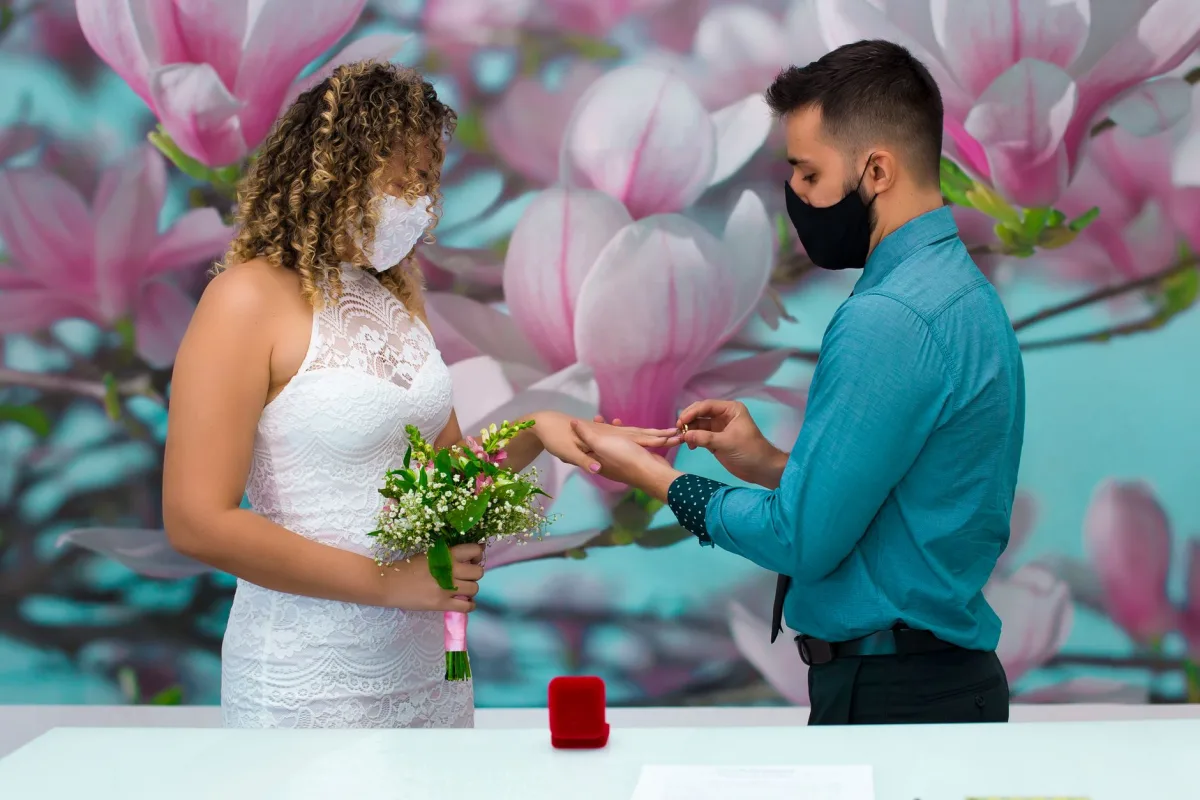
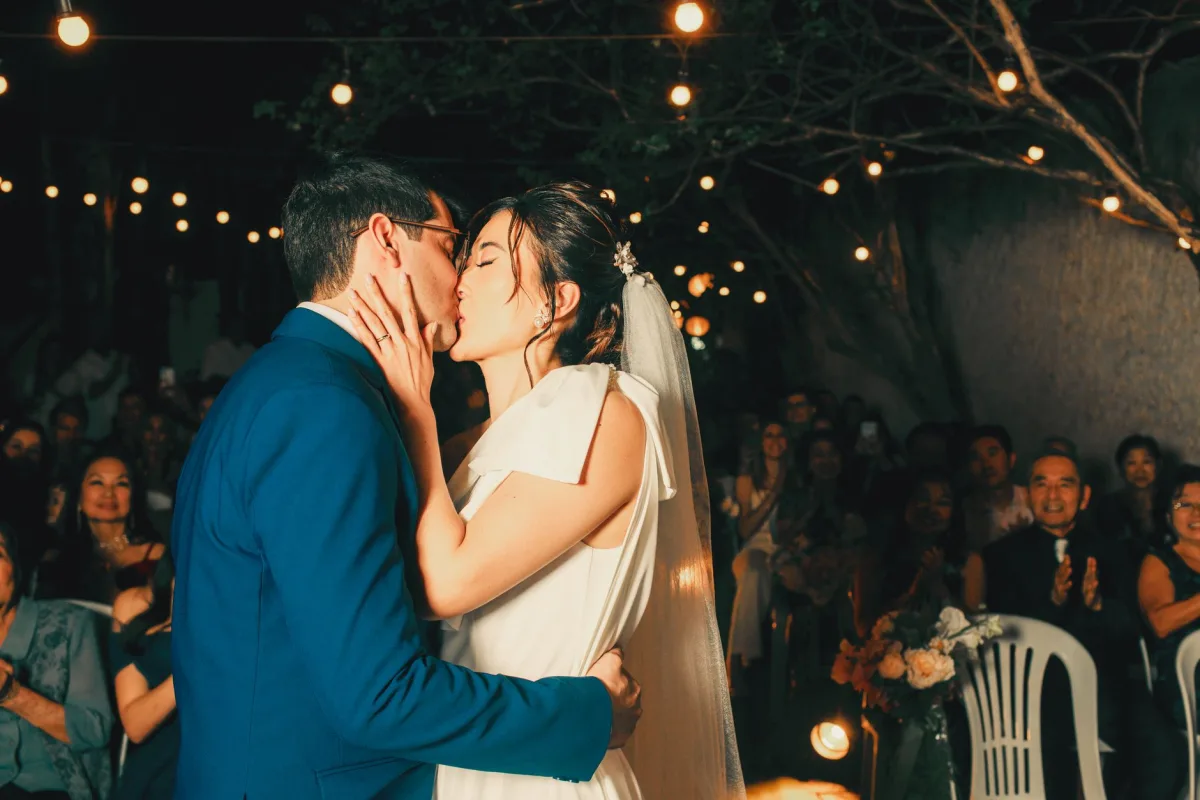
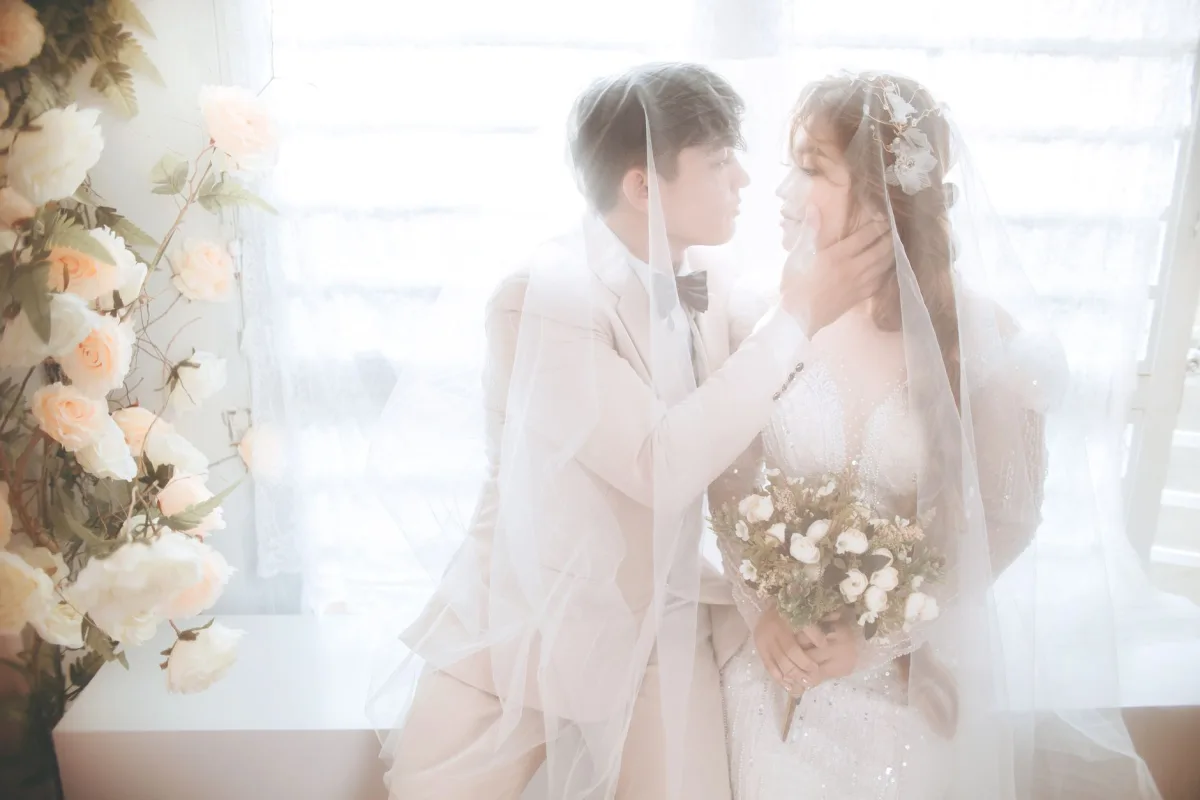
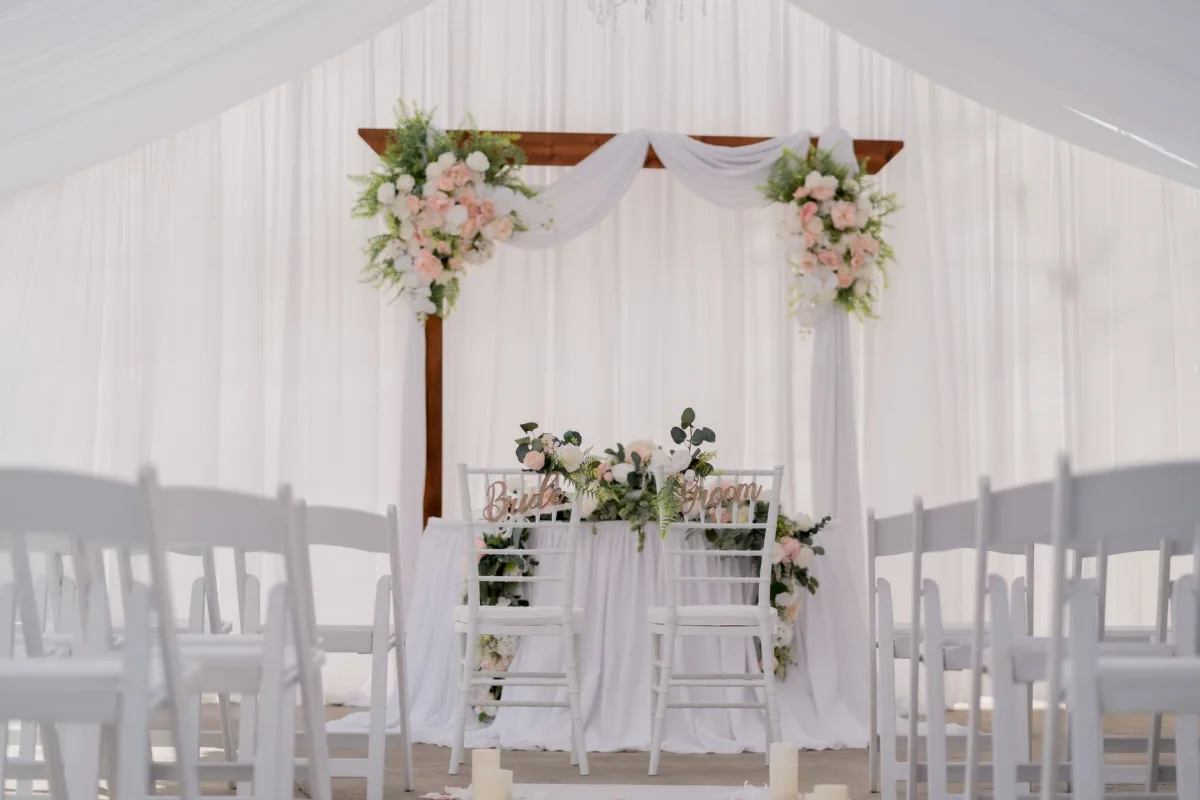
These terms overlap and get used loosely, so it helps to pin them down. The clearest way to tell them apart is by who is present and how much of a celebration surrounds the vows.
Intimate wedding
A small, full celebration, commonly up to around fifty guests, with a ceremony and a proper reception, just on a smaller, more personal scale.
Micro wedding
Smaller still, often under twenty guests. Same idea as intimate, taken further, with a short ceremony and a scaled-down meal or party.
Elopement
Traditionally just the couple, sometimes with witnesses. The focus is the marriage itself rather than a guest celebration.
Minimony plus later party
A tiny ceremony now with a larger celebration held later, a flexible route many couples adopted to keep both the moment and the party.
The key distinction is that an elopement centres on the couple marrying, often privately, while an intimate wedding still gathers your closest circle for a shared celebration. If a truly private route appeals to you, our guide to eloping explores that path in full; if you want your nearest people there, an intimate wedding is the better fit.
What an intimate wedding costs
Here is the myth worth dismantling: small does not automatically mean cheap. A smaller guest count does lower the biggest variable cost, the per-head catering, so the total bill is usually lower than a large wedding. But many couples redirect that saving rather than pocket it, spending more per guest on a beautiful venue, better food, a standout photographer or an experience they could never afford at scale.
Some fixed costs also barely move with guest count. A photographer, an officiant, a dress or suit, and a wedding planner's time cost broadly the same whether you host twenty guests or two hundred. That is why a lavish intimate wedding for thirty can, per head, cost more than a modest large one. The honest way to plan is to build a real budget from your own priorities rather than assume the word "small" caps the number. Our wedding budget checklist is the right place to test where your money actually goes.
The advantages of going small
The case for an intimate wedding is not mainly financial; it is human. With fewer guests you get more of the thing a wedding is supposedly for: time with the people you love. You can greet everyone properly, hold a real conversation, and remember the day rather than survive it. The reduced scale also unlocks options a big event forecloses.
- Deeper connection. You actually spend time with each guest instead of waving across a crowded room.
- Venue freedom. A restaurant, a garden, a small hall or a family home becomes possible when you are not seating hundreds.
- Spend where it counts. The saving on numbers can fund the food, the setting or the photography you truly want.
- Less stress, more presence. Fewer moving parts, fewer politics over the guest list, and a calmer path to the day.
- Flexibility. Small weddings adapt more easily to short timelines, tight dates and unusual locations.
A smaller guest list also opens up venues that a large wedding simply cannot use. Our guide to small wedding venues covers the intimate spaces, from private dining rooms to boutique country houses, that suit this kind of day.
The trade-offs to weigh
An intimate wedding asks for one genuinely hard thing: a short guest list. Deciding who makes the cut, and who does not, can strain family expectations, especially in cultures where a large wedding is the norm and an invitation carries social weight. It is worth handling this early, kindly and clearly, so that the people not invited hear it from you rather than from a seating chart.
There are smaller trade-offs, too. A tiny wedding can feel exposed if the venue is too large for the group, so scale the space to the guests, not the other way around. Some couples miss the buzz of a big party, and some relatives may feel the day was too quiet. None of these are reasons to avoid an intimate wedding; they are simply things to plan for. Setting the reception, in particular, matters more when numbers are small, so it is worth reading how a wedding reception works at a reduced scale before you book.
Planning an intimate wedding well
The secret to a small wedding that feels full is to lean into the intimacy rather than shrink a big-wedding template. Choose a venue sized to your group so the room feels warm, not empty. Spend the time you save on logistics building personal touches: a shared long table, hand-written notes, a menu you actually chose, a ceremony that speaks directly to the people present. Small scale is what makes those details affordable and noticeable.
Because so much of the day is personal, coordination still helps, even at a small scale. A short, clear running order keeps the ceremony, meal and any speeches flowing, and a wedding planner or even a well-briefed friend can carry the day-of logistics so you stay present. If the setting is somewhere special or far from home, an intimate wedding blends naturally into a destination wedding, where a small group travels easily and the location becomes part of the celebration. Matrimony360 couples who plan their intimate day around connection, rather than trying to miniaturise a grand event, are the ones who describe it afterwards as exactly the wedding they wanted.
The bottom line
An intimate wedding is a deliberate trade: fewer guests for more meaning. It is not an elopement, since your closest people are there, and it is not automatically cheap, since the saving on numbers is often reinvested in the day itself. Its real reward is presence, the chance to actually be with everyone you invited, in a setting that a large wedding could never use. Decide the guest list honestly, size the venue to the group, spend where it matters, and a small wedding becomes not a compromise but a celebration distilled to its best part.
Frequently asked questions
What counts as an intimate wedding?
There is no fixed rule, but an intimate wedding generally means a small, intentional guest list, often somewhere between a handful and around fifty people, where you can realistically speak with everyone present. The defining feature is intention rather than a precise number: the couple chooses a small scale to prioritise closeness over spectacle. Very small versions, under about twenty guests, are often called micro weddings.
Is an intimate wedding the same as eloping?
No. An elopement traditionally involves just the couple, sometimes with witnesses, and centres on the marriage itself rather than a guest celebration. An intimate wedding still gathers your closest family and friends for a shared ceremony and reception, only on a small scale. If you want your nearest people there, an intimate wedding fits; if you want it to be just the two of you, that is an elopement.
Is an intimate wedding cheaper?
Usually the total is lower, because catering, the biggest variable cost, scales with guest count. But small does not automatically mean cheap. Many couples reinvest the saving into a better venue, food, photography or experience, and some fixed costs, such as a photographer, officiant or attire, barely change with numbers. A lavish intimate wedding can cost more per guest than a modest large one, so build a budget from your own priorities.
How many guests are at an intimate wedding?
Most fall in the low tens, commonly up to around fifty guests, with micro weddings sitting under twenty. There is no official threshold, so the number is really defined by feel: enough people that it is a celebration, few enough that you can spend real time with each guest. Scale the venue to that group so the space feels warm rather than empty.
How do you handle the guest list for a small wedding?
Start early and be clear about your priorities as a couple, then work outward from the people who matter most. Expect this to be the hardest part, since a short list means leaving people out, which can strain family expectations. Communicate your decision kindly and directly rather than letting people find out indirectly, and hold your boundary gently but firmly so the day stays the size you intended.